

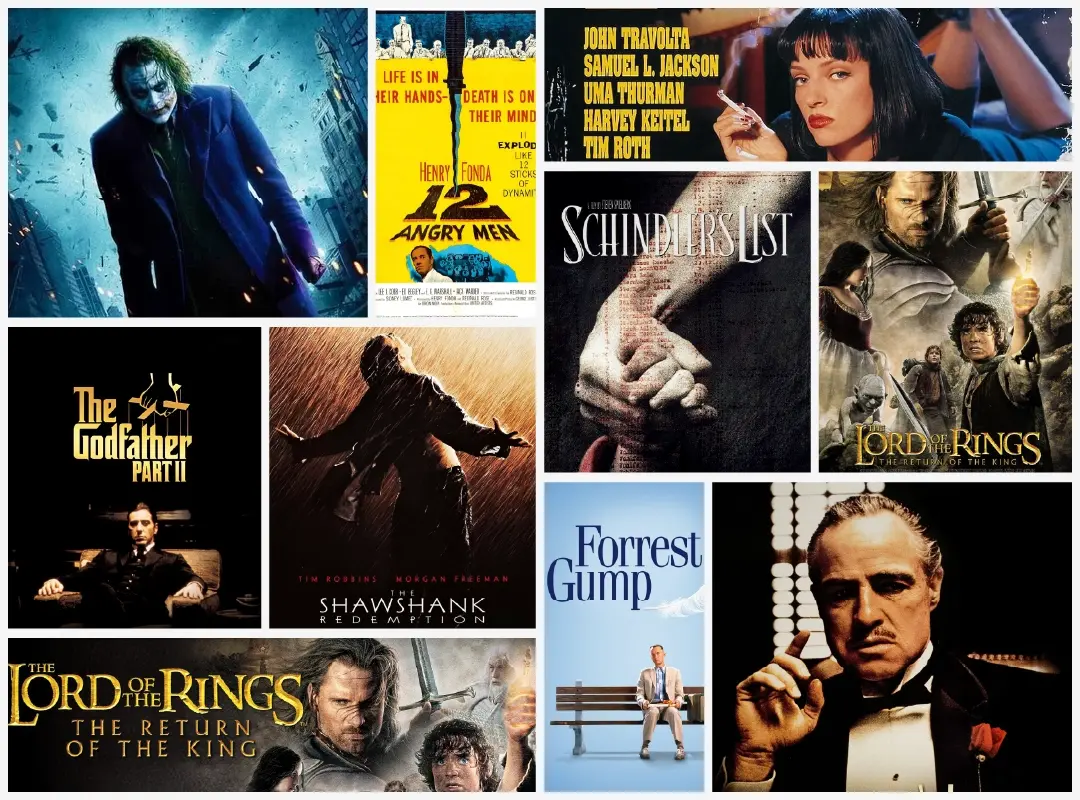

Why This List Exists (and Why It Matters)
Cinema has never been more accessible—or more overwhelming. Streaming has opened the vaults, social media has turned opinions into currency, and global film culture now moves faster than it ever has. With so much choice, the question isn’t “What’s good?” It’s “What matters?”
This list is designed to answer exactly that.
Not a nostalgia ranking. Not a “for the fans” countdown. Not a list built on vibes, studio loyalty, or algorithmic popularity.
This is a modern canon: a curated set of films that defined the language, structure, possibility, and emotional range of cinema. Films that changed how stories are told. Films that continue to reverberate today. Films that represent the foundation every viewer should stand on before diving deeper into world cinema, genre cinema, or contemporary cinema.
Think of this not as a list, but as a roadmap—100 films that give you the historical, cultural, and cinematic literacy to understand where movies came from, and where they’re heading next.
What “Must-Watch” Means in 2025
To build a list worthy of the word “essential,” every film here meets four strict criteria:
1. Critical Endurance
A film must demonstrate lasting acclaim—across decades, not months. It qualifies by either:
- ≥85% Rotten Tomatoes Critics score, or
- Presence in 3+ major canonical lists (Sight & Sound, AFI, BFI, Criterion, Cahiers du Cinéma, UNESCO Memory of the World)
A film that survives generational taste wars earns its place here.
2. Innovation
A must-watch film must have changed something:
- How stories are structured
- How genres operate
- How cameras move
- How sound is used
- How characters are written
- How audiences think about cinema
Innovation isn’t a bonus—it’s the bar.
3. Cultural Impact
Cinema doesn’t exist in a vacuum. Every film in this list influenced something bigger than itself:
- political discourse
- social movements
- filmmaking norms
- global box-office patterns
- fan culture
- genre evolution
If a film didn’t move the culture, it didn’t cut.
4. Global Representation
Cinema is global—and so is this list’s perspective. While English-language filmmaking forms much of cinema’s industrial backbone, this list integrates essential works from Japan, Korea, India, Italy, France, Brazil, and Mexico. These aren’t tokens—they are films whose influence became part of cinema’s shared vocabulary.
This is a broad foundational canon, not a proportional survey of world cinema. A dedicated global-cinema edition will expand the lens further. Here, the focus is simple: Films—regardless of origin—that shaped the way movies are made and watched.
How We Got to These 100 Films
To understand why these films matter, you need the landscape they shaped:
Practical → CGI → Hybrid Craft
Cinema moved from physical effects to digital worlds—and now to a sophisticated blend of both. From Star Wars and Terminator 2 to Avatar and Dune, technology became language.
The Rise of Independent Cinema
The ‘90s and 2000s democratized film vocabulary: Tarantino, Linklater, Jarmusch, the Coens, Darren Aronofsky, and Wong Kar-wai. Small budgets, big influence.
Globalization of Film Culture
Festivals, streaming, and online communities collapsed borders. Korean thrillers, Japanese animation, Indian dramas, French surrealism—all now shape the global conversation.
Changing Audience Expectations
Modern audiences have higher visual literacy, shorter patience for exposition, and a greater appetite for complexity. Cinema evolved to meet them.
The films on this list reflect these shifts.
What Makes a Film Canon-Worthy?
A film doesn’t become essential by accident. It earns the status through:
- Shaping a genre (The Dark Knight, Alien)
- Reinventing narrative structure (Pulp Fiction, Memento)
- Defining an era (Titanic, Forrest Gump)
- Transforming visual language (Blade Runner, 2001)
- Expanding cultural imagination (Spirited Away, City of God)
- Influencing future filmmakers (Seven Samurai, Bicycle Thieves)
- Achieving cross-generational relevance (Shawshank, Casablanca)
Canon-worthiness is not popularity— it’s impact + innovation + longevity.
Key Takeaways
- Cinema’s canon isn’t fixed—it evolves with audiences, technology, and culture.
- “Greatness” is subjective, but historical relevance is measurable.
- This list is a foundation, not a finish line—designed to help viewers understand cinema’s evolution.
- A fuller, more globally proportional canon is coming—but this list honors the films that built the cinematic vocabulary we use today.
- Preservation matters: thousands of films are lost every decade. Lists like this keep the conversation alive.
1. The Shawshank Redemption (1994)
https://www.youtube.com/watch?v=PLl99DlL6b4
Director: Frank Darabont
Cast: Tim Robbins, Morgan Freeman, Bob Gunton, William Sadler
Where To Watch (2025): US – Amazon Prime Video (included) & Apple TV (rent/purchase)
Why It’s A Must-Watch:
Few films articulate the architecture of hope as powerfully as The Shawshank Redemption. What began as a moderate box-office performer evolved into the definitive modern prison drama—a quiet yet monumental film beloved across generations.
Critical Endurance:
With a 91% critics' score on Rotten Tomatoes and recurring appearances in major canonical lists (AFI, BFI, IMDb Top 250), this film’s reputation has grown with time rather than faded.
The ScreenDollars Take:
What makes Shawshank timeless isn’t the prison break—it’s perspective. Darabont reframes incarceration, endurance, and redemption with emotional clarity. Robbins and Freeman don’t just act—they animate philosophies of hope and survival. Newman’s score and the slow-burn narrative establish a cinematic language of quietly epic storytelling.
Innovation:
- Defined the “soft epic” form—emotionally expansive without spectacle.
- Introduced first-person narration as soul-centre, not gimmick.
- Became a blueprint for literary adaptation that honors intimacy and scope equally.
Cultural Impact:
It ranked #1 on IMDb for almost two decades, not due to hype cycles, but because each new generation rediscovering it found the same emotional resonance. It’s referenced in debates about justice, masculinity, institutional decay, and narrative hope.
If You’re Watching For The First Time:
Notice how time is used—not as chronology, but as erosion, repair, and liberation.
2. The Godfather (1972)
https://www.youtube.com/watch?v=UaVTIH8mujA
Director: Francis Ford Coppola
Cast: Marlon Brando, Al Pacino, James Caan, Diane Keaton, Robert Duvall
Where To Watch (2025): US – Paramount+ & Amazon-Paramount Channel
Why It’s A Must-Watch:
Few films changed both culture and craft in the same cut. The Godfather didn’t just tell a mafia story—it reframed how filmmakers create myth in intimate, brutal detail, building a new grammar of cinematic power.
Critical Endurance:
Recognized in nearly every “greatest films” list (Sight & Sound, AFI, BFI) and consistently ranked among the top films ever. Its critical and scholarly longevity is unquestioned.
The ScreenDollars Take:
Coppola builds an empire of silence and ash in three acts—where Brando’s Vito is a god in trousers, and Pacino’s Michael becomes a nightmare in a navy suit. This film is the reference point for loyalty, betrayal, family, and power—crafted with operatic stillness and grind-house truth.
Innovation:
- Popularised naturalistic performance in crime drama.
- Merged large-scale epic with small-scale intimacy (weddings/baptisms beside assassinations).
- Architected the “sequel trilogy” mindset in prestige cinema (The Godfather Part II, III).
Cultural Impact:
It recast the mafia myth for global audiences, influenced Hollywood’s gangster genre for decades, and redefined “prestige” in studio filmmaking. Millions of references, homages, parodies, and imitations have followed.
If You’re Watching For The First Time:
Watch the montage of Michael’s transformation during the baptism scene. The cross-cutting isn’t just editing—it’s the architecture of myth and betrayal in one sequence.
3. The Dark Knight (2008)
https://www.youtube.com/watch?v=_PZpmTj1Q8Q
Director: Christopher Nolan
Cast: Christian Bale, Heath Ledger, Aaron Eckhart, Michael Caine
Where To Watch (2025): US – Max (HBO) / Hulu (via HBO add-on) / Amazon Prime Video (rent/buy)
Why It’s A Must-Watch:
The Dark Knight raised the superhero genre to cinema’s main stage—not just a blockbuster spectacle but a philosophical battleground. Its tone, stakes, and cosmic sense of chaos changed how we expect “comic book films” to behave.
Critical Endurance:
Boasting a 94% Rotten Tomatoes score and selection for the U.S. National Film Registry, Nolan’s film continues to dominate “best of” lists.
The ScreenDollars Take:
Ledger’s Joker isn’t a villain—he’s an eruption of ideological entropy. Bale’s Batman becomes a hinge between law and myth. Nolan channels blockbuster muscle but sculpts it with Greek-tragedy scale; this is a superhero film that looks inward and outward at the same time.
Innovation:
- First major superhero film to gross over $1 billion worldwide.
- Elevated IMAX-driven large-format shooting in mainstream cinema.
- Introduced moral ambiguity into big-budget genre storytelling in a way that echoed across studios.
Cultural Impact:
From political metaphors on surveillance to Batman’s iconography in popular culture, The Dark Knight disrupted both box-office paradigms and genre expectations. Its influence is visible in the industry’s “grit turn” and countless post-2008 blockbusters.
If You’re Watching For The First Time:
Pay special attention to the scene transitions—Gotham becomes the character, not the backdrop.
4. The Godfather: Part II (1974)
https://www.youtube.com/watch?v=5ydMhRwCqHw
Director: Francis Ford Coppola
Cast: Al Pacino, Robert De Niro, Robert Duvall, Diane Keaton
Where To Watch (2025): Amazon Prime Video (US)
Why It’s A Must-Watch:
Rarely does a sequel deepen its predecessor’s legacy—Part II does both sequel and prequel in one breath. It expands the Corleone saga into myth while intensifying its personal tragedy.
Critical Endurance:
Widely considered one of the greatest films ever made—feature-length dual narrative, spotless accolades, inclusion in global best-film lists.
The ScreenDollars Take:
Coppola edits time like a sculptor—each scene between Vito’s rise and Michael’s fall drills home the family’s cost. De Niro’s quiet ambition juxtaposed with Pacino’s cold expansion reads like two sides of the same coin. This film rewrote prestige cinema’s rule book for what a gangster epic could be.
Innovation:
- Merged prequel and sequel storytelling in one structure.
- Shifted crime epic from spectacle to symphony—layers of character, politics, and quiet violence.
- Elevated ensemble storytelling into serialized film-craft (what later TV shows adopted).
Cultural Impact:
It reshaped the mafia genre, influenced decades of gangster narratives (film and TV), and became a benchmark for “prestige movies” in Hollywood and beyond.
If You’re Watching For The First Time:
Focus on the parallels between father and son—they’re not just characters, they’re generational theorems.
5. 12 Angry Men (1957)
https://www.youtube.com/watch?v=TEN-2uTi2c0
Director: Sidney Lumet
Cast: Henry Fonda, Lee J. Cobb, Martin Balsam, Jack Klugman
Where To Watch (2025): Paramount+ / Pluto TV (check region)
Why It’s A Must-Watch:
This single-room, 96-minute film does more with dialogue and tension than many blockbusters do with CGI. It became a template for how the filmmaking economy can amplify moral urgency.
Critical Endurance:
Frequently ranked in “greatest films” lists since its release, it studied justice, persuasion, and dissent long before “social thriller” became a term.
The ScreenDollars Take:
Lumet uses one jury room and twelve voices to map prejudice, integrity, and group dynamics. No car chases. No explosions. Just stakes, psychology, and one vote turning the system inside out.
Innovation:
- Popularized “closed-space storytelling” in modern cinema.
- Elevated ensemble casts in one location as a high-stakes format.
- Influenced television and film predictably—think Reservoir Dogs, Cube, and Glengarry Glen Ross.
Cultural Impact:
Its use in legal and leadership training—alongside psychology syllabi—makes it rare: a film used both for entertainment and as a case study in justice and dynamics.
If You’re Watching For The First Time:
Hear how the camera moves when consensus shifts—not just dialogue, but visual trust diagnostics.
6. Schindler’s List (1993)
https://www.youtube.com/watch?v=-fuKN-XDdo0
Director: Steven Spielberg
Cast: Liam Neeson, Ralph Fiennes, Ben Kingsley
Where To Watch (2025): US: Amazon Prime Video (included) & rental via Apple TV.
Why It’s A Must-Watch:
Few films merge historical truth with cinematic rigor as powerfully as Schindler’s List. In one of the most harrowing yet human-centred WWII dramas, Spielberg transforms a studio film into a moral reckoning and emotional architecture.
Critical Endurance:
With a roughly 98% Rotten Tomatoes rating and placements in AFI’s, Time’s, and Sight & Sound’s greatest films lists, this film’s critical acclaim hasn’t faded—it has strengthened over the decades.
The ScreenDollars Take:
Spielberg uses black-and-white photography, desaturated colour bursts, and one man’s choices to turn historical atrocity into personal odyssey. Liam Neeson’s quiet power, Ralph Fiennes’ chilling villainy, and John Williams’ mournful score fuse into a cinematic elegy for humanity.
Innovation:
- Popularised feature-length use of black & white in mainstream cinema.
- Blended factual archive-aesthetic with dramatic arc in a major studio film.
- Elevated Holocaust storytelling in global consciousness and film syllabi.
Cultural Impact:
Schindler’s List not only brought layered Holocaust narratives into mainstream cinema but also shaped public memory, education curricula, and the way films address historical atrocity. It remains a foundational text in film and human-rights studies.
If You’re Watching For The First Time:
Pay attention to how Spielberg frames routine actions as incremental moral collapse and then as acts of courage—it’s in the repetition that the weight lodges.
7. The Lord Of The Rings: The Return Of The King (2003)
https://www.youtube.com/watch?v=zckJCxYxn1g
Director: Peter Jackson
Cast: Elijah Wood, Viggo Mortensen, Ian McKellen, Orlando Bloom
Where To Watch (2025): US: Amazon Prime Video (rent/buy) / Max platform rental option.
Why It’s A Must-Watch:
This finale to the trilogy is more than a blockbuster—it redefined what large-scale cinema could be, emotionally and technically. It delivers epic battles, intimate journeys, and a story about fate, friendship, and the weight of legacy.
Critical Endurance:
With a 94% Tomatometer score, 11 Oscars, and frequent placement in ‘greatest films’ surveys, this film’s prestige hasn’t diminished.
The ScreenDollars Take:
Jackson draws the sweep of myth across human stakes: Frodo and Sam’s internal pilgrimage parallels Aragorn’s external rise. The film balances spectacle with sentiment, proving mega-budget cinema can still move the soul.
Innovation:
- Masterclass in large-scale visual-effects integration with real locations and practical sets.
- Standardised the “epic trilogy” model in modern cinema.
- Showed that audience appetite for three-hour+ films still existed.
Cultural Impact:
It changed how the industry approaches franchise finales—character arc, mythic scale, visual ambition. From Dune to Game of Thrones, the template of “final chapter” stakes owes much to this film.
If You’re Watching For The First Time:
Notice how the film alternates between the grand and the intimate. That rhythm gives it emotional propulsion beyond pure spectacle.
8. Pulp Fiction (1994)
https://www.youtube.com/watch?v=s7EdQ4FqbhY
Director: Quentin Tarantino
Cast: John Travolta, Samuel L. Jackson, Uma Thurman, Bruce Willis
Where To Watch (2025): US: Amazon Prime Video streaming & Apple TV downloads/rentals confirmed.
Why It’s A Must-Watch:
Pulp Fiction didn’t just rejuvenate gangster cinema—it rewrote narrative grammar, snapped filmmaking conventions like a finger, and layered pop culture with new icons. It’s cinema in swagger mode.
Critical Endurance:
With an approximate 94% Tomatometer rating and its presence in multiple ‘best of’ lists, Tarantino’s game-changer remains as energised now as the moment of its release.
The ScreenDollars Take:
Tarantino collapsed time, blended genres, and remixed structure. Travolta’s comeback, Jackson’s monologue-blaze, Thurman’s dance-floor tension—Pulp Fiction became the sonic boom of 90s cinema, and the echo still resonates.
Innovation:
- Normalised nonlinear structure in mainstream cinema for a generation.
- Demonstrated how genre-pastiche, dialogue, and cool culture could fuse into one coherent cinematic voice.
- Revitalised actors’ careers and gave rise to auteur-driven indie voices in studios.
Cultural Impact:
From Jack Rabbit Slim’s dance to “Royale with Cheese,” the film’s lines became part of the global pop lexicon. Its influence is visible in everything from Tarantino imitators to editing styles and TV story-chopping.
If You’re Watching For The First Time:
Watch how the film’s tone shifts beneath the surface—from playful to violent to reflective—in the same sequence. That tonal agility is the film’s power.
9. The Good, The Bad And The Ugly (1966)
https://www.youtube.com/watch?v=IFNUGzCOQoI
Director: Sergio Leone
Cast: Clint Eastwood, Eli Wallach, Lee Van Cleef
Where To Watch (2025): US: Streaming on MGM+ (including via Amazon Channels). Rent/buy on Amazon, Apple TV, Google Play.
Why It’s A Must-Watch:
Few films reshape an entire genre with such force. The Good, the Bad and the Ugly takes the Western’s familiar myth and rebuilds it into something harsher, funnier, and more operatic. Leone blends dust, greed, violence, and myth-making into a cinematic grammar that feels elemental.
Critical Endurance:
Long regarded as one of the greatest Westerns ever made, it frequently appears on AFI and Sight & Sound lists and remains a foundational title in film schools for its editing, tension, and visual storytelling.
The ScreenDollars Take:
Leone turns every face, every squint, every silence into drama. His wide landscapes and extreme close-ups form a rhythm that changed action cinema forever. Eastwood’s Blondie, Van Cleef’s Angel Eyes, and Wallach’s unforgettable Tuco aren’t just characters—they’re archetypes that defined the modern antihero. And Morricone’s score? It’s not accompaniment; it’s destiny.
Innovation:
- Elevated the “spaghetti Western” from pulp to prestige.
- Used music as narrative architecture—Morricone composed themes before filming.
- Perfected the wide-shot-to-close-up tension technique still used today.
Cultural Impact:
Its title entered global vocabulary, its imagery became meme language before memes existed, and its showdown structure is quoted in everything from Tarantino films to anime. The film’s style, sound, and pacing remain touchstones in genre storytelling.
If You’re Watching For The First Time:
Watch how Leone stretches a scene—not to stall, but to sharpen tension. The final cemetery standoff is a masterclass in timing, framing, and silence.
10. Forrest Gump (1994)
https://www.youtube.com/watch?v=bLvqoHBptjg
Director: Robert Zemeckis
Cast: Tom Hanks, Robin Wright, Gary Sinise, Sally Field
Where To Watch (2025): US: Streaming on Paramount+. Rent/buy on Amazon, Apple TV, Google Play.
Why It’s A Must-Watch:
Forrest Gump blends character drama, historical tapestry, and technical ingenuity into one of Hollywood’s most emotionally resonant mainstream films. Through Forrest’s perspective, the movie reframes American history as a story of ordinary perseverance rather than grand heroism.
Critical Endurance:
With a 71% critics’ score but near-universal audience acclaim, six Academy Awards (including Best Picture and Best Actor), and constant ranking in major audience polls, its longevity is driven by cultural impact rather than pure critical consensus.
The ScreenDollars Take:
Zemeckis delivers a rare hybrid: a technical showcase with a deeply human soul. ILM’s integration of Forrest into archival footage became a watershed moment for digital compositing, and Hanks’ performance radiates sincerity without sentimentality. The film’s sweep creates an emotional chronicle of late-20th-century America.
Innovation:
- Set a new standard for digital compositing and historical integration in narrative film.
- Used pop culture, politics, and personal narrative as unified storytelling tools.
- Reimagined the biographical epic as an intimate, character-driven odyssey.
- Demonstrated the commercial viability of effects-led drama outside sci-fi/fantasy.
Cultural Impact:
“Life is like a box of chocolates” became a global catchphrase, and Forrest Gump entered the American lexicon as shorthand for earnestness and resilience. The film remains a touchpoint in discussions about nostalgia, national identity, and Hollywood’s portrayal of history.
If You’re Watching For The First Time:
Notice how the film uses music, costume, and archival texture to mark time as emotional evolution—not just chronology.
11. Fight Club (1999)
https://www.youtube.com/watch?v=BdJKm16Co6M
Director: David Fincher
Cast: Edward Norton, Brad Pitt, Helena Bonham Carter
Where To Watch (2025): US: Rent/buy on Amazon, Apple TV, Google Play, YouTube Movies, Vudu.
Why It’s A Must-Watch:
Fight Club is one of the sharpest examinations of consumerism, identity anxiety, and modern masculinity ever filmed. Its critique of corporate culture and fractured identity has only intensified in relevance over the last 25 years.
Critical Endurance:
Originally divisive, the film now holds a strong 79% critics’ score and is widely taught in film and media courses. Its journey from cult favorite to canonized modern classic is one of the most notable critical reevaluations of the late ’90s.
The ScreenDollars Take:
Fincher turns psychological unraveling into visual architecture — grime, shadow, flicker, and distortion become the narrator’s internal monologue. Norton and Pitt’s duality operates as cultural commentary as much as performance. The film’s bold use of unreliable narration set a new bar for psychological storytelling.
Innovation:
- Advanced digital color grading, helping shape the look of late-’90s neo-noir cinema.
- Popularized mainstream use of the unreliable narrator twist in psychological dramas.
- Integrated fourth-wall ruptures into adult genre storytelling.
- Created an enduring visual vocabulary for corporate dystopia.
Cultural Impact:
Despite modest box-office returns at release, Fight Club evolved into a generational reference point. Its imagery, quotes, and twists permeate modern pop culture, inspiring countless essays, reinterpretations, and debates about rebellion, identity, and ideology.
If You’re Watching For The First Time:
Watch how Fincher manipulates space and sound — the film plants clues everywhere, and your second viewing will feel like an entirely different movie.
12. Inception (2010)
https://www.youtube.com/watch?v=Qwe6qXFTdgc
Director: Christopher Nolan
Cast: Leonardo DiCaprio, Joseph Gordon-Levitt, Marion Cotillard, Elliot Page, Tom Hardy, Ken Watanabe
Where To Watch (2025): US: Streaming on Max. Rent/buy on Amazon, Apple TV, Google Play.
Why It’s A Must-Watch:
Inception blends blockbuster spectacle with cerebral storytelling, delivering a heist film staged within layers of consciousness. Its fusion of emotional stakes and structural complexity redefined how mainstream audiences engage with high-concept cinema.
Critical Endurance:
With an 87% Rotten Tomatoes score, eight Oscar nominations, and four wins, it remains one of Nolan’s most acclaimed works. Regularly cited in modern best-of-the-decade lists, it stands as a benchmark for ambitious studio filmmaking.
The ScreenDollars Take:
Nolan constructs action as architecture — dreams become cities, physics becomes choreography, and grief becomes plot propulsion. DiCaprio’s Cobb grounds the puzzle in human longing, while the film’s layered editing and practical effects give weight to its abstract ideas.
Innovation:
- Elevated the modern “intelligent blockbuster” model for wide audiences.
- Integrated practical zero-gravity stunts into complex narrative design.
- Popularized multi-level narrative action as mainstream spectacle.
- Reinforced the use of sound as a structural motif.
Cultural Impact:
“Inception-level mind-bending” became a cultural phrase, and the spinning top entered global pop lexicon. The film influenced action editing, trailer sound design, nonlinear storytelling, and a wave of puzzle-box genre films in the 2010s.
If You’re Watching For The First Time:
Pay attention to how the film uses time dilation and cross-cutting — each dream layer has its own rhythm, and Nolan syncs them like movements in a single score.
14. The Matrix (1999)
https://www.youtube.com/watch?v=nUEQNVV3Gfs
Director: Lana Wachowski & Lilly Wachowski
Cast: Keanu Reeves, Laurence Fishburne, Carrie-Anne Moss, Hugo Weaving
Where To Watch (2025): US: Streaming on Max and Netflix. Rent/buy on Amazon, Apple TV, Google Play.
Why It’s A Must-Watch:
The Matrix fused philosophy, cyberpunk, and action into a genre-shifting blockbuster that redefined what sci-fi could be. Its blend of metaphysics and spectacle reshaped audience expectations for reality-bending cinema.
Critical Endurance:
Sitting at an 83% Rotten Tomatoes score, with four Academy Awards and frequent placement in “most influential films” lists, The Matrix remains a cornerstone of modern science fiction and visual effects history.
The ScreenDollars Take:
The Wachowskis crafted a film where form and theme are inseparable — bullet time isn’t a gimmick; it’s the visual manifestation of awakening. Reeves’ stillness, Fishburne’s gravitas, and Weaving’s cold menace merge with radical editing and worldbuilding to create a film that feels engineered, not merely directed.
Innovation:
- Introduced “bullet time,” revolutionizing action cinematography.
- Merged Hong Kong wire-fu with Western sci-fi aesthetics.
- Popularized digital color grading as a narrative tool.
- Set the blueprint for early-2000s action, from choreography to camera movement.
Cultural Impact:
Few films changed pop culture vocabulary as dramatically — “red pill,” “the Matrix,” slow-motion dodges, cyberpunk leather aesthetics, and philosophical action. The Matrix shaped everything from superhero films to internet-age identity discourse.
If You’re Watching For The First Time:
Watch how the film shifts its visual language between the Matrix and the real world — color, movement, and sound design all signal which reality you’re in.
15. Goodfellas (1990)
https://www.youtube.com/watch?v=y73Fa_bC6yo
Director: Martin Scorsese
Cast: Ray Liotta, Robert De Niro, Joe Pesci, Lorraine Bracco, Paul Sorvino
Where To Watch (2025): US: Streaming on Max. Rent/buy on Amazon, Apple TV, Google Play. Canada: Streaming on Crave. Rent/buy on Apple TV, Amazon, Google Play, Cineplex.
Why It’s A Must-Watch:
Goodfellas isn’t just a gangster film — it’s Scorsese’s kinetic portrait of desire, corruption, and the intoxicating pull of criminal life. Its fusion of documentary realism and operatic style gave the mob genre new psychological depth.
Critical Endurance:
With a 96% Rotten Tomatoes score, six Oscar nominations, and constant placement in best-of lists, Goodfellas remains Scorsese’s most widely studied work. Pesci’s performance earned him an Academy Award and became a gold standard for volatile screen characters.
The ScreenDollars Take:
Scorsese directs like a conductor — tracking shots, freeze-frames, needle-drops, and voiceover operate as rhythm rather than ornament. Liotta’s Henry Hill narrates not just events but seduction, making the audience complicit in the film’s moral descent.
Innovation:
- Set the modern template for crime-film pacing and energy.
- Pioneered the fusion of documentary-style narration with cinematic spectacle.
- Popularized long-take character intros.
- Elevated needle-drop scoring as a narrative engine rather than decoration.
Cultural Impact:
Goodfellas reshaped how audiences perceive mob stories and influenced everything from The Sopranos to modern prestige crime dramas.
If You’re Watching For The First Time:
Watch the shift in tone after the Lufthansa heist — Scorsese uses pacing and paranoia to make you feel Henry’s unraveling in real time.
16. One Flew Over The Cuckoo’s Nest (1975)
https://www.youtube.com/watch?v=F4da9uRIg8c
Director: Miloš Forman
Cast: Jack Nicholson, Louise Fletcher, Danny DeVito, William Redfield
Where To Watch (2025): US: Streaming on Max. Rent/buy on Amazon, Apple TV, Google Play. Canada: Streaming on Crave. Rent/buy on Apple TV, Amazon, Google Play, Cineplex.
Why It’s A Must-Watch:
One Flew Over the Cuckoo’s Nest is a landmark character drama that confronts institutional power, personal rebellion, and the blurry line between sanity and control. It remains one of the most emotionally charged and thematically resonant films of the American New Wave.
Critical Endurance:
With a 94% Rotten Tomatoes score and one of only three films in history to win the “Big Five” Oscars (Picture, Director, Actor, Actress, Screenplay), its critical legacy is nearly unparalleled. It endures as a defining work of 1970s American cinema.
The ScreenDollars Take:
Forman treats the psychiatric ward not as a backdrop but as a pressure system — every gesture, silence, and ritual reveals how institutions enforce obedience. Nicholson’s McMurphy radiates chaotic energy, while Fletcher’s Nurse Ratched reshapes the idea of the “quiet villain,” building menace through control rather than spectacle.
Innovation:
- Elevated ensemble realism through semi-improvised blocking and lived-in performances.
- Used institutional space as thematic architecture rather than a simple setting.
- Helped define the 1970s anti-authoritarian character study.
- Demonstrated how psychological tension can drive narrative without genre framing.
Cultural Impact:
Nurse Ratched became an archetype for bureaucratic cruelty, influencing decades of storytelling. The film fortified the cultural conversation around mental health, institutionalization, and individual autonomy — and remains a staple of film education, performance studies, and American cultural analysis.
If You’re Watching For The First Time:
Watch how Forman frames group scenes — power dynamics shift with every camera position, revealing who controls the room and who loses themselves to the system.
17. Se7en (1995)
https://www.youtube.com/watch?v=KPOuJGkpblk
Director: David Fincher
Cast: Brad Pitt, Morgan Freeman, Gwyneth Paltrow, Kevin Spacey
Where To Watch (2025): US: Streaming on Netflix. Rent/buy on Amazon, Apple TV, Google Play. anada: Streaming on Crave. Rent/buy on Apple TV, Amazon, Google Play, Cineplex.
Why It’s A Must-Watch:
Se7en is one of the most unsettling and meticulously crafted psychological thrillers ever made — a descent into moral rot that still feels disturbingly contemporary. Fincher turns a procedural into an existential nightmare about apathy, obsession, and human decay.
Critical Endurance:
With an 83% Rotten Tomatoes score and frequent placement in best-thriller rankings, the film’s reputation has surged over time. Its ending became one of the most discussed and debated conclusions of the 1990s and remains a benchmark for genre tension.
The ScreenDollars Take:
Fincher uses rain, shadow, and claustrophobic framing to create a city that feels diseased — a setting as much a character as the detectives themselves. Freeman’s weary precision and Pitt’s volatility form a perfect moral contrast, while the film’s slow-burn pacing transforms each crime scene into a study of societal collapse.
Innovation:
- Elevated the modern serial-killer thriller with thematic weight and bleak realism.
- Used production design and lighting to build a psychological atmosphere.
- Popularized dread-driven suspense structure in mainstream thrillers.
- Demonstrated how nihilism can coexist with mainstream storytelling.
Cultural Impact:
The film reshaped expectations for detective thrillers and influenced works like True Detective, Zodiac, and countless genre films that pursued moral despair with cinematic precision.
If You’re Watching For The First Time:
Pay attention to how Fincher controls information — every withheld detail amplifies dread, turning the investigation into a psychological trap for both detectives and viewers.
18. The Silence Of The Lambs (1991)
https://www.youtube.com/watch?v=6iB21hsprAQ
Director: Jonathan Demme
Cast: Jodie Foster, Anthony Hopkins, Scott Glenn, Ted Levine
Where To Watch (2025): US: Streaming on Max. Rent/buy on Amazon, Apple TV, Google Play. Canada: Streaming on Crave. Rent/buy on Apple TV, Amazon, Google Play, Cineplex.
Why It’s A Must-Watch:
The Silence of the Lambs blends psychological tension with procedural precision, crafting a thriller that’s terrifying not for its violence but for its clarity. Demme builds horror through character study, not spectacle.
Critical Endurance:
With a 95% Rotten Tomatoes score and all five major Oscars — Picture, Director, Actor, Actress, Screenplay — it stands as one of the most critically decorated films ever made. Its influence on the thriller genre has only intensified.
The ScreenDollars Take:
Demme’s direct-to-camera close-ups force the viewer into Clarice’s perspective, turning every interrogation into a psychological duel. Foster and Hopkins deliver performances that function as thematic opposites: vulnerability vs. control, empathy vs. manipulation.
Innovation:
- Elevated the psychological thriller into prestige awards territory.
- Used subjective framing to merge the audience's POV with the protagonist's psychology.
- Blended grounded FBI procedural realism with atmospheric horror.
- Redefined the modern cinematic villain through controlled minimalism.
Cultural Impact:
Lecter became an enduring archetype for intelligent, eerily calm antagonists across film and television. Clarice Starling inspired new standards for female-led thrillers, and the film’s techniques influenced everything from CSI to True Detective.
If You’re Watching For The First Time:
Pay attention to how silence functions — Demme lets quiet spaces do the emotional heavy lifting, revealing power shifts without a single line spoken.
19. City Of God (2002)
https://www.youtube.com/watch?v=QY4w9-jcIfw
Director: Fernando Meirelles (co-directed by Kátia Lund)
Cast: Alexandre Rodrigues, Leandro Firmino, Phellipe Haagensen, Douglas Silva
Where To Watch (2025): US: Streaming on Max. Rent/buy on Amazon, Apple TV, Google Play. Canada: Streaming on Netflix. Rent/buy on Amazon, Apple TV, Google Play, Cineplex.
Why It’s A Must-Watch:
City of God is one of the most kinetically crafted crime dramas ever made — a film that fuses documentary immediacy with precise cinematic control. Its portrayal of systemic violence is not a stylized spectacle but the result of meticulous structure, staging, and editorial design. Few films balance narrative sweep and film-craft innovation at this level.
Critical Endurance:
With a 91% Rotten Tomatoes score and four Academy Award nominations (Director, Screenplay, Cinematography, Editing), the film stands as a modern critical landmark. It appears regularly in Sight & Sound and BBC Culture’s “Best Films of the 21st Century” lists, underscoring its long-term scholarly and critical prominence.
The ScreenDollars Take:
Meirelles and Lund construct a multi-timeline narrative that never loses clarity, despite its scale. Handheld camerawork, natural-light realism, and sharp cross-cutting turn Rio’s Cidade de Deus into a fully realized cinematic ecosystem. Performances from largely non-professional actors enhance its authenticity, while the film’s pacing functions like a controlled detonation — accelerating without sacrificing coherence.
Innovation:
- Elevated “favela realism” into a globally recognized film grammar through a hybrid docu-fiction style.
- Used accelerated montage and split-timeline editing to maintain clarity across dozens of characters.
- Integrated natural lighting and handheld movement into a unified visual system.
- Demonstrated how non-professional casting can support narrative verisimilitude at the feature scale.
Cultural Impact:
City of God introduced a global audience to Brazilian contemporary cinema and reshaped the international crime genre. Its visual and editorial techniques influenced filmmakers tackling socio-economic violence and urban storytelling, and it continues to appear in academic studies across sociology, film editing, and cinematography.
If You’re Watching For The First Time:
Pay attention to the editing rhythm — note how the film organizes chaos into readable visual beats, using transitions and time jumps to maintain narrative control without diminishing intensity.
20. The Lord Of The Rings: The Fellowship Of The Ring (2001)
https://www.youtube.com/watch?v=_nZdmwHrcnw
Director: Peter Jackson
Cast: Elijah Wood, Ian McKellen, Viggo Mortensen, Sean Astin
Where To Watch (2025): US: Streaming on Max. Rent/buy on Amazon, Apple TV, Google Play. Canada: Streaming on Crave. Rent/buy on Apple TV, Amazon, Google Play, Cineplex.
Why It’s A Must-Watch:
The Fellowship of the Ring established one of cinema’s most ambitious trilogies by balancing mythic world-building with character-driven storytelling. Jackson unites large-format spectacle with grounded emotional stakes, creating a template for modern fantasy filmmaking that is both technically rigorous and narratively intimate.
Critical Endurance:
With a 91% Rotten Tomatoes score, four Oscars, and frequent placement in AFI and global “greatest films” lists, Fellowship is widely regarded as one of the strongest franchise openers in film history.
The ScreenDollars Take:
Jackson’s fusion of practical environments, miniatures, prosthetics, and early digital effects created a cohesive visual world that still feels tactile. The film’s pacing demonstrates meticulous structural control. McKellen’s Gandalf anchors the moral universe, while the score constructs a musical architecture that carries the trilogy.
Innovation:
- Standardized large-scale world-building across practical and digital effects.
- Advanced scale-manipulation techniques (forced perspective).
- Demonstrated viability of long-form, serialized epic storytelling in theatrical film.
- Integrated New Zealand landscapes into cinematic identity.
Cultural Impact:
Fellowship redefined how studios approach fantasy franchises and became a benchmark for epic storytelling. Its multi-pronged production pipeline became a model for blockbuster craft.
If You’re Watching For The First Time:
Watch how the film handles scale — from intimate character interactions to sweeping geographical transitions — using consistent visual logic.
21. The Lord Of The Rings: The Two Towers (2002)
https://www.youtube.com/watch?v=WGAuIniKeEU
Director: Peter Jackson
Cast: Elijah Wood, Ian McKellen, Viggo Mortensen, Andy Serkis
Where To Watch (2025): US: Streaming on Max. Rent/buy on Amazon, Apple TV, Google Play. Canada: Streaming on Crave. Rent/buy on Apple TV, Amazon, Google Play, Cineplex.
Why It’s A Must-Watch:
The Two Towers expands the trilogy’s scale without losing narrative clarity, proving large-format fantasy can balance parallel storylines, emotional intimacy, and technically groundbreaking action. Jackson transforms what could have been a structural bridge film into one of the most accomplished middle chapters in cinematic history.
Critical Endurance:
Holding a 95% Rotten Tomatoes score and widely recognized as one of the greatest sequels ever made, the film earned six Oscar nominations and continues to rank highly in global “best films of the 21st century” surveys. Its long-term critical standing is anchored in both its technical achievements and editorial precision.
The ScreenDollars Take:
Jackson orchestrates three major narrative threads with disciplined pacing, while Weta Digital’s work on Gollum sets a new industry bar for performance capture. The Battle of Helm’s Deep is staged with tactical clarity—rain, lighting, geography, and crowd composition functioning as a unified visual system. The film demonstrates how serialized epics can escalate stakes without losing character focus.
Innovation:
• Advanced performance-capture integration through Gollum, establishing a new standard for digital acting. • Set a benchmark for large-scale night battles through layered practical and digital effects. • Demonstrated successful three-thread narrative editing across multiple character arcs. • Elevated fantasy action into prestige territory through technical and dramatic coherence.
Cultural Impact:
Helm’s Deep became an archetype for cinematic large-scale warfare, influencing everything from Game of Thrones to contemporary blockbuster battle design. Gollum remains one of the most studied digital characters in film schools and VFX departments worldwide. The film cemented The Lord of the Rings as a gold-standard franchise model for the industry.
If You're Watching for the First Time:
Watch how Jackson manages spatial geography in Helm’s Deep—the placement of light, rain, and motion creates readability in chaos, a technique still emulated in modern epic action filmmaking.
22. Interstellar (2014)
https://www.youtube.com/watch?v=2LqzF5WauAw
Director: Christopher Nolan
Cast: Matthew McConaughey, Anne Hathaway, Jessica Chastain, Michael Caine
Where To Watch (2025): US: Streaming on Paramount+ with Showtime. Rent/buy on Amazon, Apple TV, Google Play. Canada: Streaming on Netflix. Rent/buy on Apple TV, Amazon, Google Play, Cineplex.
Why It’s A Must-Watch:
Interstellar is Nolan’s most ambitious fusion of theoretical physics and human drama — a film that uses large-format IMAX imagery and practical spacecraft builds to ground cosmic scale in emotional precision. It stands as one of the rare sci-fi epics that marries scientific rigor, high-concept storytelling, and character-driven stakes.
Critical Endurance:
With a 73% Rotten Tomatoes score and consistent placement in “best science fiction films of the 21st century” lists, its reputation has grown significantly post-release. Hans Zimmer’s organ-driven score is widely recognized as one of the defining soundtracks of modern cinema.
The ScreenDollars Take:
Nolan constructs a narrative where astrophysics becomes emotional architecture — relativity, gravity, and time dilation expressed through editing, sound design, and scale. McConaughey’s performance grounds the film’s philosophical density, while Hoyte van Hoytema’s IMAX cinematography turns space into a tactile environment rather than an abstraction.
Innovation:
• Integrated real scientific modeling (via physicist Kip Thorne) into CG simulations of black holes. • Advanced IMAX narrative filmmaking through handheld and cockpit-mounted IMAX sequences. • Blended practical spacecraft sets with minimalistic CG for grounded realism. • Elevated sound design as a thematic force, using dynamic range to express narrative tension.
Cultural Impact:
Interstellar influenced a new wave of hard-science sci-fi and became a fixture in academic discussions on cinematic depictions of astrophysics. Its black-hole visualization (Gargantua) informed actual scientific modeling and popularized gravitational lensing for mainstream audiences.
If You're Watching for the First Time:
Pay attention to how Nolan uses sound — moments of overwhelming intensity contrasted with near silence, allowing the film’s emotional and scientific ideas to register through sonic rhythm.
23. Parasite (2019)
https://www.youtube.com/watch?v=PhPROyE0OaM
Director: Bong Joon-ho
Cast: Song Kang-ho, Lee Sun-kyun, Cho Yeo-jeong, Park So-dam
Where To Watch (2025): US: Streaming on Hulu. Rent/buy on Amazon, Apple TV, Google Play Canada: Streaming on Crave. Rent/buy on Apple TV, Amazon, Google Play, Cineplex.
Why It’s A Must-Watch:
Parasite is a surgical blend of genre, social commentary, and formal precision — a film that shifts rhythm, tone, and perspective without losing structural control. Bong Joon-ho constructs a narrative that is both tightly engineered and thematically expansive, demonstrating cinema’s capacity to merge entertainment with incisive critique.
Critical Endurance:
With a 99% Rotten Tomatoes score, the Palme d’Or, and four Academy Awards (including Best Picture — the first non-English-language film to win), Parasite has secured a historical position in world cinema. It appears across global best-of-the-decade and best-of-the-century lists, solidifying its long-term reputation.
The ScreenDollars Take:
Bong’s control of spatial storytelling — the vertical geography between the two families — becomes the film’s core narrative device. Production design, editing, and blocking reinforce class dynamics through visual architecture rather than exposition. Performances operate with tonal elasticity, enabling shifts from comedy to suspense to tragedy without disrupting cohesion.
Innovation:
• Used spatial design as a thematic narrative structure, influencing global production design discourse. • Blended tonal shifts across comedy, thriller, and drama with unprecedented precision. • Demonstrated how tightly storyboarded filmmaking can drive both character and theme. • Became a model for international films, breaking into mainstream Western awards circuits.
Cultural Impact:
Parasite redefined global award dynamics, opening pathways for non-English films in major U.S. studio conversations. It also influenced contemporary television and film regarding class allegory and domestic space as narrative territory. The film’s success accelerated North American distribution of Korean cinema and streaming platform investment in international content.
If You’re Watching for the First Time:
Study how Bong uses staircases, doorways, and elevation shifts in height to become the film’s visual shorthand for shifting power and social hierarchy.
24. Spirited Away (2001)
https://www.youtube.com/watch?v=fDUFP7EeXLE
Director: Hayao Miyazaki
Cast: Rumi Hiiragi, Miyu Irino, Mari Natsuki, Bunta Sugawara (Cast reflects original Japanese voice actors — industry standard for canonical listings.)
Where To Watch (2025): US: Streaming on Max (Studio Ghibli library). Rent/buy on Amazon, Apple TV, Google Play. Canada: Streaming on Netflix. Rent/buy on Amazon, Apple TV, Google Play, Cineplex.
Why It’s A Must-Watch:
Spirited Away exemplifies animation as cinematic art, not genre. Miyazaki creates a world that operates through visual logic — every environment, creature, and gesture advances character and emotion without relying on exposition. The film balances surrealist imagination with precise dramatic structure, making it a cornerstone of global animation.
Critical Endurance:
With a 96% Rotten Tomatoes score, an Academy Award for Best Animated Feature, and consistent placement in “greatest films of all time” surveys (including Sight & Sound and BBC Culture), Spirited Away remains a landmark of both animation and world cinema. Its critical standing has only intensified over two decades.
The ScreenDollars Take:
Miyazaki uses hand-drawn detail to create an ecosystem where atmosphere is narrative. Movement speed, environmental textures, and spatial transitions communicate inner life as effectively as dialogue. Joe Hisaishi’s score functions as emotional architecture — guiding tone, scale, and rhythm with quiet precision.
Innovation:
• Expanded global perception of animation as auteur-driven cinema rather than children’s entertainment. • Demonstrated the narrative power of hand-drawn environmental world-building. • Used micro-gestures and “ma” (intentional pauses) as emotional and rhythmic tools. • Popularized Japanese animation in Western markets, leading to expanded theatrical and home-video distribution.
Cultural Impact:
Spirited Away became a gateway to Studio Ghibli for international audiences, influencing filmmakers across animation and live-action. It accelerated Western theatrical releases of Japanese animated films and contributed to the evolving conversation about animation as a medium for complex storytelling. The protagonist, Chihiro, remains an archetype for non-traditional heroism.
If You’re Watching for the First Time:
Pay attention to transitions — especially how Miyazaki uses environmental shifts (wind, light, sound) to mark emotional beats without cutting away from the action.
25. The Pianist (2002)
https://www.youtube.com/watch?v=CerYooxlyoY
Director: Roman Polanski
Cast: Adrien Brody, Thomas Kretschmann, Frank Finlay, Maureen Lipman
Where To Watch (2025): US: Streaming on Max. Rent/buy on Amazon, Apple TV, Google Play. Canada: Streaming on Netflix. Rent/buy on Apple TV, Amazon, Google Play, Cineplex.
Why It’s A Must-Watch:
The Pianist is one of the most restrained yet devastating portrayals of wartime survival in modern cinema. Polanski’s direction emphasizes observational realism over sentimentality, allowing the narrative to unfold through controlled pacing, environmental detail, and Brody’s internalized performance. The result is a film that achieves emotional power through precision rather than spectacle.
Critical Endurance:
With a 95% Rotten Tomatoes score and three Academy Awards (Best Director, Best Actor, Best Adapted Screenplay), the film is widely considered a cornerstone of 21st-century historical drama. It appears consistently in “greatest war films” and “best biographical films” lists worldwide.
The ScreenDollars Take:
Polanski frames Warsaw as both a physical and psychological landscape, using long takes, muted color palettes, and architectural decay to externalize the protagonist’s isolation. Brody’s performance operates in near-silence for extended stretches, relying on micro-expressions and physical deterioration to carry emotional weight. The film’s spareness is not minimalism — it’s control.
Innovation:
• Demonstrated how restrained staging and minimal dialogue can sustain large-scale historical storytelling. • Used environmental sound and diegetic music to shape emotional rhythm. • Employed location-driven production design to recreate wartime destruction with forensic detail. • Elevated interior performance (gesture, silence, physicality) as the primary narrative engine.
Cultural Impact:
The Pianist became a global reference for biographical wartime storytelling grounded in realism rather than melodrama. Brody’s Oscar win — the youngest Best Actor in history — remains a landmark. The film is frequently studied for its approach to adaptation, performance discipline, and tonal restraint in depicting atrocity.
If You’re Watching for the First Time:
Watch how silence functions as narrative tension — the film often lets the absence of music and dialogue carry emotional stakes more forcefully than any dramatic monologue.
26. The Usual Suspects (1995)
https://www.youtube.com/watch?v=oiXdPolca5w
Director: Bryan Singer
Cast: Kevin Spacey, Gabriel Byrne, Benicio Del Toro, Stephen Baldwin
Where To Watch (2025): US: Streaming on Hoopla. Rent/buy on Amazon, Apple TV, Google Play. Canada: Streaming on Netflix. Rent/buy on Apple TV, Amazon, Google Play, Cineplex.
Why It’s A Must-Watch:
The Usual Suspects is a masterclass in controlled misdirection, using structure, framing, and character perspective to build one of the most influential narrative twists of modern cinema. Its emphasis on interrogation, unreliable narration, and editorial precision showcases how tension can be engineered through information design rather than action.
Critical Endurance:
With an 88% Rotten Tomatoes score and two Academy Awards (Supporting Actor, Original Screenplay), the film maintains a strong standing in “best crime thrillers” rankings. Its screenplay is frequently cited in screenwriting courses for its handling of perspective, pacing, and reversal.
The ScreenDollars Take:
The film’s core strength lies in its architecture: scenes are arranged to guide the viewer toward false certainty, with visual cues and dialogue rhythms functioning as part of the deception. The ensemble cast plays tightly against archetype, and the film’s muted color palette and claustrophobic staging reinforce its interrogation-born structure.
Innovation:
• Popularized the modern unreliable-narrator thriller in mainstream cinema. • Used editorial misdirection to embed the twist within scene construction rather than last-minute revelation. • Demonstrated the power of confined-location storytelling for narrative tension. • Elevated ensemble-driven crime drama through overlapping character backstories.
Cultural Impact:
The film’s twist ending became a defining reference point for 1990s thrillers, influencing everything from screenwriting pedagogy to television procedural structures. The concept of a narrative reshaped by retrospective framing became a widely replicated device across genres.
If You’re Watching for the First Time:
Study the interrogation scenes — note how line deliveries, camera angles, and reaction shots subtly guide your assumptions long before the twist lands.
27. It’s A Wonderful Life (1946)
https://www.youtube.com/watch?v=iLR3gZrU2Xo
Director: Frank Capra
Cast: James Stewart, Donna Reed, Lionel Barrymore, Henry Travers
Where To Watch (2025): US: Streaming on Amazon Prime Video (included). Rent/buy on Apple TV, Google Play.
Why It’s A Must-Watch:
It’s a Wonderful Life is one of the most enduring American films — a blend of fantasy and grounded drama that uses narrative framing and emotional restraint to explore purpose, community, and self-worth. Capra balances sentiment with structural rigor, creating a film whose emotional impact is rooted in craft, not nostalgia.
Critical Endurance:
With a 94% Rotten Tomatoes score and recognition in AFI’s Top 100 Films and the National Film Registry, the film’s reputation has strengthened significantly since its release. What began as a modest box-office performer has become a canonical touchstone for American cinema.
The ScreenDollars Take:
Capra’s control of tone is precise: the film moves from domestic realism to existential crisis without losing coherence. Stewart’s performance anchors the narrative, shifting between restraint and emotional volatility with calibrated nuance. The film’s use of framing — especially the structural return to George Bailey’s life through an alternate lens — turns its fantasy elements into a character study rather than a genre device.
Innovation:
• Used fantasy framework as a tool for grounded emotional reflection rather than escapism. • Demonstrated how nonlinear perspective shifts can deepen character psychology. • Integrated small-town production design with thematic world-building. • Influenced decades of holiday-themed and morality-driven American storytelling.
Cultural Impact:
Television syndication in the 1970s and 1980s transformed the film into a cultural mainstay, making it a holiday tradition for millions. Its structure and themes have influenced everything from contemporary Christmas films to existential narratives across genres. George Bailey’s arc remains a central reference in discussions of cinematic character development.
If You’re Watching for the First Time:
Pay attention to how Capra modulates lighting and shadow — especially in moments of crisis — to externalize George’s internal struggle without explicit dialogue.
28. Life Is Beautiful (1997)
https://www.youtube.com/watch?v=gtBbi-0Ryq0
Director: Roberto Benigni
Cast: Roberto Benigni, Nicoletta Braschi, Giorgio Cantarini
Where To Watch (2025): US: Streaming on Paramount+. Rent/buy on Amazon, Apple TV, Google Play. Canada: Streaming on Prime Video. Rent/buy on Apple TV, Amazon, Google Play, Cineplex.
Why It’s A Must-Watch:
Life Is Beautiful is a rare film that balances comedic mechanics with historical tragedy through precise tonal modulation. Benigni constructs a narrative where performance, staging, and point of view shape the viewer’s understanding of trauma. The film’s emotional effectiveness comes not from sentimentality but from the discipline with which humor is used as a structural device.
Critical Endurance:
With an 81% Rotten Tomatoes score and three Academy Awards — including Best Actor and Best Foreign Language Film — it remains one of the most internationally recognized Italian films. Its hybrid tonal design continues to appear in discussions of innovative narrative form and wartime storytelling.
The ScreenDollars Take:
Benigni reframes atrocity through the limited perspective of a child, allowing formal choices — blocking, performance exaggeration, and controlled framing — to construct a protective narrative shell. The contrast between the external environment and the internal family dynamic is executed with precision, demonstrating how cinema can filter harsh historical conditions through subjective experience without compromising gravity.
Innovation:
• Demonstrated how comedic tools can function within serious historical narratives without diminishing stakes. • Used limited POV storytelling to recontextualize large-scale events. • Balanced theatrical performance style with grounded camera work to shape emotional rhythm. • Broadened international acceptance of hybrid-genre wartime films.
Cultural Impact:
The film became a global reference point for genre blending, influencing narrative strategies in films exploring trauma through unconventional tonal frameworks. Its awards success expanded international visibility for contemporary Italian cinema and solidified the film’s place in academic discussions around narrative ethics and perspective.
If You’re Watching for the First Time:
Observe how Benigni stages scenes from the child’s vantage point — the framing and performance style intentionally conceal certain realities, turning form itself into emotional protection.
29. Saving Private Ryan (1998)
https://www.youtube.com/watch?v=9CiW_DgxCnQ
Director: Steven Spielberg
Cast: Tom Hanks, Matt Damon, Tom Sizemore, Edward Burns
Where To Watch (2025): US: Streaming on Paramount+ with Showtime. Rent/buy on Amazon, Apple TV, Google Play. Canada: Streaming on Paramount+. Rent/buy on Apple TV, Amazon, Google Play, Cineplex.
Why It’s A Must-Watch:
Saving Private Ryan stands as one of the most influential war films ever produced, reshaping how cinema portrays combat through visceral realism, precise geographic staging, and emotionally grounded character arcs. Spielberg’s technical rigor and commitment to immersive naturalism continue to define the modern war-film template.
Critical Endurance:
With a 94% Rotten Tomatoes score, five Academy Awards (including Best Director and Best Cinematography), and frequent placement in global “best films” and “best war films” rankings, the film’s critical status remains exceptionally strong. The opening D-Day sequence is considered one of the most studied scenes in contemporary film education.
The ScreenDollars Take:
Spielberg’s formal control is evident in every choice: handheld camerawork, drained color palette, variable shutter speed, and chaotic yet readable blocking create a battlefield that feels both immediate and disorienting — by design. Hanks provides emotional gravity, anchoring the narrative in humanity rather than spectacle, while the ensemble operates as a microcosm of wartime moral conflict.
Innovation:
• Set a new industry benchmark for combat realism through altered shutter angles and documentary-influenced camerawork. • Reinvented sound design for war films with layered, location-specific auditory immersion. • Demonstrated how controlled chaos can retain narrative clarity through spatially coherent editing. • Influenced military media, video games, and subsequent war films across Hollywood and global cinema.
Cultural Impact:
Saving Private Ryan became a defining representation of WWII for modern audiences, influencing depictions of wartime trauma across film and TV. Its D-Day sequence changed public understanding of the invasion and led to renewed academic and museum collaborations around battlefield representation. The film also shaped the tone of series such as Band of Brothers and inspired realism-based approaches in gaming and documentary reenactments.
If You’re Watching for the First Time:
Study the Normandy sequence’s composition — particularly how Spielberg uses sound dropouts, variable shutter speed, and shifting focal length to translate disorientation into a controlled cinematic language.
30. The Green Mile (1999)
https://www.youtube.com/watch?v=Bg7epsq0OIQ
Director: Frank Darabont
Cast: Tom Hanks, Michael Clarke Duncan, David Morse, Sam Rockwell
Where To Watch (2025): US: Streaming on Netflix. Rent/buy on Amazon, Apple TV, Google Play. Canada: Streaming on Netflix. Rent/buy on Apple TV, Amazon, Google Play, Cineplex.
Why It’s A Must-Watch:
The Green Mile is a meticulously paced blend of supernatural drama and carceral realism, anchored by a moral framework that prioritizes empathy, power, and human fragility. Darabont adapts King’s material with restraint, crafting a film where emotional weight emerges through performance nuance and controlled staging rather than overt sentimentality.
Critical Endurance:
Holding a 79% Rotten Tomatoes score and four Academy Award nominations (including Best Picture and Best Supporting Actor), the film has sustained a strong cultural and critical presence. It frequently appears in “most emotionally affecting films” and “top Stephen King adaptations” lists.
The ScreenDollars Take:
Darabont constructs the penitentiary as a living organism — a space defined by routine, narrow corridors, and moral contrast. Michael Clarke Duncan’s performance operates on a near-mythic register, while Hanks grounds the narrative in procedural detail. The film’s deliberate pacing, long takes, and warm lighting build an atmosphere that allows character relationships to carry the dramatic weight.
Innovation:
• Demonstrated how supernatural elements can integrate seamlessly into grounded dramatic realism. • Used extended shot duration and controlled blocking to emphasize emotional intimacy. • Reframed carceral storytelling through moral perspective rather than violence. • Showcased performance-driven ensemble filmmaking within a contained setting.
Cultural Impact:
The film became a touchstone for emotionally charged prestige dramas in the late 1990s and early 2000s, influencing adaptations of character-driven literary works. Duncan’s portrayal remains one of the most referenced performances in modern conversations on representation, empathy, and mythmaking in mainstream cinema.
If You’re Watching for the First Time:
Focus on Darabont’s pacing — the film uses time not to build plot twists but to deepen character interiority, making emotional payoff a function of patience and accumulation.
31. Gladiator (2000)
https://www.youtube.com/watch?v=P5ieIbInFpg
Director: Ridley Scott
Cast: Russell Crowe, Joaquin Phoenix, Connie Nielsen, Oliver Reed
Where To Watch (2025): US: Streaming on Paramount+. Rent/buy on Amazon, Apple TV, Google Play. Canada: Streaming on Paramount+. Rent/buy on Apple TV, Amazon, Google Play, Cineplex.
Why It’s A Must-Watch:
Gladiator revitalized the historical-epic genre through disciplined character focus, large-format production design, and a modern approach to action staging. Scott balances political intrigue, personal tragedy, and widescale spectacle, demonstrating how classical narrative frameworks can be reimagined with contemporary cinematic muscle.
Critical Endurance:
With a 79% Rotten Tomatoes score, five Academy Awards (including Best Picture and Best Actor), and continual placement in “greatest epics” surveys, the film’s long-term reputation is anchored in both its technical achievement and its narrative accessibility. Its influence reshaped historical filmmaking for the next two decades.
The ScreenDollars Take:
Scott’s visual architecture — from the saturated battlefields of Germania to the geometric symmetry of the Colosseum — reinforces narrative scale through spatial logic. Crowe’s controlled physicality and Phoenix’s volatile precision create a performance contrast that defines the film’s dramatic tension. Hans Zimmer’s score provides a structural throughline, using repeated motifs to unify character arc and action rhythm.
Innovation:
• Reinvigorated the dormant sword-and-sandal epic with contemporary pacing and VFX integration. • Used digital crowd replication to expand practical set builds into large-scale arenas. • Balanced macro-scale battles with intimate, character-driven close-quarters combat. • Set a modern standard for historical production design blending physical builds with digital extension.
Cultural Impact:
Gladiator reshaped audience appetites for historical epics, influencing works from Kingdom of Heaven to HBO’s Rome. The film revived the mainstream viability of ancient-world storytelling and cemented Crowe’s status as an international leading actor. Zimmer’s score remains one of the most recognizable soundtracks in contemporary cinema.
If You’re Watching for the First Time:
Study how Scott choreographs action with clear geographic orientation — even large-scale sequences maintain readability through camera placement, blocking, and rhythmic editing.
32. The Lion King (1994)
https://www.youtube.com/watch?v=lFzVJEksoDY
Director: Roger Allers & Rob Minkoff
Cast: Matthew Broderick, James Earl Jones, Jeremy Irons, Moira Kelly
Where To Watch (2025): US: Streaming on Disney+. Rent/buy on Amazon, Apple TV, Google Play. Canada: Streaming on Disney+. Rent/buy on Apple TV, Amazon, Google Play, Cineplex.
Why It’s A Must-Watch:
The Lion King is one of the most formally significant animated films ever produced, merging Shakespearean structure with pioneering animation techniques and musical storytelling. Its character animation, environmental depth, and narrative clarity elevated feature animation into a cinematic event rather than a genre exercise.
Critical Endurance:
With a 93% Rotten Tomatoes score, two Academy Awards (Original Score, Original Song), and consistent placement in lists of the greatest animated films of all time, its critical reputation has remained unwavering for three decades. The film also became a benchmark for Disney’s modern renaissance.
The ScreenDollars Take:
The Lion King uses composition and movement to express thematic scale: sweeping landscapes, silhouette-driven staging, and rhythmic editing create a visual language that reinforces legacy, succession, and emotional stakes. James Earl Jones and Jeremy Irons deliver vocal performances that function like live-action anchors, grounding the film’s operatic tone.
Innovation:
• Integrated hand-drawn animation with early digital tools for multiplane depth and environmental realism. • Demonstrated how musical structure can serve narrative propulsion rather than interruption. • Used animal movement studies to create naturalistic animation within a stylized world. • Expanded global reach of animated cinema through high-stakes theatrical event positioning.
Cultural Impact:
The film became one of the most widely recognized animated features worldwide, inspiring a Tony Award–winning Broadway production, extensive merchandising, and ongoing adaptations. Its imagery and music became cultural fixtures, shaping public perception of animated storytelling and Disney’s brand identity.
If You’re Watching for the First Time:
Focus on how the film uses framing — particularly horizons, vertical lines, and movement arcs — to signal shifts in power and emotional transitions without relying on dialogue.
33. The Departed (2006)
https://www.youtube.com/watch?v=r-MiSNsCdQ4
Director: Martin Scorsese
Cast: Leonardo DiCaprio, Matt Damon, Jack Nicholson, Mark Wahlberg
Where To Watch (2025): US: Streaming on Max. Rent/buy on Amazon, Apple TV, Google Play. Canada: Streaming on Netflix. Rent/buy on Apple TV, Amazon, Google Play, Cineplex.
Why It’s A Must-Watch:
The Departed showcases Scorsese operating at peak narrative control, weaving parallel character arcs, identity duality, and escalating tension through sharp pacing and spatial precision. It’s a crime thriller built on structure — every reveal, reversal, and collision is engineered through editorial rhythm rather than shock value.
Critical Endurance:
With a 91% Rotten Tomatoes score and four Academy Awards (including Best Picture and Best Director), the film stands as Scorsese’s most formally recognized mainstream success. It consistently appears in “best crime films of the 21st century” rankings and is widely studied for its adaptation of Hong Kong’s Infernal Affairs.
The ScreenDollars Take:
Scorsese uses surveillance aesthetics — phone taps, confined offices, coded exchanges — to build a psychological pressure cooker. DiCaprio and Damon create a mirrored performance dynamic, each unraveling at different speeds, while Nicholson injects volatility that destabilizes every scene he enters. The editing by Thelma Schoonmaker remains one of the film’s defining virtues, shaping tension through rhythm and omission.
Innovation:
• Elevated the remake framework into a culturally distinct reinterpretation with new thematic architecture. • Used cross-cutting and parallel structure to build dual descent narratives. • Integrated Boston’s geography and institutions into the film’s identity through lived-in location design. • Advanced crime-genre tension through editorial pacing rather than plot escalation.
Cultural Impact:
The Departed revitalized the American crime thriller and influenced subsequent undercover-cop narratives in both film and television. Its success expanded Western interest in adapting East Asian genre films and reinforced Scorsese’s editorial partnership with Schoonmaker as one of cinema’s most influential creative duos.
If You’re Watching for the First Time: Watch how Schoonmaker cuts dialogue sequences — interruptions, overlaps, and withheld reactions shape psychological intensity as much as the script itself.
34. The Prestige (2006)
https://www.youtube.com/watch?v=RLtaA9fFNXU
Director: Christopher Nolan
Cast: Christian Bale, Hugh Jackman, Scarlett Johansson, Michael Caine
Where To Watch (2025): US: Streaming on Hulu. Rent/buy on Amazon, Apple TV, Google Play. Canada: Streaming on Crave. Rent/buy on Apple TV, Amazon, Google Play, Cineplex.
Why It’s A Must-Watch:
The Prestige is one of Nolan’s most structurally refined films — a narrative engineered around misdirection, parallel obsession, and editorial sleight-of-hand. It operates as both a character study and a meta-commentary on cinematic illusion, using precision pacing and point-of-view control to build a story that rewards close formal analysis.
Critical Endurance:
With a 76% Rotten Tomatoes score and a steady rise in academic and cinephile regard over the past decade, the film now appears frequently in “best films of the 2000s” lists. Its reputation has grown due to its layered narrative design and enduring relevance in discussions of editing, reliability, and thematic recursion.
The ScreenDollars Take:
Nolan constructs the film like a triple-stack mechanism: nonlinear diaries, competing perspectives, and shifting narrative authority. Wally Pfister’s cinematography emphasizes texture — gaslight, stagecraft, mechanical apparatus — grounding the film’s illusions in tactile realism. Bale and Jackman deliver calibrated performances that mirror each other’s descent into professional fixation.
Innovation:
• Demonstrated how a nonlinear structure can support thematic interrogation rather than stylistic flourish. • Used interlocking diaries as an editorial framework to manipulate perspective. • Integrated practical illusion design with narrative architecture, merging plot and craft. • Elevated the period thriller through modern pacing and conceptual complexity.
Cultural Impact:
The Prestige became a reference point for twist-driven narratives built on structural integrity rather than shock. It influenced discussions on narrative reliability in cinema and inspired subsequent films and series centered on dueling genius archetypes, thematic recursion, and craft-driven storytelling.
If You’re Watching for the First Time:
Pay close attention to how Nolan withholds and redistributes information — shifts in voiceover, framing, and diary control subtly realign your understanding of who is “performing” each sequence.
35. Whiplash (2014)
https://www.youtube.com/watch?v=jJ8p-m2z-Ks
Director: Damien Chazelle
Cast: Miles Teller, J.K. Simmons, Paul Reiser, Melissa Benoist
Where To Watch (2025): US: Streaming on Max. Rent/buy on Amazon, Apple TV, Google Play. Canada: Streaming on Netflix. Rent/buy on Amazon, Apple TV, Google Play, Cineplex.
Why It’s A Must-Watch:
Whiplash is one of the most kinetic character studies of the 21st century — a film that weaponizes rhythm, obsession, and mentorship into something closer to psychological warfare. Chazelle turns a jazz rehearsal room into a battlefield where ambition becomes brutality, and the pursuit of greatness takes on operatic stakes. This is prestige cinema stripped to bone and nerve.
Critical Endurance:
With a 94% Rotten Tomatoes score, three Oscars (including Simmons’ win), and growing placement in modern “essential 21st-century films” lists, Whiplash has quickly cemented itself as a contemporary classic. Its reputation increases yearly, especially among filmmakers studying micro-budget mastery and performance-driven storytelling.
The ScreenDollars Take:
Chazelle uses tight framing, sweat-beaded close-ups, and punishing edits to make music feel like violence. Teller’s escalating desperation becomes a tempo; Simmons’ volcanic precision becomes the film’s metronome. Every cut lands like a cymbal crash, and the film’s emotional stakes rise not through plot but through the tension between control and surrender.
Innovation:
• Elevated the rehearsal-space drama into a cinematic pressure chamber. • Demonstrated how micro-budget filmmaking can achieve blockbuster intensity through rhythm and editing. • Used sound design as psychological architecture — not accompaniment. • Reframed the mentor–student dynamic into a high-stakes thriller template.
Cultural Impact:
The final scene entered the modern canon instantly — referenced in film schools, reaction videos, and pop-cultural shorthand for perfectionism pushed to insanity. Simmons’ Terence Fletcher became one of the defining antagonists of the decade, and the film reignited mainstream interest in jazz, artistic extremism, and the cost of ambition.
If You’re Watching for the First Time:
Focus on the cuts — how each edit accelerates pressure, how silence becomes a threat, and how the final 10 minutes transform performance into psychological combat. It’s not about music; it’s about the anatomy of obsession.
36. The Intouchables (2011)
https://www.youtube.com/watch?v=_q43vIEOt68
Director: Olivier Nakache & Éric Toledano
Cast: François Cluzet, Omar Sy, Anne Le Ny, Audrey Fleurot
Where To Watch (2025): US: Streaming on Netflix. Rent/buy on Amazon, Apple TV, Google Play. Canada: Streaming on Netflix. Rent/buy on Amazon, Apple TV, Google Play, Cineplex.
Why It’s A Must-Watch:
The Intouchables is one of the rare modern films that achieves emotional uplift without sentimentality. A story of friendship between a wealthy quadriplegic and his outspoken caregiver, it transforms a familiar “oddball duo” setup into something intimate, soulful, and culturally resonant. Its charm never dilutes its honesty; its humor never avoids the gravity of disability.
Critical Endurance:
With a 75% Rotten Tomatoes score and enormous global acclaim, the film became one of the highest-grossing French movies of all time and an international phenomenon. It frequently appears in lists of essential non-English-language films of the 21st century, studied for its cross-cultural accessibility and character dynamism.
The ScreenDollars Take:
Nakache and Toledano build the film on contrast — stillness vs. motion, privilege vs. survival, restraint vs. spontaneity. Omar Sy’s breakout performance crackles with warmth and unpredictability; Cluzet counters with quiet emotional precision. Together, they turn a two-character drama into a master class on chemistry and compassion.
Innovation:
• Humanized disability representation through humor, dignity, and emotional balance. • Proved that international feel-good cinema could dominate the global box office. • Elevated character-driven storytelling through tonal agility rather than plot mechanics. • Inspired multiple remakes worldwide, including the Hollywood version, The Upside.
Cultural Impact:
The film became a global touchstone for narratives about unlikely friendship, inspiring discussions on caregiving, socioeconomic divides, and representation. Omar Sy’s performance propelled him into international stardom, and the film’s emotional universality helped revive interest in French popular cinema across non-French markets.
If You’re Watching for the First Time:
Notice how the film shifts rhythmically between humor and vulnerability — not as tonal swings, but as reflections of how real friendship forms. Its emotional impact lies not in dramatic peaks, but in the steady accumulation of mutual trust.
37. The Great Dictator (1940)
https://www.youtube.com/watch?v=i1C6qZVeFtA
Director: Charlie Chaplin
Cast: Charlie Chaplin, Paulette Goddard, Jack Oakie, Reginald Gardiner
Where To Watch (2025): US: Streaming on Max. Rent/buy on Amazon, Apple TV, Google Play. Canada: Streaming on Criterion Channel. Rent/buy on Apple TV, Amazon, Google Play.
Why It’s A Must-Watch:
Chaplin’s The Great Dictator is one of the boldest films ever made — a satirical strike against fascism released while World War II was still unfolding. It blends sharp political critique with Chaplin’s trademark physical comedy, transforming slapstick into a weapon of moral protest. It isn’t just historically significant; it’s still shockingly relevant.
Critical Endurance:
With a 93% Rotten Tomatoes score and placement in numerous best-film lists, the movie endures as a milestone in political cinema. Scholars frequently cite it as the pivotal moment when Hollywood comedy became openly ideological — and courageous.
The ScreenDollars Take:
Chaplin plays both a persecuted Jewish barber and the dictator Adenoid Hynkel, crafting a dual performance that moves between tenderness and absurdity. His final speech — a direct plea for empathy, democracy, and resistance — remains one of the most quoted monologues in movie history. This is cinema as a call-to-action.
Innovation:
• Marked Chaplin’s transition from silent-era formats into dialogue-driven satire. • Used parody to demystify authoritarianism, making tyranny look ridiculous rather than invincible. • One of the first major Hollywood films to directly confront Nazi ideology. • Demonstrated how comedy can function as a political scalpel rather than escapism.
Cultural Impact:
The film influenced generations of political satirists and filmmakers, from Mel Brooks to Sacha Baron Cohen. It is screened in classrooms worldwide for lessons on propaganda, power, and moral responsibility. The final speech resurfaces every few years during global crises — a testament to its lasting resonance.
If You’re Watching for the First Time:
Watch how Chaplin uses contrast — the barber’s humanity vs. Hynkel’s buffoonery — to reveal how authoritarian power degrades both ruler and ruled. The comedy is intentional; the truth underneath it is devastating.
38. Cinema Paradiso (1988)
https://www.youtube.com/watch?v=JMyVSD6OvO8
Director: Giuseppe Tornatore
Cast: Philippe Noiret, Jacques Perrin, Salvatore Cascio, Marco Leonardi
Where To Watch (2025): US: Streaming on Max and Kanopy. Rent/buy on Amazon, Apple TV, Google Play. Canada: Streaming on Crave. Rent/buy on Apple TV, Amazon, Google Play.
Why It’s A Must-Watch:
Cinema Paradiso is the purest love letter ever written to the movies. Tornatore turns memory into emotion, nostalgia into myth, and projection-booth light into the heartbeat of an entire town. It’s a story about childhood, mentorship, and the sacred spaces where cinema becomes community. Anyone who has ever fallen in love with movies will see themselves in this film.
Critical Endurance:
Winner of the Academy Award for Best Foreign Language Film and a constant presence in global “most beloved films” lists, it holds a 90%+ Rotten Tomatoes score and is widely considered one of Italy’s greatest modern classics. Its reputation has only strengthened as new generations discover it.
The ScreenDollars Take:
Tornatore understands that cinema isn’t escapism — it’s memory construction. Alfredo and Toto’s bond becomes a metaphor for how films shape us, guide us, and stay with us long after the credits roll. Ennio Morricone’s score is one of the most emotionally devastating ever composed; it doesn’t accompany the story so much as it haunts it.
Innovation:
• Blended autobiographical storytelling with universal emotion, creating a new template for “cinema-about-cinema.” • Used shifting timelines to mirror memory’s imperfect but heartfelt logic. • Elevated the projection booth as both a literal and symbolic sanctuary. • Reinforced the power of montage — particularly in its iconic final scene.
Cultural Impact:
Cinema Paradiso reignited global interest in Italian cinema during the late ’80s and early ’90s. It influenced filmmakers exploring nostalgia and film history, from Alfonso Cuarón (Roma) to Damien Chazelle (La La Land). Its final montage remains one of the most referenced and emulated endings in cinema.
If You’re Watching for the First Time:
Prepare for a slow emotional burn. Pay attention to how music and memory intertwine. And when you reach the final scene — don’t fight it. Everyone cries.
39. Django Unchained (2012)
https://www.youtube.com/watch?v=_iH0UBYDI4g
Director: Quentin Tarantino
Cast: Jamie Foxx, Christoph Waltz, Leonardo DiCaprio, Kerry Washington, Samuel L. Jackson
Where To Watch (2025): US: Streaming on Netflix. Rent/buy on Amazon, Apple TV, Google Play. Canada: Streaming on Netflix. Rent/buy on Apple TV, Amazon, Google Play, Cineplex.
Why It’s A Must-Watch:
Django Unchained is Tarantino’s blood-soaked Southern epic — a revenge tale that flips the Western on its head and reclaims agency for a Black hero in a genre that historically erased him. It’s furious, stylish, uncomfortable, and cathartic in ways that only Tarantino’s genre remixing can achieve.
Critical Endurance:
With an 87% Rotten Tomatoes score, a Best Screenplay Oscar for Tarantino, and a Best Supporting Actor win for Waltz, the film stands as one of the director’s most decorated works. It appears frequently in 21st-century “best Westerns” and “most influential films” lists.
The ScreenDollars Take:
This is Tarantino’s most emotionally direct film. Foxx’s stoic resolve, Washington’s wounded resilience, and Waltz’s moral charm form a triangle that grounds the chaos. DiCaprio’s Calvin Candie — pompous, sadistic, terrifying — represents the rot the film wants to burn down. Tarantino weaponizes music, silence, and violence to turn myth into confrontation.
Innovation:
• Reframed the Western as a Black liberation narrative. • Combined spaghetti Western visual language with Blaxploitation energy. • Used abrupt tonal shifts — a Tarantino signature — to amplify emotional stakes. • Pushed mainstream studios toward more radical reimaginings of genre history.
Cultural Impact:
The film ignited discourse on representation, historical responsibility, and who gets to wield power in genre cinema. It inspired a wave of revisionist Westerns and sparked academic analysis around mythmaking and race. Django himself has become a modern archetype of the anti-slavery avenger.
If You’re Watching for the First Time:
Watch Tarantino’s control of silence — the way quiet moments pull tension tighter than gunfire. And notice Foxx’s eyes in every close-up: that’s where the movie’s real fire burns.
40. The Shining (1980)
https://www.youtube.com/watch?v=S014oGZiSdI
Director: Stanley Kubrick
Cast: Jack Nicholson, Shelley Duvall, Danny Lloyd, Scatman Crothers
Where To Watch (2025): US: Streaming on Max and AMC+. Rent/buy on Amazon, Apple TV, Google Play. Canada: Streaming on Crave and AMC+. Rent/buy on Apple TV, Amazon, Google Play, Cineplex.
Why It’s A Must-Watch:
The Shining is not just a horror film — it’s a psychological labyrinth disguised as one. Kubrick transforms a haunted hotel into a study of madness, isolation, and domestic fracture. Every frame feels engineered, every hallway a trap, every echo a warning. Few films have burrowed this deeply into collective memory.
Critical Endurance:
Once divisive, it now holds an 84% Rotten Tomatoes score and is recognized as one of the most influential horror films in history. Its academic footprint is massive — entire books, documentaries (Room 237), and university courses dissect its symbols, edits, and ambiguities.
The ScreenDollars Take:
Kubrick’s precision is relentless. Nicholson delivers a volcanic unraveling, while Duvall’s raw vulnerability grounds the film in human terror. The Overlook Hotel itself becomes a character — impossible geometry, oppressive symmetry, and a sense of history pressing in from unseen rooms. This isn’t horror you watch; it’s horror that watches you.
Innovation:
• Pioneered Steadicam tracking shots that redefined cinematic movement. • Blended supernatural horror with psychological deterioration — no clear line between them. • Used sound design (heartbeat thumps, rhythmic drones) as a subconscious assault. • Created some of the most iconic imagery in film history — from the blood elevator to the Grady twins.
Cultural Impact:
The Shining became a cultural tidal wave: endlessly quoted, referenced, parodied, and analyzed. It shaped the visual language of horror for decades and inspired filmmakers like Ari Aster, Mike Flanagan, Jordan Peele, and countless others. “Here’s Johnny!” transcended cinema entirely.
If You’re Watching for the First Time:
Study the geography — the Overlook doesn’t make sense. Kubrick uses spatial impossibility to disorient you long before the terror erupts. Every rewatch reveals something new, and something worse.
41. Wall·E (2008)
https://www.youtube.com/watch?v=alIq_wG9FNk
Director: Andrew Stanton
Cast: Ben Burtt, Elissa Knight, Jeff Garlin, Sigourney Weaver
Where To Watch (2025): US: Streaming on Disney+. Rent/buy on Amazon, Apple TV, Google Play. Canada: Streaming on Disney+. Rent/buy on Apple TV, Amazon, Google Play.
Why It’s A Must-Watch:
WALL·E is one of Pixar’s most daring achievements — a near-silent love story, an ecological warning, and a work of visual poetry wrapped inside a family film. With minimal dialogue, it builds an emotional connection stronger than many live-action romances. It’s animation as cinema, not genre.
Critical Endurance:
With a 95% Rotten Tomatoes score and a place in the BBC/NYT rankings of the greatest films of the 21st century, WALL·E has escalated from a beloved Pixar hit to a modern classic. Film scholars often cite it as one of the finest examples of environmental storytelling and world-building in contemporary animation.
The ScreenDollars Take:
Stanton approaches animation like silent-era filmmaking — gesture, framing, rhythm. WALL·E’s loneliness becomes a universal human ache, and EVE’s arrival transforms the story from existential isolation to cosmic wonder. The film’s tonal pivot — from desolate Earth to corporate dystopia — lands because the emotional core never wavers.
Innovation:
- Reintroduced silent-cinema techniques into modern animation, proving visual storytelling can carry a feature film.
- Pushed photorealistic textures and lighting to new standards in CG animation.
- Used environmental decay as a narrative device rather than a backdrop.
- Blended genre modes — sci-fi, romance, comedy — into a unified cinematic grammar.
Cultural Impact:
WALL·E became a cultural shorthand for environmental collapse, consumerism, and digital dependency. Its depictions of corporate control, human inertia, and ecological crisis remain widely discussed. The characters also entered global iconography — WALL·E is now one of Pixar’s most recognizable creations.
If You’re Watching for the First Time:
Pay attention to sound — the hums, beeps, and whirs are emotional beats, not effects. Ben Burtt’s audio design is the character. And notice how the film uses trash, not spectacle, to build its world.
42. Avengers: Endgame (2019)
https://www.youtube.com/watch?v=TcMBFSGVi1c
Director: Anthony Russo, Joe Russo
Cast: Robert Downey Jr., Chris Evans, Scarlett Johansson, Chris Hemsworth, Mark Ruffalo, Jeremy Renner
Where To Watch (2025): US: Streaming on Disney+. Rent/buy on Amazon, Apple TV, Google Play. Canada: Streaming on Disney+. Rent/buy on Apple TV, Amazon, Google Play.
Why It’s A Must-Watch:
Avengers: Endgame is the culmination of a decade-long cinematic experiment — a blockbuster with the emotional weight of a farewell letter. It balances time-travel spectacle with character-driven closure, giving audiences an ending that feels both massive and intimate. Few films have ever attempted this scale; even fewer have stuck the landing.
Critical Endurance:
Holding a 94% Rotten Tomatoes score and once surpassing Avatar as the highest-grossing film of all time, Endgame remains the defining event movie of its era. Critics and scholars cite it as the pinnacle of long-form franchise storytelling — a model that reshaped Hollywood production and audience expectation.
The ScreenDollars Take:
The film succeeds because it’s not about saving the universe — it’s about what these characters mean to each other. Downey Jr. delivers the most layered work of his superhero career, Evans anchors the film with moral calm, and Johansson gives Black Widow her most grounded emotional arc. The Russos orchestrate action with poignancy, not chaos.
Innovation:
- Perfected long-form interconnected storytelling across 20+ films — unprecedented in cinema history.
- Used time-travel mechanics not as a gimmick, but as a character reckoning device.
- Delivered the largest ensemble action sequence ever choreographed for live-action film.
- Proved that serialized cinematic universes can achieve operatic emotional payoff.
Cultural Impact:
From “Avengers… assemble” to Stark’s final “I am Iron Man,” the film carved itself into modern pop culture. The global theatrical experience became a communal event — audiences cheering, crying, and reacting together in real time. The film set new expectations for what “event cinema” means in the 21st century and redefined industry franchise strategy.
If You’re Watching for the First Time:
Watch how the film handles pacing — quiet grief, then hopeful rebuilding, then operatic confrontation. Endgame isn’t about spectacle; it’s about resolution. Let the silences hit as hard as the battles.
43. Oldboy (2003)
https://www.youtube.com/watch?v=tAaBkFChaRg&pp=ygUOb2xkYm95IHRyYWlsZXI%3D
Director: Park Chan-wook
Cast: Choi Min-sik, Yoo Ji-tae, Kang Hye-jung
Where To Watch (2025): US: Streaming on Prime Video (with ads) and free on Tubi. Rent/buy on Amazon, Apple TV, Google Play. Canada: Streaming on Netflix. Rent/buy on Apple TV, Amazon, Google Play.
Why It’s A Must-Watch:
Oldboy isn’t just a thriller — it’s a cinematic punch to the psyche. Park Chan-wook fuses revenge drama, noir, and Greek tragedy into a film that spirals from mystery into a moral abyss. Its choreography, emotional brutality, and mythic structure make it one of the most influential films of the 21st century.
Critical Endurance:
With an 82% Rotten Tomatoes score and the Grand Prix at Cannes, Oldboy is widely considered a cornerstone of South Korean cinema’s global breakthrough. It regularly appears on “best films of the 2000s” lists and is frequently cited in academic writing on violence, narrative inversion, and modern tragedy.
The ScreenDollars Take:
Choi Min-sik delivers a performance of volcanic volatility — grief, rage, confusion, and self-destruction swirl inside him like a storm. Park Chan-wook frames revenge not as justice but as contagion, letting each revelation cut deeper. The hallway hammer sequence, shot in a single lateral take, remains one of cinema’s most imitated action set pieces.
Innovation:
- Redefined the revenge thriller with operatic scale and psychological depth.
- Popularized single-take action choreography in mainstream global filmmaking.
- Used color, symmetry, and violence as emotional rather than aesthetic tools.
- Anchored the rise of South Korean cinema as a global force.
Cultural Impact:
Oldboy became a cult phenomenon internationally, introducing millions to the “Korean New Wave.” Its influence spreads across Hollywood (e.g., John Wick, Daredevil hallway fights), anime, and global internet culture. Few films provoke such intense post-viewing discussion — its moral ambiguity is the point.
If You’re Watching for the First Time:
Resist the urge to predict the twists. Park designs the film like a trap — every answer ruins assumptions you didn’t realize you’d made. Let it take you where it wants; the ending is unforgettable for a reason.
44. Once Upon A Time In The West (1968)
https://www.youtube.com/watch?v=c8CJ6L0I6W8&pp=ygUrb25jZSB1cG9uIGEgdGltZSBpbiB0aGUgd2VzdCAoMTk2OCkgdHJhaWxlcg%3D%3D
Director: Sergio Leone
Cast: Henry Fonda, Charles Bronson, Claudia Cardinale, Jason Robards
Where To Watch (2025): US: Streaming on Paramount+. Rent/buy on Amazon, Apple TV, Google Play. Canada: Streaming on Paramount+. Rent/buy on Apple TV, Amazon, Google Play.
Why It’s A Must-Watch:
Sergio Leone’s Once Upon a Time in the West is the Western distilled to myth — an operatic meditation on progress, revenge, violence, and the death of the frontier. It’s a film built on faces, landscapes, and tension so slow it feels cosmic. This isn’t a shootout movie; it’s a symphony.
Critical Endurance:
With a 95% Rotten Tomatoes score and universal acclaim from historians and filmmakers, it stands as one of the most important Westerns ever made. The film is frequently included in Sight & Sound, Empire, and AFI global polls, and is considered Leone’s crowning achievement.
The ScreenDollars Take:
Leone plays with time like a conductor — long silences, drawn-out stares, and gestures that carry more weight than entire monologues. Ennio Morricone’s score gives each character a musical identity, turning the narrative into a kind of cinematic opera. Henry Fonda’s villainous turn remains one of the boldest casting decisions in Hollywood history.
Innovation:
- Elevated the Spaghetti Western into formal cinematic mythmaking.
- Blended operatic scoring with character psychology — each theme a narrative device.
- Pioneered extended tension sequences that modern filmmakers still imitate.
- Used extreme close-ups and wide landscapes to redefine emotional scale in Westerns.
Cultural Impact:
The film influenced an entire generation of directors: Quentin Tarantino, Martin Scorsese, George Lucas, Kathryn Bigelow, and Denis Villeneuve all cite Leone as a foundational impact. Its imagery — the arrival scene, the opening duel, the train-station standoff — has become part of cinema history. Many modern Westerns are, directly or indirectly, responses to this film.
If You’re Watching for the First Time:
Slow down. Leone wants you to feel time stretching — that’s the tension. Watch how faces and silence become storytelling tools. And listen to the score; it tells you what characters never say.
45. Alien (1979)
https://www.youtube.com/watch?v=L2VWfWC-wI4
Director: Ridley Scott
Cast: Sigourney Weaver, Tom Skerritt, John Hurt, Veronica Cartwright, Ian Holm, Harry Dean Stanton, Yaphet Kotto
Where To Watch (2025): US: Streaming on Hulu and Starz. Rent/buy on Amazon, Apple TV, Google Play. Canada: Streaming on Disney+. Rent/buy on Apple TV, Amazon, Google Play, Cineplex.
Why It’s A Must-Watch:
Alien is the perfect fusion of science fiction and horror — a haunted house film set in deep space. Ridley Scott constructs tension with microscopic precision, crafting an atmosphere of dread that never releases its grip. Ripley’s emergence as the unlikely survivor reshaped genre expectations and created one of cinema’s greatest protagonists.
Critical Endurance:
Sporting a 93% Rotten Tomatoes score and preserved in the U.S. National Film Registry, Alien remains one of the most studied thrillers ever made. Critics continue to examine its production design, creature mythology, gender dynamics, and narrative minimalism. It routinely appears in top sci-fi and top horror lists alike.
The ScreenDollars Take:
Scott’s genius lies in what he hides, not what he shows. The Nostromo isn’t just a ship — it’s a labyrinth of claustrophobic industrial corridors where every shadow suggests threat. H.R. Giger’s xenomorph design remains one of the most influential creature creations in film history, and Sigourney Weaver’s quiet resolve becomes the film’s emotional core.
Innovation:
- Introduced the “biomechanical horror” aesthetic into mainstream cinema.
- Redefined the final-girl archetype through Ripley’s grounded resilience.
- Used sound design and pacing to create slow-burn dread instead of shock-heavy horror.
- Elevated creature effects and production design to a level that still influences filmmakers.
Cultural Impact:
Alien spawned one of the longest-running and most influential sci-fi franchises. Ripley became a feminist icon; the xenomorph became a pop-culture monolith. The film’s DNA is everywhere — from video games to prestige sci-fi thrillers to survival-horror cinema. Its tagline, “In space no one can hear you scream,” became a cultural artifact.
If You’re Watching for the First Time:
Watch how Scott stretches silence — the tension comes from waiting, not chasing. And keep an eye on Ripley’s arc: the film quietly hands her authority until she becomes the inevitable survivor.
46. Blade Runner 2049 (2017)
https://www.youtube.com/watch?v=gCcx85zbxz4
Director: Denis Villeneuve
Cast: Ryan Gosling, Harrison Ford, Ana de Armas, Jared Leto, Robin Wright, Sylvia Hoeks
Where To Watch (2025): US: Streaming on Netflix and Hulu. Rent/buy on Amazon, Apple TV, Google Play. Canada: Streaming on Crave. Rent/buy on Apple TV, Amazon, Google Play, Cineplex.
Why It’s A Must-Watch:
Blade Runner 2049 is a rare sequel that deepens — rather than imitates — its predecessor. Villeneuve crafts a philosophical noir that meditates on memory, identity, loneliness, and the meaning of being real. Its visuals are monumental, its pacing hypnotic, and its emotional architecture devastating in restraint.
Critical Endurance:
With an 88% Rotten Tomatoes score and multiple Oscar wins (including Cinematography), the film is now regarded as one of the defining works of 2010s cinema. Its reputation has strengthened as audiences and scholars reassess its ambition and formal discipline.
The ScreenDollars Take:
Villeneuve expands the original’s mythology without nostalgia. Gosling’s internalized performance anchors a story about artificial souls searching for meaning. Roger Deakins’ imagery — orange wastelands, sterile whites, spectral blues — transforms every frame into existential architecture.
Innovation:
- Elevated sci-fi noir into meditative, large-format visual poetry.
- Set a new benchmark for cinematography and color-language.
- Explored AI intimacy and synthetic identity years ahead of cultural discourse.
- Demonstrated that sequels can be philosophical literature, not franchise maintenance.
Cultural Impact:
Though modest at the box office, the film became a cult-critical landmark, influencing prestige sci-fi, game design, and visual storytelling worldwide. Its imagery is now shorthand for dystopian futurism.
If You’re Watching for the First Time:
Let the pace work on you — it’s deliberate, not slow. Watch how K’s emotional awakening happens through silence, framing, and color rather than dialogue.
47. Dr. Strangelove Or: How I Learned To Stop Worrying And Love The Bomb (1964)
https://www.youtube.com/watch?v=1gXY3kuDvSU
Director: Stanley Kubrick
Cast: Peter Sellers, George C. Scott, Sterling Hayden, Slim Pickens
Where To Watch (2025): US: Streaming on Max. Rent/buy on Amazon, Apple TV, Google Play. Canada: Streaming on Crave. Rent/buy on Apple TV, Amazon, Google Play, Cineplex.
Why It’s A Must-Watch:
Kubrick’s Dr. Strangelove is a pitch-black satire that turns nuclear annihilation into absurdist horror. By treating catastrophe as bureaucratic comedy, the film exposes the terrifying fragility of human systems governing unimaginable power.
Critical Endurance:
With a 98% Rotten Tomatoes score and perennial placement on Sight & Sound and AFI lists, the film is widely regarded as one of the greatest comedies — and political films — ever made.
The ScreenDollars Take:
Kubrick directs with cold precision, allowing humor to emerge from behavior rather than jokes. Peter Sellers’ triple performance dissects political, military, and intellectual arrogance with surgical cruelty. The final montage remains one of cinema’s most chilling endings.
Innovation:
- Blended political satire with apocalyptic tension at unprecedented scale.
- Introduced documentary realism into comedic framing.
- Used multi-role casting as an ideological critique.
- Proved comedy could confront existential dread head-on.
Cultural Impact:
Its dialogue and imagery entered political discourse permanently. The film reshaped how satire engages with power and remains a foundational reference for political comedy.
If You’re Watching for the First Time:
Notice how every actor plays their role completely straight — that sincerity is what makes the absurdity lethal.
48. Memento (2000)
https://www.youtube.com/watch?v=0vS0E9bBSL0
Director: Christopher Nolan
Cast: Guy Pearce, Carrie-Anne Moss, Joe Pantoliano
Where To Watch (2025): US: Streaming on Peacock and Tubi. Rent/buy on Amazon, Apple TV, Google Play. Canada: Streaming on Crave. Rent/buy on Apple TV, Amazon, Google Play, Cineplex.
Why It’s A Must-Watch:
Memento is a structural landmark — a thriller that forces the audience to experience memory loss through form. Nolan’s reverse chronology turns editing into psychology, making perception itself the subject.
Critical Endurance:
With a 93% Rotten Tomatoes score and an Oscar nomination for Best Original Screenplay, the film remains a staple of film-school curricula and nonlinear storytelling analysis.
The ScreenDollars Take:
The brilliance isn’t the gimmick — it’s emotional coherence. Pearce grounds the fractured narrative, while the interlocking timelines snap together with mathematical and philosophical precision.
Innovation:
- Redefined nonlinear storytelling for modern cinema.
- Used editing as a character perspective.
- Created a mystery that unfolds backward yet remains emotionally legible.
- Established Nolan as a major formal innovator.
Cultural Impact:
Memento inspired an entire wave of puzzle-box cinema and reshaped screenwriting discourse around structure and reliability.
If You’re Watching for the First Time:
Don’t try to solve it early. Let your understanding shift — that disorientation is the experience.
49. American Beauty (1999)
https://www.youtube.com/watch?v=3ycmmJ6rxA8
Director: Sam Mendes
Cast: Kevin Spacey, Annette Bening, Thora Birch, Wes Bentley, Mena Suvari, Chris Cooper
Where To Watch (2025): US: Streaming on Paramount+. Rent/buy on Amazon, Apple TV, Google Play. Canada: Streaming on Paramount+. Rent/buy on Apple TV, Amazon, Google Play, Cineplex.
Why It’s A Must-Watch:
American Beauty dissects suburban performance, desire, and repression with surgical satire. Mendes turns ordinary spaces into psychological battlegrounds, revealing the violence beneath politeness.
Critical Endurance:
With five Academy Awards and enduring cultural relevance, the film remains a cornerstone of late-’90s prestige cinema.
The ScreenDollars Take:
Conrad Hall’s cinematography transforms domestic space into symbolism, while Mendes balances satire and tragedy with theatrical control. The film’s restraint is what makes it devastating.
Innovation:
- Reframed suburban drama through psychological satire.
- Used symbolism-heavy visual language for character storytelling.
- Popularized reflective voiceover as emotional architecture.
- Blended satire and melodrama into a unified tone.
Cultural Impact:
Its imagery and themes remain embedded in pop-culture analysis of identity, performance, and the American Dream.
If You’re Watching for the First Time:
Watch how stillness and symmetry hold tension — calm frames often hide emotional collapse.
50. Paths Of Glory (1957)
https://www.youtube.com/watch?v=nmDA60X-f_A
Director: Stanley Kubrick
Cast: Kirk Douglas, Adolphe Menjou, George Macready, Ralph Meeker
Where To Watch (2025): US: Streaming on Max and Tubi. Rent/buy on Amazon, Apple TV, Google Play. Canada: Streaming on Crave. Rent/buy on Apple TV, Amazon, Google Play, Cineplex.
Why It’s A Must-Watch:
Paths of Glory is a furious anti-war indictment that exposes institutional cruelty with moral clarity. Kubrick strips warfare of heroism, replacing it with accountability and outrage.
Critical Endurance:
With a 95% Rotten Tomatoes score, the film is consistently ranked among the greatest war films ever made — not for action, but for ethical force.
The ScreenDollars Take:
Kubrick contrasts chaotic trenches with cold, elegant courtrooms to visualize power imbalance. Douglas’ performance channels righteous fury into disciplined restraint.
Innovation:
- Redefined war cinema around moral conflict rather than spectacle.
- Used tracking shots to immerse viewers in trench warfare.
- Exposed hierarchical injustice through spatial composition.
- Established prestige war drama as philosophical cinema.
Cultural Impact:
Once banned for its political critique, the film later became foundational to anti-war cinema and academic discourse.
If You’re Watching for the First Time:
Notice how Kubrick uses space — generals dominate wide frames while soldiers are visually confined.
51. Requiem For A Dream (2000)
https://www.youtube.com/watch?v=QBwzN4v1vA0
Director: Darren Aronofsky
Cast: Ellen Burstyn, Jared Leto, Jennifer Connelly, Marlon Wayans
Where To Watch (2025): US: Streaming on Paramount+ with Showtime. Rent/buy on Amazon, Apple TV, Google Play. Canada: Streaming on Paramount+ with Showtime. Rent/buy on Apple TV, Amazon, Google Play, Cineplex.
Why It’s A Must-Watch:
Requiem for a Dream remains one of the most visceral portrayals of addiction ever committed to film. Aronofsky doesn’t dramatize excess — he anatomizes obsession, denial, and collapse with relentless formal intensity.
Critical Endurance:
Holding a 79% Rotten Tomatoes score and anchored by Ellen Burstyn’s iconic performance, the film is frequently cited among the most disturbing and powerful cinematic experiences ever made.
The ScreenDollars Take:
Aronofsky weaponizes rhythm — repetition, accelerating edits, and tightening frames mirror psychological deterioration. Burstyn’s arc is devastating in its restraint, and Clint Mansell’s score functions like a deteriorating heartbeat.
Innovation:
- Codified the “hip-hop montage” editing style in prestige cinema.
- Used extreme subjective camerawork to visualize mental collapse.
- Elevated score-driven emotional storytelling.
- Reframed addiction as psychological horror rather than a morality tale.
Cultural Impact:
The film became a definitive reference point for addiction narratives and visualized psychological breakdown in pop culture, trailers, and academic analysis.
If You’re Watching for the First Time:
Watch the repetition — every sound, cut, and image is intentional escalation.
52. Eternal Sunshine Of The Spotless Mind (2004)
https://www.youtube.com/watch?v=yE-f1alkq9I
Director: Michel Gondry
Cast: Jim Carrey, Kate Winslet, Kirsten Dunst, Mark Ruffalo, Elijah Wood, Tom Wilkinson
Where To Watch (2025): US: Streaming on Peacock. Rent/buy on Amazon, Apple TV, Google Play.Canada: Streaming on Netflix. Rent/buy on Apple TV, Amazon, Google Play, Cineplex.
Why It’s A Must-Watch:
Eternal Sunshine is one of cinema’s most inventive love stories — a surreal meditation on memory, heartbreak, and emotional persistence. It fuses sci-fi concept with raw human vulnerability.
Critical Endurance:
With a 92% Rotten Tomatoes score and an Academy Award for Best Original Screenplay, the film is widely regarded as one of the finest screenplays of the 21st century.
The ScreenDollars Take:
Gondry turns memory into collapsing architecture — disappearing faces, shrinking spaces, and fractured continuity. Carrey delivers his most restrained performance, while Winslet radiates emotional volatility. The result is heartbreak rendered as structure.
Innovation:
- Used practical in-camera effects to visualize memory erosion.
- Blended romance, sci-fi, and psychological drama seamlessly.
- Established a new language for interior storytelling.
- Elevated nonlinear narrative as emotional truth, not gimmick.
Cultural Impact:
The film became a generational touchstone for modern relationships and emotional trauma, influencing indie cinema, music videos, and narrative experimentation.
If You’re Watching for the First Time:
Watch how environments fall apart — memory collapses visually before it does emotionally.
53. Casablanca (1942)
https://www.youtube.com/watch?v=BkL9l7qovsE
Director: Michael Curtiz
Cast: Humphrey Bogart, Ingrid Bergman, Paul Henreid, Claude Rains, Dooley Wilson
Where To Watch (2025): US: Streaming on Max. Rent/buy on Amazon, Apple TV, Google Play. Canada: Streaming on Crave. Rent/buy on Apple TV, Amazon, Google Play, Cineplex.
Why It’s A Must-Watch:
Casablanca is romantic cinema perfected — a wartime love story where sacrifice, duty, and longing collide. Every scene carries moral weight without melodrama.
Critical Endurance:
With a 99% Rotten Tomatoes score and three Academy Awards, including Best Picture, the film remains a permanent fixture in all-time-great lists.
The ScreenDollars Take:
Bogart’s restraint and Bergman’s luminous vulnerability anchor a film where glances matter more than speeches. Curtiz directs with fluid elegance, turning dialogue into destiny.
Innovation:
- Perfected studio-era romantic and political storytelling.
- Used indirect dialogue to convey emotional depth.
- Elevated ensemble storytelling into narrative inevitability.
- Created one of cinema’s most iconic final acts.
Cultural Impact:
The film shaped cinematic romance forever, embedding its dialogue and themes into global culture.
If You’re Watching for the First Time:
Notice how restraint carries emotion — longing lives between the lines.
54. Braveheart (1995)
https://www.youtube.com/watch?v=wj0I8xVTV18
Director: Mel Gibson
Cast: Mel Gibson, Sophie Marceau, Patrick McGoohan, Catherine McCormack
Where To Watch (2025): US: Streaming on Paramount+. Rent/buy on Amazon, Apple TV, Google Play. Canada: Streaming on Paramount+. Rent/buy on Apple TV, Amazon, Google Play, Cineplex.
Why It’s A Must-Watch:
Braveheart is a mythic historical epic that blends romance, rebellion, and raw battle spectacle. Its emotional conviction gives its scale enduring power.
Critical Endurance:
Winner of five Academy Awards, including Best Picture, the film remains a landmark of 1990s epic filmmaking despite historical debate.
The ScreenDollars Take:
Gibson directs with physical immediacy — mud, steel, and sweat dominate the frame. James Horner’s score elevates the narrative into legend.
Innovation:
- Reinvigorated the medieval epic for modern audiences.
- Set new standards for large-scale practical battle choreography.
- Blended intimacy and political uprising.
- Proven epics could dominate both the box office and awards.
Cultural Impact:
Its imagery and speeches entered pop culture permanently, inspiring global discussions on freedom and resistance.
If You’re Watching for the First Time:
Watch the contrast between brutality and tenderness — that balance gives the epic its soul.
55. Amélie (2001)
https://www.youtube.com/watch?v=HUECWi5pX7o
Director: Jean-Pierre Jeunet
Cast: Audrey Tautou, Mathieu Kassovitz, Rufus, Lorella Cravotta, Serge Merlin
Where To Watch (2025): US: Streaming on Max and Kanopy. Rent/buy on Amazon, Apple TV, Google Play. Canada: Streaming on Crave and Hoopla. Rent/buy on Apple TV, Amazon, Google Play, Cineplex.
Why It’s A Must-Watch:
Amélie is a whimsical celebration of kindness, loneliness, and quiet joy. It transforms ordinary gestures into emotional magic.
Critical Endurance:
With an 89% Rotten Tomatoes score and lasting global affection, the film remains one of the most beloved foreign-language films ever made.
The ScreenDollars Take:
Jeunet crafts emotion through color, rhythm, and eccentric detail. Audrey Tautou’s performance is luminous, and Yann Tiersen’s score becomes the film’s heartbeat.
Innovation:
- Popularized hyper-stylized color palettes in modern cinema.
- Used micro-moments to build an emotional narrative.
- Balanced whimsy with melancholy.
- Influenced visual culture across film, fashion, and photography.
Cultural Impact:
Amélie became a global cultural phenomenon, shaping indie cinema aesthetics and modern romantic storytelling.
If You’re Watching for the First Time:
Watch the tiny gestures — the film’s emotional truth lives in details.
56. Toy Story (1995)
https://www.youtube.com/watch?v=v-PjgYDrg70
Director: John Lasseter
Cast: Tom Hanks, Tim Allen, Don Rickles, Jim Varney, Annie Potts
Where To Watch (2025): US: Streaming on Disney+. Rent/buy on Amazon, Apple TV, Google Play. Canada: Streaming on Disney+. Rent/buy on Apple TV, Amazon, Google Play, Cineplex.
Why It’s A Must-Watch:
Toy Story is a cinematic landmark — the first fully computer-animated feature film and the foundation of Pixar’s story-first philosophy. Beyond its technical breakthrough, it’s a deeply human story about identity, insecurity, and belonging.
Critical Endurance:
With a 100% Rotten Tomatoes score and preservation in the U.S. National Film Registry, the film is universally recognized as one of the most important achievements in animation history.
The ScreenDollars Take:
Pixar understood that technology alone isn’t cinema — emotion is. Woody’s jealousy and Buzz’s existential crisis give the film emotional gravity that transcends its premise. This is innovation anchored in character.
Innovation:
- First feature-length film created entirely with computer animation.
- Established Pixar’s story-driven animation model.
- Set new standards for character-based humor and emotion.
- Redefined the commercial and artistic potential of animated cinema.
Cultural Impact:
Toy Story launched one of cinema’s most beloved franchises and reshaped global animation. Woody and Buzz became cultural icons, and Pixar became synonymous with storytelling excellence.
If You’re Watching for the First Time:
Notice how character flaws — insecurity, denial, ego — drive the story more than plot mechanics.
57. Grave Of The Fireflies (1988)
https://www.youtube.com/watch?v=4vPeTSRd580
Director: Isao Takahata
Cast: Tsutomu Tatsumi, Ayano Shiraishi, Yoshiko Shinohara, Akemi Yamaguchi
Where To Watch (2025): US: Streaming on Hulu. Rent/buy on Amazon, Apple TV, Google Play. Canada: Streaming on Hoopla and Criterion Channel. Rent/buy on Apple TV, Amazon, Google Play, Cineplex.
Why It’s A Must-Watch:
Grave of the Fireflies is one of the most devastating anti-war films ever made. Takahata tells a story of survival and loss through tenderness rather than spectacle, making the emotional impact unbearable and unforgettable.
Critical Endurance:
With a 100% Rotten Tomatoes score, the film is widely regarded as one of the greatest war films in cinema history — animated or live-action.
The ScreenDollars Take:
Takahata directs with reverence and restraint. Every quiet moment deepens the tragedy, and the contrast between soft animation and brutal reality sharpens the emotional wound.
Innovation:
- Elevated animation into historical tragedy and adult drama.
- Used restraint and silence as emotional weapons.
- Positioned childhood perspective as a moral indictment of war.
- Redefined what animated cinema could confront emotionally.
Cultural Impact:
The film is taught worldwide in discussions of war trauma, ethics, and animation as serious art. Its emotional legacy remains unmatched.
If You’re Watching for the First Time:
Prepare for honesty, not sentimentality. Watch how small details carry devastating weight.
58. A Clockwork Orange (1971)
https://www.youtube.com/watch?v=SPRzm8ibDQ8
Director: Stanley Kubrick
Cast: Malcolm McDowell, Patrick Magee, Adrienne Corri, Miriam Karlin
Where To Watch (2025): US: Streaming on Max and AMC+. Rent/buy on Amazon, Apple TV, Google Play. Canada: Streaming on Crave. Rent/buy on Apple TV, Amazon, Google Play, Cineplex.
Why It’s A Must-Watch:
A Clockwork Orange is one of cinema’s most confrontational works — a stylized exploration of violence, free will, and state control that refuses comfort or easy answers.
Critical Endurance:
With an 88% Rotten Tomatoes score and enduring academic scrutiny, it remains one of Kubrick’s most debated and influential films.
The ScreenDollars Take:
Kubrick’s precision turns provocation into philosophy. McDowell’s charismatic menace and the film’s ironic use of classical music create a nightmare that interrogates morality itself.
Innovation:
- Pushed dystopian cinema into avant-garde territory.
- Used classical music as an ironic narrative counterpoint.
- Challenged censorship norms and moral boundaries.
- Influenced visual culture across film, music, and fashion.
Cultural Impact:
Few films have generated more debate, censorship, and academic discourse. Its imagery became global iconography.
If You’re Watching for the First Time:
Don’t seek comfort — seek questions. Kubrick designs every frame to unsettle.
59. Joker (2019)
https://www.youtube.com/watch?v=zAGVQLHvwOY
Director: Todd Phillips
Cast: Joaquin Phoenix, Robert De Niro, Zazie Beetz, Frances Conroy
Where To Watch (2025): US: Streaming on Max and Hulu (via Max add-on). Rent/buy on Amazon, Apple TV, Google Play. Canada: Streaming on Crave. Rent/buy on Amazon, Apple TV, Google Play, Cineplex.
Why It’s A Must-Watch:
Joker reframes a comic-book villain as a tragic psychological case study, transforming franchise IP into character-driven arthouse cinema.
Critical Endurance:
Despite divided critics, the film earned 11 Oscar nominations and won Best Actor and Best Score, cementing its cultural footprint.
The ScreenDollars Take:
Phoenix’s performance is raw and unsettling — a portrait of abandonment and decay. Phillips builds Gotham as a social pressure cooker rather than a superhero playground.
Innovation:
- Introduced 1970s character-drama aesthetics into franchise cinema.
- Proven R-rated psychological films could dominate globally.
- Repositioned villain origin stories as prestige cinema.
- Enabled auteur-driven interpretations within studio IP.
Cultural Impact:
Joker became a cultural flashpoint, sparking debates around violence, mental health, and societal neglect. Its imagery entered pop culture instantly.
If You’re Watching for the First Time:
Watch how awkwardness turns into menace — the transformation feels disturbingly inevitable.
60. The Truman Show (1998)
https://www.youtube.com/watch?v=dlnmQbPGuls
Director: Peter Weir
Cast: Jim Carrey, Ed Harris, Laura Linney, Noah Emmerich, Natascha McElhone
Where To Watch (2025): US: Streaming on Paramount+ and Pluto TV. Rent/buy on Amazon, Apple TV, Google Play. Canada: Streaming on Paramount+. Rent/buy on Apple TV, Amazon, Google Play, Cineplex.
Why It’s A Must-Watch:
The Truman Show predicted reality television, surveillance culture, and performative existence with astonishing accuracy. Beneath its satire lies a deeply human story about freedom and self-determination.
Critical Endurance:
With a 94% Rotten Tomatoes score and growing academic relevance, the film’s cultural importance has only intensified over time.
The ScreenDollars Take:
Weir constructs a warm dystopia — cheerful surfaces masking absolute control. Carrey delivers his most emotionally grounded performance, while Ed Harris embodies godlike manipulation with chilling calm.
Innovation:
- Predicted reality-TV and surveillance culture before mainstream adoption.
- Merged speculative sci-fi with intimate human drama.
- Used diegetic cameras to critique media ethics.
- Influenced later media-commentary works like Black Mirror.
Cultural Impact:
The film inspired psychological terminology (“The Truman Show delusion”) and remains a defining critique of spectacle-driven culture.
If You’re Watching for the First Time:
Watch the framing — every “camera angle” reinforces Truman’s invisible prison.
61. The Social Network (2010)
https://www.youtube.com/watch?v=lB95KLmpLR4
Director: David Fincher
Cast: Jesse Eisenberg, Andrew Garfield, Justin Timberlake, Rooney Mara
Where to Watch (2025) US: Rent/Buy on Amazon Prime Video, Apple TV, Google Play. Canada: Rent/Buy on Apple TV, Amazon, Google Play, Cineplex Store
Why It’s a Must-Watch
It’s not a tech movie—it’s a power movie. It captures how modern empires are built through leverage, ownership, and narrative control, and how “winning” can leave you emotionally bankrupt.
Critical Endurance
With a 96% Rotten Tomatoes score, it’s a defining film of the 2010s and a staple for studying screenplay rhythm, editing propulsion, and contemporary cultural relevance.
The ScreenDollars Take
Fincher shoots it like a legal thriller, moving at chase-movie speed. Sorkin’s dialogue is velocity; the subtext is loneliness. The film’s coldest insight: power doesn’t need charm—only advantage.
Innovation
- Reframed the biopic as procedural power drama.
- Used dialogue rhythm + editorial velocity as propulsion.
- Codified the “modern corporate origin story” template.
- Provided contemporary subject matter can carry prestige weight.
Cultural Impact
It permanently shaped how Silicon Valley founders are depicted, turning “credit” and “ownership” into the emotional core of modern-tech storytelling on screen.
If You’re Watching for the First Time
Listen to what people fight over—control, not friendship. Every conversation is a negotiation wearing a joke.
62. The Wolf Of Wall Street (2013)
https://www.youtube.com/watch?v=iszwuX1AK6A&pp=ygUmdGhlIHdvbGYgb2Ygd2FsbCBzdHJlZXQgKDIwMTMpIHRyYWlsZXI%3D
Director: Martin Scorsese
Cast: Leonardo DiCaprio, Jonah Hill, Margot Robbie, Matthew McConaughey
Where to Watch (2025) US: Streaming on Paramount+ (via Showtime). Rent/buy on Amazon, Apple TV, Google Play. Canada: Streaming on Crave. Rent/buy on Apple TV, Amazon, Google Play, Cineplex.
Why It’s a Must-Watch
Capitalism as spectacle—seduction and indictment at once. Scorsese doesn’t moralize; he exposes how charisma and systemic corruption become entertainment when “success” is the only value left.
Critical Endurance
Holding an 80% Rotten Tomatoes score and five Oscar nominations, its legacy has strengthened as wealth-inequality and hustle-culture conversations have intensified.
The ScreenDollars Take
Momentum is the drug. The film’s speed mirrors Belfort’s addiction to attention. It refuses a clean punishment because complicity is the point—the audience is part of the machine.
Innovation
- Turned financial crime into high-energy, fourth-wall cinema.
- Used comedy as an accelerant, not relief, inside moral rot.
- Reframed the modern antihero as a systems product.
- Made excess itself a cinematic language.
Cultural Impact
It became meme fuel and motivational rhetoric—often in ways that prove the film’s critique. It also reignited debate over whether depiction can ever be separated from endorsement.
If You’re Watching for the First Time
Notice when the fun starts to feel complicit. That discomfort is engineered.
63. 3 Idiots (2009)
https://www.youtube.com/watch?v=zIKu9k50SDo
Director: Rajkumar Hirani
Cast: Aamir Khan, R. Madhavan, Sharman Joshi, Kareena Kapoor Khan, Boman Irani
Where to Watch (2025) US: Streaming on Netflix. Rent/buy on Amazon, Apple TV, Google Play. Canada: Streaming on Netflix. Rent/buy on Apple TV, Amazon, Google Play.
Why It’s a Must-Watch
A cultural earthquake disguised as comedy—an unusually direct critique of education, fear-driven success, and institutional pressure that lands because it’s genuinely funny and genuinely humane.
Critical Endurance
Its long-term power is cultural more than institutional: it remains a touchstone across India and diaspora audiences and regularly appears on “most impactful Indian films” lists.
The ScreenDollars Take
Hirani uses laughter as a key to unlock difficult truths. Rancho is less “rebel hero” than an antidote to fear—an argument for curiosity over credential worship.
Innovation
- Blended mainstream entertainment with systemic critique.
- Popularized education-pressure commentary in commercial cinema.
- Proved culturally specific stories can travel globally.
- Balanced comedy and tragedy without tipping into preachiness.
Cultural Impact
It reshaped conversations about rote learning, mental health, and parental expectations. “All Is Well” became global shorthand for resilience under pressure.
If You’re Watching for the First Time
Track how humor disarms you—then the film quietly delivers the heavy punches.
64. Ratatouille (2007)
https://www.youtube.com/watch?v=NgsQ8mVkN8w&pp=ygUacmF0YXRvdWlsbGUgKDIwMDcpIHRyYWlsZXI%3D
Director: Brad Bird
Cast: Patton Oswalt, Ian Holm, Lou Romano, Brad Garrett, Janeane Garofalo
Where to Watch (2025) US: Streaming on Disney+. Rent/buy on Amazon, Apple TV, Google Play. Canada: Streaming on Disney+. Rent/buy on Apple TV, Amazon, Google Play.
Why It’s a Must-Watch
A family film with adult-level thematic confidence—about taste, legitimacy, mentorship, and the courage to claim authorship when gatekeepers say you don’t belong.
Critical Endurance
With a 96% Rotten Tomatoes score, it’s a modern animation classic, frequently cited for narrative maturity and craft precision.
The ScreenDollars Take
Brad Bird films food like action—reverent, kinetic, sensory. Remy is not a gimmick; he’s creative insecurity made tangible. The critic isn’t the enemy—he’s part of the ecosystem of art.
Innovation
- Elevated culinary craft into cinematic language via animation.
- Visualized taste using color, motion, and rhythm as “flavor.”
- Centered adult creative anxiety without losing kids.
- Redefined the critic archetype into something necessary.
Cultural Impact
Anton Ego’s final review became a widely quoted argument against gatekeeping. The film shifted how pop culture depicts chefs, artistry, and mentorship.
If You’re Watching for the First Time
Watch how “taste” is animated—those synesthetic bursts are storytelling, not decoration.
65. Mad Max: Fury Road (2015)
https://www.youtube.com/watch?v=WjLEHgdDaZQ
Director: George Miller
Cast: Tom Hardy, Charlize Theron, Nicholas Hoult, Hugh Keays-Byrne, Rosie Huntington-Whiteley
Where to Watch (2025) US: Streaming on Max. Rent/buy on Amazon, Apple TV, Google Play. Canada: Streaming on Crave. Rent/buy on Apple TV, Amazon, Google Play, Cineplex.
Why It’s a Must-Watch
A symphony of motion—disciplined chaos where world-building, choreography, and character agency are inseparable. It’s action cinema operating at the level of pure form.
Critical Endurance
With a 97% Rotten Tomatoes score and six Oscars, it’s a defining action film of the 2010s and a craft benchmark.
The ScreenDollars Take
Miller treats vehicles as character psychology and the desert as a stage. The film’s language—center-framing clarity, rhythm as meaning, silence as punctuation—makes spectacle readable and emotionally pointed.
Innovation
- Reasserted action as choreography with thematic weight.
- Seamlessly fused practical stunts and editing into “real-time” intensity.
- Centered on Furiosa’s agency inside a blockbuster spectacle.
- Normalized bold color-contrast as emotional timekeeping.
Cultural Impact
It rewired modern action grammar—editing rhythm, stunt integration, and character-driven spectacle became the new standard.
If You’re Watching for the First Time
Feel the rhythm: it’s not set pieces—it’s one continuous musical movement of motion and breath.
66. No Country For Old Men (2007)
https://www.youtube.com/watch?v=38A__WT3-o0
Director: Joel Coen, Ethan Coen
Cast: Javier Bardem, Tommy Lee Jones, Josh Brolin, Kelly Macdonald
Where to Watch (2025) US: Streaming on Paramount+. Rent/buy on Amazon, Apple TV, Google Play.Canada: Streaming on Crave. Rent/buy on Apple TV, Amazon, Google Play, Cineplex.
Why It’s a Must-Watch
An existential thriller that drains the audience of comfort. It replaces catharsis with inevitability—violence as weather, morality as something the world has stopped honoring.
Critical Endurance
With a 93% Rotten Tomatoes score and four Oscars (including Best Picture), it’s a modern cornerstone of American cinema.
The ScreenDollars Take
Silence is the weapon. Chigurh isn’t a villain—he’s a principle with boots. Sheriff Bell is the audience, watching meaning collapse in real time.
Innovation
- Rejected conventional payoff in prestige mainstream cinema.
- Used sound design and silence as primary tension engines.
- Redefined the antagonist as inevitability, not psychology.
- Proved restraint can be more unsettling than escalation.
Cultural Impact
Chigurh became a template for “modern evil” defined by logic. It helped normalize bleak, unresolved endings at awards scale.
If You’re Watching for the First Time
Don’t chase closure—the film’s thesis is that closure is a lie we want, not a thing the world owes.
67. Inside Out (2015)
https://www.youtube.com/watch?v=l-vLVFColgQ
Why It’s a Must-Watch
It turned emotions into characters and memory into architecture—one of the most effective cinematic translations of inner life ever made.
Critical Endurance
With a 98% Rotten Tomatoes score and an Oscar win, it’s a defining 2010s film for emotional intelligence on screen.
The ScreenDollars Take
Joy’s arc is about releasing control; Sadness is the mechanism of healing. The genius is that the film doesn’t “teach”—it dramatizes coexistence.
Innovation
- Visualized emotional theory through narrative space.
- Reframed sadness as essential, not antagonistic.
- Embedded cognitive-science ideas into mainstream storytelling.
- Raised the thematic ceiling of family animation.
Cultural Impact
Its metaphors entered classrooms, therapy spaces, parenting language, and everyday conversation about feelings.
If You’re Watching for the First Time
Watch memory color/texture shifts—those changes are the film quietly explaining growth.
68. Coco (2017)
https://www.youtube.com/watch?v=Hp8N5U5nbYM
Director: Lee Unkrich
Cast: Anthony Gonzalez, Gael García Bernal, Benjamin Bratt, Alanna Ubach
Where to Watch (2025) US: Streaming on Disney+. Rent/buy on Amazon, Apple TV, Google Play. Canada: Streaming on Disney+. Rent/buy on Apple TV, Amazon, Google Play.
Why It’s a Must-Watch
A culturally specific story with universal emotional reach—about memory as responsibility, family as legacy, and death as continuity rather than endpoint.
Critical Endurance
With a 97% Rotten Tomatoes score and Oscars for Animated Feature + Original Song (“Remember Me”), it remains a benchmark for respectful cultural storytelling in studio animation.
The ScreenDollars Take
Its strength is commitment to specificity—ritual, music, language, color—and the refusal to flatten culture into generic “inspiration.” The plot reveals through song, not spectacle.
Innovation
- Proved culturally grounded stories can succeed globally without dilution.
- Integrated music as narrative revelation, not detour.
- Advanced lighting/color pipelines for a “spiritual world” that feels tactile.
- Normalized deep cultural consultation as a production necessity.
Cultural Impact
It raised expectations for representation and authenticity in mainstream animation and became a recurring reference in discussions of diaspora identity and remembrance.
If You’re Watching for the First Time
Track remembrance as currency: who is remembered, who is forgotten, and what memory costs.
69. Prisoners (2013)
https://www.youtube.com/watch?v=j7y78kFXrDI
Director: Denis Villeneuve
Cast: Hugh Jackman, Jake Gyllenhaal, Viola Davis, Maria Bello, Paul Dano
Where to Watch US: Streaming on Hulu. Rent/buy on Amazon, Apple TV, Google Play. Canada: Streaming on Crave. Rent/buy on Apple TV, Amazon, Google Play, Cineplex.
Why It’s a Must-Watch
A missing-child thriller that becomes an ethical inquiry: when does “doing everything” turn into irreversible harm?
Critical Endurance
Its stature has grown over time—less about twists than sustained moral pressure and atmosphere-driven dread.
The ScreenDollars Take
Villeneuve stages anxiety through patience. Deakins’ rain-soaked darkness makes suburbia feel like a moral maze. Certainty and doubt collide until both look like violence.
Innovation
- Reframed the genre as moral confrontation, not puzzle-solving.
- Used duration and atmosphere to generate tension.
- Advanced Villeneuve’s studio-scale arthouse restraint.
- Turned low-light weather cinematography into psychology.
Cultural Impact
It helped define the “prestige thriller” wave, where ethical complexity matters more than closure.
If You’re Watching for the First Time
Notice what the film forces you to sit with—waiting becomes the torture device.
70. The Sixth Sense (1999)
https://www.youtube.com/watch?v=3-ZP95NF_Wk
Why It’s a Must-Watch
A psychological thriller remembered for its twist—but built to endure because of restraint, grief, and emotional intimacy that makes the reveal feel inevitable instead of gimmicky.
Critical Endurance
With an 86% Rotten Tomatoes critics' score and six Oscar nominations, it remains a blueprint for controlled suspense and delayed revelation.
The ScreenDollars Take
The breakthrough is discipline: quiet pacing, withheld information, and performances that make the supernatural feel domestic. Collette grounds the horror in real-life grief.
Innovation
- Made the twist structure emotionally legitimate, not a trick.
- Used controlled framing + minimalism to sustain dread.
- Proved genre can prioritize psychology over shocks.
- Influenced a wave of reveal-driven suspense cinema.
Cultural Impact
It reshaped studio appetite for smart, audience-friendly thrillers and became one of pop culture’s most quoted genre landmarks.
If You’re Watching for the First Time
Watch how often the film withholds via framing and silence. It asks you to feel first—then realize.
71. Slumdog Millionaire (2008)
https://www.youtube.com/watch?v=SQ7P5wEI2CA&pp=ygUic2x1bWRvZyBtaWxsaW9uYWlyZSAoMjAwOCkgdHJhaWxlcg%3D%3D
Director: Danny Boyle
Cast: Dev Patel, Freida Pinto, Madhur Mittal, Anil Kapoor, Irrfan Khan
Where to Watch (2025) US: Rent/buy on Apple TV. Canada: Rent/buy on Apple TV.
Why It’s a Must-Watch
A propulsive love story and social thriller built on a brilliant formal engine: every answer is earned through lived experience, turning coincidence into structure.
Critical Endurance
With a 92% Rotten Tomatoes critics' score and 8 Oscars, including Best Picture, it remains a rare modern film that was both widely seen and institutionally crowned.
The ScreenDollars Take
Boyle’s velocity is moral, not just stylistic. The pacing mirrors survival pressure, while A.R. Rahman’s score functions like editing—driving the film’s bloodstream.
Innovation
- Codified interrogation/game-show present tense as memory trigger structure.
- Normalized handheld, location-driven realism in awards-scale crowd-pleasers.
- Used pop-forward scoring as narrative propulsion.
- Proved globally situated stories can play as mass-market event cinema.
Cultural Impact
It helped accelerate awards and studio appetite for globally set, structurally inventive mainstream films—while sparking lasting debate about authorship in global cinema.
If You’re Watching for the First Time
Watch the editing logic: flashbacks are timed like answer-reveals, making fate feel engineered, not lucky.
72. Black Swan (2010)
https://www.youtube.com/watch?v=5jaI1XOB-bs&pp=ygUZYmxhY2sgc3dhbiAoMjAxMCkgdHJhaWxlcg%3D%3D
Director: Darren Aronofsky
Cast: Natalie Portman, Mila Kunis, Vincent Cassel, Barbara Hershey
Where to Watch (2025) US: Streaming on Hulu. Rent/buy on Amazon, Apple TV, Google Play. Canada: Streaming on Disney+ (Star). Rent/buy on Apple TV, Amazon, Google Play, Cineplex.
Why It’s a Must-Watch
A psychological descent where perfection becomes self-erasure—prestige thriller fused with body horror and identity fracture.
Critical Endurance
With an 85% Rotten Tomatoes critics' score, five Oscar nominations, and Portman’s Best Actress win, it remains a defining psychological thriller of the 2010s.
The ScreenDollars Take
Shot like a pressure chamber: the camera clings to Nina’s body and denies spatial relief. Reality and hallucination blur until the distinction stops mattering—because the collapse is the story.
Innovation
- Merged psychological thriller + body horror in prestige frameworks.
- Used subjective camera proximity to externalize fragmentation.
- Treated perfection as self-violence, not virtue.
- Made an “unreliable reality” sustained atmosphere, not a twist.
Cultural Impact
It influenced a wave of obsession-driven character descents and set a benchmark for portraying ambition without romanticizing it.
If You’re Watching for the First Time
Follow mirrors and doubles. The horror is repetition—what almost happens—and what anticipation does to her mind.
73. Her (2013)
https://www.youtube.com/watch?v=ne6p6MfLBxc
Director: Spike Jonze
Cast: Joaquin Phoenix, Scarlett Johansson, Amy Adams, Rooney Mara
Where to Watch (2025) US: Streaming on Max. Rent/buy on Amazon, Apple TV, Google Play. Canada: Streaming on Crave. Rent/buy on Apple TV, Amazon, Google Play, Cineplex.
Why It’s a Must-Watch
A near-future romance that treats technology as an emotional mirror, not spectacle—loneliness and connection rendered with radical softness.
Critical Endurance
With a 94% Rotten Tomatoes critics score and an Oscar for Best Original Screenplay, its relevance has grown as AI companionship becomes less “future” and more “now.”
The ScreenDollars Take
Jonze directs with tenderness. Johansson’s voice becomes presence-through-absence, and the “soft future” design refuses dystopia—showing emotional displacement can exist in beautiful worlds.
Innovation
- Reimagined sci-fi as an intimate emotional drama.
- Made voice performance the primary embodiment.
- Centered romance without physical presence as core tension.
- Anticipated real conversations about emotional outsourcing to tech.
Cultural Impact
It helped define modern screen language around digital intimacy and “soft futurism,” influencing later AI/identity works across film and TV.
If You’re Watching for the First Time
The most revealing moments are pauses—what he can’t say, and what he hopes the relationship will solve.
74. La La Land (2016)
https://www.youtube.com/watch?v=KcoJu6y6v5E
Director: Damien Chazelle
Cast: Ryan Gosling, Emma Stone, John Legend, J.K. Simmons
Where to Watch (2025) US: Streaming on Paramount+. Rent/buy on Amazon, Apple TV, Google Play. Canada: Streaming on Crave. Rent/buy on Apple TV, Amazon, Google Play, Cineplex.
Why It’s a Must-Watch
A modern musical that understands nostalgia but won’t lie for it—dreams have costs, and love doesn’t automatically win just because it’s sincere.
Critical Endurance
With a 91% Rotten Tomatoes critics' score and six Oscars, it remains a defining 2010s studio film and a frequent reference point for modern romance and artistic compromise.
The ScreenDollars Take
Chazelle uses musical numbers to reveal divergence, not unity. The film’s boldest move is honesty: it refuses fantasy as a substitute for truth.
Innovation
- Reintroduced the original live-action musical as prestige studio cinema.
- Used songs to advance emotional fracture, not resolution.
- Blended classical Hollywood grammar with modern emotional realism.
- Proved bittersweet endings can thrive in mainstream awards cinema.
Cultural Impact
It reignited mainstream interest in musicals and sparked lasting debate about ambition vs. partnership—an ending that became a cultural litmus test.
If You’re Watching for the First Time
Track contrast over color. The brightest moments can still be the most fragile.
75. The Big Lebowski (1998)
https://www.youtube.com/watch?v=cd-go0oBF4Y&pp=ygUfdGhlIGJpZyBsZWJvd3NraSAoMTk5OCkgdHJhaWxlcg%3D%3D
Director: Joel Coen, Ethan Coen
Cast: Jeff Bridges, John Goodman, Julianne Moore, Steve Buscemi, Philip Seymour Hoffman
Where to Watch (2025) US: Rent/buy on Amazon, Apple TV, Google Play. Canada: Rent/buy on Apple TV, Amazon, Google Play, Cineplex.
Why It’s a Must-Watch
A “slacker noir” that’s secretly a study of American masculinity and the absurdity of forcing meaning onto an indifferent universe.
Critical Endurance
Now universally recognized as cult canon, its longevity is built on rhythm, tone, and endlessly replayable character logic.
The ScreenDollars Take
The plot is a decoy. The Dude is philosophical inertia; Walter is rule-obsessed aggression. Comedy is watching these worldviews crash inside a story that refuses tidy closure.
Innovation
- Subverted noir by removing stakes, urgency, and resolution.
- Made character philosophy the engine of comedy.
- Normalized cult longevity built on repetition + dialogue.
- Proved “controlled incoherence” can be intentional and meaningful.
Cultural Impact
It became a subculture (festivals, Dudeism, endless quotes) and influenced tone-first comedies that value vibe over plot.
If You’re Watching for the First Time
Let go of plot expectations early. Follow cadence, repetition, and character logic—the movie lives there.
76. Shutter Island (2010)
https://www.youtube.com/watch?v=v8yrZSkKxTA&pp=ygUdc2h1dHRlciBpc2xhbmQgKDIwMTApIHRyYWlsZXI%3D
Director: Martin Scorsese
Cast: Leonardo DiCaprio, Mark Ruffalo, Ben Kingsley, Michelle Williams, Max von Sydow
Where to Watch (2025) US: Rent/buy on Amazon, Apple TV, Google Play. Canada: Rent/buy on Apple TV, Amazon, Google Play, Cineplex.
Why It’s a Must-Watch
A psychological thriller about denial and guilt that uses classical filmmaking precision to show why the mind creates stories it cannot survive without.
Critical Endurance
Once divisive, it’s now frequently discussed as one of Scorsese’s most formally controlled late-career genre works.
The ScreenDollars Take
Expressionist shadows, Hitchcock paranoia, and recurring motifs (water, fire, barriers) slowly trap the viewer in the same cognitive maze as Teddy—accumulation as inevitability.
Innovation
- Revitalized classical thriller grammar inside modern studio cinema.
- Used sound + production design as identity fracture devices.
- Sustained unreliable narration structurally, not just narratively.
- Balanced homage without collapsing into pastiche.
Cultural Impact
Helped normalize psychologically closed-ended mainstream thrillers and reinforced the genre as existential inquiry rather than twist delivery.
If You’re Watching for the First Time
Track motifs and repeated language, not “clues.” The film tells you the truth more than once—the question is acceptance.
77. Zodiac (2007)
https://www.youtube.com/watch?v=yNncHPl1UXg&pp=ygUTem9kaWFjIDIwMDcgdHJhaWxlcg%3D%3D
Director: David Fincher
Cast: Jake Gyllenhaal, Mark Ruffalo, Robert Downey Jr., Anthony Edwards
Where to Watch (2025) US: Streaming on Paramount+. Rent/buy on Amazon, Apple TV, Google Play. Canada: Streaming on Crave. Rent/buy on Apple TV, Amazon, Google Play, Cineplex.
Why It’s a Must-Watch
A procedural that refuses closure—true-crime as obsession, erosion, and the slow violence of uncertainty.
Critical Endurance
Its reputation has grown significantly, and it now appears regularly among the greatest films of the 2000s for its rigor and restraint.
The ScreenDollars Take
Fincher directs like an archivist: detail accumulation, imperfect overlap, and time asa corrosive force. The absence of catharsis is the thesis.
Innovation
- Shifted serial-killer cinema toward procedural realism over sensationalism.
- Used digital cinematography for forensic period recreation.
- Generated dread through repetition and duration.
- Set a template for prestige true-crime built on ambiguity.
Cultural Impact
It influenced later true-crime films/series that privilege method and uncertainty over “answers.”
If You’re Watching for the First Time
Don’t hunt for a solution. Watch certainty erode—scene by scene, year by year.
78. The Irishman (2019)
https://www.youtube.com/watch?v=WHXxVmeGQUc
Director: Martin Scorsese
Cast: Robert De Niro, Al Pacino, Joe Pesci, Harvey Keitel
Where to Watch (2025) US: Streaming on Netflix. Canada: Streaming on Netflix.
Why It’s a Must-Watch
A gangster epic as postmortem—about aging, regret, and the long echo of choices after the myth has died.
Critical Endurance
With a 95% Rotten Tomatoes critics' score and ten Oscar nominations, it’s already cemented as one of the most respected American films of the 2010s.
The ScreenDollars Take
The length is the mechanism: time is the antagonist. De-aging functions as distance, not spectacle—men trapped pretending they’re still young.
Innovation
- Reframed gangster cinema as a meditation on aging and moral residue.
- Used duration as thematic weight.
- Applied digital de-aging as a storytelling device.
- Turned genre nostalgia inward—interrogation over celebration.
Cultural Impact
It shifted the conversation around streaming-first prestige cinema and late-career auteur “final chapters” for genre cycles.
If You’re Watching for the First Time
Let the pace work on you. Violence becomes quieter and less meaningful—that erosion is the point.
79. 1917 (2019)
https://www.youtube.com/watch?v=UaKjpeVNT-U
Director: Sam Mendes
Cast: George MacKay, Dean-Charles Chapman, Mark Strong, Andrew Scott, Benedict Cumberbatch
Where to Watch (2025) US: Rent/buy on Amazon, Apple TV, Google Play. Canada: Rent/buy on Apple TV, Amazon, Google Play, Cineplex.
Why It’s a Must-Watch
A war film reimagined as an experiential relay—mission urgency replaces strategy, and the viewer is locked to the terrain like a heartbeat.
Critical Endurance
With an 89% Rotten Tomatoes critics' score and Oscars for Cinematography, VFX, and Sound Mixing, it remains a flagship example of technique serving immersion.
The ScreenDollars Take
The “one-shot” illusion is moral pressure: time becomes relentless, and empathy is created through proximity and exhaustion rather than heroics.
Innovation
- Perfected long-take illusion as a sustained narrative structure.
- Unified choreography, lighting, and production design into a continuous flow.
- Reframed war storytelling around immediacy over strategy.
- Proved virtuosity can heighten empathy, not distract.
Cultural Impact
It reset expectations for formal ambition in large-scale studio war films and encouraged renewed investment in experiential technique.
If You’re Watching for the First Time
Notice how geography replaces plot beats. The land dictates the rhythm—and the dread.
80. The Grand Budapest Hotel (2014)
https://www.youtube.com/watch?v=1Fg5iWmQjwk
Director: Wes Anderson
Cast: Ralph Fiennes, Tony Revolori, Saoirse Ronan, Adrien Brody, Willem Dafoe
Where to Watch (2025) US: Streaming on Hulu. Rent/buy on Amazon, Apple TV, Google Play. Canada: Streaming on Disney+ (Star). Rent/buy on Apple TV, Amazon, Google Play, Cineplex.
Why It’s a Must-Watch
A meticulously composed fable about memory and the erosion of civility—ornamental on the surface, quietly devastated underneath.
Critical Endurance
With a 92% Rotten Tomatoes critics' score and four Oscars, it’s widely regarded as Anderson’s most complete synthesis of style, discipline, and melancholy.
The ScreenDollars Take
Symmetry isn’t indulgence—it’s armor. Gustave is a relic clinging to ritual as history turns violent. Nested narration underlines the film’s anxiety: the dead don’t tell the story—survivors do.
Innovation
- Perfected hyper-stylized production design as narrative language.
- Used nested narration to interrogate memory and historical distortion.
- Balanced deadpan comedy with real political grief.
- Showed controlled artificiality can intensify emotional truth.
Cultural Impact
It solidified Anderson’s visual influence across media and reframed his work as politically resonant rather than merely whimsical.
If You’re Watching for the First Time
Look past the diorama beauty. Pay attention to what disappears—languages, manners, whole worlds.
81. Inglourious Basterds (2009)
https://www.youtube.com/watch?v=KnrRy6kSFF0&pp=ygUjaW5nbG91cmlvdXMgYmFzdGVyZHMgKDIwMDkpIHRyYWlsZXI%3D
Director: Quentin Tarantino
Cast: Brad Pitt, Christoph Waltz, Mélanie Laurent, Diane Kruger, Michael Fassbender
Where To Watch (2025): US: Streaming on Peacock. Rent/buy on Amazon, Apple TV, Google Play. Canada: Streaming on Netflix. Rent/buy on Apple TV, Amazon, Google Play, Cineplex.
Why It’s A Must-Watch:
Inglourious Basterds is Tarantino’s most intellectually aggressive film — a war movie that rejects realism in favor of cinematic vengeance. It doesn’t ask what happened during World War II; it asks what cinema wishes it could have done.
Critical Endurance:
With an 89% Rotten Tomatoes critics' score and eight Academy Award nominations (including a Best Supporting Actor win for Christoph Waltz), the film remains one of Tarantino’s most dissected works.
The ScreenDollars Take:
Tarantino directs with uncommon discipline. Dialogue becomes suspense architecture, and Hans Landa emerges as a villain powered by language rather than chaos.
Innovation:
- Rewrote historical cinema through deliberate anachronism.
- Used dialogue as sustained suspense.
- Reframed violence as a symbolic resolution.
- Balanced auteur control with studio scale.
Cultural Impact:
The film reshaped revisionist history in mainstream cinema and established Hans Landa as a modern villain archetype.
If You’re Watching For The First Time:
Focus on language — who controls it, who loses it, and how silence becomes a threat.
82. Spider-Man: Into The Spider-Verse (2018)
https://www.youtube.com/watch?v=jtUZ1vbL4pc
Director: Bob Persichetti, Peter Ramsey, Rodney Rothman
Cast: Shameik Moore, Jake Johnson, Hailee Steinfeld, Mahershala Ali, Brian Tyree Henry
Where To Watch (2025): US: Rent/buy on Amazon, Apple TV, Google Play. Canada: Rent/buy on Apple TV, Amazon, Google Play, Cineplex.
Why It’s A Must-Watch:
Into the Spider-Verse redefined animated blockbuster cinema by merging comic-book grammar with emotional storytelling, proving heroism is built through choice rather than destiny.
Critical Endurance:
With a 97% Rotten Tomatoes score and an Academy Award for Best Animated Feature, it stands as a modern animation milestone.
The ScreenDollars Take:
Visual experimentation serves character. Miles Morales’ emotional growth is mirrored directly through motion, rhythm, and design.
Innovation:
- Integrated comic aesthetics into motion grammar.
- Normalized mixed frame rates.
- Expanded superhero identity at scale.
Cultural Impact:
It reshaped animation risk tolerance and cemented Miles Morales as a generational icon.
If You’re Watching For The First Time:
Notice how Miles’ movement smooths as confidence grows — animation embodies character.
83. Hamilton (2020)
https://www.youtube.com/watch?v=DSCKfXpAGHc&pp=ygUQaGFtaWx0b24gdHJhaWxlcg%3D%3D
Director: Thomas Kail
Cast: Lin-Manuel Miranda, Leslie Odom Jr., Renée Elise Goldsberry, Daveed Diggs, Phillipa Soo
Where To Watch (2025): US: Streaming on Disney+. Canada: Streaming on Disney+.
Why It’s A Must-Watch:
Hamilton is a landmark in filmed performance — not simply a documentation of a stage phenomenon, but a deliberate cinematic translation of theater into screen language. It reframes American founding mythology through contemporary music and casting, collapsing history, pop culture, and performance into a work that expands what “cinema” can encompass without abandoning theatrical integrity.
Critical Endurance:
With a 98% Rotten Tomatoes critics' score and sustained placement in canon-level cultural discussions of the 2010s, Hamilton’s filmed version has secured long-term relevance beyond its Broadway run.
The ScreenDollars Take:
Director Thomas Kail treats the stage as a dynamic space rather than a static proscenium. Camera movement and selective close-ups enhance intimacy without diluting choreography or ensemble power, while the score functions as narrative propulsion in place of traditional exposition.
Innovation:
- Established a high-water mark for cinematic presentation of live theater.
- Integrated film grammar without undermining stage authenticity.
- Recontextualized historical narrative through contemporary musical forms.
- Expanded what “feature film” can mean in modern distribution ecosystems.
Cultural Impact:
Hamilton reshaped conversations around representation, authorship, and national storytelling, and its Disney+ release accelerated hybrid distribution models for performance-based cinema worldwide.
If You’re Watching For The First Time:
Watch when the camera steps forward and when it recedes. Emotional impact often comes from proximity — a glance, a breath, a lyric landing inches from the lens — without sacrificing ensemble scale.
84. The Bridge On The River Kwai (1957)
https://www.youtube.com/watch?v=PDVjulgOjrE&pp=ygUpdGhlIGJyaWRnZSBvbiB0aGUgcml2ZXIga3dhaSAxOTU3IHRyYWlsZXI%3D
Director: David Lean
Cast: William Holden, Alec Guinness, Jack Hawkins
Where To Watch (2025): US: Rent/buy on Amazon, Apple TV, Google Play. Canada: Rent/buy on Apple TV, Amazon, Google Play.
Why It’s A Must-Watch:
The Bridge on the River Kwai is a war film that refuses the comfort of heroics. Instead of glorifying combat, it interrogates pride, discipline, and the psychological costs of obedience, turning a POW narrative into a moral paradox about purpose and self-destruction.
Critical Endurance:
Winner of seven Academy Awards, including Best Picture, Best Director, and Best Actor, the film remains a cornerstone of the “greatest war films” canon because its thematic complexity hasn’t dulled with time.
The ScreenDollars Take:
Lean stages conflict less between nations and more within men. Colonel Nicholson becomes a study in institutional obsession, while Holden’s pragmatism grounds the story in survival. Widescreen compositions dwarf human certainty against landscape, making ideology look fragile.
Innovation:
- Shifted war cinema from battlefield spectacle to psychological and ethical conflict.
- Used epic-scale visuals to explore internal collapse rather than external victory.
- Reframed leadership as moral liability instead of automatic virtue.
- Strengthened the impact of location shooting for physical and emotional scale.
Cultural Impact:
The film changed how war stories functioned — as cautionary studies of ideals gone unchecked — and its whistle motif entered pop culture as an ironic shorthand for moral blindness.
If You’re Watching For The First Time:
Watch how certainty is framed. The more confident Nicholson becomes, the more ominous the film feels — the movie questions not courage, but unquestioned values.
85. City Lights (1931)
https://www.youtube.com/watch?v=7vl7F8S4cpQ&pp=ygUYY2l0eSBsaWdodHMgMTkzMSB0cmFpbGVy
Director: Charlie Chaplin
Cast: Charlie Chaplin, Virginia Cherrill, Harry Myers
Where To Watch (2025): US: Streaming on Max (via TCM hub). Rent/buy on Amazon, Apple TV, Google Play. Canada: Streaming on Crave (TCM hub). Rent/buy on Apple TV, Amazon, Google Play.
Why It’s A Must-Watch:
City Lights is proof that silence can speak louder than dialogue. Released during the sound-film revolution, Chaplin resisted talking pictures to craft a story told through movement, expression, and emotional timing — not nostalgia, but mastery.
Critical Endurance:
Frequently ranked among the greatest films ever made by major critics’ polls, City Lights endures as a benchmark for emotional storytelling, with a final scene often cited as one of cinema’s greatest endings.
The ScreenDollars Take:
Chaplin turns slapstick into vulnerability. Gags function as emotional punctuation, and the tonal control allows absurdity and heartbreak to coexist. Chaplin’s score guides feeling without forcing it, and the final recognition lands through restraint.
Innovation:
- Proved that silent cinema could outperform sound films emotionally and commercially.
- Perfected visual storytelling through rhythm, gesture, and facial expression.
- Unified comedy and tragedy into a single emotional register.
- Advance the filmmaker-as-composer model with Chaplin controlling image and music.
Cultural Impact:
City Lights cemented Chaplin as cinema’s first global artist and influenced generations of filmmakers, including later animation storytellers who built emotion through purely visual means.
If You’re Watching For The First Time:
Watch faces and pauses, not just jokes. The power arrives in the spaces between actions — especially in the final moments where recognition replaces punchlines.
86. A Beautiful Mind (2001)
https://www.youtube.com/watch?v=EajIlG_OCvw&pp=ygUfYSBiZWF1dGlmdWwgbWluZCAoMjAwMSkgdHJhaWxlcg%3D%3D
Director: Ron Howard
Cast: Russell Crowe, Jennifer Connelly, Ed Harris, Paul Bettany
Where To Watch (2025): US: Rent/buy on Amazon, Apple TV, Google Play. Canada: Rent/buy on Apple TV, Amazon, Google Play, Cineplex Store.
Why It’s A Must-Watch:
A Beautiful Mind bridges rigorous intellectual pursuit and intimate emotional struggle, portraying genius and mental illness as intertwined lived realities rather than spectacle. It helped mainstream audiences engage with schizophrenia through dignity and sustained human focus.
Critical Endurance:
Winner of four Academy Awards, including Best Picture, the film remains a durable prestige-biopic staple, with its emotional credibility sustaining its reputation despite ongoing debates about dramatization.
The ScreenDollars Take:
Howard directs with restraint, letting performance and structure do the work. The film’s bold move is aligning the audience with Nash’s subjective reality, turning perception itself into a narrative mechanism. Connelly’s Alicia anchors the story with grounded emotional gravity.
Innovation:
- Used unreliable subjectivity as a mainstream narrative strategy.
- Integrated psychological revelation into plot structure rather than exposition.
- Shifted biopic focus toward interior experience over chronological achievement.
- Humanized schizophrenia globally without sensationalizing violence.
Cultural Impact:
The film broadened public conversations about mental illness toward management and dignity and became a touchstone for later prestige dramas that explored perception and reality through structure.
If You’re Watching For The First Time:
Notice what the camera doesn’t question early on. The film’s emotional power depends on trust — and the re-examination of that trust reshapes everything you’ve seen.
87. The Hateful Eight (2015)
https://www.youtube.com/watch?v=KD-H4SeqTbI
Director: Quentin Tarantino
Cast: Samuel L. Jackson, Kurt Russell, Jennifer Jason Leigh, Walton Goggins, Tim Roth
Where To Watch (2025): US: Rent/buy on Amazon, Apple TV, Google Play. Canada: Rent/buy on Apple TV, Amazon, Google Play, Cineplex Store.
Why It’s A Must-Watch:
The Hateful Eight is Tarantino at his most confrontational — a claustrophobic Western chamber piece that weaponizes dialogue, time, and mistrust to dismantle frontier heroism into moral rot and ideological stalemate.
Critical Endurance:
Initially polarizing, the film has aged into a cult-critical favorite, increasingly recognized for its formal ambition, slow-burn control, and commitment to theatrical craft.
The ScreenDollars Take:
Tarantino turns a snowbound cabin into a pressure cooker for American identity. The chapter structure and narration fracture trust, while Jackson and Leigh deliver performances that refuse moral simplification. Morricone’s score supplies dread as inevitability.
Innovation:
- Revived Ultra Panavision 70mm for modern theatrical release.
- Used epic width to frame confinement rather than scale.
- Subverted Western iconography by prioritizing ideological confrontation.
- Integrated Morricone’s original score as a modern genre deconstruction.
Cultural Impact:
The film reignited conversations about roadshow exhibition and cinematic formats, and marked a Tarantino pivot toward moral excavation over pop exhilaration.
If You’re Watching For The First Time:
Listen as closely as you watch. Every monologue is a trap, and every pause is a threat — the violence confirms what the words already promise.
88. Kill Bill: Vol. 1 (2003)
https://www.youtube.com/watch?v=7kSuas6mRpk&pp=ygUfa2lsbCBiaWxsIHZvbC4gMSAoMjAwMykgdHJhaWxlcg%3D%3D
Director: Quentin Tarantino
Cast: Uma Thurman, Lucy Liu, Vivica A. Fox, Daryl Hannah, Michael Madsen
Where To Watch (2025): US: Rent/buy on Amazon Video, Apple TV, Fandango At Home. Canada: Streaming on Netflix and Crave (Amazon Channel). Rent/buy on Apple TV, Amazon Video, and CosmoGo.
Why It’s A Must-Watch:
Kill Bill: Vol. 1 treats action as full filmmaking language — editing rhythm, color design, sound punctuation, and narrative architecture. It synthesizes global genre traditions into a coherent, high-velocity system built on control rather than mere “cool.”
Critical Endurance:
With an 85% Rotten Tomatoes critics' score and sustained placement in best-action conversations, the film endures as a reference text for contemporary action craft and long-form set-piece construction.
The ScreenDollars Take:
Tarantino frames revenge as myth. Shifting film grammars remain coherent because spatial clarity and escalation are meticulously calibrated. Thurman’s performance anchors the stylization with resolve, preventing spectacle from turning hollow.
Innovation:
- Reintroduced hyper-stylized long-form action set pieces with sustained readability.
- Blended animation and live action as structural storytelling, not novelty.
- Treated violence as formal choreography where editing and sound carry narrative meaning.
- Normalized chapter-based cross-genre construction without losing momentum.
Cultural Impact:
The film reshaped 2000s action aesthetics and influenced fight choreography, game combat staging, and episodic action structure, while its iconography became instantly legible pop language.
If You’re Watching For The First Time:
Track how genre gears shift without losing tension. Notice tempo, contrast (silence vs. noise), and spatial clarity — each section becomes a different tradition inside one revenge machine.
89. The Revenant (2015)
https://www.youtube.com/watch?v=GEVTkcnMiWA
Director: Alejandro G. Iñárritu
Cast: Leonardo DiCaprio, Tom Hardy, Domhnall Gleeson, Will Poulter
Where To Watch (2025): US: Rent/buy on Amazon Video, Apple TV, Google Play, Fandango At Home. Canada: Rent/buy on Apple TV, Amazon Video, Google Play, Cineplex Store.
Why It’s A Must-Watch:
The Revenant is a cinematic endurance test that replaces exposition with elemental struggle — cold, hunger, breath, pain. Its importance lies less in the revenge plot than in how it collapses the distance between the viewer and the environment, asking what cinematic suffering can sustain while still finding meaning.
Critical Endurance:
With a 78% Rotten Tomatoes critics' score and multiple Academy Awards (including Best Director and Best Actor), its legacy is rooted in technical audacity and its extreme commitment to naturalistic immersion.
The ScreenDollars Take:
Iñárritu turns nature into an antagonist without personifying it. Lubezki’s camera denies comfort through long takes and brutal proximity, while DiCaprio performs almost pre-verbally through breath and posture. The deeper conflict is meaning versus oblivion.
Innovation:
- Pushed natural-light cinematography to unprecedented extremes at studio scale.
- Used long, unbroken takes to simulate lived exhaustion.
- Blurred prestige drama into endurance cinema territory.
- Abandoned conventional pacing while maintaining immersion.
Cultural Impact:
The film reignited debates about authenticity, actor endurance, and ethical boundaries of filmmaking, becoming a benchmark for sensory realism and “suffering-for-art” performances.
If You’re Watching For The First Time:
Don’t expect propulsion — expect immersion. Listen to how wind and breath replace dialogue, and how survival erodes language and identity.
90. Star Wars: Episode IV – A New Hope (1977)
https://www.youtube.com/watch?v=vZ734NWnAHA
Director: George Lucas
Cast: Mark Hamill, Harrison Ford, Carrie Fisher, Alec Guinness
Where To Watch (2025): US: Streaming on Disney+. Rent/buy on Amazon Video, Apple TV, Google Play. Canada: Streaming on Disney+. Rent/buy on Apple TV, Amazon Video, Google Play, and Cineplex Store.
Why It’s A Must-Watch:
A New Hope is the moment modern popular cinema was rewired. Lucas reframed science fiction as accessible myth — emotional, legible, and scalable — proving blockbusters could feel vast without losing clarity or wonder.
Critical Endurance:
With a 93% Rotten Tomatoes critics' score and permanent canon status through major institutional lists and preservation, its endurance comes from structural elegance and archetypal execution, not nostalgia alone.
The ScreenDollars Take:
The film’s brilliance is restraint: it implies a massive universe while explaining just enough to ignite imagination. Performances anchor spectacle in human scale, and the narrative moves with serial-like momentum powered by mythic clarity.
Innovation:
- Revolutionized visual effects through the creation of Industrial Light & Magic.
- Reintroduced mythic structure as the mainstream cinema backbone.
- Standardized modern franchise architecture across sequels and transmedia.
- Elevated sound design and scoring as primary narrative engines.
Cultural Impact:
Star Wars transformed Hollywood economics, merchandising, release strategies, and fandom culture, influencing blockbuster pacing and genre hybridity for decades.
If You’re Watching For The First Time:
Notice how little is overexplained. The universe feels vast because of what’s implied, and relationships — not technology — carry the emotional weight.
91. Titanic (1997)
https://www.youtube.com/watch?v=kVrqfYjkTdQ&pp=ygUUdGl0YW5pYyAxOTk3IHRyYWlsZXI%3D
Director: James Cameron
Cast: Leonardo DiCaprio, Kate Winslet, Billy Zane, Kathy Bates, Gloria Stuart
Where To Watch (2025): US: Rent/buy on Amazon Video, Apple TV, Google Play, Fandango At Home. Canada: Rent/buy on Apple TV, Amazon Video, Google Play, Cineplex Store.
Why It’s A Must-Watch:
Titanic fuses intimate melodrama with historical spectacle at a scale cinema had never sustained so cleanly. Its significance lies in how mass tragedy becomes emotionally legible through individual stakes, making the disaster not just spectacular but devastatingly human.
Critical Endurance:
With an 88% Rotten Tomatoes critics' score and 11 Academy Awards, its reputation has stabilized into broad respect for craft, structure, and technical ambition beyond box-office mythology.
The ScreenDollars Take:
Cameron directs like an engineer with a poet’s patience: emotional beats are reinforced by design, pacing, and spatial clarity. The first half invests in geography and class hierarchy, so the second half’s controlled collapse remains coherent and deeply affecting.
Innovation:
- Pioneered large-scale digital–practical effects integration for historical reconstruction.
- Set a new benchmark for event filmmaking built on emotional architecture.
- Proven romance could anchor global blockbuster scale.
- Advanced underwater cinematography and large-set logistics at the studio level.
Cultural Impact:
Titanic reshaped how studios assessed risk, scale, and emotional appeal, and embedded moments, music, and imagery into global pop culture for decades.
If You’re Watching For The First Time:
Notice how the “slow” first half is a structural investment. By disaster’s onset, the ship’s geography and social order are clear — that clarity makes the chaos emotionally crushing.
92. Harry Potter And The Deathly Hallows: Part 2 (2011)
https://www.youtube.com/watch?v=mObK5XD8udk
Director: David Yates
Cast: Daniel Radcliffe, Emma Watson, Rupert Grint, Ralph Fiennes
Where To Watch (2025): US: Streaming on Max. Rent/buy on Amazon Video, Apple TV, Google Play. Canada: Streaming on Crave. Rent/buy on Apple TV, Amazon Video, Google Play, and Cineplex Store.
Why It’s A Must-Watch:
Deathly Hallows: Part 2 is a franchise finale that succeeds because it honors emotional accumulation. It delivers closure with consequence, sacrifice, and seriousness, demonstrating how long-form blockbuster storytelling can earn its ending.
Critical Endurance:
With a 96% Rotten Tomatoes critics' score and strong placement in fantasy and franchise retrospectives, its reputation has grown for efficiency and discipline in resolving arcs without flattening emotional stakes.
The ScreenDollars Take:
Yates directs with gravity. The Battle of Hogwarts is framed as costly and disorienting rather than triumphant. Victory is never sentimentalized; loss is permanent, and survival carries weight.
Innovation:
- Showed decade-long serialized blockbuster storytelling can deliver emotional payoff.
- Balanced large-scale VFX battles with intimate character resolution.
- Set a benchmark for finales that prioritize closure over sequel bait.
- Proved YA adaptations can mature tonally with their audience.
Cultural Impact:
The film closed a generational entertainment chapter and shaped how studios plan multi-film adaptations, audience loyalty arcs, and finale release strategies.
If You’re Watching For The First Time:
Watch the quiet beats — pauses after spells, stillness after loss. The film’s power comes from acknowledging endings aren’t clean, even when earned.
93. Citizen Kane (1941)
https://www.youtube.com/watch?v=8dxh3lwdOFw
Director: Orson Welles
Cast: Orson Welles, Joseph Cotten, Dorothy Comingore, Agnes Moorehead
Where To Watch (2025): US: Streaming on Max. Rent/buy on Amazon Video, Apple TV, Google Play. Canada: Streaming on Crave. Rent/buy on Apple TV, Amazon Video, Google Play, and Cineplex Store.
Why It’s A Must-Watch:
Citizen Kane permanently expanded what cinema could do: story becomes fractured perspective, and truth becomes something interrogated rather than delivered. Its importance is formal — a blueprint for modern ambiguity, memory, and power on screen.
Critical Endurance:
A perennial top-tier entry in major critics’ and academic canons, Citizen Kane’s influence hasn’t diminished because its techniques remain foundational and instructive.
The ScreenDollars Take:
Welles treats cinema like architecture. Deep-focus and low angles turn rooms into power structures, while the narrative refuses to “explain” Kane — each account reveals as much about the teller as the subject.
Innovation:
- Popularized deep-focus cinematography as a storytelling tool.
- Normalized nonlinear narrative driven by subjective recollection.
- Integrated overlapping dialogue and expressive lighting into narrative meaning.
- Proved that a debut filmmaker could reshape studio cinema from within.
Cultural Impact:
The film reshaped film education and influenced generations of filmmakers across genres, while redefining how cinema could critique power and legacy without moral simplification.
If You’re Watching For The First Time:
Don’t chase the “answer” to Rosebud. Watch how each narrator frames Kane — and how framing, camera height, and spatial distance shift with perspective.
94. 2001: A Space Odyssey (1968)
https://www.youtube.com/watch?v=cZcsHucRB9Y
Director: Stanley Kubrick
Cast: Keir Dullea, Gary Lockwood, Douglas Rain
Where To Watch (2025): US: Rent/buy on Amazon, Apple TV, Google Play; rotating availability on Max. Canada: Rent/buy on Apple TV, Amazon, Google Play, Cineplex Store; rotating availability on Crave.
Why It’s A Must-Watch:
2001 is cinema’s most radical act of confidence. It demands patience and intelligence, offering meaning through image, rhythm, and sound rather than exposition, constructing a meditation on evolution, technology, and consciousness that retrain how viewers watch movies.
Critical Endurance:
A top-tier fixture in major critics’ polls and academic canons, its stature has grown through decades of reassessment as one of the 20th century’s most important visual artworks.
The ScreenDollars Take:
Kubrick directs like a philosopher-engineer. Space is vast and indifferent; HAL is terrifying not through malice but logic. Meaning is embedded in composition, duration, and the relationship between humans, machines, and scale.
Innovation:
- Revolutionized visual effects realism decades ahead of CGI.
- Used classical music as a structural narrative force.
- Normalized minimalist dialogue and abstract storytelling at a large scale.
- Established science fiction as a vehicle for philosophical inquiry.
Cultural Impact:
Every major science-fiction film after 1968 exists in conversation with 2001, which reshaped how culture imagines space, AI, and the future across cinema and beyond.
If You’re Watching For The First Time:
Let go of plot expectations. Experience it as ideas expressed through image and sound, and watch how scale reshapes meaning: humans shrink against machines, machines shrink against space.
95. Bicycle Thieves (1948)
https://www.youtube.com/watch?v=H2P4xo9kmPM
Director: Vittorio De Sica
Cast: Lamberto Maggiorani, Enzo Staiola
Where To Watch (2025): US: Streaming via Criterion Channel; rent/buy on Amazon Video, Apple TV. Canada: Streaming via Criterion Channel (through supported partners); rent/buy on Apple TV, Amazon Video, Cineplex Store.
Why It’s A Must-Watch:
Bicycle Thieves distills cinema to moral clarity. A single stolen object becomes a devastating portrait of postwar survival, proving emotional devastation doesn’t require spectacle — only empathy, precision, and truth.
Critical Endurance:
A permanent fixture on major international canons, it remains foundational for realism in cinema and a core text in film and humanities education worldwide.
The ScreenDollars Take:
De Sica directs with radical humility, using non-professional actors and real streets to erasethe distance between the viewer and subject. The child’s perspective becomes the emotional anchor, forcing confrontation with dignity eroding in real time.
Innovation:
- Defined Italian Neorealism for global audiences.
- Popularized non-professional actors in lead roles to heighten authenticity.
- Shifted focus from plot resolution to ethical consequence.
- Used real locations as socio-political context rather than backdrop.
Cultural Impact:
The film reshaped global cinema after WWII and influenced directors across continents, legitimizing everyday struggle as worthy of serious cinematic attention.
If You’re Watching For The First Time:
Watch Bruno’s face. The most devastating moments are wordless — when admiration shifts into quiet understanding and innocence begins to erode.
96. Avatar (2009)
https://www.youtube.com/watch?v=5PSNL1qE6VY
Director: James Cameron
Cast: Sam Worthington, Zoe Saldaña, Sigourney Weaver, Stephen Lang
Where To Watch (2025): US: Streaming on Disney+. Rent/buy on Amazon Video, Apple TV, Google Play. Canada: Streaming on Disney+. Rent/buy on Apple TV, Amazon Video, Google Play, and Cineplex Store.
Why It’s A Must-Watch:
Avatar is a turning point in how cinema defines “experience.” Cameron engineered immersion as theatrical strength, reasserting spectacle as something distinct from home viewing and rebuilding audience demand for big-screen world-entry.
Critical Endurance:
With an 82% Rotten Tomatoes critics' score and sustained discussion as an influential 21st-century film, its reputation has shifted toward broader recognition of technical ambition and long-term franchise footprint.
The ScreenDollars Take:
Cameron builds Pandora as a coherent ecosystem rather than a backdrop. The story’s accessibility functions as an entry ramp into a new cinematic language, while performance capture advances digital expressiveness and anchors emotion in motion.
Innovation:
- Revolutionized performance-capture, redefining digital acting standards.
- Normalized 3D as narrative-enhancing rather than novelty.
- Advanced virtual production workflows for blockbusters.
- Reaffirmed theatrical immersion as cinema’s unique power.
Cultural Impact:
Avatar reshaped global box-office strategy and long-term franchise planning, influencing everything from theme-park design to studio thinking around spectacle built on technological evolution.
If You’re Watching For The First Time:
Follow movement — camera drift, flight, environmental flow — and let immersion build empathy before judging narrative familiarity.
97. Oppenheimer (2023)
https://www.youtube.com/watch?v=C6CRrnYJCVs
Director: Christopher Nolan
Cast: Cillian Murphy, Emily Blunt, Matt Damon, Robert Downey Jr.
Where To Watch (2025): US: Streaming on Peacock. Rent/buy on Amazon Video, Apple TV, Google Play. Canada: Streaming on Crave. Rent/buy on Apple TV, Amazon Video, Google Play, and Cineplex Store.
Why It’s A Must-Watch:
Oppenheimer treats history as a moral problem, not spectacle — framing the atomic bomb as an ethical fracture that reshapes knowledge, power, and responsibility. It proves that intellectually demanding, dialogue-driven cinema can still operate as global event filmmaking.
Critical Endurance:
With a 93% Rotten Tomatoes critics' score and dominant awards recognition, its stature is anchored in structural ambition and seriousness rather than topicality alone.
The ScreenDollars Take:
Nolan builds tension from information and fractured perspective rather than action. Murphy plays interior collapse, while Downey Jr.’s Strauss turns bureaucratic process into psychological warfare. Restraint around the Trinity Test demonstrates confidence in implication over excess.
Innovation:
- Presented a three-hour, dialogue-heavy biographical drama as a blockbuster event.
- Used practical effects and large-format IMAX to convey scale without CGI reliance.
- Structured history around subjectivity and perception instead of chronology.
- Used sound and silence as ethical punctuation rather than mere atmosphere.
Cultural Impact:
The film revived mainstream discourse around nuclear ethics and scientific accountability while proving audiences will engage deeply with challenging material when treated with seriousness.
If You’re Watching For The First Time:
Track point-of-view shifts — not just visually, but morally. Notice when empathy is invited and when it’s withdrawn; the most devastating moments are procedural, not explosive.
98. Pan’s Labyrinth (2006)
https://www.youtube.com/watch?v=jVZRnnVSQ8k
Director: Guillermo del Toro
Cast: Ivana Baquero, Sergi López, Maribel Verdú, Doug Jones
Where To Watch (2025): US: Streaming on Max. Rent/buy on Amazon Video, Apple TV, Google Play. Canada: Streaming on Crave. Rent/buy on Apple TV, Amazon Video, Google Play, and Cineplex Store.
Why It’s A Must-Watch:
Pan’s Labyrinth fuses historical trauma with mythic imagination, where fantasy isn’t escape but confrontation. Del Toro uses fairy-tale consequence to expose fascism’s moral absolutism and frame imagination as resistance rather than innocence.
Critical Endurance:
With a 95% Rotten Tomatoes critics' score and frequent inclusion in greatest-21st-century lists, it has become canonical for treating childhood and fantasy as sites of moral clarity.
The ScreenDollars Take:
Two worlds bleed together: authoritarian cruelty and ancient rule-based myth. Ofelia is a moral agent, Vidal a methodical horror, and practical creature work grounds symbolism in tangible presence rather than abstraction.
Innovation:
- Reframed fantasy cinema as a political and historical reckoning.
- Combined practical creature effects with restrained CGI for physical realism.
- Used fairy-tale structure as ethical architecture, not escapism.
- Elevated Spanish-language genre filmmaking into global prestige recognition.
Cultural Impact:
The film expanded what fantasy could represent for international audiences and strengthened the global profile of Spanish-language cinema while cementing del Toro’s moral imagination.
If You’re Watching For The First Time:
Don’t treat the fantasy as a metaphor alone. Watch how consequences follow choices in both worlds — obedience, not imagination, becomes the true danger.
99. Dunkirk (2017)
https://www.youtube.com/watch?v=F-eMt3SrfFU&pp=ygUUZHVua2lyayAyMDE3IHRyYWlsZXI%3D
Director: Christopher Nolan
Cast: Fionn Whitehead, Tom Hardy, Mark Rylance, Kenneth Branagh
Where To Watch (2025): US: Streaming on Max. Rent/buy on Amazon Video, Apple TV, Google Play. Canada: Streaming on Crave. Rent/buy on Apple TV, Amazon Video, Google Play, and Cineplex Store.
Why It’s A Must-Watch:
Dunkirk removes heroics and narrative comfort, replacing victory with survival and strategy with sensation. Nolan turns evacuation into cinematic problem-solving, building fear and scale without exposition, so the film doesn’t depict war — it induces it.
Critical Endurance:
With a 92% Rotten Tomatoes critics' score and sustained placement amongthe best war films, it’s frequently studied for structure, sound design, and minimalist storytelling discipline.
The ScreenDollars Take:
Time fractures into land, sea, and air strands operating on different scales, creating emotional engineering rather than narrative trickery. Zimmer’s Shepard-tone score becomes a physiological trigger, and performances remain restrained to emphasize collective endurance over individual arc.
Innovation:
- Reimagined war cinema through experiential structure rather than plot progression.
- Used large-format IMAX photography to immerse viewers in physical peril.
- Integrated score and sound as a continuous anxiety engine.
- Minimized dialogue to foreground rhythm and spatial clarity.
Cultural Impact:
Dunkirk influenced minimalist sensory-driven historical filmmaking and reaffirmed theatrical exhibition, especially IMAX, as essential for certain cinematic experiences.
If You’re Watching For The First Time:
Don’t look for a protagonist. Look for patterns — how time stretches and collapses, how sound replaces explanation, and how relief arrives as temporary safety, not triumph.
100. Seven Samurai (1954)
https://www.youtube.com/watch?v=1XMJY0hYJEw
Director: Akira Kurosawa
Cast: Toshiro Mifune, Takashi Shimura, Keiko Tsushima
Where To Watch (2025): US: Streaming on The Criterion Channel. Rent/buy on Amazon Video, Apple TV. Canada: Streaming on The Criterion Channel (via supported partners). Rent/buy on Apple TV, Amazon Video, Cineplex Store.
Why It’s A Must-Watch:
Seven Samurai is the foundation beneath modern action cinema, ensemble storytelling, and moral heroism. Kurosawa expands a simple defense premise into a meditation on class, honor, violence, and the cost of protection — and nearly every team-based action narrative traces its DNA back here.
Critical Endurance:
A top-tier fixture in major canons, it remains widely regarded as one of the greatest films ever made and continues to be studied for structure, pacing, and action clarity.
The ScreenDollars Take:
Kurosawa balances kinetic precision with humanist depth. Each samurai is defined by philosophy as much as skill, and action is chaotic yet legible. The film refuses to glorify victory — the final image insists survival isn’t triumph and warriors become obsolete.
Innovation:
- Established the ensemble action template later echoed across genres.
- Pioneered multi-camera action staging for dynamic movement with clarity.
- Redefined pacing by balancing preparation, character, and battle.
- Elevated genre filmmaking into sociopolitical and philosophical inquiry.
Cultural Impact:
Its influence is immeasurable across Westerns, war films, heists, and superhero teams, shaping global ideas of leadership, sacrifice, and collective responsibility for generations.
If You’re Watching For The First Time:
Pay attention to preparation as much as combat. Trust is earned, terrain is learned, and stakes become real — the battles matter because Kurosawa makes people matter first.


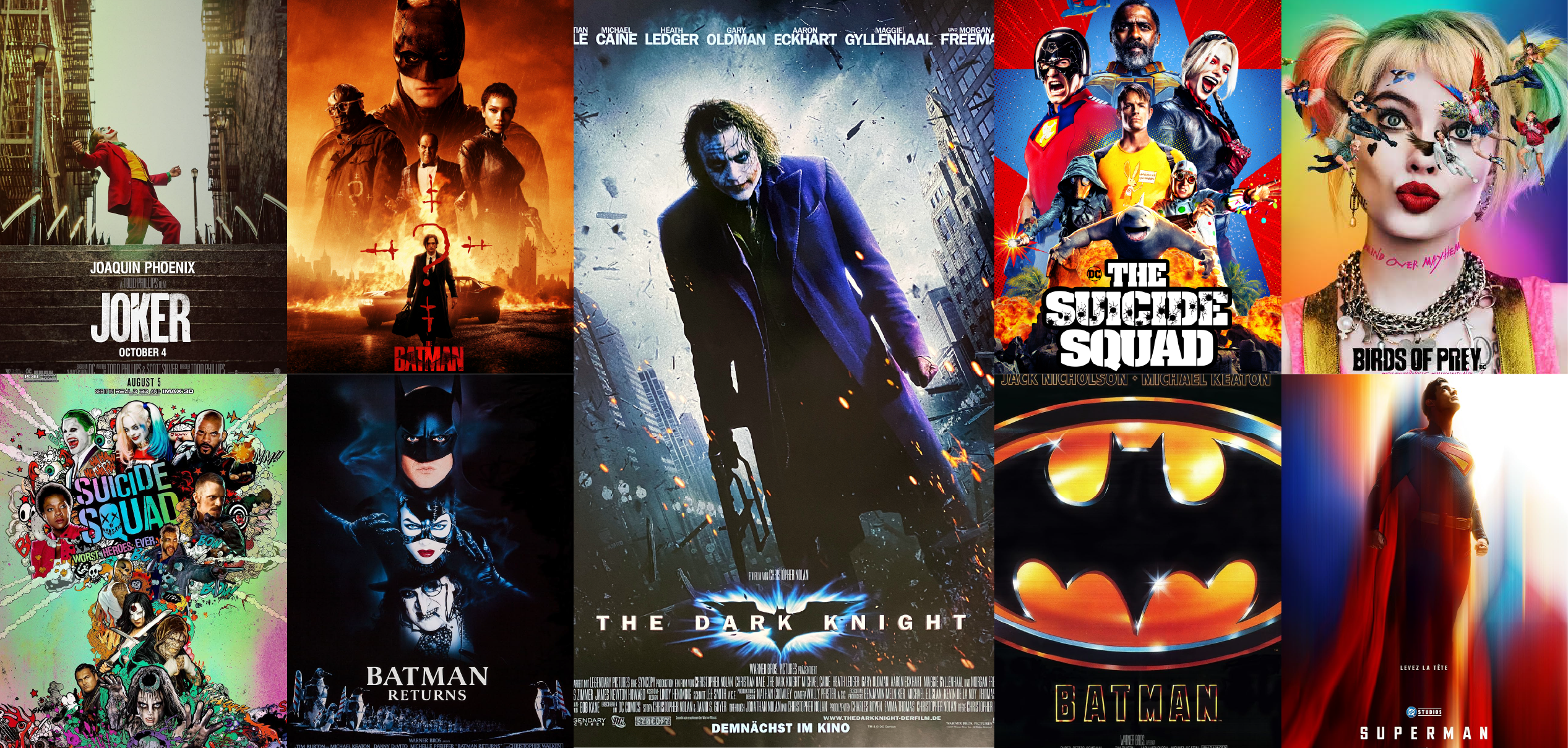
.webp)