

The Science of the Instant Cry
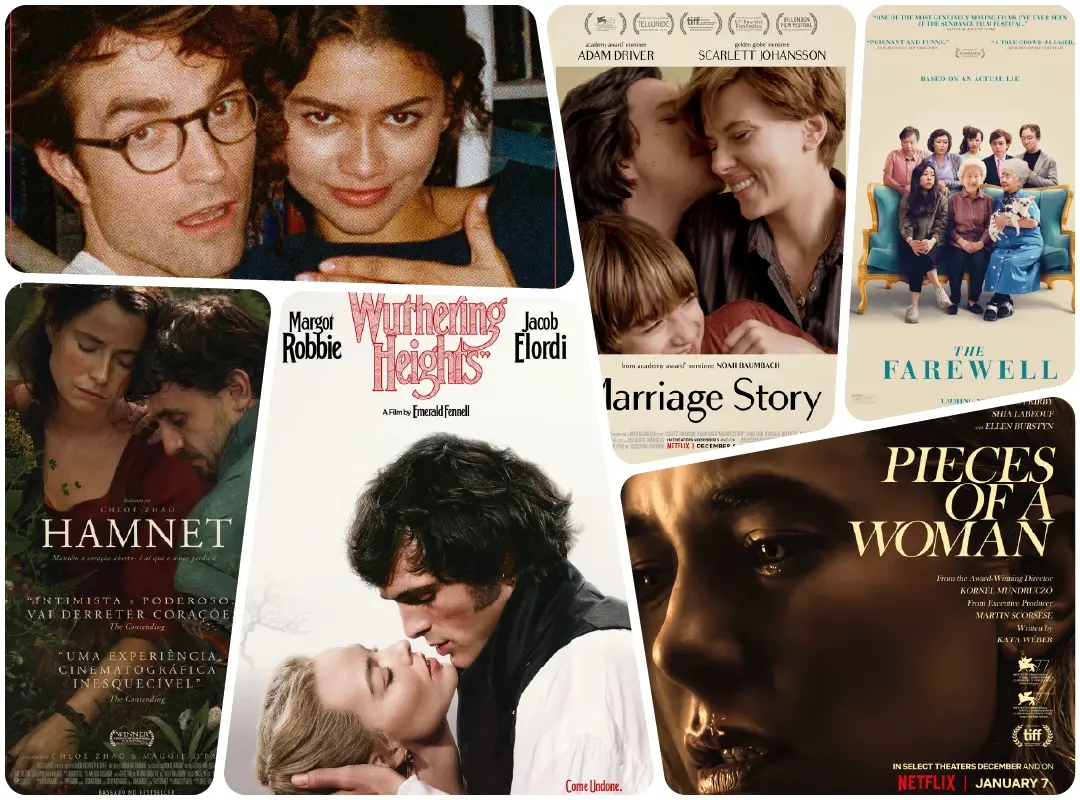
Test screening audiences for Hamnet described it in a specific way. Not "moving." Not "emotional." Two gallons of tears. Sniffling at peak levels before the first act was done. This is a film that does not wait for you to settle in.
That is the subject of this piece. Not films that earn your tears over two careful hours. Not the slow build, the earned payoff, the catharsis that arrives on schedule. Something faster and stranger than that. Films that reach you before you have any rational reason to be reached. Before you know the characters. Before you decide to care.
It is not manipulation, or at least not only that. Mirror neurons fire when we witness grief that resembles the grief we have carried. Oxytocin is released during scenes of sacrifice or unconditional love. The brain draws no clean line between a parent losing a child on screen and the fear of the same thing happening in your own life. The best films in this category understand this and build directly toward it. They skip the introduction. They go straight for something primal and old.
In 2026, Hamnet and Wuthering Heights have joined a tradition that stretches back decades. Ryan Coogler's Sinners, released in 2025, had early viewers describing its ending as an experience they were not prepared for. They join the films below, organised by the specific mechanism each one uses to reach you before you are ready.
The 2026 Instant Tears: New Releases
1. Hamnet (January 2026) — The Grief Epic
https://www.youtube.com/watch?v=xYcgQMxQwmk&t
Director: Chloé Zhao
Cast: Paul Mescal, Jessie Buckley, Emily Watson, Joe Alwyn
Where to Watch (2026): Apple TV,
Why It's a Must-Watch:
Shakespeare's son died at eleven. That fact is in every biography, every footnote, every undergraduate survey. What Chloé Zhao does with it is something else entirely: she makes it feel like it happened last week, to someone you know. The film is not interested in the historical record. It is interesting in the specific texture of grief that has nowhere to go.
Critical Endurance:
Jessie Buckley won Best Actress at the 2026 Oscars. The film earned eight nominations, including Best Picture. Test screenings generated the kind of word-of-mouth that studios cannot manufacture: strangers describing, unprompted, the moment they lost it and why.
The Screendollars Take
Mescal plays Shakespeare as a man who has misplaced the thread of his own existence. That is the performance choice that makes everything else work. Buckley's Agnes is the emotional spine, a woman whose grief refuses to make itself presentable, which turns out to be the most devastating thing the film could have done. Zhao shoots the funeral procession with a stillness that removes all distance. You stop watching. You start remembering something you have been carrying without a name for it.
Innovation:
- Reframes Shakespeare entirely around loss rather than legacy, which no previous adaptation has attempted.
- Uses restraint structurally: what is withheld lands harder than anything shown.
- Brings Zhao's naturalistic visual grammar into period literary filmmaking for the first time.
Cultural Impact:
Hamnet arrived at the precise moment when grief had become a serious subject for prestige cinema rather than an emotional garnish. It will be cited alongside Marriage Story and Aftersun when future writers map this period's preoccupation with loss as a narrative centre.
If You're Watching for the First Time:
The devastation is built before the death scene arrives. Watch what Zhao does in the ordinary moments. The accumulation is the point.
2. Wuthering Heights (February 2026) — Gothic Tragedy
https://www.youtube.com/watch?v=3fLCdIYShEQ
Director: Emerald Fennell
Cast: Margot Robbie, Jacob Elordi, Hong Chau, Alison Oliver
Where to Watch (2026): Watch or Rent on Prime Video, Apple TV,
Critical Endurance:
Grossed $236 million worldwide against an $80 million budget. Reviews were divided — Rolling Stone called it the horniest literary adaptation ever made, which is both accurate and not quite the whole story. Audiences showed up in numbers that suggested Fennell had found something real inside the material.
Why It's a Must-Watch:
Every previous version of Wuthering Heights has softened the novel. Made it romantic. Made Heathcliff sympathetic in a way Brontë never intended. Fennell commits to the ugliness. This is a film about what obsession actually costs, played without the reassurance that love will redeem either of them.
The Screendollars Take
There is a scene, quiet, barely a minute long, where Heathcliff stands at a window in a specific quality of evening light. No dialogue. Elordi does almost nothing. And yet what the film has built to that point means the scene lands like a door closing on something that cannot be reopened. Heathcliff's line, "I cannot live without my life,e," is not romantic in Fennell's hands. It is a clinical description of a man who has confused love with the only evidence he exists.
Innovation:
- First adaptation to treat the source material as a psychological study rather than a Gothic romance.
- Charli XCX's score functions as emotional dissonance, not accompaniment.
- Robbie's performance finds something new: Cathy as a woman who knows exactly what she is doing and cannot stop.
Cultural Impact:
The casting controversy before release, the divided reviews, the enormous box office: Wuthering Heights in 2026 became the film people argued about, which is a form of cultural impact Brontë's novel has always generated, and Fennell's version extended into a new century.
If You're Watching for the First Time:
Do not root for the love story. That is the trap. Watch instead what the love does to both of them, scene by scene, year by year.
3. The Drama (April 2026) — Relationship Collapse
https://www.youtube.com/watch?v=6zmKcUa4Xxk
Cast: Zendaya, Robert Pattinson
Where to Watch (2026): US: In theatres from April 2026. Canada: In theatres from April 2026. Streaming dates not yet announced — check JustWatch for updates.
Why It's a Must-Watch:
Two people. A room. A secret that has just surfaced. The Drama removes every buffer the cinema usually provides between the audience and the emotional event. No narrative safety net. No intercutting to relief. You watch a relationship come apart the way you would watch it happen to someone you love: unable to intervene, unable to look away.
Critical Endurance:
Too recent for full critical assessment. What exists is significant anticipation built on the premise, and on what Pattinson and Zendaya have each demonstrated separately that they are capable of. The real-time unraveling format is an all-or-nothing creative decision.
The Screendollars Take
Pattinson's particular gift is playing men who are disintegrating quietly, the damage invisible until it is not. Zendaya is holding more emotional information than she expresses, letting the surplus leak through in glances and pauses. Put them together in a confined, real-time format, and the film becomes an interrogation of what relationships are actually constructed from, and what happens when that construction is examined honestly. The crying here will not feel cathartic. It will feel like recognition.
Innovation:
- Real-time format applied to relationship drama rather than thriller or horror, where it more commonly lives.
- Uses two of the most culturally visible performers of their generation in territory that is deliberately unglamorous.
Cultural Impact:
Whatever The Drama delivers, the conversation around it will define how 2026 prestige drama is discussed. That is its own form of cultural weight, applied before a wide audience has seen a frame.
If You're Watching for the First Time:
The secret is not the point. What happens in the room after the secret is.
4. Remain (October 2026) — Grief Horror
https://www.youtube.com/watch?v=lWrpDUaofTI
Director: M. Night Shyamalan
Cast: Jake Gyllenhaal
Where to Watch (2026): US: Theatrical release October 2026. Canada: Theatrical release October 2026.
Why It's a Must-Watch:
Shyamalan's best films use genre architecture to deliver emotional truths that straight drama cannot access. Remaining places grief inside a horror framework, which changes what grief is permitted to do on screen. The Cape Cod setting, the isolation, the specific loneliness of coastal autumn: all of it gives the loss a physical environment. Early accounts describe a third-act twist that reframes everything preceding it as more devastating than it appeared.
Critical Endurance:
Not yet released. The anticipation rests on Gyllenhaal's track record with grief-driven performance — Prisoners, Demolition, Wildlife — and on Shyamalan's late-career precision.
The Screendollars Take
The guaranteed weep that early accounts promise is not despite the horror framework. It is because of it. Genre creates emotional permission. Horror audiences accept levels of dread and release that straight drama cannot sustain. If Remain uses that permission the way Shyamalan uses it at his best, the grief will land at a frequency that pure drama cannot reach.
Innovation:
- Position grief inside a horror structure rather than drama, altering the emotional register entirely.
- Uses landscape as a psychological environment rather than a backdrop.
If You're Watching for the First Time:
Know as little as possible going in. The devastation depends on the reframe landing without preparation.
The Crying Categories: What Triggers Instant Tears
Before the deep dives, here is the full taxonomy at a glance: the six categories, what triggers them, the films that define them, and the specific scene where the instant cry arrives.
|
Category |
Trigger Mechanism | Representative Films |
The Scene |
| Parental Loss | Unconditional love cut short | Steel Magnolias (1989), Terms of Endearment (1983), Hamnet (2026) | Shelby's funeral; Emma's cancer goodbye; Hamnet's deathbed |
| Forbidden Love | Societal barriers to happiness | Brokeback Mountain (2005), Carol (2015), Atonement (2007), Wuthering Heights (2026) | "I wish I knew how to quit you"; the library scene; "I cannot live without my life." |
| Terminal Romance | Love vs. death | The Fault in Our Stars (2014), All the Bright Places (2020), Me Before You (2016) | Gus's pre-funeral; Finch's disappearance; "Don't go" |
| True Story Survival | Real human resilience | Schindler's List (1993), Lion (2016), The Boy in the Striped Pajamas (2008) | The girl in red; reunion at the train station; the fence scene |
| Sacrificial Love | Self-destruction for others | Titanic (1997), Roma (2018), Marriage Story (2019) | "I'll never let go"; Cleo's baby delivery; Charlie's "I love you.u" |
| Missed Connections | Timing and regret | Past Lives (2023), Eternal Sunshine (2004), (500) Days of Summer (2009) | The bridge scene; "Okay"; the expectation vs. reality split-screen |
The Crying Categories: Deep Dives
Category 1: Parental Loss — Unconditional Love Cut Short
The love between a parent and a child requires no narrative setup. You do not need to know a character's history to understand what it costs them to lose each other. The emotion is already in the room before the film starts. That is why this category hits faster than any other.
Steel Magnolias (1989)
https://www.youtube.com/watch?v=d8nojAKKijA
Director: Herbert Ross
Cast: Sally Field, Shirley MacLaine, Olympia Dukakis, Dolly Parton, Daryl Hannah, Julia Roberts
Where to Watch: Watch or Rent on Prime Video, Apple TV.
Critical Endurance:
Sally Field's breakdown in the cemetery scene is taught in acting conservatories. The film has outlasted its mixed initial reviews to become the generational touchstone for a specific kind of female friendship film: one that earns the grief because it earns the love first.
Why It's a Must-Watch:
Six women in a Louisiana beauty salon. Years of marriages, disasters, small triumphs, spectacular arguments. The film makes you love them completely before it asks anything of you. That is the architecture. Comedy first, then grief, and the grief lands harder for everything that preceded it.
The Screendollars Take
The instant cry is not the funeral. Everyone is braced for that. It is the scene before it. The ordinary Tuesday texture of a moment that precedes catastrophe. Ross understands something that directors of grief films often miss: the most devastating thing is the gap between the last normal moment and the first moment that is not normal. He films that gap with the same attention he has given to everything else. That consistency is what makes the emotion feel inevitable rather than constructed.
Innovation:
- Established the female ensemble grief film as a serious dramatic form rather than a subgenre of melodrama.
- Used comedy as structural preparation: the harder the laugh, the more exposed the audience is to what follows.
Cultural Impact:
The template Steel Magnolias built has been attempted dozens of times and matched rarely. Shelby's funeral is cultural shorthand for a specific quality of grief performance.
If You're Watching for the First Time:
Let the comedy land. The film is funnier than you expect. That is entirely the point.
Terms of Endearment (1983)
https://www.youtube.com/watch?v=sSY3YUrdSJI
Director: James L. Brooks
Cast: Shirley MacLaine, Debra Winger, Jack Nicholson, Jeff Daniels
Where to Watch: Watch or Rent on Prime Video, Apple TV.
Why It's a Must-Watch:
A mother and daughter who love each other imperfectly and noisily for two hours. Then one of them has cancer. The film is the benchmark for domestic grief cinema, not because of the tragedy but because of how ordinary life is before the tragedy arrives. Brooks earns the devastating scenes by making the non-devastating ones equally vivid.
Critical Endurance:
Five Academy Awards, including Best Picture and Best Actress. Debra Winger's performance is cited by working actors with a frequency that suggests it changed how people understood what film acting could do with very quiet material.
The Screendollars Take
The scene where Emma says goodbye to her sons is technically meticulous: camera placement, duration, and the specific way children receive information they cannot yet process. Brooks does not sentimentalise it. He observes it with the same unblinking attention he has given to every scene that preceded it, and that consistency of gaze is exactly what makes the moment feel earned rather than manufactured. You cry not because the film tells you to. You cry because the scene is accurate.
Innovation:
- Proved that a film centred on two women, with no male-driven plot, could win Best Picture and be commercially enormous.
- Used Jack Nicholson as a tonal counterweight: his comedic energy is structural support, the thing that makes the grief bearable enough to sit with.
- Merged domestic comedy and terminal illness without collapsing the tone of either.
Cultural Impact:
Terms of Endearment changed what Hollywood drama was allowed to be about. It is not an exaggeration to say that its success made possible a significant body of subsequent American films.
If You're Watching for the First Time:
Watch how Brooks uses the Nicholson character. He is not comic relief. He is the film's breathing space, present precisely so the grief does not become suffocating.
Category 2: Forbidden Love — Societal Barriers to Happiness
What makes forbidden love films unbearable is not the loss itself. It is that the audience can see, clearly, what these people could be to each other. The barrier is concrete. The happiness being denied is visible. The gap between what is and what could have been is the film's entire emotional subject.
Brokeback Mountain (2005)
https://www.youtube.com/watch?v=z89xU8l5wn8
Director: Ang Lee
Cast: Heath Ledger, Jake Gyllenhaal, Michelle Williams, Anne Hathaway
Where to Watch: Watch or Rent on Prime Video, Apple TV.
Two men in Wyoming in 1963, finding something they have no language for and no permission to keep. The film spans twenty years of suppression, compromise, and grief that has nowhere legitimate to go. Ang Lee shoots it with the patience of someone who understands that this kind of love exists in the spaces between things, in silences, in the particular way a person looks at someone they are not allowed to look at.
Critical Endurance:
Three Academy Awards, including Best Director. Heath Ledger's performance is cited by peers and critics as among the greatest in American film. The film has grown in cultural stature with every passing year.
The Screendollars Take
Ledger operates almost entirely below the surface. Every gesture that is withheld. Every almost-touch. Every morning required packing away what the night permitted. The famous line is not the instant cry, not for most viewers. The shirt is. If you have seen the film, you know what that means. If you have not, no description will prepare you for it. Some things in cinema work because the film has built them so carefully that the landing is not a surprise but an inevitability.
Innovation:
- Brought a gay love story to mainstream American cinema without compromise, qualification, or a redemptive framework that softened the material.
- Used landscape as an emotional mirror: Wyoming is paradise, and paradise is the only place where love is permitted to fully exist.
- Redefined what restraint in film performance could communicate.
Cultural Impact:
Brokeback Mountain altered American cinema's relationship with LGBTQ+ storytelling. Every prestige drama since that has treated marginalised love with the same seriousness previously reserved for heterosexual romance exists in a landscape this film helped create.
If You're Watching for the First Time:
The silences carry more than the dialogue. Pay attention to what is not said, not shown, not permitted.
Atonement (2007)
https://www.youtube.com/watch?v=zRlkHu-R7yI
Director: Joe Wright
Cast: Keira Knightley, James McAvoy, Saoirse Ronan, Romola Garai, Vanessa Redgrave
Where to Watch: Watch or Rent on Prime Video, Apple TV.
Critical Endurance:
Seven Academy Award nominations, including Best Picture. The five-minute Dunkirk tracking shot is one of the most discussed single sequences in contemporary cinema. Saoirse Ronan's performance as the thirteen-year-old Briony established her as one of her generation's defining screen presences before she was fifteen years old.
Why It's a Must-Watch:
Atonement adds something to the forbidden love formula that most entries in the category do not have: culpability. Not just the barrier, but the knowledge of who built it, why, and what a lifetime of living with that knowledge actually costs.
The Screendollars Take
The instant cry does not arrive at the Dunkirk sequence, which everyone anticipates and steel themselves for. It arrives in a library, in afternoon light, in the understanding of what is about to be taken and who is about to take it. Wright films the moment with the attention of someone preserving something, not recreating it. Vanessa Redgrave's final ten minutes are among the most quietly devastating in British cinema. By then, the full cost of the lie has compounded across the entire film.
Innovation:
- Used narrative perspective as emotional architecture: the story you watch is not the story that happened, and the gap between them is the film's subject.
- The Dunkirk tracking shot reset expectations for what single-take cinematography could achieve in a mainstream film.
- Introduced a new archetype: the child villain who is not malicious, only catastrophically certain.
Cultural Impact:
Atonement reshaped how literary adaptation handles unreliable narration and remains the reference point for subsequent films that use the gap between what is shown and what is true as their primary emotional mechanism.
If You're Watching for the First Time:
Watch Briony's face in the library. Everything the film will do to you is already in that expression.
Category 3: Terminal Romance — Love vs. Death
Establish the relationship. Make the audience feel its value. Then remove it. This is the formula, and in the wrong hands, it is exploitation. In the right hand, it is a specific and important category of cinema: films that earn their grief entirely through the love that precedes it.
The Fault in Our Stars (2014)
https://www.youtube.com/watch?v=4XzCppxNrsY
Director: Josh Boone
Cast: Shailene Woodley, Ansel Elgort, Nat Wolff, Laura Dern
Where to Watch: Watch or Rent on Prime Video, Apple TV.
Why It's a Must-Watch:
The film works better than its critical reputation suggests. Woodley and Elgort are doing something genuinely difficult: playing teenagers who are old enough to understand exactly what is happening to them. That clarity, the absence of denial, is what separates this from most entries in the terminal romance category. These characters know. The film does not shield them from knowing.
Critical Endurance:
80% on Rotten Tomatoes. Became one of 2014's most commercially successful dramas and introduced a generation of younger viewers to grief cinema in a way that more formally accomplished films had not managed to do.
The Screendollars Take
Augustus Waters writing a letter when he can no longer speak is not sentimental. It is what love looks like when it understands its own limits and refuses to waste what remains. The instant cry arrives earlier than the famous scenes, though. It is in the first conversation. The specific way Gus looks at Hazel as if she is already the most important thing that will ever happen to him. That certainty, in someone that young, in circumstances that cruel, is the film's most quietly devastating quality.
Innovation:
- Treated teenage terminal illness with the seriousness previously reserved for adult drama.
- Used a novel-within-the-film as intellectual scaffolding, giving the story weight beyond its emotional register.
- Made death romantic without making it beautiful, which is the hardest balance this genre has to strike.
Cultural Impact:
A gateway film for a generation. Many viewers for whom grief cinema later became important cite The Fault in Our Stars as the first film that made them understand what the category was capable of.
If You're Watching for the First Time:
Watch what Gus does with the cigarette. The metaphor is stated explicitly by the characters. Watch it anyway in his hands, in the margins, in the spaces where the film is not explaining itself.
Past Lives (2023)
https://www.youtube.com/watch?v=kA244xewjcI
Director: Celine Song
Cast: Greta Lee, Teo Yoo, John Magaro
Where to Watch: Watch or Rent on Prime Video, Apple TV.
Critical Endurance:
98% on Rotten Tomatoes. Two Academy Award nominations, including Best Picture. Celine Song's debut feature is already widely regarded as one of the most emotionally precise films of the decade, and its reputation is still building.
Why It's a Must-Watch:
Past Lives is a film about a love that never happened and never stopped mattering. Nora and Hae Sung are separated by immigration at twelve and reconnected twice across twenty-four years, standing on a New York street at the end, saying goodbye to a version of their lives that was always hypothetical and never stopped being real. The film does not ask you to grieve a relationship. It asks you to grieve a possibility.
The Screendollars Take
Song shoots the final scene with such restraint that the emotion has nowhere to go except into the audience. The word "okay" has never carried more weight in cinema. One word. The entire film is behind it. What Nora and Hae Sung mourn is not something that ended. It is something that never began, and Song's achievement is making that absence feel as concrete and as permanent as any loss that actually happened.
Innovation:
- Introduced in-yeon, the Korean concept of fate and connection across lifetimes, as a narrative framework for Western audiences.
- Shot the final scene in a single sustained take that trusts the audience's emotional preparation without hedging.
- Built a film about what did not happen that feels more present than most films about what did.
Cultural Impact:
Past Lives reshaped how immigrant identity is addressed in American prestige cinema. It introduced Celine Song as one of her generation's most important voices. The ending is already cultural shorthand for a specific quality of emotional restraint.
If You're Watching for the First Time:
Watch John Magaro's face in the final scene. He plays the husband who understands everything and says nothing. That performance is the frame everything else sits inside.
Category 4: True Story Survival — Real Human Resilience
Something changes when you know it happened. The brain processes witnessed grief differently when a factual layer sits beneath the fiction. These films do not just move you; they make you feel the weight of what was real, underneath what is recreated.
Schindler's List (1993)
https://www.youtube.com/watch?v=mxphAlJID9U
Director: Steven Spielberg
Cast: Liam Neeson, Ralph Fiennes, Ben Kingsley
Where to Watch: Watch or Rent on Prime Video, Apple TV.
Critical Endurance:
Seven Academy Awards, including Best Picture and Best Director. 98% on Rotten Tomatoes. Preserved in the US National Film Registry. Its critical standing has not diminished in thirty years; if anything,g it has sharpened.
Why It's a Must-Watch:
The red coat. That single formal decision, placing one point of colour in a black-and-white world and asking the audience to track it, is the most precisely targeted emotional choice in modern mainstream cinema. You see it. You follow it. And before any character explains anything, you understand what following it means.
The Screendollars Take
Spielberg frames routine administrative actions, lists being typed, people being counted, trains being loaded, as incremental moral collapse. Then he reframes those same actions as resistance. The genius is that the vocabulary never changes: only the direction of the bureaucracy does. The instant cry is heard in multiple locations throughout the film. Each one is for something different. Together they form the most sustained emotional reckoning in mainstream cinema.
Innovation:
- Brought black-and-white photography back to mainstream studio filmmaking as a deliberate narrative instrument, not a stylistic gesture.
- Blended documentary aesthetic with dramatic arc at major studio scale.
- Set the standard against which all subsequent Holocaust cinema is measured.
Cultural Impact:
Schindler's List shaped public memory, educational curricula, and the terms on which historical atrocity is permitted to be represented in mainstream film. That influence has not faded. It has become structural.
If You're Watching for the First Time:
The horror lives in the routine. Watch how Spielberg frames the ordinary. That is where the moral architecture of the film is built.
Lion (2016)
https://www.youtube.com/watch?v=-RNI9o06vqo
Director: Garth Davis
Cast: Dev Patel, Nicole Kidman, Rooney Mara, Sunny Pawar
Where to Watch: Watch or Rent on Prime Video, Apple TV
Why It's a Must-Watch:
A five-year-old falls asleep on a train in rural India and wakes up 1,500 kilometres from home. Twenty-five years later, he finds his way back using Google Earth. The story's implausibility is a documented fact. The film earns its emotional climax through ninety minutes of specific, patient accumulation, and when the reunion arrives, it is not the scene that does the work. It is everything that preceded the scene.
Critical Endurance:
Six Academy Award nominations, including Best Picture. 86% on Rotten Tomatoes. Dev Patel's performance as the adult Saroo is among the most affecting of his career. Sunny Pawar's work in the first half is extraordinary in a way that child performances rarely are.
The Screendollars Take
Davis shoots the reunion without music for the first several seconds. That is the right choice and a nearly unbearable one. Silence where the score should be. The decision trusts the audience completely, and the audience trusts it back. When the silence finally gives, the release is total. The instant cry in Lion is a delayed detonation: everything the film has built gives way at once.
Innovation:
- Used Google Earth as a narrative device with genuine emotional weight, not as a technology showcase.
- Split its emotional throughline between a child actor and an adult actor without losing continuity of character or feeling.
- Made the factual implausibility of the story feel structurally inevitable.
Cultural Impact:
Lion brought the specific crisis of child displacement in India to global mainstream audiences. It contributed to increased public awareness of trafficking and family separation.
If You're Watching for the First Time:
Give the first forty minutes the same attention you give the reunion. The cry lands at the level it does only because of what Pawar built in the first half.
Category 5: Sacrificial Love — Self-Destruction for Others
Self-sacrifice triggers something that predates cinema. It reaches into whatever part of the human brain processes devotion as an act of pure will rather than feeling. The films in this category do not ask you to admire the sacrifice. They ask you to feel what it costs.
Titanic (1997)
https://www.youtube.com/watch?v=CHekzSiZjrY
Director: James Cameron
Cast: Leonardo DiCaprio, Kate Winslet, Billy Zane, Kathy Bates
Where to Watch: Watch or Rent on Prime Video, Apple TV.
Critical Endurance:
Eleven Academy Awards, tying the record. One of the highest-grossing films ever made. 88% on Rotten Tomatoes. What began as a spectacle has been reassessed across three decades as a masterwork of emotional engineering.
Why It's a Must-Watch:
The door argument is beside the point. The point is, Jack's face reflects what he chooses to look at as the cold takes him. The sacrifice is not a dramatic moment; it is a quiet decision made as if it were obvious. Cameron spends the entire first half of the film making you care about something he is going to take away. That investment is the mechanism. The loss is proportional to it.
The Screendollars Take
Cameron is an engineer who happens to understand sentiment. He gives you exactly enough time with Jack and Rose to understand what is being lost: not too much, not too little, precisely the amount that makes the second half devastating without making the film only about its ending. The formal genius is in the pacing. Love in the first half. Dismantling in the second. The audience is trapped because Cameron made them care before the iceberg was a possibility.
Innovation:
- Set new benchmarks for digital-practical effects integration in historical reconstruction.
- Proved that emotional storytelling at this scale could drive global box office performance of unprecedented size.
- Demonstrated that a female-led romance could anchor a massive event film without concession or compromise.
Cultural Impact:
Titanic reshaped what Hollywood believed audiences would repeatedly pay to see. It is the reference point against which romantic epic cinema has been measured ever since.
If You're Watching for the First Time:
The elderly Rose narrates grief before the story begins. Cameron is establishing loss before he shows you what is being lost. That sequence is not a preamble. It is an instruction.
Roma (2018)
https://www.youtube.com/watch?v=6BS27ngZtxg
Director: Alfonso Cuarón
Cast: Yalitza Aparicio, Marina de Tavira
Where to Watch: US: Streaming on Netflix. Canada: Streaming on Netflix.
Why It's a Must-Watch:
Cleo is a domestic worker. Her life does not belong to herself in any meaningful economic or social sense. And then, in the ocean, without deliberation, she walks into water she cannot swim in to save children who are not hers. Cuarón holds the shot long enough that the choice registers fully. This is what sacrifice looks like when it is instinct rather than decision: faster than thought, paid for by the body.
Critical Endurance:
Three Academy Awards, including Best Director, Best Cinematography, and Best Foreign Language Film. 96% on Rotten Tomatoes. Appears on virtually every best-of-the-decade list.
The Screendollars Take
The beach scene is the film's apex, but the instant cry arrives earlier. In the delivery room. In silence. In a single held shot that contains more grief than most films manage across their entire runtime. Yalitza Aparicio's performance is almost entirely physical. A non-professional actor in her first screen role, communicating everything through posture and micro-expression, and the specific quality of stillness that follows devastation. It is one of the most affecting performances of the decade.
Innovation:
- Shot in black and white on digital, creating a visual language that exists between memory and document
- Built a major film's emotional credibility entirely around a non-professional lead.
- Used sound design as the primary emotional instrument.
Cultural Impact:
Roma changed the conversation around domestic labour in Latin American cinema and marked a turning point in how streaming platforms were assessed as distributors of prestige cinema.
If You're Watching for the First Time:
What Cleo does not say is the performance. Aparicio communicates more in held silences than most actors do with dialogue.
Category 6: Missed Connections — Timing and Regret
Regret for what did not happen is harder to film than regret for what did. There is no event to return to, no moment to replay. The films in this category have to make an absence feel as real and as heavy as a presence. The ones that manage it are among the most haunting in cinema.
Eternal Sunshine of the Spotless Mind (2004)
https://www.youtube.com/watch?v=Q3uyTSAspN8
Director: Michel Gondry
Cast: Jim Carrey, Kate Winslet, Kirsten Dunst, Mark Ruffalo, Elijah Wood, Tom Wilkinson
Where to Watch: Watch or Rent on Prime Video
Joel erases the memory of the woman he loved and discovers, in the process of the erasure, that he does not want to. Gondry films memory as a collapsing architecture: rooms shrinking, faces disappearing, years of shared life going dark in sequence. The film is about the human instinct to hold on even when holding on is being taken from you by your own prior decision.
Critical Endurance:
Academy Award for Best Original Screenplay. 92% on Rotten Tomatoes. Appears on virtually every best-of-the-2000s list and is taught in screenwriting programmes worldwide as a model of nonlinear structure that generates emotional rather than merely conceptual coherence.
The Screendollars Take
The cry is not in the ending, which carries something close to hope. It is in the moment Joel realises what is disappearing and starts to run toward it: knowing it is already gone, running anyway. Carrey's performance is the most surprising and affecting of his career. He plays restraint and longing as the same thing, and the combination lands in a way that his comedic performances, however technically impressive, never quite managed.
Innovation:
- Used practical in-camera effects and genuine surrealism to visualise heartbreak as literal physical architecture.
- Built a nonlinear structure that generates emotional coherence rather than narrative confusion.
- Established a new cinematic language for interior, subjective experience.
Cultural Impact:
Eternal Sunshine reshaped how a generation thinks about memory, relationships, and whether the knowledge of an ending changes the value of a beginning.
If You're Watching for the First Time:
Pay attention to how memories change as the erasure progresses: shrinking, warping, losing colour. The filmmaking mirrors the emotional experience. The further back Joel runs, the more universal what he is losing becomes.
Marriage Story (2019)
https://youtu.be/BHi-a1n8t7M
Director: Noah Baumbach
Cast: Adam Driver, Scarlett Johansson, Laura Dern, Alan Alda, Ray Liotta
Where to Watch: US: Streaming on Netflix. Canada: Streaming on Netflix.
Critical Endurance:
Six Academy Award nominations, including Best Picture. 95% on Rotten Tomatoes. Both lead performances received acting nominations. Already considered one of the defining American films of the 2010s, a decade it arrived at the very end of, and its reputation shows no sign of softening.
Why It's a Must-Watch:
The film opens with both characters narrating what they love about each other, over images of their shared life. This is the cruelest formal decision Baumbach makes: you are shown what is already gone before you are shown how it was lost. The tears begin in the opening minutes. Everything that follows is the explanation of the opening.
The Screendollars Take
The fight scene is the most discussed sequence. But the instant cry is earlier, in the love lists, in the specificity of what each person noticed about the other, in the recognition that noticing is itself a form of love and that love was not enough to hold the marriage together. Baumbach makes a divorce film that is simultaneously one of cinema's most honest love stories. The two are not in tension. They are the same film, looked at from different angles.
Innovation:
- Opened with the conclusion and then reconstructed how it was reached, inverting the conventional narrative arc.
- Used the Los Angeles-New York geography as a metaphor for the incompatibility that the marriage was always negotiating.
- Proved that a film about the end of a relationship could function as an argument for the value of that relationship.
Cultural Impact:
Marriage Story changed the terms on which divorce is represented in mainstream cinema. Not betrayal. Not failure. Two people are becoming themselves in ways that are no longer compatible.
If You're Watching for the First Time:
Watch the fight in one sitting. Do not pause it. It is one continuous piece of acting that needs to be experienced as a single event.
The Animation Paradox: Why Cartoons Hit Harder
There is a specific vulnerability that animation creates. The characters are visibly constructed. The world is obviously artificial. Your defences lower because the medium signals safety. And then the film reaches past those lowered defences and hits something you were not protecting.
Coco (2017)
https://www.youtube.com/watch?v=Hp8N5U5nbYM
Director: Lee Unkrich
Cast: Anthony Gonzalez, Gael García Bernal, Benjamin Bratt, Alanna Ubach
Where to Watch: Watch or Rent on Prime Video, Apple TV+.
Critical Endurance:
97% on Rotten Tomatoes. Two Academy Awards, including Best Animated Feature. Has become Pixar's most emotionally significant film for many viewers, particularly among Latin American audiences for whom its cultural specificity is not background texture but the entire point of the film.
Why It's a Must-Watch:
Coco is a precisely engineered delivery system for one scene: Miguel singing to his great-grandmother as her memory returns. Everything in the preceding ninety minutes exists to build the weight that scene needs to land. Pixar uses the same melody three times, each time in a different emotional register, each time heavier than the last.
The Screendollars Take
"Remember Me" is not a sad song. In its original form, it is almost cheerful. What the film does to it by the third iteration is what makes adults cry in ways they were not anticipating. The cry is not for Miguel or for Mamá Coco. It is for everyone you are afraid of losing. The film reaches past the fictional characters and touches something personal and specific, which is the highest thing animation can do.
Innovation:
- Demonstrated that culturally specific storytelling can succeed globally without dilution or translation into generic universality.
- Used musical repetition and transformation as narrative architecture rather than emotional punctuation.
- Set a new standard for cultural consultation as a production requirement in mainstream animation.
Cultural Impact:
Coco reshaped expectations for cultural representation in studio animation. Its visual language and music entered classrooms, festivals, and diaspora communities in ways that extended well beyond cinema.
If You're Watching for the First Time:
Pay attention to what the film establishes about remembrance in its first act. Who is forgotten, what that costs, and why the song is the structural key to everything the film is doing.
Grave of the Fireflies (1988)
https://www.youtube.com/watch?v=lhlh7JVcTt8
Director: Isao Takahata
Cast: Tsutomu Tatsumi, Ayano Shiraishi
Where to Watch: Watch or Rent on Prime Video
Why It's a Must-Watch:
The film tells you in its first sixty seconds that both children die. It is not a spoiler. It is a formal decision: Takahata removes the possibility of hope so that the entire film can be spent in the present tense of what these two people had, briefly, before it was gone. The tragedy is not the ending. The tragedy is every ordinary day that preceded it.
Critical Endurance:
100% on Rotten Tomatoes. Appears on virtually every list of the greatest war films and the greatest animated films simultaneously, which is an almost unique critical position. Its reputation has grown for thirty-five years without exception.
The Screendollars Take
The specific rituals of Seita's care for Setsuko, the fireflies in the tin, the maintenance of normalcy beyond the point where normalcy is possible, accumulate into something that does not feel like cinema. It feels like testimony. Takahata does not sentimentalise what is essentially a story about institutional indifference resulting in two children's deaths. The devastation is not in the final scenes. It is in the days before them, and in what those days required of a fourteen-year-old boy who had no one else to be responsible for.
Innovation:
- Elevated animated cinema into the register of historical tragedy permanently.
- Used the medium's capacity for stylised beauty as a formal contrast to the horror it was depicting.
- Positioned a child's perspective as a moral indictment of war rather than an innocent bystander within it.
Cultural Impact:
Grave of the Fireflies is used in university courses on war ethics, animation as an expressive medium, and the representation of historical trauma. It remains the standard against which war-themed animation is measured.
If You're Watching for the First Time:
The ending is stated in the opening minute. Watch anyway. The devastation is not in discovering what happens. It is in watching how it happens, one ordinary day at a time.
The Foreign Language Devastation
Grief does not require translation. The films below cross every linguistic barrier because what they are communicating is older than language.
The Boy in the Striped Pajamas (2008)
https://www.youtube.com/watch?v=uwysOfnX2Qg
Director: Mark Herman
Cast: Asa Butterfield, Jack Scanlon, David Thewlis, Vera Farmiga
Where to Watch: Watch or Rent on Prime Video
Critical Endurance:
65% critics' score but significantly stronger audience reception, a gap that reflects the film's priority of emotional accessibility over formal complexity. Its cultural impact, particularly in secondary education, has outlasted its mixed critical standing.
Why It's a Must-Watch:
The film withholds from its protagonist what it gives to its audience. That gap between what Bruno understands and what we understand is where the film lives. The horror accumulates quietly in that space across the entire runtime. The ending is not a surprise. It is a dread that has been building since approximately the twenty-minute mark, confirmed.
The Screendollars Take
Bruno and Shmuel find each other across a boundary neither of them fully comprehends. Herman makes the friendship entirely specific: particular conversations, particular jokes, the particular way two children talk when they have decided each other matters. The fence does not need to function as a metaphor. It functions as a fence, and what happens on the other side of it is what the film has been building toward since it began.
Innovation:
- Used a child's limited perspective as both a narrative device and a moral instrument simultaneously.
- Made historical horror legible to younger audiences without simplifying its weight.
Cultural Impact:
One of the most widely taught Holocaust films in secondary education globally. The debates around its approach are themselves part of its cultural legacy.
If You're Watching for the First Time:
The book, by John Boyne, is widely considered even more devastating. The film achieves something specific to the medium that prose cannot replicate in the final sequence.
Drawing Closer (2023)
https://www.youtube.com/watch?v=WMpngmDc7Sg
Director: Takahiro Miki
Cast: Ren Nagase, Natsuki Deguchi
Where to Watch: Netflix
Why It's a Must-Watch:
Two teenagers in a hospital rooftop garden with less than a year between them and the end. Drawing Closer belongs to a Japanese melodrama tradition that treats dying not as a tragedy to be avoided but as a condition to be inhabited with specific, daily attention. The rooftop meetings are not a romantic backdrop. They are the film's entire emotional landscape.
The Screendollars Take
The cry here is not for the plot. It is for the time: the quality of attention these scenes inhabit, and the way Nagase and Deguchi make each conversation feel like it is being recorded, because both characters understand it might be the last one. Miki shoots the rooftop with a specific quality of light that makes it feel suspended between worlds. The film understands and communicates without stating that some places exist outside ordinary time.
If You're Watching for the First Time:
Watch it in one sitting. The emotional accumulation is the mechanism. It does not work in pieces.
The Modern Classics (2020-2025)
Sinners (2025)
https://www.youtube.com/watch?v=8fBYoZ6Pt5A
Director: Ryan Coogler
Cast: Michael B. Jordan, Hailee Steinfeld, Miles Caton, Jack O'Connell, Delroy Lindo
Where to Watch: Watch or Rent on Prime Video, Apple TV
Critical Endurance:
Shot on 65mm film. A record-breaking 16 Oscar nominations. 97% on Rotten Tomatoes. Ryan Coogler's first original blockbuster arrived as the kind of film that people describe in terms usually reserved for live experiences: something that happened to them rather than something they watched.
Why It's a Must-Watch:
Early viewers described the ending in specific terms: absolutely weeping. Once-in-a-lifetime. The kind of word-of-mouth that cannot be manufactured. Coogler has made a film that understands grief, community, and sacrifice as forces that operate on each other, and the final sequence allows all three to converge without offering resolution.
The Screendollars Take
The specifics belong to the film. Go in cold. What can be said is that the weeping is not for a plot event. It is for something the film has been building across its entire runtime, and when it arrives, the accumulated weight of everything preceding it means the emotional response is not to a scene but to everything the scene represents. Coogler has always been a filmmaker who earns his endings. Sinners appears to be his most complete version of that skill.
If You're Watching for the First Time:
The less you know, the harder it lands.
Pieces of a Woman (2020)
https://www.youtube.com/watch?v=1zLKbMAZNGI
Director: Kornél Mundruczó
Cast: Vanessa Kirby, Shia LaBeouf, Ellen Burstyn
Where to Watch: US: Streaming on Netflix. Canada: Streaming on Netflix.
Why It's a Must-Watch:
The film opens with a thirty-minute single-take home birth scene. What follows is Vanessa Kirby processing a stillbirth across the remainder of the film. The grief is not operatic. It is quiet, private, and resistant to being witnessed, which is the most accurate representation of this specific loss that mainstream cinema has attempted.
Critical Endurance:
Kirby won Best Actress at Venice. Ellen Burstyn received an Academy Award nomination for Supporting Actress. Martin Scorsese served as executive producer after being moved by an early screening.
The Screendollars Take
The birth sequence is the film's emotional origin point, but the instant cry is not there. It is in the quiet scenes that follow: Martha attempting to return to ordinary life and discovering that ordinary life has a shape she no longer fits. Kirby builds her performance entirely from absence. What she withholds is more devastating than what she shows. It is a lesson in what restraint can do when the material is this specific and this heavy.
Innovation:
- The single-take birth sequence set a new benchmark for sustained performance under conditions of extreme difficulty.
- Treated pregnancy loss as the primary subject of a mainstream film, not a subplot or a catalyst.
If You're Watching for the First Time:
The first thirty minutes are the hardest. Stay with them. Everything that follows is built on what they establish.
Conclusion: The Catharsis Club
Whether it is Hamnet's 16th-century grief or Marriage Story's modern divorce, the instant cry comes from the same place: recognition. We see our own fears of loss reflected before we have had time to construct the usual defences against feeling them.
The filmmakers on this list did not set out to make you cry. They set out to make something true. The crying is a byproduct of accuracy: when a film gets grief right, the audience's grief responds. Not to the characters. To the thing the characters are standing in for.
In an age of increasing distance from direct emotional experience, these films offer something that has become genuinely rare: the permission to feel something fully, in the dark, without having to justify it. The ugly cry is not weakness. It is evidence that you are still paying attention to what matters.
Grief and love are not opposites. They are the same thing, separated only by time. These films understand that. Start anywhere.