

The Comfort Movie as Emotional Tool
A comfort movie isn't about quality, and it isn't even about happiness. It's a film whose familiarity and emotional architecture create a sense of safety. The best comfort movies are rewatched not for surprise but for predictability. The plot points land where you expect them to. The jokes hit at the same beat. Nothing sneaks up on you. The right comfort movie for anxiety differs fundamentally from the right one for grief, and that difference is the whole point of building this list by what you're feeling, not by genre.
For When You Feel Anxious: Movies That Slow the Heart Rate
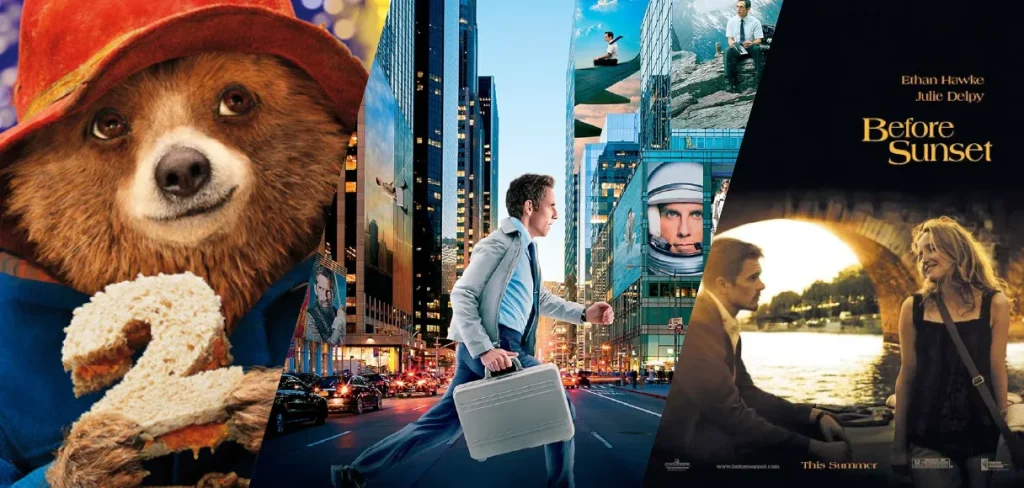
When anxiety is at an all-time high, the last thing the nervous system needs is more stimulation. Slow cinema, low narrative stakes, and gentle repetition do the opposite of what a thriller does. There is real science behind this. Predictable narrative structures lower cortisol reduction thresholds because the brain stops scanning for danger; this triggers the parasympathetic nervous system to take over, which is exactly what anxiety regulation requires. Researchers have noted that storytelling itself measurably reduces cortisol, and rewatching a familiar film amplifies that effect because the outcome is already known.
Films that work this way often share a few traits. There's no real villain, or the villain is so cartoonish that they pose no genuine threat. Visual motifs repeat. The pacing leans toward what some call ASMR cinema — soft sounds, gentle hands at work, weather as a character. Hugh Grant at his most charmingly hammy in Paddington 2 is one version of this. Hayao Miyazaki's Rain in the Forest is another. Richard Linklater's walking-and-talking films are a third.
None of these movies is boring. They are regulating, which is a different function entirely.
| Film | Year | Why It Works for Anxiety | The Regulating Element | Where to Watch |
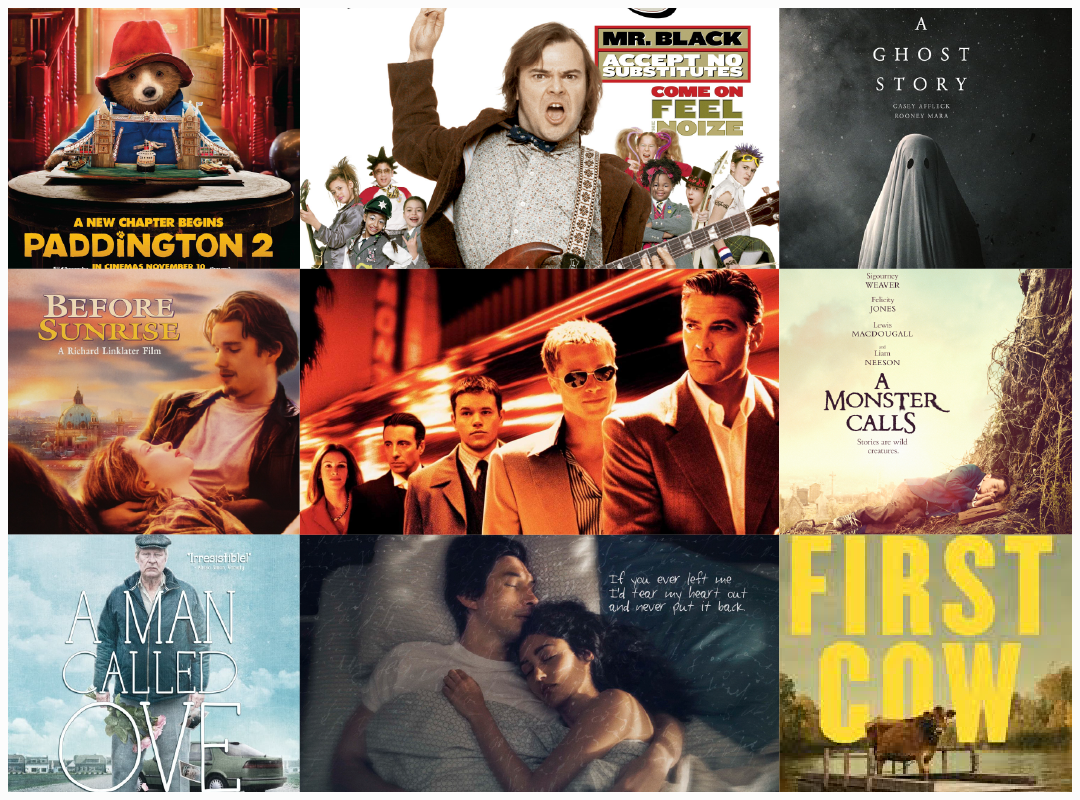
| Paddington 2 | 2017 | Zero cynicism; every character is fundamentally decent | Marmalade-making sequence; prison escape via kindness; Hugh Grant's villainy is playful | Watch or Rent on Prime Video |
| The Secret Life of Walter Mitty | 2013 | Ben Stiller's daydreams become reality; Iceland landscapes | Skateboarding sequence; visual grandeur replaces worry; "beautiful things don't ask for attention." | Apple TV |
| Before Sunrise | 1995 | Walking and talking; no plot pressure; Vienna at dusk | Real-time conversation; no deadlines; Jesse and Céline's ease | Watch or Rent on Prime Video |
| My Neighbor Totoro | 1988 | Hayao Miyazaki's gentle pacing, no villain, and rain sounds | Catbus; soot sprites; waiting at the bus stop in rain; environmental sound design | Apple TV |
| Chef | 2014 | Jon Favreau cooks his way back to happiness; food prep as meditation | Grilled cheese sequence; food truck rhythm; father-son road trip; no antagonist | Watch or Rent on Prime Video |
| A Man Called Ove | 2015 | Grumpy old man's routine; flashback structure provides predictability | Daily rounds; cat adoption; neighbor interruptions; Swedish ordinariness | Watch or Rent on Prime Video |
For When You're Grieving: Movies That Hold Space for Sadness
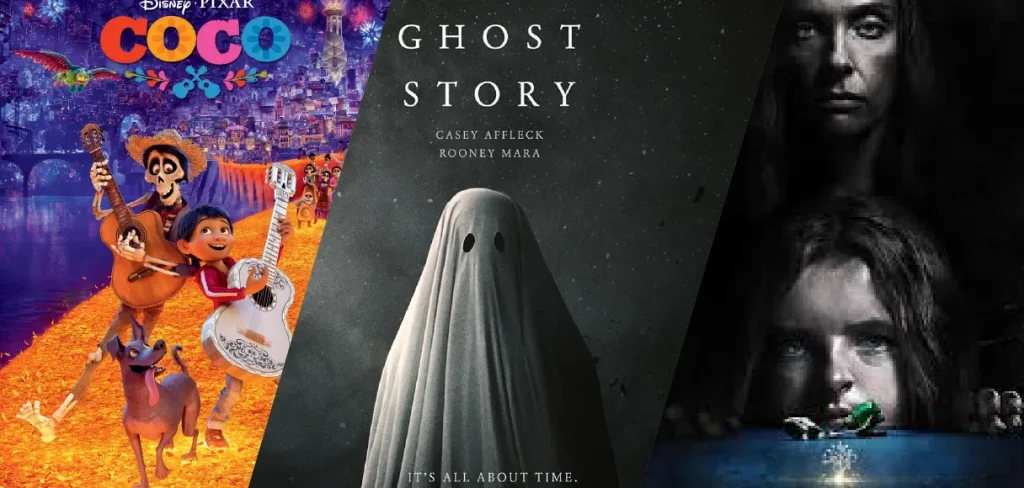
There's a meaningful difference between a sad movie and a grief movie. A sad movie pushes you toward tears for its own sake. A grief movie sits with you. It lets sadness exist. That distinction matters because grief validation is what people in mourning actually need: a film that says, " This is real, you are not crazy for feeling this, and you don't have to wrap it up in ninety minutes.
Films that handle the mourning process well share a structural honesty. They don't tidy the ending. They don't give you a montage that "fixes" the loss. They allow the contained sadness of the feeling to stay inside the frame, so the viewer doesn't carry it home alone. Death in cinema at its most useful externalises what is impossible to articulate. Toni Collette's scream-cry in Hereditary works because it gives ugly grief a physical shape. Ari Aster lets the horror of it stand. Lulu Wang's The Farewell turns a family lying about death into a meditation on ancestor veneration and collective care. Charlie Kaufman's Eternal Sunshine treats memory and loss as a single, inseparable thing.
| Film | Year | Why It Works for Grief | The Holding Element | Where to Watch |
| Coco | 2017 | Death as reunion; ancestors as presence, not absence | "Remember Me" sequence; ofrenda; Miguel and Mamá Coco; afterlife as colorful | Watch or Rent on Prime Video |
| A Ghost Story | 2017 | Casey Affleck under the sheet; time as grief made visible | Pie scene (Rooney Mara, 5 minutes, single take); the note in the wall; circular time | Apple TV |
| Eternal Sunshine of the Spotless Mind | 2004 | Erasing memories vs. keeping pain; love after loss | Clementine's "I'm erasing you" honesty; Joel's resistance; beach house collapse | Watch or Rent on Prime Video |
| Hereditary | 2018 | Toni Collette's grief becomes horror; validation of ugly emotions | Dinner scene ("I am your mother!"); miniature models as control; no tidy resolution | Watch or Rent on Prime Video |
| The Farewell | 2019 | Awkwafina's family keeps the grandmother's cancer secret; the collective is pretending. | Dinner table scenes; "based on an actual lie"; Billi's scream; goodbye without saying goodbye | Apple TV |
| A Monster Calls | 2016 | The boy's mother is dying; the monster is a manifestation | Liam Neeson's voice; three stories; truth at the end; "I wish I had 100 years." | Watch or Rent on Prime Video |
A note on the A Ghost Story pie scene: director David Lowery has said the shot itself runs around four and a half minutes, with the lead-up scene taking it close to ten minutes total. Either way, it is one continuous take of Rooney Mara eating a vegan chocolate pie on the floor of her kitchen, while the ghost of her dead husband watches from the corner of the frame. It is grief made visible in real time.
For When You're Burned Out: Movies That Require Zero Emotional Labor
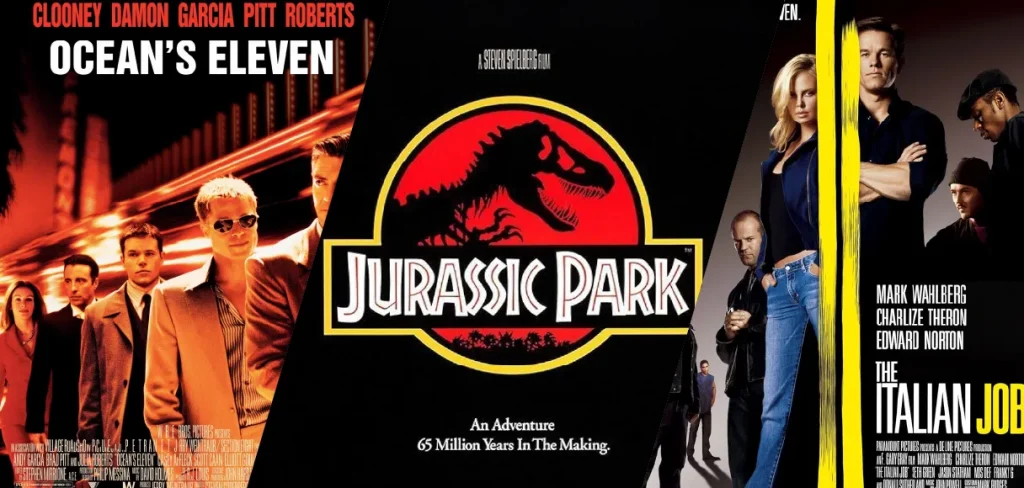
Burnout is the state where empathy becomes expensive. Watching a "good" film that demands you feel deeply for a damaged protagonist can be the last thing a depleted person can handle. The emotional labor of watching is real, and certain films don't require any of it. This is where competence porn earns its place in the comfort movie list.
The pleasure of procedural satisfaction is watching people who are excellent at their jobs do those jobs well, with no one suffering and no moral weight to carry. A heist crew pulls off a heist. A baker bakes a cake. NASA gets the astronauts home. The viewer's reward system gets activated without their nervous system being asked to absorb anyone's pain. This is dopamine regulation through narrative — small, satisfying payoffs spaced evenly across the runtime, with no big emotional ask. Zero-stakes viewing also explains why reality TV comfort like baking shows works on the same circuit. Steven Spielberg built his career on the kind of craft that makes spectacle feel like a hug; the heist film structure, with its team assembly and clean execution, is one of the most reliable comfort engines in cinema. None of this is the same as burnout recovery, but it is rest.
| Film | Year | Why It Works for Burnout | The Zero-Labor Element | Where to Watch |
| Ocean's Eleven | 2001 | Competence porn; everyone is good at their job; no one suffers | Brad Pitt eating in every scene; Vegas glow; Danny and Rusty's ease; plan unfolds perfectly | Watch or Rent on Prime Video |
| The Great British Bake Off (series) | 2010– | No elimination cruelty; baking as a process; Paul Hollywood handshake | Tent; soggy bottom; handshake; "on your marks, get set, bake." | NA |
| Jurassic Park | 1993 | Dinosaur spectacle; Jeff Goldblum chaos theory; no moral complexity | T. rex arrival; raptor kitchen; "life finds a way"; Spielberg craft as comfort | Apple TV |
| The Italian Job | 2003 | Mini Coopers; heist as puzzle; Edward Norton's villainy is cartoonish | Venice opening; LA traffic; safe cracking; everyone gets their moment | Watch or Rent on Prime Video |
| School of Rock | 2003 | Jack Black's enthusiasm is infectious; no real stakes; music as joy | "You're not hardcore unless you live hardcore"; Battle of the Bands; Dewey's incompetence is harmless | Watch or Rent on Prime Video |
| Apollo 13 | 1995 | Problem-solving under pressure; NASA competence; happy ending known | "Houston, we have a problem"; duct tape; Ed Harris; failure is not an option | Watch or Rent on Prime Video |
For When the World Feels Too Loud: Movies That Create Quiet
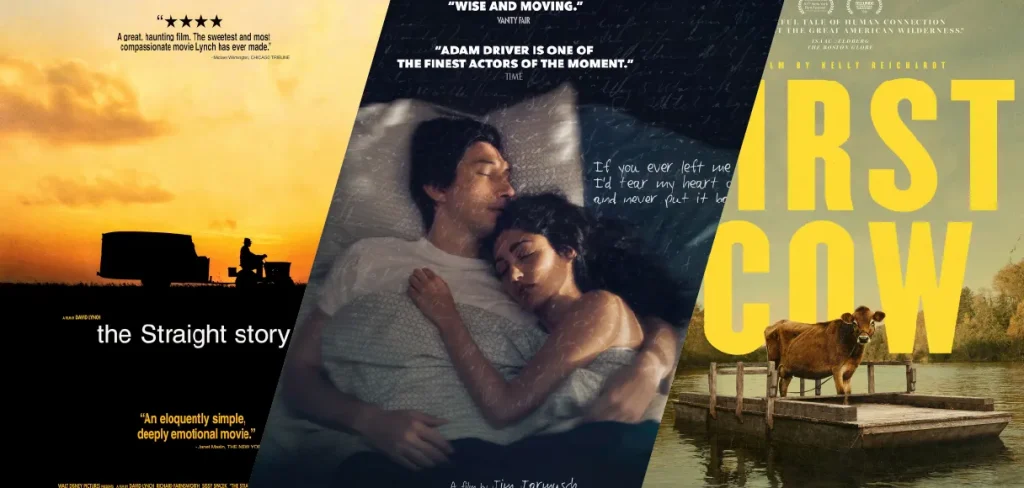
Modern life runs on sensory overload — phones, push notifications, twelve open tabs, a constant background hum of other people's voices through speakers. Quiet cinema counteracts this not just by being quieter, but by demonstrating a different relationship with sound and silence. Minimal dialogue doesn't mean nothing happens. It means the film trusts the image, the natural soundscape, and the viewer's own attention to do the work that explanation usually does.
This is where slow cinema earns its reputation as cinema for the depleted. ASMR film qualities give the brain something to settle on without overstimulating it. Jim Jarmusch has spent decades making films where the silence between lines is doing as much work as the lines themselves. Kelly Reichardt trusts long, patient compositions to carry meaning. Studio Ghibli films, even the busy ones, build in deliberate quiet pockets — what Hayao Miyazaki calls "ma," the space that lets the rest breathe. David Lynch, surprisingly, made one of the gentlest films on this list when he stepped outside his usual register.
| Film | Year | Why It Works for Sensory Overload | The Quiet Element | Where to Watch |
| The Red Turtle | 2016 | No dialogue; Studio Ghibli; island solitude | Waves; turtle transformation; birth; death; cycle; Michael Dudok de Wit | Apple TV |
| A River Runs Through It | 1992 | Fly-fishing as meditation; Brad Pitt; Montana rivers | Casting; river sounds; Norman Maclean narration; "all good things come by grace." | Watch or Rent on Prime Video |
| The Straight Story | 1999 | David Lynch's G-rated film; Richard Farnsworth on a lawnmower | Engine hum; Iowa roads; forgiveness; 6 mph pace; Lynch without darkness | Watch or Rent on Prime Video |
| Paterson | 2016 | Adam Driver as bus driver poet; Jim Jarmusch; New Jersey routine | Bus route; lunchbox; English bulldog; notebook; William Carlos Williams; week in life | Apple TV |
| Columbus | 2017 | John Cho and Haley Lu Richardson discuss architecture; Columbus, Indiana | Modernist buildings; conversations about space; parent illness; no soundtrack intrusion | Watch or Rent on Prime Video |
| First Cow | 2019 | Kelly Reichardt; 1820s Oregon; friendship and baking | Clafoutis-making; forest sounds; cow's arrival; quiet capitalism; no violence | Watch or Rent on Prime Video |
The Red Turtle was directed by Michael Dudok de Wit and co-produced by Studio Ghibli with Wild Bunch — it's the studio's first international co-production, and the film famously runs without spoken dialogue except for a single shouted "hey." The Straight Story, based on Alvin Straight's real 1994 lawnmower journey across Iowa and Wisconsin, is the only film David Lynch ever made that received a G rating from the MPAA, distributed in the US by Walt Disney Pictures.
Richard Farnsworth was 79 at the time of his Best Actor Oscar nomination, then the oldest nominee in that category. In First Cow, the bread-and-butter baked good Cookie and King Lu sell is the "oily cake"; the clafoutis is the dessert that triggers the film's third act.
For When You Feel Lonely: Movies That Feel Like Company
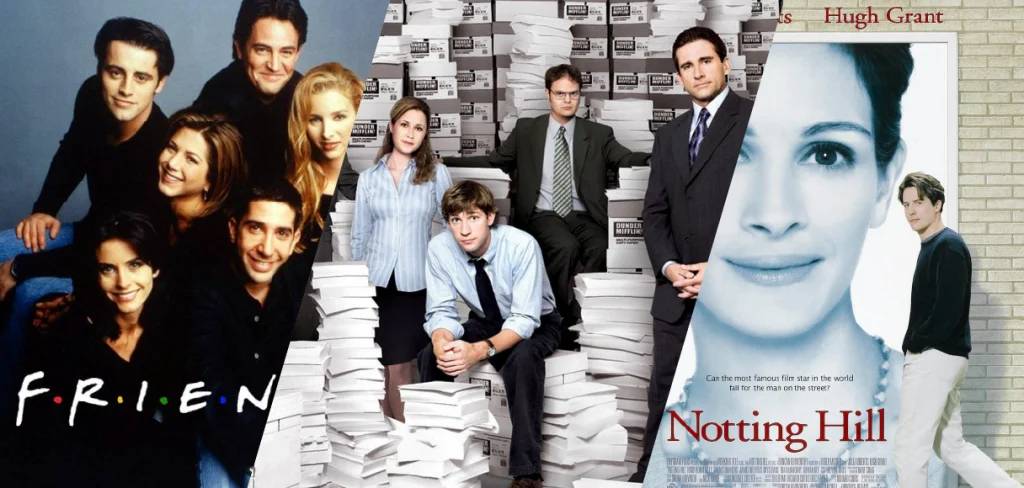
Loneliness is not the same as being alone, and certain films understand this. Some characters, on rewatch, start to feel less like fictional people and more like neighbours you check in on. This is the territory of parasocial relationships — the one-sided bond a viewer forms with a character or a cast — and while the term gets used pejoratively now, the underlying experience is genuinely useful for someone going through a quiet patch.
The co-viewing sensation is the strange feeling that you are watching with someone, even when you are alone. Sitcoms produce this almost automatically; the laugh track was originally engineered to simulate exactly that. Sitcom comfort explains why Friends and The Office still play in the background of so many homes.
Certain films work the same way. Nora Ephron's scripts, with their crisp, generous dialogue, create a sense that the characters would be good friends if you ever met them. Romantic comedy as companionship is one of the most underrated functions of the genre — not as wish-fulfilment, but as a model of warm, daily-life conversation. The recent wave of Ted Lasso optimism taps the same vein from a different direction. Fictional friendship sounds soft, but for someone moving cities or recovering from a breakup, a rewatchable series is sometimes the steadiest thing in a week.
| Film/Series | Year | Why It Works for Loneliness | The Company Element | Where to Watch |
| Friends (series) | 1994–2004 | Central Perk as a third space; no one ages badly | "I'll be there for you"; Thanksgiving episodes, Ross and Rachel; Chandler's jokes. | Watch or Rent on Prime Video |
| The Office (US) | 2005–2013 | Documentary intimacy: Michael Scott's neediness as a mirror | Jim's camera looks; Pam's art show; "that's what she said"; finale | Watch or Rent on Prime Video |
| When Harry Met Sally | 1989 | Nora Ephron's dialogue; Meg Ryan and Billy Crystal as friends first | Deli scene; New Year's Eve; "I came here tonight because when you realize you want to spend the rest of your life with somebody..." | Apple TV |
| Notting Hill | 1999 | Hugh Grant's stammer; Julia Roberts' movie star as approachable | "I'm also just a girl, standing in front of a boy..."; seasons montage; Spike's shirts | Watch or Rent on Prime Video |
| Pride and Prejudice (2005) | 2005 | Keira Knightley and Matthew Macfadyen; Dawn Walks | Hand flex; rain proposal; "you have bewitched me, body and soul"; Darcy's letter | Watch or Rent on Prime Video |
| Ted Lasso (series) | 2020–2023 | Optimism as strategy: "Be curious, not judgmental." | Biscuits with the boss, Roy Kent; Jamie Tartt's redemption; Rebecca and Keeley | Apple TV |
For When You Feel Numb: Movies That Reawaken Feeling
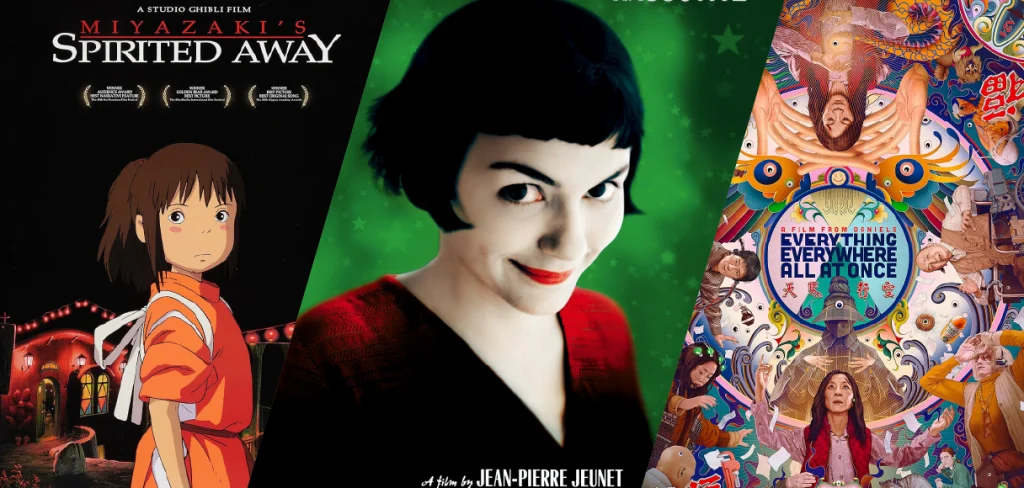
There is a specific kind of stress that doesn't feel like sadness or anxiety — it feels like nothing. Emotional numbness can come from prolonged stress, depression, anhedonia, or the antidepressant flatness that some people experience as a side effect of medication that is otherwise helping them. The challenge, in this state, is that "sad films" don't work — you can't feel them. What's needed is something that bypasses the affective dampening through sensory reawakening, moral clarity, or sheer beauty so striking it gets through.
Films that pull this off tend to commit fully to their visual or emotional register. Hayao Miyazaki's Spirited Away is alive in every frame; the bathhouse, the train ride, and the spirit world refuse to be ignored. Barry Jenkins in Moonlight uses silence and colour to make Chiron's shut-down state legible without forcing a catharsis. Denis Villeneuve's Arrival rebuilds the experience of grief through language and time.
Michelle Yeoh in Everything Everywhere All at Once turns the absurd into the only honest way to talk about meaning. Audrey Tautou's Amélie, with its saturated palette and small acts of mischief, is a film about choosing to feel as a deliberate act. None of these films is subtle. That is the point — when feeling is hard to access, subtlety doesn't make it through.
| Film | Year | Why It Works for Numbness | The Reawakening Element | Where to Watch |
| Spirited Away | 2001 | Hayao Miyazaki's bathhouse; every frame is alive | No-Face; train ride; Haku; "don't look back"; Chihiro's courage | Watch or Rent on Prime Video |
| Amélie | 2001 | Jean-Pierre Jeunet's Paris; Audrey Tautou's whimsy as defiance | Spoon on glasses; photo booth; gnome; "without you, today's emotions would be the scurf of yesterday's." | Watch or Rent on Prime Video |
| Everything Everywhere All at Once | 2022 | Absurdity as emotional truth; Michelle Yeoh; hot dog fingers | Laundry and taxes; "I would have liked just doing laundry and taxes with you"; googly eyes; rock scene | Apple TV |
| The Florida Project | 2017 | Willem Dafoe's kindness; children in poverty without pity | Moonee; Magic Castle motel; rainbow; "you know I love you"; Dafoe's face | Watch or Rent on Prime Video |
| Moonlight | 2016 | Barry Jenkins' triptych; Chiron's silence as feeling | Little, Chiron, Black; beach; "Who are you, man?"; Kevin's call; mother's apology | Watch or Rent on Prime Video |
| Arrival | 2016 | Amy Adams learning Heptapod; time as circle; grief and love | "I used to think this was the beginning of your story"; language montage; Ian and Louise; non-linear time as comfort | Apple TV |
Conclusion: The Rewatch as Ritual
The point of a comfort movie is not escape. It is emotional regulation. The rewatch ritual works because knowing the ending is the feature, not the bug—your nervous system can stop scanning, your body can drop its shoulders, and the predictable arrival of the familiar beat gives the brain a small reward without asking it to spend energy. Narrative predictability signals physiological safety in a way that few other low-effort activities reliably do.
What this list won't give you is a one-size-fits-all answer. Personalized comfort is the whole point. The same person who needs Paddington 2 on a panicked Tuesday might need Moonlight when they're numb in March. Film as therapy doesn't mean cinema replaces actual support — it means a careful, self-aware film menu can be one tool in a wider kit. Build your own list based on what you're feeling, not based on what some "best of" article tells you is great. The best comfort movie is the one you've already seen—the one your body recognizes before your mind does.