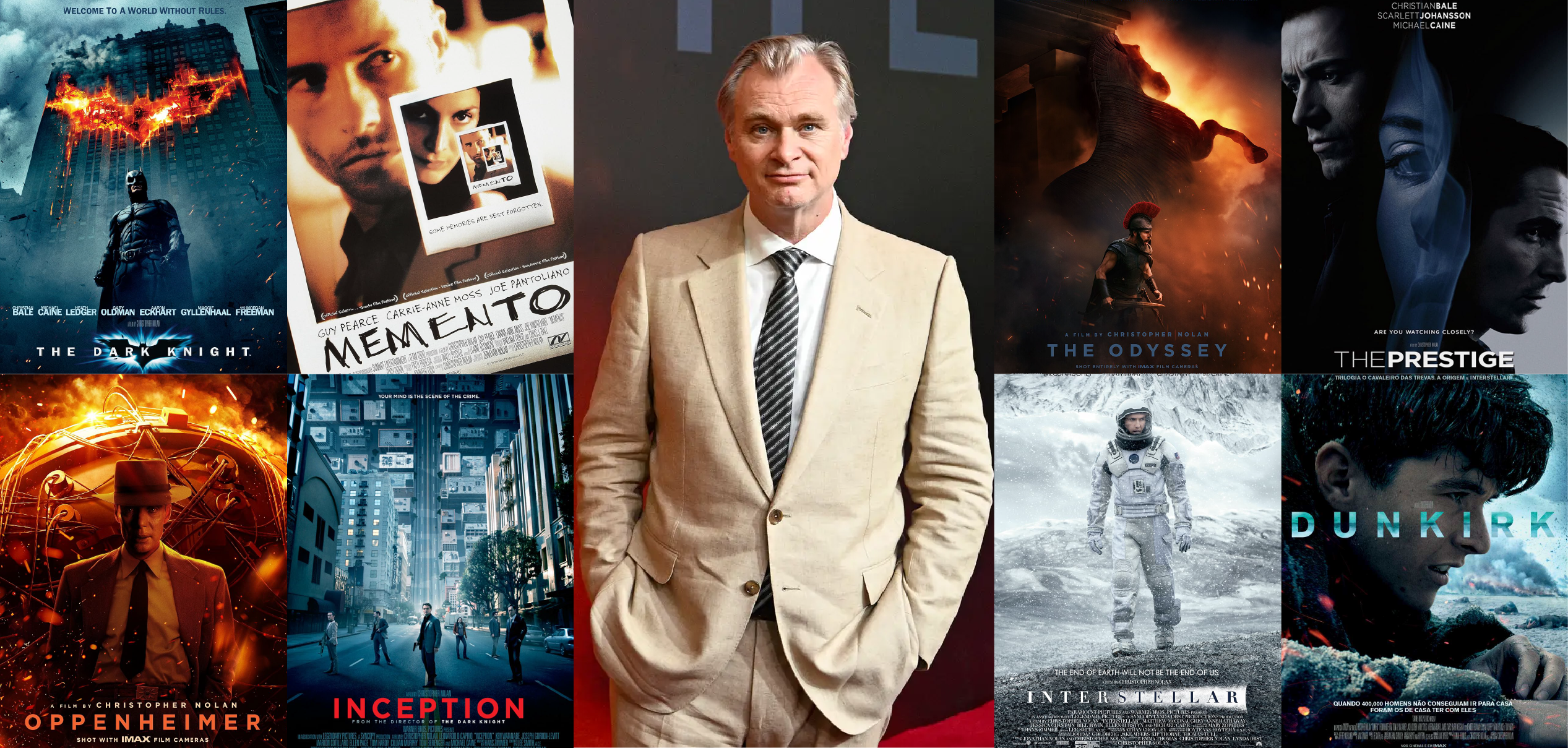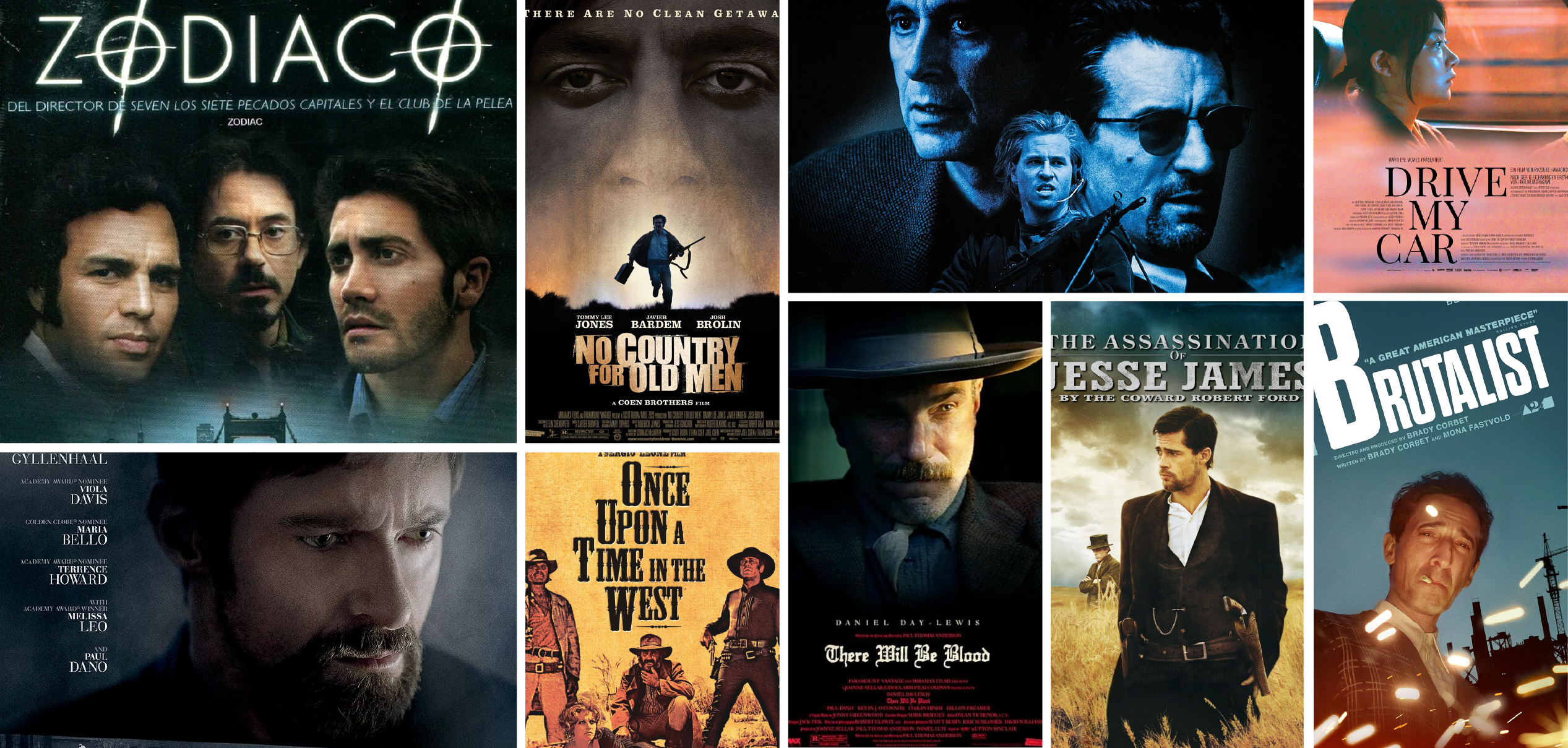


Sometimes when a film ends, the credits roll, and you just sit there because something about it has gotten underneath your skin. You replay the scenes. You second-guess a character's motive all night long. That is the psychological thriller doing exactly what it was built to do.
As a genre, the psychological thriller is frequently mislabelled. It’s close to horror, mystery, and crime drama, but it’s slightly different. The threat in a psychological thriller is internal. The mind is the battlefield. What you trust, what you perceive, what you believe about yourself and the people around you: these are the things the genre puts under pressure.
The films on this list span from 1990 to 2017 and range across Hollywood studio productions, micro-budget independents, and international cinema from South Korea, the United Kingdom, and Greece. They include films about marriage, ballet, artificial intelligence, serial murder, dinner parties, and magic tricks. These films make you think, and then think again.
Ranking criteria for this list: depth of psychological exploration; rewatchability and thematic richness; cultural impact and genre influence; and sustained visceral tension. The list runs as a countdown from #25 to #1. Each entry includes a synopsis, a psychological analysis, a note on why the film earns its ranking, and a key scene.
The Anatomy of a Psychological Thriller
Before the countdown, it is worth naming the specific devices that recur across the genre. Not every film uses all of them. But understanding the toolkit helps explain why certain films continue to unsettle long after the credits roll.
- The Unreliable Narrator
We follow protagonists we should not entirely trust. The unreliable narrator works because cinema encourages identification — we see through a character's eyes, we adopt their assumptions, and the revelation that those assumptions were wrong is experienced as personal disorientation.
- Gaslighting and Paranoia
Some films on this list are about external threats that present as internal ones: the character who believes they are imagining persecution and is not. Or vice versa.
- The Doppelganger and the Double
Split identity is one of the genre's oldest devices, from Poe through Dostoevsky and into 20th-century cinema. The double externalises internal conflict: the other self who embodies what the protagonist has suppressed, repressed, or disowned.
- The Slow Burn vs. The Twist
Two distinct approaches to destabilising the audience. The slow burn accumulates dread through texture — atmosphere, behaviour, small wrongnesses that the audience cannot name. The twist reorganises accumulated information in a single moment. The best films can do both: sustain a slow burn and then detonate.
Ranked: The 25 Most Unsettling Thrillers of All Time
#25 — The Invitation (2015)
https://www.youtube.com/watch?v=0-mp77SZ_0M&t=1s
Synopsis
Directed by Karyn Kusama from a screenplay by Phil Hay and Matt Manfredi, The Invitation is a 2015 psychological thriller set over the course of a single evening in the Hollywood Hills.
Will (Logan Marshall-Green) receives a dinner party invitation from his ex-wife, Eden (Tammy Blanchard), and her new husband, David (Michiel Huisman). The couple was brought together through grief — Will and Eden lost a child, and this is their first social gathering since the tragedy. What begins as an awkward reunion among old friends turns increasingly tense as the night wears on. New guests arrive. Toasts grow strange. Games feel loaded. The film sits in the ambiguous space between Will's grief-distorted perception and the possibility that something genuinely sinister is unfolding around him.
The Psychology
The film operates on two psychological registers simultaneously. On one level, it is a portrait of complicated grief — the way loss warps perception, creates guilt, and isolates the bereaved. On another, it examines the mechanics of cult indoctrination: love-bombing, manufactured intimacy, and an incremental normalization of extreme belief. The film also asks a pointed social question: why do people stay in situations that feel wrong?
Why It Ranks Here
On a micro-budget, Kusama sustains nearly 100 minutes of creeping dread without a single cheap scare. The horror is in the wine glasses and the awkward silences. The final act earns its violence precisely because the film spent so long making you doubt whether you were imagining it.
Key Scene
The improvised confessional game around the dinner table, in which a guest shares a story about watching someone die with visible relief. The room's reaction — some horrified, some strangely moved is the whole film in miniature.
Where to Watch
Peacock Premium, Pluto TV, Free Movies Plus, Amazon Prime Video,
#24 — Enemy (2013)
https://www.youtube.com/watch?v=aVvgt3jIUsc&t=2s
Synopsis
Denis Villeneuve's Enemy (2013), adapted from Jose Saramago's novel The Double by screenwriter Javier Gullon, stars Jake Gyllenhaal in a dual role. Adam Bell is a passive, disengaged history professor in Toronto leading a life of apparent routine. After renting a film on a colleague's recommendation, he spots a minor actor who appears to be his exact physical double. His subsequent obsession with finding and confronting this man — Anthony Claire — pulls both of them into a spiral neither can control. The film offers no clear resolution. It ends on a shot that has generated debate since its 2013 premiere.
The Psychology
Enemy draws heavily on Jungian psychology, specifically the concept of the shadow self — the repressed, darker aspects of identity that the conscious mind refuses to integrate. The doppelganger device here is not a thriller plot mechanism but a psychological one. Arachnophobia recurs as a visual motif throughout, functioning as an expression of entrapment, fear of intimacy, and subconscious guilt. Adam and Anthony are not two men but one, fractured.
Why It Ranks Here
It is the most deliberately opaque film on this list, and one of the most rewarding for viewers willing to do the interpretive work. Villeneuve and Gyllenhaal were in the middle of a remarkable collaboration — Enemy and Prisoners were filmed back-to-back, and the contrast between the two films shows the range of what psychological cinema can do.
Key Scene
The opening dream sequence and the final shot. The latter remains one of the most discussed endings in 21st-century genre cinema.
Where to Watch
Max (HBO Max), Amazon Prime Video,
#23 — Side Effects (2013)
https://www.youtube.com/watch?v=it2quRx79pg
Synopsis
Steven Soderbergh's Side Effects (2013), written by Scott Z. Burns, opens as a study of psychiatric treatment in contemporary America. Emily Taylor (Rooney Mara) is a young woman struggling with severe depression following her husband Martin's (Channing Tatum) release from prison after an insider trading conviction. Her psychiatrist, Jonathan Banks (Jude Law), prescribes a new antidepressant after consulting with her previous therapist, Dr. Victoria Siebert (Catherine Zeta-Jones). When Emily commits a violent act while apparently sleepwalking — a listed side effect of the drug — the question of culpability becomes the film's engine. What follows is a neo-noir that repeatedly repositions itself.
The Psychology
The film's first half is a credible portrait of pharmaceutical dependency and the complicated trust patients place in medical authority. The second half interrogates how that trust can be gamed. It is also a sharp piece of social commentary about the pharmaceutical industry's marketing of mental health conditions, and about the assumptions audiences bring to depictions of female psychological vulnerability.
Why It Ranks Here
Soderbergh directed this as what he described at the time as his final theatrical feature (he returned to film in 2017). The script weaponizes audience sympathy with clinical precision. Most viewers spend the first 45 minutes fully aligned with Emily. That realignment is the film's real subject.
Key Scene
The kitchen scene, which reframes everything preceding it. Cannot be elaborated on without spoiling the film.
Where to Watch
Netflix, Amazon Prime Video, Apple TV
#22 — The Machinist (2004)
https://www.youtube.com/watch?v=qPxI4RC6PX0
Synopsis
Brad Anderson's The Machinist (2004), written by Scott Kosar, stars Christian Bale as Trevor Reznik, a factory worker in an unnamed American city who has not slept in a year. His body has deteriorated to an extreme degree. His grip on reality is loosening. He leaves himself Post-it notes as a coping mechanism. His only consistent human connections are Stevie (Jennifer Jason Leigh), a sex worker, and Marie (Ania Marson), a diner waitress. When a new worker named Ivan appears on the factory floor — a man no one else seems to know — Trevor's already fragile mental state begins to collapse. The film moves toward a revelation that is both inevitable and devastating.
The Psychology
The Machinist is a film about guilt so intolerable that the mind cannot hold it while remaining conscious. Insomnia here functions not as a quirk but as a symptom: the body's refusal to lose consciousness because unconsciousness brings confrontation with what the waking mind has buried. Bale's physical transformation — he lost approximately 63 pounds for the role, dropping to around 120 pounds makes the film's psychological deterioration viscerally literal.
Why It Ranks Here
Brad Anderson remains chronically underseen as a filmmaker, and The Machinist is his best work. The film uses noir visual grammar — industrial settings, harsh overhead light, a drained colour palette to externalise a specifically internal crisis. It is an underseen gem from a decade that produced a lot of psychological thrillers but few this controlled.
Key Scene
The carnival ride sequence and Trevor's late-film conversation with Marie, in which the geography of the film's mystery begins to resolve.
Where to Watch
MGM Plus (Roku), Hoopla (free), Amazon Prime Video,
#21 — Jacob's Ladder (1990)
https://www.youtube.com/watch?v=eKqEwvAkg6g
Synopsis
Adrian Lyne's Jacob's Ladder (1990), written by Bruce Joel Rubin, stars Tim Robbins as Jacob Singer, a Vietnam War veteran living in New York City who begins experiencing terrifying hallucinations. Demonic figures appear in crowds and subway cars. His memories of Vietnam fracture and intrude on his waking life. His sense of what is present, past, and real collapses progressively. The film moves between timelines — Jacob's post-war life, his wartime experience, and his earlier domestic life with his family — in a structure that refuses to stabilise until the final sequence.
The Psychology
The film's central concern is trauma: specifically, the way extreme psychological injury can disorganise memory, perception, and identity. It draws on documented research into the psychological effects of wartime chemical exposure and the government's documented use of experimental compounds on soldiers, to give Jacob's paranoia a credible foundation. The film also engages seriously with the phenomenology of dying — the theory that consciousness at the moment of death can produce experiences of vivid, prolonged reality.
Why It Ranks Here
Jacob's Ladder is the direct ancestor of a significant strand of 1990s and 2000s psychological cinema. Its influence on Silent Hill (the video game, released in 1999) is well documented by the game's creators. Its DNA is visible in The Sixth Sense (1999) and numerous other films that use unreliable temporal structure. Seeing it now is to see the source code.
Key Scene
The hospital gurney sequence, in which Jacob is wheeled through a corridor that becomes progressively more hellish. It remains one of the most disturbing sequences of its decade.
Where to Watch
MGM Plus Roku Premium Channel, Kanopy (free), Hoopla (free), Apple TV
#20 — You Were Never Really Here (2017)
https://www.youtube.com/watch?v=R8oYYg75Qvg
Synopsis
Lynne Ramsay's You Were Never Really Here (2017), adapted from Jonathan Ames's novella of the same name, stars Joaquin Phoenix as Joe, a traumatised veteran who works as a contract operative rescuing trafficked girls. He lives with his elderly mother in New York. He is hired by a state senator to recover his teenage daughter from a trafficking ring. The plot, in conventional terms, is spare. What the film is actually doing is something more radical: it puts you inside Joe's dissociated mental state through editing, sound design, and elliptical storytelling, and refuses to let you out.
The Psychology
The film is a sustained portrait of PTSD, suicidal ideation, and the psychology of violence as the only language available to a man who has been trained in it since childhood. Ramsay cuts around the acts of violence themselves, showing their aftermath or their anticipation, but rarely the event. This is a deliberate formal choice: the film is not interested in violence as spectacle but in what violence costs the person who enacts it. Joe's relationship with his mother grounds the film's humanity in what might otherwise be unrelenting bleakness.
Why It Ranks Here
Ramsay won the Best Screenplay award at the 2017 Cannes Film Festival for this film, and Phoenix won Best Actor. It is a film that operates almost entirely through sensation rather than exposition. The impressionistic editing and Jonny Greenwood's score make it an experience as much as a narrative. Nothing quite like it exists in mainstream genre cinema.
Key Scene
The hammer attack set to Rosie and the Originals' 'Angel Baby' — a sequence in which extreme violence is rendered almost tender by the music choice. It is the film's thesis in a single scene. The film consciously positions itself in relation to Taxi Driver (1976): same archetype, radically different formal approach. Where Scorsese's film aestheticises its protagonist's violence, Ramsay deliberately refuses to.
Where to Watch
#19 — Nightcrawler (2014)
https://www.youtube.com/watch?v=6-tWofz0Hrc
Synopsis
Dan Gilroy's Nightcrawler (2014), which Gilroy also wrote, stars Jake Gyllenhaal as Lou Bloom, a young man in Los Angeles who discovers the world of freelance crime journalism — the practice of filming accidents, crime scenes, and emergencies for sale to local television news. Lou has no prior experience but a voracious work ethic, a complete absence of ethical instinct, and an ability to read and manipulate social situations that initially reads as ambition and reveals itself as something more clinical. He takes on an intern, Rick (Riz Ahmed), and begins pushing further into his subjects' lives and into the crimes themselves — in pursuit of better footage.
The Psychology
Nightcrawler is a character study of what clinical psychology identifies as the dark triad: narcissism, Machiavellianism, and psychopathy. What makes it disturbing is not that Lou is unusual but that his traits are legible in the language of business self-help and startup culture. He speaks in the cadences of motivational literature. He thinks in metrics. His sociopathy is not presented as aberrant but as a particularly pure expression of a certain strain of professional ambition. The film's critique of local news — its hunger for graphic content, its indifference to who provides it — gives Lou an enabling structure.
Why It Ranks Here
There is no supernatural element, no twist, no conspiracy. The horror is recognition: Lou could exist in your office or city. Gyllenhaal lost around 30 pounds for the role to emphasise the character's feverish, hollowed quality. Gilroy, in his directorial debut, builds the film with a precision that mirrors its protagonist.
Key Scene
Lou repositioned the crime scene body for a better camera angle while explaining to Rick the importance of composition. Delivered with absolute sincerity.
Where to Watch
Tubi (free), Kanopy (free), Shout! Factory Amazon Channel, Amazon Prime Video
#18 — Ex Machina (2014)
https://www.youtube.com/watch?v=_I3hKuOjgoM
Synopsis
Alex Garland's directorial debut, Ex Machina (2014), which Garland also wrote, is set almost entirely in the remote Nordic research estate of Nathan Bateman (Oscar Isaac), the billionaire founder of a search engine company called Blue Origin. Caleb Smith (Domhnall Gleeson), a programmer at the company, wins an internal lottery that earns him a week at Nathan's property. He arrives to discover he has been selected to administer a Turing test on Ava (Alicia Vikander), a humanoid AI of Nathan's design. The three-way dynamic that develops among Caleb, Nathan, and Ava forms the film's entire architecture. The estate has no other characters and almost no exterior world.
The Psychology
The Turing test, in Garland's hands, becomes a framework for examining power: who is testing whom, and what does passing require? The film is preoccupied with gendered performance — with the question of whether Ava's apparent consciousness is genuine or a learned simulation of what Caleb wants to see. Nathan's design of Ava is itself an act of control. Caleb's responses to her are predictable in ways the film makes him unable to see. The film's central moral ambiguity — is Ava escaping captivity or manipulating? has generated sustained critical debate since its release.
Why It Ranks Here
It is a chamber piece: three characters, one location, infinite unease. Garland builds philosophical weight without ever losing narrative tension. Vikander's performance, which requires her to embody a being that may or may not have genuine inner states, is one of the most technically precise performances of the decade.
Key Scene
The power-cut conversations between Caleb and Ava were conducted without Nathan's surveillance. And the dance sequence, which arrives at exactly the right moment to unsettle everything that came before it.
Where to Watch
Netflix (US), Apple TV
#17 — The Game (1997)
https://www.youtube.com/watch?v=nsKdR05ZsGE
Synopsis
David Fincher's The Game (1997), written by John Brancato and Michael Ferris, stars Michael Douglas as Nicholas Van Orton, a wealthy San Francisco investment banker whose life is characterised by control, isolation, and emotional unavailability. On his 48th birthday — the same age at which his father died — his younger brother Conrad (Sean Penn) gives him a voucher for an experience offered by a company called Consumer Recreation Services. The 'game' begins as a series of strange coincidences and escalates into what appears to be a comprehensive dismantling of Nicholas's wealth, identity, and grip on reality. He cannot determine who is playing, what the rules are, or whether anyone around him can be trusted.
The Psychology
The film examines control anxiety: the terror experienced by a person who has constructed their entire life around the elimination of uncertainty when that certainty is removed. Nicholas is not a sympathetic character at the film's opening, and this is deliberate — the game forces him to need other people, to ask for help, to experience vulnerability. The question the film poses is whether that transformation is real or whether it has been manufactured by people who knew exactly what would break him and how.
Why It Ranks Here
It is Fincher's most underrated film from his peak period, sitting between Se7en (1995) and Fight Club (1999) and receiving less attention than either. The paranoid energy is relentless, and the film's formal command — every frame designed to make the audience uncertain what is real — is immaculate.
Key Scene
The taxi plunged into San Francisco Bay. And the moment Nicholas realizes who has been watching. The film appeared to predict the rise of immersive experience culture — ARGs, escape rooms, experiential marketing — years before these became mainstream entertainment forms.
Where to Watch
#16 — Donnie Darko (2001)
https://www.youtube.com/watch?v=bzLn8sYeM9o&t
Synopsis
Richard Kelly's debut feature, Donnie Darko (2001), which Kelly also wrote, is set in Middlesex, Virginia, in October 1988, six weeks before a presidential election. Donnie Darko (Jake Gyllenhaal) is a troubled teenager prone to sleepwalking and under psychiatric care. On the night a jet engine falls through his bedroom roof, he is saved by a hallucination: a man in a grotesque rabbit costume named Frank, who tells him the world will end in 28 days, 6 hours, 42 minutes, and 12 seconds. The film follows Donnie through those weeks, in which he sets fires, floods his school, falls in love, and attempts to understand what Frank wants from him. The film operates simultaneously as a coming-of-age drama, a time-travel puzzle, and an examination of adolescent mortality.
The Psychology
The film engages with philosophical questions about predestination and free will through the mechanics of tangent universe theory — Donnie's copy of a book called The Philosophy of Time Travel provides the film's internal logic. Psychologically, it is about adolescent nihilism: the specific teenage experience of feeling that the world is meaningless while simultaneously feeling everything with extreme intensity. Donnie's psychiatric treatment, his medication, and his relationship with his therapist (Katharine Ross) are treated with more nuance than most films of this period afforded mental health.
Why It Ranks Here
Donnie Darko is one of a small number of cult films that genuinely improve on each viewing. The theatrical cut and the director's cut are significantly different films with different implications. The theatrical cut, which leaves more unexplained, is generally preferred by critics for allowing the emotional experience to precede the intellectual one.
Key Scene
The conversation between Donnie and Roberta Sparrow near the cinema, in which Donnie asks her a question about time travel. And the closing sequence, set to Gary Jules's cover of 'Mad World,' which defined a certain register of early 2000s film scoring.
Where to Watch
Amazon Prime Video, Disney+, Hulu
#15 — The Handmaiden (2016)
https://www.youtube.com/watch?v=whldChqCsYk
Synopsis
Park Chan-wook's The Handmaiden (2016), co-written by Park and Chung Seo-kyung and adapted from Sarah Waters's novel Fingersmith, is set in Japanese-occupied Korea in the 1930s. A Korean con man calling himself Count Fujiwara (Ha Jung-woo) recruits a young pickpocket, Sookee (Kim Tae-ri), to work as a handmaiden to Lady Hideko (Kim Min-hee), a wealthy heiress kept isolated in her uncle's estate. The plan is for Sookee to facilitate Fujiwara's seduction of Hideko, enabling him to have her committed to an asylum and access her fortune. The film is structured in three parts, each of which recontextualises everything preceding it.
The Psychology
The film is a study of deception as a system: who is deceiving whom, at what level, and at what cost to themselves. Its three-part structure is not a gimmick but a formal expression of its central argument — that any single perspective on a human relationship is by definition incomplete. It is also a film about the specific psychology of desire in repressive social structures, and about the relationship between narrative control and actual power. The library sequences, in which Hideko is made to read aloud for her uncle's guests, make the connection between storytelling and coercion explicit.
Why It Ranks Here
Park Chan-wook's twist architecture has no equal in contemporary cinema. Each revelation in The Handmaiden does not simply surprise — it retroactively changes the emotional register of scenes already watched. The first act and the second act, covering the same period from different perspectives, are one of the most controlled structural gambits in recent genre film.
Key Scene
The library reading scene, revisited from Hideko's perspective in the film's second act. The contrast between what we understood the first time and what we understand the second time is where the film lives.
Where to Watch
Amazon Prime Video (US)
#14 — Get Out (2017)
https://www.youtube.com/watch?v=lusML-YVeo8
Synopsis
Jordan Peele's directorial debut Get Out (2017), which Peele also wrote, follows Chris Washington (Daniel Kaluuya), a Black photographer in a relationship with Rose Armitage (Allison Williams), a white woman. When Rose invites Chris to meet her parents for the first time at their large estate in upstate New York, he arrives prepared for the ordinary awkwardness of meeting a girlfriend's family. What he finds instead is a household in which the Black staff behaves with a vacancy that unsettles him, the white guests make racial remarks disguised as compliments, and something is systematically wrong in ways he cannot immediately name. The film was released on February 24, 2017.
The Psychology
Get Out is a film about racial gaslighting — the experience of being made to feel that one's perception of racism is an overreaction, a misreading, a personal failing. Chris's sunken place is not simply a horror conceit but a direct externalisation of a specific psychological experience: the dissociation that occurs when a person is systemically denied their own reality by those around them. The film also operates as a study of coercive control and of the specific vulnerability created by being in a new social environment where all the social cues are unfamiliar, and the exits are unclear.
Why It Ranks Here
Peele was the first Black writer-director to earn $100 million at the domestic box office with a debut feature. Get Out won the Academy Award for Best Original Screenplay in 2018. Its influence on the genre has been considerable: it demonstrated that psychological horror could be politically specific without sacrificing entertainment or formal craft.
Key Scene
The hypnosis sequence in the living room, in which Missy Armitage (Catherine Keener) uses a teacup and a spoon to bring Chris into the sunken place. It is one of the most precisely staged scenes of recent genre cinema.
Where to Watch
Max (HBO Max), Amazon Prime Video
#13 — The Killing of a Sacred Deer (2017)
https://www.youtube.com/watch?v=CQFdGfwChtw
Synopsis
Yorgos Lanthimos's The Killing of a Sacred Deer (2017), co-written by Lanthimos and Efthymis Filippou, stars Colin Farrell as Steven Murphy, a cardiologist in Cincinnati who has developed an unexplained relationship with a teenage boy named Martin (Barry Keoghan), the son of a patient who died on Steven's operating table. Steven's wife Anna (Nicole Kidman) is also a doctor. Their two children — teenage Kim (Raffey Cassidy) and younger Bob (Sunny Suljic) — have no knowledge of Martin's existence. When Steven attempts to end the friendship, Martin makes Steven an offer he cannot refuse: one member of Steven's family must die, or they all will. The film does not explain how this is possible. It simply becomes true.
The Psychology
Lanthimos uses Greek tragedy structure — specifically the myth of Iphigenia — to examine guilt as a system that demands payment regardless of whether guilt can be assigned rationally. Steven is a man of clinical detachment who uses professional distance to avoid emotional accountability. The film strips that away methodically. Martin is not a supernatural figure but a psychological one: the embodiment of consequences that Steven has refused to sit with. The family scapegoating dynamic in the film's final act is its most disturbing sequence.
Why It Ranks Here
The film's deliberate affectlessness — its robotic dialogue, its refusal of conventional emotional cues produces a specific kind of dread that conventional psychological thrillers cannot access. The audience cannot regulate against it because there is nothing to regulate against. The horror arrives in the register of bureaucratic inevitability.
Key Scene
The diner confrontation between Martin and Steven, in which Martin explains the terms of his offer with the composure of someone describing a medical protocol. And the final selection scene is unbearable.
Where to Watch
Max (HBO Max), Cinemax, Apple TV
#12 — Mulholland Drive (2001)
https://www.youtube.com/watch?v=jbZJ487oJlY
Synopsis
David Lynch's Mulholland Drive (2001), written and directed by Lynch, begins as what appears to be a noir mystery. A woman (Laura Harring) survives a car accident on Mulholland Drive in Los Angeles with no memory of who she is. She makes her way to an apartment complex where she meets Betty (Naomi Watts), an aspiring actress newly arrived from Canada with apparent talent and optimism. The two women begin investigating the amnesiac's identity. The film runs for approximately 100 minutes in this mode before fracturing completely into a different story, with the same actors playing different characters, and a logic that is explicitly that of dreams rather than linear narrative.
The Psychology
The most widely held interpretive framework for Mulholland Drive reads the second half as the real, and the first half as the dream of a failed actress named Diane Selwyn (Watts) who has constructed an elaborate wish-fulfillment fantasy in which she is talented, loved, and not responsible for a devastating act. The film is about the psychological function of fantasy — the mind's capacity to construct alternative realities in which guilt and failure are redistributed. It is also a film about what Hollywood does to people who arrive in it wanting something from it.
Why It Ranks Here
Lynch won the Best Director award at the 2001 Cannes Film Festival for this film. Sight & Sound ranked it the 8th greatest film of all time in their 2022 poll. It is a film that has no single correct interpretation and that rewards — demands — more than one viewing.
Key Scene
Club Silencio, in which a performer on a nightclub stage announces in Spanish that everything is a recording, and then proceeds to demonstrate it. And the scene behind the diner called Winkie's, in which a man's dream is made literally real.
Where to Watch
Available on Mubi (US), Apple TV
#11 — Shutter Island (2010)
https://www.youtube.com/watch?v=v8yrZSkKxTA&t
Synopsis
Martin Scorsese's Shutter Island (2010), adapted from Dennis Lehane's 2003 novel by screenwriter Laeta Kalogridis, stars Leonardo DiCaprio as Edward 'Teddy' Daniels, a U.S. Marshal sent with his partner Chuck Aule (Mark Ruffalo) to Ashecliffe Hospital for the Criminally Insane on Shutter Island, a facility located off the coast of Massachusetts. They are investigating the disappearance of a patient named Rachel Solando, who walked out of a locked room without apparent means. As the investigation proceeds, Teddy becomes convinced that the hospital's staff — led by Dr. John Cawley (Ben Kingsley) — is conducting illegal psychological experiments on patients. A severe storm traps everyone on the island. Teddy's grip on what is real begins to deteriorate.
The Psychology
The film is constructed around role-play as a therapeutic device — specifically, a form of immersive therapy in which a patient is allowed to inhabit a delusion until they can be brought to confront it from within. It is also a film about the psychological function of narrative itself: the stories we construct about our lives to make trauma survivable. Teddy's specific delusion, and what it is protecting him from, is the film's devastating core. On a second viewing, every scene reads differently.
Why It Ranks Here
Shutter Island is Scorsese's most formally playful film outside of his early work. It was marketed as a Gothic thriller and received mixed critical notices on release. Its reputation has risen considerably since, as audiences have revisited it with full knowledge of its structure and found a film of considerably more emotional and psychological sophistication than its initial reception credited.
Key Scene
The lighthouse confrontation between Teddy and Dr. Cawley, and the final line of the film, which provides the most precise possible statement of the film's thematic question.
Where to Watch
Paramount+ (US) and Peacock, Amazon Prime Video
#10 — The Prestige (2006)
https://www.youtube.com/watch?v=RLtaA9fFNXU
Synopsis
Christopher Nolan's The Prestige (2006), co-written with his brother Jonathan Nolan and adapted from Christopher Priest's 1995 novel, stars Hugh Jackman and Christian Bale as Robert Angier and Alfred Borden, rival stage magicians in late 19th-century London. The film opens with a death and investigates its cause through competing accounts, journals, and a non-linear structure. Both men are capable of genuine obsession. The competition between them escalates through theft, sabotage, imprisonment, and finally into territory involving Nikola Tesla (David Bowie) and a machine that should not be possible. The film's structure has three declared parts, named after the three stages of a magic trick: the pledge, the turn, and the prestige.
The Psychology
The Prestige is about obsession as addiction — the way a competitive fixation can consume not just professional identity but personal life, relationships, and ultimately selfhood. The film's central question is what would you sacrifice to be the best at something? — receives an answer that is both literal and figurative. It is also Nolan's most emotionally direct film: beneath the structural complexity is a story about grief, guilt, and the way men can destroy each other and themselves in the pursuit of supremacy.
Why It Ranks Here
The film warns you, in its opening line, that you are about to be deceived. It then deceives you anyway, completely. On second viewing, what read as plot becomes visible as character, and the structural trick resolves into genuine tragedy. It is the best film Nolan has made about the cost of what he asks of his audience.
Key Scene
The final warehouse reveal and the frame that immediately precedes it. And the recurring shot of Angier watching Borden perform the transported man, which accumulates meaning across the film's runtime.
Where to Watch
Disney+, Hulu, Apple TV
#9 — Fight Club (1999)
https://www.youtube.com/watch?v=qtRKdVHc-cE
Synopsis
David Fincher's Fight Club (1999), adapted from Chuck Palahniuk's 1996 novel by screenwriter Jim Uhls, stars Edward Norton as a nameless insomniac office worker whose consumption-saturated life in an unnamed American city has left him emotionally empty and unable to sleep. He meets Tyler Durden (Brad Pitt) on a flight: a soap salesman of radical opinions and frictionless charisma. After the narrator's apartment is destroyed, he moves in with Tyler, and the two men begin an underground bare-knuckle fighting club that spreads and eventually mutates into a network of cells executing acts of anti-corporate destruction called Project Mayhem. The film's narrative turn, which arrives approximately 100 minutes in, reframes everything preceding it.
The Psychology
Fight Club engages with dissociative identity disorder, though its primary concern is not clinical accuracy but the psychological logic of why such a split would occur and what it would serve. The Tyler Durden identity functions as the projection of everything the narrator has been told to suppress: aggression, contempt for consumer culture, sexual confidence, and willingness to feel pain. The film is a satire of the masculine crisis it depicts — Tyler's philosophy is presented as seductive and then systematically dismantled — though this distinction was lost on a significant portion of its audience at release.
Why It Ranks Here
Fight Club remains genuinely polarising, which is part of the point. Fincher's direction is at its most formally aggressive: the film uses digital manipulation of the image, fourth-wall moments, and unreliable narration in ways that were formally bold for 1999. The performances — Norton's controlled unravelling, Pitt's construction of an image rather than a person — are precisely calibrated to the film's satirical intent.
Key Scene
The IKEA scene, which establishes the film's satirical register in its opening twenty minutes. And the final twist reveal, which Fincher stages as a physical sensation rather than an expository explanation.
Where to Watch
Available on Max (US), Amazon Prime Video
#8 — Gone Girl (2014)
https://www.youtube.com/watch?v=gwZI8RTlmvY
Synopsis
David Fincher's Gone Girl (2014), adapted from Gillian Flynn's 2012 novel by Flynn herself, opens on the morning of Nick Dunne's (Ben Affleck) and Amy Dunne's (Rosamund Pike) fifth wedding anniversary. Amy is missing. The circumstances are suspicious. Nick becomes the prime suspect as a media circus constructs a narrative around him. The film alternates between Nick's present-day perspective and Amy's diary entries, which chronicle the history of their marriage. A structural shift approximately halfway through fundamentally reorganises everything the audience has understood.
The Psychology
Gone Girl is a film about performance: the performance of the happy marriage, the performance of victimhood, the performance of grief, the performance of innocence. Its central antagonist operates through coercive control and long-game manipulation — planning actions years to produce predetermined outcomes in others. The film's specific interest is in how fully media trial by public opinion can be gamed by someone who understands its mechanics.
Why It Ranks Here
Fincher's formal control is absolute — this is a film in which every costume, every frame of surveillance footage, every line of dialogue is a variable in an argument being made about the performance of marriage and gender. Rosamund Pike's performance was widely considered one of the most technically accomplished of 2014. The film works both as a thriller and as a social commentary, and the two registers reinforce each other.
Key Scene
Amy's 'Cool Girl' monologue, delivered in voiceover while she drives. And the blood scene in the kitchen — Nick's face when he sees it, and what that tells us about him.
Where to Watch
YouTube TV, Amazon Prime Video
#7 — Zodiac (2007)
https://www.youtube.com/watch?v=yNncHPl1UXg&t
Synopsis
David Fincher's Zodiac (2007), adapted from Robert Graysmith's 1986 book of the same name by screenwriter James Vanderbilt, is a procedural account of the investigation into the Zodiac Killer, who operated in Northern California in the late 1960s and early 1970s. The film follows three men: Robert Graysmith (Jake Gyllenhaal), a cartoonist at the San Francisco Chronicle who becomes privately obsessed with solving the case; Paul Avery (Robert Downey Jr.), the paper's crime reporter; and Dave Toschi (Mark Ruffalo), the San Francisco Police Department detective who leads the official investigation. The killer was never officially identified. The film does not provide a definitive answer.
The Psychology
Zodiac is a film about obsession — specifically, the psychological cost of devoting years of one's life to a question that may not have an answer. Each of the three central figures is consumed by the investigation in different ways, to different degrees, and with different consequences for their personal lives. The film is also a meditation on what investigators and journalists require from cases — resolution, narrative closure — and what happens when that requirement cannot be satisfied. The absence of an ending is the ending.
Why It Ranks Here
It is the only major film on this list in which the horror comes almost entirely from procedure. There are very few scenes of violence, and those that exist are brief. The tension is entirely in documents, interviews, phone records, and the slow accumulation of evidence that points toward someone without proving anything. Fincher shot it on digital video, which gives it a flat, contemporaneous quality that serves the procedural register exactly.
Key Scene
Dave Toschi's interview with the prime suspect, Arthur Leigh Allen, at his place of work. And the final scene, in which Graysmith confronts a surviving victim with a photograph.
Where to Watch
Available on Paramount+ (US), Amazon Prime Video
#6 — Prisoners (2013)
https://www.youtube.com/watch?v=j7y78kFXrDI
Synopsis
Denis Villeneuve's Prisoners (2013), written by Aaron Guzikowski, stars Hugh Jackman as Keller Dover, a working-class father in rural Pennsylvania whose six-year-old daughter and her friend go missing on Thanksgiving Day. The prime suspect, Alex Jones (Paul Dano), a young man of limited cognitive function, is arrested by Detective Loki (Jake Gyllenhaal) but released when evidence proves insufficient. Keller, convinced of Alex's guilt, takes matters into his own hands. The film runs two and a half hours and constructs its moral argument with considerable patience, refusing to position Keller's actions as heroic or as straightforwardly monstrous.
The Psychology
Prisoners ask what parental desperation does to moral reasoning — whether the love of a parent for a child constitutes a sufficient warrant for acts that would otherwise be recognised as torture. Keller is not presented as a bad person who becomes evil. He is presented as a particular type of person — a survivalist, a man who believes in self-sufficiency and the failure of institutions — whose existing psychology drives him to a specific response. The film also examines the investigative psychology of Detective Loki: the procedural mind that continues to collect information when the emotional mind would have stopped.
Why It Ranks Here
Villeneuve's direction creates a specific atmosphere — grey Pennsylvania autumn, domestic spaces made oppressive, a score by Johann Johannsson that never becomes melodramatic — that makes the film's moral weight bearable to sit with. The performances from Jackman and Gyllenhaal anchor it in recognisable human behaviour even as the plot moves toward its more constructed territory.
Key Scene
Keller's first act of violence against Alex was in a rented apartment that Keller had soundproofed. And the maze necklace revelation, which reorganises the investigation.
Where to Watch
VideoFilmBox+ , Amazon Prime Video
#5 — Black Swan (2010)
https://www.youtube.com/watch?v=5jaI1XOB-bs&t=1s
Synopsis
Darren Aronofsky's Black Swan (2010), written by Mark Heyman, Andres Heinz, and John McLaughlin, stars Natalie Portman as Nina Sayers, a dancer with the New York City Ballet who wins the lead in a new production of Swan Lake directed by Thomas Leroy (Vincent Cassel). The dual role requires her to play both the White Swan — for which her precision and discipline make her a natural fit — and the Black Swan, which requires an abandon and sensuality she cannot access. The arrival of a new dancer, Lily (Mila Kunis), who moves with the freedom Nina cannot locate in herself, becomes the focal point of Nina's deteriorating sense of reality. Her relationship with her mother (Barbara Hershey), a former dancer who retired to raise Nina, is the film's psychological ground.
The Psychology
Black Swan is a study of perfectionism as pathology. Nina's pursuit of the perfect performance is indistinguishable from self-destruction. The film also engages with the psychology of mother-daughter enmeshment — the way Nina's mother's unfulfilled ambitions have been transferred onto her daughter as expectation and control. Lily functions as Nina's doppelganger: the shadow self who embodies what Nina has suppressed. The body horror elements of the film externalise psychological deterioration in visceral, literal form.
Why It Ranks Here
Portman won the Academy Award for Best Actress for the role at the 83rd Academy Awards, held in February 2011. The physical preparation required was considerable: Portman trained in ballet for a year before filming. Aronofsky's formal approach — the handheld camera pressed close to Portman's back throughout, the intrusive sound design, the mirrors that never reflect quite what they should — makes the film an experience of Nina's psychological state rather than an observation of it.
Key Scene
The dressing room mirror confrontation, in which Nina's reflection does not behave as it should. And the transformation sequence in the final act, which collapses the psychological and the literal into a single image.
Where to Watch
Available on Disney+ (US), Amazon Prime Video
#4 — Se7en (1995)
https://www.youtube.com/watch?v=znmZoVkCjpI
Synopsis
David Fincher's Se7en (1995), written by Andrew Kevin Walker, stars Morgan Freeman as Detective William Somerset, a veteran homicide investigator in the final week of his career in an unnamed American city, and Brad Pitt as Detective David Mills, his newly transferred replacement. The two are assigned to a series of murders in which each killing is staged to correspond to one of the seven deadly sins. The killer, John Doe, is meticulous, deliberate, and patient. The city is perpetually wet, grey, and overcrowded. The investigation is as much a portrait of urban decay as a procedural. The film ends in a manner that was, in 1995, genuinely shocking in a major studio release.
The Psychology
The film constructs its killer as someone with a coherent, if pathological, moral architecture. John Doe is not simply violent — he has a thesis. His crimes are performative acts of social commentary, and the film is alert to the uncomfortable possibility that his diagnosis of the culture he is punishing is not entirely wrong. Somerset's exhaustion at the film's opening is a response to the same phenomenon that Doe has turned into a spectacle.
Why It Ranks Here
Se7en defined the visual and tonal grammar of the American psychological thriller for the latter half of the 1990s. Its influence on crime television and subsequent genre films is pervasive. The ending was not altered despite studio pressure, and it remains one of the most formally brave conclusions a mainstream studio film has committed to. The box in the desert has entered the vocabulary of popular culture.
Key Scene
The desert sequence in the film's final act. It does not need further description for those who have seen the film, and should not be further described for those who haven't.
Where to Watch
Available on Paramount+ (US), Apple TV
#3 — Memento (2000)
https://www.youtube.com/watch?v=4CV41hoyS8A
Synopsis
Christopher Nolan's Memento (2000), adapted from his brother Jonathan Nolan's short story 'Memento Mori' and written by Christopher Nolan, stars Guy Pearce as Leonard Shelby, a former insurance investigator suffering from anterograde amnesia — the inability to form new memories following a traumatic event. Leonard is searching for the man who assaulted him and killed his wife. Unable to form new memories, he documents his investigation through Polaroid photographs with handwritten notes, a system of tattooed facts on his body, and his own handwriting on other people's photographs. The film's colour sequences run in reverse chronological order. Its black-and-white sequences run forward. They meet in the middle.
The Psychology
The film's central question is whether identity can exist without continuous memory. Leonard's sense of self depends entirely on the investigative narrative he has constructed and the physical documentation that supports it. The film's reverse chronology is not a stylistic choice separate from its psychological content — it is the only formal approach that allows the audience to experience Leonard's condition from the inside. We know what Leonard knows when he knows it. We are as vulnerable as he is to those who understand his limitations.
Why It Ranks Here
Nolan made Memento for approximately $9 million. It was his second feature film and the one that brought him to international attention. The structural decision to run the colour sequences in reverse is one of the most consequential formal choices in 21st-century cinema — not because it is a gimmick but because it is the only way to make the film's argument. On second viewing, knowing the chronological truth, the film is a different and more disturbing experience.
Key Scene
The final chronological event of the story — which occurs near the middle of the film as it is structured — in which Leonard's full history becomes momentarily visible. And the 'I did it' tattoo ambiguity, which the film raises and then withdraws from resolving.
Where to Watch
Amazon Prime Video, Max, Peacock, The Roku Channel, Pluto TV, Tubi
#2 — American Psycho (2000)
https://www.youtube.com/watch?v=5YnGhW4UEhc
Synopsis
Mary Harron's American Psycho (2000), co-written by Harron and Guinevere Turner and adapted from Bret Easton Ellis's 1991 novel, stars Christian Bale as Patrick Bateman, a 27-year-old investment banker at a fictional New York firm in 1987. Bateman inhabits a world of designer suits, restaurant reservations, business card hierarchies, and social status as the only available measure of selfhood. In voiceover, and increasingly in action, he describes and enacts graphic violence against a range of victims. The film refuses to confirm whether any of this violence is real. This ambiguity is the film's subject, not an evasion of it.
The Psychology
Bateman presents with narcissistic personality disorder in its most recognisable cultural form: the executive whose self-regard is total and whose empathy is performed rather than felt. The film's more interesting move is its treatment of corporate culture as the condition that produces Bateman rather than the container that merely houses him. The interchangeability of the characters — the business card scene, the cases of mistaken identity — makes the satire structural. The violence may be fantasy; the emptiness is not.
Why It Ranks Here
Bale's performance is one of the most precisely controlled pieces of screen acting of the decade. The film holds two interpretations in suspension — that Bateman committed the acts he describes, or that they exist entirely in his imagination — and is careful to produce equivalent evidence for both. Harron's direction is deliberately flat and affectless, which is the correct approach: the horror of the film lives in its surface, not beneath it.
Key Scene
The Huey Lewis and the News monologue delivered immediately before an axe murderer. And the phone call to Bateman's lawyer at the film's end, in which he attempts to confess and is not believed.
Where to Watch
VIX, Roku Channel (free), Plex (free), Apple TV
#1 — The Silence of the Lambs (1991)
https://www.youtube.com/watch?v=6iB21hsprAQ
Synopsis
Jonathan Demme's The Silence of the Lambs (1991), adapted from Thomas Harris's 1988 novel by screenwriter Ted Tally, stars Jodie Foster as Clarice Starling, an FBI trainee in her final year at the Quantico academy. She is sent by her unit chief, Jack Crawford (Scott Glenn), to interview Dr. Hannibal Lecter (Anthony Hopkins), a former psychiatrist and convicted murderer held in a maximum-security facility in Baltimore, in the hope that Lecter's insight into criminal psychology might help the Bureau locate another serial killer, Buffalo Bill (Ted Levine), who is abducting and murdering women. The film follows the developing exchange between Starling and Lecter across a series of visits, and the parallel investigation into Buffalo Bill's identity and location.
The Psychology
The film's central mechanism is the structured exchange: Clarice offers Lecter fragments of her own history and psychology in return for his professional insight into the killer they are both attempting to locate. This is not simply a plot device. It is the film's psychological subject. Lecter functions as an anti-therapist — someone who uses clinical skill to expose rather than to heal, and who conditions his subject to offer more of herself with each exchange. The relationship between them is one of the most precisely written in American genre cinema.
Why It Ranks Here
The Silence of the Lambs won five Academy Awards at the 64th Academy Awards in 1992: Best Picture, Best Director, Best Actor (Hopkins), Best Actress (Foster), and Best Adapted Screenplay. It is one of three films in Academy Award history to achieve this sweep. It remains the only film of its genre to win Best Picture. The psychological sophistication of the central relationship, and the formal control of Demme's direction — his use of direct address, of the camera held at eye level, of space and claustrophobia — make it the standard against which psychological thrillers continue to be measured.
Key Scene
The quid pro quo conversations through the prison glass. And the night-vision goggle sequence in the film's climax — a scene that shifts the audience's perspective from the investigator to the killer and back again in a manner that remains formally remarkable.
Where to Watch
MGM+, fuboTV, YouTube TV, Philo, Kanopy (free), Hoopla (free), Amazon Prime Video
Honorable Mentions
These films came close. Each has a legitimate claim to psychological thriller status. Their exclusion reflects placement within an adjacent genre as much as quality.
-
Oldboy (2003)
Park Chan-wook's preceding feature to The Handmaiden. A film about captivity, violence, and one of the most devastating revelations in Korean cinema. Excluded from the main list only because its action elements pull it toward a different genre register. Psychologically, it is brutal.
-
The Sixth Sense (1999)
- Night Shyamalan's breakthrough film. The twist is one of the most discussed in popular cinema. Included here rather than on the main list because it operates closer to supernatural drama than pure psychological thriller.
-
No Country for Old Men (2007)
The Coen Brothers' adaptation of Cormac McCarthy's novel. Anton Chigurh (Javier Bardem) is one of cinema's most psychologically conceived figures of pure menace. The film leans toward neo-Western and existential crime rather than psychological thriller proper.
-
Psycho (1960)
Alfred Hitchcock's film is foundational to everything on this list. Its exclusion from the top 25 reflects the decision to prioritise the evolution of the form over its origin point. Without Psycho, none of the above exist.
-
The Shining (1980)
Stanley Kubrick's adaptation of Stephen King's novel. A sustained study of isolation, addiction, and creative failure. Horror-dominant, but the psychological architecture is impeccable.
-
Vertigo (1958)
Hitchcock again. Obsession, manufactured identity, and manipulated love. Its influence on the genre is second only to Psycho. Categorised here as noir-romance rather than psychological thriller proper, but the distinction is a close call.
How to Watch: A Viewing Guide by Mood
Not every film on this list works for every occasion. If you are new to the genre or returning to it with a specific appetite, this is a rough map.
- Reality-shattering
Memento, Mulholland Drive, Shutter Island, The Prestige. Films that leave you uncertain about the architecture of what you just watched.
- Slow-burn dread
Zodiac, Prisoners, The Invitation, The Killing of a Sacred Deer. Films that build tension through procedure, atmosphere, and the deliberate refusal of resolution.
- Unreliable protagonists
The Machinist, American Psycho, Fight Club, Enemy. Films where the person whose eyes you are seeing through cannot be trusted.
- Social and political unease
Get Out, Gone Girl, Nightcrawler. Films that use psychological genre mechanics to say something specific about the culture they were made in.
- Unforgettable twists
The Prestige, Memento, Oldboy, The Sixth Sense. Films that reorganise everything that came before them in a single moment.
- Best entry points
If you are new to psychological thrillers: start with The Silence of the Lambs (the gold standard), then Shutter Island (accessible and formally inventive), then Gone Girl (contemporary, propulsive, socially sharp).
What Makes a Psychological Thriller Endure?
Most genre films fade. The ones on this list have not. There are a few reasons for that.
- They reflect the anxieties of their moment.
Fight Club (1999) is about masculinity in the late 1990s — about men who had been told that consumer success was fulfilment and found themselves empty. Get Out (2017) is about the specific experience of racial gaslighting in liberal white social spaces. Nightcrawler (2014) is about the algorithmic reward for outrage content. None of them generalise their anxieties into something vague enough to have nothing to say. They are specific, and specificity is what makes them last.
- They reward a second viewing.
The Prestige tells you, in its first scene, that you are about to be deceived. It deceives you anyway. On second viewing, every scene you watched as the plot reveals itself as a character. Shutter Island, American Psycho, and Memento all change substantially when watched with knowledge of their endings. This is not a feature that most genre films offer.
- They refuse an easy resolution.
Mulholland Drive does not have a single correct interpretation. The enemy does not. Zodiac resolves with a face identified and a case unclosed. The Killing of a Sacred Deer ends, but explains nothing. Films that provoke sustained debate endure in a way that films with clean answers do not. The conversation continues.
- They are about real things.
Even the most stylised entries on this list are grounded in recognisable human experience. Guilt. Grief. The need for control. The terror of being seen. The doppelganger is an abstraction; the fear it embodies is not. The films work because, however strange their surfaces are, their emotional stakes are legible.
Conclusion
The psychological thriller is the genre most native to cinema precisely because cinema is already a technology of subjectivity. You sit in the dark. You adopt a character's perspective. You trust what you are shown. The genre does what cinema does, but it does it self-consciously — it makes you aware that your perception is being managed, and it does so in ways that leave traces.
The 25 films on this list are not unified by a single approach, a single decade, or a single national cinema. They are unified by what they ask of their audience: not just attention, but active cognitive engagement; not just emotion, but genuine uncertainty about what you have witnessed and what it means.
They are films that stay. You will still be thinking about one of them in three years. Several of them you will watch again, find different, and be glad you did.
Which film on this list kept you awake the longest? Share this with someone who always guesses the twist, and make them watch The Prestige.