


There is a moment in a certain kind of film where you realise the person you have been watching is no longer in the room. Not dead. Not offscreen. Standing right there in the frame, wearing the same face, and gone. Violence disturbs for a few seconds. This lasts.
Twenty films sit below, and none of them are here because they are gory or bleak. They are here because each one performs a specific operation: it introduces a person, spends its runtime dissolving them, and hands you back something else at the end. Cinema has five mechanisms for doing this, and the Five Modes of Character Disappearance framework below names all five. Every film is filed under its primary mode, with overlaps addressed openly in the overlap section. Content warnings are specific rather than decorative, and every streaming line was checked the day this piece went live.
What "Watching Someone Disappear" Actually Means
Not every film about change qualifies. Disappearance is a narrower thing than character arc, and the distinction is what the rest of this article rests on.
The distinction from ordinary character change: Every competent film alters its protagonist. A romance leaves someone braver, a war film leaves someone quieter. That is arc: the ordinary engine of narrative cinema, and it assumes a continuous self that experience acts upon. The films below break that assumption. At the closing credits, the person introduced in the first reel is not present in any form. What remains is someone else, something else, or a space where a self used to be.
The distinction from villain-becomes-worse trajectories: Rise-and-fall stories are also excluded, which rules out more films than readers expect. Scarface (1983) tracks Tony Montana from ambition to ruin, but Tony Montana is Tony Montana throughout: the trajectory changes, the identity does not. There Will Be Blood (2007) is doing something else. Daniel Plainview's capacity for restraint does not break in a single scene. It thins across 158 minutes until there is nothing left holding the shape of a man.
The distinction from redemption or transformation arcs: Unmasking is the third exclusion, and the most commonly confused. A story where the "real" self was there all along is a revelation story, not a disappearance story. Black Swan (2010) ends with Nina Sayers dissolved, not exposed. Nothing truer was hiding underneath. That difference is the whole article.
The Five Modes of Character Disappearance in Cinema
Cinema has five distinct mechanisms for making a character disappear across a runtime. Each mode below is defined by what specifically is lost. Every film in this article is filed under its primary mode.
Mode 1: Moral Disappearance
Moral disappearance is when a character stays intact in mind and body while their ethical framework dissolves. Nothing is broken; something is worn away. There Will Be Blood (2007) is the reference case, because Paul Thomas Anderson refuses to supply the scene where Daniel Plainview turns. Every compromise makes local sense. The accumulation does not. What disturbs is the audience's inability to name the moment, which quietly implies there was no moment, which implies this can happen to anyone paying attention to the wrong things.
Mode 2: Psychological Disappearance
Psychological disappearance is when the mind itself comes apart while the moral framework is left largely alone. The character is not becoming worse. They are becoming unreachable. Black Swan (2010) puts Nina Sayers inside a hallucinatory logic the film never steps outside of, and the viewer loses the ability to separate event from projection at roughly the same rate she does. This is the hardest mode to film, because the loss is interior and the camera is not. The successful entries solve it with sound, editing and repetition rather than with explanation.
Mode 3: Physical Disappearance
Physical disappearance is when the body becomes the site of the loss and the audience watches a recognisable human form stop being one. The Fly (1986) stages the process in stages: appetite, then fingernails and teeth, then the face, then the walk. Body horror is the vehicle, but the mode is defined by whether the film treats the transformation as loss or as spectacle. Films that treat it as spectacle are not in this article. Films that make you grieve a shape are.
Mode 4: Absorption Disappearance
Absorption disappearance is when an individual identity is dissolved into a group, a doctrine or a ritual structure that continues without it. The body is untouched and often thriving. Midsommar (2019) ends with Dani Ardor smiling, crowned and surrounded, which is exactly the problem: the film presents her erasure as her recovery and dares you to disagree. Absorption is the most socially uncomfortable mode because it asks whether belonging and disappearance are always separable, and answers less confidently than viewers would like.
Mode 5: Replacement Disappearance
Replacement disappearance is when something else ends up occupying the character's body or life. Unlike physical disappearance, the form survives; the occupant changes. Get Out (2017) literalises this as a transaction, with a buyer, a procedure, and a consciousness left conscious underneath. Genre horror built this mode, but Jordan Peele, Denis Villeneuve, Ingmar Bergman and Satoshi Kon all use it for arguments that have nothing to do with monsters. The dread comes from a specific gap: the audience usually understands what has happened before the character does.
How the modes combine
The modes overlap, and the strongest films overlap the most. Under the Skin (2013) is physical and replacement at once. Hereditary (2018) is absorption and replacement. Persona (1966) is psychological and replacement, depending on which of Ingmar Bergman's provocations you take seriously. Primary mode assignment is a critical claim about where a film's centre of gravity sits, not a filing system, and the overlap section shows the work on every contested case.
Mode 1: The Moral Disappearance, When Ethics Dissolve On Screen
Moral disappearance is the oldest mechanism in this article and the one that needs no supernatural apparatus. Four films follow, and each shares a structure: no single decisive scene, no visible line crossed, and a person at the end who cannot be reconciled with the person at the start.
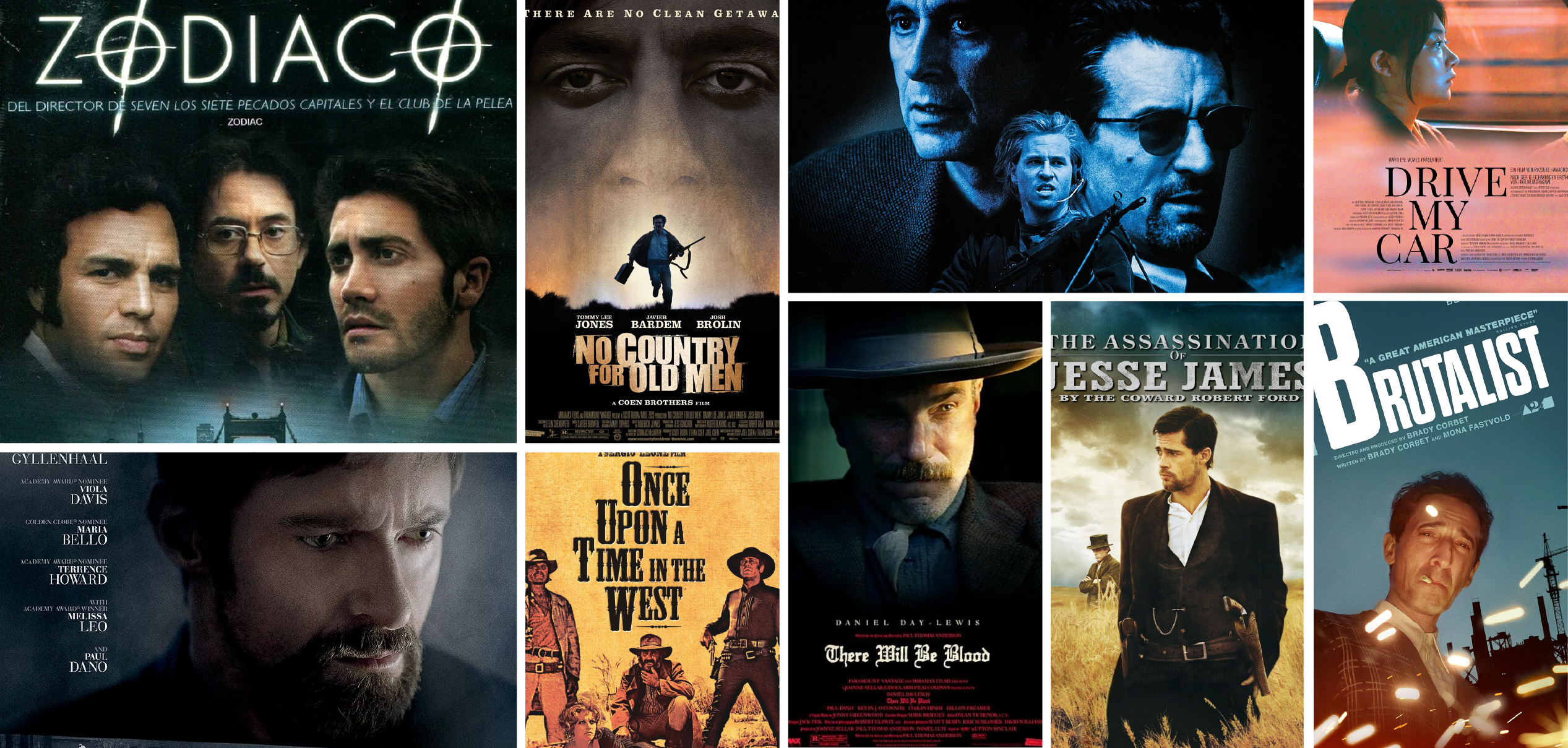
There Will Be Blood (2007)
Director: Paul Thomas Anderson
Starring: Daniel Day-Lewis, Paul Dano, Kevin J. O'Connor, Dillon Freasier
Runtime: 2h 38m
Where to watch (US): Streaming on Paramount+. Free with a library card on Kanopy and Hoopla. Rent or buy on Prime Video, Apple TV, Google Play.
Content warnings: Murder, alcoholism, child endangerment, religious coercion.
Who disappears: Daniel Plainview, a silver prospector turned California oil man at the turn of the twentieth century.
How it works: The film opens with Plainview alone in a mine shaft, injured, dragging himself out. He is recognisably a man building a life. Anderson then spends two and a half hours removing, one deal at a time, every part of him that was capable of wanting something with another person in the picture: his adopted son H.W., his supposed brother Henry, the preacher Eli Sunday who is the only person left he can still feel anything about, and that feeling is hatred.
The moment it completes: The bowling alley beneath the mansion, and the line that ends the film. Plainview announces he is finished, and he is right in a way he does not intend.
The ScreenDollars Take: There Will Be Blood is not a film about greed. Greed implies wanting something, and Plainview stops wanting anything around the halfway mark. Watch what Day-Lewis does with volume: he gets quieter as the character empties, until the final act, when a man shouts in an empty room because there is no longer anyone he needs to convince. Anderson never gives you the scene where he turns, and that refusal is the argument. Nobody turns. People keep choosing, and one day the choosing is over.
Watch it when you have three hours and nobody to answer to afterwards.
Nightcrawler (2014)
Director: Dan Gilroy
Starring: Jake Gyllenhaal, Rene Russo, Riz Ahmed, Bill Paxton
Runtime: 1h 57m
Where to watch (US): Streaming on Netflix and Sundance Now. Free with a library card on Kanopy. Rent or buy on Prime Video, Apple TV, Fandango at Home.
Content warnings: Crime scene imagery, on-screen shooting, workplace coercion, sociopathy.
Who disappears: Lou Bloom, a Los Angeles drifter who discovers that freelance crime footage sells.
How it works: Bloom starts the film stealing scrap metal and reciting management-seminar language he clearly learned online. He is unnerving but legible. As his footage sells, the language stays, and the person behind it thins out: he rearranges a body for a better frame, withholds evidence, and finally arranges the event he intends to film. Dan Gilroy's structure is the trick. Every step up the career ladder is a step out of the human race, and the film never separates the two.
The moment it completes: The final address to his new hires, delivered in the same tone as everything else he has ever said. There is no person left underneath the pitch.
The Screendollars Take: Nightcrawler is a workplace film that happens to be shot at night. Gyllenhaal plays Bloom with almost no blinking and a permanent slight smile, and Rene Russo's Nina is the film's real horror: an experienced professional who understands exactly what he is and negotiates with him anyway. Nothing in Bloom's philosophy is invented by the film. Every line of it is available in any business paperback. He is not the aberration. He is the graduate.
Watch it when you want a film that makes ambition feel like a diagnosis.
Whiplash (2014)
Director: Damien Chazelle
Starring: Miles Teller, J.K. Simmons, Paul Reiser, Melissa Benoist
Runtime: 1h 47m
Where to watch (US): Streaming on MGM+ and MGM Plus Roku Premium Channel. Rent or buy on Prime Video, Apple TV, Fandango at Home.
Content warnings: Sustained verbal and emotional abuse, blood injury, a car crash, a reference to suicide.
Who disappears: Andrew Neiman, a first-year drummer at the Shaffer Conservatory in New York.
How it works: Neiman arrives with a family, a girlfriend, and a plausible life. Terence Fletcher removes them by proxy, not by instruction: Neiman ends the relationship himself, alienates the family himself, drives himself into an accident, and keeps playing with a bleeding hand because the alternative is being ordinary. Damien Chazelle stages every subtraction as a decision the character makes freely, which is the cruellest possible reading of what mentorship can be.
The moment it completes: The extended "Caravan" finale, when Fletcher finally looks at him with approval. Whatever is behind the kit at that point is not the student from the first reel.
The Screendollars Take: Whiplash is not a film about ambition rewarded. It is a film about a boy being edited down to a pair of hands. Watch how Chazelle shoots the drums: cymbals, snare, sweat, blood, all in close-up, all in pieces, so that by the finale Neiman has been literally dismembered by the camera. The ending plays as triumph and functions as an obituary. If you stood up and cheered, the film already accounted for you.
Watch it when you want to argue with someone afterwards.
Uncut Gems (2019)
Directors: Josh Safdie, Benny Safdie
Starring: Adam Sandler, Julia Fox, Lakeith Stanfield, Kevin Garnett, Idina Menzel. Runtime: 2h 16m
Where to watch (US): No current subscription streaming. Rent or buy on Prime Video, Apple TV, Fandango at Home.
Content warnings: Gambling addiction, sustained shouting and stress, violence, a shooting.
Who disappears: Howard Ratner, a Diamond District jeweller running debts he services with more debt.
How it works: Ratner begins the film already compromised, which is why the disappearance is cognitive rather than ethical. What dissolves across the week the film covers is his ability to tell an opportunity from a trap. The Safdies build the effect out of sound: overlapping dialogue, competing phone calls, a score that never releases, so the audience loses the capacity to weigh options at the same rate he does. His wife, his children, and his own safety stop registering as inputs.
The moment it completes: The final sequence, with the bet won, the money real, and Ratner locked inside a trap he designed himself and cannot stop celebrating in.
The Screendollars Take: Uncut Gems is not a thriller about debt. It is a film about a man who has been replaced by a nervous system. Sandler plays Ratner as almost entirely reactive, a person constructed from whatever stimulus arrived last, and the performance's genius is that the charm is real and completely load-bearing. The tragedy is not the ending. It is that no version of this man could ever have reached a different one
Watch it when your own week has already calmed down.
Mode 2: The Psychological Disappearance, When Identity Dissolves On Screen
Psychological disappearance is the most subjective mode, because the loss happens somewhere the camera cannot go. Four films follow, and each solves that problem by refusing to stand outside the character's perception. None of them clarify what was real. That refusal is the subject, not a puzzle to be solved by a video essay.
Black Swan (2010)
Director: Darren Aronofsky
Starring: Natalie Portman, Mila Kunis, Vincent Cassel, Barbara Hershey, Winona Ryder
Runtime: 1h 48m
Where to watch (US): No current subscription streaming. Rent or buy on Prime Video, Apple TV, Fandango At Home.
Content warnings: Self-harm imagery, disordered eating cues, hallucination, sexual content, controlling parenting.
Who disappears: Nina Sayers, a technically precise dancer cast as both swans in Swan Lake.
How it works: Nina's discipline is the problem the ballet needs solved, and the film's method is to grant the solution as a symptom. Skin, mirrors, reflections that lag, a rival who may be a projection: Darren Aronofsky refuses to mark any of it as interior, so hallucination and event carry identical weight on screen. By the performance sequence there is no stable narrator left, including the audience.
The moment it completes: The transformation on stage. Read it as breakdown or as transcendence; Nina is absent either way.
The Screendollars Take: Black Swan is not a film about perfectionism. It is a film about a woman being consumed by a role that was written to consume women. Aronofsky shoots almost the entire film from behind Portman's shoulder, hand-held, so you are permanently one step behind her and can never see her face and her situation at once. The last line is spoken by someone who has already gone. What she calls perfection, the film calls an ending
Watch it when you can follow it with something silent and undemanding.
The Machinist (2004)
Director: Brad Anderson
Starring: Christian Bale, Jennifer Jason Leigh, Aitana Sánchez-Gijón, John Sharian, Michael Ironside
Runtime: 1h 42m
Where to watch (US): Streaming on Paramount+, MGM+, Philo and fuboTV. Rent or buy on Prime Video, Apple TV, Fandango at Home.
Content warnings: Extreme depiction of emaciation, industrial injury, guilt, hallucination, a fatal accident involving a child.
Who disappears: Trevor Reznik, a lathe operator who has not slept in a year.
How it works: Reznik arrives already most of the way gone, which makes this the mode's late-stage case study. Bale told the San Francisco Chronicle in 2004 that he lost 63 pounds for the role and weighed 122 pounds while shooting, and Brad Anderson frames that body as evidence rather than as a feat. The plot Reznik believes he is in, involving a co-worker nobody else can see, is a construction his mind built to avoid a fact. The film is the last stage of a man metabolising himself.
The moment it completes: The arrival at the police station, when he stops maintaining the story. Sleep and disappearance arrive together.
The Screendollars Take: The Machinist is not a mystery with a twist. It is a portrait of a person who has already been evicted from himself and keeps paying rent. Anderson colour-grades the entire film toward a sickly green, so Bale's body reads as the only true thing in the frame. The revelation is not what Reznik did. It is that the answer arrives too late to be inhabited by anyone.
Watch it when you want something short, cold and precise.
Repulsion (1965)
Director: Roman Polanski
Starring: Catherine Deneuve, Ian Hendry, John Fraser, Yvonne Furneaux
Runtime: 1h 45m
Where to watch (US): Streaming on fuboTV and Midnight Pulp. Free with ads on Free Movies Plus. Rent or buy on Prime Video, Apple TV, Fandango at Home.
Content warnings: Sexual assault imagery, murder, severe mental illness, isolation.
Who disappears: Carol Ledoux, a Belgian manicurist sharing a London flat with her sister.
How it works: Carol is withdrawn from the first scene, and the film treats that as a baseline rather than a symptom. When her sister Helen leaves for a holiday in Italy, the flat takes over the job of characterisation: walls crack, hands push through plaster, corridors stretch, food rots on the counter in real time. Roman Polanski shoots all of it as objective fact, with no dissolve or filter to mark it as interior, and the effect is that Carol does not describe her collapse. She is architecture by the end.
The moment it completes: The corridor of hands. There is no longer a boundary between the woman and the room.
The Screendollars Take: Repulsion is not an early Polanski curiosity. It is the film that taught cinema how to shoot a mind from the inside without cheating. The trick is the sound design: a dripping tap, a ticking clock, nuns laughing in the courtyard, all held at the same volume as the violence, so nothing is ranked and nothing can be dismissed. Every psychological horror film since has been working in this vocabulary, usually with less discipline.
Watch it when you want to see the blueprint the rest of the mode is copying.
Persona (1966)
Director: Ingmar Bergman
Starring: Bibi Andersson, Liv Ullmann, Margaretha Krook, Gunnar Björnstrand · Runtime: 1h 24m
Where to watch (US): Streaming on HBO Max and The Criterion Channel. Rent or buy on Prime Video, Apple TV, Fandango at Home.
Content warnings: References to suicide, discussion of an unwanted pregnancy, sexual content, disturbing imagery.
Who disappears: Alma, a young nurse, or Elisabet Vogler, an actress who has stopped speaking, or the distinction between them.
How it works: Elisabet goes silent mid-performance and is sent to a coastal house with Alma to look after her. Alma talks. That is the whole engine. Across 84 minutes, her confessions fill the silence until the silence starts using them, and Ingmar Bergman punctuates the process by attacking the film itself: the strip burns, images invert, the projector shows its own machinery. Identity dissolution is staged as material dissolution.
The moment it completes: The composite face, half Andersson and half Ullmann, held long enough that you cannot unsee the join or find it.
The Screendollars Take: Persona is not a difficult film. It is a simple film about a hard thing: what happens to a self that is only ever spoken to. Bergman's decision to let the medium break down alongside the characters is not a flourish; it is the argument made in the only language available. Sixty years on, nothing in psychological cinema has gone further. Most of it is still arriving.
Watch it when you have somewhere quiet and no intention of pausing.
Mode 3: The Physical Disappearance, When the Body Itself Transforms
Physical disappearance is the mode with the highest craft cost and the easiest failure state. Prosthetics and effects can deliver a monster in one cut; these four films instead spend their runtimes making you watch a familiar form leave, stage by stage, while someone you know is still inside it.
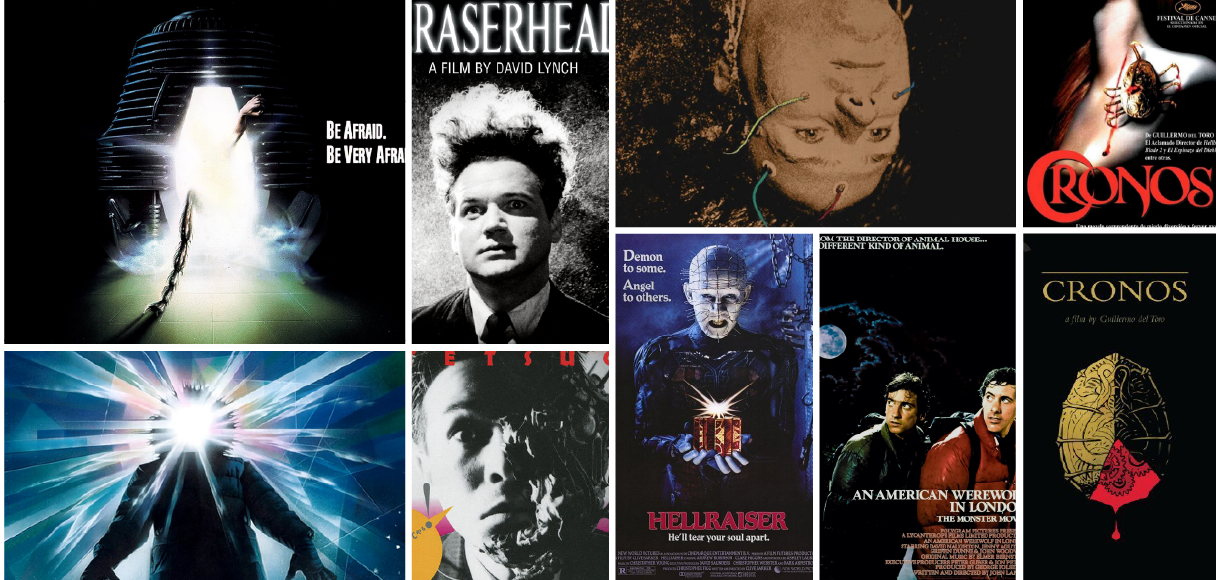
The Fly (1986)
Director: David Cronenberg
Starring: Jeff Goldblum, Geena Davis, John Getz
Runtime: 1h 36m
Where to watch (US): No current subscription streaming. Rent or buy on Prime Video, Apple TV, Fandango at Home.
Content warnings: Extreme body horror, dismemberment, a distressing pregnancy sequence, mercy killing.
Who disappears: Seth Brundle, a scientist who tests his own teleportation pods.
How it works: A housefly enters the pod. David Cronenberg then stages the fusion as a medical decline rather than a monster reveal: energy and appetite first, then fingernails and teeth kept in a bathroom cabinet. Brundle labels the Brundle Museum of Natural History, then the face, then the walk. Goldblum plays each stage as a man reasoning about his own symptoms, which keeps a person present in the frame long after the shape has left.
The moment it completes: The creature guiding the barrel of a shotgun toward its own head. The gesture is the last thing Brundle has left, and he uses it correctly.
The Screendollars Take: The Fly is not a monster movie with an unusually good makeup department. It is the most accurate film ever made about watching someone you love get sick. Cronenberg's decision to keep the effects work by Chris Walas and Stephan Dupuis, which won the Academy Award for Makeup, tethered to Geena Davis's reaction shots is what separates it from everything that copied it. You do not watch a transformation. You watch a woman doing the arithmetic on how much is left.
Watch it when you can handle a love story that ends in a veterinary decision.
The Substance (2024)
Director: Coralie Fargeat
Starring: Demi Moore, Margaret Qualley, Dennis Quaid
Runtime: 2h 21m
Where to watch (US): Streaming on HBO Max and MUBI. Rent or buy on Prime Video, Apple TV, Fandango At Home.
Content warnings: Extreme body horror, sustained gore, self-injection, ageing and body-image distress, misogyny.
Who disappears: Elisabeth Sparkle, a television fitness star fired on her fiftieth birthday.
How it works: A black-market procedure generates Sue, a younger body Elisabeth alternates into on a strict seven-day cycle. Every hour Sue steals is billed to the original, and Coralie Fargeat plays the accounting with no mercy at all: the ageing accelerates, the hidden body deteriorates, and the film's second half is a slow settlement of a debt taken out in the first. Fargeat won Best Screenplay at Cannes in 2024, and the film took five Academy Award nominations, including Best Picture, winning Makeup and Hairstyling.
The moment it completes: Monstro Elisasue on live television, coming apart in front of the audience that commissioned her.
The Screendollars Take: The Substance is not a film about vanity. It is a film about an industry that issues a woman a body and then repossesses it. Fargeat shoots Sue in the exact visual language of the commercials that destroyed Elisabeth, wide-angle, glossy, dismembering, so the camera itself is one of the antagonists. The excess of the last half hour is not indulgence. It is the bill, printed in full.
Watch it when you have eaten already and have nothing planned.
Titane (2021)
Director: Julia Ducournau
Starring: Agathe Rousselle, Vincent Lindon, Garance Marillier
Runtime: 1h 48m
Where to watch (US): Free with ads on Tubi. Free with a library card on Kanopy. Rent or buy on Apple TV, Fandango At Home.
Content warnings: Extreme body horror, murder, self-harm, sexual content, a distressing birth sequence.
Who disappears: Alexia, a dancer carrying a titanium plate from a childhood car crash.
How it works: Alexia's body starts producing metal and fluid it should not, and she responds by abandoning her identity outright: she breaks her own face, cuts her hair, and presents herself as Adrien, the son missing for a decade from firefighter Vincent's life. Julia Ducournau then does the unexpected thing and makes the second half tender. Vincent chooses the fiction. The body keeps changing underneath it. Ducournau became the second woman to win the Palme d'Or with this film, and the first to win it outright since Jane Campion shared the prize in 1993.
The moment it completes: The birth. Alexia ends and something continuous with her begins, in the same room, in the same minute.
The Screendollars Take: Titane is not provocation with a car in it. It is a film about whether a person can be loved after they have stopped being the thing that was loved. Ducournau shoots Vincent's steroid injections and Alexia's bindings with identical clinical patience, two people repairing bodies to hold a story together. The famous transgressions are not the point. The point is a man who decides not to look too closely, and is right.
Watch it when you want something that will not resolve into a genre.
Under the Skin (2013)
Director: Jonathan Glazer
Starring: Scarlett Johansson, Adam Pearson
Runtime: 1h 48m
Where to watch (US): Streaming on Netflix. Rent or buy on Prime Video, Apple TV.
Content warnings: Sexual content, attempted rape, an infant in danger, drowning, disturbing imagery.
Who disappears: an unnamed entity wearing a woman's body, hunting men in Glasgow.
How it works: The film opens with the process running smoothly: a van, a rehearsed conversation, a black liquid interior that takes what it needs. Jonathan Glazer then breaks the routine with an encounter with a man with a facial disfigurement, played by Adam Pearson, and the machine begins acquiring hesitations. Attempts at food fail. Attempts at intimacy fail differently. Something human is arriving in a body not built to hold it, which turns out to be its own kind of ending.
The moment it completes: The forest, the skin peeled away, the shape underneath looking at the face it wore.
The Screendollars Take: Under the Skin is not a science fiction film about an alien. It is a film about the exact moment a predator becomes something that can be hurt. Glazer shot much of the first half with hidden cameras and real strangers, which is why the early scenes have a documentary flatness the later ones lose entirely. Johansson does almost nothing for two hours, and it is the most exposed performance of her career. Empathy arrives, and it is fatal.
Watch it when you want a film with no interest in explaining itself.
Mode 4: The Absorption Disappearance, When Selfhood Merges With Something Larger
Absorption disappearance leaves the body intact and takes everything else. These four films all present the group as competent, coherent, and often kind, which is what makes them difficult. The horror is not that the community is a lie. It is that the community works.
Midsommar (2019)
Director: Ari Aster
Starring: Florence Pugh, Jack Reynor, William Jackson Harper, Will Poulter, Vilhelm Blomgren
Runtime: 2h 27m theatrical, 2h 51m director's cut
Where to watch (US): Streaming on HBO Max. Rent or buy on Prime Video, Apple TV, Fandango At Home.
Content warnings: Murder-suicide and its aftermath, ritual suicide, graphic injury, drug use, grief, a coerced sex scene.
Who disappears: Dani Ardor, a graduate student whose family has just died.
How it works: Dani attaches herself to a trip she was not invited on, with a boyfriend who has been leaving for a year. The Hårga commune offers what her actual life will not: people who breathe with her when she screams, a role, a schedule, an explanation. Ari Aster stages the assimilation as care, incrementally, in daylight, with every ritual introduced before it is enacted. The extra 24 minutes of the director's cut make Christian worse and the trade clearer.
The moment it completes: The final close-up on Pugh's face as the temple burns, held long past comfort, resolving into a smile.
The Screendollars Take: Midsommar is not a break-up film with a cult attached. It is a film that asks what you would trade for people who show up, and refuses to pretend the answer is obvious. Aster shoots the Hårga in symmetrical wide shots, always centred, always composed, while Dani's American life is filmed in cramped handheld darkness. The visual language is on the commune's side. That is not a mistake, and you should be uneasy about how much it works.
Watch it when you are not in the middle of a bad relationship.
Hereditary (2018)
Director: Ari Aster
Starring: Toni Collette, Alex Wolff, Milly Shapiro, Gabriel Byrne, Ann Dowd
Runtime: 2h 7m
Where to watch (US): Streaming on HBO Max. Rent or buy on Prime Video, Apple TV, Fandango At Home.
Content warnings: Sudden violent death, decapitation imagery, grief, mental illness, self-harm, cult ritual.
Who disappears: Peter Graham, a teenager who was allocated a purpose before he was born.
How it works: The Graham family is grieving a grandmother who turns out to have been running a coven that worships the demon king Paimon. What looks like a haunting is a logistics operation, and Peter is the venue. Ari Aster's structure is retrospective cruelty: on a second viewing, the film is not a mystery at all, and every domestic scene reads as inventory management. Toni Collette carries the film's grief while the plot quietly informs you that grief was scheduled.
The moment it completes: The treehouse, the bowing figures, the crown. The boy is not present at his own coronation.
The Screendollars Take: Hereditary is not a film about a haunted family. It is a film about being born into someone else's plan and calling it a personality. Aster shoots the house as a dollhouse and the dollhouse as a house, so scale keeps flipping, and the family is never confidently the real ones. The title is not about illness. It is about a debt that was assigned generations before anyone alive could refuse it.
Watch it when you have a full night and someone to talk to afterwards.
The Wicker Man (1973)
Director: Robin Hardy
Starring: Edward Woodward, Christopher Lee, Britt Ekland, Diane Cilento, Ingrid Pitt. Runtime: 1h 33m in the widely circulated cut; the original theatrical version ran 88 minutes, and longer restorations exist
Where to watch (US): Free with a library card on Kanopy and Hoopla. Free on Plex. Streaming on BFI Player Amazon Channel. Rent or buy on Prime Video, Apple TV, Fandango at Home.
Content warnings: Death by burning, ritual sacrifice, nudity, sexual coercion, religious content.
Who disappears: Sergeant Neil Howie, a devout mainland policeman investigating a missing girl on Summerisle.
How it works: Howie's Christianity is not a character trait; it is his entire operating system, and Summerisle's pre-Christian community is a functioning alternative that has no need of him except as a component. Every islander he interviews is polite, helpful, and lying. Robin Hardy structures the film as a procedural so that Howie's competence becomes the mechanism of his delivery: he investigates himself directly into the wicker structure.
The moment it completes: Howie praying inside the burning figure while the islanders sing. His faith holds. It simply becomes fuel for someone else's harvest.
The Screendollars Take: The Wicker Man is not a horror film about pagans. It is a film about a man absorbed into a belief system he never joined and could not have refused. Christopher Lee plays Lord Summerisle as a landlord rather than a fanatic, reasonable and slightly bored, which is far more frightening than a zealot. Howie is not murdered. He is used, which is what absorption always looks like from outside the fire.
Watch it when you want a folk-horror ending that no remake has ever matched.
The Master (2012)
Director: Paul Thomas Anderson
Starring: Joaquin Phoenix, Philip Seymour Hoffman, Amy Adams, Laura Dern
Runtime: 2h 17m
Where to watch (US): Streaming on Prime Video. Free with ads on Tubi, The Roku Channel, and Plex. Free with a library card on Kanopy and Hoopla. Rent or buy on Prime Video, Apple TV, Fandango At Home.
Content warnings: Alcoholism, war trauma, sexual content, violence, coercive group practice.
Who disappears: Freddie Quell, a Navy veteran who cannot be returned to civilian life.
How it works: Quell drinks solvents and cannot hold a job or a sentence. Lancaster Dodd and The Cause offer him a framework: processing sessions, exercises, a family, a role. This is the article's incomplete case, deliberately included because the evidence does not fit the tidier version of the model. Quell never fully joins and never fully leaves, and Paul Thomas Anderson refuses to say whether Dodd is saving him or farming him.
The moment it completes: Quell in bed with a stranger, running Dodd's processing questions on her, half joking. He left the group. The group did not leave.
The Screendollars Take: The Master is not a Scientology film. It is a film about a man with no interior asking someone else to install one. Anderson keeps returning to Quell alone in wide shots on the ship, on the beach, in the desert, always slightly hunched, a body that has not been told what to do next. Absorption usually erases a self. Here it lends one, on terms, and the loan is never repaid.
Watch it when you want the mode's hardest case rather than its cleanest.
Mode 5: The Replacement Disappearance, When Someone Else Takes the Body
Replacement disappearance is the mode that genre horror built, and the four films below all borrow its machinery to argue about something else: race, capital, authorship, celebrity. The form persists. The occupant changes. In every case, the audience works it out before the character does, which converts dread into something closer to grief.
Get Out (2017)
Director: Jordan Peele
Starring: Daniel Kaluuya, Allison Williams, Catherine Keener, Bradley Whitford, Betty Gabriel, Lakeith Stanfield
Runtime: 1h 44m
Where to watch (US): Streaming on YouTube TV. Rent or buy on Prime Video, Apple TV, Fandango at Home.
Content warnings: Racism, hypnosis and loss of bodily autonomy, surgical horror, on-screen deaths, a car accident.
Who disappears: Chris Washington, a photographer meeting his girlfriend's family for the weekend.
How it works: The Armitages run an auction. Bodies are acquired, consciousness is transplanted in, and the original occupant is left awake and immobilised in what the film calls the sunken place. Jordan Peele seeds the mechanism in plain sight from the first act, in the household staff, the small talk, the bingo cards, so the reveal functions as confirmation rather than surprise. The horror is procedural. Everyone in the house has done this before.
The moment it completes: The first fall into the sunken place, when the camera pulls Chris backwards into the dark while his body sits upright and compliant on the sofa.
The Screendollars Take: Get Out is not a film with a metaphor in it. The metaphor is the plot, executed at feature length with no seam anywhere. Peele's most disciplined choice is Betty Gabriel's Georgina, whose smile and single escaping tear tell you exactly what replacement costs long before anyone explains the procedure. The line about wanting Chris's eyes is the thesis. Admiration and consumption are the same transaction here, and the film knows which one gets called the compliments.
Watch it when you want to see genre used as an argument rather than a costume.
The Thing (1982)
Director: John Carpenter
Starring: Kurt Russell, Wilford Brimley, Keith David, Richard Masur, Richard Dysart. Runtime: 1h 49m
Where to watch (US): No current subscription streaming. Rent or buy on Prime Video, Apple TV, Fandango at Home. Repertory screenings are currently listed in US theatres.
Content warnings: Extreme body horror, animal death, gore, suicide, paranoia.
Who disappears: the crew of US Outpost 31, in an order the film declines to confirm.
How it works: The organism copies whatever it consumes, memories included, and the copy does not know to behave differently until it is exposed. John Carpenter therefore stages the disappearances offscreen, in gaps, in unaccounted minutes, and the film's tension is bookkeeping: who was alone, and when. Rob Bottin's effects work is celebrated for good reason, but the machine underneath it is scheduling.
The moment it completes: The blood test. The room learns what has already happened to it, and the answer is worse than the sequence that follows.
The Screendollars Take
The Thing is not a creature feature. It is a film about a group discovering that identity is unverifiable, and that trust was always a convenience. Carpenter shoots the men in wide, cold, evenly lit compositions where everyone is visible, and nobody is legible. The famous ending is not ambiguous for effect. It is the only honest place to stop, because the film has spent 109 minutes proving that looking at someone tells you nothing.
Watch it when you want the mode at its most structurally perfect.
Enemy (2013)
Director: Denis Villeneuve
Starring: Jake Gyllenhaal, Mélanie Laurent, Sarah Gadon, Isabella Rossellini · Runtime: 1h 31m
Where to watch (US): Free with ads on Tubi. Rent or buy on Prime Video, Apple TV, Fandango at Home.
Content warnings: Sexual content, a car crash, disturbing imagery, coercive relationship dynamics.
Who disappears: Adam Bell, a history lecturer who finds a bit-part actor with his face.
How it works: Adam spots his double in a rented film, tracks him down, and the two men begin trying on each other's lives, including each other's partners. Denis Villeneuve withholds every stabilising fact: whether there are two men, one man, or a single psyche presenting two settlements. Toronto is shot in sulphurous yellow like a city in a jar. The spiders are not explained and do not need to be.
The moment it completes: The bedroom, the last shot, the sigh. Whoever that man is, he has been here before and knows the routine.
The Screendollars Take: Enemy is not a puzzle box. It is a film about a man who would rather be replaced than be responsible. Villeneuve's tell is repetition: lectures on totalitarian control repeated word for word, the same corridors, the same key in the same lock, a life already running on a loop before the double appears. Solve it if you like. The exhaustion in that final sigh is the actual content, and it survives every reading.
Watch it when you have ninety minutes and a tolerance for being left alone with it.
Perfect Blue (1997)
Director: Satoshi Kon
Starring (voice): Junko Iwao, Rica Matsumoto, Shinpachi Tsuji
Runtime: 81 min
Where to watch (US): Streaming on HBO Max. Rent or buy on Prime Video, Apple TV, Fandango At Home.
Content warnings: A staged sexual assault sequence, stalking, murder, self-harm, mental illness.
Who disappears: Mima Kirigoe, a pop idol leaving her group for acting work.
How it works: Mima's fans do not accept the change; her new career requires humiliations she agrees to, and a website appears that narrates her days in her own voice. Satoshi Kon cuts between the drama she is filming, the life she is living, and the idol she used to be with no marker separating them, so the audience loses custody of the timeline. Her former manager Rumi keeps the discarded Mima alive by wearing her, which is replaced by devotion rather than by malice.
The moment it completes: Rumi in the idol costume, seeing the reflection she wants and not the one there. The pop star has a body again. It belongs to someone else.
The Screendollars Take: Perfect Blue is not an anime thriller. It is the first film to understand that being watched at scale is a form of eviction. Kon's edit rhymes across contexts, a scream in a scene cutting to a scream on set, so the medium performs the confusion instead of describing it. Darren Aronofsky openly restaged its bathtub shot in Requiem for a Dream, and Kon himself wrote about the resemblance. Twenty-nine years on, its account of a public self outliving a private one has only become more literal.
Watch it when you want the mode's most formally radical entry.
The Overlap Zone: Films That Cross Between Modes
Several films here sit in more than one mode at once. The primary assignment is a critical claim about where a film's centre of gravity lies, and the alternative readings below are all defensible.
- Under the Skin: physical plus replacement. The primary mode is physical, because the film's decisive event is a body coming apart in a forest. The replacement reading is real: an entity is occupying a human form, and the film never confirms whether the woman whose shape it wears existed. Mode 3 wins on where the runtime spends its attention.
- Hereditary: absorption plus replacement. The primary mode is absorption, because the film's argument concerns an entire family allocated across generations. Focus only on Peter and the treehouse, and Mode 5 becomes the better description: a specific consciousness evicted for a specific occupant. Ari Aster wrote both films into the same object.
- Persona: psychological plus replacement. The primary mode is psychological, but every assignment here is contestable, and Ingmar Bergman designed it that way. If Alma and Elisabet were always one psyche, the film is not about merging at all, and the article's taxonomy is the thing being dissolved.
- The Substance: physical plus replacement. The primary mode is physical, because the ending is a body. Sue is generated, named, and treated in-film as a separate entity with her own interests, which makes the replacement reading strong. Coralie Fargeat's own framing, that they are one person, is the argument for Mode 3.
- Uncut Gems: moral plus psychological. The primary mode is moral, because the structural core is a cascade of choices. What actually dissolves in Howard Ratner is closer to cognition than conscience, which is why the film sits at the border and belongs on any honest reading of both.
Overlap is a marker of quality rather than a filing problem. Films that operate in two registers at once are the ones that survive rewatching, because the second viewing is spent testing an argument rather than following a plot.
Content Warnings and Viewing Considerations
Every film in this article contains material some viewers will find distressing. Warnings are grouped by content type below, and the specific warnings on each entry above are the ones to check before pressing play.
- Body horror and physical transformation. The Fly (1986), The Substance (2024), Titane (2021), The Thing (1982) and Under the Skin (2013) all contain sustained on-screen bodily transformation and gore. The Substance's final act is the longest continuous stretch of body horror in the article. The Thing's practical effects remain unusually explicit more than forty years on.
- Psychological distress and mental illness. Black Swan (2010), The Machinist (2004), Repulsion (1965), Persona (1966) and Perfect Blue (1997) depict psychological collapse in detail. Black Swan contains self-harm imagery and cues around disordered eating. The Machinist's central visual is an actor's extreme weight loss. Perfect Blue contains a staged sexual assault sequence filmed as a scene within the film.
- Grief, family tragedy and loss. Midsommar (2019), Hereditary (2018) and The Machinist (2004) build directly on bereavement. Midsommar opens with the aftermath of a murder-suicide. Hereditary contains a sudden death in its first act that many viewers find very hard to sit with, and the film gives no warning before it.
- Cult, ritual and religious content. Midsommar (2019), Hereditary (2018), The Wicker Man (1973) and The Master (2012) all present belief systems from inside their own logic rather than critiquing them from outside. Viewers with religious-group histories often find that framing more difficult than explicit horror.
Practical viewing notes. These are not background films. One per evening is the sensible ceiling, and the four Mode 3 entries in particular are worth watching with someone else in the house. If you are currently in a difficult stretch, Midsommar, Hereditary, Black Swan and The Machinist are the four to postpone rather than push through. Knowing your own limits is not squeamishness. It is the same judgment these films are all about.
Support. If a film leaves you struggling, support is available. In the US, the 988 Suicide and Crisis Lifeline can be reached by call or text at 988, 24 hours a day. The National Alliance for Eating Disorders helpline is 1-866-662-1235. RAINN's National Sexual Assault Hotline is 1-800-656-4673. Reaching out after a film hits somewhere unexpected is a reasonable response, not an overreaction.
Where to Watch Every Film in This Article
All twenty films are listed by platform below, verified via JustWatch on 1 September 2026 for the United States. Streaming rotates constantly, so check before subscribing to anything on the strength of a single title.
- HBO Max: Persona, The Substance (also on MUBI), Midsommar, Hereditary, Perfect Blue.
- Netflix: Nightcrawler (also on Sundance Now), Under the Skin.
- Paramount+: There Will Be Blood, The Machinist (also on MGM+, Philo and fuboTV).
- MGM+: Whiplash, The Machinist.
- The Criterion Channel: Persona.
- Prime Video with a subscription: The Master.
- YouTube TV: Get Out.
- fuboTV: Repulsion, The Machinist.
- Free with ads or with a library card: The Wicker Man (Kanopy, Hoopla, Plex), Titane (Tubi, Kanopy), The Master (Tubi, The Roku Channel, Plex, Kanopy, Hoopla), Enemy (Tubi), Nightcrawler (Kanopy), There Will Be Blood (Kanopy, Hoopla), Repulsion (Free Movies Plus).
- Rent or buy only, with no US subscription option: Uncut Gems, Black Swan, The Fly, The Thing.
The strongest single subscription for this list is HBO Max, which carries five of the twenty including both Ari Aster films and the article's two most-cited formal experiments, Persona and Perfect Blue. Anyone who prefers to own rather than rent will find the whole list available for digital purchase, and four titles are only available that way. If you are assembling a broader watchlist across services, our complete streaming guide to the best films on every platform covers the same verification method across a much wider slate. For performance-first viewing, the four actors doing the heaviest work here also appear in our ranking of the greatest movie performances of the twenty-first century.
Why These Films Matter Beyond Their Disturbance
Five mechanisms, twenty films, and sixty-one years between the oldest and the newest. Moral, psychological, physical, absorption, replacement. The framework holds across national cinemas, budgets and genres, which is the strongest available evidence that it is describing something real about how the medium works rather than something clever about how this article is organised.
What it gives you is a question to bring to everything you watch next. When a film unsettles you and you cannot say why, ask which part of the person left and what took the space. Most films that feel disturbing turn out to be doing something much simpler: threatening a character rather than dissolving one. The difference is the difference between a scare and a haunting.