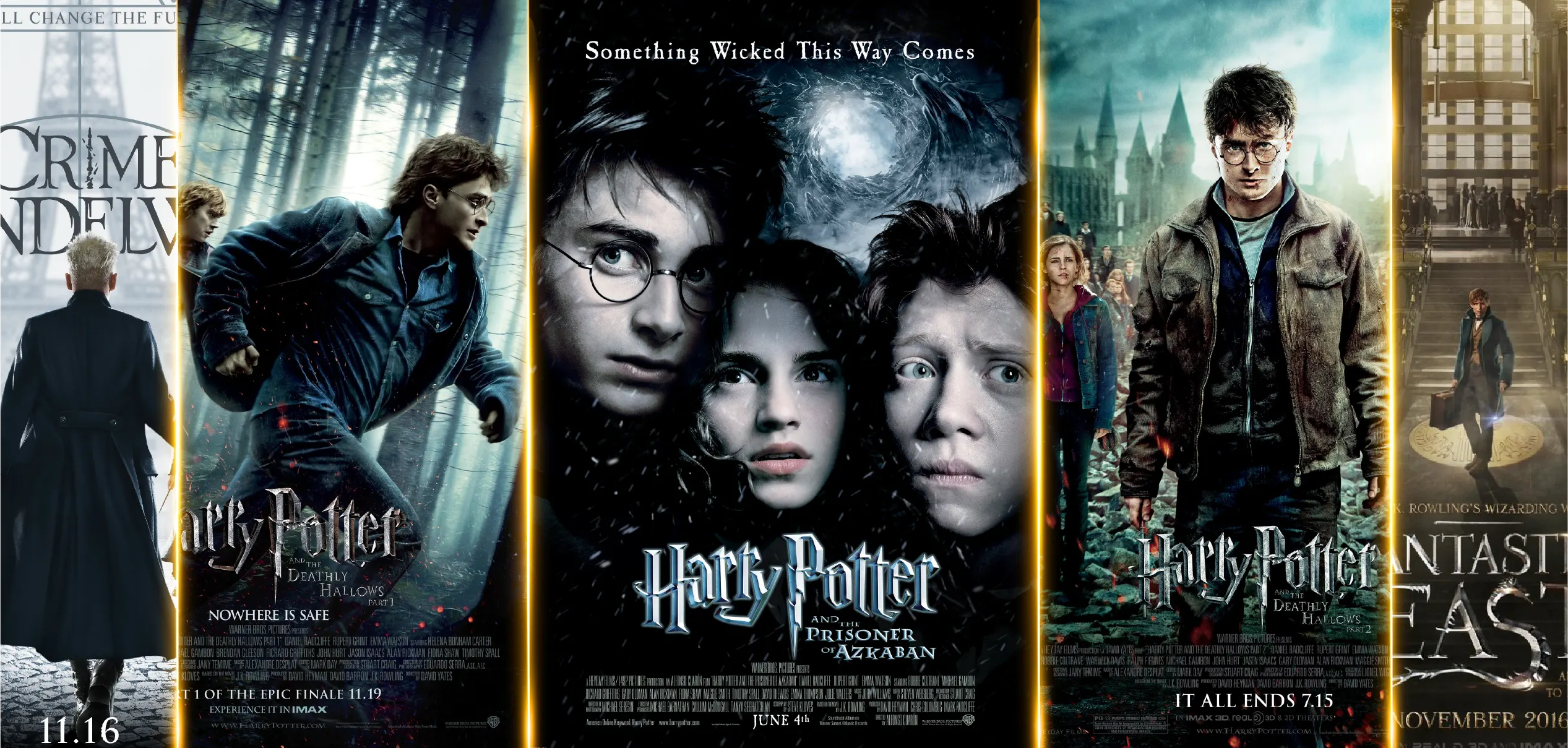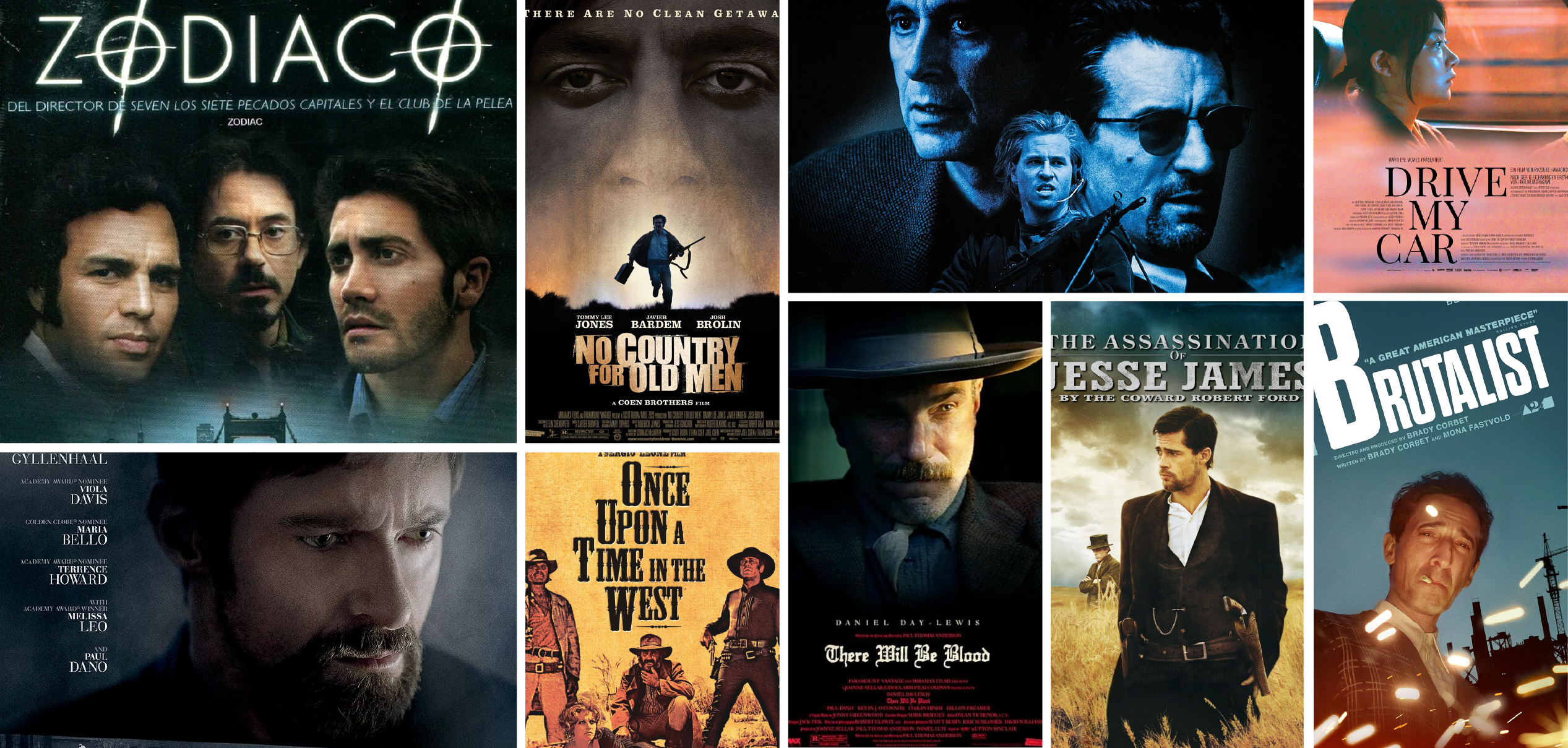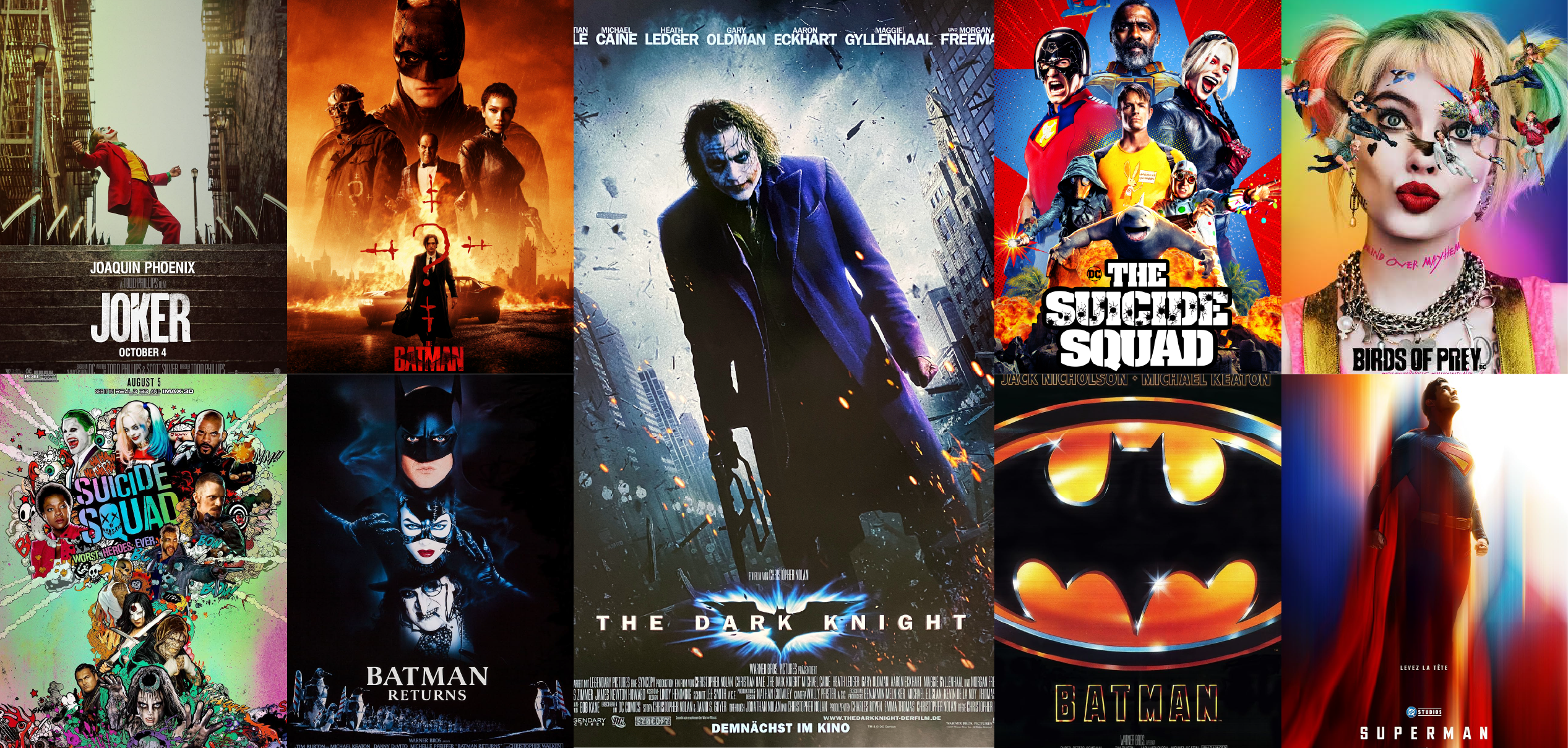

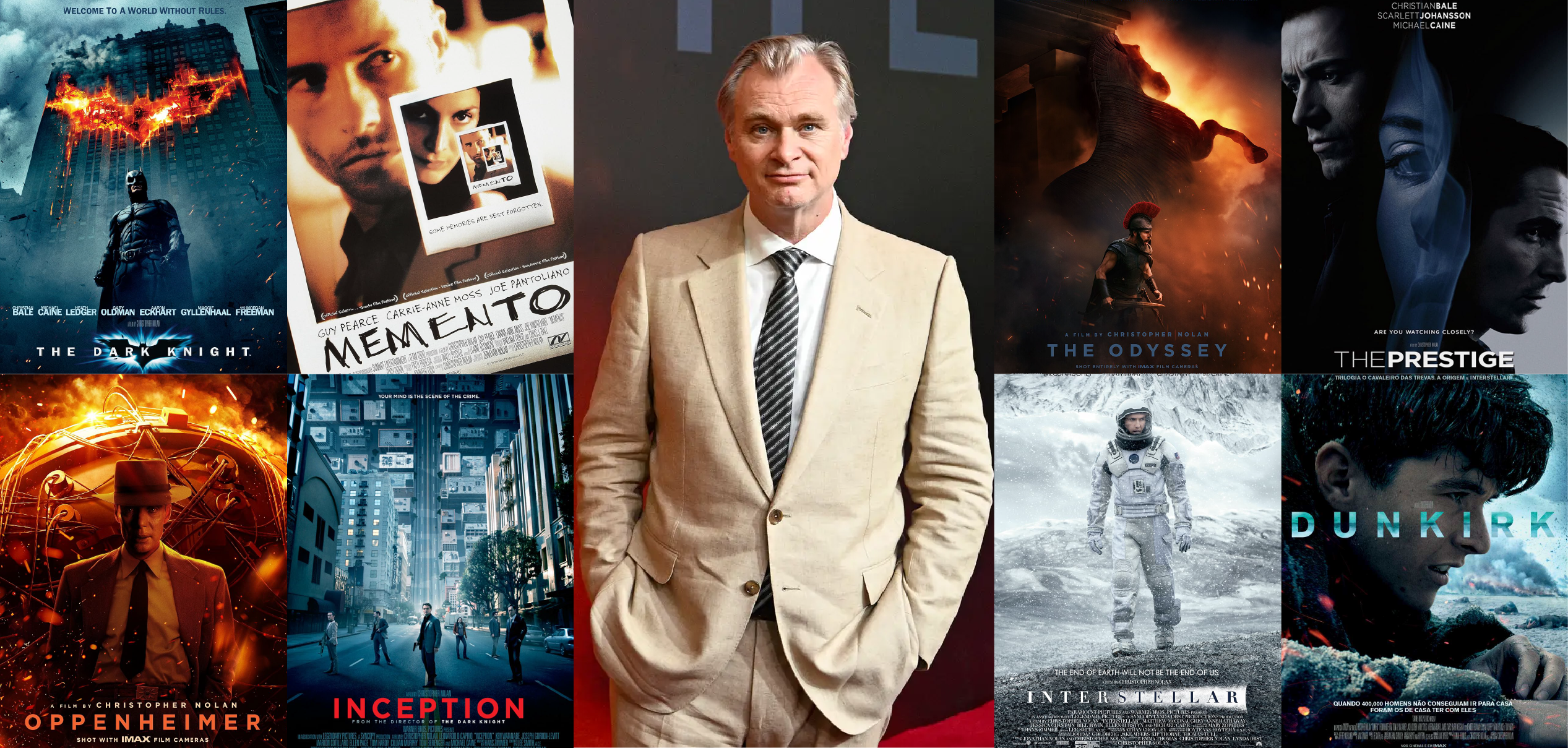

Christopher Nolan has directed 13 feature films in 28 years, from Following (1998), made for $6,000, to The Odyssey (2026), made for $250 million. Together, his films have grossed more than $8 billion worldwide as of October 2026, and three of them, The Dark Knight, The Dark Knight Rises and The Odyssey, have each passed $1 billion. Oppenheimer won him Best Director and Best Picture at the 96th Academy Awards in March 2024.
Very few directors sell a film on their name alone, and Nolan is one of them.
The reason is not a genre or a franchise. It is a set of habits so consistent that you can recognise a Nolan film within minutes: time treated as story material, real effects instead of digital ones, plots built to be solved, images made for the largest screen available, and sound that behaves like a character.
Screendollars calls these the Five Signatures of Christopher Nolan Cinema, and every film below is measured against them.
How Are Christopher Nolan's Movies Ranked Here?
Every Christopher Nolan movie on this list is ranked on five criteria: critical standing over time, cultural impact, technical craft, structural ambition, and rewatch value. A film that is strong on all five ranks above a film that is strong on two or three, which is why review scores alone do not set the order.
-
Critical standing means how a film was received on release and how that view has held up since.
-
Cultural impact covers quotability, influence on other filmmakers, and how often a film still comes up in conversation.
-
Technical craft is the cinematography, editing, sound, and performance direction.
-
Structural ambition is the puzzle-like construction that separates Nolan from other blockbuster directors.
-
Rewatch value asks whether a second viewing gives you something the first one could not.
The Prestige is the clearest example of why scores are not the whole story. It holds a Metascore of 66, lower than Insomnia's 78, yet it ranks seven places higher here because its structure and rewatch value are in a different league. Dunkirk works the other way. Its Metascore of 94 is the highest of any Nolan film, but it sits at number 8 because its characters are deliberately thin and its emotional pull is limited.
Two other placements will surprise some readers. The Odyssey sits at number 5 rather than near the top, because a film released in July 2026 has not yet had time to settle against films whose reputations have already been tested by years of rewatching and reassessment. Following sits at number 11, above two far bigger films, because the ideas that drive Nolan's whole career are already fully formed in it.
The ranking leaves some things out on purpose.
Box office is a factor in cultural impact, not a criterion on its own, and fan popularity does not move a film up. Nolan's short films (including Larceny, Doodlebug, and the 2015 documentary short Quay) are excluded, as are films he produced but did not direct, such as Man of Steel.
What Makes a Movie a Christopher Nolan Movie?
A Christopher Nolan movie is defined by five recurring signatures: time used as the subject of the story, practical effects over digital ones, puzzle-box plotting, filmmaking built for IMAX screens, and sound design that drives the drama. Most of his films show several of these at once, and the films at the top of this ranking show them at their strongest.
Signature 1: Temporal Structure as Subject
Temporal structure is Nolan's habit of making time itself the material of the story rather than just the order events happen in. Memento (2000) runs its main story backwards. Inception (2010) stacks dream levels where time moves more slowly the deeper the characters go. Interstellar (2014) turns time into a physical cost, with hours near a black hole costing years back on Earth. Dunkirk (2017) cuts between three timelines of one week, one day, and one hour.
Tenet (2020) sends objects and people backwards through time, and Oppenheimer (2023) interlocks a colour timeline with a black-and-white one. Insomnia (2002) is the one Nolan film that tells its story in a straight line, which is a large part of why it ranks last.
Signature 2: Practical-Effects Ambition
Practical-effects ambition is Nolan's preference for capturing real events on camera instead of building them in a computer. For The Dark Knight (2008), his crew flipped a real 18-wheel truck end over end on LaSalle Street in Chicago. For Inception, they built a rotating hotel corridor inside a former airship hangar at Cardington in England, so the actors fought on a set that was physically turning. Interstellar's dust storms were made with giant fans blowing a synthetic, cellulose-based dust. Oppenheimer recreated the Trinity nuclear test with real explosions rather than a computer simulation. The result is images with weight, because the camera recorded something that was actually there.
Signature 3: Puzzle-Box Architecture
Puzzle-box architecture is Nolan's way of building a film so that its structure is part of what you are watching, and so that a second viewing reveals how the pieces fit. Memento withholds cause until after you have seen the effect. The Prestige (2006) is shaped like the magic trick it describes. Inception asks you to track four dream levels at once, Tenet folds its plot back on itself, and Oppenheimer delays the meaning of its early scenes until the final hour. Many directors make intelligent blockbusters. Very few make blockbusters whose construction is the main event, and the films that do it best sit at the top of this list.
Signature 4: IMAX-Scale Ambition
IMAX-scale ambition is Nolan's insistence that cinema should be made for, and seen on, the largest screens available. The Dark Knight was the first major Hollywood feature shot partly with IMAX cameras, including its opening bank heist, and every Nolan film since has used them except Inception. Cinematographer Hoyte van Hoytema has said that three-quarters of Dunkirk was shot on IMAX film.
For Oppenheimer, Kodak manufactured black-and-white film in 65mm for the first time. The Odyssey (2026) went furthest of all: it is the first feature shot entirely with IMAX film cameras, and it has become IMAX's highest-grossing release of all time. Nolan uses his commercial clout to make a consistent argument that a film loses something essential when it is watched on a small screen.
Signature 5: Sound Design as Character
Sound design as character is Nolan's use of music and sound as an active force in the story rather than a background layer. Hans Zimmer scored six Nolan films, Batman Begins (2005) and The Dark Knight with James Newton Howard, then Inception, The Dark Knight Rises, Interstellar and Dunkirk on his own, and gave Inception its low brass blasts and Interstellar its church organ. In Dunkirk, Zimmer built the score around a recording of Nolan's own pocket watch, which is why the film never stops ticking.
Ludwig Göransson took over for Tenet and went on to score Oppenheimer, which won him an Oscar, and The Odyssey. Nolan's mixes are famously loud, and dialogue often competes with the score. Fans hear immersion and critics hear muddiness, but nobody hears a Nolan soundtrack as neutral.
How Do the Five Signatures Decide the Ranking?
The Five Signatures decide the ranking by rewarding films that show several signatures at full strength. The Dark Knight combines practical effects, IMAX scale, and a score that set the template for modern superhero music. Memento and Oppenheimer both push temporal structure further than any other films in Nolan's career. Insomnia shows the fewest signatures of any Nolan film, and despite strong review,s it lands at number 13.
Christopher Nolan Movies at a Glance
| Rank | Film | Year | Director | Lead Signature | US streaming (October 2026) | Key fact |
|---|---|---|---|---|---|---|
| 1 | The Dark Knight | 2008 | Christopher Nolan | Practical Effects | HBO Max | $1.008 billion worldwide |
| 2 | Oppenheimer | 2023 | Christopher Nolan | Temporal Structure | Peacock | Seven Oscars, including Best Picture |
| 3 | Memento | 2000 | Christopher Nolan | Temporal Structure | Netflix, Hulu, Prime Video, Peacock; free with ads on Tubi | Nolan's first Oscar nomination |
| 4 | Inception | 2010 | Christopher Nolan | Puzzle-Box Architecture | Rent or buy only | $839.8 million worldwide |
| 5 | The Odyssey | 2026 | Christopher Nolan | IMAX Scale | In theaters | $1.768 billion worldwide, run ongoing |
| 6 | The Prestige | 2006 | Christopher Nolan | Puzzle-Box Architecture | Netflix | David Bowie plays Nikola Tesla |
| 7 | Interstellar | 2014 | Christopher Nolan | Sound Design | Paramount+, Prime Video | $758.6 million worldwide |
| 8 | Dunkirk | 2017 | Christopher Nolan | Temporal Structure | Paramount+ | Metascore 94, highest of any Nolan film |
| 9 | Batman Begins | 2005 | Christopher Nolan | Practical Effects | HBO Max | $375.6 million worldwide |
| 10 | The Dark Knight Rises | 2012 | Christopher Nolan | IMAX Scale | HBO Max | $1.115 billion worldwide |
| 11 | Following | 1998 | Christopher Nolan | Puzzle-Box Architecture | Sundance Now, Philo; free on Kanopy | Made for $6,000 |
| 12 | Tenet | 2020 | Christopher Nolan | Temporal Structure | Rent or buy only | $365.3 million worldwide |
| 13 | Insomnia | 2002 | Christopher Nolan | Sound Design | Apple TV | Nolan's first studio film |
How Do All 13 Christopher Nolan Movies Rank From Best to Weakest?
The best Christopher Nolan movie is The Dark Knight (2008), followed by Oppenheimer (2023) and Memento (2000), and the weakest of his 13 features is Insomnia (2002). Every position is defended against the Five Signatures, with US streaming for each film and The Screendollars Take.
1. The Dark Knight (2008)
-
Director: Christopher Nolan
-
Starring: Christian Bale, Heath Ledger, Aaron Eckhart, Gary Oldman, Maggie Gyllenhaal
-
Rating: PG-13
-
Runtime: 152 minutes
-
Worldwide box office: $1.008 billion
-
Metascore: 85
-
Where to watch (US): Streaming on HBO Max. Rent or buy on Apple TV, Prime Video, and Fandango at Home.
-
Signatures at full strength: Practical Effects, IMAX Scale, Sound Design
The Dark Knight is the best Christopher Nolan movie. Batman faces the Joker, an anarchist who sets out to prove that Gotham's institutions, and Batman himself, will abandon their principles under enough pressure.
Why it ranks here: Heath Ledger's Joker won a posthumous Oscar for Best Supporting Actor and remains the villain performance every comic-book film is measured against. Wally Pfister's photography, including 28 minutes shot on IMAX cameras, made the format part of blockbuster language. The score by Hans Zimmer and James Newton Howard replaced heroic fanfare with a single sustained, rising note for the Joker. Few superhero films since have matched its moral seriousness, and none has replaced it at the top of the genre.
What to watch for: The opening bank heist, shot entirely in IMAX. The truck flip on LaSalle Street, done for real. The two ferries, each given the power to destroy the other.
Best for: A Friday night when you want a crime film that happens to wear a cape.
The Screendollars Take: The Dark Knight is not a superhero film. It is a film about what a city will trade for safety. Ledger's Joker never asks for money or power; every scheme is an experiment designed to make decent people do indecent things. The ferry sequence is the film's real climax, because it is the one test the Joker loses, and Batman barely touches it. The hero wins by being unnecessary for ten minutes.
2. Oppenheimer (2023)
-
Director: Christopher Nolan
-
Starring: Cillian Murphy, Emily Blunt, Matt Damon, Robert Downey Jr., Florence Pugh
-
Rating: R
-
Runtime: 180 minutes
-
Worldwide box office: $975.8 million
-
Metascore: 90
-
Where to watch (US): Streaming on Peacock. Rent or buy on Apple TV, Prime Video, and Fandango at Home.
-
Signatures at full strength: Temporal Structure, IMAX Scale, Sound Design
Oppenheimer is Christopher Nolan's biography of J. Robert Oppenheimer, the physicist who led the Manhattan Project. Based on Kai Bird and Martin J. Sherwin's book American Prometheus, it moves between his rise, the building of the bomb, and the 1954 security hearing that ended his government career.
Why it ranks here: Oppenheimer won seven Academy Awards: Best Picture, Best Director, Best Actor for Cillian Murphy, Best Supporting Actor for Robert Downey Jr., Best Cinematography, Best Film Editing and Best Original Score. It is Nolan's most mature use of structure and his most adult subject. It sits at number 2 rather than number 1 only because The Dark Knight has had 15 more years to prove its influence, and this is the film most likely to overtake it.
What to watch for: The colour "Fission" timeline, told from Oppenheimer's point of view, against the black-and-white "Fusion" timeline, told from Lewis Strauss's. The Trinity test, where the light arrives in silence and the blast follows seconds later. Downey's Strauss, who turns out to be the film's antagonist.
Best for: A long Sunday afternoon with your phone in another room.
The Screendollars Take: Oppenheimer is not a film about building a bomb. It is a film about the meeting after the bomb. Nolan spends the first two hours earning the audience's awe and the last hour taking it back, as closed-door hearings strip Oppenheimer of his clearance and his standing. The Trinity explosion is the spectacle everyone remembers, but the film's real event is a small room where his own past is read back to him. The loudest scene in the film is silent.
3. Memento (2000)
-
Director: Christopher Nolan
-
Starring: Guy Pearce, Carrie-Anne Moss, Joe Pantoliano
-
Rating: R
-
Runtime: 113 minutes
-
Worldwide box office: $40.1 million
-
Metascore: 83
-
Where to watch (US): Streaming on Netflix, Hulu, Prime Video and Peacock, and free with ads on Tubi, Pluto TV and The Roku Channel. Buy on Apple TV; rent or buy on Prime Video and Fandango at Home.
-
Signatures at full strength: Temporal Structure, Puzzle-Box Architecture
Memento is Christopher Nolan's second feature, about Leonard Shelby, a man who cannot form new memories and hunts his wife's killer using Polaroid photographs and tattoos. The main story is told in reverse order.
Why it ranks here: The backwards structure is not a gimmick. It puts the audience in Leonard's position, always arriving at a scene without knowing what caused it, and that is the film's argument about memory and self-deception. The screenplay earned Nolan his first Oscar nomination, and the film was also nominated for Film Editing. No Nolan film since has fused form and theme this tightly, which is why it sits above every blockbuster except two.
What to watch for: The colour scenes running backwards and the black-and-white scenes running forwards until they meet. Guy Pearce playing every scene as if it is the first one. The final reveal about who Leonard has been hunting.
Best for: A night in with a friend you can argue with afterwards.
The Screendollars Take: Memento is not a mystery. It is a confession told in the wrong order. By running the story backwards, Nolan makes the audience as dependent on notes and photographs as Leonard is, and then shows how easily those notes can be written to lie. The black-and-white phone call that runs forward through the film feels like the truth until you realise who is talking. Leonard forgets. The film makes sure you cannot.
4. Inception (2010)
-
Director: Christopher Nolan
-
Starring: Leonardo DiCaprio, Joseph Gordon-Levitt, Elliot Page, Tom Hardy, Marion Cotillard
-
Rating: PG-13
-
Runtime: 148 minutes
-
Worldwide box office: $839.8 million
-
Metascore: 74
-
Where to watch (US): Not on any subscription service. Rent or buy on Apple TV, Prime Video, and Fandango at Home.
-
Signatures at full strength: Temporal Structure, Practical Effects, Puzzle-Box Architecture, Sound Design
Inception is Christopher Nolan's heist film set inside dreams. A team of thieves who steal ideas from sleeping minds is hired for the harder job of planting one.
Why it ranks here: Inception shows four of the Five Signatures at full strength. The only one missing is IMAX: it was shot on 35mm and 65mm film, without IMAX cameras. It explains complicated rules through action rather than lectures, and it proved an original, non-franchise idea could earn $839.8 million worldwide. Marion Cotillard's Mal gives the spectacle an emotional centre, which keeps it from being only a machine.
What to watch for: Paris folding over on itself. The hallway fight on a set that was physically rotating. The spinning top in the final shot.
Best for: A first Nolan film for anyone who thinks they don't like blockbusters.
The Screendollars Take: Inception is not a film about dreams. It is a film about grief disguised as a heist. Every rule the team explains is really a rule for how Cobb avoids his wife's death, and the deepest dream level is the one place he keeps her. Nolan hides a love story in a heist film's machinery, and the machinery is so entertaining that many viewers never notice it. The top keeps spinning because Cobb has stopped watching it.
5. The Odyssey (2026)
-
Director: Christopher Nolan
-
Starring: Matt Damon, Anne Hathaway, Tom Holland, Robert Pattinson, Lupita Nyong'o, Zendaya, Charlize Theron
-
Rating: R
-
Runtime: 172 minutes
-
Worldwide box office: $1.768 billion (The Numbers, as of October 5, 2026; still in release)
-
Metascore: 88
-
Where to watch (US): In theaters only. Digital rent and buy is reported for November 17, 2026. No streaming date has been announced.
-
Signatures at full strength: Practical Effects, IMAX Scale, Sound Design
The Odyssey is Christopher Nolan's adaptation of Homer's epic, with Matt Damon as Odysseus fighting his way home from the Trojan War while Anne Hathaway's Penelope holds Ithaca against the suitors. Universal released it in the US on July 17, 2026.
Why it ranks here: The Odyssey is Nolan's highest-grossing film and the first feature shot entirely with IMAX film cameras. Its $124.5 million domestic opening was his biggest since The Dark Knight Rises, and it has since become IMAX's highest-grossing release of all time. It ranks at number 5 because less than three months of acclaim cannot yet outweigh the standing the four films above it have built over years of rewatching. Of all 13 films, this is the one most likely to climb.
What to watch for: Hoyte van Hoytema's photography, all of it on IMAX film. Ludwig Göransson's score, his third for Nolan. The supporting cast, with Tom Holland as Telemachus, Zendaya as Athena, Charlize Theron as Calypso, and Robert Pattinson as the suitor Antinous.
Best for: The largest IMAX screen within driving distance, before it leaves theaters.
The Screendollars Take: The Odyssey is not a mythology film. It is a homecoming film with monsters in the way. By casting Anne Hathaway as Penelope and Tom Holland as Telemachus, Nolan gives the family waiting in Ithaca as much weight as the man at sea, so the cost of the journey lands on both ends of it. Shooting every frame on IMAX film turns Homer's distances into something you feel in your seat. The oldest story about getting home is now the biggest film of Nolan's career.
6. The Prestige (2006)
-
Director: Christopher Nolan
-
Starring: Hugh Jackman, Christian Bale, Michael Caine, Scarlett Johansson, David Bowie
-
Rating: PG-13
-
Runtime: 130 minutes
-
Worldwide box office: $109.7 million
-
Metascore: 66
-
Where to watch (US): Streaming on Netflix. Rent or buy on Apple TV, Prime Video, and Fandango at Home.
-
Signatures at full strength: Temporal Structure, Puzzle-Box Architecture
The Prestige is Christopher Nolan's film about two rival stage magicians in Victorian London, played by Hugh Jackman and Christian Bale, whose feud grows until each will sacrifice anything to beat the other.
Why it ranks here: The Prestige is Nolan's most underrated film. Its Metascore of 66 is one of the lowest of his career, yet no Nolan film rewards a second viewing more. The story is built in three acts that mirror the three parts of a magic trick, the Pledge, the Turn, and the Prestige, which Michael Caine's character explains at the start. Nolan refuses to make either magician the villain, and David Bowie's Nikola Tesla brings an eerie calm to a film full of obsessive men.
What to watch for: The opening question, "Are you watching closely?" How much of Borden's secret is visible in plain sight on a first viewing. The final image of the water tanks.
Best for: The rainy evening you finally convince a friend to rewatch it with you.
The Screendollars Take: The Prestige is not a film about magic. It is a film about what obsession costs the people standing next to it. Both magicians win their tricks and lose their lives; the women who love them pay the bill first. Nolan structures the whole film as a trick on the audience, putting the answer on screen early and trusting you not to look at it. The film tells you it is lying, and you believe it anyway.
7. Interstellar (2014)
-
Director: Christopher Nolan
-
Starring: Matthew McConaughey, Anne Hathaway, Jessica Chastain, Michael Caine
-
Rating: PG-13
-
Runtime: 169 minutes
-
Worldwide box office: $758.6 million
-
Metascore: 74
-
Where to watch (US): Streaming on Paramount+, and on Prime Video through late October 2026. Rent or buy on Apple TV, Prime Video, and Fandango at Home.
-
Signatures at full strength: Temporal Structure, Practical Effects, IMAX Scale, Sound Design
Interstellar is Christopher Nolan's space epic about Cooper, a former pilot turned farmer, who leaves his children on a dying Earth to search for a new home for humanity through a wormhole near Saturn.
Why it ranks here: Interstellar is the Nolan film most willing to lead with feeling, and the bond between Cooper and his daughter Murph carries real weight. Physicist Kip Thorne's work on the film's black hole led to two peer-reviewed scientific papers. Hans Zimmer's organ score is the most recognisable music of Nolan's career. It ranks at number 7 because its control slips in places, especially when characters stop to explain the science or the theme out loud.
What to watch for: Cooper watching 23 years of video messages from his children in a single sitting. The docking sequence, timed to Zimmer's organ. The tesseract, where time becomes a place.
Best for: A late night when you are ready to call your parents afterwards.
The Screendollars Take: Interstellar is not a science-fiction film. It is a film about a father who misses his daughter's whole life. Nolan uses relativity as an emotional weapon: an hour on one planet costs Cooper seven years at home, and the film makes you watch that bill arrive on a video screen. The physics was real enough to produce scientific papers, but the scene everyone remembers is a man crying in a chair. Time is the villain, and love is the only thing it cannot outrun.
8. Dunkirk (2017)
-
Director: Christopher Nolan
-
Starring: Fionn Whitehead, Tom Hardy, Mark Rylance, Kenneth Branagh, Cillian Murphy
-
Rating: PG-13
-
Runtime: 106 minutes
-
Worldwide box office: $533.7 million
-
Metascore: 94
-
Where to watch (US): Streaming on Paramount+. Rent or buy on Apple TV, Prime Video, and Fandango at Home.
-
Signatures at full strength: Temporal Structure, Practical Effects, IMAX Scale, Sound Design
Dunkirk is Christopher Nolan's account of the 1940 evacuation of Allied soldiers from the French coast, told across three timelines: one week on the beach, one day at sea, and one hour in the air.
Why it ranks here: Dunkirk is Nolan's most disciplined film, and its Metascore of 94 is the highest of his career. It is also his shortest feature since Following. The three timelines converge with precision, and Hoyte van Hoytema's IMAX aerial photography puts you in the cockpit. It ranks at number 8 because the characters are kept deliberately thin, which makes it a film you experience intensely once and admire more than you revisit.
What to watch for: The moment the three timelines meet. Tom Hardy's pilot, Farrier, acting almost entirely with his eyes behind a mask. Mark Rylance's Mr Dawson steering his small boat toward the beach. The ticking that never stops.
Best for: A single sitting on the biggest screen and loudest speakers you can find.
The Screendollars Take: Dunkirk is not a war film. It is a survival film with the war kept off screen. Nolan rarely shows the enemy's faces and gives his soldiers barely any backstory, so the only story left is the clock. Zimmer's score, built around the tick of Nolan's own pocket watch, never lets you breathe. The film is 106 minutes long and feels like one held breath.
9. Batman Begins (2005)
-
Director: Christopher Nolan
-
Starring: Christian Bale, Michael Caine, Liam Neeson, Katie Holmes, Gary Oldman, Cillian Murphy
-
Rating: PG-13
-
Runtime: 140 minutes
-
Worldwide box office: $375.6 million
-
Metascore: 70
-
Where to watch (US): Streaming on HBO Max. Rent or buy on Apple TV, Prime Video, and Fandango at Home.
-
Signatures at full strength: Practical Effects, Sound Design
Batman Begins is Christopher Nolan's origin story for Bruce Wayne, from his training with the League of Shadows to his return to Gotham to face the Scarecrow and Ra's al Ghul.
Why it ranks here: Batman Begins rebuilt the character after the excess of earlier films, and its grounded approach changed how studios treated superhero material. Christian Bale anchors it, and Cillian Murphy and Liam Neeson set the trilogy's standard for serious villains. It ranks at number 9 because it is a foundation rather than a peak. Too much of its running time goes to explaining where every gadget came from.
What to watch for: Bruce's fear of bats, turned into the source of his identity. The Tumbler chase across Gotham's rooftops. Michael Caine's first scenes as Alfred.
Best for: The first night of a three-night trilogy rewatch.
The Screendollars Take: Batman Begins is not a superhero origin. It is a film about a rich man learning to use fear as a tool. Nolan and co-writer David S. Goyer spend a long first act on Bruce before the cowl appears, building a man before they build a symbol. The patience is what made the trilogy possible, even if this film is the one that pays for it. Every Batman film since has had to answer to it.
10. The Dark Knight Rises (2012)
-
Director: Christopher Nolan
-
Starring: Christian Bale, Tom Hardy, Anne Hathaway, Joseph Gordon-Levitt, Marion Cotillard
-
Rating: PG-13
-
Runtime: 164 minutes
-
Worldwide box office: $1.115 billion
-
Metascore: 78
-
Where to watch (US): Streaming on HBO Max. Rent or buy on Apple TV, Prime Video, and Fandango at Home.
-
Signatures at full strength: Practical Effects, IMAX Scale, Sound Design
The Dark Knight Rises is the final film of Christopher Nolan's Batman trilogy, set eight years after The Dark Knight, as Bruce Wayne comes out of retirement to face Bane, a masked mercenary who takes Gotham hostage.
Why it ranks here: The Dark Knight Rises tries to finish Bruce's story, introduce Bane and Selina Kyle, and stage a months-long siege of Gotham, and the film strains to hold all of it. Tom Hardy's Bane is a physical, memorable villain, and Anne Hathaway's Selina Kyle is the trilogy's sharpest supporting role. It earned more than The Dark Knight, but its structure is looser than either earlier Batman film, which is why it sits at number 10.
What to watch for: The football stadium collapsing behind a running player. Bane's voice, which Hardy plays as theatrical rather than menacing. Joseph Gordon-Levitt's John Blake, whose investigation gives the final act its best scenes.
Best for: The third night of a trilogy weekend, with snacks to spare.
The Screendollars Take: The Dark Knight Rises is not an action film. It is a film about whether Bruce Wayne is allowed to stop. Every scene pulls him between duty and an exit, and Alfred's pleading is the film's real heart. Nolan overloads the plot, but the ending, where Bruce finally gives the symbol away, is the right one. The trilogy closes with a man sitting at a café table, which is the bravest choice in it.
11. Following (1998)
-
Director: Christopher Nolan
-
Starring: Jeremy Theobald, Alex Haw, Lucy Russell
-
Rating: R
-
Runtime: 69 minutes
-
Budget: $6,000
-
Metascore: 60
-
Where to watch (US): Streaming on Sundance Now and Philo, and free with a library card on Kanopy. Rent or buy on Apple TV, Prime Video and Fandango at Home.
-
Signatures at full strength: Puzzle-Box Architecture (in early form, alongside Temporal Structure)
Following is Christopher Nolan's first feature, a black-and-white London thriller about an unemployed young writer who starts following strangers and falls in with a burglar named Cobb.
Why it ranks here: Following was made for $6,000 on 16mm black-and-white film, shot on weekends over the course of a year because the cast and crew had weekday jobs. Nolan shot it himself. The production is rough, but the ideas are not: scrambled chronology, a con built around the main character, and a mentor who is using him. It ranks at number 11, above two films with far bigger budgets, because every one of those ideas returns in his later work.
What to watch for: The cross-cut timelines, which only line up in the final minutes. The writer's changing haircut and suit, which tell you where you are in time. The burglar's name, Cobb, which Nolan later gave to Leonardo DiCaprio's thief in Inception.
Best for: A short weeknight watch when you have 69 minutes and a curiosity about where it all began.
The Screendollars Take: Following is not a student film. It is a blueprint. Nolan had almost no money and only weekends to shoot, so he built the film out of the one thing he could afford: structure. Watching it after Memento and Inception is like finding the sketch under a finished painting. Everything is already there except the budget.
12. Tenet (2020)
-
Director: Christopher Nolan
-
Starring: John David Washington, Robert Pattinson, Elizabeth Debicki, Kenneth Branagh
-
Rating: PG-13
-
Runtime: 150 minutes
-
Worldwide box office: $365.3 million
-
Metascore: 69
-
Where to watch (US): Not on any subscription service. Rent or buy on Apple TV, Prime Video, and Fandango at Home.
-
Signatures at full strength: Temporal Structure, Practical Effects, IMAX Scale
Tenet is Christopher Nolan's spy film about a CIA operative known only as the Protagonist, recruited into a secret war fought with technology that makes objects and people move backwards through time.
Why it ranks here: Tenet has Nolan's boldest concept and his weakest execution. The dialogue is often buried in the sound mix, the Protagonist is a function rather than a person, and the plot explains its rules constantly without making them clear. Its release during the COVID-19 pandemic, in August and September 2020, also cost it the theatrical word of mouth his films usually build. The ambition is real, but the film never pays it off, which is why it ranks at number 12.
What to watch for: The opening siege at an opera house in Kyiv, filmed at the Linnahall in Tallinn, Estonia. The Oslo Freeport sequence, built around the crash of a real Boeing 747. Robert Pattinson's Neil, the only character the film lets you like.
Best for: A second viewing with subtitles switched on.
The Screendollars Take: Tenet is not a puzzle. It is a palindrome that forgot to include people. Nolan builds the structure with extraordinary care, so that the final battle runs forwards and backwards at once, but he never gives the Protagonist a reason to care beyond orders. Pattinson's Neil is the exception, and his final scene lands because it is the only moment the time-loop becomes personal. The film's best idea is a friendship it only reveals at the end.
13. Insomnia (2002)
-
Director: Christopher Nolan
-
Starring: Al Pacino, Robin Williams, Hilary Swank
-
Rating: R
-
Runtime: 118 minutes
-
Worldwide box office: $113.8 million
-
Metascore: 78
-
Where to watch (US): Streaming with an Apple TV subscription. Rent or buy on Apple TV, Prime Video and Fandango at Home.
-
Signatures present: Sound Design, in restrained form; no signature at full strength
Insomnia is Christopher Nolan's remake of the 1997 Norwegian thriller, in which a Los Angeles detective played by Al Pacino investigates a teenager's murder in an Alaskan town where the sun never sets, and is drawn into a pact with the killer, a crime novelist played by Robin Williams.
Why it ranks here: Insomnia is a well-made thriller with strong reviews and excellent performances, but it is the least Nolan of Nolan's films. It tells its story in order, has no puzzle structure, and predates his work with IMAX. As his first studio film, made for Warner Bros., it proved he could deliver a professional thriller to a major studio, a step on the road to Batman Begins. It ranks at number 13 not because it is bad, but because almost any capable director could have made it.
What to watch for: Pacino's detective, Will Dormer, unravelling as sleeplessness sets in. Robin Williams playing quiet menace instead of comedy. The constant daylight of Nome, Alaska, used as a form of pressure.
Best for: A double bill with Memento, to see how differently Nolan handles a man who cannot trust his own mind.
The Screendollars Take: Insomnia is not a weak film. It is a well-made film with Nolan's name kept off its structure. Pacino and Williams turn a cat-and-mouse thriller into a study of two liars who recognise each other, and the endless daylight denies Dormer the darkness he needs to hide. What it lacks is the one thing that makes the other 12 films unmistakable. It is the only Nolan film you could mistake for someone else's.
Where Can You Stream Every Christopher Nolan Movie in the US?
Christopher Nolan's movies are spread across several US subscription services as of October 6, 2026, and two of them, Inception and Tenet, are available only to rent or buy. HBO Max has the most, with all three Batman films. Every Nolan film except The Odyssey can be rented or bought on Apple TV, Prime Video, and Fandango at Home.
| Film | Subscription streaming (US) | Free options | Rent or buy |
|---|---|---|---|
| The Dark Knight (2008) | HBO Max | None | Apple TV, Prime Video, Fandango at Home |
| Oppenheimer (2023) | Peacock | Fandango at Home Free (with ads) | Apple TV, Prime Video, Fandango at Home |
| Memento (2000) | Netflix, Hulu, Prime Video, Peacock | Tubi, Pluto TV, The Roku Channel (with ads) | Buy on Apple TV; rent or buy on Prime Video, Fandango at Home |
| Inception (2010) | None | None | Apple TV, Prime Video, Fandango at Home |
| The Odyssey (2026) | None (in theaters) | None | Digital release reported for November 17, 2026 |
| The Prestige (2006) | Netflix | None | Apple TV, Prime Video, Fandango at Home |
| Interstellar (2014) | Paramount+; Prime Video through late October 2026 | None | Apple TV, Prime Video, Fandango at Home |
| Dunkirk (2017) | Paramount+ | None | Apple TV, Prime Video, Fandango at Home |
| Batman Begins (2005) | HBO Max | None | Apple TV, Prime Video, Fandango at Home |
| The Dark Knight Rises (2012) | HBO Max | None | Apple TV, Prime Video, Fandango at Home |
| Following (1998) | Sundance Now, Philo | Kanopy (with a library card) | Apple TV, Prime Video, Fandango at Home |
| Tenet (2020) | None | None | Apple TV, Prime Video, Fandango at Home |
| Insomnia (2002) | Apple TV (subscription) | None | Apple TV, Prime Video, Fandango at Home |
Which Streaming Service Has the Most Christopher Nolan Movies?
HBO Max has the most Christopher Nolan movies in the US, with Batman Begins, The Dark Knight,t and The Dark Knight Rises. HBO Max and Peacock together cover five films, including the top three in this ranking: The Dark Knight, Oppenheimer and Memento. Adding Paramount+ brings in Interstellar and Dunkirk for seven, and Netflix adds The Prestige for eight. For more on getting the most from each service, see the Screendollars Complete Streaming Guide.
Why Aren't Inception and Tenet on HBO Max?
Inception and Tenet are not on HBO Max or any other US subscription service as of October 6, 2026, even though both are Warner Bros. films. A studio's films do not always sit on that studio's streaming service, because licensing deals move titles between platforms. Both films can be rented or bought on Apple TV, Prime Video, and Fandango at Home.
How Has Christopher Nolan's Filmmaking Changed From Following to The Odyssey?
Christopher Nolan's 28-year career falls into four phases: an experimental start, a move into studio filmmaking, a decade as Hollywood's leading blockbuster director, and a mature period of awards and record-breaking epics. Each phase added signatures to the ones before it.
Phase 1: The Experimental Debut (1998 to 2000)
Nolan's experimental phase covers Following (1998) and Memento (2000), two low-budget films where the ideas ran far ahead of the resources. Following was shot on weekends for $6,000. Memento, his second feature, earned him his first Oscar nomination and made him one of the most sought-after new directors in Hollywood. Temporal structure and puzzle-box plotting arrive fully formed here; the practical spectacle, the IMAX scale and the sound design were still to come.
Phase 2: The Studio Establishment (2002 to 2006)
Nolan's studio phase covers Insomnia (2002), Batman Begins (2005) and The Prestige (2006), the films where he proved he could work at studio scale without losing his voice. Insomnia, his first studio film, showed Warner Bros. he could deliver a polished thriller with major stars. Batman Begins rebooted a dormant franchise and gave him real commercial power. The Prestige, adapted from Christopher Priest's novel, showed that power would be spent on puzzle films rather than safe sequels.
Phase 3: The Blockbuster Auteur (2008 to 2017)
Nolan's blockbuster phase runs from The Dark Knight (2008) through Inception, The Dark Knight Rises, Interstellar, and Dunkirk (2017), a decade in which he made five films that each earned more than $500 million worldwide. The Dark Knight changed what a superhero film could be. Inception proved an original idea could compete with franchises. Interstellar brought emotional science fiction to the largest screens, and Dunkirk turned an art-house structure into a summer release. This is the phase where all five signatures appear together.
Phase 4: The Mature Auteur (2020 to Present)
Nolan's mature phase covers Tenet (2020), Oppenheimer (2023) and The Odyssey (2026), films defined by longer running times, heavier subjects and greater confidence. Tenet was his biggest risk and his least successful result. Oppenheimer brought him his first Oscars, Best Director and Best Picture, after five nominations stretching back to Memento. The Odyssey took the IMAX experiment to its logical end and became his highest-grossing film.
What Is Christopher Nolan Making Next?
Christopher Nolan has not announced his next film as of October 2026. In interviews around The Odyssey's release, he said the wait would be at least three years, and he told interviewers he would like to make a horror film, a genre he has not yet fully explored.
Whatever comes next, his record suggests it will be built for IMAX and shot as practically as possible.
Which Christopher Nolan Movie Should You Watch First?
Start with The Dark Knight (2008) if you have never seen a Christopher Nolan movie. It is his best film, it works without any knowledge of Batman, and it streams on HBO Max in the US. If you want something else, the guide below matches each film to what you are in the mood for.
If You Have Never Seen a Nolan Film, Start With The Dark Knight (2008)
The Dark Knight is the best first Nolan film because it shows his range in one package: a crime thriller, a moral argument,nt and the biggest set pieces of its era. It runs 152 minutes and streams on HBO Max.
If You Want Nolan's Purest Puzzle, Watch Memento (2000)
Memento is the purest Nolan puzzle, a revenge thriller told backwards that you will want to replay in your head the moment it ends. It runs 113 minutes and streams on Netflix, Hulu, Prime Video, and Peacock, and is free with ads on Tubi.
If You Want Spectacle With Ideas, Watch Inception (2010)
Inception is the Nolan film with the widest appeal, a heist film inside dreams that works as pure entertainment and rewards close attention. It runs 148 minutes and is available to rent or buy on Apple TV, Prime Video, and Fandango at Home.
If You Want a Film That Will Make You Cry, Watch Interstellar (2014)
Interstellar is Nolan's most emotional film, built around a father and daughter separated by time and space. It runs 169 minutes and streams on Paramount+, and on Prime Video through late October 2026.
If You Want Prestige Drama, Watch Oppenheimer (2023)
Oppenheimer is Nolan's most serious film and his Best Picture winner, a three-hour biography that plays like a thriller. It runs 180 minutes and streams on Peacock.
If You Want the Biggest Screen Experience, Watch The Odyssey (2026)
The Odyssey is the first feature shot entirely with IMAX film cameras, and it is built for the largest screen you can find. It runs 172 minutes and is in theaters, with a digital release reported for November 17, 2026.
If You Want to Watch Every Nolan Film in Order
Watching every Christopher Nolan film in release order takes 30 hours and 11 minutes: Following (1998), Memento (2000), Insomnia (2002), Batman Begins (2005), The Prestige (2006), The Dark Knight (2008), Inception (2010), The Dark Knight Rises (2012), Interstellar (2014), Dunkirk (2017), Tenet (2020), Oppenheimer (2023) and The Odyssey (2026).
If You Only Have One Evening
Watch The Dark Knight (2008). If you have seen it, watch Memento. If you have seen both, watch Inception, and if you have seen all three, watch The Prestige, the most underrated film in Nolan's career and the one that changes most on a second viewing.
Why Does Christopher Nolan Matter Beyond His Individual Films?
Christopher Nolan matters because he has spent 28 years proving that the biggest films in the world can be made with the care of an art-house film. Thirteen features in, his Five Signatures work less like a formula and more like a set of tools he keeps sharpening, and the films at the top of this ranking are the ones where every tool works at once.
That consistency is why audiences buy a ticket for a Nolan film before they know what it is about. A $6,000 black-and-white thriller shot on weekends and a $250 million Homeric epic shot entirely on IMAX film share the same instincts: build the film around its structure, and film for real what other directors would fake. For more on the performances that defined this era, see The 25 Greatest Movie Performances of the 21st Century, Ranked.
The Dark Knight on HBO Max is the place to start tonight. The Odyssey, in theaters ahead of its reported November 17 digital release, is the one to catch on the biggest screen while you still can, and its place in this ranking is the one most likely to change.
.webp)