

Best Body Horror Movies Ranked: 25 Films and Where to Stream Them in 2026
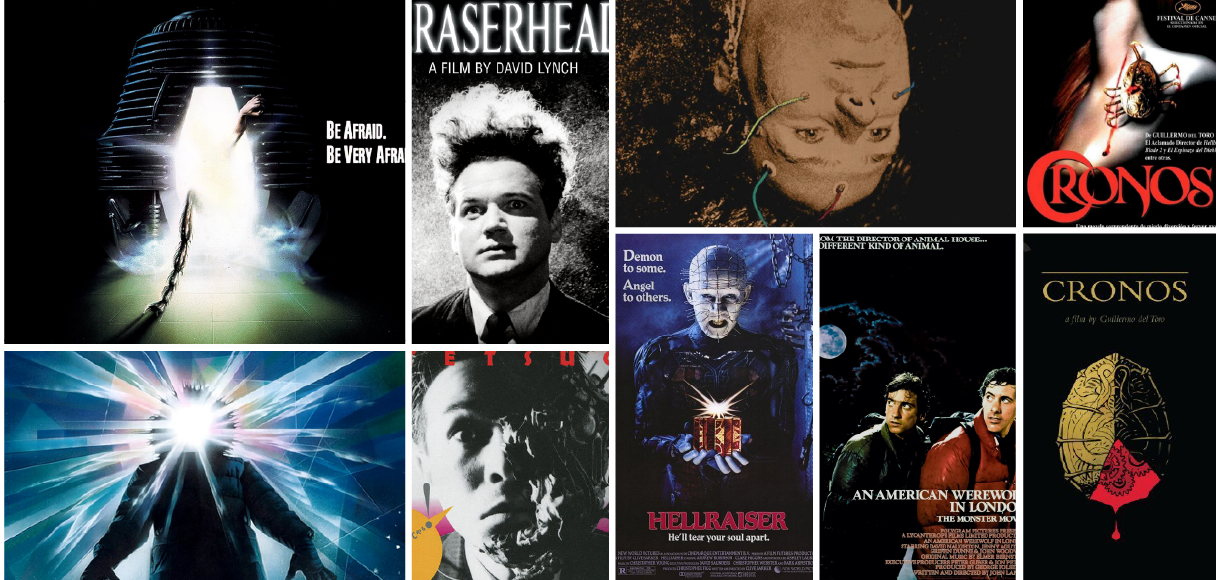
The best body horror movie ever made is The Fly (1986), David Cronenberg's film about a scientist who fuses with a housefly, followed by John Carpenter's The Thing (1982) and Cronenberg's Videodrome (1983). The 25 best body horror movies below run from Eraserhead (1977) to Together (2025) in three ranked tiers, and every entry names where it streams in the US as of October 2026.
Most horror keeps the threat on the other side of a door. Body horror removes that door and shows you what’s behind it, which is why it’s so much more eerie. You actually feel it in your body. Some examples are: The monster in The Fly is the man who built the machine, and the second body in The Substance is grown from the woman who wanted it.
That is why the best body horror movies follow you home: there is nowhere to go that leaves your own skin behind.
The films below sit in three tiers.
-
Tier 1 holds the essential films that defined the genre
-
Tier 2 holds the cult classics that built its subgenres
-
Tier 3 holds the modern films that carried body horror to the Palme d'Or and the Academy Awards.
Every film is also filed under the kind of threat it deals in (biological, technological, psychological, or parasitic), so you can follow the strand that disturbs you most.
At a Glance: The Best Body Horror Movies Ranked
| Rank | Film | Year | Director | Subgenre | US streaming (Oct 2026) | Key fact |
|---|---|---|---|---|---|---|
| 1 | The Fly | 1986 | David Cronenberg | Biological | Hulu, Peacock | Won the Oscar for Best Makeup |
| 2 | The Thing | 1982 | John Carpenter | Parasitic | Prime Video | Rob Bottin led a 35-person creature-effects team |
| 3 | Videodrome | 1983 | David Cronenberg | Technological | Prime Video | Effects by Rick Baker |
| 4 | Possession | 1981 | Andrzej Żuławski | Psychological | Shudder; free on Kanopy, Hoopla | Isabelle Adjani won Best Actress at Cannes |
| 5 | Tetsuo: The Iron Man | 1989 | Shinya Tsukamoto | Technological | Free on Kanopy | 67 minutes, shot in black and white on 16mm |
| 6 | Eraserhead | 1977 | David Lynch | Biological | HBO Max; free on Tubi | Added to the National Film Registry in 2004 |
| 7 | Hellraiser | 1987 | Clive Barker | Psychological | Prime Video; free on Tubi | Barker's directing debut, from his own novella |
| 8 | The Brood | 1979 | David Cronenberg | Psychological | HBO Max; free on Tubi | First Cronenberg film scored by Howard Shore |
| 9 | An American Werewolf in London | 1981 | John Landis | Biological | Free on Kanopy | First competitive Oscar for Best Makeup |
| 10 | Altered States | 1980 | Ken Russell | Biological | Free on Tubi, The Roku Channel | Oscar nominations for Score and Sound |
| 11 | Society | 1989 | Brian Yuzna | Biological | Night Flight Plus | Premiered at Cannes 1989; US release 1992 |
| 12 | Cronos | 1993 | Guillermo del Toro | Parasitic | HBO Max, Criterion Channel | Del Toro's feature debut |
| 13 | Ginger Snaps | 2000 | John Fawcett | Biological | Peacock; free on Tubi | Special Jury Citation at TIFF 2000 |
| 14 | Trouble Every Day | 2001 | Claire Denis | Biological | Free on Kanopy | Score by Tindersticks |
| 15 | Taxidermia | 2006 | György Pálfi | Biological | Here TV | Hungary's Oscar submission |
| 16 | Slither | 2006 | James Gunn | Parasitic | Rent or buy only | James Gunn's directing debut |
| 17 | The Substance | 2024 | Coralie Fargeat | Biological | Hulu, MUBI, HBO Max | Won the Oscar for Makeup and Hairstyling |
| 18 | Titane | 2021 | Julia Ducournau | Technological | Free on Tubi, Kanopy | Won the Palme d'Or |
| 19 | Raw | 2016 | Julia Ducournau | Biological | Rent or buy only | FIPRESCI Prize at Cannes 2016 |
| 20 | Possessor | 2020 | Brandon Cronenberg | Technological | Free on Plex, Kanopy | Best Director at Sitges 2020 |
| 21 | The Skin I Live In | 2011 | Pedro Almodóvar | Psychological | Rent or buy only | BAFTA for Film Not in the English Language |
| 22 | Evolution | 2015 | Lucile Hadžihalilović | Biological | AMC+, Sundance Now; free on The Roku Channel | Special Jury Prize at San Sebastián 2015 |
| 23 | Together | 2025 | Michael Shanks | Biological | Hulu | $32.3 million worldwide (Box Office Mojo) |
| 24 | The Ugly Stepsister | 2025 | Emilie Blichfeldt | Psychological | Shudder, Hulu, AMC+ | Opened Sundance 2025's Midnight section |
| 25 | Swallow | 2019 | Carlo Mirabella-Davis | Psychological | Hulu, Shudder, MUBI | Haley Bennett won Best Actress at Tribeca |
What Is Body Horror? Defining the Genre by Transformation, Decay, and Identity
Body horror is a horror subgenre in which the threat is the human body itself, through transformation, disease, mutation, invasion, or decay, rather than an outside killer. The best body horror movies make the audience watch a body stop behaving like the body its owner thinks they have.
The name arrived after the films. Australian critic Philip Brophy used the term in his essay "Horrorality: The Textuality of the Contemporary Horror Film," first published in the Melbourne journal Art & Text in 1983. The British film journal Screen reprinted it in its January/February 1986 issue alongside Pete Boss's "Vile Bodies and Bad Medicine," under a section headed "Body Horror." By then Cronenberg, Carpenter and Lynch had already made most of the canon.
Three changes sit at the heart of the genre, and the strongest films use more than one:
-
Transformation: the body becomes something else, as Seth Brundle does in The Fly (1986).
-
Decay: the body breaks down while its owner is still inside it, as Elisabeth Sparkle does in The Substance (2024).
-
Identity: the body changes and takes the self with it, which is why Possessor (2020) and The Skin I Live In (2011) belong here even when the blood is sparse.
Blood alone does not make a body horror film. A slasher opens bodies from the outside; body horror changes them from within. That difference decides most of the borderline calls on this list, and it is the reason Alien (1979), whose chestburster is the most famous body horror moment in science fiction, sits in the honorable mentions rather than the main ranking.
Ranking Methodology: How We Evaluated the Best Body Horror Films
Each film was judged on four questions, and a film had to answer the first one with a clear yes before the other three counted.
-
Is the body the subject? The change to the body has to drive the story. A film where bodies are only damaged on the way to a plot point does not qualify.
-
Does the change mean something? The best entries attach the transformation to a real fear: ageing in The Substance (2024), divorce in The Brood (1979), puberty in Ginger Snaps (2000), television in Videodrome (1983).
-
Does the craft hold up? Practical effects, makeup, sound design, and performance all count. Two films on this list won the Oscar for makeup, and a third won the first competitive Oscar the category ever gave.
-
Did it change what came after? Influence on later films and filmmakers decides close calls between films of similar quality.
The tiers answer a different question from the ranks inside them. Tier 1 is for the films any serious account of body horror has to include. Tier 2 is for the cult films that founded a strand of the genre or carried it through a lean decade. Tier 3 is for films from 2011 onward that changed what body horror is allowed to be about. Films are ranked against the others in their own tier, and the honorable mentions sit outside the count entirely.
The Definitive Body Horror Movie Rankings
The Fly (1986) is the best body horror movie ever made, and David Cronenberg directed three of the top eight films below. The rankings run in three tiers, and each entry lists the film's verified US streaming home as of October 2026.
Tier 1: The Essential Body Horror Masterpieces
The seven Tier 1 films are the foundation of the genre. Every later film on this list borrows from at least one of them.
1. The Fly (1986)
Director: David Cronenberg
Starring: Jeff Goldblum, Geena Davis, John Getz
Year: 1986
Rating: R
Runtime: 96 minutes
Box office: $40.5 million domestic, $60.6 million worldwide (Box Office Mojo)
Subgenre: Biological
Where to watch (US): Streaming on Hulu and Peacock. Rent or buy on Apple TV, Prime Video, and Fandango at Home.
The Fly (1986) is David Cronenberg's remake of the 1958 science fiction film, about scientist Seth Brundle (Jeff Goldblum), whose teleportation experiment fuses him with a housefly. Science journalist Veronica Quaife (Geena Davis) watches the change from inside a new relationship.
Cronenberg treats the transformation as an illness with stages, so every gain Brundle feels early on is paid back with interest later. Chris Walas and Stephan Dupuis won the Academy Award for Best Makeup for the work, and it remains the clearest case for practical effects in the genre. The film also gave popular culture the line "Be afraid. Be very afraid."
Best for: A late-night first viewing with someone who thinks they are too old to be scared by a remake.
The Screendollars Take: The Fly is not a monster movie. It is a love story told from the bedside. Goldblum plays Brundle's early changes as a thrill, all appetite and confidence, and the horror arrives when Davis stops being able to share the joke. Howard Shore's score keeps playing it as a romance long after the makeup has given up on the face. You leave grieving a man, not fearing an insect.
2. The Thing (1982)
Director: John Carpenter
Starring: Kurt Russell, Wilford Brimley, Keith David, T.K. Carter
Year: 1982
Rating: R
Runtime: 109 minutes
Box office: $20.1 million domestic (Box Office Mojo)
Subgenre: Parasitic
Where to watch (US): Streaming on Prime Video. Rent or buy on Apple TV, Prime Video, and Fandango at Home.
The Thing (1982) traps an Antarctic research team with an alien organism that can imitate any living thing it absorbs. Helicopter pilot R.J. MacReady (Kurt Russell) has to work out who is still human.
John Carpenter adapted John W. Campbell Jr.'s 1938 novella "Who Goes There?", and effects artist Rob Bottin led a 35-person creature team to build the transformations. Stan Winston built the Dog-Thing puppet and took only a thank-you credit. The defibrillator scene, in which a chest opens and severs Dr. Copper's arms, is still the genre's most-quoted effects shot.
Best for: A snowed-in January night with friends who trust each other a little too much.
The Screendollars Take: The Thing is not about a monster. It is about the blood test. MacReady ties the survivors up and touches a heated wire to each man's blood sample, and the scene turns the body into evidence that can testify against its owner. Ennio Morricone's pulsing score refuses to tell you who passes. Paranoia has never looked so much like a lab result.
3. Videodrome (1983)
Director: David Cronenberg
Starring: James Woods, Debbie Harry, Sonja Smits, Peter Dvorsky
Year: 1983
Rating: R
Runtime: 87 minutes
Box office: $2.1 million domestic (Box Office Mojo)
Subgenre: Technological
Where to watch (US): Streaming on Prime Video. Rent or buy on Apple TV, Prime Video, and Fandango at Home.
Videodrome (1983) follows Max Renn (James Woods), who runs CIVIC-TV, a small Toronto UHF station, and finds a pirate broadcast that begins rewriting his body. Debbie Harry plays Nicki Brand, the radio host who pulls him further in.
Videodrome is the founding text of technological body horror, and it got there decades before screens moved into our pockets. Rick Baker built the effects, including the slot that opens in Max's stomach, sized for Betamax tapes because a VHS cassette was too large. The media prophet Brian O'Blivion is modelled on Marshall McLuhan.
Best for: The hour after you notice how long you have been scrolling.
The Screendollars Take: Videodrome is not a warning about violent television. It is a film about a man becoming the machine he watches. Cronenberg makes the television set breathe and swell like a lung, so the body and the device trade places before Max does. The closing words, "Long live the new flesh," play less like a slogan now than a product launch.
4. Possession (1981)
https://www.youtube.com/watch?v=Ah4Z1yIAoFM
Director: Andrzej Żuławski
Starring: Isabelle Adjani, Sam Neill, Margit Carstensen, Heinz Bennent
Year: 1981
Runtime: 124 minutes
Subgenre: Psychological
Where to watch (US): Streaming on Shudder. Free with a library card on Kanopy and Hoopla. Rent or buy on Apple TV, Prime Video, and Fandango at Home.
Possession (1981) is Andrzej Żuławski's account of a marriage ending in West Berlin. Mark (Sam Neill) learns that his wife Anna (Isabelle Adjani) is leaving him, and what she is leaving him for turns out to be something she has made.
Żuławski shot along the Wall in Kreuzberg, and the city's split runs through every scene. Adjani's breakdown in a U-Bahn corridor is the film's most famous sequence, and she won Best Actress at Cannes in 1981 for this film and Quartet. Carlo Rambaldi, who worked on Alien, built the creature. The US release was cut by more than a third, and the film landed on Britain's "video nasties" list.
Best for: The week after a breakup, if you would rather feel worse before you feel better.
The Screendollars Take: Possession is not a monster film. It is the most accurate divorce film ever made, with a monster in it. Adjani plays the subway scene with her whole body, so the grief leaves her as something physical and wet rather than as dialogue. Neill matches her by getting quieter as she gets louder. Nothing on screen is as frightening as two people who used to know each other.
5. Tetsuo: The Iron Man (1989)
https://www.youtube.com/watch?v=s8mEPTH0VCY
Director: Shinya Tsukamoto
Starring: Tomorowo Taguchi, Kei Fujiwara, Shinya Tsukamoto, Renji Ishibashi
Year: 1989
Rating: Not rated
Runtime: 67 minutes
Subgenre: Technological
Where to watch (US): Free with a library card on Kanopy. Streaming on Night Flight Plus, AsianCrush and Midnight Pulp. Rent or buy on Apple TV and Fandango at Home.
Tetsuo: The Iron Man (1989) follows a Tokyo salaryman (Tomorowo Taguchi) whose body begins turning into scrap metal, pursued by a figure called the Metal Fetishist, played by director Shinya Tsukamoto himself.
Tsukamoto shot the film in black and white on 16mm, starting in September 1987, and the grain makes the metal look like it is growing in real time. Chu Ishikawa's pounding metal-percussion score, his first for film, does as much damage as the effects. It won the Grand Prize at Rome's Fantafestival in 1989, and it is the founding film of Japanese cyberpunk body horror.
Best for: A Friday night when you want 67 minutes that feel like a fistfight.
The Screendollars Take: Tetsuo is not a science fiction film. It is an office worker's nervous breakdown with power tools. Tsukamoto cuts so fast and so close that you rarely see a whole body, only pieces of one being replaced. The stop-motion runs through Tokyo streets that look like they are rusting too. Every commute after it sounds slightly more metallic.
6. Eraserhead (1977)
https://www.youtube.com/watch?v=J0Eq5GtCYdA
Director: David Lynch
Starring: Jack Nance, Charlotte Stewart, Jeanne Bates, Judith Anna Roberts
Year: 1977
Rating: Not rated
Runtime: 89 minutes
Subgenre: Biological
Where to watch (US): Streaming on HBO Max. Free with ads on Tubi and Plex. Rent or buy on Apple TV, Prime Video, and Fandango at Home.
Eraserhead (1977) is David Lynch's first feature, about Henry Spencer (Jack Nance), a nervous man in an industrial city who is left caring for the deformed infant his girlfriend Mary (Charlotte Stewart) has given birth to.
Lynch made it over several years as money ran out, and in one scene a full year passed between Henry opening a door and Lynch filming him walking through it. The infant's design has never been fully explained, which is part of why it still works. The film was added to the US National Film Registry in 2004.
Best for: The sleepless weeks before a first child arrives, if you are brave about it.
The Screendollars Take: Eraserhead is not surrealism for its own sake. It is the most honest film ever made about the fear of becoming a parent. Lynch fills every room with hissing pipes and radiators, so even the walls seem to have bodily functions. The Lady in the Radiator sings "In Heaven," written and performed by Peter Ivers, and it is the only kindness Henry receives. Lynch understood that the scariest body in the house can be the smallest one.
7. Hellraiser (1987)
https://www.youtube.com/watch?v=tOcth6-HjPg
Director: Clive Barker
Starring: Andrew Robinson, Clare Higgins, Ashley Laurence, Doug Bradley
Year: 1987
Rating: R
Runtime: 94 minutes
Box office: $14.6 million domestic (Box Office Mojo)
Subgenre: Psychological
Where to watch (US): Streaming on Prime Video. Free with ads on Tubi and Plex. Rent or buy on Apple TV, Prime Video and Fandango at Home.
Hellraiser (1987) is Clive Barker's adaptation of his own 1986 novella The Hellbound Heart and his debut as a director. Julia Cotton (Clare Higgins) helps her dead lover Frank rebuild his body, while her stepdaughter Kirsty (Ashley Laurence) is drawn toward the Cenobites who took him apart.
Barker made the film in London on a small budget, with New World Pictures putting in $900,000, and the low budget forced the effects to be practical and close. Doug Bradley's Cenobite is credited only as "Lead Cenobite"; the name Pinhead arrived with the 1988 sequel. Christopher Young wrote the score after New World rejected the original one by the band Coil.
Best for: Halloween night, once the trick-or-treaters have gone home.
The Screendollars Take: Hellraiser is not a slasher with a mascot. It is a film about appetite, and the Cenobites are simply its most honest customers. Barker shows Frank's body rebuilding itself from a floor soaked in blood, muscle first and skin last, so the audience sees a man assembled out of other people's lives. The Cenobites barely need to threaten anyone. Julia has already done the cruel work for them.
Tier 2: Subgenre-Defining Films and Cult Classics
The nine Tier 2 films each opened or carried a strand of body horror, from the werewolf transformation to the parasite comedy. Several were commercial failures on release and found their audience later.
8. The Brood (1979)
Director: David Cronenberg
Starring: Oliver Reed, Samantha Eggar, Art Hindle, Cindy Hinds
Year: 1979
Rating: R
Runtime: 92 minutes
Subgenre: Psychological
Where to watch (US): Streaming on HBO Max. Free with ads on Tubi, Plex, and Shout! Factory TV. Rent on Apple TV, Prime Video, and Fandango at Home.
The Brood (1979) follows Frank Carveth (Art Hindle), who suspects that the therapy his estranged wife Nola (Samantha Eggar) is receiving from Dr. Hal Raglan (Oliver Reed) is dangerous. Raglan's method, which he calls "psychoplasmics," makes his patients' emotions appear on their bodies.
Cronenberg wrote The Brood after a bitter divorce and later called it his version of Kramer vs. Kramer, "but more realistic." It was the first of his films with an original score by Howard Shore, the start of a partnership that runs through most of his career. The Criterion Collection released it as spine number 777.
Best for: The night after a custody hearing you were glad to leave.
The Screendollars Take: The Brood is not a monster movie. It is a custody battle in which one parent can weaponize her own body. Cronenberg keeps Raglan's Somafree Institute calm and clinical, so the violence that leaks out of it feels like paperwork going wrong. Samantha Eggar's final scene is the most frightening image Cronenberg ever filmed. Anger, in this film, is hereditary in the most literal sense.
9. An American Werewolf in London (1981)
Director: John Landis
Starring: David Naughton, Jenny Agutter, Griffin Dunne, John Woodvine
Year: 1981
Rating: R
Runtime: 97 minutes
Box office: $30.6 million domestic (Box Office Mojo)
Subgenre: Biological
Where to watch (US): Free with a library card on Kanopy. Streaming on MovieSphere+ as a Prime Video Channels add-on. Rent on Apple TV, Prime Video, and Fandango at Home.
An American Werewolf in London (1981) follows two American backpackers, David Kessler (David Naughton) and Jack Goodman (Griffin Dunne), who are attacked by a wolf on the English moors. David survives and is nursed in London by Alex Price (Jenny Agutter), as the full moon approaches.
Rick Baker won the first competitive Academy Award for Best Makeup for the film at the 1982 ceremony. The transformation scene became the template every werewolf film since has had to answer, and it led Michael Jackson to hire Landis and Baker for the "Thriller" video. The production was the first in 15 years allowed to film in Piccadilly Circus.
Best for: A full-moon night with friends who like their horror with jokes.
The Screendollars Take: An American Werewolf in London is not a horror comedy. It is a horror film that uses comedy to lower your guard. Landis lets the transformation play out in a bright room with no shadows to hide in, so every stretched limb and lengthening snout happens in plain view. David's screams are real pain, not spectacle. You laugh for an hour so the change can hurt more.
10. Altered States (1980)
Director: Ken Russell
Starring: William Hurt, Blair Brown, Bob Balaban, Charles Haid
Year: 1980
Rating: R
Runtime: 102 minutes
Box office: $19.9 million domestic (Box Office Mojo)
Subgenre: Biological
Where to watch (US): Free with ads on Tubi and The Roku Channel, and free with a library card on Hoopla. Rent or buy on Apple TV, Prime Video, and Fandango at Home.
Altered States (1980) follows psychopathologist Eddie Jessup (William Hurt), whose experiments with isolation tanks start to reverse his evolution. The premise draws on John C. Lilly's real isolation-tank research.
It was William Hurt's film debut, and Drew Barrymore's too, in a small role. Paddy Chayefsky adapted his own novel, then fought with Ken Russell and took his name off the screenplay, which is credited to "Sidney Aaron," his real first and middle names. Dick Smith designed the makeup effects, and the film earned Oscar nominations for John Corigliano's score and for Sound.
Best for: A rainy Sunday afternoon when you want ideas with your horror.
The Screendollars Take: Altered States is not a drug movie. It is a film about a scientist who wants the truth so badly that he will become something less than human to get it. Russell films the hallucinations at full volume, then cuts to Hurt talking in long, fast scientific sentences as if words could hold the experience down. The body horror is the proof that they cannot. Some answers cost the person asking.
11. Society (1989)
Director: Brian Yuzna
Starring: Billy Warlock, Devin DeVasquez, Evan Richards, Ben Meyerson
Year: 1989 (US release 1992)
Rating: R
Runtime: 99 minutes
Subgenre: Biological
Where to watch (US): Streaming on Night Flight Plus. Rent or buy on Fandango at Home. Not available on Apple TV.
Society (1989) follows Bill Whitney (Billy Warlock), a wealthy teenager who becomes convinced that his family and their social circle are not what they seem. He is right, in a way no one could have predicted.
Society screened at Cannes in May 1989 but did not reach US cinemas until February 1992, after a surprise run in London's West End. Effects artist Screaming Mad George built the climactic "shunting" sequence, which required twelve to fourteen puppeteers. It is Brian Yuzna's first film as director, and it plays as the angriest satire of class on this list.
Best for: The drive home from a dinner party where you felt like the help.
The Screendollars Take: Society is not a cult oddity. It is the most direct statement in horror cinema that the rich feed on everyone else. Yuzna spends an hour on slightly wrong family dinners and whispered conversations, so the finale lands as a confirmation rather than a twist. Screaming Mad George's shunting scene melts bodies together into one class. Nothing in the 1980s said it more plainly.
12. Cronos (1993)
Director: Guillermo del Toro
Starring: Federico Luppi, Ron Perlman, Claudio Brook, Tamara Shanath
Year: 1993
Rating: R
Runtime: 94 minutes
Box office: $621,392 domestic (Box Office Mojo)
Subgenre: Parasitic
Where to watch (US): Streaming on HBO Max and the Criterion Channel. Rent or buy on Apple TV, Prime Video, and Fandango at Home.
Cronos (1993) follows Jesús Gris (Federico Luppi), an elderly antique dealer who finds a scarab-shaped clockwork device hidden inside a statue. A living insect inside the device gives him youth and a thirst for blood, and a dying industrialist's nephew (Ron Perlman) wants it back.
Cronos is Guillermo del Toro's feature debut, and the Criterion Collection credits it with the top prize at Cannes Critics' Week. It swept the 1993 Ariel Awards in Mexico with nine wins, including Best Picture. Every later del Toro film, from The Devil's Backbone to Frankenstein, carries its mix of tenderness and rot.
Best for: A quiet evening with a grandparent who has a strong stomach.
The Screendollars Take: Cronos is not a vampire film. It is a film about an old man discovering he still has appetites. Luppi plays Jesús as gentle and embarrassed, licking blood from a bathroom floor with the shame of someone sneaking dessert. His granddaughter Aurora watches it all without judgement. Del Toro's first film already knew that love is the most frightening thing in a horror story.
13. Ginger Snaps (2000)
Ginger Snaps (2001) Official Trailer - Emily Perkins, Katharine Isabelle, Mimi Rogers
Director: John Fawcett
Starring: Emily Perkins, Katharine Isabelle, Kris Lemche, Mimi Rogers
Year: 2000
Runtime: 108 minutes
Subgenre: Biological
Where to watch (US): Streaming on Peacock. Free with ads on Tubi and Plex. Rent or buy on Apple TV, Prime Video, and Fandango at Home.
Ginger Snaps (2000) follows two death-obsessed teenage sisters, Brigitte (Emily Perkins) and Ginger Fitzgerald (Katharine Isabelle), in the suburb of Bailey Downs. After Ginger is attacked by a creature, her body starts changing in ways she can't hide from her family or from her school.
Karen Walton's screenplay treats lycanthropy as puberty with teeth, and the film became the reference point for every coming-of-age horror story that followed. It received a Special Jury Citation for Best Canadian Feature Film at the Toronto International Film Festival in 2000. Mimi Rogers plays the sisters' cheerfully oblivious mother.
Best for: A sleepover with a sibling who still knows all your secrets.
The Screendollars Take: Ginger Snaps is not a werewolf movie. It is a film about the moment one sister grows up and leaves the other behind. Isabelle plays Ginger's change as a kind of liberation, while Perkins plays Brigitte as the one who has to clean up after it. The horror sits in the gap between them. Every younger sibling recognizes the ending.
14. Trouble Every Day (2001)
TROUBLE EVERY DAY | Masters of Cinema Trailer - New & Exclusive
Director: Claire Denis
Starring: Vincent Gallo, Tricia Vessey, Béatrice Dalle, Alex Descas
Year: 2001
Rating: Not rated
Runtime: 101 minutes
Subgenre: Biological
Where to watch (US): Free with a library card on Kanopy. Rent or buy on Apple TV and Fandango at Home.
Trouble Every Day (2001) follows American newlyweds Shane (Vincent Gallo) and June (Tricia Vessey) on their honeymoon in Paris, where Shane secretly searches for a doctor (Alex Descas) whose wife Coré (Béatrice Dalle) suffers from a condition that turns desire into violence.
Claire Denis premiered the film out of competition at Cannes in 2001, and it became one of the founding films of the New French Extremity. Agnès Godard's cinematography keeps the camera close enough to see pores, and the band Tindersticks wrote the score. It is the slowest film on this list and the hardest to shake.
Best for: A solo late night, when nobody will ask you to explain what you just watched.
The Screendollars Take: Trouble Every Day is not a cannibal film. It is a film about how close tenderness and hunger sit in the same body. Denis holds on skin, neck,s and shoulders until the audience cannot tell whether a kiss is about to become something else. Tindersticks' score stays soft through the worst of it. The horror is that the gentleness never leaves.
15. Taxidermia (2006)
Director: György Pálfi
Starring: Csaba Czene, Gergely Trócsányi, Marc Bischoff, Adél Stanczel
Year: 2006
Rating: Not rated
Runtime: 94 minutes
Subgenre: Biological
Where to watch (US): Streaming on HERE TV, including as a Prime Video Channels add-on. No US rent or buy option, including on Apple TV.
Taxidermia (2006) follows three generations of Hungarian men: a wartime orderly, his son Kálmán, who becomes a speed-eating champion in the Cold War era, and his grandson Lajoska, a taxidermist. Each man's body becomes the record of his era.
György Pálfi adapted short stories by Lajos Parti Nagy, premiered the film in the Un Certain Regard section at Cannes in 2006, and won a Silver Hugo at the Chicago International Film Festival. Hungary submitted it for the Academy Award for Best Foreign Language Film. It is the strangest film on this list and the one most likely to divide a room.
Best for: A film-society screening where you want the argument to last longer than the movie.
The Screendollars Take: Taxidermia is not shock cinema. It is a history of Hungary written on three bodies. Pálfi gives each generation a different appetite: desire, food, and finally the urge to preserve, which tells the story of a country through what its men consumed and what consumed them. The speed-eating contests are staged like Olympic events. Politics, here, is something you swallow.
16. Slither (2006)
Slither (2006) - Official Trailer (HD)
Director: James Gunn
Starring: Nathan Fillion, Elizabeth Banks, Michael Rooker, Gregg Henry
Year: 2006
Rating: R
Runtime: 95 minutes
Box office: $7.8 million domestic, $12.8 million worldwide (Box Office Mojo)
Subgenre: Parasitic
Where to watch (US): No subscription or free streaming. Rent or buy on Apple TV, Prime Video, and Fandango at Home.
Slither (2006) is set in the small town of Wheelsy, South Carolina, where an alien parasite takes over Grant Grant (Michael Rooker). His wife Starla (Elizabeth Banks) and police chief Bill Pardy (Nathan Fillion) try to stop it from spreading.
Slither is James Gunn's first film as a director, released by Universal in March 2006. It took $12.8 million worldwide against a budget The Numbers puts at $15.25 million, and it has grown into a cult favorite since. MastersFX built nearly 500 prosthetic parasites, and Rooker's makeup took three hours to apply. Troma co-founder Lloyd Kaufman has a cameo.
Best for: A Saturday night with friends who loved Tremors and want something nastier.
The Screendollars Take: Slither is not a spoof. It is a love letter to 1980s creature films that takes their rules seriously. Gunn gives Rooker's Grant a strange, sad devotion to Starla even as his body swells into something enormous, so the joke and the tragedy arrive in the same shot. Fillion plays it straight, which is the secret. The movie knows exactly how funny it is.
Tier 3: Modern Body Horror Movies Rewriting the Genre
The nine Tier 3 films, all made since 2011, moved body horror from the midnight slot to the festival competition. Between them, they hold a Palme d'Or, a Best Picture nomination, and an Oscar win.
17. The Substance (2024)
THE SUBSTANCE | Official Trailer | In Theaters & On MUBI Now
Director: Coralie Fargeat
Starring: Demi Moore, Margaret Qualley, Dennis Quaid
Year: 2024
Rating: R
Runtime: 141 minutes
Box office: $17.6 million domestic, $77.3 million worldwide (Box Office Mojo)
Subgenre: Biological
Where to watch (US): Streaming on Hulu, MUBI and HBO Max, with MUBI and HBO Max also available as Prime Video Channels add-ons. Rent or buy on Apple TV, Prime Video, and Fandango at Home.
The Substance (2024) follows Elisabeth Sparkle (Demi Moore), who is fired from her long-running TV aerobics show by producer Harvey (Dennis Quaid) on her 50th birthday. An underground treatment creates a younger version of her, Sue (Margaret Qualley), and the two must switch bodies every seven days without exception.
The Substance earned five nominations at the 97th Academy Awards, including Best Picture, Best Director for Coralie Fargeat and Best Actress for Moore, and won for Makeup and Hairstyling. Prosthetics designer Pierre-Olivier Persin spent 11 months on the film with a team of 15. Fargeat had already won Best Screenplay at Cannes in 2024.
Best for: The evening after a birthday that ended in a zero.
The Screendollars Take: The Substance is not satire with gore added. It is a film that makes the audience complicit in the way it looks at women. Fargeat shoots Qualley's body in glossy close-ups that feel like advertising, then shoots Moore's in the bathroom mirror, and the gap between those two cameras is the subject. The final act pushes its effects past the point of comfort on purpose. It is the most expensive mirror in modern horror.
18. Titane (2021)
Director: Julia Ducournau
Starring: Agathe Rousselle, Vincent Lindon, Garance Marillier, Laïs Salameh
Year: 2021
Rating: R
Runtime: 108 minutes
Box office: $1.4 million domestic, $6.6 million worldwide (Box Office Mojo)
Subgenre: Technological
Where to watch (US): Free with ads on Tubi, and free with a library card on Kanopy. Rent or buy on Apple TV and Fandango at Home, Prime Video.
Titane (2021) follows Alexia (Agathe Rousselle), who has had a titanium plate in her head since a childhood car crash and now works as a showgirl at motor shows. On the run, she poses as Adrien, the son of a fire captain named Vincent (Vincent Lindon) who lost ten years earlier.
Titane won the Palme d'Or in 2021, making Julia Ducournau the second woman to win the prize after Jane Campion, whose 1993 win for The Piano was shared, and the first woman to win it outright. It was Rousselle's first feature role. Neon released it in US cinemas on October 1, 2021.
Best for: A night when you want a film that refuses to explain itself and trusts you to keep up.
The Screendollars Take: Titane is not a film about a woman and a car. It is a film about a grieving father who decides not to ask questions. Ducournau spends the first half on violence and the second half on Lindon's aging body, pumping steroids to keep up with the son he wants back. The two halves meet in a family that neither of them chose. The strangest film on this list has the warmest heart.
19. Raw (2016)
https://www.youtube.com/watch?v=wKYFH0hRpD0
Director: Julia Ducournau
Starring: Garance Marillier, Ella Rumpf, Rabah Naït Oufella, Laurent Lucas
Year: 2016 (US release 2017)
Rating: R
Runtime: 99 minutes
Box office: $514,870 domestic, $3.2 million worldwide (Box Office Mojo)
Subgenre: Biological
Where to watch (US): No subscription or free streaming in the US as of October 2026. Rent or buy on Apple TV.
Raw (2016) follows Justine (Garance Marillier), a lifelong vegetarian starting veterinary school, who is forced to eat raw rabbit kidney during freshman hazing. The taste wakes a hunger she cannot control, and her older sister Alexia (Ella Rumpf) knows more about it than she admits.
Raw won the FIPRESCI Prize at Cannes in 2016 and became famous months later when two people at its Toronto International Film Festival Midnight Madness screening felt unwell, one of whom needed emergency services. Julia Ducournau shot it at the University of Liège in Belgium. It is her first feature and the clearest entry point to her work.
Best for: The first week of a new school year, preferably not on campus.
The Screendollars Take: Raw is not a cannibal film. It is a film about the family traits you discover you inherited. Ducournau keeps Justine's hunger embarrassing rather than monstrous, so the horror arrives in canteens, parties, and bathrooms rather than dark woods. Marillier and Rumpf play sisters who fight like sisters. The last scene explains everything without a single line of exposition.
20. Possessor (2020)
POSSESSOR UNCUT Trailer - In Theaters & SelectDrive-Inss October 2
Director: Brandon Cronenberg
Starring: Andrea Riseborough, Christopher Abbott, Jennifer Jason Leigh, Sean Bean
Year: 2020
Rating: R
Runtime: 103 minutes
Box office: $752,885 domestic (Box Office Mojo)
Subgenre: Technological
Where to watch (US): Free with ads on Plex, and free with a library card on Kanopy. Rent or buy on Apple TV, Prime Video, and Fandango at Home.
Possessor (2020) follows Tasya Vos (Andrea Riseborough), a corporate assassin who uses brain implants to take over other people's bodies and kill through them. Her handle,r Girder (Jennifer Jason Leigh), sends her into Colin Tate (Christopher Abbott), and Tasya's own identity starts to leak.
Possessor premiered at Sundance in January 2020, and at Sitges that year Brandon Cronenberg won Best Director while the film won Best Feature. Effects designer Dan Martin used prosthetics and fake heads rather than computer effects, and Cronenberg has said he finds something "a bit floaty about CGI blood." Neon opened it in cinemas and drive-ins in October 2020.
Best for: A night when you suspect you have been someone else at work all week.
The Screendollars Take: Possessor is not a sci-fi thriller. It is a film about a woman who has lost track of where her job ends and she begins. Brandon Cronenberg shows each body takeover as a melting face, half Riseborough and half Abbott, so identity looks like wax under a lamp. The violence is close and practical, and it feels heavier for it. Cronenberg's son has inherited the family business and opened a new branch.
21. The Skin I Live In (2011)
The Skin I Live In | Official Trailer HD (2011)
Director: Pedro Almodóvar
Starring: Antonio Banderas, Elena Anaya, Marisa Paredes, Jan Cornet
Year: 2011
Rating: R
Runtime: 120 minutes
Box office: $3.2 million domestic, $33.7 million worldwide (Box Office Mojo)
Subgenre: Psychological
Where to watch (US): Rent or buy on Apple TV, Prime Video, and Fandango at Home.
The Skin I Live In (2011) follows Dr. Robert Ledgard (Antonio Banderas), a plastic surgeon developing a synthetic skin, who keeps a young woman named Vera (Elena Anaya) in his house as his subject. The reason she is there is the film's central secret.
Pedro Almodóvar adapted Thierry Jonquet's novel Mygale, published in English as Tarantula, and reunited with Banderas for the first time in 21 years. The film competed at Cannes in 2011, won the BAFTA for Film Not in the English Language, and took four Goya Awards, including Best Actress for Anaya.
Best for: A night when you want the slow dread of a thriller and the payoff of a horror film.
The Screendollars Take: The Skin I Live In is not a surgical thriller. It is a revenge film in which the body itself is the sentence. Almodóvar shoots Ledgard's house in clean lines and warm colors, so the cruelty happens in rooms that look like a design magazine. Anaya gives a performance built from stillness, and the final line lands harder than any effect. The most violent film here barely spills a drop.
22. Evolution (2015)
Evolution - Official Trailer I HD I IFC Midnight
Director: Lucile Hadžihalilović
Starring: Max Brebant, Roxane Duran, Julie-Marie Parmentier, Nissim Renard
Year: 2015 (US release 2016)
Rating: Not rated
Runtime: 81 minutes
Subgenre: Biological
Where to watch (US): Streaming on AMC+ as a Prime Video Channels add-on, and on Sundance Now. Free with ads on The Roku Channel, and free with a library card on Kanopy. Rent or buy on Apple TV, Prime Vide,o and Fandango at Home.
Evolution (2015) follows Nicolas (Max Brebant), a ten-year-old on a remote island populated only by women and young boys. When he sees something he shouldn't in a rock pool, he begins to question the medical treatments every boy on the island receives.
Lucile Hadžihalilović shot the island scenes on the lava coast of Lanzarote. The film premiered at the Toronto International Film Festival in 2015 and won the Special Jury Prize and the Best Cinematography award for Manu Dacosse at San Sebastián that year. At 81 minutes, it is the second-shortest film in the rankings.
Best for: A night at the beach house, after everyone else has gone to bed.
The Screendollars Take: Evolution is not a mystery to be solved. It is a film about a child sensing that the adults have plans for his body. Hadžihalilović keeps the dialogue minimal and lets the sea, the hospital lighting and the women's blank expressions do the talking. The film reverses who carries a pregnancy, and the idea lands without a word of explanation. It is a nightmare told in the voice of a lullaby.
23. Together (2025)
TOGETHER - Official Trailer - In Theaters July 30
Director: Michael Shanks
Starring: Dave Franco, Alison Brie, Damon Herriman
Year: 2025
Rating: R
Runtime: 102 minutes
Box office: $21.3 million domestic, $32.3 million worldwide (Box Office Mojo)
Subgenre: Biological
Where to watch (US): Streaming on Hulu (since December 31, 2025). Free with a library card on Kanopy. Rent or buy on Apple TV, Prime Video, and Fandango at Home.
Together (2025) follows Tim (Dave Franco) and Millie (Alison Brie), a long-term couple whose relationship is fraying just as their bodies begin, literally, to fuse. The codependency they joke about becomes a physical condition.
Together premiered in Sundance's Midnight section in January 2025, and Neon bought it for a reported $17 million. Franco and Brie are married in real life, which makes every argument harder to watch. Michael Shanks shot the film in Melbourne in 21 days.
Best for: Date night, with a partner who can take a joke about how much you need each other.
The Screendollars Take: Together is not a breakup movie. It is a film about the fear that you can no longer leave. Shanks turns the language of couples therapy into anatomy, so a phrase like "we're joined at the hip" becomes a threat rather than a compliment. Franco and Brie bring a real marriage's timing to every fight. It is the most romantic body horror film since The Fly.
24. The Ugly Stepsister (2025)
The Ugly Stepsister | Official Trailer | Shudder
Director: Emilie Blichfeldt
Starring: Lea Myren, Thea Sofie Loch Næss, Ane Dahl Torp, Flo Fagerli
Year: 2025
Rating: Not rated
Runtime: 109 minutes
Box office: $308,555 domestic, $1.6 million worldwide (Box Office Mojo)
Subgenre: Psychological
Where to watch (US): Streaming on Shudder, Hul,u and AMC+. Free with a library card on Kanopy. Rent or buy on Apple TV, Prime Video and Fandango at Home.
The Ugly Stepsister (2025) retells the Grimm fairy tale "Aschenputtel" from the side of Elvira (Lea Myren), who competes with her stepsister Agnes (Thea Sofie Loch Næss) for Prince Julian. Her mother Rebekka (Ane Dahl Torp) pushes her through surgeries and a tapeworm diet to make her fit.
The Ugly Stepsister opened the Midnight section at Sundance in January 2025, played the Berlinale's Panorama section a month later, and reached US cinemas through IFC Films on April 18, 2025. Shudder began streaming it on May 9, 2025. Emilie Blichfeldt's debut feature depends on practical makeup, from a nose cage to eyelashes stitched into place.
Best for: The night before a wedding, a reuni,on or any event you have been dieting for.
The Screendollars Take: The Ugly Stepsister is not a fairy tale parody. It is the story of a girl who believes the people who tell her she is not enough. Blichfeldt makes every beauty procedure look like an old medical engraving, precise and patient and cruel. Myren keeps Elvira sympathetic even when she tries to cut off her own toes to fit the slipper. The fairy tale was always this violent; it just used to look away.
25. Swallow (2019)
Official trailer for Swallow: Swallow - Official Trailer I HD I IFC Films
Director: Carlo Mirabella-Davis
Starring: Haley Bennett, Austin Stowell, Elizabeth Marvel, David Rasche
Year: 2019 (US release 2020)
Rating: R
Runtime: 94 minutes
Subgenre: Psychological
Where to watch (US): Streaming on Hulu, Shudder, MUBI, and Sundance Now. Free with a library card on Kanopy, and free with ads on Plex. Rent or buy on Apple TV, Prime Video, and Fandango at Home.
Swallow (2019) follows Hunter Conrad (Haley Bennett), a newly pregnant woman married into a wealthy family, who develops pica, a compulsion to swallow inedible objects. It starts with a marble and escalates to thumbtacks and a battery.
Haley Bennett won Best Actress in a US Narrative Feature at the Tribeca Film Festival in 2019, and IFC Films released the film in the US in March 2020. Director Carlo Mirabella-Davis based it on his grandmother's compulsive hand-washing, and chose pica because it gave him more to show on screen.
Best for: A quiet weeknight alone, when you can sit with something uncomfortable.
The Screendollars Take: Swallow is not a film about a strange habit. It is a film about the one part of her life a controlled woman can still control. Mirabella-Davis frames Hunter in a house of glass walls and perfect surfaces, so every swallowed object feels like a small act of rebellion against the decor. Bennett plays each swallow like a private triumph. The smallest body horror film on this list leaves the biggest bruise.
Body Horror by Subgenre: Biological, Technological, Psychological, and Parasitic
Body horror splits into four main subgenres, defined by what is changing the body: biology, technology, the mind, or an invader. Biological body horror is the largest strand and the oldest, while technological body horror is the one that has aged into prophecy.
Biological body horror is change driven by the body's own processes: mutation, disease, ageing, puberty and pregnancy. The Fly (1986) is the defining example, and the strand runs through Eraserhead (1977), An American Werewolf in London (1981), Altered States (1980), Society (1989), Ginger Snaps (2000), Trouble Every Day (2001), Taxidermia (2006), Raw (2016), Evolution (2015), The Substance (2024) and Together (2025).
Start with The Fly, then jump to The Substance to see how far the strand has travelled.
Technological body horror is the body merging with machines, media, or implants. Videodrome (1983) founded it, Tetsuo: The Iron Man (1989) took it to Tokyo, Titane (2021) took it to Cannes, and Possessor (2020) took it inside the brain.
These films predicted the phone in your hand more accurately than most science fiction did.
Psychological body horror is the mind breaking down, and the body following it, or a body changed to break a mind. Possession (1981), Hellraiser (1987), The Brood (1979), The Skin I Live In (2011), Swallow (2019), and The Ugly Stepsister (2025) sit here.
The effects in these films tend to be fewer and harder to forget.
Parasitic body horror is a foreign organism taking over a host. The Thing (1982) is its high point, Cronos (1993) gave it a gentle old man as its host, and Slither (2006) gave it a sense of humor. Alien (1979), in the honorable mentions, is its most famous single scene.
If a single subgenre bothers you more than the others, that is the one to watch next. The disturbing character transformation films in our guide to the Five Modes of Character Disappearance follow the psychological strand beyond horror entirely.
The Directors Who Shaped Body Horror Cinema
David Cronenberg, Shinya Tsukamoto and Julia Ducournau are the three directors who shaped body horror most, one for each of the genre's eras. Cronenberg built it in 1970s Canada, Tsukamoto rewired it in late-1980s Tokyo, and Ducournau carried it to the Palme d'Or.
David Cronenberg and the Birth of Venereal Horror
David Cronenberg is the defining director of body horror, with three films in this ranking (The Fly, Videodrome and The Brood) and three more in the honorable mentions. The Canadian Encyclopedia records that he was nicknamed both the "Baron of Blood" and "the King of Venereal Horror." Cronenberg later joked: "It's a small field, Venereal Horror, but at least I'm king of it."
The phrase fits his first commercial feature. Shivers (1975) spreads a parasite through a modern apartment block by sexual contact, and it was made with $76,500 of public money from the Canadian Film Development Corporation. The critic Robert Fulford, writing as Marshall Delaney, attacked the film for exactly that. Cronenberg answered with a decade of films that turned the body into his only subject: The Brood (1979), Videodrome (1983), The Fly (1986) and Dead Ringers (1988).
He has never left. Crimes of the Future (2022), from a script he wrote in 1998, competed at Cannes, and so did The Shrouds, which premiered there in May 2024 and reached US cinemas in April 2025. His son Brandon Cronenberg has taken the work into a new generation with Possessor (2020).
Shinya Tsukamoto and the Japanese Cyberpunk Body Horror Movement
Shinya Tsukamoto is the director who fused body horror with cyberpunk, starting with Tetsuo: The Iron Man (1989). He wrote, directed, and starred in it, shooting on 16mm in black and white, and it arrived in the same period as Katsuhiro Otomo's anime Akira (1988), which was released in Japan in July 1988 and shares its fascination with flesh overtaken by machinery.
Tsukamoto kept returning to the theme. Tetsuo II: Body Hammer (1992) and Tetsuo: The Bullet Man (2009) extended the series, and Tokyo Fist (1995) moved the transformation into a boxing ring, where the body is remade by violence rather than metal. International audiences may know him best as an actor: he played Mokichi in Martin Scorsese's Silence (2016).
Tsukamoto's legacy is the idea that a city can infect a body. Every later film that treats technology as a skin condition, from Titane to Possessor, owes something to his Tokyo of rust and noise.
Julia Ducournau and the New French Extremity Wave
Julia Ducournau is the most decorated body horror director working today, the second woman to win the Palme d'Or and the first to win it outright, with Titane (2021). She belongs to a French tradition that critic James Quandt named the "New French Extremity" in his February 2004 Artforum essay "Flesh & Blood: Sex and Violence in Recent French Cinema."
Claire Denis's Trouble Every Day (2001) is one of the films that defined that wave, and Lucile Hadžihalilović's Evolution (2015) and Coralie Fargeat's The Substance (2024) extend it. Ducournau's first feature, Raw (2016), won the FIPRESCI Prize at Cannes, and actor Garance Marillier, who plays Justine in Raw, appears again in Titane.
Her third feature, Alpha, premiered in competition at Cannes in May 2025, and Neon released it in US cinemas on March 27, 2026. Ducournau's achievement is that she made the genre's ugliest images serve its most tender stories, which is the lesson Cronenberg taught with The Fly.
Where to Watch Body Horror Movies: Streaming Guide by Platform
Hulu is the best single subscription for body horror in the US as of October 2026, with five of the ranked films, and Prime Video carries three more. Kanopy carries ten of them free with a library card. Every ranked film except Society (1989) and Taxidermia (2006) can be rented on Apple TV.
Streaming availability verified via JustWatch, October 2026. Availability is in the US and was verified at the time of writing; check JustWatch for your region.
Best Body Horror on Netflix Right Now
None of the ranked films stream on Netflix in the US as of October 2026. The closest pick is Alien (1979), from the honorable mentions, which streams on Netflix, including the Standard with Ads plan. For body horror, a Netflix subscription is the weakest place to start.
Best Body Horror on Hulu, Disney+, and Max
Hulu carries five ranked films: The Fly (1986), The Substance (2024), Together (2025), The Ugly Stepsister (2025), and Swallow (2019). HBO Max carries four: Eraserhead (1977), The Brood (1979), Cronos (1993), and The Substance. Disney+ carries none of the ranked films.
Peacock is worth a mention here too: it streams The Fly (1986) and Ginger Snaps (2000).
Best Body Horror on Amazon Prime Video
Prime Video includes three ranked films with a standard Prime membership: The Thing (1982), Videodrome (1983) and Hellraiser (1987). Two honorable mentions, Crimes of the Future (2022) and The Void (2016), are included too.
Prime Video Channels add-ons extend that list. An American Werewolf in London (1981) streams on MovieSphere+, Evolution (2015) on AMC+, Taxidermia (2006) on Here TV, and The Substance (2024) on MUBI or HBO Max. Slither (2006) is rent or buy only, and Prime Video is one of the stores that sells it.
Best Body Horror on Shudder, AMC+, and Horror Specialty Services
Shudder, AMC Networks' horror streaming service, carries three ranked films: Possession (1981), The Ugly Stepsister (2025) and Swallow (2019). AMC+ carries The Ugly Stepsister and adds Evolution (2015) and Swallow through its Prime Video and Roku add-ons.
Smaller specialty services fill the gaps. Night Flight Plus streams Tetsuo: The Iron Man (1989) and Society (1989), and Society has no other US subscription home. Tetsuo also streams on Midnight Pulp and AsianCrush, Sundance Now carries Evolution and Swallow, and Taxidermia streams only on Here TV.
Best Body Horror on the Criterion Channel and Arthouse Platforms
The Criterion Channel streams Cronos (1993), and MUBI streams The Substance (2024) and Swallow (2019). For arthouse viewers on a budget, the strongest service is free: Kanopy, available with many US library cards.
Kanopy carries ten ranked films: Possession, Tetsuo: The Iron Man, An American Werewolf in London, Trouble Every Day, Titane, Possessor, Evolution, Together, The Ugly Stepsister and Swallow. Hoopla, another library service, carries Possession and Altered States.
Free services with ads cover more of the list. Tubi streams Eraserhead, Hellraiser, The Brood, Altered States, Ginger Snaps and Titane. Plex streams Eraserhead, Hellraiser, The Brood, Ginger Snaps, Possessor and Swallow, and The Roku Channel streams Altered States and Evolution.
Two ranked films have no US subscription or free option. Slither (2006) can be rented or bought on Apple TV, Prime Video, and Fandango at Home, and Raw (2016) can be rented or bought only on Apple TV. For a wider list of what to watch on each service, see our complete streaming guide to the best films on every platform.
The Evolution of Body Horror: From Drive-In Shock to Academy Recognition
Body horror moved from low-budget shock cinema in the 1970s to a Best Picture nomination in 2025. The Substance (2024) earned five Academy Award nominations, including Best Picture, four decades after the genre's makeup artists won their first competitive Oscar.
The roots go back to the studio era.
Island of Lost Souls (1932), directed by Erle C. Kenton, turned surgery into monstrosity, and Rouben Mamoulian's Dr. Jekyll and Mr. Hyde (1931) won Fredric March the Academy Award for Best Actor for a transformation staged on his own face. The 1950s added The Quatermass Xperiment (1955) and the original The Fly (1958), and Georges Franju's Eyes Without a Face (1960) brought surgical horror to European art cinema.
The modern genre took shape in the 1970s and 1980s, largely outside respectable cinema. Cronenberg's Shivers (1975) was publicly funded and publicly attacked. Possession (1981) was cut by more than a third for its US release and landed on Britain's "video nasties" list. Society (1989) waited three years for US distribution. The critics caught up only when Philip Brophy gave the genre its name in 1983.
The Academy noticed sooner than the critics expected.
Rick Baker won the first competitive Oscar for Best Makeup for An American Werewolf in London (1981), at the 1982 ceremony, and Chris Walas and Stephan Dupuis won the same award for The Fly (1986). Those wins rewarded craft, though, not the films themselves.
The shift to prestige came in the last decade. Titane (2021) won the Palme d'Or, the top prize at Cannes. The Substance (2024) won Best Screenplay at Cannes, then earned Oscar nominations for Best Picture, Best Director and Best Actress, and won for Makeup and Hairstyling. Together (2025) was the first major sale at Sundance in 2025 and took $21.3 million at the US box office.
The genre has not lost its grindhouse instincts along the way. When Neon released Possessor (2020) in October 2020, the trailer advertised it in cinemas and select drive-ins, which is about as neat a full circle as the genre could ask for.
Content Warnings and Viewer Discretion: What to Expect Before You Watch
Expect graphic bodily transformation, blood, surgery, and gore in almost every film on this list, and expect it to be shown in close-up rather than implied. Most of the ranked films carry an R rating in the US, and six were released without an MPA rating: Eraserhead, Tetsuo: The Iron Man, Trouble Every Day, Taxidermia, Evolution and The Ugly Stepsister.
The specific risks vary by film, so match the warning to the viewer:
-
Self-inflicted harm to the body: The Ugly Stepsister (2025) shows a young woman mutilating herself to meet a beauty standard, including trying to cut off her own toes. Swallow (2019) shows a woman compulsively swallowing dangerous objects. Viewers with a history of self-harm or disordered eating should approach both with care.
-
Cannibalism: Raw (2016) and Trouble Every Day (2001) both center on it. At Raw's 2016 Toronto International Film Festival screening, two audience members felt unwell,l and one needed emergency services.
-
Sexual content alongside violence: Possessor (2020) carries an R rating for strong bloody violence and strong sexual content, and Together (2025) is rated R for violent and disturbing content, sexual content, and graphic nudity. Trouble Every Day links desire and violence throughout.
-
Pregnancy, birth and children in danger: Eraserhead (1977), The Brood (1979), Evolution (2015) and Swallow (2019) all involve pregnancy, birth or harm to children.
-
Sustained, escalating gore: The final act of The Substance (2024) is the longest stretch of continuous body horror on this list.
If you are new to the genre, start with the films that balance horror with humor or warmth. Slither (2006), An American Werewolf in London (1981), and Ginger Snaps (2000) are the gentlest ways in, and The Fly (1986) is the best single introduction to what the genre can do.
Honorable Mentions: Disturbing Body Horror Films That Just Missed the Cut
Alien (1979), Shivers (197,5), and Dead Ringers (1988) are the strongest body horror films outside the ranking, along with five more listed below. Each one missed the cut for a specific reason, usually because body horror is one part of the film rather than its core, or because a stronger film already covers the same ground.
| Film | Year | Director | Why it missed the cut | US streaming (Oct 2026) |
|---|---|---|---|---|
| Alien | 1979 | Ridley Scott | Science fiction first; the chestburster is one scene | Netflix |
| Shivers | 1975 | David Cronenberg | The Brood and Videodrome do Cronenberg's early ideas better | Cultpix; free on Tubi, The Roku Channel, Hoopla |
| Dead Ringers | 1988 | David Cronenberg | A psychological drama whose horror is mostly implied | Night Flight Plus; free on Kanopy, Hoopla, The Roku Channel, Plex |
| Crimes of the Future | 2022 | David Cronenberg | A late-career essay on body horror rather than an example of it | Prime Video; free on Kanopy, Plex |
| Re-Animator | 1985 | Stuart Gordon | Closer to splatter comedy than transformation | Free on Tubi, Hoopla |
| Brain Damage | 1988 | Frank Henenlotter | Slither covers parasitic comedy with more polish | Night Flight Plus; free on Kanopy |
| Akira | 1988 | Katsuhiro Otomo | Body horror is its climax, not its subject | Crunchyroll |
| The Void | 2016 | Jeremy Gillespie, Steven Kostanski | A loving tribute to The Thing that never escapes it | Prime Video; free on Tubi, Plex |
All eight can be rented or bought on Apple TV except Brain Damage, which is available to rent or buy on Fandango at Home. Alien won the Oscar for Best Visual Effects, Dead Ringers won Jeremy Irons the New York Film Critics Circle award for Best Actor, and The Void funded its practical creature effects with $82,510 raised on Indiegogo.
Final Verdict: Why Body Horror Remains the Most Intimately Terrifying Genre
Body horror is the most intimately terrifying genre because it is the only one with no escape route. You can leave a haunted house, outrun a killer, and lock a door against a monster, but every film on this list ends with the character still inside the body that betrayed them.
That is also why the genre keeps renewing itself. Every generation brings new fears about the body, and body horror turns each one into a film: television in Videodrome, divorce in The Brood, ageing in The Substance, codependency in Together. The Fly sits at the top because it holds all of those fears at once and still finds room for a love story.
Start with The Fly. Then follow whichever fear you recognize in yourself.

.webp)