

50 Underrated Films Worth Rediscovering, Ranked by Why They Got Buried
Streaming, rental, and purchase availability verified via JustWatch as of August 24, 2026. Streaming rights and digital pricing change frequently. Always check JustWatch.com for current availability in your region before watching.
Cinema produces roughly 500 wide theatrical releases each year, and streaming services add thousands more direct-to-platform films annually. Most of those films get seen by the audiences who want them. Some don’t. This article covers underrated films across multiple genres, organized by the Five Reasons Great Films Get Buried framework: Timing Bury, Marketing Bury, Streaming Bury, Genre Bury, and International Bury. Every film is tagged with its primary reason and paired with verified streaming, rental, and purchase availability, so you can watch what interests you tonight instead of spending twenty minutes searching JustWatch yourself.
Here’s a quick Snapshot!
Comedies (7 films)
| Film | Year | Director | Bury Reason |
|---|---|---|---|
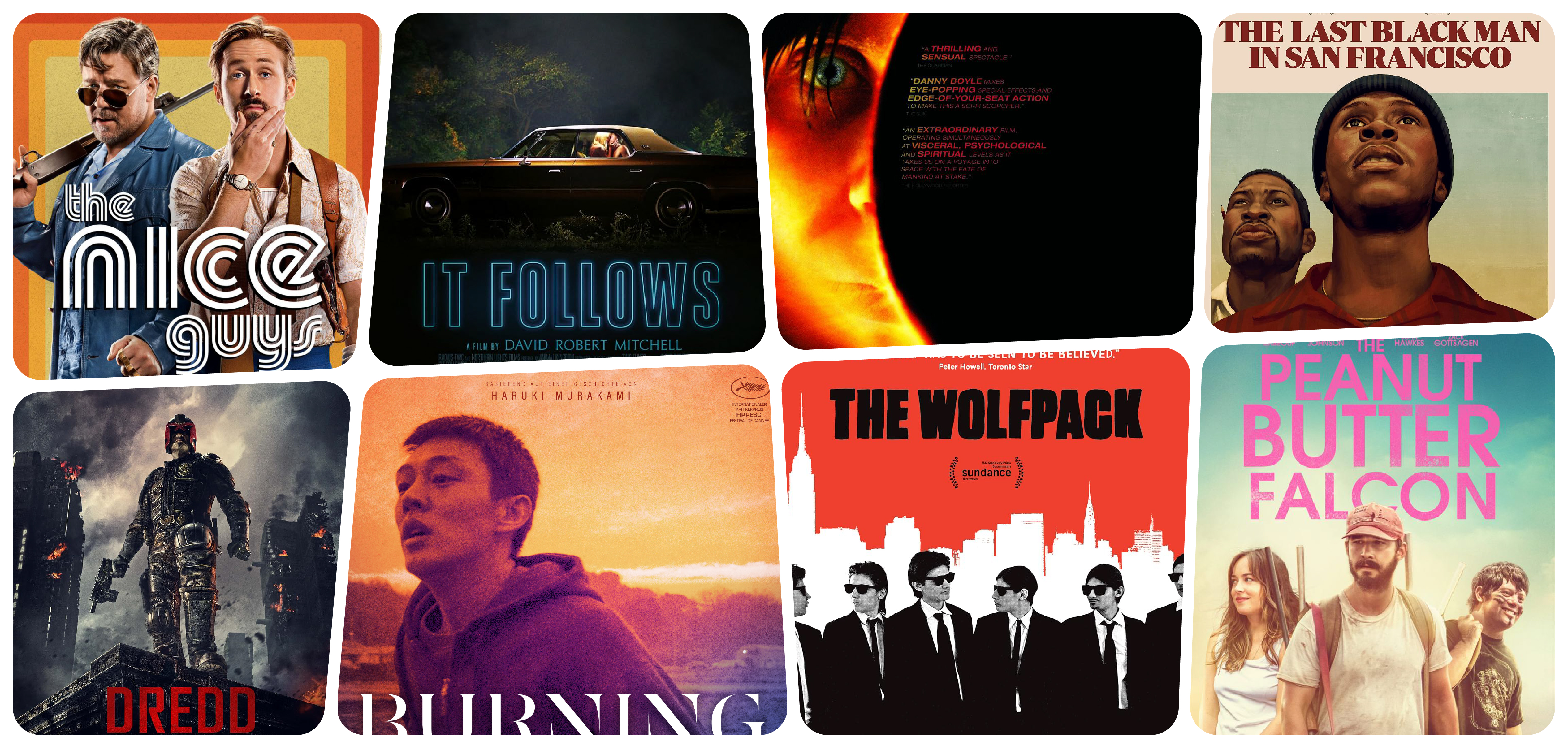
| The Nice Guys | 2016 | Shane Black | Marketing Bury |
| Popstar: Never Stop Never Stopping | 2016 | Akiva Schaffer, Jorma Taccone | Timing Bury |
| What We Do in the Shadows | 2014 | Taika Waititi, Jemaine Clement | Marketing Bury |
| Game Night | 2018 | John Francis Daley, Jonathan Goldstein | Genre Bury |
| The Death of Stalin | 2017 | Armando Iannucci | Marketing Bury |
| Hunt for the Wilderpeople | 2016 | Taika Waititi | International Bury |
| Booksmart | 2019 | Olivia Wilde | Timing Bury |
Horror & Thrillers (7 films)
| Film | Year | Director | Bury Reason |
|---|---|---|---|
| It Follows | 2014 | David Robert Mitchell | Marketing Bury |
| The Guest | 2014 | Adam Wingard | Genre Bury |
| You’re Next | 2011 | Adam Wingard | Marketing Bury |
| The Autopsy of Jane Doe | 2016 | André Øvredal | Streaming Bury |
| His House | 2020 | Remi Weekes | Streaming Bury |
| The Invitation | 2015 | Karyn Kusama | Marketing Bury |
| Fresh | 2022 | Mimi Cave | Streaming Bury |
Sci-Fi & Fantasy (6 films)
| Film | Year | Director | Bury Reason |
|---|---|---|---|
| Sunshine | 2007 | Danny Boyle | Marketing Bury |
| Attack the Block | 2011 | Joe Cornish | Marketing Bury |
| Predestination | 2014 | Michael Spierig, Peter Spierig | Marketing Bury |
| Coherence | 2013 | James Ward Byrkit | Streaming Bury |
| Annihilation | 2018 | Alex Garland | Streaming Bury |
| The Fountain | 2006 | Darren Aronofsky | Timing Bury |
Dramas (8 films)
| Film | Year | Director | Bury Reason |
|---|---|---|---|
| The Last Black Man in San Francisco | 2019 | Joe Talbot | Timing Bury |
| Blindspotting | 2018 | Carlos López Estrada | Marketing Bury |
| Support the Girls | 2018 | Andrew Bujalski | Marketing Bury |
| Locke | 2013 | Steven Knight | Genre Bury |
| Fruitvale Station | 2013 | Ryan Coogler | Timing Bury |
| Short Term 12 | 2013 | Destin Daniel Cretton | Marketing Bury |
| The Rider | 2017 | Chloé Zhao | Genre Bury |
| Mid90s | 2018 | Jonah Hill | Marketing Bury |
Action & Adventure (6 films)
| Film | Year | Director | Bury Reason |
|---|---|---|---|
| Dredd | 2012 | Pete Travis | Marketing Bury |
| Blue Ruin | 2013 | Jeremy Saulnier | Marketing Bury |
| Green Room | 2015 | Jeremy Saulnier | Genre Bury |
| The Raid | 2011 | Gareth Evans | International Bury |
| Bullet Train | 2022 | David Leitch | Marketing Bury |
| Wheelman | 2017 | Jeremy Rush | Streaming Bury |
International & Foreign (6 films)
| Film | Year | Director | Bury Reason |
|---|---|---|---|
| Burning | 2018 | Lee Chang-dong | International Bury |
| The Wailing | 2016 | Na Hong-jin | International Bury |
| A Girl Walks Home Alone at Night | 2014 | Ana Lily Amirpour | International Bury |
| Timecrimes | 2007 | Nacho Vigalondo | International Bury |
| Werckmeister Harmonies | 2000 | Béla Tarr, Ágnes Hranitzky | International Bury |
| Rare Exports: A Christmas Tale | 2010 | Jalmari Helander | International Bury |
Documentaries (4 films)
| Film | Year | Director | Bury Reason |
|---|---|---|---|
| The Wolfpack | 2015 | Crystal Moselle | Genre Bury |
| Man on Wire | 2008 | James Marsh | Marketing Bury |
| Faces Places | 2017 | Agnès Varda, JR | International Bury |
| Amazing Grace | 2018 | Alan Elliott | Timing Bury |
Family & Animation (3 films)
| Film | Year | Director | Bury Reason |
|---|---|---|---|
| The Iron Giant | 1999 | Brad Bird | Timing Bury |
| Wolfwalkers | 2020 | Tomm Moore, Ross Stewart | Streaming Bury |
| The Peanut Butter Falcon | 2019 | Tyler Nilson, Michael Schwartz | Marketing Bury |
Musicals & Music Films (3 films)
| Film | Year | Director | Bury Reason |
|---|---|---|---|
| Sing Street | 2016 | John Carney | Timing Bury |
| Once | 2007 | John Carney | International Bury |
| Whip It | 2009 | Drew Barrymore | Marketing Bury |
Comedy (7 films)
| Film | Year | Director | Bury Reason |
|---|---|---|---|
| The Nice Guys | 2016 | Shane Black | Marketing Bury |
| Popstar: Never Stop Never Stopping | 2016 | Akiva Schaffer, Jorma Taccone | Timing Bury |
| What We Do in the Shadows | 2014 | Taika Waititi, Jemaine Clement | Marketing Bury |
| Game Night | 2018 | John Francis Daley, Jonathan Goldstein | Genre Bury |
| The Death of Stalin | 2017 | Armando Iannucci | Marketing Bury |
| Hunt for the Wilderpeople | 2016 | Taika Waititi | International Bury |
| Booksmart | 2019 | Olivia Wilde | Timing Bury |
Let Us Understand What “Underrated” Actually Means
“Underrated” is one of the most-abused words in film discourse. This section defines what it actually means for the purposes of this article, and why the Five Reasons framework below is the tool for validating each film’s underrated status.
The word is often used to mean one of three things: a film the speaker personally likes more than most people do, a film critics scored lower than the speaker believes it deserves, or a film that wasn’t nominated for major awards. None of these definitions hold up. Personal preference isn’t analysis. A critics’ score is one measure of critical consensus, not the only one. Awards recognition reflects a specific set of institutional biases, not a quality ceiling. This article rejects all three.
Here, a film qualifies as underrated when its commercial or critical reception at the time of release did not match its actual quality. Two tests apply. First, the film has to have genuine quality, verified by strong critical consensus or by a widely documented later reappraisal. Second, something specific has to have caused its initial reception to be underscaled: a timing collision, a marketing failure, a streaming dump, a genre-positioning problem, or foreign-market limitations. Both tests must be satisfied. A film that was widely loved on release doesn’t qualify no matter how much it deserves that love.
Most “underrated films” lists are personal-preference rankings dressed up in analytical language. Pairing this definition with the Five Reasons framework gives readers a diagnostic tool instead. Understanding why a specific film tells you something about how the film industry actually operates. Marketing Bury films expose studio failures. International Bury films expose the limits of US distribution. Streaming Bury films expose the algorithm-driven attention economy that now decides what gets watched.
The Five Reasons Great Films Get Buried
Great films get buried for specific reasons. The framework below names five distinct mechanisms. Every film in this list sits primarily in one of the five categories, and understanding which one a specific film is buried in is what separates a recommendation from a taste statement.
Reason 1: The Timing Bury
A film opens alongside a bigger release that swallows all cultural attention. Audiences and critics have finite bandwidth. When a smaller film lands the same weekend as a franchise blockbuster, or in the shadow of a buzzier awards contender, the smaller film gets squeezed regardless of its own quality. This is often the fairest of the five bury reasons, because the film had real merit and simply no attention available to receive it. Films buried this way frequently find their audience years later, through streaming and word of mouth rather than a theatrical run.
Reason 2: The Marketing Bury
The studio didn’t know how to sell the film, or the campaign actively misrepresented what the film is. A period noir gets cut as a broad buddy comedy. A philosophical science-fiction film gets a genre-thriller trailer. A film gets almost no campaign at all. Marketing Bury films depend on word of mouth to find an audience, which can take years or never happen. It is the largest single category of bury reason represented in this list.
Reason 3: The Streaming Bury
The film went straight to a platform or got pulled from a planned theatrical run and dumped online without the critical attention a release normally generates. A director’s-cut science-fiction film loses its theatrical event. A studio original disappears into a crowded platform library the week it drops. Streaming Bury films can find an audience over time through algorithmic recommendation, but they rarely get the cultural moment they earned. The rise of streaming has multiplied this category substantially over the past decade.
Reason 4: The Genre Bury
The film’s genre positioning doesn’t match audience expectations, or its actual genre doesn’t match how it was marketed. A deafness drama is sold as a music film. A synthy retro-action psychodrama gets sold as a home-invasion thriller. A scripted narrative using real subjects gets mistaken for a documentary. Genre Bury films often become critics’ favorites because critics see past the marketing, but they rarely break through to mainstream audiences because those audiences never got a clear read on what the film actually is.
Reason 5: The International Bury
The film is a foreign or non-English-language production with limited US distribution. Some of the most acclaimed films of a given year never play wide in the United States at all, confined to a handful of art-house screens while wide-release films with a fraction of the critical support fill thousands of American theaters. Most American audiences have never had genuine access to these films. International streaming has helped close the gap, but language and cultural unfamiliarity continue to keep foreign cinema under-scaled for US audiences.
How the reasons combine
A film sits primarily in one broad category, but many are cross-cases. A film dumped internationally to a streaming platform and also mis-marketed by genre is both Streaming Bury and Genre Bury at once. A film that opened between two blockbusters, sold by a studio that also misjudged its tone, is both a Timing Bury and a Marketing Bury. The primary category determines the analytical framing below; secondary influences are noted in the write-ups where they matter. This is how the framework matches the way films actually fail commercially, which is rarely for just one reason.
Underrated Comedies Worth Rediscovering
Comedy is the genre most vulnerable to burial. Comedies date faster than dramas, get marketed less carefully than horror or action, and typically depend on word of mouth that never materializes when the trailer misfires. The seven films below are among the most underrated comedies of the past decade, each buried by a specific mechanism the Five Reasons framework identifies.
The Nice Guys (2016) — Reason 2: Marketing Bury
Director: Shane Black
Runtime: 116 min
The pitch: A hapless private detective and a bruiser-for-hire team up in 1977 Los Angeles to find a missing girl and unravel a corporate conspiracy.
Why it got buried: Warner Bros. marketed the film as a broad Ryan Gosling and Russell Crowe buddy comedy, with trailers built around slapstick and one-liners. What audiences actually got was a specific Shane Black period noir with the tonal register of Kiss Kiss Bang Bang. Viewers who came for broad comedy got something more particular, and viewers who wanted specific Black noir stayed away because the campaign never signaled them.
Why it deserves rediscovery: The Nice Guys is one of the sharpest comedies of the 2010s. Gosling’s physical-comedy work is the best of his career; Crowe grounds it perfectly. The 1970s LA setting is realized in specific period detail rather than generic pastiche. Shane Black’s dialogue is at its most-refined here — better than The Nice Guys’ more-celebrated predecessor Kiss Kiss Bang Bang (2005).
Best for viewers who liked: Kiss Kiss Bang Bang (2005), Inherent Vice (2014), L.A. Confidential (1997).
The Screendollars Take The Nice Guys is not a comeback for the buddy comedy. It is Shane Black proving the genre never needed reviving in the first place.
Black stages the film’s chaos with the same structural precision he brought to Lethal Weapon, but here the plot mechanics serve the comedy rather than the other way around. Gosling’s physical performance, the panic-scream, the falling-off-the-balcony stumble that somehow lands a punchline, is the best pure slapstick work of his career, and Crowe’s flat menace grounds every scene he shares with it. The 1970s Los Angeles setting is rendered in specific period texture, not generic pastiche: the smog, the porn-industry set dressing, the particular ugliness of the era’s furniture.
The mystery plot resolves cleanly, but it was never really the point. The point is watching two damaged men discover, almost by accident, that they are capable of decency.
US streaming: No current subscription option.
Rent: Prime Video, Apple TV, Fandango at Home.
Buy: Prime Video, Apple TV, Fandango at Home.
- Popstar: Never Stop Never Stopping (2016) — Reason 1: Timing Bury
Directors: Akiva Schaffer, Jorma Taccone
Runtime: 87 min
The pitch: A hip-hop superstar’s career implodes when his second album flops, and his former group must decide whether to help him save it. The Lonely Island’s mockumentary parody of contemporary pop stardom.
Why it got buried: Universal released the film on June 3, 2016, the same weekend as Warcraft, one week after X-Men: Apocalypse, and one week before Finding Dory. It opened at number seven and disappeared within a month. Multiple release-week collisions consumed all the cultural oxygen available that summer. Universal’s marketing also failed to communicate that this was a Lonely Island production aimed squarely at their existing fanbase.
Why it deserves rediscovery: Popstar has become one of the most-quoted comedies of the 2010s among people who eventually found it. The songs are among the Lonely Island’s best. The Justin Timberlake / Andy Samberg dynamic is genuine comic chemistry. The film’s specific parody of contemporary pop marketing (equipment endorsements, streaming numbers, TMZ coverage) has aged into cultural document status.
Best for viewers who liked: This is Spinal Tap (1984), Walk Hard: The Dewey Cox Story (2007), Documentary Now! (2015–2020, TV).
The Screendollars Take Popstar is not a parody of pop music. It is a parody of the machinery that manufactures relevance, and it understood that machinery a decade before most critics gave it credit for.
The Lonely Island’s songs work as both jokes and genuine pop craft, which is the trick most music-mockumentaries miss. Samberg and Taccone’s chemistry as former bandmates carries real, uncomfortable weight underneath the gags about equipment endorsements and TMZ coverage. The film’s specific parody of celebrity self-mythology, the drone-shot album cover reveal, the emotional-support falcon, has only gotten funnier as the culture it mocked has gotten stranger.
Give it ten years and no marketing budget. It found its audience anyway.
US streaming: No current subscription option
Rent: Prime Video, Apple TV, Fandango at Home
Buy: Prime Video, Apple TV, Fandango at Home.
- What We Do in the Shadows (2014) — Reason 2: Marketing Bury
Directors: Taika Waititi, Jemaine Clement
Runtime: 86 min
The pitch: Four vampire flatmates in modern Wellington navigate the mundane challenges of nightclub bouncers, vampire hierarchy, and doing the dishes. Mockumentary format.
Why it got buried: The film’s US distribution was limited, and its release carried almost no marketing support beyond festival buzz. It played primarily in coastal art-house cinemas and disappeared quickly from American theaters. The later FX television adaptation has made the film findable in retrospect, but the original theatrical release itself was nearly invisible.
Why it deserves rediscovery: Shadows is arguably the funniest film of the 2010s per minute. It is an 86 minutes with essentially no dead scenes. Waititi and Clement’s writing has the specific rhythm of the best British mockumentary (This is Spinal Tap, The Office). The vampire-flatmate premise is used for genuinely inventive gags rather than as a one-note joke. The film’s cult status is deserved.
Best for viewers who liked: This is Spinal Tap (1984), A Girl Walks Home Alone at Night (2014), Only Lovers Left Alive (2013).
The Screendollars Take Shadows is not a vampire spoof. It is a flatmate sitcom that happens to star the undead, and that distinction is the entire joke.
Waititi and Clement understand that immortality is funniest when it’s inconvenient rather than glamorous. The film mines its best material from bureaucratic friction, a chore wheel nobody follows, a centuries-old rivalry reduced to petty roommate sniping, rather than from vampire mythology itself. The mockumentary format lets every gag land through deadpan delivery instead of a punchline setup, which is the harder and rarer comic register to sustain for 86 straight minutes.
Eighty-six minutes with essentially no dead scenes. That density is the achievement.
US streaming: No current subscription option
Rent: Fandango at Home, Apple TV
Buy: Fandango at Home, Apple TV, Prime Video.
- Game Night (2018) — Reason 4: Genre Bury
Directors: John Francis Daley, Jonathan Goldstein
Runtime: 100 min
The pitch: A competitive suburban couple’s weekly game night goes wrong when a staged kidnapping turns out to be real.
Why it got buried: Warner Bros. marketed the film as a broad adult ensemble comedy; trailers leaned on the cast bickering. What it actually delivers is a genuinely crafted action-thriller wearing a comedy’s clothes, closer in structure to After Hours than to a typical studio comedy. Audiences expecting one thing got something else, and the mismatch cost the film word-of-mouth momentum in its first weekend.
Why it got buried: Game Night was marketed as a broad adult comedy. Its trailers emphasized the Rachel McAdams / Jason Bateman ensemble bickering. The film is actually a legitimately crafted action-thriller with comedy tone that is closer to After Hours (1985) or The Man Who Knew Too Little (1997) than to typical Warner Bros. adult comedy. Audiences expected one thing; got another.
Why it deserves rediscovery: Daley and Goldstein’s direction is genuinely inventive. The recurring “hand-held object as miniature city” transitions between scenes are one of the 2010s’ most underused visual devices. The plot’s genuine twists earn their reveals. Rachel McAdams and Jason Bateman have real comic chemistry. Kyle Chandler’s supporting turn is the film’s secret weapon.
The Screendollars Take Game Night is not a comedy with some thriller elements. It is a thriller that happens to be extremely funny, and that ordering matters.
Daley and Goldstein’s direction is genuinely inventive: the recurring miniature-city transitions between scenes, shot as if the camera is tracking a hand-held object across a model of the neighborhood, is one of the decade’s most underused visual devices. The plot’s twists earn their reveals rather than announcing them, and Jesse Plemons’s creepy-neighbor performance turns a stock character into the film’s best running joke.
It plays like a real thriller because the filmmakers built a real one first, then let the jokes live inside it.
US streaming: HBO Max.
Rent: Prime Video, Apple TV, Fandango at Home.
Buy: Prime Video, Apple TV, Fandango at Home.
- The Death of Stalin (2017) — Reason 2: Marketing Bury
Director: Armando Iannucci
Runtime: 107 min
The pitch: The comic chaos following Joseph Stalin’s 1953 death, as the Soviet Union’s top officials jockey for power. Armando Iannucci’s period political satire.
Why it got buried: IFC Films gave the film a limited US release with minimal marketing spend. Soviet political history is not obvious commercial terrain for mainstream American audiences, and the film was banned outright in Russia and several former Soviet states, which limited its international reach further. Iannucci’s Veep fanbase never fully translated into ticket sales for a theatrical release built around historical satire rather than contemporary Washington.
Why it deserves rediscovery: The Death of Stalin is Iannucci’s masterpiece. It is sharper than In the Loop (2009) and denser than Veep. The ensemble cast delivers the specific Iannucci-register political humor across British and American accents (no attempted Russian). Simon Russell Beale’s Beria performance is one of the great supporting turns of the 2010s.
Best for viewers who liked: In the Loop (2009), Veep (2012–2019, TV), Four Lions (2010).
The Screendollars Take The Death of Stalin is not a history lesson with jokes attached. It is Iannucci’s argument that tyranny and farce have always shared the same engine room.
The ensemble delivers Iannucci’s specific register of political humor, overlapping insults, bureaucratic panic, casual cruelty treated as small talk, across a mix of British and American accents with no attempted Russian, a choice that keeps the satire pointed at power itself rather than at nationality. Simon Russell Beale’s performance as secret police chief Beria is the film’s engine: charming in one scene, monstrous in the next, and never telegraphing which is coming.
It is funnier than a film about a genocidal regime’s death spiral has any right to be, and that discomfort is the entire point.
US streaming: AMC+, Sundance Now.
Rent: Prime Video, Apple TV, Fandango at Home.
Buy: Prime Video, Apple TV, Fandango at Home, Google Play.
- Hunt for the Wilderpeople (2016) — Reason 5: International Bury
>
Director: Taika Waititi
Runtime: 101 min
The pitch: A rebellious foster kid and his cantankerous foster uncle end up on the run in the New Zealand bush, pursued by child services and the national media.
Why it got buried: Waititi’s fourth feature came out of New Zealand through The Orchard, a boutique US distributor, with no significant wide theatrical push. It played art-house cinemas and never expanded. Waititi’s subsequent Marvel career made him findable in retrospect, but the film itself remained the province of enthusiasts who already knew his name.
Why it deserves rediscovery: Hunt for the Wilderpeople is Waititi’s warmest film — the specific New Zealand comic register (dry, self-mocking, empathetic) is at its purest here. Sam Neill’s foster-uncle performance is one of his best. The film’s set-piece action sequences (the boar hunt, the final chase) are crafted at a level well above the film’s budget.
Best for viewers who liked: Boy (2010, also Waititi), Little Miss Sunshine (2006), Moonrise Kingdom (2012).
The Screendollars Take Hunt for the Wilderpeople is not a road movie about a boy and his reluctant guardian. It is a film about the specific loneliness of being unwanted, dressed up as an adventure so it doesn’t have to say so directly.
Waititi’s dry, self-mocking, deeply empathetic New Zealand comic register is at its purest here, and Sam Neill’s performance as the foster uncle Hec carries the film’s emotional weight without ever softening the character’s genuine gruffness. The set-piece sequences, the boar hunt, the extended bush chase, are staged with a craft and scale well beyond the film’s actual budget.
It earns its warmth the hard way, by refusing to rush toward it.
US streaming: Peacock.
Rent: Fandango at Home, Prime Video, Apple TV.
Buy: Fandango at Home, Prime Video, Apple TV.
- Booksmart (2019) — Reason 1: Timing Bury
Director: Olivia Wilde
Runtime: 102 min
The pitch: Two overachieving best friends realize, the night before graduation, that they spent four years studying while their classmates partied, and set out to cram an entire high-school social life into one night.
Why it got buried: The film opened Memorial Day weekend 2019 against Aladdin at number one and John Wick: Chapter 3 in its second week. It debuted at $6.9 million against tracking of $10 to $13 million and never recovered. Annapurna’s marketing leaned on strong early reviews, but review strength couldn’t overcome the release-window competition.
Why it deserves rediscovery: Hunt for the Wilderpeople is Waititi’s warmest film — the specific New Zealand comic register (dry, self-mocking, empathetic) is at its purest here. Sam Neill’s performance as a foster uncle is one of his best. The film’s set-piece action sequences (the boar hunt, the final chase) are crafted at a level well above the film’s budget.
Best for viewers who liked: Boy (2010, also Waititi), Little Miss Sunshine (2006), Moonrise Kingdom (2012).
The Screendollars Take Booksmart is not a gender-flipped Superbad. It is a film about what happens when the reward system you built your identity around turns out to have lied to you.
Wilde’s directorial debut is stylistically confident in ways first features rarely are, the underwater pool sequence and the stop-motion drug trip both take real formal risks and land them. Dever and Feldstein’s chemistry reads as a genuine, decade-long friendship rather than a screenwriting device, which is what makes the film’s late-act rupture between them actually hurt. Its queer-affirming register, handled without a single moment of after-school-special caution, was ahead of most mainstream studio comedy of its era.
It’s a teen comedy that trusts its teenagers to be as smart as the adults in the room, usually smarter.
US streaming: Lionsgate+ (Amazon Channel).
Rent: Apple TV, Prime Video, Google Play, YouTube
Buy: Apple TV, Prime Video, Google Play, YouTube.
These seven films didn’t fail because they weren’t good enough. They failed because a release date, a trailer cut, a distributor’s budget, or a country’s import quota got in the way of the film reaching the people who would have loved it. None of that has anything to do with what’s actually on screen. Start with whichever one matches your evening, and let the other six wait for the next one.
Underrated Horror & Thrillers Worth Rediscovering
Horror has the most active discovery ecosystem in genre cinema: dedicated critics, YouTube channels, and cult communities find hidden gems constantly. But that same ecosystem creates a hierarchy. Some films become community-canonized quickly. Others get missed. The seven films below are the ones the horror community has canonized, or should have, but that mainstream audiences still haven’t reached.
It Follows (2014) — Reason 2: Marketing Bury
Director: David Robert Mitchell
Runtime: 101 min
The pitch: A teenage girl in suburban Detroit is pursued by a supernatural entity, visible only to her, that walks toward her constantly and passes between people through sexual contact.
Why it got buried: RADiUS-TWC sold It Follows with a genre-horror campaign built around jump scares, cutting the trailer to look like standard supernatural horror. What the film actually delivers is mood-driven, arthouse-adjacent dread closer to The Innocents than to a studio horror release. Audiences who came expecting scares got something slower and more atmospheric, and the mismatch cost the film its opening-weekend word of mouth.
Why it deserves rediscovery: It Follows has become the reference-point 2010s horror film among cinephile-facing critics. David Robert Mitchell’s direction — long lens work, specific 1970s and 1980s cinematography homages, Disasterpeace’s synth score — established a modern horror aesthetic that subsequent films (Ari Aster’s Hereditary, Robert Eggers’s The Witch) built on. The film’s central metaphor is unusually literary for the genre.
Best for viewers who liked: Let the Right One In (2008), The Innocents (1961), Under the Skin (2013).
The Screendollars Take It Follows is not a monster movie. It is an anxiety movie that borrowed a monster to make the anxiety visible.
David Robert Mitchell shoots the thing that follows Jay in unbroken wide shots, letting it appear anywhere in the frame at any distance, which does more to generate dread than any jump cut could. Disasterpeace’s synth score, composed in three weeks before the film’s Cannes premiere, does the same work through sound that the cinematography does through space: it never lets the audience settle. The film’s suburban Detroit setting, shot with a specific eye for empty pools and abandoned houses, turns adolescence itself into the haunted thing.
The monster never runs. It just never stops. That’s the whole film in one sentence.
US streaming: No current subscription option (previously on Netflix; removed)
Rent: Amazon Video, Apple TV, Fandango at Home
Buy: Amazon Video, Apple TV, Fandango at Home.
- The Guest (2014) — Reason 4: Genre Bury
Director: Adam Wingard
Runtime: 99 min
The pitch: A mysterious former soldier arrives at the home of a grieving family whose son died in Afghanistan and offers to help them heal. His real purpose is far more sinister.
Why it got buried: Picturehouse marketed The Guest as a home-invasion thriller, with trailers built around suspense and threat. The film is actually a synth-scored, retro-action psychodrama in the John Carpenter tradition: closer to Halloween or They Live than to a contained thriller. Audiences expecting tension got neon-lit action-horror instead, and Wingard’s specific tonal ambition never made it into the marketing.
Why it deserves rediscovery: The Guest is one of the 2010s’ most-influential smaller films for genre cinema. Dan Stevens’s central performance — using his Downton Abbey wholesome-actor image against type — is legitimately great. The Halloween-set final act at the abandoned high-school haunted maze is one of the era’s most-cited genre set pieces. The film’s synth-and-neon aesthetic influenced everything from Stranger Things onward.
Best for viewers who liked: You’re Next (2011, also Wingard), Drive (2011), They Live (1988).
The Screendollars Take The Guest is not a home-invasion thriller. It is an action movie wearing a thriller’s disguise until it decides it doesn’t need to anymore.
Dan Stevens plays against every expectation set by his Downton Abbey image, using that same soft-spoken politeness as camouflage for something genuinely dangerous. Wingard stages the escalation with real patience, letting David’s presence curdle scene by scene rather than announcing the twist early. Steve Moore’s synth score, and the Halloween-set finale inside an abandoned high school haunted maze, turn the back half into a full genre-cinema set piece that most contained thrillers never attempt.
By the time the strobe lights start, the film has already stopped pretending to be polite.
US streaming: AMC+, Shudder, Philo.
Rent: Prime Video, Apple TV, Google Play, Fandango at Home.
Buy: Prime Video, Apple TV, Google Play, Fandango at Home.
- You’re Next (2011) — Reason 2: Marketing Bury
Director: Adam Wingard
Runtime: 95 min
The pitch: A family reunion at an isolated country home is interrupted by masked killers. One of the guests turns out to be far more capable than anyone at the table expected.
Why it got buried: The film premiered at TIFF in 2011 to strong reception, then sat on Lionsgate’s shelf for two years before its 2013 release. The delay killed its festival momentum, and the eventual marketing sold it as generic home-invasion horror, ignoring the film’s subversion of the genre’s own rules. By the time it reached theaters, even the TIFF buzz had gone cold.
Why it deserves rediscovery: You’re Next is Adam Wingard’s genre-defining home-invasion revisionist horror. Sharni Vinson’s central performance as Erin, the seemingly mild girlfriend who turns out to be raised in a survivalist compound, is one of horror’s great final-girl subversions. The film’s dark comic register combined with genuine tension produced the specific tonal template Wingard would refine in The Guest.
Best for viewers who liked: Scream (1996), The Guest (2014), Ready or Not (2019).
The Screendollars Take You’re Next is not a home-invasion movie about victims. It is a home-invasion movie about the one guest who was never going to be one.
Sharni Vinson’s Erin spends the first act reading as the mild girlfriend nobody at the table takes seriously, which is exactly the point: she was raised in a survivalist compound, and the film waits until the masks come off to let that fact matter. Wingard and screenwriter Simon Barrett build genuine dark comedy into the kill sequences without undercutting the tension, a balance most slasher revisions get wrong in one direction or the other.
Erin doesn’t need saving. She needs everyone else to get out of her way.
US streaming: Philo, Starz (Amazon/Apple TV Channel). Free with ads: The Roku Channel, The CW, Fandango at Home Free, Plex.
Rent: Amazon Video, Apple TV, Fandango at Home.
Buy: Amazon Video, Apple TV, Fandango at Home.
- The Autopsy of Jane Doe (2016) — Reason 3: Streaming Bury
>
Director: André Øvredal
Runtime: 86 min
The pitch: A father-son coroner team receive the body of an unidentified woman found at a violent crime scene. As they conduct her autopsy, increasingly inexplicable things begin happening in their morgue.
Why it got buried: IFC Midnight gave the film a limited December 2016 theatrical and VOD release with no significant marketing push and no wide expansion. It found an audience gradually through streaming word of mouth over the following years, but it never got the cultural moment a wider release would have given it. IFC’s VOD-first business model prioritizes monetization over theatrical event-building, which meant even a strongly reviewed film like this one got almost no visibility at launch.
Why it deserves rediscovery: Jane Doe is one of the best-crafted horror films of the 2010s in the specific “single location, mounting dread” mode. Brian Cox anchors the film in genuine performance depth. The autopsy procedure is depicted with unusual medical detail, which grounds the supernatural escalation. The film’s third-act reveal is genuinely earned.
Best for viewers who liked: The Ritual (2017), The Wailing (2016), The Descent (2005).
The Screendollars Take The Autopsy of Jane Doe is not a body-horror film. It is a procedural that keeps its rules until the rules themselves become the horror.
Øvredal grounds the supernatural escalation in unusually specific medical detail: the film trusts the mechanics of an actual autopsy to build dread before anything overtly impossible happens. Brian Cox anchors the film with the kind of lived-in, exhausted-professional performance that horror rarely gets, and the single-location structure, one body, one morgue, one night, forces every scare to come from procedure rather than jump-cut.
The scariest thing in the room is how long it takes anyone to admit something is wrong.
US streaming: Paramount+, AMC+, Shudder, Sundance Now, Philo, fuboTV.
Rent: Apple TV, Amazon Video, Fandango at Home.
Buy: Apple TV, Amazon Video, Fandango at Home, Google Play.
- His House (2020) — Reason 3: Streaming Bury
Director: Remi Weekes
Runtime: 93 min
The pitch: A South Sudanese refugee couple, granted asylum in England, are placed in a decrepit government house, where increasingly supernatural experiences may be their own trauma resurfacing, the house’s history, or something worse.
Why it got buried: His House premiered at Sundance 2020 to strong reception, then Netflix released it directly to streaming that October with no theatrical event and no critical-moment build. It disappeared quickly into Netflix’s constantly rotating catalog. The near-universal acclaim belongs to a film almost no one outside the horror press actually watched at release.
Why it deserves rediscovery: His House is one of the most-culturally-substantive horror films of the past decade. Weekes’s direction handles the refugee-trauma metaphor with unusual seriousness — the film is genuinely about the experience of displacement, not just using it as horror premise. The supernatural elements pay off narrative and character work rather than just providing scares. Wunmi Mosaku’s central performance is legitimately great.
Best for viewers who liked: The Babadook (2014), Get Out (2017), A Quiet Place (2018).
The Screendollars Take His House is not a haunted-house movie that happens to feature refugees. It is a film about displacement that uses the haunted house as the only structure honest enough to hold that subject.
Remi Weekes never lets the supernatural elements function as mere scares. Every apparition ties directly back to what Bol and Rial carried out of South Sudan, so the horror and the grief are structurally inseparable. Wunmi Mosaku’s performance carries the film’s emotional weight in scenes where she says almost nothing, and the production design, the house’s peeling walls doing double duty as both decay and memory, does as much storytelling as the script.
The house was never the thing haunting them. It just made the thing they already carried visible.
US streaming: Netflix (exclusive)
Rent: Not available
Buy: Not available.
- The Invitation (2015) — Reason 2: Marketing Bury
Director: Karyn Kusama
Runtime: 99 min
The pitch: A man attends a dinner party at his ex-wife’s Hollywood Hills home, the first time he’s seen her since their son’s death two years earlier. Her new husband and their new friends have something to reveal about how they’ve been coping.
Why it got buried: Drafthouse Films gave The Invitation a small theatrical release in April 2016, a year after its SXSW premiere, with minimal marketing behind it. The film’s slow-burn structure, nearly an hour of dinner-party conversation before the horror fully surfaces, was a hard sell to mainstream audiences, and Karyn Kusama’s earlier work was undervalued at the time in a way that didn’t help the film find its footing.
Why it deserves rediscovery: The Invitation is a masterclass in sustained tension. Kusama’s direction extracts genuine dread from purely conversational scenes and the film is essentially 90 minutes of a dinner party where the audience knows something is wrong but can’t pin down what. The third-act payoff is legitimately terrifying. Logan Marshall-Green’s central performance grounds the material.
Best for viewers who liked: Rosemary’s Baby (1968), The Guest (2014), Get Out (2017).
The Screendollars Take The Invitation is not a horror movie about a cult. It is a film about grief that only reveals it was a horror movie the whole time once it’s too late to leave the table.
Kusama extracts genuine dread from scenes that are, on the surface, just people talking over wine, using blocking and lingering shot length to make the audience distrust hospitality itself. Logan Marshall-Green’s performance keeps Will’s paranoia legible without tipping into unreliable-narrator cliché, so the tension never collapses into a simple “is he crazy” question. The film’s patience is the whole strategy: every uncomfortable pause is doing work.
By the time the real reveal arrives, the dinner party was never really the point. The waiting was.
US streaming: Peacock.
Rent: Amazon Video, Apple TV, Fandango at Home.
Buy: Amazon Video, Apple TV, Fandango at Home.
- Fresh (2022) — Reason 3: Streaming Bury
Director: Mimi Cave
Runtime: 114 min
The pitch: A woman fed up with dating apps meets a charming man at a grocery store. On their first weekend getaway, she discovers his real preferences.
Why it got buried: Fresh premiered at Sundance in January 2022 and went straight to Hulu (and Disney+ internationally) two months later with no theatrical release at all. The streaming-first release meant no cultural moment and no critical buzz built before it landed in Hulu’s catalog. The film’s tonal pivot, from dating-app romantic comedy to outright horror at roughly the thirty-minute mark, also made it a hard film to market honestly without spoiling its own structure.
Why it deserves rediscovery: Fresh is one of the sharpest dating-culture horror films of the 2020s. Sebastian Stan’s central performance, using his charm to a genuinely disturbing effect, is one of his best. The film’s title-card drop at 30 minutes (after the tonal shift) is one of the era’s most effective structural moves. Mimi Cave’s directorial debut is confident throughout.
Best for viewers who liked: Gone Girl (2014), You (2018–2025, TV), Ready or Not (2019).
The Screendollars Take Fresh is not a horror movie about a killer. It is a satire of modern dating that commits so completely to the bit that it becomes a horror movie by necessity.
Mimi Cave’s direction holds the tonal shift at the thirty-minute title-card drop with total control, refusing to soften the whiplash for the audience the way a lesser first feature might. Sebastian Stan’s performance depends entirely on weaponizing his own charm, and the film never lets you clock exactly when likable tips into monstrous. Daisy Edgar-Jones’s Noa spends the back half solving her own captivity with resourcefulness rather than pure terror, which is the film’s sharpest structural choice.
The grocery-store meet-cute was always the trap. The film just waits thirty minutes to say so.
US streaming: Hulu, Disney+
Rent: Not currently available for rental or purchase.
Buy: Not currently available for rental or purchase.
Underrated Sci-Fi & Fantasy Worth Rediscovering
Sci-fi and fantasy audiences skew toward franchise cinema: Marvel, DC, Star Wars, Dune. Standalone genre films fight for oxygen in a landscape dominated by IP. The six films below are the standalone sci-fi and fantasy releases of the past two decades that most deserve rediscovery, each buried by the specific mechanism that makes standalone genre films vulnerable.
Sunshine (2007) — Reason 2: Marketing Bury
Director: Danny Boyle
Runtime: 107 min
The pitch: A crew of astronauts on a spacecraft carrying a nuclear payload journeys toward a dying sun to reignite it, humanity’s last hope.
Why it got buried: Fox Searchlight gave Sunshine a limited US release in July 2007, competing directly against Transformers, Ratatouille, and Live Free or Die Hard. The marketing never clarified what the film actually is: a philosophical space drama that pivots into horror in its final act. Boyle was between 28 Days Later and Slumdog Millionaire at the time, and his commercial identity hadn’t locked into place yet, which left the studio without a clear angle to sell.
Why it deserves rediscovery: Sunshine is one of the great overlooked science-fiction films of the 21st century. Alex Garland’s screenplay (before his directorial career) is philosophically serious. The visual language, like the sun as a blinding presence, the interior spaceship’s design is stunning. The film’s genre shift in the third act is genuinely divisive but is a legitimate artistic choice. Cillian Murphy’s central performance is quiet and effective.
Best for viewers who liked: Ex Machina (2015), Solaris (2002), Interstellar (2014).
The Screendollars Take Sunshine is not a disaster movie about saving the sun. It is a film about what proximity to something vast does to the people closest to it.
Alex Garland’s screenplay treats the mission’s philosophical stakes as seriously as its mechanical ones, and Boyle shoots the sun itself as a genuine visual antagonist, blinding, overwhelming, almost holy. The divisive third-act genre pivot toward horror reads less like a mistake with two decades of distance and more like the film following its own internal logic to its most honest conclusion: proximity to godlike scale breaks people. Cillian Murphy’s quiet, internalized performance holds the human center of a film that keeps threatening to become pure abstraction.
The sun was never the enemy. What people become while worshipping it is.
US streaming: Disney+.
Rent: Amazon Video, Apple TV, Fandango at Home, Google Play.
Buy: Amazon Video, Apple TV, Fandango at Home, Google Play.
- Attack the Block (2011) — Reason 2: Marketing Bury
Director: Joe Cornish
Runtime: 88 min
The pitch: A South London teen gang’s mugging is interrupted when aliens crash-land in their council estate, and the same gang finds themselves defending their neighborhood against extraterrestrial invasion.
Why it got buried: Screen Gems gave Attack the Block a tiny US release in July 2011 with almost no marketing behind it. The film’s protagonists are British teenagers speaking dense South London slang, which American distributors treated as an accessibility problem rather than a strength, and the film’s genre mashup of comedy, horror, and alien invasion didn’t fit neatly into any single marketing category.
Why it deserves rediscovery: Attack the Block is Joe Cornish’s directorial debut. It is sharper and more confident than most decade-later directorial debuts. John Boyega’s central performance made him a Star Wars star; the specific charisma he shows here is his most fully realized to date. The film’s alien design (fully black, glowing blue teeth) is one of the era’s most inventive creature choices.
Best for viewers who liked: Shaun of the Dead (2004), The Kid Who Would Be King (2019, also Cornish), Super 8 (2011).
The Screendollars Take Attack the Block is not an alien-invasion movie that happens to star teenagers. It is a coming-of-age film that uses the invasion to force its characters to become the adults their neighborhood already needed.
Joe Cornish’s debut is sharper and more structurally confident than most decade-later directorial follow-ups, let alone a first feature. John Boyega’s performance as Moses carries a specific, wary charisma that made his later Star Wars casting look inevitable in hindsight. The alien design itself, fully black-furred with only glowing blue teeth visible, is one of the most inventive low-budget creature choices of the decade, built entirely around what the film’s budget could actually achieve.
By the time the aliens are defeated, the block has already changed who’s defending it.
US streaming: No current wide subscription option (occasionally on Pluto TV, free with ads).
Rent: Apple TV, Prime Video, Google Play.
Buy: Apple TV, Prime Video, Google Play, Fandango at Home.
- Predestination (2014) — Reason 2: Marketing Bury
Directors: Michael Spierig, Peter Spierig · Runtime: 97 min
The pitch: A temporal agent on his final assignment must pursue an elusive criminal across time to prevent a bombing in 1970s New York. Based on Robert Heinlein’s short story “—All You Zombies—.”
Why it got buried: Sony Pictures Classics released Predestination in January 2015 with almost no marketing support. The film’s twist-dependent structure made honest trailers nearly impossible to cut without spoiling its central reveals, and neither lead name carried box office weight at the time. Sarah Snook was four years away from Succession, and Ethan Hawke’s genre-film presence didn’t drive turnout on its own.
Why it deserves rediscovery: Predestination is one of the great overlooked time-travel films. Sarah Snook’s central performance, in which she plays multiple characters at different life stages across gender presentations, is a legitimate acting achievement that predates her Succession stardom by four years. The film’s twist mechanics genuinely reward multiple viewings. The Spierig brothers’ direction handles the tricky material with unusual confidence.
Best for viewers who liked: Primer (2004), Looper (2012), Twelve Monkeys (1995).
The Screendollars Take Predestination is not a time-travel puzzle box. It is a character study that uses the puzzle box structure to ask what happens when a single identity is forced to play every role in its own story.
Sarah Snook plays the same character across multiple life stages and gender presentations, a performance that demanded far more technical and emotional range than the film’s quiet release ever gave her credit for. The Spierig brothers handle the temporal mechanics with unusual discipline, letting the paradox structure reward a second viewing rather than collapsing under its own cleverness. Ethan Hawke’s performance stays deliberately restrained, which is the correct choice for a film whose real fireworks are happening inside Snook’s character.
Every version of this story’s protagonist was always the same person. The film just makes you watch her meet herself before you’re allowed to understand that.
US streaming: Sony Pictures Core (Amazon Channel), The Roku Channel (free with ads).
Rent: Amazon Video, Apple TV.
Buy: Amazon Video, Apple TV, Fandango at Home.
- Coherence (2013) — Reason 3: Streaming Bury
Director: James Ward Byrkit
Runtime: 89 min
The pitch: Eight friends at a dinner party experience increasingly strange phenomena during a passing comet and gradually realize that the physical world around them has fractured into parallel possibilities.
Why it got buried: Coherence went straight to VOD in 2014 after a 2013 festival run, with no theatrical release, no marketing budget, and no critical event to build around. It found its audience slowly through algorithmic recommendation over the following years, but it never got a cultural moment. Micro-budget films almost always get buried at the streaming level regardless of how strong the reviews are, because there’s no marketing spend behind them to counteract the algorithm’s indifference.
Why it deserves rediscovery: Coherence is one of the most inventive micro-budget science-fiction films of the past decade. Shot in five nights on a $50,000 budget in a single Los Angeles house, the film uses its constraints to force conceptual invention. The multiverse mechanics are legitimately worked out. The improvised-feeling dialogue creates genuine ensemble tension.
Best for viewers who liked: Primer (2004), Timecrimes (2007), Everything Everywhere All at Once (2022).
The Screendollars Take Coherence is not a science-fiction film with a small budget. It is proof that the multiverse concept works best with the fewest possible variables, not the most.
Shot in five nights inside a single Los Angeles house on a fifty-thousand-dollar budget, the film turns its constraints into its method: with nowhere to hide behind spectacle, Byrkit forces the concept itself to do all the work. The largely improvised dialogue creates a genuine sense of a real friend group fraying under pressure, rather than actors reciting theory at each other. The multiverse mechanics are worked out with a rigor that most bigger-budget versions of the same idea don’t bother with.
Eight friends, one street, one comet. That’s the entire film, and it’s enough to fracture reality.
US streaming: Amazon Prime Video, Peacock.
Rent: Amazon Video, Apple TV, Fandango at Home.
Buy: Amazon Video, Apple TV, Fandango at Home.
- Annihilation (2018) — Reason 3: Streaming Bury (with Genre Bury secondary)
Director: Alex Garland
Runtime: 115 min
The pitch: A biologist joins an expedition into “The Shimmer,” a mysterious environmental disaster zone from which no team has ever returned.
Why it got buried: Paramount released Annihilation theatrically in the US in February 2018 but sold the international rights to Netflix, reportedly after a producer expressed concern the film was too intellectual and too complicated for a wide international rollout. The result denied the film the theatrical event it needed outside North America, and its Netflix international release meant it never built a cultural moment beyond the US market.
Why it deserves rediscovery: Annihilation is one of the great science-fiction films of the 2010s. Alex Garland’s direction with the Shimmer’s visual language, the bear-monster sequence, and the third-act lighthouse confrontation is at his career-best. Natalie Portman’s central performance is unusually complex for a big-budget sci-fi lead. The film’s ending is genuinely uncompromising in ways studio science fiction almost never permits.
Best for viewers who liked: Ex Machina (2015), Arrival (2016), Stalker (1979).
The Screendollars Take Annihilation is not a monster movie set in a quarantine zone. It is a film about self-destruction that uses body horror as its most honest visual language.
Alex Garland treats The Shimmer as a place where biology itself has stopped following the rules that make identity stable, and the film never explains its way out of that discomfort. Natalie Portman’s performance carries a complexity rare for a studio-scale science-fiction lead, playing someone whose curiosity and self-destructive instinct are the same trait wearing two names. The film’s ending refuses the clarity a studio note would have demanded, and that refusal is exactly what makes it work.
Nobody who enters the Shimmer comes back unchanged. The film’s real subject is that nobody ever really does, Shimmer or not.
US streaming: MGM+ (Amazon Channel), fuboTV, Philo.
Rent: JustWatch TV, Amazon Video, Apple TV, Fandango at Home, Spectrum On Demand.
Buy: Amazon Video, Apple TV, Fandango at Home.
- The Fountain (2006) — Reason 1: Timing Bury
Director: Darren Aronofsky
Runtime: 96 min
The pitch: Three interwoven stories across a thousand years, a 16th-century conquistador, a present-day scientist searching for a cure for his dying wife, and a 26th-century space traveler, connect through themes of mortality and eternal love.
Why it got buried: The Fountain opened November 22, 2006, against Casino Royale in wide release and a wall of Thanksgiving-week family films. Its budget had already been compromised years earlier by the 2002 collapse of an original, larger-scale version starring Brad Pitt, so Aronofsky delivered a smaller rework of what had once been planned as a bigger film. Warner Bros. never found a way to sell the film’s specific romantic-metaphysical register, and critical reception split sharply, a genuine critical division rather than a consensus failure.
Why it deserves rediscovery: The Fountain has been critically reappraised over the past 15 years because the film’s specific ambitions (visual storytelling across time frames, thematic weight over plot mechanics) have aged well. Aronofsky’s use of macro-photography instead of CGI for the space scenes is one of the era’s most inventive visual choices. Clint Mansell’s score (with Kronos Quartet and Mogwai) is one of the great film scores of the century. The film’s ending is genuinely earned.
Best for viewers who liked: Cloud Atlas (2012), The Tree of Life (2011), Interstellar (2014).
The Screendollars Take The Fountain is not a science-fiction film about immortality. It is a film about the specific, unbearable work of letting someone go, told three times because once wasn’t enough to say it honestly.
Aronofsky shot the space-travel sequences using macro-photography of chemical reactions instead of CGI, a choice that gives the 26th-century timeline a tactile, almost hand-made quality that no digital effect from the same era has aged as well. Clint Mansell’s score, performed with the Kronos Quartet and Mogwai, carries emotional information the fractured, non-linear structure doesn’t always spell out in dialogue. The film asks the audience to hold three timelines as one continuous grief rather than three separate stories, which is a genuinely difficult structural bet that mostly pays off.
The tree was never going to save her. The film knows that from the first frame. It’s asking what you do anyway.
US streaming: No current subscription option.
Rent: Amazon Video, Apple TV, Fandango at Home, Google Play.
Buy: Amazon Video, Apple TV, Fandango at Home, Google Play.
Underrated Dramas Worth Rediscovering
Drama is cinema’s largest and most varied genre. That variety produces more discoveries than any other category, but also more misses. The eight films below are the character-driven dramas that deserved bigger audiences at release. Each was buried by a specific mechanism the Five Reasons framework identifies. Every one is worth an evening.
The Last Black Man in San Francisco (2019) — Reason 1: Timing Bury
Director: Joe Talbot
Runtime: 121 min
The pitch: A young Black man’s obsessive attachment to his family’s former Victorian home in a gentrifying San Francisco Fillmore District. Jimmie Fails and Jonathan Majors lead.
Why it got buried: The film opened June 7, 2019, competing against Dark Phoenix’s wide launch and a holdover John Wick 3. A24’s marketing leaned on the film’s arthouse critical reception, but the release never expanded past a limited theatrical footprint. Its gentrification premise was undersold as a topical issue film rather than as the emotionally universal story about belonging that it actually is.
Why it deserves rediscovery: Last Black Man is one of the most-visually-distinctive American independent films of the past decade. Adam Newport-Berra’s cinematography and the specific ways the San Francisco light is used, the film’s slow tracking shots through Fillmore, are genuinely beautiful. Jonathan Majors’s supporting performance as playwright Montgomery is one of the era’s most-cited breakout turns. The film’s specific San Francisco geography is treated as a character.
Best for viewers who liked: Moonlight (2016), If Beale Street Could Talk (2018), American Honey (2016).
The Screendollars Take The Last Black Man in San Francisco is not a film about gentrification. It is a film about the specific grief of watching a place stop belonging to you while you’re still standing in it.
Adam Newport-Berra’s cinematography treats San Francisco light as a plot element, tracking Jimmie and Mont through the Fillmore District with a patience most American independent films don’t allow themselves. Jonathan Majors’s performance as the playwright Montgomery, quiet, observant, carrying his own grief sideways through art, remains one of the decade’s most fully realized supporting turns. The film never resolves the house question the way a lesser script would, because the house was never really the point.
Jimmie doesn’t get his house back. He gets something harder: the truth about what it meant to him in the first place.
US streaming: Max. Free with ads: The Roku Channel, Fandango at Home Free, YouTube Free, Plex, Xumo Play, Tubi.
Rent: Apple TV, Prime Video, Fandango at Home.
Buy: Apple TV, Prime Video, Fandango at Home.
- Blindspotting (2018) — Reason 2: Marketing Bury
Director: Carlos López Estrada
Runtime: 95 min
The pitch: An Oakland man on the final three days of his probation witnesses a police shooting, an event that ignites the racial and class tensions already running through his working-class life. Daveed Diggs and Rafael Casal wrote and star.
Why it got buried: Lionsgate gave Blindspotting a limited July 2018 release with marketing built around the film’s political relevance rather than its formal specifics. The film’s genuine structural ambition, mid-scene shifts into hip-hop verse, a tonal range that swings from broad comedy to serious drama in the same breath, went almost entirely unmentioned in trailers. Its Oakland specificity was framed as niche rather than as the universal story it’s actually telling.
Why it deserves rediscovery: Blindspotting is one of the most formally inventive American independent films of the late 2010s. The verse-shift structural device (characters break into hip-hop verse during dramatic peaks) is used to genuine effect — a device that could have been gimmicky becomes emotionally functional. Daveed Diggs’s central performance is career-defining. The film’s ending confrontation is legitimately harrowing.
Best for viewers who liked: Do the Right Thing (1989), Sorry to Bother You (2018), If Beale Street Could Talk (2018).
The Screendollars Take Blindspotting is not a message movie about police violence. It is a film about the specific terror of watching a friendship curdle under pressure you can’t control.
Diggs and Casal’s verse-shift device, characters breaking into hip-hop cadence at emotional peaks, could have been a gimmick and instead becomes the film’s most functional tool: it’s how Collin’s rage finally gets a shape his probation won’t let him express any other way. Daveed Diggs’s performance carries a man trying to survive his own city by staying invisible in it, and the friendship at the film’s center reads as lived-in rather than written. The ending confrontation earns every second of its discomfort.
The title isn’t a metaphor you have to work for. By the time the credits roll, you’ve watched exactly what it means to see someone and still miss them completely.
US streaming: No current subscription option.
Rent: Prime Video, Apple TV, Google Play, YouTube.
Buy: Prime Video, Apple TV, Google Play, YouTube.
- Support the Girls (2018) — Reason 2: Marketing Bury
Director: Andrew Bujalski
Runtime: 93 min
The pitch: A day in the life of a manager at a Hooters-style sports bar in Texas, as she navigates staff crises, corporate visits, and the accumulated indignities of the job.
Why it got buried: Magnolia Pictures gave Support the Girls a barely visible August 2018 release. The premise, a sports-bar workplace comedy, was assumed to be niche adult humor rather than the character drama it actually is. Andrew Bujalski’s mumblecore-adjacent reputation didn’t translate into commercial pull, and Regina Hall’s widely praised central performance couldn’t build momentum without a wider release behind it.
Why it deserves rediscovery: Support the Girls is one of the sharpest working-class American dramas of the past decade. Regina Hall’s central performance is arguably her best work. It is a role that requires her to hold together an ensemble in continuous small-crisis mode. The film’s specific attention to service-industry labor (uniform requirements, tip economies, corporate visits) is unusually accurate. The ending’s transcendent scream sequence is one of the era’s most-cited emotional releases.
Best for viewers who liked: Waitress (2007), Frances Ha (2012), Nomadland (2020).
The Screendollars Take Support the Girls is not a workplace comedy. It is a film about the specific exhaustion of being the person who holds everyone else together, told across one day that never lets her stop.
Regina Hall’s performance requires her to hold an ensemble together in continuous small-crisis mode without ever seeming like she’s performing exhaustion, which is a much harder trick than it sounds. Bujalski’s attention to the actual mechanics of service-industry labor, uniform requirements, tip economies, a corporate visit that arrives like weather, is specific enough to feel reported rather than imagined. The film’s climactic scream sequence, wordless and cathartic, does more emotional work in thirty seconds than most workplace dramas manage in two hours.
Lisa spends the whole day holding the bar together. The film’s real question is who’s supposed to hold her.
US streaming: Philo, Magnolia Selects (Amazon Channel).
Free with ads: The Roku Channel, Fandango at Home Free, DistroTV, Kanopy, Hoopla, Plex.
Rent: Amazon Video, Fandango at Home, Apple TV, FlixFling.
Buy: Amazon Video, Fandango at Home, Apple TV, FlixFling.
- Locke (2013) — Reason 4: Genre Bury
Director: Steven Knight
Runtime: 85 min
The pitch: A construction foreman drives from Birmingham to London one night, taking phone calls that will change his life. The entire film takes place inside his car, with Tom Hardy as the only character on screen.
Why it got buried: A24 released Locke in April 2014 with limited marketing, and the “one man in a car for 85 minutes” premise got treated as too niche for mainstream audiences. The film was categorized as arthouse experimentation when it’s actually a tightly conventional suspense structure wearing an unconventional form. Critics understood immediately what it was doing. Audiences never got a clear enough signal to find out.
Why it deserves rediscovery: Locke is one of the most formally daring films of the 2010s. It is Tom Hardy’s single performance carries an entire feature without becoming monotonous. Steven Knight’s screenplay uses the car-and-phone structure to compress a full family and work drama into a real-time crisis. The film’s sound design is unusually rich for a small-scale production. Watching Locke navigate multiple simultaneous phone conversations is legitimately gripping.
Best for viewers who liked: Buried (2010), Wild (2014), Everything Everywhere All at Once (2022, for the “constraint drives invention” principle).
The Screendollars Take Locke is not a gimmick film about a man in a car. It is a film about the specific arithmetic of decency, what it costs to do the right thing when every version of doing right destroys something else you love.
Tom Hardy carries the entire runtime through voice modulation and micro-expression alone, since the camera has nowhere else to go, and the performance never once reaches for a big moment because the film doesn’t need one. Steven Knight’s screenplay compresses a full domestic and professional collapse into real time, using the phone calls as the only structure the film needs. The sound design, every voice on the other end of the line fully alive despite never appearing on screen, does as much characterization as the visuals.
Ivan Locke never raises his voice. The film doesn’t need him to. Watching a decent man calmly detonate his own life is tense enough on its own.
US streaming: Netflix.
Rent: Fandango at Home, Amazon Video, Apple TV.
Buy: Fandango at Home, Amazon Video, Apple TV.
- Fruitvale Station (2013) — Reason 1: Timing Bury
Director: Ryan Coogler
Runtime: 85 min
The pitch: The final day of Oscar Grant III, the 22-year-old Black man shot and killed by BART police at Fruitvale Station in Oakland on New Year’s Day 2009. Michael B. Jordan’s breakthrough role; Ryan Coogler’s directorial debut.
Why it got buried: Fruitvale Station opened in July 2013, a month after Man of Steel and directly against Pacific Rim and Turbo. The Weinstein Company gave it modest theatrical support, and the film’s subject matter, a real police killing, limited its perceived commercial appeal despite strong critical response. Ryan Coogler’s subsequent Marvel career has made him findable in retrospect, but the film itself never got the audience its craft earned at the time.
Why it deserves rediscovery: Fruitvale Station is one of the most emotionally powerful debut features of the 2010s. Michael B. Jordan’s central performance as a full, complex human being on the last day of his life is career-defining. Ryan Coogler’s direction has the specific naturalist register (Do the Right Thing, Boyz n the Hood) that made the film’s ending genuinely devastating rather than exploitative.
Best for viewers who liked: Boyz n the Hood (1991), Moonlight (2016), If Beale Street Could Talk (2018).
The Screendollars Take Fruitvale Station is not a film about how Oscar Grant died. It is a film about how ordinary his last day was, which is exactly what makes the ending unbearable.
Michael B. Jordan plays a full, contradictory human being rather than a symbol, a man juggling a daughter’s birthday, a job he just lost, a mother he’s trying to reassure, in the same twenty-four hours that will end his life. Coogler’s direction stays in a naturalist register throughout, refusing every opportunity to underline the tragedy with music or framing, which makes the actual event land with far more force than a more stylized approach ever could. Octavia Spencer’s performance as Oscar’s mother carries grief the film never has to name directly.
The film never asks you to see Oscar Grant as a martyr. It asks you to see him as someone’s son on an ordinary Tuesday, which turns out to be so much harder to watch.
US streaming: Max, Starz (Amazon/Apple TV Channel).
Rent: Prime Video, Apple TV, Fandango at Home.
Buy: Prime Video, Apple TV, Fandango at Home.
- Short Term 12 (2013) — Reason 2: Marketing Bury
Director: Destin Daniel Cretton
Runtime: 96 min
The pitch: A young woman manages a facility for at-risk teenagers while grappling with her own past. Brie Larson leads a pre-fame ensemble including Rami Malek, Lakeith Stanfield, and Kaitlyn Dever.
Why it got buried: Cinedigm gave Short Term 12 a tiny August 2013 release. A residential-care-facility drama sounded like a hard commercial sell, and Brie Larson was still two years from Room and six from Captain Marvel, so her presence didn’t drive turnout. The ensemble’s later stardom makes the film easy to find in retrospect. At release, it was nearly invisible.
Why it deserves rediscovery: Short Term 12 earned its glowing reviews for a reason. Brie Larson’s central performance playing a young woman still working through her own trauma while professionally helping teenagers work through theirs, is genuinely moving. The ensemble is one of the great pre-fame casts in recent cinema (Larson, Malek, Stanfield, Dever). Cretton’s screenplay handles difficult material (self-harm, sexual abuse in past history) with unusual respect for character rather than exploitation.
Best for viewers who liked: Room (2015, also Cretton), Manchester by the Sea (2016), Lady Bird (2017).
The Screendollars Take Short Term 12 is not a film about a facility for troubled teenagers. It is a film about the specific, exhausting math of caretaking when the caretaker is still doing her own repair work in real time.
Brie Larson plays Grace with a warmth that never curdles into sentimentality, because the film keeps showing you the cost underneath it: a young woman helping teenagers process trauma she hasn’t fully processed herself. Cretton’s screenplay handles difficult material, self-harm, past sexual abuse, without ever treating it as spectacle, staying instead with how these kids actually talk and deflect and test the adults around them. The ensemble, Malek and Stanfield among them years before anyone knew their names, plays every scene like it’s the only one that matters.
Grace spends the whole film taking care of everyone else’s damage. The film’s real subject is what happens when she finally has to look at her own.
US streaming: Prime Video, fuboTV, Philo. Free with ads: Tubi, The Roku Channel, Fandor, Pluto TV.
Rent: Prime Video, Google Play, Apple TV.
Buy: Prime Video, Google Play, Apple TV.
- The Rider (2017) — Reason 4: Genre Bury
Director: Chloé Zhao
Runtime: 105 min
The pitch: A young Lakota rodeo rider on South Dakota’s Pine Ridge Reservation faces the end of his career after a traumatic brain injury. The film stars actual Pine Ridge residents playing fictionalized versions of themselves.
Why it got buried: Sony Pictures Classics gave The Rider a small April 2018 release. Its hybrid form, a scripted narrative filmed with non-professional actors in real locations, drawing directly on real events, created a genre-positioning problem: audiences and even some critics weren’t sure whether to read it as documentary or drama. Chloé Zhao was still two years from Nomadland and three from Eternals, so her name carried no commercial weight yet.
Why it deserves rediscovery: The Rider is one of the most formally distinctive American independent films of the late 2010s. Brady Jandreau’s central performance playing a fictionalized version of himself is legitimately moving. The film’s specific attention to the Pine Ridge landscape and Lakota community is respectful and detailed. Chloé Zhao’s naturalist visual style (which she would refine in Nomadland) is fully formed here.
Best for viewers who liked: Nomadland (2020, also Zhao), Winter’s Bone (2010), Wendy and Lucy (2008).
The Screendollars Take The Rider is not a documentary about rodeo culture wearing a fictional character’s clothes. It is a fiction that trusts real lives more than it trusts professional performance.
Brady Jandreau plays a version of his own story, and the film never asks him to perform grief he hasn’t actually lived, which is why every scene with a horse carries a physical truth a trained actor couldn’t fake. Zhao’s naturalist visual style, wide-open Pine Ridge landscapes shot at the edges of daylight, is already fully formed here, three years before Nomadland made it famous. The film’s attention to the Lakota community and place is observational rather than extractive, treating Brady’s world as worth understanding on its own terms.
Brady loses the one thing that made him legible to himself. The film spends its runtime watching him figure out what’s left.
US streaming: No current subscription option.
Rent: Amazon Video, Apple TV, Google Play, Fandango at Home.
Buy: Amazon Video, Apple TV, Google Play, Fandango at Home.
- Mid90s (2018) — Reason 2: Marketing Bury
Director: Jonah Hill
Runtime: 84 min
The pitch: A 13-year-old boy in mid-1990s Los Angeles seeks refuge from his fraught home life among a group of skateboarders. Jonah Hill’s directorial debut.
Why it got buried: A24 released Mid90s in October 2018 with marketing that leaned on Jonah Hill’s celebrity, but Hill-as-director was an unfamiliar proposition most audiences hadn’t priced in. The 4:3 aspect ratio and specific 1990s setting narrowed its perceived contemporary reach, and trailers emphasizing comic beats undersold the film’s naturalist, low-plot register.
Why it deserves rediscovery: Mid90s is a legitimately crafted directorial debut. Jonah Hill’s writing captures the specific rhythm of teenage male friendship in the 1990s with unusual accuracy. The skateboarding cinematography is real (most skaters are actual skaters, filmed authentically). The film’s ending is emotionally earned rather than dramatic. Sunny Suljic’s central performance is the best pre-teen dramatic performance since Moonlight (2016).
Best for viewers who liked: Kids (1995), Moonlight (2016), We The Animals (2018).
The Screendollars Take Mid90s is not a nostalgia trip through skate culture. It is a film about what it costs a thirteen-year-old to trade one unsafe family for another one that at least chooses him back.
Hill’s screenplay captures the specific rhythm of teenage male friendship, the insults that are actually affection, the dares that are actually tests of belonging, with an accuracy that suggests real memory rather than research. The skateboarding cinematography is unglamorous and functional because most of the cast are actual skaters shot doing what they actually do, not choreography dressed up as spontaneity. Sunny Suljic’s performance carries the film’s emotional register without a single overplayed moment, which is a difficult needle for a young actor to thread.
Stevie doesn’t find a better family. He finds one that’s willing to notice him, which turns out to be most of what he was actually looking for.
US streaming: Max.
Rent: Amazon Video, Apple TV, Fandango at Home.
Buy: Amazon Video, Apple TV, Fandango at Home.
Underrated Action & Adventure Worth Rediscovering
Action cinema in the streaming era is dominated by legacy franchises, John Wick, Fast & Furious, Mission: Impossible, and their imitators. Standalone action films fight for oxygen. The six films below are the action and adventure releases of the past fifteen years that most deserve rediscovery, including one 2022 studio release that critics dismissed but audiences loved.
Dredd (2012) — Reason 2: Marketing Bury
Director: Pete Travis
Runtime: 96 min
The pitch: Judge Dredd, a law-enforcement officer with judicial powers in a dystopian future Mega-City One, is trapped in a 200-story housing complex with a rookie judge and forced to fight his way out floor by floor.
Why it got buried: Lionsgate marketed Dredd around its 3D presentation and generic action beats, with no signal that this was a restrained, specific genre exercise unlike the widely mocked 1995 Sylvester Stallone version. Audiences who remembered that earlier film stayed away entirely. The R rating limited teen access, and the film’s box office, roughly $41 million against a $50 million budget, was a genuine commercial disaster.
Why it deserves rediscovery: Dredd is one of the best-crafted action films of the 2010s. Alex Garland’s screenplay (before his directorial career) is tight and focused. Karl Urban’s central performance, playing an entire film with his face hidden behind Dredd’s helmet, is a legitimate acting achievement. The slow-motion sequences (the “Slo-Mo” drug bombing) use the technique for a genuinely thematic effect. The film’s cult status among action fans is deserved.
Best for viewers who liked: The Raid (2011), Robocop (1987), John Wick (2014).
The Screendollars Take Dredd is not a superhero movie about a masked lawman. It is a formal experiment in withholding, an entire feature carried by an actor whose face the audience never sees.
Karl Urban plays the entire film from the jaw down, and the performance holds because Urban commits to physical stillness as a character trait rather than a limitation. Alex Garland’s screenplay, written before his own directing career began, strips the plot to its essentials and never pads the runtime with backstory the film doesn’t need. The Slo-Mo drug sequences use slow motion for genuine thematic weight, turning a visual gimmick into the film’s clearest statement about how violence actually feels from inside it.
The floor-by-floor structure sounds like a limitation. Travis and Garland turn it into the film’s entire engine.
US streaming: Prime Video, Max, AMC+.
Rent: Amazon Video, Apple TV, Fandango at Home.
Buy: Amazon Video, Apple TV, Fandango at Home.
- Blue Ruin (2013) — Reason 2: Marketing Bury
Director: Jeremy Saulnier
Runtime: 90 min
The pitch: A quiet loner returns to his childhood home to carry out revenge for a decades-old crime and discovers that revenge is far more complicated in practice than in his head.
Why it got buried: Blue Ruin self-distributed after its Cannes 2013 Directors’ Fortnight premiere, with no studio marketing budget behind it. Its Kickstarter-funded origins meant no wide release infrastructure existed to carry it into theaters. The film’s specific tonal register, methodical rather than adrenaline-driven, also made it a harder sell than a conventional revenge thriller.
Why it deserves rediscovery: Blue Ruin is one of the most-controlled revenge films of the past two decades. Jeremy Saulnier’s direction — the specific use of naturalist light, the extended silences, the deliberately unheroic protagonist — treats the genre with unusual respect. Macon Blair’s central performance (a Saulnier collaborator throughout his career) grounds the material in real human awkwardness rather than genre archetype.
Best for viewers who liked: No Country for Old Men (2007), Green Room (2015, also Saulnier), Prisoners (2013).
The Screendollars Take Blue Ruin is not a revenge thriller about a man getting even. It is a film about how badly unprepared most people actually are for the violence revenge requires.
Jeremy Saulnier’s direction uses naturalist light and extended silence to strip the genre of its usual competence fantasy: Dwight is not good at this, and the film never lets the audience forget it. Macon Blair’s performance grounds every scene in real physical awkwardness rather than genre archetype, which is the choice that makes the violence land as consequence rather than catharsis. The film’s patience, letting dread build through inaction rather than incident, is a genuinely disciplined structural choice for a film this lean.
Dwight gets his revenge. The film’s real interest is in everything revenge actually costs him to get there.
US streaming: Prime Video, Philo, Starz (Apple TV Channel). Free with ads: The Roku Channel, The CW, Fandango at Home Free, YouTube Free, Tubi.
Rent: Amazon Video, Fandango at Home.
Buy: Amazon Video, Fandango at Home.
- Green Room (2015) — Reason 4: Genre Bury
Director: Jeremy Saulnier · Runtime: 94 min
The pitch: A struggling punk band accidentally witnesses a murder after playing a show at a neo-Nazi bar, and must fight their way out of the venue’s back room.
Why it got buried: A24 gave Green Room a modest April 2016 release, and the film’s genre positioning, action, thriller, or horror, was never clarified by the marketing. Anton Yelchin’s death two months after release reshaped the film’s cultural reception in ways no campaign could have anticipated going in, and Patrick Stewart’s against-type villain casting was undersold rather than treated as the selling point it should have been.
Why it deserves rediscovery: Green Room is one of the most legitimately tense films of the 2010s. Jeremy Saulnier’s direction extracts genuine dread from the confined setting. Patrick Stewart’s villain performance, playing calm menace against his X-Men-tradition heroic register, is his best late-career work. The film’s specific violence is genuinely uncomfortable in ways that action cinema usually softens.
Best for viewers who liked: Blue Ruin (2013, also Saulnier), You’re Next (2011), Straw Dogs (1971).
The Screendollars Take Green Room is not a siege thriller about a band fighting Nazis. It is a film about how quickly a group of unprepared people either rise to a crisis or don’t, with no guarantee which way any individual will break.
Saulnier extracts genuine dread from the confined venue setting, using the geography of the back room itself as a character the band has to keep relearning under pressure. Patrick Stewart’s performance as the compound’s owner is his best late-career work precisely because he plays calm administrative menace rather than theatrical villainy, a register his X-Men-era stardom never asked of him. The violence throughout is deliberately uncomfortable rather than stylized, refusing the genre’s usual cushioning.
Nobody in this room is a hero waiting to happen. The film’s tension comes from watching who survives anyway.
US streaming: Netflix, Darkroom. Free with ads: The Roku Channel, Fandango at Home Free.
Rent: Amazon Video, Apple TV, Fandango at Home.
Buy: Amazon Video, Apple TV, Fandango at Home.
- The Raid (2011) — Reason 5: International Bury
Director: Gareth Evans
Runtime: 101 min
The pitch: An elite Indonesian SWAT team raids a 30-story apartment block controlled by a drug lord, and must fight through floor after floor of increasingly dangerous defenders.
Why it got buried: Sony Pictures Classics gave The Raid a modest US release in March 2012, treating it as a niche action import. The Indonesian language and cast created a marketing assumption, rarely stated outright but clearly acted on, that American audiences would reject subtitled action wholesale. The film’s Silat-based choreography was undersold as exotic rather than presented as the genuine innovation it was.
Why it deserves rediscovery: The Raid is one of the greatest pure action films ever made. Gareth Evans’s direction, the specific use of confined spaces, the escalating fight choreography, and the practical stunt work set new standards for the genre. Iko Uwais’s central performance as Rama is a legitimate action-star introduction. The film’s influence on subsequent action cinema (John Wick, Atomic Blonde, most contemporary action choreography) is substantial.
Best for viewers who liked: John Wick (2014), Ong-Bak (2003), Die Hard (1988).
The Screendollars Take The Raid is not an import that happens to be a great action film. It is one of the films that reset what action choreography was allowed to look like afterward.
Gareth Evans stages the confined-space combat with an escalating structural logic, each floor raising the stakes and the physical toll, that most Hollywood action cinema still hasn’t matched. Iko Uwais’s performance as Rama introduces a genuine physical star through practical stunt work rather than editing tricks, and the fight choreography’s influence on everything from John Wick to Atomic Blonde is directly traceable. The film never slows down to explain itself, trusting the audience to track escalating danger through pure physical stakes.
By the time the credits roll, half the action cinema made in the decade since has quietly borrowed from what happens on this staircase.
US streaming: Hulu, Disney+, AMC+, Sony Pictures Core (Amazon Channel).
Rent: Amazon Video, Apple TV, Fandango at Home.
Buy: Amazon Video, Apple TV, Fandango at Home.
- Bullet Train (2022) — Reason 2: Marketing Bury
Director: David Leitch
Runtime: 126 min
The pitch: Five assassins aboard the same Tokyo-to-Kyoto bullet train find their contracts strangely connected. Brad Pitt leads an ensemble including Aaron Taylor-Johnson, Brian Tyree Henry, Joey King, and Bad Bunny.
Why it got buried: Sony marketed Bullet Train as a broad Brad Pitt action-comedy, when the film is actually a specific, structurally elaborate ensemble crime-comedy closer to the Guy Ritchie tradition, dependent on cross-cutting timelines the trailers never signaled. This is the article’s most contested inclusion given its mainstream release scale, but the numbers make the case on their own: critics and audiences split sharply on it, one of the clearest critic-audience divides of any film on this list, and that gap is exactly what the underrated designation is built to catch.
Why it deserves rediscovery: Bullet Train is far better than its critical reception suggests. David Leitch’s direction handles the ensemble action with unusual visual clarity. Brad Pitt’s central performance is a legitimate movie-star turn in a mode he rarely gets to play (comic vulnerability rather than stoic cool). Brian Tyree Henry and Aaron Taylor-Johnson’s brotherly-assassin dynamic is the film’s genuine emotional center. The film’s second-viewing rewards are substantial.
Best for viewers who liked: Snatch (2000), Kill Bill (2003), The Nice Guys (2016).
The Screendollars Take Bullet Train is not a star vehicle that coasts on Brad Pitt’s charisma. It is an ensemble-structure film that happens to have used a star vehicle as its delivery system.
David Leitch stages the train’s cramped geography with unusual visual clarity for a film juggling this many characters and timelines at once, never losing the audience’s spatial sense of who’s where. Pitt plays against his usual stoic-cool mode here, working in comic vulnerability instead, which is a register he rarely gets offered and clearly enjoys. Brian Tyree Henry and Aaron Taylor-Johnson’s bickering-brothers dynamic ends up carrying more genuine emotional weight than the plot mechanics around them, and the film’s second-viewing rewards, catching the cross-cutting connections missed the first time, are substantial.
Critics clocked it as noise. Audiences clocked it as a genuinely fun ensemble machine. On this one, the audience read the film more accurately.
US streaming: Hulu, fuboTV, YouTube TV.
Rent: Amazon Video, Apple TV, Fandango at Home, Spectrum On Demand.
Buy: Amazon Video, Apple TV, Fandango at Home.
- Wheelman (2017) — Reason 3: Streaming Bury
Director: Jeremy Rush
Runtime: 82 min
The pitch: A getaway driver discovers he’s been double-crossed during a robbery, and must navigate the fallout in real time from behind the wheel of his car. Frank Grillo leads.
Why it got buried: Wheelman went directly to Netflix in October 2017 with no theatrical release, no critical-buzz build, and no marketing beyond in-platform promotion. Frank Grillo’s action profile, mostly built from MCU villain work and direct-to-video credits, didn’t carry enough name recognition to drive discovery on its own, and the film became findable only through algorithmic recommendation rather than any cultural moment.
Why it deserves rediscovery: Wheelman is one of the tightest single-location action films of the past decade. Jeremy Rush’s directorial debut is unusually confident — the specific tension of watching a getaway driver navigate escalating crises in real time is genuinely gripping. Frank Grillo’s central performance carries the entire film. The film’s 82-minute runtime is exactly what the material needs — no filler.
Best for viewers who liked: Locke (2013), Drive (2011), Baby Driver (2017).
The Screendollars Take Wheelman is not a Netflix original padded out to feature length. It is one of the tightest single-location action films of the past decade, and its runtime is the whole argument.
Jeremy Rush’s directorial debut stages nearly the entire film from inside a moving car, using the confined space to generate real-time tension rather than the false urgency a countdown clock usually provides. Frank Grillo’s performance has to carry every scene through voice and micro-reaction alone, since the camera rarely leaves his face, and he never once reaches for more than the moment needs. At 82 minutes, the film has been trimmed of every scene that isn’t load-bearing, a discipline most modern action films refuse to practice.
There’s no fat here, no extended flashback, no unnecessary subplot. Just a man, a car, and a night that keeps getting worse in real time.
US streaming: Netflix (exclusive).
Rent: Not available.**
Buy:** Not available.
Underrated International & Foreign Cinema Worth Rediscovering
The International Bury is one of the largest structural failures of the American film market. Genuinely great non-English-language films routinely fail to reach US audiences at scale despite critical acclaim. The six films below are the international releases of the past 25 years that most deserve American discovery. Everyone is subtitled. Everyone is worth the effort.
Burning (2018) — Reason 5: International Bury
Director: Lee Chang-dong
Runtime: 148 min
The pitch: A young South Korean man reconnects with a woman from his hometown who introduces him to her new, mysterious boyfriend, a wealthy man with a strange hobby. Based on a Haruki Murakami short story.
Why it got buried: Well Go USA gave Burning a limited US release in October 2018, and the specialty distributor’s marketing budget couldn’t build the theatrical event a film this acclaimed would normally generate. The 148-minute runtime, subtitled dialogue, and deliberate slow-burn structure all worked against wider reach, and Well Go’s business model is built around Korean-diaspora audiences rather than a broad American rollout.
Why it deserves rediscovery: Burning is one of the great films of the 21st century; its glowing reviews are genuinely warranted. Lee Chang-dong’s direction sustains tension across the film’s 148-minute runtime without ever showing exactly what happens. The film’s ambiguity is not evasion and it’s the film’s actual subject. Steven Yeun’s central performance (his breakout international role) is one of the era’s most-cited breakout international turns.
Best for viewers who liked: Parasite (2019), Memories of Murder (2003), There Will Be Blood (2007).
The Screendollars Take Burning is not a mystery about a missing woman. It is a film about class resentment that uses a disappearance as the only structure patient enough to hold that rage without naming it directly.
Lee Chang-dong sustains dread across two and a half hours without ever confirming what actually happened to Hae-mi, and the ambiguity itself is the film’s subject rather than a withheld answer. Steven Yeun’s performance as Ben, his breakout international role, plays wealth as a kind of practiced blankness that becomes more unsettling the longer the film sits with it. The greenhouse-burning metaphor threads through every register of the story, literal, symbolic, and finally violent, without the film ever stopping to explain itself.
Jong-su spends the whole film trying to see clearly. What Lee actually shows him is how much clarity class resentment can distort.
US streaming: MUBI, MUBI/Fandor/Cineverse Amazon Channels, AsianCrush. Free with ads: The Roku Channel, Pluto TV, Plex, OnDemandKorea, Xumo Play, Tubi, Amasian TV.
Rent: Amazon Video, Apple TV, Fandango at Home.
Buy: Amazon Video, Apple TV, Fandango at Home.
- The Wailing (2016) — Reason 5: International Bury
Director: Na Hong-jin
Runtime: 156 min
The pitch: In a remote South Korean village, a mysterious stranger’s arrival coincides with a series of gruesome deaths, and a police officer’s daughter falls violently ill.
Why it got buried: The Wailing received a very limited US theatrical release in June 2016 through Well Go USA, aimed primarily at Korean-diaspora audiences and dedicated horror fans. The 156-minute runtime and the film’s specific religious syncretism, shamanism layered against Christianity in ways that require some cultural context to fully track, created real marketing challenges. It found its audience gradually through streaming word of mouth, but it never got a wide cultural moment.
Why it deserves rediscovery: The Wailing is one of the great horror films of the 21st century and its near-universal acclaim is deserved. Na Hong-jin’s direction handles the escalating supernatural horror with unusual patience, the film builds for 90 minutes before its horror payoff begins. The final act shifts between competing supernatural interpretations in ways that genuinely earn their ambiguity. Kwak Do-won’s central performance grounds the material.
Best for viewers who liked: The Autopsy of Jane Doe (2016), The Witch (2015), Kwaidan (1964).
The Screendollars Take The Wailing is not a horror film that eventually reveals its villain. It is a film that keeps three competing supernatural explanations alive simultaneously and never fully resolves which one is true.
Na Hong-jin spends the first ninety minutes building procedural dread before the horror payoff even begins, a patience almost no horror film released in the US market would be allowed to keep. The film’s final act deliberately withholds certainty about who the real threat is, forcing the audience to sit with the same paralysis that destroys its protagonist. Kwak Do-won’s performance as the father keeps the film’s emotional stakes legible even as the plot mechanics grow more disorienting around him.
By the time the wailing of the title arrives, the film has made sure you can’t trust your own read on what caused it.
US streaming: fuboTV, Philo, Fandor/Screambox/Hi-YAH/Midnight Pulp Amazon Channels, Rakuten Viki (also free with ads).
Rent: Amazon Video (Prime Video).
Buy: Amazon Video (Prime Video).
- A Girl Walks Home Alone at Night (2014) — Reason 5: International Bury
Director: Ana Lily Amirpour
Runtime: 101 min
The pitch: A lonely vampire stalks the streets of an Iranian ghost town called Bad City. Persian-language, black-and-white, shot in California, billed as the first Iranian vampire Western.
Why it got buried: Kino Lorber gave the film a boutique November 2014 release. Its hybrid identity, Persian-language dialogue, an American production, vampire genre trappings, Western visual grammar, meant no single existing audience knew to seek it out on its own terms. Ana Lily Amirpour was a completely unknown first-time director, which left the film with no built-in audience to carry it past a limited run.
Why it deserves rediscovery: A Girl Walks Home Alone at Night is one of the most stylistically distinctive debut features of the 2010s. Ana Lily Amirpour’s direction and the specific black-and-white cinematography (Lyle Vincent), the synth-heavy soundtrack, and the slow-motion sequences established a complete visual language. Sheila Vand’s central performance as the vampire is one of the era’s most-cited breakout international performances. The film’s specific Persian-language cultural context adds genuine texture.
Best for viewers who liked: Let the Right One In (2008), Only Lovers Left Alive (2013), Under the Skin (2013).
The Screendollars Take A Girl Walks Home Alone at Night is not a vampire movie about predation. It is a film about loneliness that happens to give its loneliest character fangs.
Amirpour’s black-and-white cinematography, shot by Lyle Vincent, and Bei Ru’s synth-heavy score build a complete visual language in a first feature, one confident enough to let long stretches pass with almost no dialogue at all. Sheila Vand’s performance as the vampire communicates almost entirely through posture and stillness, turning silence into the film’s most expressive tool rather than a limitation. The Persian-language setting is never treated as exotic backdrop. It’s specific, lived-in texture that grounds the film’s more stylized instincts.
The Girl walks alone because nothing in Bad City has given her a reason not to. The film never asks you to fear her. It asks you to recognize her.
US streaming: Kino Film Collection. Free with ads: Kanopy.
Rent: Amazon Video, Apple TV, Fandango at Home.
Buy: Amazon Video, Apple TV, Fandango at Home.
- Timecrimes (2007) — Reason 5: International Bury
Director: Nacho Vigalondo
Runtime: 88 min
The pitch: A middle-aged man witnesses something strange in the woods behind his house and finds himself accidentally participating in a time-travel loop that will require him to become the very person he originally feared.
Why it got buried: Timecrimes got a very limited US release in December 2008 through Magnolia Pictures. Its low-budget sci-fi register and Spanish-language dialogue limited mainstream reach from the start, and a rumored Hollywood English-language remake was announced but never materialized, which would have been the film’s most obvious path to wider American visibility. Nacho Vigalondo’s later English-language work hasn’t broken through commercially either, so his name never became a draw.
Why it deserves rediscovery: Timecrimes is one of the tightest time-travel films ever made, and 88 minutes, a single protagonist, and mechanical time-loop mechanics are genuinely thought through. Vigalondo’s direction handles the escalating loop with unusual clarity. The film’s central twist genuinely rewards multiple viewings. Karra Elejalde’s central performance is grounded in genuine confusion rather than heroic capability.
Best for viewers who liked: Primer (2004), Predestination (2014), Coherence (2013).
The Screendollars Take Timecrimes is not a time-travel puzzle box built to impress with its own cleverness. It is a mechanical nightmare where every attempt to fix the timeline is what causes it to need fixing in the first place.
Vigalondo stages the loop with unusual clarity for a film this tangled, always making sure the audience can track which Héctor is doing what and why, even as the character himself loses that thread completely. Karra Elejalde plays the escalating paranoia with genuine confusion rather than reluctant-hero competence, which is the correct choice for a man who never signed up for any of this. The film’s single location and four-person cast turn budget constraints into the source of its tension rather than a limitation to work around.
Héctor never becomes the bandaged man because he’s evil. He becomes him because the loop only closes if he does.
US streaming: Max, Prime Video, Philo.
Rent: Amazon Video, Apple TV, Fandango at Home, FlixFling.
Buy: Amazon Video, Apple TV, Fandango at Home, FlixFling.
- Werckmeister Harmonies (2000) — Reason 5: International Bury
Directors: Béla Tarr, Ágnes Hranitzky Runtime: 145 min
The pitch: A traveling circus arrives in a small Hungarian town carrying the corpse of an enormous whale, and mysterious forces begin gathering around the town square.
Why it got buried: Werckmeister Harmonies barely played US theaters at all. Facets Multi-Media’s distribution was minimal, and the film’s 145-minute runtime, built from roughly 39 shots across its entire length, combined with Hungarian-language dialogue, created barriers no arthouse marketing push could realistically clear. The film has always belonged to dedicated cinephile audiences rather than any wider release track.
Why it deserves rediscovery: Werckmeister Harmonies is one of the great art films of the 21st century and is regularly cited in Sight & Sound polls and by cinephile filmmakers (Gus Van Sant, Aleksandr Sokurov, and others have all named it as influential). Tarr and Hranitzky’s direction uses long-take cinematography for genuine philosophical effect. The film’s specific tone (dread, transcendence, historical resonance) is unlike anything in contemporary cinema.
Best for viewers who liked: Stalker (1979), The Tree of Life (2011), 2001: A Space Odyssey (1968).
The Screendollars Take Werckmeister Harmonies is not a slow film about a whale in a small town. It is a film about how a community’s capacity for order collapses, told at the exact pace collapse actually takes.
Tarr and Hranitzky’s long-take cinematography, entire scenes held in unbroken shots that can run several minutes, forces the audience into the same suspended, uncertain time the townspeople are living through as the crowd around the whale grows more volatile. Mihály Vig’s score does the emotional work that dialogue in the film deliberately withholds. The film has been cited as a direct influence by filmmakers from Gus Van Sant to Aleksandr Sokurov, and its specific tone, somewhere between dread and transcendence, hasn’t been replicated since.
Nothing about the plot explains why the crowd turns. The film’s real subject is that it never needed a reason to.
US streaming: Criterion Channel, Klassiki.
Rent: Amazon Video, Apple TV, Fandango at Home.
Buy: Amazon Video, Apple TV, Fandango at Home.
- Rare Exports: A Christmas Tale (2010) — Reason 5: International Bury
Director: Jalmari Helander
Runtime: 82 min
The pitch: In the frozen forests of Finnish Lapland, an American research corporation digs up an enormous burial mound, awakening the original, murderous version of Santa Claus.
Why it got buried: Rare Exports got a barely visible US release in December 2010 through Oscilloscope. The film’s tonal hybrid, a horror-comedy Christmas movie explicitly made for adults, didn’t fit any existing marketing category, and its Finnish-language dialogue with subtitles further narrowed its mainstream reach. It has found seasonal rediscovery through streaming in the years since, but it never got a proper cultural moment of its own.
Why it deserves rediscovery: Rare Exports is one of the most-inventive Christmas films of the 21st century. Helander’s direction handles the specific tonal register (dark comedy grounded in real horror) with unusual confidence. The film’s central premise as the original Santa Claus is a monster, is used for genuinely inventive scares rather than as a one-joke premise. The father-son dynamic at the film’s center grounds the escalating horror.
Best for viewers who liked: Krampus (2015), Anna and the Apocalypse (2017), A Christmas Horror Story (2015).
The Screendollars Take Rare Exports is not a horror-comedy that happens to be set at Christmas. It is a father-son story that uses the original, monstrous Santa Claus myth as the only frame strange enough to hold both genuine dread and genuine warmth at once.
Jalmari Helander commits fully to the premise’s darker implications, an ancient, punishing Santa dug out of a mountain, without ever losing the film’s dry comic register underneath. The practical creature effects and the elves’ unsettling physicality do more with a modest budget than most contemporary horror manages with ten times the money. The relationship between Pietari and his father grounds the film’s escalating strangeness in something recognizably human, which is what keeps the scares from tipping into pure spectacle.
This is not the Santa Claus of department-store windows. The film is scarier, and funnier, for insisting on that from the first scene.
US streaming: Night Flight Plus, Fandor/Screambox/Midnight Pulp Amazon Channels, Philo. Free with ads: Tubi, Kanopy, Fawesome, Cineverse.
Rent: Amazon Video, Apple TV, Google Play, Fandango at Home.
Buy: Amazon Video, Apple TV, Google Play, Fandango at Home.
Underrated Documentaries Worth Rediscovering
Documentary has become one of streaming’s most vital categories. Netflix, Max, and Apple TV+ commission substantial documentary output. But older documentaries and smaller-release theatrical documentaries frequently get lost in the flood. The four films below are among the most worthwhile documentary discoveries.
The Wolfpack (2015) — Reason 4: Genre Bury
Director: Crystal Moselle
Runtime: 90 min
The pitch: Six brothers raised in a Lower East Side Manhattan apartment, locked inside by their father and allowed out only rarely, cope with confinement by reenacting scenes from their favorite films.
Why it got buried: Magnolia Pictures gave The Wolfpack a small June 2015 release. The film’s premise, children raised in near-total confinement, was widely misread going in as sensationalist true-crime material rather than the sensitive character study it actually is. Crystal Moselle’s specific access to the family, built over months of relationship-building before she ever brought a camera, was undersold as a marketing hook rather than presented as the documentary’s real achievement.
Why it deserves rediscovery: The Wolfpack is one of the most humane documentaries of the 2010s. Crystal Moselle’s direction handles the brothers with unusual respect; the film is genuinely about their emerging awareness of the outside world, not about the sensationalism of their confinement. The film’s use of the brothers’ film reenactments (crude costumes, transcribed dialogue) is genuinely moving. Sundance Grand Jury Prize winner.
Best for viewers who liked: Man on Wire (2008), Grey Gardens (1975), Grizzly Man (2005).
The Screendollars Take The Wolfpack is not a documentary about confinement. It is a documentary about how six brothers built an entire language of imagination out of the only material their father ever let them have.
Moselle treats the Angulo brothers’ film reenactments, handmade costumes, transcribed dialogue, entire scenes performed shot for shot, not as a curiosity but as the real evidence of what they were capable of the whole time. The film stays with their gradual, halting movement toward the outside world rather than dwelling on the confinement itself, which is the choice that keeps it humane rather than exploitative. Winning the Sundance Grand Jury Prize for documentary wasn’t a fluke: the access here is the kind that takes years to earn, not months.
The brothers didn’t need saving from their imagination. They needed the rest of the world to catch up to it.
US streaming: YouTube TV, Dox/Magnolia Selects Amazon Channels. Free with ads: The Roku Channel, Fandango at Home Free, YouTube Free, Xumo Play, Tubi, Kanopy, Hoopla.
Rent: Amazon Video, Fandango at Home, FlixFling, Apple TV.
Buy: Amazon Video, Fandango at Home, FlixFling, Apple TV.
- Man on Wire (2008) — Reason 2: Marketing Bury
Director: James Marsh
Runtime: 94 min
The pitch: Philippe Petit’s 1974 illegal high-wire walk between the towers of the World Trade Center, planned across years, executed at dawn, and unrecoverable now that the towers themselves are gone.
Why it got buried: Magnolia Pictures released Man on Wire in July 2008 to strong critical acclaim, and it would go on to win the Best Documentary Feature Oscar the following year. But the film’s subject, a 1974 event centered on the Twin Towers, released seven years after September 11, put the marketing in a genuinely delicate position: leaning on the towers’ post-9/11 resonance directly would have felt exploitative, but ignoring that resonance entirely wasn’t really possible either.
Why it deserves rediscovery: Man on Wire is one of the great documentary features of the 21st century. James Marsh’s direction, the specific use of heist-film-tradition reenactments, the interviews with the aging Petit team, and the elegiac framing of the towers treat the material as legitimate cinema rather than as journalism. The film’s central 45-minute wire walk (reconstructed through photos, testimony, and reenactment) is one of the documentary’s most transcendent sequences.
Best for viewers who liked: Won’t You Be My Neighbor? (2018), 20 Feet From Stardom (2013), Searching for Sugar Man (2012).
The Screendollars Take Man on Wire is not a documentary about a stunt. It is a heist film where the object being stolen is a single, impossible hour of beauty, and the theft is entirely legal to want and entirely illegal to attempt.
James Marsh structures the film using the visual grammar of a caper, reenactments cut with genuine archival footage, aging conspirators interviewed like retired professionals recalling their best job. Petit’s team plans the walk with the same operational seriousness as a bank job, smuggling gear past security, forging credentials, rehearsing for years, which gives the eventual forty-five minutes on the wire an earned, almost unbearable suspense despite the audience already knowing he survives. Marsh’s decision never to mention the towers’ 2001 destruction wasn’t an oversight. It was a refusal to let one morning define what the buildings meant.
The walk itself lasted less than an hour. The film makes the case that nothing about American architecture has felt as alive since.
US streaming: Prime Video, Dox/Magnolia Selects Amazon Channels. Free with ads: The Roku Channel, Fandango at Home Free, YouTube Free, DistroTV, Tubi, Kanopy, Hoopla.
Rent: Amazon Video, Fandango at Home, FlixFling, Apple TV.
Buy: Amazon Video, Fandango at Home, FlixFling, Apple TV.
- Faces Places (2017) — Reason 5: International Bury
Directors: Agnès Varda, JR
Runtime: 89 min
The pitch: The elder French filmmaker Agnès Varda, 88 at filming, travels through rural France with the young French photographer JR, 33, creating enormous portrait murals of the people they meet.
Why it got buried: Cohen Media Group gave Faces Places a limited October 2017 US release. The art-documentary hybrid format, subtitled French dialogue, and Varda’s status as a French New Wave legend, more reference point than household name to most American audiences, all limited its mainstream reach. It earned an Oscar nomination for Best Documentary Feature but lost to Icarus, which left it without the additional visibility a win would have provided.
Why it deserves rediscovery: Faces Places is one of the warmest documentaries ever made. Varda and JR’s specific collaboration is between an 88-year-old New Wave legend and a 33-year-old contemporary street artist — producing genuinely delightful cinema. The film’s specific attention to working-class French people is respectful and generous. Varda’s death in 2019 has made the film retrospectively an elegiac document of her final major work.
Best for viewers who liked: The Gleaners and I (2000, also Varda), Cléo from 5 to 7 (1962), 20 Feet From Stardom (2013).
The Screendollars Take Faces Places is not a road-trip documentary about art. It is a film about what an eighty-eight-year-old filmmaker and a thirty-three-year-old photographer can still discover about looking, together, that neither could find alone.
Varda and JR’s collaboration works because neither one performs deference to the other: JR treats Varda as a genuine creative equal rather than a legend to be managed, and Varda treats JR’s street-art instincts with real curiosity rather than condescension. Their portrait murals, plastered on barns, shipping containers, and the sides of houses across rural France, turn anonymous working people into monumental figures for exactly as long as the weather allows the paper to hold. Varda’s death in 2019, not long after the film’s release, has retroactively made it feel like a closing statement she never quite intended it to be.
The murals wash away eventually. The friendship the film records did not get the chance to.
US streaming: Kanopy, Fandor/Cohen Media Amazon Channels, Philo.
Rent: Prime Video, Apple TV.
Buy: Prime Video, Apple TV.
- Amazing Grace (2018) — Reason 1: Timing Bury
Director: Sydney Pollack (completed by Alan Elliott)
Runtime: 87 min
The pitch: Aretha Franklin’s 1972 gospel-album recording sessions at the New Temple Missionary Baptist Church in Los Angeles, the sessions that produced her bestselling album Amazing Grace. Filmed by Sydney Pollack but shelved for 46 years over technical issues.
Why it got buried: Amazing Grace had one of the strangest release histories in documentary history. Sound-sync problems kept Pollack’s original footage unusable for decades, and Aretha Franklin herself later blocked its release during her lifetime, so the film only reached theaters after her 2018 death allowed her estate to finally clear it. Neon released it in April 2019 to strong reviews but a limited theatrical footprint, and the concert-film format itself got undersold as a niche proposition rather than the event it actually was.
Why it deserves rediscovery: Amazing Grace is one of the great concert films ever made. Aretha Franklin’s live performances of the Amazing Grace songs, filmed in the church across two nights and edited chronologically, are simply astonishing. The film’s specific documentary integrity (no interviews, no context, just the sessions) is uncommon and welcome. Sydney Pollack’s direction (including his own on-camera cameo trying to figure out the technical issues) is unusually intimate.
Best for viewers who liked: Stop Making Sense (1984), The Last Waltz (1978), 20 Feet From Stardom (2013).
The Screendollars Take Amazing Grace is not a concert film with historical value attached after the fact. It is simply Aretha Franklin, filmed live across two nights, doing the thing she did better than almost anyone who has ever sung.
The film carries no narration, no talking-head interviews, no context beyond what happens in the room, a choice that keeps every second of screen time on the performance itself rather than on packaging it for an audience assumed not to already understand its significance. Pollack’s own on-camera struggle with the technical problems that would eventually shelve the footage for decades is left in, an unusually honest admission for a concert film to make about its own production. Franklin’s voice across the two nights needs no accompanying argument for why it matters.
Nothing about this film is trying to convince you Aretha Franklin was extraordinary. It just shows you, in real time, and gets out of the way.
US streaming: Max.
Rent: Prime Video, Fandango at Home, Apple TV.
Buy: Prime Video, Fandango at Home, Apple TV.
Underrated Family & Animation Worth Rediscovering
Family cinema is dominated by Disney, Pixar, and DreamWorks IP. Non-franchise animated films and family-friendly live-action films fight for oxygen against those franchises. The three films below are the most worthwhile family and animation discoveries of the past 25 years, each buried by a specific mechanism the framework identifies.
The Iron Giant (1999) — Reason 1: Timing Bury
Director: Brad Bird
Runtime: 86 min
The pitch: A nine-year-old boy in 1950s Maine befriends a giant robot from outer space, one that the US military desperately wants to destroy. Warner Bros. Feature Animation’s third feature, and Brad Bird’s feature debut.
Why it got buried: Warner Bros. released The Iron Giant in August 1999 with almost no marketing support. The studio’s animation division was already closing, executives were distracted elsewhere, and no one internally championed the film enough to fight for it. It opened against The Sixth Sense, which dominated cultural conversation that month, and against Muppets from Space, and disappeared almost immediately. A $31 million gross against a $70 million budget was a genuine commercial disaster.
Why it deserves rediscovery: The Iron Giant is one of the greatest American animated films ever made. Brad Bird’s direction (before The Incredibles and Ratatouille) is already fully formed. The specific 1950s setting, McCarthyism subtext, and moral seriousness make the film unusually substantive for family cinema. The final “Superman” sequence is one of animation’s most emotionally devastating moments. The film’s cult status is deserved and continues to grow.
Best for viewers who liked: E.T. the Extra-Terrestrial (1982), The Incredibles (2004, also Bird), Wall-E (2008).
The Screendollars Take The Iron Giant is not a family film about a boy and his robot friend. It is a Cold War fable about choosing who you become when everyone around you insists your nature was decided for you at birth.
Brad Bird’s direction, years before The Incredibles and Ratatouille, is already fully formed here: confident staging, real moral seriousness, a 1950s small-town setting rendered with specific period detail rather than generic nostalgia. The McCarthy-era paranoia running underneath the plot gives the film a substance most family animation never attempts, let alone achieves. The Giant’s climactic choice, quietly echoing Superman in a way the film never needs to spell out, is one of American animation’s most genuinely devastating moments.
A giant weapon chooses, at the last possible second, to be something else entirely. The whole film has been quietly arguing that the choice was always available.
US streaming: Max, Howdy (Amazon Channel).
Rent: Amazon Video, Apple TV, Google Play, Fandango at Home, Spectrum On Demand.
Buy: Amazon Video, Apple TV, Google Play, Fandango at Home.
- Wolfwalkers (2020) — Reason 3: Streaming Bury
Directors: Tomm Moore, Ross Stewart
Runtime: 103 min
The pitch: In 1650 Kilkenny, Ireland, a young English girl helping her father hunt the last wolves discovers a hidden community of wolfwalkers, humans who transform into wolves when they sleep. The final entry in Cartoon Saloon’s Irish Folklore Trilogy.
Why it got buried: Wolfwalkers went directly to Apple TV+ in December 2020, with only limited festival screenings serving as any kind of theatrical event. Apple TV+’s marketing infrastructure, still new at the time, didn’t reach the broader animation audience the film deserved. Its hand-drawn 2D style and specifically Irish folklore setting were treated as a niche proposition relative to the CGI-dominated animation mainstream, when the opposite case was always the more accurate one.
Why it deserves rediscovery: Wolfwalkers is one of the great animated films of the 21st century, and its near-universal acclaim is deserved. Tomm Moore and Ross Stewart’s direction extends Cartoon Saloon’s specific visual language (Celtic-inflected 2D animation, natural-world lyricism) to its most mature expression. The film’s central mother-daughter parallel is emotionally earned. The wolf-transformation sequences (rendered through dream-state visual shifts) are legitimately beautiful.
Best for viewers who liked: The Secret of Kells (2009), Song of the Sea (2014), Spirited Away (2001).
The Screendollars Take Wolfwalkers is not a fantasy adventure about girls who turn into wolves. It is a film about the specific violence of colonization, told through the folklore of the people being colonized rather than through the perspective of the colonizers.
Tomm Moore and Ross Stewart extend Cartoon Saloon’s Celtic-inflected visual language to its most mature expression yet, using distinct linework and color palettes to separate Robyn’s rigid, walled Kilkenny from Mebh’s wild, unbounded forest before the two worlds are ever allowed to touch. The wolf-transformation sequences render the shift through dreamlike visual dissolves rather than literal creature-effect logic, which keeps the magic feeling mythic instead of mechanical. The mother-daughter parallel running underneath the central friendship earns its emotional weight through accumulation rather than a single big scene.
The hunt was always going to fail. The film’s real question is what Robyn becomes once she understands why.
US streaming: Apple TV+ (exclusive).
Rent: Not currently available for rental or purchase.
Buy: Not currently available for rental or purchase.
- The Peanut Butter Falcon (2019) — Reason 2: Marketing Bury
Directors: Tyler Nilson, Michael Schwartz
Runtime: 97 min
The pitch: A young man with Down syndrome runs away from his North Carolina care facility to pursue his dream of becoming a professional wrestler, and finds an unlikely companion in a fugitive fisherman. Zack Gottsagen and Shia LaBeouf lead; Dakota Johnson co-stars.
Why it got buried: Roadside Attractions gave The Peanut Butter Falcon a modest August 2019 release. Trailers emphasized the film’s warmth without clarifying its specific tonal precision, a Mark Twain-inflected river adventure rather than a generic feel-good drama, and Shia LaBeouf’s presence read as an ambivalent commercial signal given his uneven post-Fury career at the time. Zack Gottsagen’s central performance, the film’s real reason to watch, was underplayed in the marketing rather than positioned as the lead attraction it deserved to be.
Why it deserves rediscovery: The Peanut Butter Falcon is one of the most genuinely warm films of the 2010s. Zack Gottsagen’s central performance playing a version of himself pursuing his real dream of becoming a wrestler, is one of the era’s most-cited breakout performances. Shia LaBeouf’s supporting turn is his best work since Nymphomaniac (2013). The film’s specific North Carolina coastal setting is rendered as legitimate character.
Best for viewers who liked: Huckleberry Finn (any adaptation), Nebraska (2013), Nomadland (2020).
The Screendollars Take The Peanut Butter Falcon is not a feel-good drama about disability. It is an adventure story that happens to star a man with Down syndrome, and the difference between those two framings is the entire film’s achievement.
Zack Gottsagen plays a version of his own real dream, chasing a wrestling career, with a directness that never asks for the audience’s pity and never gets treated by the film’s camera as though it should. Shia LaBeouf’s performance, his best work since Nymphomaniac, matches that directness rather than softening around it, playing Tyler’s own damage with the same lack of sentimentality the film extends to Zak. The North Carolina coastal setting is rendered as a real character rather than scenery, its marshes and back rivers doing genuine narrative work.
Zak was never the one who needed rescuing. The film spends its runtime proving that everyone around him had it backwards.
US streaming: Cinemax (Amazon/Apple TV Channel), Prime Video.
Rent: Amazon Video, Apple TV, Fandango at Home.
Buy: Amazon Video, Apple TV, Fandango at Home.
Underrated Musicals & Music Films Worth Rediscovering
Musicals and music-centered films have a specific audience that follows the genre actively, but films that fall between musical and music-adjacent often get lost. The three films below are the most worthwhile discoveries in this specific category.
Sing Street (2016) — Reason 1: Timing Bury
Director: John Carney
Runtime: 106 min
The pitch: A Dublin teenager in 1985 forms a band to impress the mysterious girl who claims to be a model, and discovers actual talent along the way. John Carney’s third music-drama after Once and Begin Again.
Why it got buried: The Weinstein Company gave Sing Street a small April 2016 US release. Its Dublin setting and mid-1980s specificity, thick regional accents included, limited its perceived mainstream reach from the start. At the same time, the extended La La Land awards buildup was consuming most of the cultural oxygen available for music-adjacent films throughout 2016, and Sing Street got squeezed by the year’s dominant musical narrative before it ever had a chance to build its own.
Why it deserves rediscovery: Sing Street is one of the great music films of the 21st century. John Carney’s direction extends his specific tonal register (warm, character-focused, structurally patient) to his most-mature expression. The original songs (written for the film) are legitimately strong pop songs, not just movie-musical numbers. Ferdia Walsh-Peelo’s central performance grounds the material. The final ferry sequence is one of the era’s most-earned emotional payoffs.
Best for viewers who liked: Once (2007, also Carney), Begin Again (2013, also Carney), Almost Famous (2000).
The Screendollars Take Sing Street is not a nostalgia piece about 1980s pop music. It is a film about the specific power of deciding, at fourteen, to become someone else on purpose.
John Carney’s direction extends the warm, patient, character-first register of Once and Begin Again to its most fully realized version yet, and the original songs written for the film work as genuinely strong pop songs rather than functional movie-musical filler. Ferdia Walsh-Peelo carries Conor’s transformation from awkward transfer student to self-invented frontman without ever losing the character’s underlying vulnerability. The film’s closing ferry sequence earns its emotional swing through everything that came before it, rather than manufacturing the feeling in the moment.
Conor doesn’t escape Dublin by the end. He escapes the version of himself Dublin was about to decide for him.
US streaming: Starz (multiple channels), Philo.
Rent: Amazon Video, Apple TV, Fandango at Home, Google Play.
Buy: Amazon Video, Apple TV, Fandango at Home, Google Play.
- Once (2007) — Reason 5: International Bury
Director: John Carney
Runtime: 86 min
The pitch: A Dublin street musician meets a Czech immigrant, and their week together produces both an album and a genuine emotional connection. A micro-budget Irish musical made for $150,000.
Why it got buried: Once got a small US release from Fox Searchlight in May 2007. Despite an unexpectedly strong critical reception and a Best Original Song Oscar for “Falling Slowly,” the film never broke through to mainstream American audiences at scale. Its shoestring budget, handheld cinematography, and cast of real musicians rather than trained actors got read by some as amateur rather than as the deliberate authenticity that gives the film its specific power.
Why it deserves rediscovery: Once is a genuinely singular music film, and its specific naturalist register (real musicians, real streets, real feeling) hasn’t been replicated. Glen Hansard and Markéta Irglová’s chemistry is legitimate (they became a couple during and after the film). The film’s specific approach to songs (mostly performed in-diegetically during the couple’s collaborative writing sessions) is unusual and effective. The 2011 Broadway musical adaptation extended the material’s reach.
Best for viewers who liked: Sing Street (2016), Begin Again (2013), Frances Ha (2012).
The Screendollars Take Once is not a romance about two musicians who almost fall in love. It is a film about a week in which making something together turned out to matter more than whether the romance happened at all.
Glen Hansard and Markéta Irglová’s real musical chemistry, they were already performing together before the film and became a couple during its making, gives the songs a documentary-level honesty no scripted performance could fake. Carney’s choice to let most of the songs play out in full, performed in-diegetic during the couple’s actual writing sessions, treats the music as the story rather than as an interruption to it. The film’s specific naturalist register, real Dublin streets, real financial precarity, a genuinely uncertain ending, hasn’t been replicated by any of its imitators since.
Glen Hansard died in a motorcycle accident in Dublin in July 2026. Watching Once now means watching the specific, unrepeatable thing his voice did on-screen, at twenty-six, with the knowledge that this was never going to happen quite this way again.
US streaming: BroadwayHD.
Rent: Amazon Video, Apple TV, Fandango at Home.
Buy: Amazon Video, Apple TV, Fandango at Home.
- Whip It (2009) — Reason 2: Marketing Bury
Director: Drew Barrymore
Runtime: 111 min
The pitch: A 17-year-old small-town Texas girl discovers roller derby and joins an Austin team, while hiding her participation from her pageant-obsessed mother. Elliot Page leads; Drew Barrymore’s directorial debut.
Why it got buried: Fox Searchlight released Whip It in October 2009 with marketing built around the film’s roller-derby specifics, a subculture most audiences had no existing familiarity with. Positioned as a sports comedy, it competed for the same female-led-release attention as Bright Star and Coco Before Chanel that same season and got squeezed in the crowd. Drew Barrymore’s directorial debut, genuinely the more interesting story, was undersold rather than treated as a real event.
Why it deserves rediscovery: Whip It is one of the great overlooked coming-of-age films of the late 2000s. Drew Barrymore’s direction is unusually confident for a debut — the roller-derby sequences are legitimately exciting, the specific Austin/Bodeen tonal contrast is rendered with care. Elliot Page’s central performance (three years after Juno) is quietly strong. Kristen Wiig’s supporting turn is one of her best pre-Bridesmaids comic performances.
Best for viewers who liked: Juno (2007), Bring It On (2000), Little Miss Sunshine (2006).
The Screendollars Take Whip It is not a sports comedy about an underdog team. It is a coming-of-age film that uses roller derby as the only place its heroine has ever been allowed to be openly aggressive.
Drew Barrymore’s direction is unusually confident for a debut, staging the derby sequences with real kinetic clarity while keeping the small-town Bodeen scenes grounded in a specific, unglamorous Texas register. Elliot Page’s performance, three years after Juno, is quieter and more internal than that earlier breakout, carrying Bliss’s rebellion as something closer to survival than defiance. Kristen Wiig’s supporting turn, in the years just before Bridesmaids made her a star, is some of her sharpest pre-fame comic work.
Bliss was never going to win the pageant crown her mother wanted for her. The film’s real interest is in what she wins instead, on her own terms, once nobody’s watching to approve of it.
US streaming: Lionsgate+ (Amazon Channel).
Rent: Amazon Video, Apple TV.
Buy: Amazon Video, Apple TV.
Where to Watch Every Film in This Guide: Complete Streaming Quick-Reference
The section below is a quick-reference table for all 50 films in this article. Every entry names the platform where the film is currently streaming, as of August 2026, plus PVOD rental availability. Streaming rotation happens frequently. Verify current platforms via JustWatch before subscribing to any service specifically for a film listed here.
On Netflix
His House, Locke, Green Room, Wheelman.
On Prime Video
Coherence, Short Term 12, Man on Wire, The Peanut Butter Falcon, Dredd, Blue Ruin, Timecrimes.
On Hulu
Fresh, The Raid, Bullet Train.
On HBO Max
Game Night, The Last Black Man in San Francisco, Fruitvale Station, Mid90s, Dredd, Timecrimes, Amazing Grace, The Iron Giant.
On Disney+
Sunshine, Fresh, The Raid.
On Peacock
Hunt for the Wilderpeople, The Invitation, Coherence.
On Apple TV+
Wolfwalkers.
On MUBI
Burning.
On Criterion Channel
Werckmeister Harmonies.
On specialty and add-on channels only
These films don’t currently live on a flagship base subscription. Each is available through a named add-on channel (most bundled through Amazon Channels) or a niche standalone service: The Death of Stalin (AMC+, Sundance Now), Booksmart (Lionsgate+), The Guest (AMC+, Shudder, Philo), You’re Next (Philo, Starz), The Autopsy of Jane Doe (Paramount+, AMC+, Shudder, Sundance Now, Philo, fuboTV), Predestination (Sony Pictures Core), Annihilation (MGM+, fuboTV, Philo), Support the Girls (Philo, Magnolia Selects), The Wailing (fuboTV, Philo, Fandor, Screambox, Hi-YAH, Midnight Pulp, Rakuten Viki), A Girl Walks Home Alone at Night (Kino Film Collection), Rare Exports (Night Flight Plus, Fandor, Screambox, Midnight Pulp, Philo), The Wolfpack (YouTube TV, Dox, Magnolia Selects), Faces Places (Kanopy, Fandor, Cohen Media, Philo), Sing Street (Starz, Philo), Once (BroadwayHD), Whip It (Lionsgate+).
Currently no subscription home, PVOD only
These eight films are not streaming on any subscription service right now. Rental and purchase remain available on Apple TV, Prime Video, and Fandango at Home: The Nice Guys, Popstar: Never Stop Never Stopping, What We Do in the Shadows, Attack the Block, The Fountain, Blindspotting, The Rider, It Follows.
Films to prioritize by platform
For readers deciding which subscription to prioritize based on this article’s picks: HBO Max has the deepest slate at 8 films, including The Iron Giant, Fruitvale Station, and Amazing Grace. Prime Video follows at 7. Netflix has 4, including His House and Locke, two of the article’s strongest single recommendations. Hulu and Peacock each carry 3. Disney+, Apple TV+, MUBI, and Criterion Channel each anchor a single essential pick, Sunshine, Wolfwalkers, Burning, and Werckmeister Harmonies respectively. No single subscription covers more than a fraction of this list. The specialty channels above account for the largest share of the 50 films combined, which is itself a demonstration of the Streaming Bury problem this article opened by naming.
Why Discovering Underrated Films Matters
Cinema produces more great films than any single viewer can see in a lifetime. The 50 films in this article are among the most likely to have been missed, each buried by the specific mechanism the Five Reasons framework identifies: Timing Bury, Marketing Bury, Streaming Bury, Genre Bury, International Bury. Understanding these mechanisms is what turns browsing streaming into actively discovering.
The framework is portable. The same five reasons will apply to films released in 2027, 2030, and beyond. Cinema will keep producing underrated films because the mechanisms of burial, release-week competition, marketing missteps, streaming dumps, genre miscategorization, foreign-distribution limits, are structural features of how the film industry operates, not correctable errors somebody eventually fixes. A great film releasing the same weekend as a franchise blockbuster will keep happening. A studio misjudging its own marketing will keep happening. A strong film dumped to streaming with no theatrical event will keep happening. Knowing the mechanism doesn’t prevent the burial. It just means you don’t have to wait for luck to find what got buried by it.

.webp)