

The $10 Million Miracle
Somewhere around 2014, Dev Patel had an image in his head that wouldn't go away. A man in a rubber monkey mask, taking punches in a wrestling ring somewhere in the dirt and noise of India. He wrote two words on a piece of paper: "Monkey Man." It would take him a decade, three broken bones, a pandemic, a Netflix deal gone sideways, and a last-minute rescue from one of Hollywood's most respected producers (Jordan Peele) to turn those two words into a film.
Monkey Man is Dev Patel's feature directorial debut. He wrote it, produced it, and starred in it. The film was made on a $10 million budget and grossed $35 million worldwide. It earned an 89% approval rating on Rotten Tomatoes from 306 critics and received a BAFTA nomination at the 78th BAFTA Awards for Outstanding Debut by a British Writer, Director or Producer.
The film matters for more than its box office arithmetic. It is a case study in what happens when a filmmaker refuses to let a story die, and what it costs them physically, financially, and professionally to keep it alive. It is also a deliberate argument, made in blood and neon, for why films with South Asian leads, rooted in Indian mythology, and shot in the action genre rather than prestige drama, belong on the biggest screen possible.
The 10-Year Odyssey: From Concept to SXSW
A. The 2014 Image
The seed of Monkey Man was not a screenplay or a pitch deck. It was a single visual: a man wearing a rubber monkey mask, fighting in a wrestling ring in what Dev Patel described as "the armpit of India." He wrote the words "Monkey Man" and sat with them. The image was visceral and specific, carrying the weight of something personal. It would stay with him for years before it became anything close to a film.
B. Development Hell
By October 2018, Patel's directorial debut had been formally announced at the American Film Market. The project had a title, a star, and a co-written script. What it did not have yet was a director. Patel's first instinct was to find one. He approached Neill Blomkamp, the South African filmmaker behind Chappie and District 9, who had previously worked with Patel. Blomkamp read the material, recognized the passion behind it, and declined to direct. His advice was direct: "You know every corner of it. You should do this yourself." Patel was resistant. He eventually got pushed, in his own words, "reluctantly into the driver's seat."
The plan to shoot in India was dismantled by COVID-19. With the original location gone, Patel relocated the production to Batam, a small Indonesian island. In the process, he lost his production designer, his original John Wick stunt team, and his gaffer, who died during production. By March 2021, filming had wrapped, and Thunder Road Films had sold worldwide rights to Netflix for $30 million.
3. The Physical Toll
Patel did not come through the production intact. Two weeks before filming began, during fight training, his toes were stomped on and broken. He continued. On the second day of shooting the film's first major action sequence, in a cramped bathroom set mid-fight, he heard his hand snap. He told his producer to say nothing, kept filming through the night, and by the time cameras stopped, his hand had swollen to what he later described as the size of "an elephant's foot."
Unable to afford a cast on a visual effects budget that couldn't paint it out, he flew to Jakarta, had a surgeon insert a screw into the bone, and returned to set the next day. The doctor's instruction was clear: no more than two pounds of pressure on the hand. Patel went straight back into the action sequences. He also tore his shoulder at some point during production. Fight coordinator Brahim Chab, who worked with Patel through the entire shoot, put it plainly: "Dev was probably the hardest-working director, actor, and producer I ever worked with."
The Netflix Rescue and Jordan Peele's Intervention
A. The Streaming Trap
Getting a deal with Netflix for $30 million should have been the end of the hard part. It was not. After acquiring the film, Netflix reportedly found it too politically charged and too gritty for Indian audiences, and grew uncertain about the reception to its commentary. The film quietly got shelved. Adding to the complications, co-financier Bron Studios filed for bankruptcy, which froze the project further and made finding any alternative home nearly impossible. Patel later described the film as having been "brushed under the carpet," and admitted he had come close to letting it go entirely.
B. The Monkeypaw Salvation
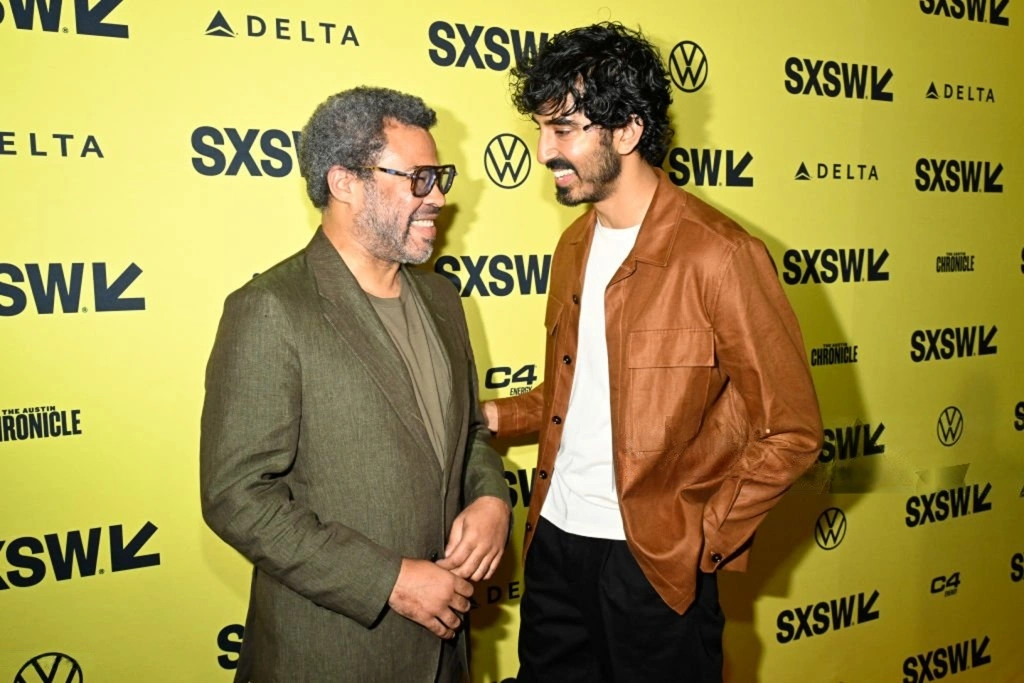
Producer Jordan Peele, founder of Monkeypaw Productions, saw the film. What he saw convinced him immediately that it was built for a theater, not a streaming shelf. Peele brought it to Universal Pictures, with which Monkeypaw has an exclusivity deal, and Universal acquired it from Netflix for under $10 million. The call to Patel was, by his own account, the kind of moment that doesn't feel real when it happens. Peele told him he'd shared it with Universal and they were going to buy it. Patel said he "literally fell off his seat."
At the SXSW world premiere, Peele was direct about why: "No one has put their soul, energy, mind, body into a film than this man. And he has done it for us to enjoy this film."
C. The Theatrical Victory
Monkey Man had its world premiere at the South by Southwest Film and TV Festival on March 11, 2024, to a standing ovation. Patel was reportedly in tears. The film was released in the United States, Canada, the United Kingdom, and Ireland by Universal Pictures on April 5, 2024. It was also released in Australia on April 4, 2024, where Patel attended the Sydney premiere. The film was never released in India. A scheduled release date of April 19, 2024, was quietly abandoned after the Central Board of Film Certification did not certify the film, a delay that multiple Indian film critics attributed to its violent content and pointed political themes.
Why It Slapped: The Action Craft
https://www.youtube.com/watch?v=aPZKw6Nyx24
A. The Influences
Dev Patel has been consistent about the films that shaped Monkey Man's action. He has cited John Wick, The Raid, Korean action cinema, Bollywood, and Bruce Lee. At the SXSW introduction, he named-checked Sammo Hung and the tradition of Korean genre films, including Oldboy and Man from Nowhere. This is not a list assembled for a press tour. The film's combat is a recognizable synthesis of all of it, filtered through something more personal.
As Patel put it: "I wanted to give action real soul, real trauma, real pain. And I wanted to infuse it with a little bit of culture."
B. The Choreography
The person responsible for translating that vision into sequences was fight coordinator Brahim Chab, whose prior credits include The Foreigner. Chab also appears on screen in the film, masked, as the ring fighter King Kobra. The approach Patel and Chab developed was deliberate in its refusal to make Kid look polished. The character is an underdog who survives by improvising, biting, clawing, and using whatever is in reach. A dinner tray becomes a weapon.
A dog is trained to smuggle a revolver past security. The bathroom fight that broke Patel's hand includes an exploding aquarium. The decision to shoot some sequences in long, uncut takes, including a sustained elevator fight, was both a creative and logistical choice. The production only had around eight stunt performers for much of the shoot, and with makeup, they cycled through appearances to fill out the crowd. "By the last fight," Patel has said, "I'm killing the same dudes over and over."
The animal theme running through the fight club is consistent throughout. Kid fights as the Monkey Man, his opponents include King Kobra and Shere Khan, and the ringmaster is known as Tiger. The film's fictional city of Yatana is the backdrop for a criminal ecosystem where every player wears a mask, literal or otherwise.
C. The Visual Style
Cinematographer Sharone Meir, whose previous credits include Whiplash, shot the film with a loose, fluid camera that functions as another presence in the room during fight sequences. The approach was to stay close, shoot raw, and let the chaos feel like chaos. Yatana, the fictional Mumbai-adjacent city at the heart of the film, is rendered in neon-saturated light against grime and decay. The visual contrast is not subtle. The club at the center of the power structure, Kings, is dressed in the aesthetics of wealth while functioning as a cocaine den and brothel. The film is rated R, and the rating is earned.
Editors Dávid Jancsó and Tim Murrell cut the sequences to maintain pace without sacrificing physicality. Composer Jed Kurzel replaced original composer Volker Bertelmann and built a score that draws from the film's setting. The soundtrack also includes a track from the Indian folk metal band Bloodywood.
Why It Matters: The Cultural Trojan Horse
https://www.youtube.com/watch?v=Tzkzg7hEzQk
A. The Political Subtext
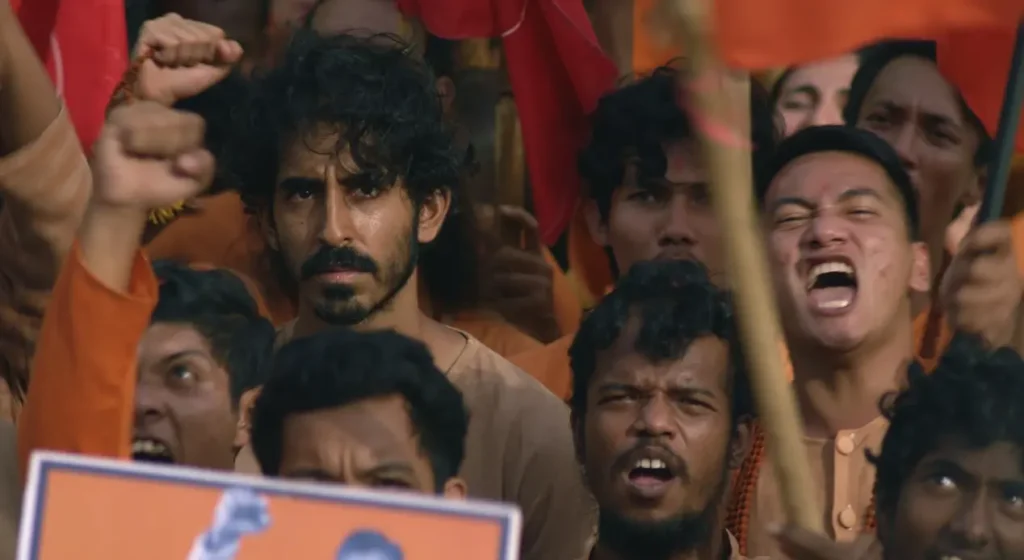
Monkey Man is set in a fictionalized India, but its references to the real one are not hidden. The film's villain, spiritual guru Baba Shakti, leads an ultranationalist political party. Corrupt police chief Rana Singh executes his orders. The system they represent targets religious minorities, the poor, and the marginalized. The film includes actual news footage from real protests and incidents depicting Hindu nationalism. The Associated Press described it as "pointedly political in its fictionalized echoes of modern, Modi-led India."
Dev Patel has spoken directly about using the action genre as a vehicle for this material. "I can use a genre that I love so dearly to talk about the caste system," he said. Police brutality, land displacement, the weaponization of religious faith, violence against women, and the treatment of transgender communities are all woven into the narrative. The film did not get a release in India.
B. The "Vegetables Through Entertainment" Strategy
Patel has described his approach to the political content as a form of concealment. The framework he used was: "How do I get them to watch this and feed them vegetables through a sort of entertaining Trojan horse?" The revenge thriller structure gives the audience an entry point that feels familiar. The escalating violence and mythology keep them engaged. The political content is inside the story rather than on top of it. The film uses faith as a dual-edged symbol throughout, acknowledging it as a source of genuine community and courage while showing it being manipulated as a tool for violence and control.
Jordan Peele, who understood this approach from his own genre work, identified the same quality when he saw the film. He told Patel he understood "the strength of using genre to talk about more interesting motif things, societal issues, using it as a Trojan horse."
C. The Hindu Mythology Layer
The foundational text running beneath Monkey Man is the legend of Hanuman, the Hindu deity associated with strength, courage, and devotion. The kid grows up on stories of Hanuman told by his mother, Neela. The mythology is not decorative. It structures Kid's arc from a man driven by personal revenge to something closer to a community protector.
Dev Patel has drawn a direct line between Hindu mythology and the iconography of Western superhero stories. "I saw a lot of parallels between Hindu mythology and the iconography of superheroes like Superman," he has said, noting that temple carvings depict figures he found "so much more free, open, and radical" than what Western genre cinema has typically offered. The Hanuman parallel gives Kid's transformation a framework that operates independently of anything Hollywood established. His origin story exists entirely within a tradition that predates comic books by centuries.
The Performance: Patel as Kid
https://www.youtube.com/watch?v=RDC47NsoRE0
A. The "Guy Who Hacks the Mainframe" Breakup
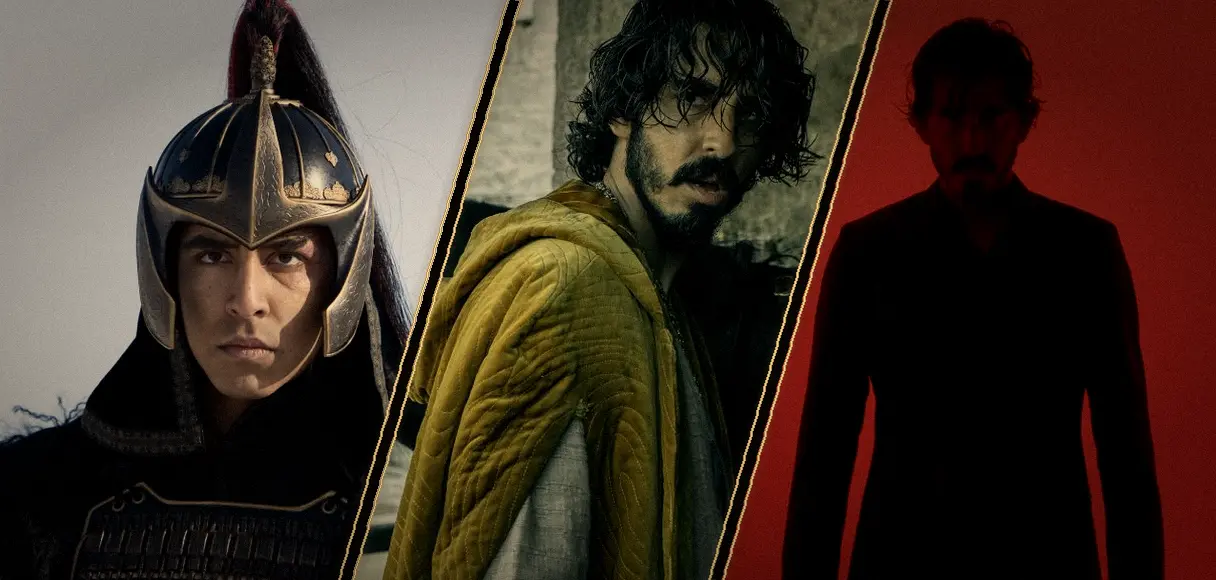
Dev Patel is, by any reasonable measure, a prestige drama actor. Slumdog Millionaire made him famous. Lion earned him an Academy Award nomination. The Green Knight demonstrated a willingness to do strange and demanding work. What those films have in common is that none of them required him to carry an action film. More to the point, none of them let him.
Patel has spoken frankly about the types of roles South Asian actors are typically offered in English-language cinema. The tech support character. The comedic relief. "The guy who opens that laptop and hacks the mainframe type of thing," as he put it. Kid is the opposite of that. He is anonymous, scarred, broke, and furious. He spends the first act of the film taking beatings for cash in an underground fight club, wearing a gorilla mask. He is not a sidekick, not comic relief, and not support for a white lead. He is the entire film.
B. The Physical Transformation. The kid arrives in the film already marked. His hands are scarred from childhood trauma. He is emaciated and watchful, someone who has learned to absorb punishment and survive it. The physicality Patel brought to the role was not a performance choice made in a gym between takes. He had broken his toes before filming started, broken his hand on the second day, and torn his shoulder at some point in between. The damage the character carries is not entirely simulated.
Fight coordinator Brahim Chab worked with Patel to develop a fighting style that matched Kid's circumstances. He is not a trained martial artist. He is a man using anything available, including his teeth, to stay alive. The style is jagged and improvisational. "Real violence is not like choreo," Patel has said. The goal was to make Kid look like he was surviving rather than winning.
C. The Ensemble
Pitobash plays Alphonso, a gangster working for the nightclub's manager. The character is the film's primary comic relief and also one of Kid's most important relationships. Patel had seen Pitobash in Million Dollar Arm (2014) and personally invited him to audition.
Sikandar Kher plays Rana Singh, the corrupt police chief and the film's central antagonist. Rana is responsible for the massacre of Kid's village and the murder of his mother. The character is the engine of Kid's revenge.
Sobhita Dhulipala plays Sita, a sex worker inside the Kings Club who becomes an ally. Dhulipala had auditioned for the film before she had any professional acting credits in 2016. She did not hear back until 2019, when Patel confirmed she had the role from the moment he saw her audition tape.
Vipin Sharma plays Alpha, a transgender elder who leads the hijra community that shelters Kid after his cover is blown. Sharma and Patel had previously worked together on Hotel Mumbai (2018). He was cast quickly after a brief audition.
Sharlto Copley, who starred alongside Patel in Chappie, plays Tiger, the ringmaster of the underground fight club Tiger's Temple, where Kid begins the film as a paid loser.
Makarand Deshpande plays Baba Shakti, the spiritual guru and political operator who functions as the film's architect of power.
Adithi Kalkunte plays Neela, Kid's mother, seen primarily in flashback.
Ashwini Kalsekar plays Queenie, the manager and pimp running Kings, the luxury club that serves as Kid's point of entry into the world of the corrupt elite.
The Reception: Critics vs. Box Office
| Metric | Figure | Context |
| Rotten Tomatoes | 89% (306 critics) | "Audacious effort...dispenses action and sociopolitical commentary with equal aplomb." |
| Metacritic | 70/100 | "Generally favorable" |
| CinemaScore | B+ | Mediocre audience grade |
| Opening Weekend | $10.2 million (US) | #2 behind Godzilla x Kong |
| Total Gross | $35 million worldwide | $25.1M US, $9.9M international |
| Budget | $10 million | 3.5x return |
| BAFTA Nomination | Outstanding Debut | 78th BAFTA Awards |
Why It Matters: The Industry Implications
A. The Streaming vs. Theatrical Debate
The journey of Monkey Man from a $30 million Netflix acquisition to a Universal Pictures theatrical release is, by itself, a significant data point in a debate the industry has not resolved. Netflix bought the film and then quietly tried to offload it. The reasons cited included the film being too gritty for Indian audiences and the complications arising from Bron Studios' bankruptcy. What followed was a period in which a finished, competent action film had no home because a streamer did not know what to do with it.
Jordan Peele and Universal stepped in and made a case with money and a release strategy. The film opened to $10.2 million domestically, finished second in its opening weekend, and eventually grossed $35 million worldwide on a $10 million budget. That is a profitable original action film with no franchise attachment, no IP, and a South Asian lead in a genre where those elements rarely coexist. In the same April 2024 weekend, it competed against Godzilla x Kong: The New Empire, which had the institutional support of a fifty-year-old monster franchise behind it. Monkey Man held its own.
B. The Representation Breakthrough
The genre of action cinema has a very specific idea of what its heroes look like. Dev Patel does not fit that template, and that is precisely the point. He is a British actor of Indian descent. His most celebrated roles to that point were in arthouse and prestige drama. He had never led an action film. Monkey Man put him at the center of a 113-minute revenge thriller in which he directed himself, broke bones performing his own stunts, and built a character who is, by design, someone Hollywood would not typically cast as an action lead.
The film also gives significant space to India's hijra community, who in the film's climactic act join Kid in his final assault on the corrupt power structure. The character of Alpha, played by Vipin Sharma, is a transgender elder whose community provides Kid with shelter and moral grounding. This is not a cameo or a token gesture. The hijra warriors participate in the climax as full agents of the story's resolution.
C. The Director-Actor Model
Dev Patel had directed two short films before Monkey Man: Home Shopper (2018) and Roborovski (2021). He came to the feature with no prior experience directing a large-scale action production and with every incentive to hand it off to someone else. He did not. He also established Minor Realm, his production company, in 2021 during production.
The result is a directorial debut that has a point of view, a consistent visual grammar, and a political argument embedded in its genre structure. It did not happen because conditions were favorable. It happened because Dev Patel spent eight years refusing to let it happen.
Conclusion: The Song Finally Sung
Monkey Man began as an image and ended as a precedent. An actor known for Slumdog Millionaire and Lion spent the better part of a decade assembling a film that broke three of his bones, survived a pandemic location move from India to Indonesia, outlasted a Netflix deal and a financier bankruptcy, and required a producer of Jordan Peele's standing to rescue it from obscurity.
The result is a $10 million film that grossed $35 million, earned an 89% critical approval rating, received a BAFTA nomination, and put a South Asian lead at the center of an R-rated action film rooted in Hindu mythology and South Asian political reality. It also, perhaps most importantly, proved that these elements are not incompatible with a profitable theatrical release.
In a theatrical landscape currently dominated by franchise sequels and IP extensions, Monkey Man demonstrated that original genre filmmaking with a specific cultural identity and a theatrical release strategy can work. The film is available to stream and rent. A sequel has not been confirmed as of this writing.

.webp)