
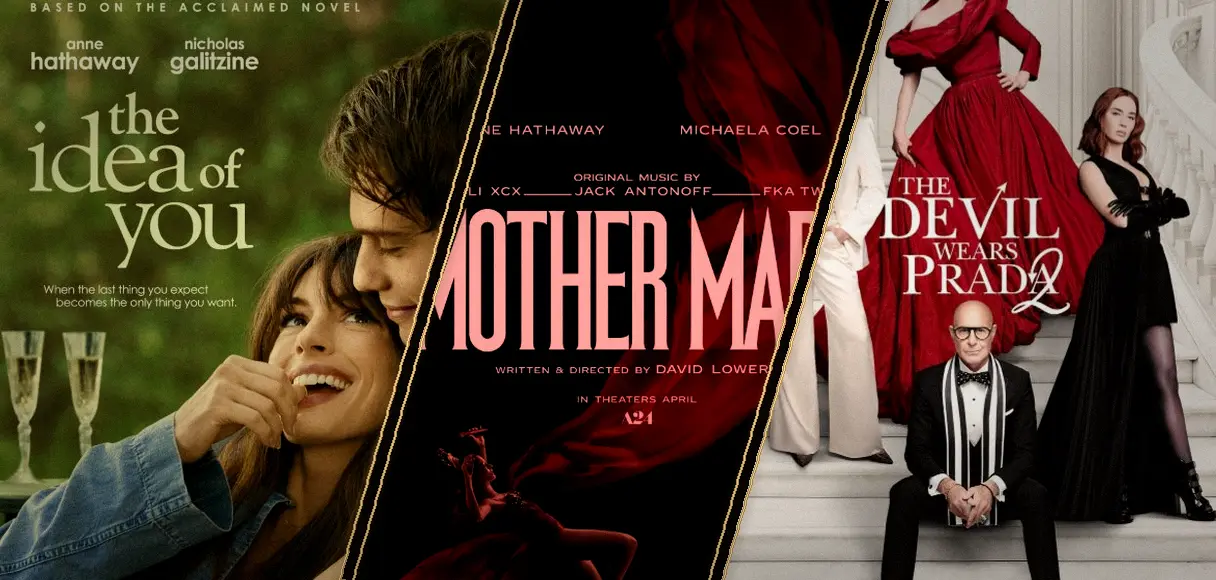
Anne Hathaway has five films releasing in 2026 — more than in any year of her career. The slate spans A24 art-cinema (Mother Mary, April 17), a 20-year-later studio sequel (The Devil Wears Prada 2, May 1), a Christopher Nolan IMAX epic (The Odyssey, July 17), a David Robert Mitchell sci-fi survival film with dinosaurs (The End of Oak Street, August 14), and a Colleen Hoover thriller adaptation (Verity, October 2).
Two have already been released. Three remain. The article below previews all five, explains what makes each one worth anticipating, and updates as the year unfolds.
The five films are organized by the Four Anticipation Drivers framework — Filmmaker Pedigree, Cast Chemistry, Source Magnetism, Genre Risk. Each entry is tagged with the drivers that explain its presence on the slate. The article also covers two on-the-horizon projects (Alone at Dawn, The Princess Diaries 3) that may or may not land in 2026.
Why 2026 Could Be Anne Hathaway’s Biggest Year in Movies
Anne Hathaway has had busy years before, but never one with five theatrical releases. The 2026 slate marks the most concentrated year of her career, ending what she has called a "conscious decision" to slow down after a sustained-output stretch in the 2010s. The films also span an unusually wide range of formats and budgets, suggesting deliberate range rather than commercial drift.
The career context. Hathaway's career has moved in cycles. The Princess Diaries (2001), into Brokeback Mountain (2005), into The Devil Wears Prada (2006). The Oscar-winning Fantine in Les Misérables (2012), into The Dark Knight Rises (2012), into Interstellar (2014). A quieter mid-2010s into the streaming-era reset (WeCrashed, 2022; Eileen, 2023; The Idea of You, 2024). The 2026 slate is the third major peak in twenty-five years — and the first one where the films span this many genres at once.
The structural shift. Each of the five 2026 films places Hathaway in a different position. Mother Mary is the genre-risk art project. The Devil Wears Prada 2 is the IP-driven legacy sequel. The Odyssey is the prestige-blockbuster epic. The End of Oak Street is the auteur sci-fi. Verity is the streaming thriller adaptation. No two films are in the same lane. The slate reads as a deliberate range-of-motion exercise.
The Hathaway revival narrative. The Idea of You (2024) reset Hathaway's commercial standing — Amazon's biggest opening weekend for an original film at the time. The 2026 slate is the follow-through. Industry reporting across IMDb, Deadline, and the trades has framed the year as a statement: Hathaway is everywhere in 2026, and the five releases are the operational expression of that. The numbers, as we'll see, are backing the narrative up.
The Four Reasons Anne Hathaway’s 2026 Films Are So Anticipated
A film earns its place on a "most anticipated" preview through one of four drivers — sometimes two at once. The framework below names them. Each of Anne Hathaway's five 2026 films is tagged with the drivers that explain why it's on the slate.
1. Filmmaker Pedigree: Big Directors Behind the Slate
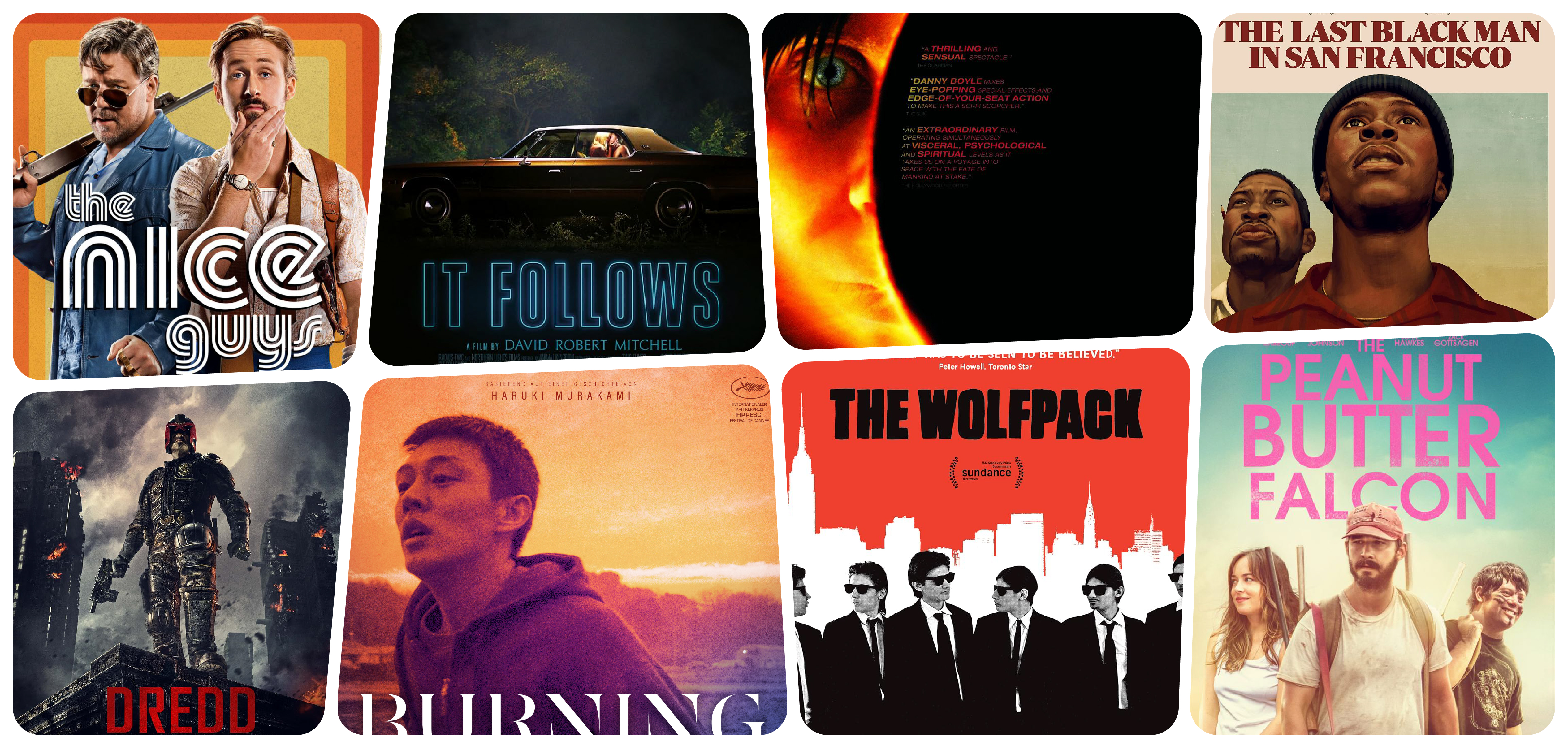
Filmmaker Pedigree opens audience interest on a director's track record alone. Hathaway's 2026 slate has four films driven primarily by this: David Lowery (Mother Mary), Christopher Nolan (The Odyssey), David Robert Mitchell (The End of Oak Street), and Michael Showalter (Verity). Each director has a recognizable house style that audiences are buying alongside the cast. Nolan brings IMAX scale and structural complexity. Lowery brings A24-aligned visual rigor. Mitchell brings the It Follows register of slow, creeping unease. Showalter brings the warm character work of The Big Sick and The Idea of You. The four together constitute unusually strong directorial credentials for a single actor's year.
2. Cast Chemistry: Major Co-Stars and Reunions
Cast Chemistry creates anticipation through the ensemble or the central pairing. The Devil Wears Prada 2 reunites Meryl Streep, Anne Hathaway, Emily Blunt, and Stanley Tucci twenty years after the original — the rarest version of the cast-reunion vector, and one with documented, measurable audience demand. The Odyssey assembles Matt Damon, Robert Pattinson, Tom Holland, Zendaya, Hathaway, and Charlize Theron under Nolan — the kind of ensemble usually reserved for finale-level franchise entries. The End of Oak Street pairs Hathaway with Ewan McGregor, two actors of comparable register who have never previously co-led a film.
3. Source Material: Books, Sequels, and Classic Stories
Source Magnetism is the pre-existing audience that comes attached to source material. Verity draws from a Colleen Hoover novel that has sold over two million copies and helped reignite the BookTok adaptation market. The Devil Wears Prada 2 draws from the 2006 film, which itself adapted Lauren Weisberger's novel. The Odyssey draws from Hom, the oldest IP in cinema. Each carries an audience that arrives at the marketing campaign already partially convinced. The argument doesn't need to be made from scratch; the awareness already exists, and the film's job is simply not to squander it.
4. Genre Risk: Hathaway Taking Bigger Creative Swings
Genre Risk is the project doing something audiences haven't seen the actor do at this scale. Mother Mary asks Hathaway to play a pop-diva role in a psychosexual register adjacent to Black Swan and The Substance — explicitly not the prestige-drama lane she usually occupies. The End of Oak Street is an 1980s-set sci-fi survival film with dinosaurs from the It Follows director, a genre combination Hathaway has not previously worked in. Both films treat her as a vehicle for genre experimentation rather than character-piece prestige. When it works, Genre Risk is the driver that changes how an actor is perceived — the one that rewrites the shorthand.
All Anne Hathaway Movies Releasing in 2026
The five films below are presented in release order. Each entry includes the release date, director, distributor, co-stars, and the Anticipation Drivers behind it. The two films that have already been released (Mother Mary, The Devil Wears Prada 2) include current performance data. The three upcoming films (The Odyssey, The End of Oak Street, Verity) include what is publicly known about the productions and what early marketing has revealed.
#1. Mother Mary (April 17, 2026) — Released
https://www.youtube.com/watch?v=ATGaqU6Srcc
Director: David Lowery (The Green Knight, A Ghost Story) Distributor: A24 Co-stars: Michaela Coel, Hunter Schafer, Kaia Gerber, FKA Twigs, Alba Baptista, Sian Clifford
The pitch: A psychosexual pop thriller about an iconic pop star who flees her tour mid-comeback and reunites with her estranged best friend and former costume designer (Coel) — the two pulled into a fever-dream entanglement shaped by the image they built together. Original songs by Charli XCX, Jack Antonoff, and FKA Twigs.
Why it's interesting: Mother Mary is the genre-risk entry on Hathaway's slate, and the most difficult to categorize. The film places her in the A24 art-cinema lane — the same register Black Swan and The Substance operate in and pairs her with Lowery, whose visual rigor has built a devoted critical following since A Ghost Story (2017) and The Green Knight (2021). The original songs give the film a parallel audio-cultural identity; Hathaway performs all of them in character, and the Charli XCX production credit alone carries its own ecosystem of audience attention. The Michaela Coel co-lead places the film in conversation with her post-I May Destroy You canon, which means the film is navigating multiple overlapping fanbases at once.
How it performed: Mother Mary opened in five theaters on April 17, earning $168,000 at a strong per-screen average of $33,600. The wide release on April 24 brought the total to $2.9 million against a $20 million production budget — a commercial underperformance, but one that reads differently in context. The film earned 70% on Rotten Tomatoes (critics: 'frustratingly obtuse but has style to spare'), with audience scores lower at 60%.
The result is A24's familiar pattern: a polarizing, formally ambitious film that outperforms its commercial trajectory on streaming. Mother Mary moved to Fandango at Home on May 19.
What to watch for: Lowery's visual register — how he applies the long-shot light-and-space approach of his previous films to a pop-icon framework. Whether the album and the film exist as companion texts, or whether one is secondary to the other.
If you liked: Black Swan (2010), The Substance (2024), I May Destroy You (2020)
#2. The Devil Wears Prada 2 (May 1, 2026) — Released
https://www.youtube.com/watch?v=jr4ludppyjk
Director: David Frankel (returning from the original) Distributor: 20th Century Studios / Disney Co-stars: Meryl Streep, Emily Blunt, Stanley Tucci, Lady Gaga, Lucy Liu, Kenneth Branagh, Simone Ashley, Pauline Chalamet, Justin Theroux
The pitch: A 20-year-later sequel. Andy Sachs has built a respected career in journalism — until her entire newsroom is laid off by text during an awards gala. Meanwhile, Miranda Priestly is under fire after Runway publishes a puff piece on a brand with sweatshop ties. Runway's parent company hires Andy as features editor, without Miranda's consent. The collision that follows is the film. Lady Gaga and Doechii's "Runway" plays in the opening sequence and was released as the lead single.
Why it's interesting: Cast-reunion sequels rarely deliver on their pre-release anticipation. The Devil Wears Prada 2 has several things working in its favor that most don't. Meryl Streep returning in full Miranda Priestly mode after twenty years is, on its own, a cultural event. Streaming viewership for the original jumped 428% between March and April 2026, in the weeks before the sequel's release, which is the clearest possible evidence that audiences were doing homework. And the film is smart enough to dramatize a real conversation — about what happened to print media, to fashion journalism, to the structures of power the original captured at their late peak. The expanded cast (Lady Gaga, Lucy Liu, Kenneth Branagh, Simone Ashley) signals that the sequel is being treated as an event, not a retread.
How it performed: By every measure, The Devil Wears Prada 2 is the defining commercial event of Hathaway's 2026. It opened to $77 million domestically and $233.6 million worldwide in its first weekend — the second-biggest global debut of 2026, behind only The Super Mario Galaxy Movie. The opening weekend alone represented 72% of the original film's entire theatrical run. By its second weekend, with a 44% drop to $43 million, the sequel had already outgrossed the original both domestically ($144.8 million vs. $124.7 million) and worldwide ($433 million vs. $326 million). It ultimately grossed $666 million globally on a $100 million budget, landing as the fourth-highest-grossing film of 2026. The audience skewed 76% female — one of the most gender-defined openings in recent memory and the film earned an A- CinemaScore and a 4.5/5 PostTrak score.
What to watch for: How the film handles what happened between 2006 and now. The original was a snapshot of print-fashion power at its late peak. The sequel is, at its core, a portrait of what came after — the layoffs, the credibility crisis, the reckoning. Whether Frankel and screenwriter Aline Brosh McKenna (returning from the original) treat that subject as backdrop or as the film's actual argument is the thing worth watching.
If you liked: The Devil Wears Prada (2006), Top Gun: Maverick (2022), Bridget Jones: Mad About the Boy (2025)
#3. The Odyssey (July 17, 2026) — Upcoming
https://www.youtube.com/watch?v=f_bKjZeJBBI
Director: Christopher Nolan Distributor: Universal Co-stars: Matt Damon (Odysseus), Tom Holland (Telemachus), Zendaya (Athena), Robert Pattinson (Antinous), Charlize Theron (Calypso), Lupita Nyong'o (Helen of Troy), Jon Bernthal, Benny Safdie, and Mia Goth. Hathaway plays Penelope.
The pitch: Christopher Nolan's adaptation of Homer's Odyssey — the story of Odysseus's ten-year journey home from the Trojan War. Shot entirely on IMAX film cameras, reportedly the largest production of Nolan's career. The film draws particular inspiration from Emily Wilson's 2017 translation of the poem, the first English translation by a woman, which reframed the text's tonal register significantly. Budget: approximately $250 million.
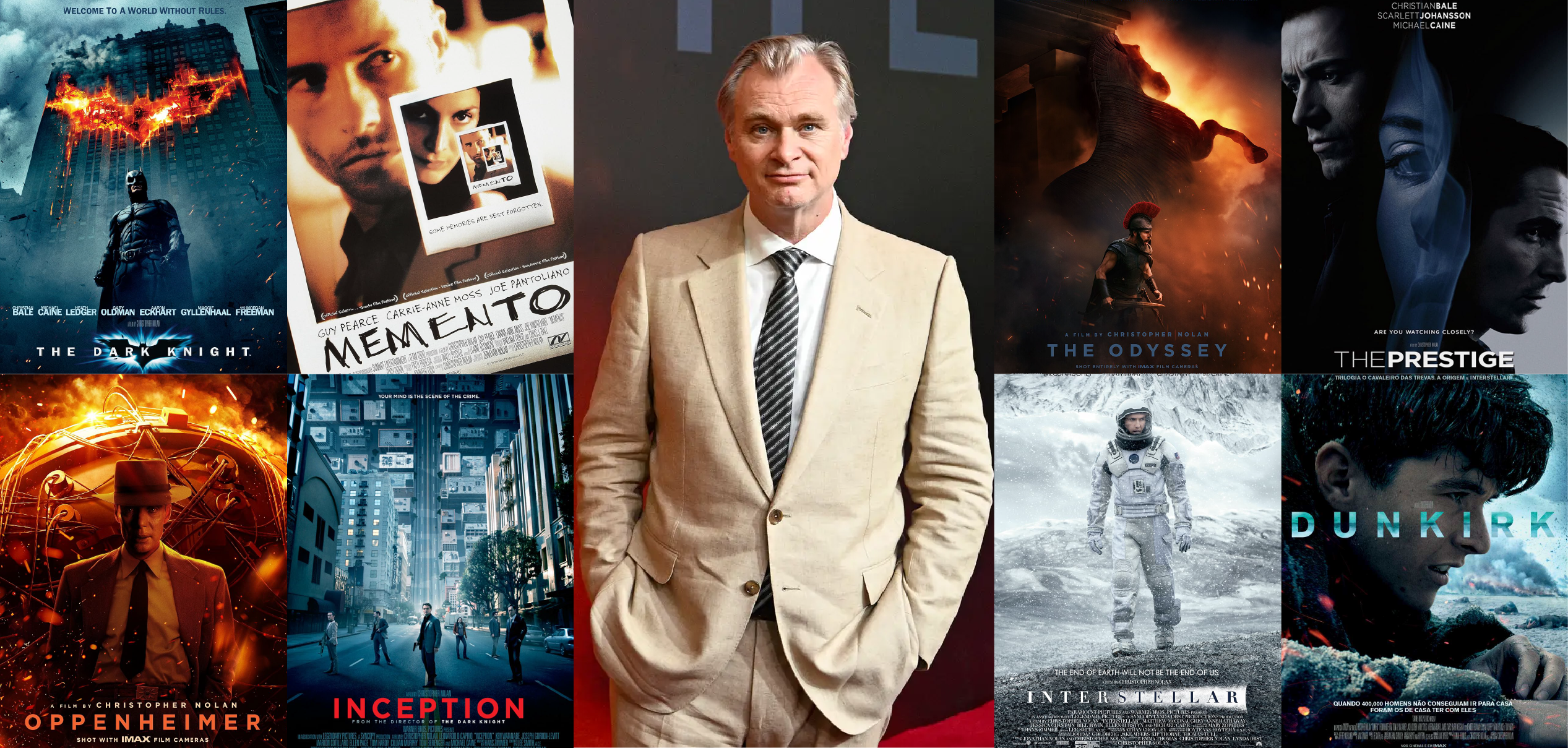
Why it's interesting: The Odyssey is the closest thing 2026 has to a guaranteed cultural event. Nolan's previous film (Oppenheimer, 2023) won Best Picture and grossed $952 million. He has never made a film in July that didn't define the summer. The cast is stacked with Damon, Pattinson, Holland, Zendaya, Hathaway, Theron, Nyong'o — it's the kind of assembly usually reserved for finale-level franchise entries, not standalone originals. IMAX tickets went on sale a full year before release and sold out within hours. A six-minute prologue played in IMAX theaters alongside the Avengers: Doomsday teaser. A featurette released this week includes new footage of Nolan's take on the Trojan horse sequence.
Hathaway plays Penelope — a role with limited screen time in the source material but enormous narrative weight. Penelope is the fixed point around which the entire story orbits. Odysseus's decade at sea only matters because she's waiting; her fidelity is the condition of his return. In a film about the journey, she is the destination. The role's challenge is doing significant, dramatic work from a position that the text largely constructs as absence, and Nolan, who cast Hathaway in Interstellar precisely because of how much she can carry in a limited register, clearly knows what he has.
What to watch for: Nolan's approach to the supernatural elements of Homer's text. The gods, the cyclops, Circe, the Sirens — these are the scenes that will define how the film is received, because they're the ones where his procedural, physics-grounded aesthetic will be tested against source material that is, at its core, mythic fantasy. Nolan's previous work has consistently favored practical reality over spectacle. The Odyssey will reveal how he reconciles those instincts with material that does not share them.
If you liked: Oppenheimer (2023), Gladiator II (2024), Dune: Part Two (2024)
#4. The End of Oak Street (August 14, 2026) — Upcoming
https://www.youtube.com/watch?v=3oB9AxspVow
Director: David Robert Mitchell (It Follows) Distributor: Warner Bros. (IMAX release) Co-stars: Ewan McGregor, Maisy Stella, Christian Convery Producer: J.J. Abrams (Bad Robot)
The pitch: An 1980s-set sci-fi survival film. A cosmic event rips Oak Street — a quiet suburban neighborhood — from its location and deposits it somewhere unknown. The Platt family (Hathaway and McGregor as the parents) must navigate terrain that has become completely unrecognizable. There are dinosaurs. The film was previously titled Flowervale Street before being retitled in March 2026.
Why it's interesting: The End of Oak Street is the most unusual film on Hathaway's 2026 slate, and arguably the most interesting on a craft level. Mitchell's previous narrative feature, Under the Silver Lake (2018), polarized critics and opened narrowly after multiple delays. His debut, It Follows (2014), made him one of the most genuinely distinctive horror auteurs of his generation — a filmmaker whose work isn't about gore or shock but about texture and dread, about the way a normal suburban street can feel wrong. The combination of that sensibility with an $85 million Bad Robot budget, an IMAX release, and a premise that Warner Bros. executive Michael De Luca described as "Twilight Zone meets Jurassic Park" makes this the highest-variance entry on the slate.
Mike Gioulakis, who shot It Follows, is the cinematographer here — a significant detail. The visual language Mitchell developed in that film (long, creeping pans; wide-open suburban spaces that feel threatening; the slow accumulation of wrongness) has a loyal audience, and applying it to a family-adventure framework is either the best possible idea or a category error. The 1980s setting adds a Stranger Things / Super 8 nostalgia register, which gives the marketing a clear handle even if the film itself is stranger than either.
What to watch for: Whether Mitchell can hold his specific register — the slow, suburban uncanny — inside the structural demands ofan $855 million studio adventure film with dinosaurs. Whether the PG-13 danger-meets-E.T.-style wonder that early test screenings reportedly suggested is actually what's in the film, or whether it's a more unnerving experience dressed in a family-adventure frame.
If you liked: It Follows (2014), Super 8 (2011), Stranger Things (2016–)
#5. Verity (October 2, 2026) — Upcoming
https://www.youtube.com/watch?v=cF53flmfByw
Director: Michael Showalter (The Big Sick, The Idea of You) Co-stars: Dakota Johnson (Lowen Ashleigh), Josh Hartnett (Jeremy Crawford). Hathaway plays Verity Crawford.
The pitch: A struggling writer (Johnson) is hired to complete the unfinished manuscripts of a successful but incapacitated author (Hathaway) following a car accident. While working in the author's home, she discovers a manuscript that reframes everything she thought she knew about her employer's marriage and family. Adapted from Colleen Hoover's 2018 psychological thriller novel.
Why it's interesting: Verity is the film on Hathaway's slate with the largest pre-existing source audience. Hoover's novel has sold over two million copies and was at the center of the BookTok adaptation wave that produced It Ends with Us (2024). Showalter's previous Hathaway collaboration, The Idea of You, was Amazon's biggest original film by viewership at the time. The Johnson-Hathaway pairing is the kind of two-hander Hathaway has worked in before — Rachel Getting Married, The Hustle — but with Johnson now operating at peak career visibility, fresh off Madame Web discourse and the critical recalibration that followed.
Verity is also the film on the slate with the clearest built-in tension between what the source audience wants and what a film adaptation can deliver. Hoover's novel trades on a fundamental structural ambiguity — the manuscript Lowen discovers may or may not be true — and the book's most passionate readers are divided on what the "correct" reading is. A film has to commit to an interpretation. However, the showalter and screenwriter's handling of that choice will define how the adaptation is received, regardless of production quality.
What to watch for: The film's handling of the novel's central unreliability — whether it preserves the ambiguity, collapses it, or finds a third option. And Hathaway's performance specifically: Verity Crawford is incapacitated for most of the story, which means Hathaway is playing a character whose menace has to work through stillness and implication rather than action. That is a specific and difficult acting challenge, and it's the one the adaptation depends on.
If you liked: Gone Girl (2014), The Girl on the Train (2016), It Ends with Us (2024)
What Anne Hathaway’s 2026 Movies Reveal About Her Career
The five films are not a random distribution of work. The slate patterns below explain why Hathaway is taking the kind of career year she is taking.
A Balance of Blockbusters, Sequels, and Creative Risks.
The Devil Wears Prada 2 and The Odyssey are commercial-event films. Mother Mary and The End of Oak Street are creative-risk films. Verity sits between them — a commercial property in a streaming-original release. The 60/40 split (commercial/creative) is unusual for an A-list actor's year. Most stars at Hathaway's level cluster around commercial certainty. The split here reads as deliberate range-of-motion, not hedging.
A Director-Driven Slate Across Multiple Genres.
David Lowery, Christopher Nolan, David Robert Mitchell, and Michael Showalter all bring named filmmaker identities to their respective films. Only The Devil Wears Prada 2 is studio-led in the conventional sense, and even that film belongs to a returning director and screenwriter with a specific sensibility. The pattern suggests Hathaway is choosing roles where the director's vision is the project's center of gravity — the prestige-collaborator lane, not the franchise-vehicle lane.
Anne Hathaway’s Widest Genre Range Yet
Psychosexual pop thriller. Legacy comedy sequel. Mythological IMAX epic. 1980s sci-fi survival adventure. Psychological thriller. Five films, five distinct genres. The closest comparable year in Hathaway's filmography was 2012 (Les Misérables and The Dark Knight Rises), but that was two films, not five. The 2026 spread is structural — it is what an actor does when they want every casting director and filmmaker in town to remember every register they can play, all at once.
Anne Hathaway Projects That Could Arrive After 2026
Two additional Anne Hathaway projects sit on the edge of the 2026 calendar — one that may land before year-end, and one that may not. Both are worth knowing.
Alone at Dawn: What We Know So Far - Gold Derby reporting in early 2026 referenced an additional Hathaway project, Alone at Dawn, as yet-to-be-scheduled and in active development. Production details remain limited at the time of writing. If the film slots in before year-end, it would make 2026 a six-film year — the most concentrated theatrical year for any actor at her level since the studio system. The likely scenarios: late December prestige drop (for awards eligibility) or a rollover to early 2027. This page tracks the project for updates.
The Princess Diaries 3: Is It Coming Soon? Confirmed in development by Hathaway and Disney+ in 2024, with Julie Andrews reportedly returning as Queen Clarisse. The film is in pre-production at the time of writing; no release date has been announced. A 2026 release is unlikely given the calendar's existing density, but the project is the most-asked-about Hathaway sequel after The Devil Wears Prada 2 and warrants inclusion as a reader-interest anchor. Mia Thermopolis returns to Genovia — the cultural appetite for which has not dimmed in the twenty-four years since the original.
How 2026 Compares to Hathaway's Past Career Peaks
Anne Hathaway has had three career peaks before 2026 — and the 2026 slate is structurally larger than any of them. The comparison below puts the year in context.
The breakout era (2001–2006). Hathaway's first major peak. The Princess Diaries (2001) made her a teen star at nineteen. Brokeback Mountain (2005) repositioned her in the prestige lane. The Devil Wears Prada (2006) made her a recurring A-list lead. Three films across five years — significant, but spaced. Each one performed a specific function; the arc was deliberate but not concentrated.
The Oscar era (2012–2014). Her most awards-driven stretch. Les Misérables (2012) earned her Best Supporting Actress as Fantine — a performance that runs approximately twelve minutes of screen time and won the Oscar on its own terms. The Dark Knight Rises (2012) was, in the same year, a $1 billion-plus blockbuster as Catwoman. Interstellar (2014) gave her her first Christopher Nolan experience and a $746 million global gross. Three films, two years — concentrated, but within a narrow range of prestige and scale.
The streaming-reset era (2022–2024). WeCrashed (2022, Apple TV+ miniseries). Eileen (2023, indie thriller, A24). The Idea of You (2024, Amazon, the studio's biggest original film by viewership at the time, with 50 million viewers in its first two weeks). A deliberate recalibration — three projects across three years and three different platforms, each one testing a slightly different version of Hathaway's commercial and critical appeal. The Idea of You was the answer: the reset worked.
The 2026 slate. Five films in a single calendar year, across five genres, four major studios and distributors, and four distinct directorial visions. The closest historical comparisons in modern Hollywood are Nicole Kidman's 2001 (Moulin Rouge!, The Others) and Jessica Chastain's 2011 (The Help, Take Shelter, The Tree of Life, The Debt, Coriolanus). Hathaway's 2026 sits alongside Chastain's 2011 as the most concentrated A-list year of the 21st century — and unlike Chastain's, which emerged from a single breakout moment, Hathaway's is a deliberate third act, built on twenty-five years of infrastructure.
Why 2026 Is the Year Anne Hathaway Decided to Be Everywhere
Anne Hathaway's 2026 is a five-film, five-genre, four-director, four-distributor statement that she intends to operate at the widest range of her career in a single calendar year. The films span A24 art-cinema, legacy IP sequel, prestige IMAX epic, auteur sci-fi, and streaming-thriller adaptation — and the structure suggests intent, not coincidence. This is not an actor who took five jobs because they were offered. This is an actor who built a career.
The Four Anticipation Drivers framework is the clearest way to understand the year's shape. Each film earns its place through a different combination of Filmmaker Pedigree, Cast Chemistry, Source Magnetism, and Genre Risk. No two films rely on the same combination. That diversity is the point — it ensures that whichever driver a given audience responds to most, there is a Hathaway film designed to activate it. The result is a slate that functions not just as a collection of roles but as a full-range demonstration: this is what the actor can do, and this is how much of it she can do at once.
The slate closes with Verity in October. If Alone at Dawn materializes before year-end, 2026 becomes a six-film year. What comes after will reveal whether this concentration is the new baseline for Hathaway's output or a single extraordinary accumulation — but the box office and the conversation already suggest it. The Devil Wears Prada 2 has proven that the commercial ceiling is still there. The Odyssey is poised to prove the prestige ceiling is still there. And Mother Mary, for all its commercial modesty, has already earned its place in the year's record: the genre-risk swing that a quieter actor would not have taken.

.webp)