

The Ambiguity Economy
There is a clean line between a twist ending and an ambiguous one, and it is worth drawing before we go any further. A twist ending is a revelation. The film hands you the answer in the final reel, you rewind to check the breadcrumbs, and the puzzle clicks shut. The Sixth Sense, Fight Club, The Prestige. An ambiguous ending is the opposite. It hands you the question and walks away. The film refuses to confirm what just happened, who survived, what was real, and who was lying. It demands interpretation. You leave the theatre still working.
In 2026, audiences want closure more than ever. Streaming has made every film pauseable, screenshot-able, and frame-by-frame analyzable. The viewer is no longer a passive recipient. They are a co-investigator. Filmmakers know this, and the smartest ones write final scenes as bait for the second watch.
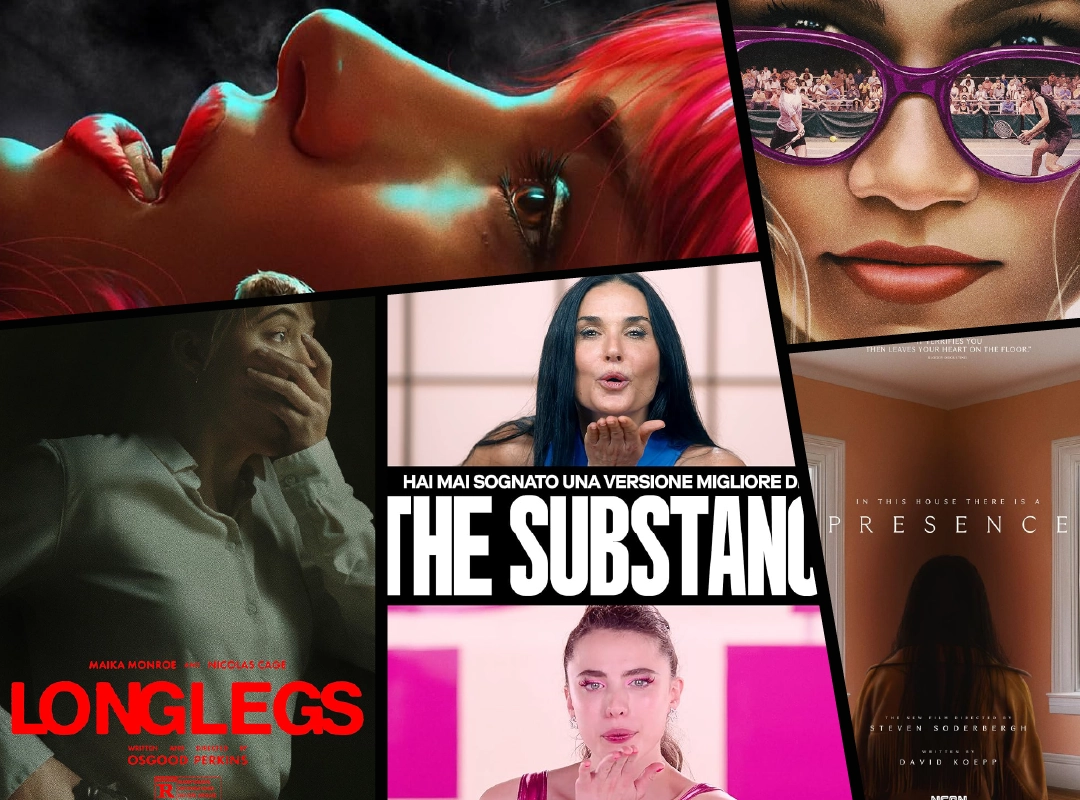
Then there is the Reddit effect. The internet has converted the discomfort of an unresolved finale into pure engagement. Inception (2010) generated more than fourteen thousand Reddit threads about whether the spinning top falls. Presence (2024), the Steven Soderbergh ghost POV film, already has thousands of theory posts dissecting its final frame. Ambiguous catharsis has become a marketing strategy. Active viewing is the new default. When Reddit film theories start trending the weekend a film opens, that is a sign of narrative working.
This piece argues something simple. Ambiguity in cinema is viewer participation built into the script. The directors who do this best, from Christopher Nolan to Denis Villeneuve to David Lynch, are inviting the audience to become the final co-writer of the scene. Interpretive cinema treats the viewer as a partner. The ontological mystery at the centre of the best ambiguous endings is the entire point.
The framework borrows from literary theory. Hermeneutics, the study of interpretation, has always argued that meaning is made between text and reader, not handed down from author to audience. Roland Barthes called this the death of the author. The film ends. The director leaves. The meaning is now yours. Closure psychology tells us that the brain hates an unfinished story, and that is exactly why these endings will not let you go.
The Taxonomy of Ambiguity: Four Types of Unresolved Endings
Not every debated ending works the same way. Some films make you doubt reality itself. Others make you doubt your own moral compass. Some leave a character's literal fate unknown. And some pull the rug on the medium of cinema itself. Each type triggers a different psychological response, which is why the arguments online tend to fall into the same recurring shapes regardless of the film.
- Ontological ambiguity goes after your sense of what is real. The film plants enough evidence on both sides that the dream-versus-waking question can never be settled, and the audience is left with existential anxiety about perception itself.
- Ethical ambiguity is different. The film shows you exactly what happened, but refuses to tell you whether it was right. You are forced to render the verdict, and the discomfort is the discomfort of complicity.
- Existential ambiguity strands a character in unknown territory and cuts. We do not know if they are alive, dead, free, or trapped. The feeling left behind is separation anxiety and isolation.
- Metatextual ambiguity is the sneakiest. The film admits, somewhere in its bones, that it is a film, and the rules of reliability collapse. You stop trusting the medium.
| Type | Mechanism | Psychological Effect | Key Examples |
| Ontological | Reality itself is questioned (dream vs. awake, alive vs. dead) | Existential anxiety about perception | Inception (top), Total Recall (dream), Shutter Island (truth vs. delusion), Presence (ghost identity) |
| Ethical | Moral action is shown, but judgment is withheld | Guilt complicity (did the hero do the right thing?) | No Country for Old Men (bell), Prisoners (snake/whistle), Nightcrawler (success of sociopathy) |
| Existential | Fate of characters unknown; isolation emphasized | Separation anxiety, loneliness | The Thing (child's play), Taxi Driver (isolation cycle), American Psycho (did he kill?) |
| Metatextual | Film breaks the fourth wall; narrative reliability collapses | Distrust of the medium itself | Mulholland Drive (dream theory), Enemy (spiders), Synecdoche, New York (art/life blur) |
The vocabulary is borrowed from philosophy, and it fits. Ontological uncertainty is the question of what exists. Epistemological ambiguity is the question of what we can know. The ethical dilemma at the heart of films like Nightcrawler leaves the moral arithmetic for the viewer to do. Existential dread is the residue of The Thing's final two-hander. Metafiction, unreliable reality, solipsism, phenomenology: every one of these terms maps cleanly onto an ambiguous ending you have argued about with a friend.
The 2024–2026 Wave: Contemporary Ambiguity
Something shifted in the last two years. The ambiguous ending used to feel like an arthouse signature. But it is now showing up in mid-budget thrillers, body horror, sports romance, and FBI procedurals. Modern filmmakers are also doing it differently. The 20th-century version of an unresolved finale tended to lean on monologue, voiceover, or a final exchange of dialogue that opened the door but did not walk through it.
The A24 ambiguity aesthetic deserves credit for normalising this. Hereditary, Midsommar, and The Witch trained a generation of horror viewers to accept that the final frame is not going to explain itself. That training has now leaked across genres. Here are the films currently driving the most debate.
A. Presence (2024) — The Ghost's Identity
https://www.youtube.com/watch?v=BilT2Aesf0g
Steven Soderbergh's Presence is shot entirely from the ghost's POV, a single floating perspective that drifts through a suburban house as a fractured family moves in. Written by David Koepp, it stars Lucy Liu as Rebekah, the mother, alongside Chris Sullivan, Callina Liang as the daughter Chloe, Eddy Maday, West Mulholland, and Julia Fox as the realtor. The premise sounds like a gimmick and somehow is not. The camera is the supernatural ambiguity. We never see the entity because we are inside it.
The debate centres on spectral motivation. Is the presence protecting Chloe, who is grieving the recent death of her best friend, or is it stalking her? The film's third act offers a partial reveal that some viewers find clarifying and others find frustrating, but the held final shot, and the question of why the ghost stays in the house at all, have fuelled the bulk of the online theory work. Presence is not a conventional haunted house genre entry. It is a family drama wearing a horror skin, and the ambiguity is about who in the room you are supposed to fear.
B. Challengers (2024) — The Final Point
https://www.youtube.com/watch?v=Guxi001XOds
Luca Guadagnino's tennis film ends mid-rally. Art Donaldson, played by Mike Faist, and Patrick Zweig, played by Josh O'Connor, are deep in a Challenger-tier match in New Rochelle while Tashi, played by Zendaya, watches from the stands. We have spent two hours watching their love triangle resolution get continually deferred across thirteen years of flashbacks. In the final exchange, Art leaps the net, collides with Patrick, and the two men collapse into something between an embrace and a tackle. Cut to black. We never find out who took the point.
The screenwriter Justin Kuritzkes and Guadagnino have both said in interviews that the winner was deliberately withheld, and that the question of who wins the match is not the question the film is actually asking. Tennis as a metaphor has been the structuring device the whole time. The match is the marriage. The match is the friendship. The match is the unfulfilled desire among all three of them. Zendaya's final expression, half-scream, half-revelation, has been parsed online almost frame by frame. Sports film ambiguity is rare because sports films usually exist to deliver winners. Challengers refuse, and the refusal is the point.
C. The Substance (2024) — The Monstrous Fusion
https://www.youtube.com/watch?v=W6wm2HsnK2Y
Coralie Fargeat's The Substance ends on the Hollywood Walk of Fame. Elisabeth Sparkle, played by Demi Moore, has spent the film injecting a black market drug that allows a younger version of herself, Sue, played by Margaret Qualley, to live on alternating weeks. But, as the system collapses, the ‘two bodies’ fuse into a creature called Monstro Elisasue, who staggers onto a Hollywood stage and disintegrates. In the final shot, what is left of Elisabeth, essentially a face on a puddle of flesh, drags itself onto her star on the Walk of Fame and then dissolves as the pavement is washed clean.
The debate is not about plot. The plot is clear. The debate is about register. Is the ending a literal body-horror climax, or a metaphorical vs. literal one about the fate of women in Hollywood? Feminist horror readers see it as a closed argument about aging in Hollywood and body dysmorphia, with the creature as the literal manifestation of internalised industry self-hatred. Other viewers find the maximalism overstated and the metaphor too on-the-nose by the third act. Both readings are defensible, which is part of why the film picked up five Oscar nominations, including Best Picture and Best Actress.
D. Longlegs (2024) — The True Nature of Evil
https://www.youtube.com/watch?v=_bv1iyVaE64
Osgood Perkins (often credited as Oz Perkins) directed Longlegs as a 1990s-set FBI profiler thriller drenched in Satanic Panic iconography. Maika Monroe plays Lee Harker, a young agent with possible clairvoyant ability assigned to track an occult killer named Longlegs, played by Nicolas Cage in full unhinged mode. The killer murders entire families without ever physically being present at the scene, which is the puzzle Harker is asked to solve.
The ending reveals that Harker's mother, Ruth, has been complicit, and that Harker's own childhood encounter with Longlegs has tied her to the cycle in ways the FBI cannot unpick. The debate is about whether possession cinema logic actually closes here. Is the evil defeated when Longlegs is finally caught, or has it simply transferred? Ruth's role muddies the waters. So does the film's treatment of generational trauma. Some viewers read the final sequence as a clean win for the FBI. Others read it as the film telling us, quietly, that the cycle is older than the case file and is not going to stop.
E. Strange Darling (2024) — The Predator/Prey Reversal
https://www.youtube.com/watch?v=4wqsAwoSOd0
JT Mollner's Strange Darling, shot on 35mm by Giovanni Ribisi, was structured in six chapters in non-linear narrative order. The film opens mid-chase. Willa Fitzgerald is The Lady, fleeing through rural Oregon. Kyle Gallner is The Demon, hunting her. For the first half, you read the film as a serial killer perspective thriller about a woman escaping a predator. Then the chronology starts to fold back on itself, and the gender subversion kicks in. The chapters are out of order on purpose. The roles you assigned in the first ten minutes were the wrong roles.
The debate is about who, in the end, is the actual villain. Mollner has played coy in interviews about whether the film is based on any real case, and the unreliable chronology is built so that the third or fourth rewatch is meaningfully different from the first. Strange Darling belongs in the same conversation as Gone Girl in the sense that the entire film is a delivery system for one structural reveal, but the damsel subversion here is sharper and the moral arithmetic less tidy.
IV. The Classics: Endings That Spanned Decades of Debate
A. The 1970s and 1980s: The Practical Effects Era
Blade Runner (1982) — The Unicorn
https://www.youtube.com/watch?v=eogpIG53Cis
The question that has hung over Ridley Scott's film for forty-plus years is simple. Is Deckard, played by Harrison Ford, a replicant? The evidence sits in a single moment: Deckard daydreams of a unicorn, and at the end of the film, Gaff leaves an origami unicorn outside Deckard's apartment. If Gaff knew what Deckard was dreaming about, then the dream was an implanted memory, and only replicants have implanted memories. The Voight-Kampff test Deckard administers to others might apply to him.
The complication is that the unicorn scene was added later. The original 1982 theatrical cut does not contain it. The 1992 Director's Cut and the 2007 Final Cut do. Ridley Scott has said publicly that he believes Deckard is a replicant. Harrison Ford has said publicly that he plays him as a human. The film exists in multiple versions, and your reading of Deckard's identity depends partly on which cut you saw and which interview you trust.
Total Recall (1990) — The Blue Sky on Mars
https://www.youtube.com/watch?v=684nkWhd658
Paul Verhoeven adapted Philip K. Dick's short story We Can Remember It for You Wholesale into a film starring Arnold Schwarzenegger as a construction worker who books a virtual vacation through a company called Rekall and may or may not be hallucinating the rest of the film from the chair. The clue is colour. When Quaid arrives at Rekall, he picks a vacation package called 'Blue Sky on Mars' that includes a secret agent fantasy. A technician glances at the screen and mutters that it's a new one. The rest of the film follows Quaid to Mars, and only at the very end, after he activates the alien reactor, does the Martian sky actually turn blue. The film then fades to white, not black. The dream vs. reality debate hinges on whether the blue sky and the white fade-out are Verhoeven's wink that Quaid never left the chair.
The film commits to neither. Long before The Matrix gave us the red pill precursor language for this kind of choice, Total Recall was running the same experiment with a vacation package and a chair.
Taxi Driver (1976) — The Rearview Mirror
https://www.youtube.com/watch?v=T5IligQP7Fo
Martin Scorsese's film, with Robert De Niro as Travis Bickle, ends in what looks like redemption. Bickle survives his rampage at the brothel, is hailed in the press as a hero, and has a chance encounter with Betsy in the back of his cab. Then he glances in the rearview mirror, the camera jerks, and Bernard Herrmann's score swells. Some viewers read that final glance as the cycle restarting, the vigilante justice fantasy not closed but reloaded.
A more literal reading is that the entire epilogue, the survival, the press, the Jodie Foster letter from her parents, is a dying fantasy in Bickle's head as he bleeds out on the brothel staircase. Herrmann's jazz score, lush and warm in a way the rest of the film never is, supports the dream reading. Vietnam PTSD, isolation, and ambiguous redemption are the film's whole subject, and the rearview shot gives you both endings at once. Pick one.
B. The 1990s: The Independent Explosion
The Usual Suspects (1995) — The Coffee Drop
https://www.youtube.com/watch?v=x3t0Nc6fg7w
Bryan Singer's film puts an unreliable narrator at the centre of a police interrogation room. Kevin Spacey plays Verbal Kint, a low-level con who spins a long story to a US Customs agent about a mythic crime boss named Keyser Söze. In the final minutes, the agent looks at his bulletin board and realises every detail of Verbal's story was lifted from objects and names visible on the wall behind them. The Kobayashi mug drops. Verbal walks out, and his limp disappears as he goes.
The debate is whether Verbal is actually Söze, or whether Söze does not exist at all, and Verbal is just a brilliant improviser building a legend in real time. The bulletin board foreshadowing could be the smoking gun, or it could be the joke. The film never confirms.
Mulholland Drive (2001) — The Blue Box
https://www.youtube.com/watch?v=jbZJ487oJlY
David Lynch's film splits cleanly in two. The first two-thirds are a glossy Hollywood mystery in which Naomi Watts plays Betty Elms, a hopeful young actress who befriends an amnesiac woman in her aunt's apartment. Then Betty and her companion open a small blue box, and the film resets into a much darker third act in which Watts plays Diane Selwyn, a failed actress preparing for suicide.
The dominant reading is that the first section is the dream logic of Diane's final hours. Betty, the apartment, the romance, the audition triumph, are the Hollywood dream Diane never got to live. The third act is the nightmare of the life she actually had. The Cowboy, Club Silencio, the blue key: every weird image in the film maps onto some piece of guilt or fantasy. Lynch refused to explain it, on principle. He always did.
C. The 2000s: The Blockbuster Ambiguity
Inception (2010) — The Spinning Top
https://www.youtube.com/watch?v=Qwe6qXFTdgc
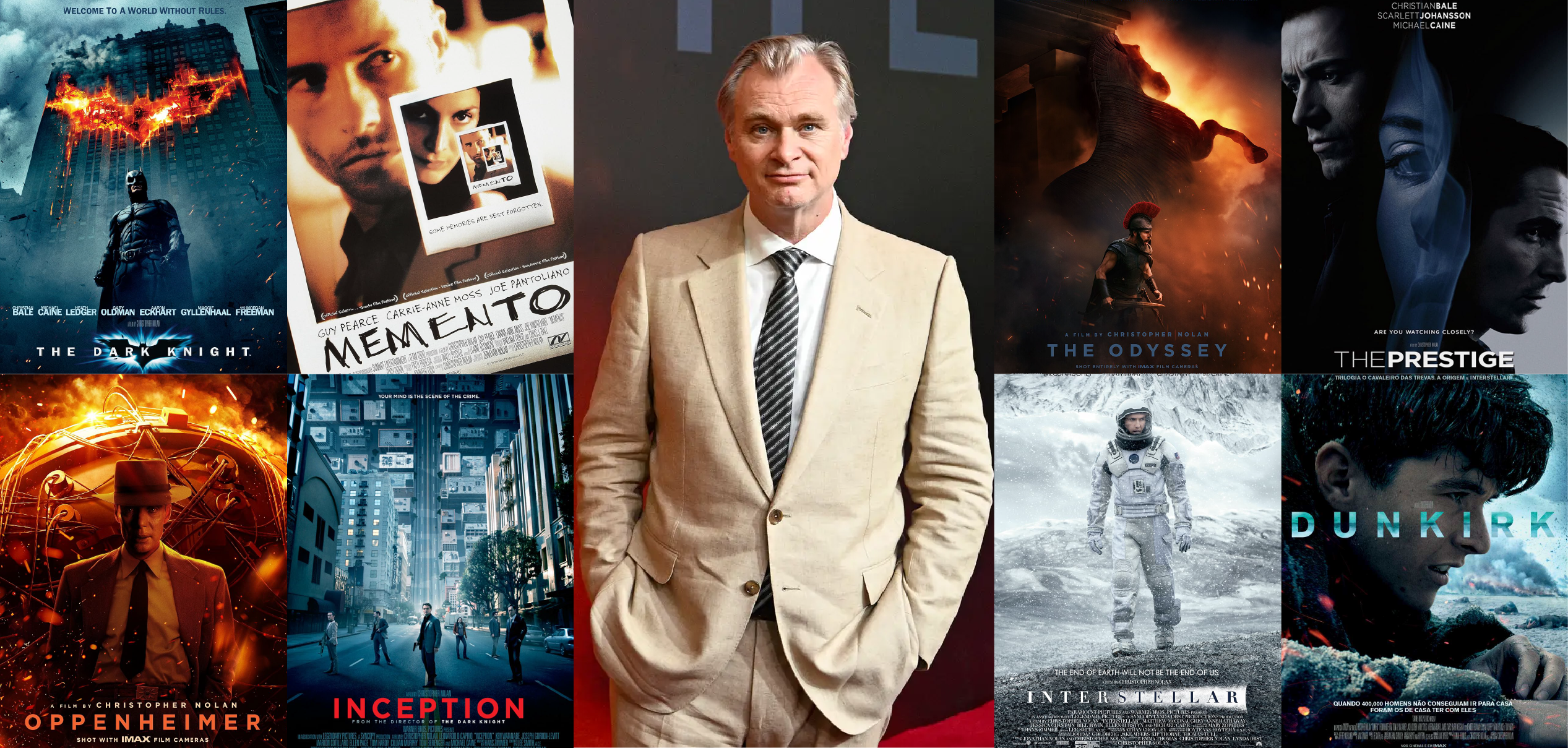
Christopher Nolan's film used a children's toy to drive this narrative. Leonardo DiCaprio plays Cobb, a thief who steals secrets from inside the dream levels of his targets. Each dreamer carries a personal totem, an object whose physics they alone know, used to confirm whether they are awake. Cobb's totem is a small spinning top. In waking life, it falls. In a dream, it spins forever.
The final shot of the film is the top spinning on a kitchen table while Cobb walks away to greet his children. The camera is held on top. It wobbles. The frame cuts to black before it falls or stabilises. There are entire fan economies built on this shot. The wedding ring theory points out that Cobb only wears his ring in dream sequences and is not wearing one in the final scene, which suggests reality. The children-in-the-same-clothes counter-theory points out that the kids look identical to how they appeared in his earlier dream flashbacks, which suggests limbo.
Michael Caine, who plays Cobb's father-in-law, has said in interviews that when he asked Nolan which scenes were dreams, Nolan told him every scene Caine appears in is reality. Since Caine is in the final scene, that is the closest thing to a director's confirmation that Cobb is awake. Personally, Nolan has refused to clarify anything!
No Country for Old Men (2007) — The Bell
https://www.youtube.com/watch?v=38A__WT3-o0
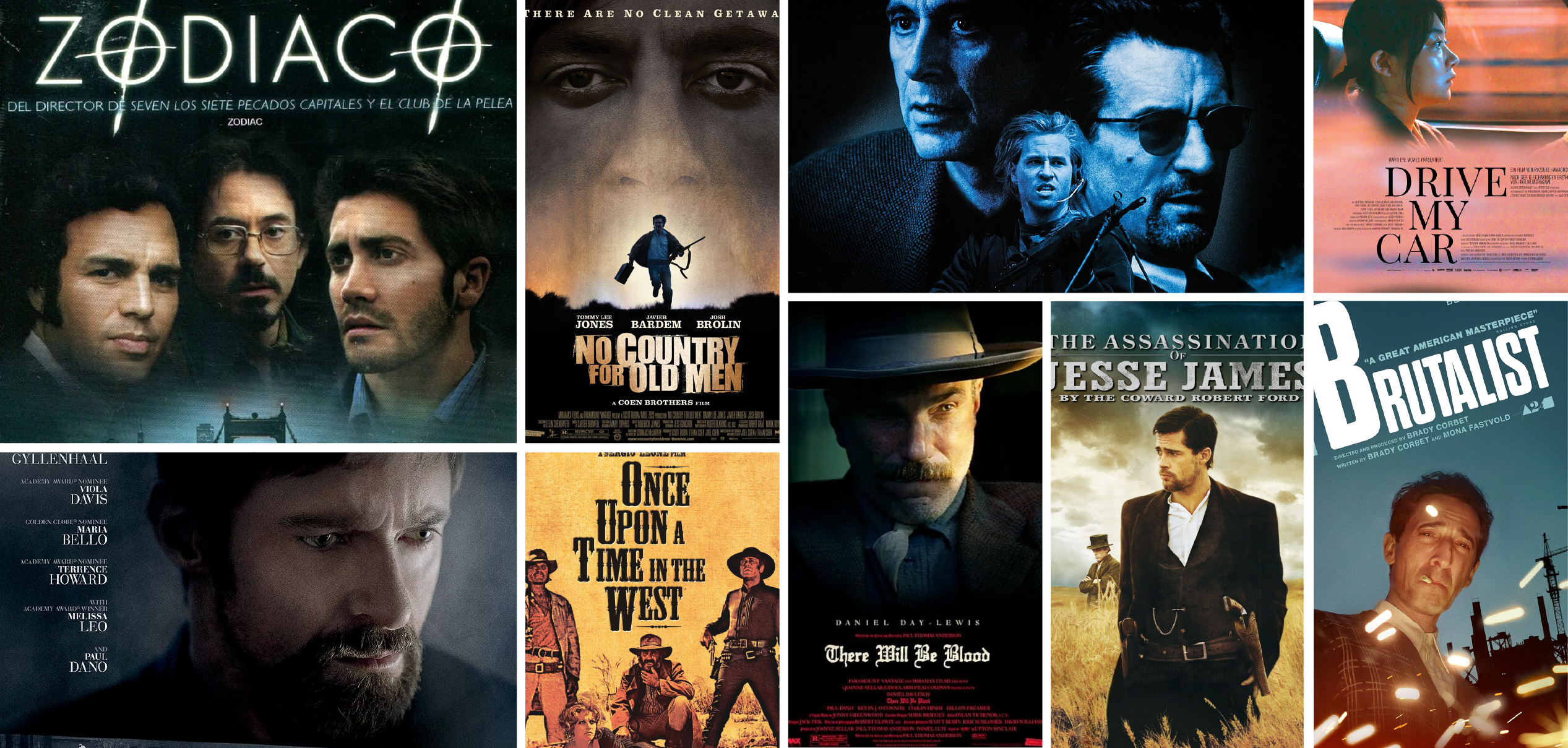
The Coen Brothers adapted Cormac McCarthy's novel about Llewelyn Moss, a Vietnam vet who finds two million dollars in a desert drug deal gone wrong, and Anton Chigurh, the unstoppable hitman played by Javier Bardem, who comes to retrieve it. The film systematically denies the audience every conventional payoff. Moss's death happens off-screen. Chigurh's reckoning is a coin toss at a gas station. He survives a car accident in the third act through sheer random chance, the same random chance he forces on everyone else. There is no shootout. There is no justice.
The final scene is Sheriff Ed Tom Bell, played by Tommy Lee Jones, sitting at his kitchen table after his retirement, telling his wife about two dreams he had the night before. In the second dream, his father rides past him through a snowy mountain pass carrying fire in a horn, going on ahead to make a fire in the dark and the cold, and Bell knows that whenever he gets there, his father will be waiting. Bell says, "And then I woke up." The film cuts to black. We never see the dream. Only the description. Whether the ending is hopeful or nihilistic is the existential Western debate that has not stopped.
The Thing (1982) — The Child's Play
https://www.youtube.com/watch?v=5ftmr17M-a4
John Carpenter's film, with Kurt Russell as MacReady and Keith David as Childs, ends with the two surviving men sitting in the burning ruins of their Antarctic base, sharing a bottle of Scotch, watching each other for any sign of infection. The alien organism in the film perfectly imitates other living things, and the audience has spent two hours unable to trust any character. In the final shot, MacReady's breath is visible in the cold. Child's, depending on how closely you watch, is not. The two men drink. The credits roll.
The "ambiguous organism" debate has been running since 1982. Is Childs the Thing? Is MacReady? Are they both? Is neither? Carpenter has hinted at answers in interviews over the years and then walked them back. The film's practical effects legacy gets all the attention, but the ending is what made it permanent. The 2011 Thing was a prequel, not a remake, and resolved some of the franchise mythology without touching the 1982 finale.
D. The 2010s: The Prestige Television Influence
Enemy (2013) — The Spider
https://www.youtube.com/watch?v=aVvgt3jIUsc
Denis Villeneuve adapted José Saramago's novel The Double with Jake Gyllenhaal in a dual role as Adam, a depressed history professor in Toronto, and Anthony, his exact physical double who works as a film extra. The film is steeped in spider symbolism. Giant spiders are walking over the city in dream sequences, women with spider heads, webs in unlikely places. In the final shot, Adam walks into his bedroom to find that his pregnant wife has transformed into an enormous tarantula that recoils from him. Cut to credits.
The competing readings are that the two men are literal doppelgangers, that they are split aspects of one personality, or that the entire film is a metaphor for infidelity in which the spider represents the web of lies binding both versions of Gyllenhaal's character. Villeneuve has said the spider is a metaphor for women in the protagonist's life and the way he perceives commitment, but he has also been pointedly vague.
Prisoners (2013) — The Snake
Denis Villeneuve again, this time with Hugh Jackman as Keller Dover, a father whose daughter is abducted on Thanksgiving, and Jake Gyllenhaal as Detective Loki, the cop assigned to the case. The film moves through snake imagery, mazes, and Christian iconography. In the final scene, Loki has rescued the missing girls, killed the abductor, Holly Jones, and returned to her property to wrap up the investigation. As the forensic team packs up, he hears a faint whistle from somewhere underground. Dover is trapped in a hidden pit beneath a car in the yard. The whistle is the daughter's emergency whistle, which Dover found in the dark. Loki turns toward the sound. The film cuts to black.
The debate is whether Loki actually hears it clearly enough to investigate, and whether Dover survives. The screenwriter Aaron Guzikowski has said in interviews that an earlier draft had Loki rescue Dover on screen, and that he prefers the ambiguous version. Loki is also a name with meaning here, and the revenge morality of the film, in which the grieving father is also a torturer, makes the question of his rescue heavier than a standard cliffhanger.
Blade Runner 2049 (2017) — The Replicant Question Redux
https://www.youtube.com/watch?v=_MusWqHUMX8
Denis Villeneuve's sequel takes the original's central question and rotates it ninety degrees. Ryan Gosling plays K, a replicant blade runner who comes to believe he might be the miraculous child born to a replicant mother, which would make him biologically the first of his kind. He is not. The actual child is Ana Stelline, a memory designer. K dies in the snow, having reunited Stelline with her father, Harrison Ford's Deckard, and the question of whether Deckard himself is a replicant is left exactly where the original left it. Joi, K's holographic AI girlfriend, raises a new question about machine sentience that the film also refuses to close. Villeneuve clearly knows the answers and clearly does not want to give them.
The Mechanisms: How Directors Engineer Debate
Ambiguity is not accidental. The films that work this well are using specific filmmaking tools to plant the seeds of debate without confusing the audience about what they are watching. Sound design, editing, prop placement, and the choice of when to cut are all weaponised. The Rashomon effect, in which multiple characters narrate the same event differently, is one well-known version. The unreliable narrator is another. But the techniques below are more granular.
| Technique | Function | Example Film | Specific Application |
| The Cut to Black | Denies resolution image | The Sopranos (TV), No Country for Old Men | Bell's dream described but not shown; sound of bell cuts to black |
| The Unreliable Visual | Final image contradicts logic | Inception | Top spins indefinitely (dream physics) but wobbles (reality physics) |
| The Audio Mismatch | The soundtrack suggests a different genre | Taxi Driver | Jazz score over a potential death scene suggests fantasy |
| The Duplicate Prop | Object appears in an impossible place | The Prestige | Multiple hats/birds hint at cloning before the reveal |
| The Character Absence | Key character not shown in finale | The Thing | Childs appears suddenly; no breath visible |
| The Loop Structure | Ending mirrors opening | Taxi Driver, Stalker | Suggests a cycle rather than a conclusion |
The film grammar of ambiguity has its own short vocabulary.
Editing psychology matters because the cut is the moment the director chooses to deny you the next frame. Sound design ambiguity matters because the soundtrack tells you how to feel about an image, and a mismatch between the two creates productive uncertainty. Visual literacy is the audience's side of this. The more closely you watch, the more the film has to give you. The Kuleshov effect, the foundational montage principle that an actor's expression takes on different meanings depending on what is cut next to it, is what makes Zendaya's final scream in Challenger's legible as triumph, horror, or something in between. Narrative closure is what these films deliberately withhold. Open ending is the term critics use, but it understates how engineered the openness actually is.
The Culture of Debate: Why We Can't Stop Arguing
There is a name for why these films stick. The Zeigarnik effect, identified by Soviet psychologist Bluma Zeigarnik in the 1920s, is the finding that the human brain remembers unfinished tasks better than completed ones. A waiter remembers an order until it is delivered and then forgets it. A viewer remembers an unresolved film for years. Cognitive dissonance is the engine. Narrative closure psychology is the field that studies why an open ending feels physically itchy.
Internet film culture has industrialised this itch. The r/movies and r/FanTheories subreddits run on it. There is an entire economy of explained videos on YouTube, with channels that have built six- and seven-figure subscriber counts almost entirely from breaking down ambiguous finales frame by frame. Academic film studies has its own version, more polite, less monetised, in which hermeneutics scholars apply interpretive frameworks to films like Mulholland Drive and Stalker. The amateur and the academic readings often arrive at the same places by different routes.
The deeper question is whether the director's word should settle anything. Roland Barthes argued in 1967 that the death of the author was a critical necessity, that meaning belongs to readers, not writers. The competing position is the intentional fallacy, the idea that asking what the author meant is the wrong question to begin with. Blade Runner is the cleanest test case. Ridley Scott has said Deckard is a replicant. Harrison Ford has said he is human. Both are credited as authors. Pick a side, or refuse to.
There is a commercial layer too. Ambiguous endings drive rewatch value in a way that closed endings cannot. In the VOD revenue era, where home media sales and streaming retention matter as much as opening weekend, an ending that demands a second viewing is, in pure business terms, a feature. Studios have noticed. So have directors with negotiating leverage.
Conclusion: The Gift of Uncertainty
The reason ambiguous endings refuse to die is that they convert a film from just a ‘film’ to a conversation. An open ending sells you a ticket and then keeps you talking about the film for fifteen years. Perpetual interpretation is the actual value proposition.
Streaming has accelerated this. Frame-by-frame analysis used to require a 35mm projector and a film school. Now it requires a pause button. The democratisation of interpretation means that the moment a film like Strange Darling drops on VOD, an army of viewers will be screenshotting Chapter 4 and arguing about timeline order before the credits finish. Cinematic longevity is now measured in Reddit threads.
There is a question worth asking about whether AI-generated films will ever do this well. Probably not, at least not soon. Ambiguity that lands requires the kind of subconscious pattern recognition that comes from a human director making a thousand small decisions about where to cut, what to obscure, what to leave in the corner of the frame for the third rewatch. Those decisions are not really replicable from a prompt. Active viewing pedagogy, the idea that a film can teach you how to watch it, is one of the things human filmmakers still do that no model has matched.
Five films worth watching twice, with what to look for the second time:
- Blade Runner: The Final Cut (1982/2007) — Watch Gaff's hands.
- Inception (2010) — Watch Cobb's wedding ring across every scene. Note when it appears and disappears.
- Mulholland Drive (2001) — Watch the blue box and the blue key. Watch which character holds them and when.
- No Country for Old Men (2007) — Watch the off-screen kills. Notice how often the film denies you the moment of death.
- The Substance (2024) — Watch the framing of every mirror shot in the first act. Fargeat is telling you the ending early.
The best endings do not answer the questions you brought into the theatre. They teach you how to ask better ones.

.webp)