

The Iceberg Effect
There's a specific feeling certain films give you on a rewatch in 2026. The plot you thought you understood changes quietly, and suddenly it turns out to be the entire ending. You were watching the same film with the wrong eyes.
Call it the iceberg effect: the idea that what you saw on first viewing was maybe ten percent of what was actually on screen. The other ninety percent was hiding in plain sight, waiting for you to slowly understand.
Cinematic literacy research has long pointed to inattentional blindness, the phenomenon where viewers literally fail to register details their attention isn't directed toward. On a first watch, your brain is racing to assemble the plot. On a second, freed from that work, it can finally see the architecture. This is the difference between active viewing and passive consumption.
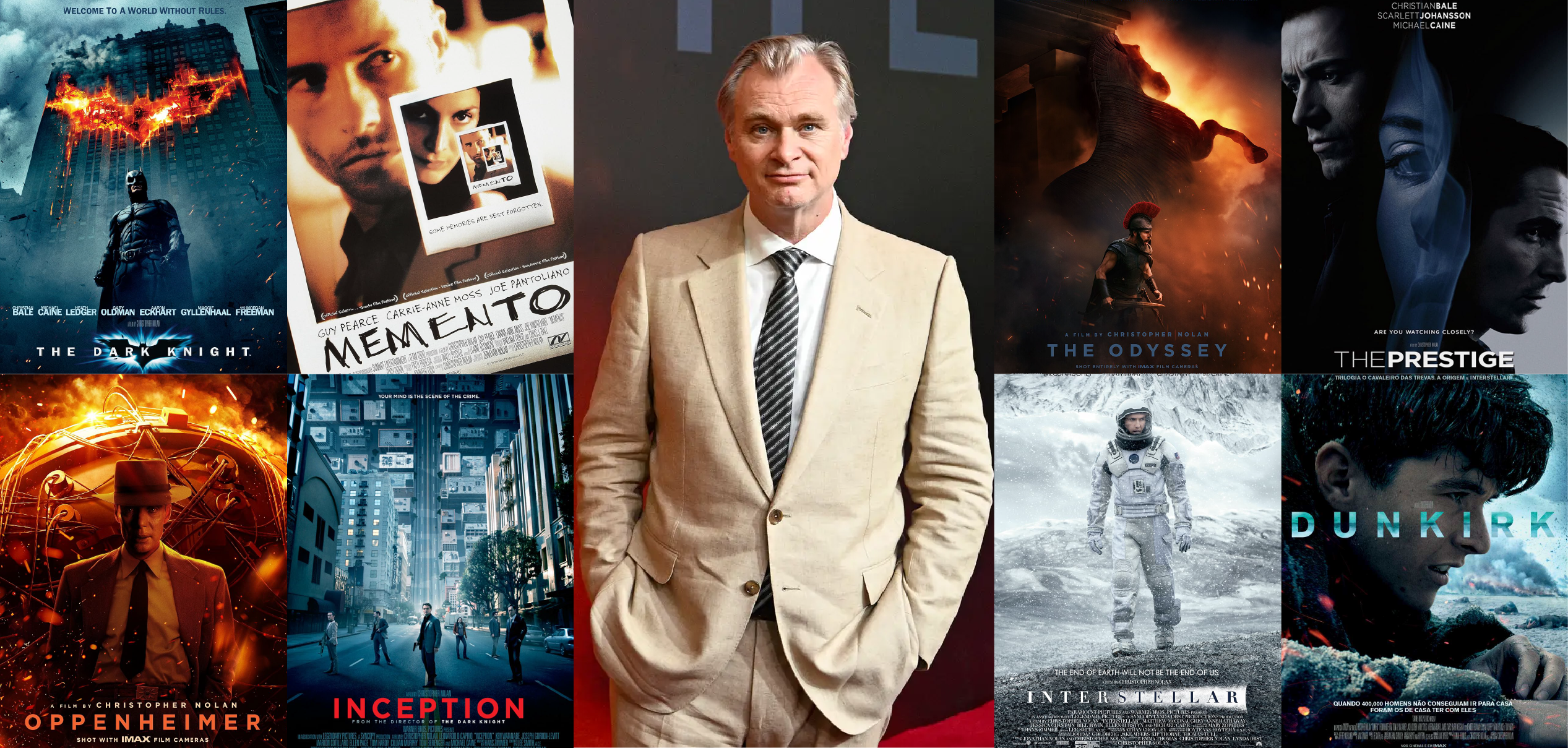
Foreknowledge doesn't ruin a great mind-bender. It only rebuilds it. Narrative misdirection by directors like M. Night Shyamalan, Christopher Nolan, and David Fincher is engineered specifically to reward the second pass. Foreshadowing density is so high in films like The Sixth Sense and Fight Club that the second viewing adds more value than the first. The rewatchability is the point. The unreliable perspective of the first watch and the structure's chronological manipulation both exist so that the second watch can collapse them.
The scope here is wide: films from 1960 to 2025, from Psycho to Soderbergh's Presence. What ties them together isn't genre. It's the fact that they were built to be watched twice.
The Mechanisms: How Directors Plant Invisible Clues
Before getting into specific films, it helps to understand the toolkit. Directors who build for rewatchability tend to draw from the same set of techniques, refined and remixed across decades. From Hitchcock's Psycho in 1960 to Soderbergh's Presence in 2025, the toolbox has stayed remarkably consistent.
What's changed is the audience's ability to spot the seams.
Color coding is the oldest trick in the book. Shyamalan's use of red in The Sixth Sense is the textbook example: the colour appears almost exclusively when the supernatural is present, a piece of visual foreshadowing so consistent that on rewatch it becomes a tracking device. Costume consistency plays the same role, with Bruce Willis's wardrobe locked into a tight palette that telegraphs his character's true state.
Single-frame inserts push this further into the realm of subliminal perception. Cinema runs at 24fps, meaning a single frame lasts 1/24th of a second, well below the threshold most viewers register consciously. Fincher used this in Fight Club to flash Tyler Durden onto screen four times before he officially "appears", planting him into the Narrator's reality so subtly that audiences felt them without seeing them. This is subliminal messaging as foreshadowing, not advertising.
Unreliable blocking is the choreographic version of the same idea. Characters who don't actually exist within the world of the film are kept apart from those who do. Doors don't open for them. They never share a frame in a two-shot. The audience reads them as present only because the editing implies it.
Continuity errors as clues turn what looks like sloppy filmmaking into a deliberate signal. Prop manipulation in Shutter Island, where small objects shift between cuts, is engineered to make the audience feel a low hum of wrongness.
Mirrored dialogue does the same for the script: lines that mean one thing on first listen and something completely different on the second. This is where cognitive load theory comes in. On a first watch, your brain is too busy tracking the story to flag inconsistencies. On a second, with the plot on autopilot, the inconsistencies are all you can see.
|
Technique |
Function | Example Film |
Specific Clue/Timestamp |
| Color Coding | Visual foreshadowing | The Sixth Sense (1999) | Red objects appear only when ghosts are present; Bruce Willis wears variations of the same outfit he was wearing the night he was shot. |
| Single-Frame Inserts | Subliminal hints | Fight Club (1999) | Brad Pitt appears in four locations during the Narrator's insomnia montage. (airplane safety card, hospital hallway, etc.) |
| Unreliable Blocking | Phantom character isolation | The Sixth Sense | Malcolm never opens doors; Cole is the only living person who speaks to him; his wife ignores him at the restaurant. |
| Chronological Reversal | Forces amnesiac experience | Memento (2000) | BW sequences chronological forward; color sequences reverse; meet at the middle. |
| Prop Continuity | Reality fractures | Shutter Island (2010) | Cigarettes disappear between shots; impossible storm timelines |
| Mirrored Dialogue | Dual-meaning lines | Fight Club | "You were looking for a way to change your life" = self-addressed; "I look like you wanna look." |
The Reality-Benders: Unreliable Protagonists & Psychological Traps
The most efficient way to fool a viewer is to fool the protagonist first. If the person whose perspective you're inhabiting doesn't know what's real, you don't either. The films in this category fall into roughly four buckets: detectives whose investigations are delusions, characters with imaginary companions, protagonists whose disabilities are concealed from the audience, and narrators who are already dead. Each one uses a different mechanism, but the effect is the same. You spend the whole film inside a head that is lying to itself, and the second viewing is the moment you finally see the lie.
A. Shutter Island (2010) — The Delusional Detective
https://www.youtube.com/watch?v=v8yrZSkKxTA
In Martin Scorsese's Shutter Island, Leonardo DiCaprio plays a US Marshal investigating a disappearance at Ashecliffe Hospital, a 1950s psychiatric facility for the criminally insane. On a first watch, it plays like a tight psychological thriller in the tradition of classic noir, full of shadowy doctors, missing patients, and the sense that something is rotten in the institution itself. On the second, it plays like a trauma narrative about a man named Andrew Laeddis, whose entire investigation is a piece of role-play therapy designed to break him out of his dissociative identity disorder.
Scorsese uses weather and lighting like a mood ring. The storm intensifies as Laeddis's psychosis worsens. The lighting flattens when his delusion is most stable. The "Law of 4" puzzle Teddy obsessively works on is, on rewatch, the doctors handing him the solution to his own identity. Rachel Solando, the missing patient he's hunting, is a projection of his own dead wife. Every interaction is staged. Every clue is planted by people trying to save him.
The famous final line, "Is it better to live as a monster or die as a good man?", reads on first viewing as despair. On second viewing, it reads as a choice. He is choosing the lobotomy. He knows exactly who he is, and he would rather not. This is 1950s psychiatry as a moral mirror, and it shifts the genre underneath you. The psychological thriller tropes were the bait. The film was always a tragedy.
Where to Watch: Watch or Rent on Prime Video
B. A Beautiful Mind (2001) — The Imaginary Companions
https://www.youtube.com/watch?v=EajIlG_OCvw
Ron Howard's biopic of mathematician John Nash, played by Russell Crowe, takes a structural risk almost no schizophrenia cinema has before it: it puts the audience inside the hallucinations and lets them believe. Jennifer Connelly plays his wife, Alicia, anchoring the few scenes that are actually grounded in reality. Everything else is filtered through Nash's mind.
On rewatch, the tells are everywhere. Charles, Nash's charismatic Princeton roommate, never interacts with anyone except Nash. Marcee, Charles's young niece, never ages across years of screen time, an impossibility for a child character that the film simply hopes you don't notice. In one of the most quietly devastating moments, Nash runs through a flock of pigeons that don't scatter, because the pigeons aren't reacting to him at all in the actual scene as filmed. Parcher, the shadowy government handler, exists only in rooms Nash is alone in.
The Princeton University setting and the eventual Nobel Prize in Economics ceremony aren't just biographical details. They're the structural payoff. The Nobel scene works because, by then, the audience has learned to scan every face Nash sees and ask whether anyone else is seeing them too. Psychiatric medication, insulin shock therapy, the question of whether Nash ever truly recovers: the film is honest about how messy the answer is. On second viewing, it isn't a triumph-over-illness story. It's a story about a man who never stopped seeing the people, and learned to walk past them anyway.
Where to Watch: Watch or Rent on Prime Video
C. The Book of Eli (2010) — The Concealed Disability
https://www.youtube.com/watch?v=zSMHmtaoXtI
The Hughes Brothers' The Book of Eli is post-apocalyptic cinema built around one of the most patient withholding tricks of the 2010s. Denzel Washington plays Eli, a wanderer crossing a wasted America carrying a single book. Gary Oldman plays Carnegie, the warlord who wants it. The reveal in the final act is that Eli has been blind the entire film, that the book is a Braille literacy Bible, and that everything you assumed about the action sequences was wrong.
The misdirection works partly because of Denzel Washington's star power: audiences are conditioned to read him as the capable action hero, so they extend that assumption to mean fully sighted. On rewatch, the sensory substitution clues are constant. He locates threats by sound first, then movement. He pats down corpses by touch rather than sight. He tracks objects by tactile exploration. His "aim" with a gun is auditory, not visual. He doesn't flinch at things he should be able to see.
The biblical allegory is intentional. The blind priest Eli from the Book of Samuel in the Old Testament was a high priest of Israel whose physical sight failed him as his spiritual responsibility grew. The film's Eli mirrors that arc almost beat for beat, a man whose blindness is the source of his faith rather than an obstacle to it. The Hughes Brothers use the genre's expectations against it. You came for a wasteland action movie. You got a parable about belief.
Where to Watch: Watch or Rent on Prime Video
D. Jacob's Ladder (1990) — The Post-Mortem Experience
https://www.youtube.com/watch?v=tLulu1Ovi2c
Adrian Lyne's Jacob's Ladder stars Tim Robbins as Jacob Singer, a Vietnam veteran experiencing horrifying hallucinations in 1970s New York. The film moves through three apparent realities: his current life with a girlfriend, flashbacks to his marriage and dead son, and Vietnam War PTSD flashbacks involving a chemical experiment on his unit. None of them quite line up.
The reveal is that Jacob is dying on a field hospital table in Vietnam. Everything else, the New York life, the family, the conspiracy, is the final firing of a brain in near-death experience territory, working its way toward letting go. The purgatory cinema framing isn't decorative. The film makes the theological move explicit in its closing minutes: the demons aren't trying to drag him to hell; they're angels trying to free him from his attachments. The compression of his entire imagined post-war life into the seconds of his actual death is the film's structural argument.
On rewatch, the timeline tells you everything. Jezebel, his girlfriend in the New York scenes, functions as both a demonic and angelic figure depending on which scene you're in. The medical experimentation subtext, with its fictional drug "the Ladder", is a red herring designed to make Jacob (and the viewer) feel like there's a conspiracy to uncover, when the real story is much smaller and much sadder. The psychological horror atmosphere directly influenced the Silent Hill video game series, whose creators have repeatedly cited Jacob's Ladder as a structural and visual reference. Thalidomide references in the imagery of malformed bodies underscore the film's interest in the body as a betrayal. It's a war film disguised as a horror film disguised as a love story. You only see which one was real on the rewatch.
The Identity Puzzles: Split Selves, Twins & Doppelgangers
If unreliable narration breaks the film at the level of perception, identity fracture breaks it at the level of the self. These are films where the protagonist isn't quite one person, and the central trick is hiding that fact in plain sight. There are two flavours of this: the psychological splitting of Fight Club and Psycho, where the second self is a hallucination or a buried alter, and the literal doubling of The Prestige, where the trick is mechanical, and the audience is just choosing not to see it.
The thing both versions share is costume design as a tell. Colour palettes shift with personality. Physical tics get assigned to oneself and not others. Edward Norton in Fight Club and Christian Bale in The Prestige both deliver performances that read completely differently when you know what to look for, and both films were edited by people who understood that the second watch is where the craft actually shows up. The "Tyler Durden effect" is the broader principle: a character can be hidden in plain sight if you give the audience a stronger thing to look at.
| Film | Year | Twist Mechanics | Rewatch Revelations |
| Fight Club | 1999 | Narrator/Tyler is a dissociative alter | Only the narrator pays bus fares; the narrator's swings trigger car alarms. Tyler "hears"; calls from Tyler are payphone callbacks. |
| The Prestige | 2006 | Borden has twins; Angier uses a cloning machine | "No one cares about the man in the box" = literal twin sacrifice; canary trick foreshadowing; Tesla machine works exactly as shown. |
| Primal Fear | 1996 | Aaron Stampler fakes a dissociative identity | "Meek" Aaron's masterful manipulation of court; B32.156 carving = Dewey Decimal reference to The Scarlet Letter; Ed Norton's physical transformations |
| Psycho | 1960 | Norman Bates is Mother | Shower scene editing hides knife contact; "Mother" monologues have different vocal pitch; taxidermy birds = preservation of mother. |
| Black Swan | 2010 | Nina's hallucinations/double | Mirror reflections move independently; scratches appear before she "finds" them; Winona Ryder's Beth as a future mirror. |
What ties this group together is the philosophical bet at the centre of each film: the idea that identity itself is unstable, that the self is a story we tell, and that the doppelganger mythology running through cinema since Psycho is really a way of asking who is doing the telling. Dissociative identity disorder (DID) as a clinical concept and as a narrative device aren't the same thing, and most of these films take dramatic liberties. But the psychological projection at the heart of each one is real enough to land.
Alfred Hitchcock, David Fincher, Christopher Nolan, and Darren Aronofsky have all built career-defining work on the unreliable narrator as alter ego, and the second viewing is where the twin tropes stop being tricks and start being arguments about what a person actually is.
The Temporal Manipulators: Time, Memory & Non-Linearity
If the identity puzzles break the ‘self’, these films break… time.
They use chronology the way most films use a soundtrack: as an emotional layer that the audience absorbs. Reverse order forces you to feel an amnesiac's confusion. Loops force you to feel a fatalist's trap. Erased memories force you to feel a relationship from the outside in. The structure is confusing.
Where to Watch: Watch or Rent on Prime Video
A. Memento (2000) — The Reverse Chronology
https://www.youtube.com/watch?v=HDWylEQSwFo
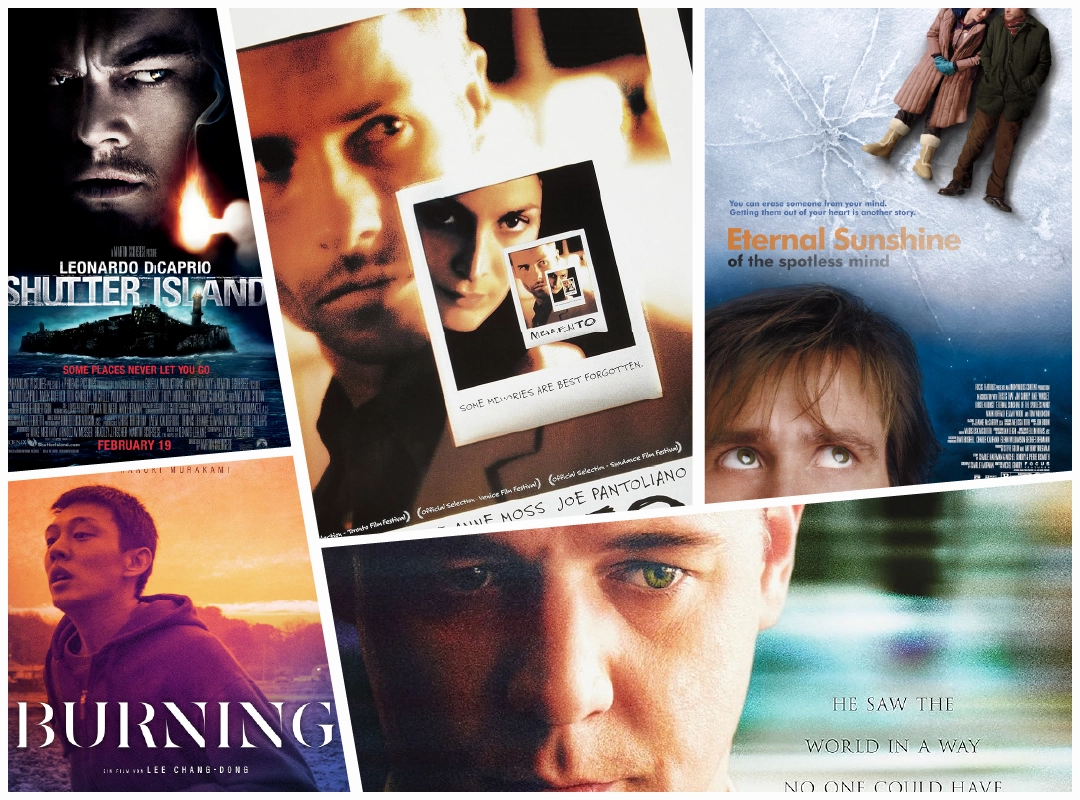
Christopher Nolan's Memento, his second feature after Following, runs on two intercut threads. Black-and-white sequences move forward in time, in standard chronological order. Colour sequences move backwards, with each scene preceding the one you just watched. The two strands meet in the middle of the film, at the moment they collapse into a single timeline. The structure is engineered to put you inside the head of Leonard Shelby, played by Guy Pearce, a man with anterograde amnesia caused by a head injury sustained during the attack that killed his wife.
The short-term memory loss is the entire epistemological problem of the film. Leonard can't form new long-term memories, so he tattoos clues onto his body and treats Polaroid notes as truth tellers. The non-linear narrative structure means the audience, like Leonard, never knows what happened in the previous scene because they haven't seen it yet. Memory and identity become indistinguishable, which is exactly the point.
On rewatch, the manipulation becomes visible everywhere. The Sammy Jankis story Leonard tells about a man with the same condition mirrors his own situation in ways the first viewing can't catch. Natalie, played by Carrie-Anne Moss, reads as helpful on first watch and as openly exploitative on the second, because you can finally see her cycling Leonard through emotional states he won't remember. The Jaguar he drives serves as a chronological anchor. And Leonard's tattoos, which the audience treats as evidence, turn out to be self-administered evidence, which means they prove nothing at all. Leonard Shelby's real condition isn't memory loss. It's the willingness to be his own unreliable narrator forever.
Where to Watch: Watch or Rent on Prime Video
B. Donnie Darko (2001) — The Tangent Universe
https://www.youtube.com/watch?v=bzLn8sYeM9o
Richard Kelly's Donnie Darko is 1980s suburban gothic with a mathematics problem at its core. Jake Gyllenhaal plays a teenager who survives a freak accident, a jet engine falling into his bedroom, only because he was sleepwalking outside at the time. He starts seeing Frank, a man in a horrifying rabbit suit, who tells him the world will end in 28 days.
The film's actual mechanics are laid out in The Philosophy of Time Travel, a fictional in-world book Donnie reads. The premise: when an artifact (the jet engine) falls into the wrong universe, a tangent universe branches off the primary one. This tangent will collapse and destroy everything unless someone, the "Living Receiver", returns the artifact. Donnie is the Receiver. Frank is the "Manipulated Dead", a future corpse reaching backwards to guide him. The other people around him are "Manipulated Living", their actions subtly directed by the universe itself toward the necessary outcome.
The time travel paradox is that the film's entire plot, including Donnie's relationship with Gretchen Ross (played by Jena Malone), happens inside the tangent universe and is therefore erased the moment he closes the loop. Water and mirrors function as portals throughout. The rabbit symbolism points back to Harvey and Watership Down. The jet engine paradox is the film's central image: the engine that kills him in the end is the same engine that should have killed him at the start. The director's cut, released in 2004, makes much of this explicit by inserting pages of the Philosophy of Time Travel book onscreen. Theatrical-cut viewers had to figure it out themselves, which is why this is one of the great rewatch films of its decade. On a first viewing, it's a mood piece. On a second,d it's a rigorously plotted machine.
Where to Watch: Watch or Rent on Prime Video
C. Eternal Sunshine of the Spotless Mind (2004) — The Erased Memory
Michel Gondry directed, and Charlie Kaufman wrote Eternal Sunshine of the Spotless Mind, and you can feel both of them in every frame. Jim Carrey plays Joel, a withdrawn man who discovers his ex-girlfriend, Clementine, played by Kate Winslet, has had him surgically erased from her memory by a company called Lacuna Inc. He decides to do the same. Most of the film takes place inside his head as the erasure is happening, with Joel watching his own memories of Clementine being deleted in reverse chronological order, from their bitter ending back to their sweet beginning.
This is where the structure does its quiet violence. By the time you reach the start of the relationship, you've already watched it die. Relationship archaeology is the only honest term for what the film is doing: digging backwards through a love affair until you find the moment it was good, and then watching that moment dissolve too. Clementine's hair colour, which changes across the timeline, is the audience's only reliable marker for where in the relationship a given memory is taking place.
Mid-procedure, Joel starts resisting. He tries to hide Clementine in memories that have nothing to do with her, childhood scenes that Lacuna shouldn't be able to reach. The "meet me in Montauk" line near the end of the erasure functions as an implanted suggestion that survives the procedure. The film's structure is circular: the ending, where Joel and Clementine meet again on a beach not knowing they've ever met, is also the beginning. On rewatch, you realise the opening scene is actually the second time they fall in love, and the entire film has been told out of order in a way that makes the first watch feel like emotional whiplash and the second feel like grief.
D. 12 Monkeys (1995) — The Predestination Paradox
https://www.youtube.com/watch?v=15s4Y9ffW_o
Terry Gilliam's 12 Monkeys takes a 1962 short film, La Jetée, and stretches it into a feature about a predestination paradox that won't let go. Bruce Willis plays James Cole, a prisoner sent back from a plague-ravaged future to find the source of the virus that wiped out humanity. Madeleine Stowe plays the psychiatrist who first thinks he's delusional and eventually believes him. Brad Pitt, in an Oscar-nominated performance, plays Jeffrey Goines, the unstable son of a virologist whose Army of the Twelve Monkeys is the obvious suspect.
The first watch tracks the Twelve Monkeys as the threat. The rewatch reveals them as a red herring. The actual source of the plague is hiding in plain sight, and Cole has been chasing the wrong target the entire film. The time loop is sealed in the airport sequence, where Cole, as a child, witnesses his own death as an adult, a memory that has haunted him without context his entire life. He cannot change the past. He can only confirm it. That's the trap of the predestination paradox: the time travel works exactly as advertised, and that's what makes it tragic.
Gilliam's post-apocalyptic Philadelphia is a wreckage of brutalist surfaces and animal-overrun streets, and the contrast with the mental institution scenes in the past gives the film its destabilising rhythm. You're never sure which version of reality is the delusion. The answer, on rewatch, is neither. They're both real, and both already written.
Where to Watch: Watch or Rent on Prime Video
The 2024–2026 Generation: Contemporary Mind-Benders
Modern audiences are more twist-literate than any generation before them. Streaming platforms have made the rewind button a standard part of viewing. Spoiler-aware Reddit threads have turned plot decoding into a pastime. Filmmakers know this, and it has changed what they build. The mind-benders of post-COVID cinema assume you're going to watch them twice and behave accordingly. The clue density is higher. The trust in the audience is higher. The patience for slow reveals is, if anything, even greater.
Three directors anchor this generation. Steven Soderbergh, working entirely outside the studio system, has been making formally experimental thrillers at a one-per-year pace. Luca Guadagnino has turned the language of arthouse romance into a vehicle for structural games. Oz Perkins has emerged as a horror director whose films require a second viewing, not because they're tricky but because they're so dense with mood and information that one pass can't hold it all. The horror renaissance at distributors like A24 and Neon has given these directors the kind of commercial space that used to belong only to mid-budget studio dramas, and the work is stranger and more rewarding for it.
|
Film |
Year | Director | Mechanism |
Rewatch Value |
| Presence | 2025 | Steven Soderbergh | Ghost POV narrative (entire film from spirit perspective) | Haunting reinterpreted through spectral intentions; why the ghost stays; Lucy Liu's character's true actions |
| Challengers | 2024 | Luca Guadagnino | Tennis match choreography as a relationship metaphor | Triangle dynamics hidden in serve/return patterns; final shot revelation; Zendaya/Mike Faist/Josh O'Connor power shifts |
| Longlegs | 2024 | Oz Perkins | Occult serial killer investigation | Nicolas Cage performance details (physicality hints true nature); satanic panic era accuracy; Maika Monroe's character perception vs. reality |
| The Substance | 2024 | Coralie Fargeat | Body horror/dual identity | Aging metaphors; feminist subtext in grotesque transformation; Demi Moore/Margaret Qualley dynamic; "substance" as metaphor |
| Strange Darling | 2024 | JT Mollner | Non-linear horror structure | Timeline reassembly; perception of predator/prey reverses; Willa Fitzgerald performance layers |
Presence is the cleanest example of how the new generation uses old tools.
Soderbergh shoots the entire film from the point of view of a ghost, with the camera as the spirit moving through a suburban house. Lucy Liu plays Rebekah, the family matriarch, whose business dealings turn out to be the actual centre of gravity of the haunting once you know what you're looking for. Challengers uses tennis as a lattice for a love triangle whose power dynamics shift in ways that only become legible after the final match. Longlegs hides Nicolas Cage's character's nature in his physicality from the first frame. The Substance uses body horror as a feminist text about ageing and visibility. Strange Darling tells a horror story in the wrong order on purpose, and the second viewing rearranges who you thought was the predator.
The Horror Subtexts: When the Scare Hides the Truth
Horror is a particularly rich vehicle for the iceberg effect because the genre conventions distract you from the architecture. You're scared, so you're not analysing. The films in this category tend to be slow burns that punish patience on a first watch and reward it on a second, and they often hide the entire ending in the production design before the plot has even started.
A. Midsommar (2019) — The Foreshadowing Murals
Ari Aster's Midsommar is folk horror built on a structural prank. Florence Pugh plays Dani, a young woman processing the recent violent death of her family, who joins her boyfriend and his graduate-school friends on a trip to a Hårga commune in rural Sweden for a midsummer festival that occurs once every 90 years. The festival turns out to be an extended ritual sacrifice cycle, and Dani, by the end of the film, has been crowned May Queen of a community that has effectively absorbed her.
What makes the film a perfect rewatch is that the entire plot is painted on the walls. The Hårga's ceremonial folk art symbolism, the murals and tapestries decorating their meeting halls, depict the ritual sequence chronologically and accurately, beat for beat. The May Day rituals are diagrammed in advance. The May Queen competition is fixed from the moment the visitors arrive. Dani's flower crown appears in iconography long before she wears it. The fates of her travelling companions, including Atti's, are pictured in the murals if you look at them in the order they're hung. Even Swedish paganism's runes, which the film translates only sparingly, contain spoilers for those who can read them.
The film's first watch is a horror movie about grief processing. Its second watch is a horror movie about how the commune knew exactly what it was getting in Dani from the moment her family died. There's an argument that the entire film is the Hårga's ritual working as designed, and the viewer is the only one who didn't see it coming.
Where to Watch: Watch or Rent on Prime Video
B. The Wailing (2016) — The Shamanic Deception
https://www.youtube.com/watch?v=43uAputjI4k
Na Hong-jin's The Wailing is one of the great formal experiments in South Korean cinema, a film that begins as a police procedural, becomes a supernatural thriller, and ends as an exorcism film without ever quite admitting it has changed genres. Kwak Do-won plays Jong-goo, a small-town policeman investigating a string of murders in a remote village. Jun Kunimura plays the Japanese stranger the villagers accuse of bringing evil with him. Hwang Jung-min plays Il-gwang, the mudang (Korean shaman) hired to protect Jong-goo's possessed daughter Hyo-jin.
The first viewing is built around a single question: Is the Japanese stranger the demon, or the victim? The film deliberately keeps both possibilities alive until the very end, and even then, the resolution is ambiguous enough that audiences left the theatres arguing. On rewatch, the picture becomes much clearer. Photographic evidence of victims is staged in ways that point to who is actually responsible. Hyo-jin's possession signs appear earlier in the film than first-time viewers register. Il-gwang's ritual, which seems to be helping, is doing the opposite.
The film leans into Korean religious syncretism, mixing shamanism, Catholicism, and folk belief into a single moral universe where every system of protection fails. The casting of Jun Kunimura as the foreign stranger draws on real cultural memory of Japanese occupation trauma, and the film's village setting in rural Korea isn't decorative. The accusation that an outsider has brought corruption to the village is itself the film's central question, and the answer it gives on rewatch is darker than the first watch suggests.
Where to Watch: Watch or Rent on Prime Video
C. Hereditary (2018) — The Miniatures
https://www.youtube.com/watch?v=mz04AFDRmCw
Ari Aster's Hereditary, his debut feature, opens on a miniature dollhouse that turns out to be the first hint of the film's entire structure. Toni Collette plays Annie, a miniaturist artist whose work depicts scenes from her own life with unsettling precision. After her mother's death and a family tragedy involving her daughter,r Charlie, played by Milly Shapiro, Annie's family begins to disintegrate in ways that seem psychological at first and supernatural by the end.
On rewatch, the miniatures as a narrative device become the key to the whole film. Annie's models contain future events that haven't happened yet in the story, scenes she couldn't possibly have witnessed, staged in dollhouse form before they occur in life. The Paimon demonology that drives the plot is hidden throughout the early scenes in the form of ritual symbols, family heirlooms, and offhand references that read as decor on first watch and as text on second. Charlie's clucking tic, the bird imagery surrounding her, and the attic scenes that feel like atmosphere are actually the cult mythology being introduced before the audience knows it's a cult mythology.
Alex Wolff as Peter, Annie's son, anchors the second half once Charlie is gone, and his arc becomes legible only on rewatch as the film's actual subject. The family dinner scene, in which Annie unleashes years of grief at Peter, plays differently when you know what's about to happen to him. Hereditary is, on the surface, a film about grief and inherited trauma. Underneath, it's a film about a family being moved into position by forces that planned everything generations ago.
Where to Watch: Watch or Rent on Prime Video
The Social Thrillers: Horror as Metaphor
The last category bends horror into political shape. These are films where the genre is the carrier and the social commentary is the cargo, and the rewatch reveals just how deeply the metaphor was structured into the bones of the film. Jordan Peele and Lee Chang-dong are working in completely different cinematic traditions, but both films in this section use ambiguity and genre play to say something specific that the first watch tends to soften.
A. Get Out (2017) — The Sunken Place Architecture
https://www.youtube.com/watch?v=lusML-YVeo8
Jordan Peele's Get Out, his directorial debut, became one of the most discussed films of the late 2010s for a reason: every interaction in it carries racial subtext, and the architecture of the screenplay rewards the kind of close reading that social horror had rarely received before. Daniel Kaluuya plays Chris Washington, a Black photographer visiting his white girlfriend Rose's family for the weekend. Allison Williams plays Rose. The family, the liberal racism they perform, and the microaggressions Chris absorbs over the course of the visit are the entire film's slow-build dread, not subtext.
The reveal is that the family runs an underground operation transplanting the consciousness of older white people into the bodies of Black guests, and Rose has been their procurer for years. The sunken place, the dissociative state Chris is hypnotised into by Rose's mother Missy, is both a literal plot device and the film's central metaphor: a place where Black consciousness is trapped behind a screen, watching its own body be operated by someone else. On rewatch, the silver spoon stirring tea reads as the hypnosis trigger from the first time it appears, not the third. The cotton stuffing scene in Chris's escape sequence stops being a horror beat and becomes a deliberate symbol. The deer Chris hits on the drive in foreshadows everything.
The film's clue density on rewatch is genuinely staggering. Rod, Chris's TSA friend played by Lil Rel Howery, is the voice of reason that the film treats as comic relief, and the second viewing treats him as the only correct character in the story. Background characters' mouths "Get out!" warnings that first-time viewers miss. Rose's closet photos of previous boyfriends reveal the timeline of her predation. The deer symbolism returns in the basement. The film's title is also its instruction. This is a film that has not aged a day, partly because the white liberalism it's diagnosing has not changed at all.
Where to Watch: Watch or Rent on Prime Video
B. Burning (2018) — The Ambiguous Disappearance
https://www.youtube.com/watch?v=oihHs2Errwk
Lee Chang-dong's Burning is based on Haruki Murakami's short story "Barn Burning", and it uses Murakami's signature ambiguity as a structural principle. Yoo Ah-in plays Jong-su, a young aspiring writer from rural Paju, who reconnects with a childhood acquaintance, Hae-mi (Jeon Jong-seo), and then meets her wealthy new friend Ben, played by Steven Yeun in the role that completely repositioned him as a serious dramatic actor.
Ben is a kind of sociopathic Gatsby figure, a young man with no visible source of his money who casually tells Jong-su about his hobby of burning down abandoned greenhouses. When Hae-mi disappears, Jong-su begins to suspect Ben of something much worse than arson. The Korean class divide is the film's actual subject. Jong-su, a working-class farmer's son, cannot articulate what is wrong about Ben because he doesn't have the social vocabulary to. The greenhouse is a metaphor and possibly also a literal murder site, and the film refuses to confirm which.
The film's central ambiguity is by design. The cat Hae-mi keeps in her apartment may or may not exist. Jong-su's writerly perspective is unreliable in ways the first viewing absorbs as moodiness and the second viewing recognises as evidence. The Great Gatsby parallels are explicit, with Ben as the inexplicable rich man and Jong-su as the watcher who can't look away. The final scene leaves the question of guilt unresolved, but on rewatch, the way Lee Chang-dong stages it makes one reading much harder to escape than the other. Ambiguity in cinema is usually a flaw. In Burning, it's the entire architecture.
Where to Watch: Watch or Rent on Prime Video
Conclusion: The Architecture of Revelation
What unites every film in this list is that they aren't really stories. They're buildings. Every element is important. Every prop, every line, every cut is doing structural work, and the second viewing is when you finally see the structure rather than just the surface. Cinematic architecture is the right word for it.
Narrative design at this level is closer to engineering than to storytelling.
Hitchcock once described suspense as the bomb under the table that the audience knows about and the characters don't. Hitchcockian suspense worked outward: the audience was given the secret and watched the characters fail to find it. The films in this list have evolved that idea inward. The bomb is still there, but now it's in the audience's head, planted by the filmmaker, and the second viewing is the moment it goes off. The technique has shifted from telling the audience the secret to letting the audience find it.
The practical advice for active viewing is simple. Watch for what the camera lingers on when there's no obvious reason to. Ask why a particular cut happened where it did. Notice who is and isn't in the frame during conversations. The directors built these films assuming you'd come back. The least you can do is take them up on it.
The future question is whether AI-generated content can replicate this. The honest answer is probably not. The iceberg effect depends on a human filmmaker thinking about a human viewer's pattern recognition over time, on a craftsperson knowing exactly what a second-watch viewer will notice that a first-watch viewer won't.
That's a layered intentionality, and current generative tools work at the level of plausible single passes rather than embedded long-game design. Spoiler culture has changed how people talk about films, but it hasn't changed the underlying fact that great mind-benders are built by people who trust you to come back.
If you want a place to start, start with three. The Prestige is the most layered, with a clue density that rewards multiple rewatches. The Sixth Sense is the most accessible, the one most likely to convert a casual viewer into a rewatcher. Presence is the most recent and cleanest demonstration that the form is alive in 2026.
The rewatch value algorithm, if there is one, is this: how much of the film were you not allowed to see the first time? The films in this list are the ones where the answer is "almost all of it". Film literacy is the ability to come back and notice.

.webp)