
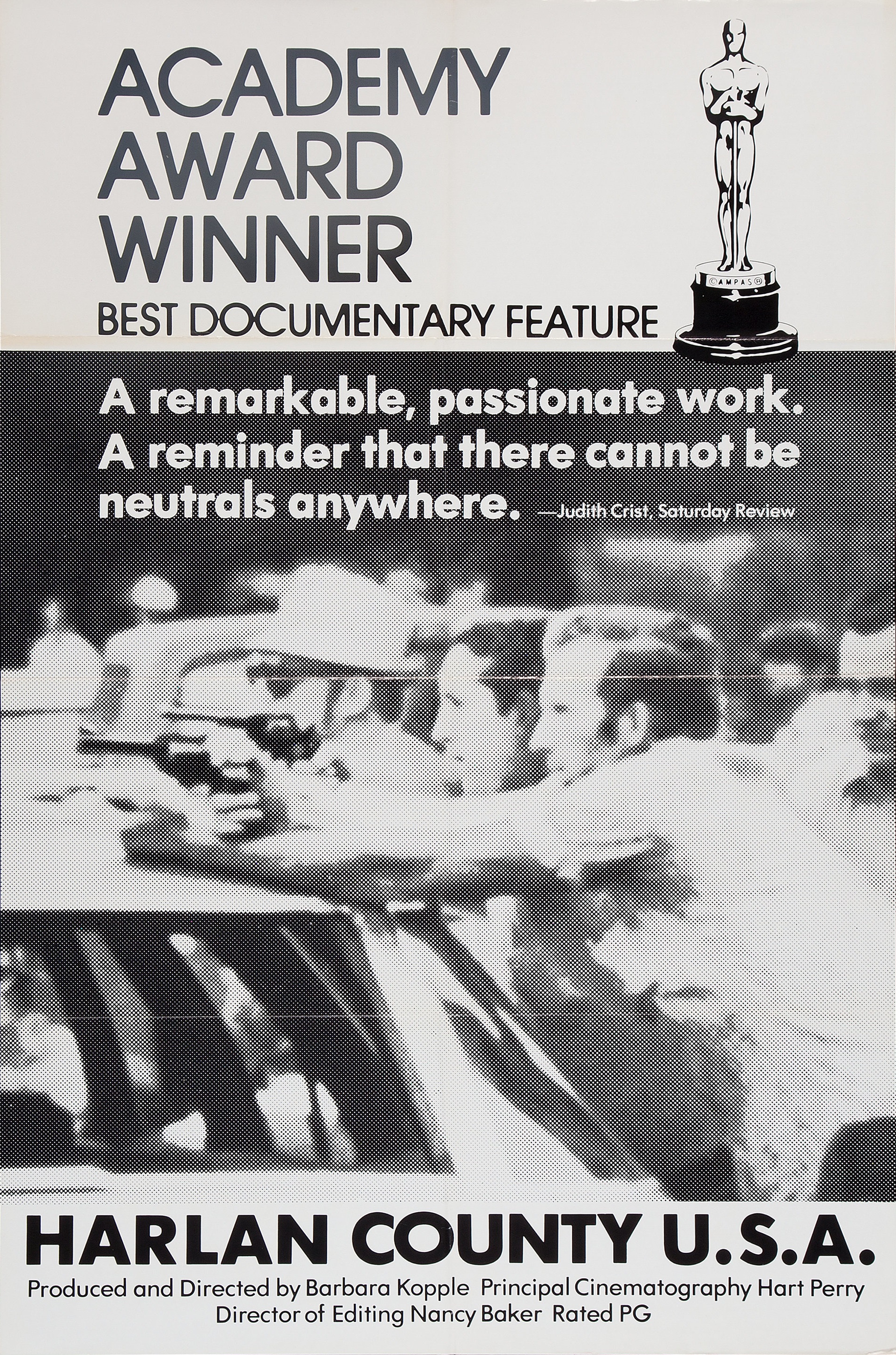
This film documents the coal miners' strike against the Brookside Mine of the Eastover Mining Company in Harlan County, Kentucky in June, 1973. Eastovers refusal to sign a contract (when the miners joined with the United Mine Workers of America) led to the strike, which lasted more than a year and included violent battles between gun-toting company thugs/scabs and the picketing miners and their supportive women-folk. Director Barbara Kopple puts the strike into perspective by giving us some background on the historical plight of the miners and some history of the UMWA. — Martin Lewison In the summer 1973, the coal miners working at the Brookside Mine, located in Brookside, Harlan County, Kentucky and owned by the Eastover Coal Company, voted to join the union, United Mine Workers of America (UMWA), against the wishes of Eastover administrators. Shortly thereafter, the miners went out on strike on Eastover and its parent company, Duke Power Company, refusing to sign a contract with its employees, union members. Beyond the direct economic issues of wages and benefits, the miners' grievances included long standing inherent problems with the coal mining industry in the United States in general, such as health issues most specifically with black lung from inhaling coal dust, and other more acute dangers, an explosion at Consolidated Coal's Mannington Mine in Farmington, West Virginia a few years earlier which killed seventy-eight of eighty-two people working in the mine itself at the time. The company was granted an injunction prohibiting the strikers from blocking vehicles from entering/exiting the mine site and from calling the replacement workers hired "scabs". Emotions on both sides ramped up as the strike progressed, with wives and other miner supporters joining the strikers on the picket lines, and the potential for violence, most specifically gun violence, becoming more blatant. Discussions of a no-strike clause as a possible item within a contract became the most contentious issue. But other problems within the UMWA, which led to an indictment for murder, and the UMWA's contractual relationship to the Bituminous Coal Operators Association (BCOA) would also be factors. But a tragedy would be the turning point in the divisive strike, which hearkened back to similar such struggles in the area during the great depression. — Huggo In this documentary about labor tension in the coal-mining industry, director Barbara Kopple films a strike in rural Kentucky. After the coal miners at the Brookside Mine join a union, the owners refuse the labor contract. Once the miners start to strike, the owners of the mine respond by hiring scabs to fill the jobs of the regular employees. The strike, which lasts more than a year, frequently becomes violent, with guns produced on both sides, and one miner is even killed in a conflict. — Jwelch5742 Barbara Kopple 's Academy Award-winning Harlan County USA unflinchingly documents a grueling coal miners' strike in a small Kentucky town. With unprecedented access, Kopple and her crew captured the miners' sometimes violent struggles with strikebreakers, local police, and company thugs. Featuring a haunting soundtrack-with legendary country and bluegrass artists Hazel Dickens , Merle Travis , Sarah Gunning, and Florence Reece -the film is a heartbreaking record of the thirteen-month struggle between a community fighting to survive and a corporation dedicated to the bottom line. — Anonymous
Frequently Asked Questions
What was the Brookside Strike, and why does the film focus on it?
Who directed the film, and how was it made?
What role do women play in the film?
When was it released, and where can it be seen?
What awards did the film win?
Is the film considered historically significant?
Fun Facts
Harlan County, U.S.A. (1976) is an acclaimed documentary by Barbara Kopple that chronicles the 1973 Brookside Strike, where 180 coal miners and their families battled Duke Power's Eastover Coal Company for union recognition in rural Kentucky.
The filmmakers faced violence themselves, including gunfire and beatings from company gun thugs, yet captured raw footage of picket lines, miner hardships, and tense negotiations over black lung disease and unsafe conditions.
Featuring a powerful folk soundtrack with Hazel Dickens singing "Come All You Coal Miners" and other classics, the 103-minute film won the Academy Award for Best Documentary Feature in 1977.
Kopple's cinéma vérité style highlights the strikers' wives as fierce leaders, turning a year-long labor struggle into a timeless portrait of corporate greed versus working-class resilience.