

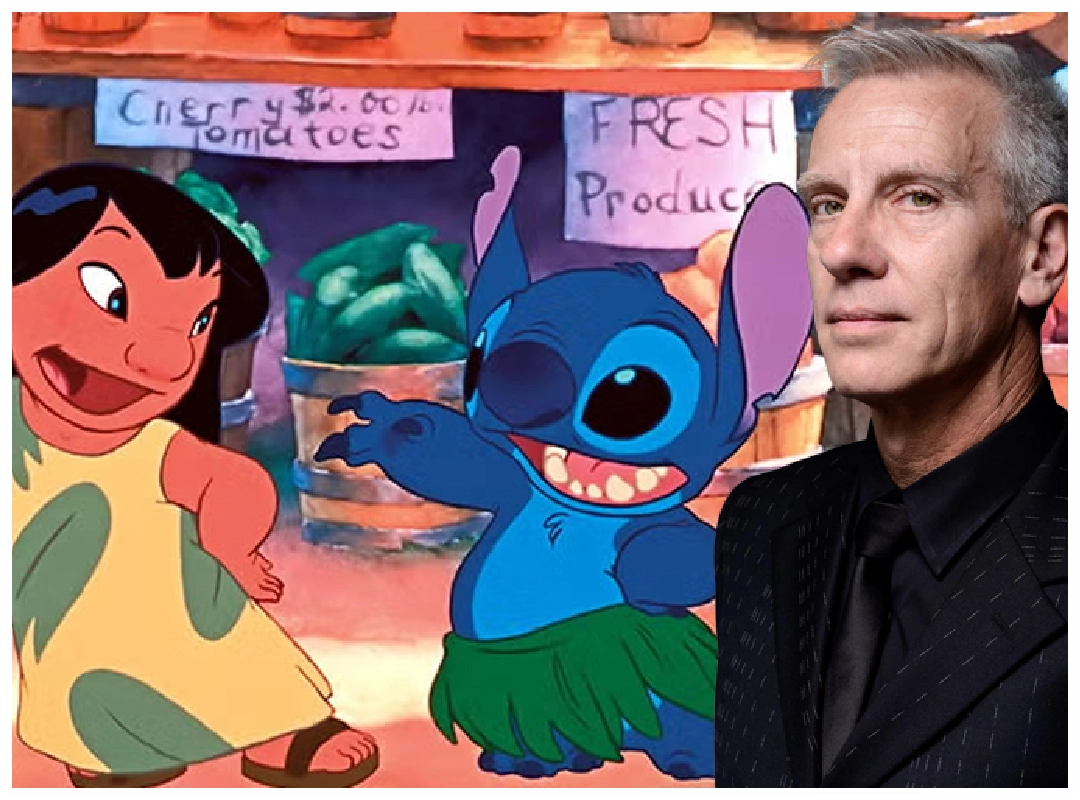
There is always one type of filmmaker who builds a creative identity that is so strong that it becomes unforgettable and iconic, and Chris Sanders Lilo and Stitch is the cleanest case study that Hollywood animation has produced.
The blue alien Sanders sketched in 1985 as a failed children's book character is currently powering a billion-dollar franchise, a confirmed sequel, and one of Disney's most commercially dominant pieces of intellectual property. The 2025 live-action Lilo & Stitch live action 2025 crossed $1 billion at the global box office, becoming the first Hollywood film of the year to do so, and Sanders himself returned to voice Stitch.
In March 2026, Disney officially set Lilo & Stitch 2 for May 26, 2028, with Sanders attached as screenwriter. Across the same stretch, he wrote and directed The Wild Robot, which received three Academy Award nominations — Best Animated Feature, Best Original Score for Kris Bowers, and Best Sound for that film alone—and is now writing the sequel, The Wild Robot Escapes. None of this is a comeback. Sanders has been building toward this moment for four decades, and the rest of the industry is only now catching up to what his career has been quietly proving.
5 Reasons Fans Are Obsessed With Chris Sanders
https://www.youtube.com/watch?v=VWqJifMMgZE
Reason 1: He broke the Disney formula from inside Disney
When Sanders pitched Lilo and Stitch 2002 to then-Walt Disney Feature Animation president Thomas Schumacher, the studio was deep into its post-Renaissance era of fairy-tale spectacle. The Lion King had grossed nearly a billion dollars. Mulan had just wrapped. The expected next move was bigger budgets, bigger ensembles, bigger song numbers. Sanders went the other way. Lilo and Stitch Disney swapped the fantasy kingdom for Kauaʻi, the princess for a six-year-old kid in a broken household, the ballads for Elvis Presley deep cuts, and the villain-must-die climax for a redemption arc. The studio gave him a smaller budget, the Florida animation studio inside Walt Disney World, and watercolor backgrounds Disney hadn't used at scale since Dumbo. It worked. The film grossed $273 million on roughly $80 million, and more importantly, it gave Disney a piece of IP that has only grown more valuable with time. The risk wasn't the Hawaiian setting. The risk was making a Disney animated feature about a single-parent household and grief, and trusting that audiences would meet it there.
Reason 2: He voiced Stitch himself
https://www.youtube.com/watch?v=D7gpoCaYcT4
The decision to perform the character he designed was not a marketing flourish. Sanders had originally planned for Stitch not to speak at all — just chirps, growls, and gibberish — and recorded the temp track himself during development. The voice stuck. Who voices Stitch is, and has been since 2002, Chris Sanders, across the original film, the direct-to-video sequels, the television series (except for the East Asia–produced Stitch! and Stitch & Ai, where Ben Diskin took over), and now the live-action remake. The designer and the voice being the same person is rarer than it sounds. It collapses the distance between the character on the page and the character on screen, because the same instinct that decided what Stitch's silhouette should look like also decided what his giggle, his snarl, and his moments of vulnerability sound like. The fact that he is reprising the role in the live-action film and is set to write Lilo and Stitch 2 is the clearest possible signal of what Disney understands now: there is no Stitch without Sanders. Did Chris Sanders voice Stitch in the live-action? Yes, he did, and he did five separate four-hour recording sessions to do it.
Reason 3: His visual style is immediately recognisable
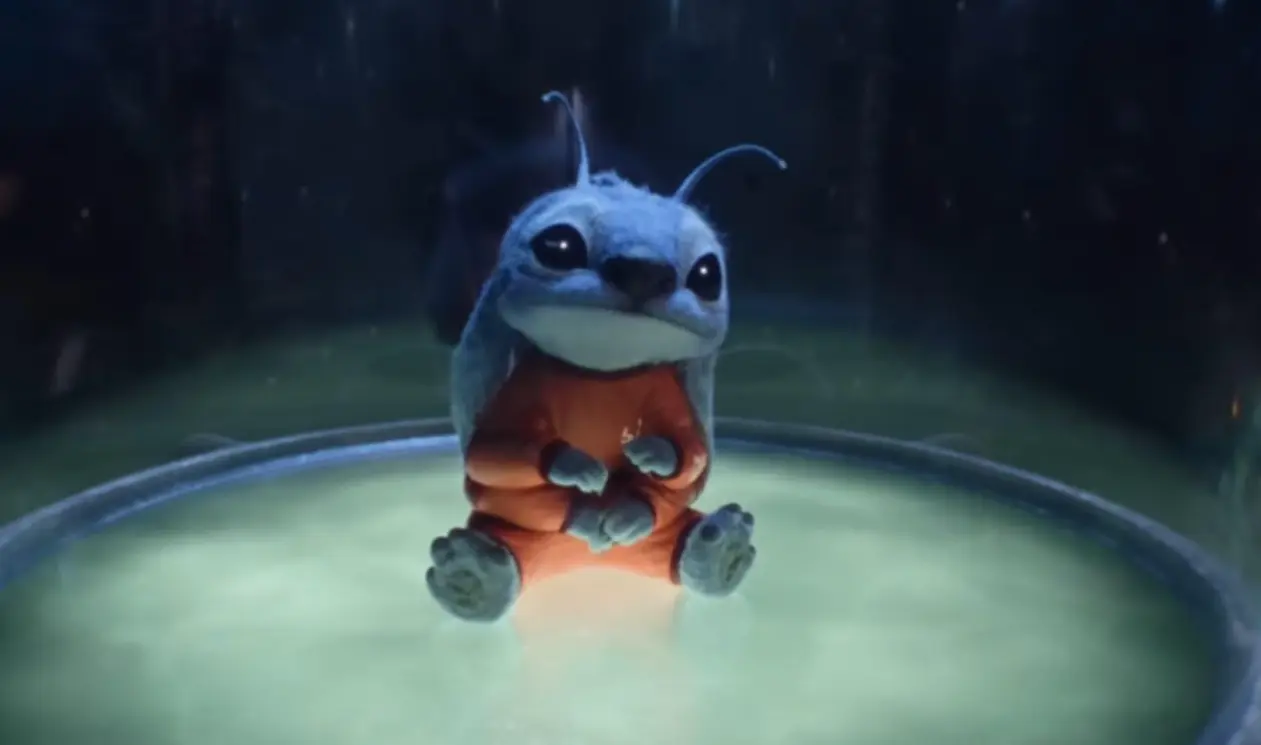
The Chris Sanders art style is built on round shapes, oversized expressive eyes, simplified anatomy, and loose linework that reads like a storyboard sketch coming to life. Disney internally created a manual called "Surfing the Sanders Style," developed by visual development supervisor Sue Nichols, specifically so other artists could replicate his look across the Lilo & Stitch production. Sanders himself has admitted he didn't think he had a style until Schumacher insisted on it and assigned Nichols to dissect it. The booklet became required reading for everyone on the project.
What is Chris Sanders' art style called? There is no formal name for it, but the "Surfing the Sanders Style" guide remains the closest thing to a formal definition, and it was used again as a reference document for the 2025 live-action remake's animation team at Industrial Light & Magic. Having a filmmaker whose personal illustration style becomes the visual language of an entire major studio production is not the norm. Most Disney animated features get filtered through a house style. Lilo & Stitch is a Sanders drawing scaled up to 85 minutes.
Reason 4: He built two franchises at two different studios
https://www.youtube.com/watch?v=K9oXZdOs91g
The through-line is unmissable. Chris Sanders’s How to Train Your Dragon at DreamWorks, The Croods at DreamWorks, The Wild Robot at DreamWorks, Lilo & Stitch at Disney — four films, three of them franchise foundations, all of them about small family units, emotional honesty, and outsiders finding belonging. Sanders co-wrote and co-directed How to Train Your Dragon (2010) with Dean DeBlois, his Lilo & Stitch co-director, after leaving Disney following creative disagreements over the project that became Bolt. Then came The Croods (2013), co-directed with Kirk DeMicco. The Wild Robot (2024), which he wrote and directed solo. Did Chris Sanders direct How to Train Your Dragon? Yes, he co-directed the 2010 original with DeBlois. The fact that he produced major franchises across competing studios without losing the thing that makes his work recognisable says something specific about creative identity in animation. It isn't the studio that makes a Sanders film. It's Sanders.
Reason 5: Lilo & Stitch is having its biggest cultural moment yet
https://www.youtube.com/watch?v=EN605-khaZc&t
The Lilo and Stitch live-action 2025 grossed over $1 billion globally, becoming the first Hollywood film of 2025 to clear the milestone and the highest-grossing live-action/animated hybrid in history. Domestic gross was $423.8 million. International totalled $614.2 million. The original 2002 film made $273 million worldwide — the remake more than tripled it. Disney's consumer products business reported $2.6 billion in retail sales for Lilo and Stitch merchandise in fiscal 2024, up from $200 million five years earlier, and Bob Iger confirmed in late 2025 that fiscal 2025 retail sales eclipsed $4 billion. The franchise is now in Disney's top ten best-selling licensed properties, behind only Mickey Mouse for some metrics. Disney announced Lilo and Stitch 2 on June 26, 2025 (Stitch's experiment number, 626), confirmed Sanders as screenwriter at San Diego Comic-Con in July 2025, and locked the May 26, 2028, release date in March 2026. The character Sanders created as a failed children's book pitch in 1985 is now one of the company's most valuable assets. That circle-back matters because it isn't nostalgia driving it. It's the original creative DNA still working.
The Chris Sanders Deep Dive
A. Who Chris Sanders actually is
Who is Chris Sanders? This depends on which decade you're asking about. Born March 12, 196,2 in Colorado Springs, he attended Arvada High School, where his art teacher reportedly told him that "comics aren't art." He applied to the California Institute of the Arts after his grandmother spotted a newspaper article about the school in the Denver Post, majored in character animation, and graduated in 1984. His first professional job was as a character designer on Jim Henson's Muppet Babies at Marvel Productions, the TV animation arm of Marvel. He joined Walt Disney Feature Animation in 1987 in the visual development department and worked his way up through The Rescuers Down Under (1990), Beauty and the Beast (1991) — where he storyboarded the death and resurrection of the Beast — and The Lion King (1994). By Mulan (1998), he was the head of the story. What separated him from the other Disney animators of his generation was an indie illustration sensibility operating inside a major studio infrastructure. While the rest of the studio was building scale, Sanders was thinking about smaller, character-first stories. The pitch that became Lilo & Stitch was the result.
B. The Stitch design decisions
Sanders created Stitch in 1985, the year after he graduated from CalArts, as part of a children's book pitch that didn't sell. The creature lived alone in a great northern forest and had no real backstory. When Schumacher asked him for a smaller film idea years later, Sanders pulled the character off the shelf and rebuilt him for the screen. The visual decisions are doing real emotional work. The round silhouette reads as non-threatening before any other information lands. The oversized eyes, which in the 2D film deliberately had no pupils, just specular highlights, keep the character readable even when he's silent. The physical compactness makes him pet-sized, which is the entire premise of the dog-pound scene. Stitch was designed to be pervasive from the start, in the merchandising sense Sanders has talked about openly in interviews: a character built to live outside the film as much as inside it. The "Surfing the Sanders Style" guide created by Sue Nichols broke down why the style worked — no hard edges, no straight lines, one simple overall shape per pose, according to animator Byron Howard's notes from the production. The intention was conscious. Sanders wasn't drawing instinctively and getting lucky. He was building a character to survive more than the film.
C. Sanders' own words on his creative philosophy
Sanders has been remarkably consistent about what he was reacting against. In a 2014 personal essay tied to a comic he made years earlier called The Big Bear Aircraft Company, he wrote about his concern over "the ever-growing complexity of our films, and what I saw as an emerging pattern they were all cut from." The specific example he cited was the Mulan story room debating the manner of the villain's death rather than whether the villain had to die at all. He has summarised Lilo & Stitch in his own words as "a story about a villain who becomes a hero." In a 2022 interview with Hawaiʻi Public Radio, he expanded on it: "We spend a lot of time killing villains at the end of Disney films. And this time, I thought, 'Let's change that up. I want a villain that becomes the hero.'" His "pervasive character" instinct came from a Hallmark store moment after Mulan, where he saw a Mulan ornament and realised some characters live outside the film, and others don't. He decided his next character was going to be the kind that lived in that store year after year. Across every promotional cycle since — The Wild Robot, the live-action Lilo & Stitch, the announced sequel — the consistent thread is character first.
Production And Industry Context
A. The live-action film and the sequel
The 2025 live-action Lilo & Stitch was directed by Dean Fleischer Camp, the Marcel the Shell with Shoes On director, and produced by Rideback. Sanders' role on this version was the voice of Stitch only — not writer, not director, and he did five voice recordings for the film, each session running about four hours.
The film opened on May 23, 2025, to a record-breaking $183 million Memorial Day debut, the biggest of all time, and went on to gross $1.038 billion worldwide. Disney announced the sequel on June 26, 2025, also known as 626 Day or Stitch Day, via an Instagram teaser. The Hollywood Reporter confirmed Sanders as the sequel's screenwriter on July 23, 2025, and Sanders himself confirmed it at the Lilo & Stitch panel at San Diego Comic-Con two days later.
Is Chris Sanders involved in Lilo and Stitch 2? Yes, as a screenwriter. The release date of May 26, 202,8 was announced by incoming Disney CEO Josh D'Amaro on March 18, 2026, three years and three days after the original live-action remake. This marks Sanders' first creative involvement in the franchise beyond voicing the character since the original 2002 animated film.
B. The wider creative context: Wild Robot and DreamWorks
The Wild Robot (2024), written and directed by Sanders at DreamWorks, was nominated for three Academy Awards at the 97th Oscars: Best Animated Feature, Best Original Score (Kris Bowers), and Best Sound. It lost Best Animated Feature to the Latvian indie film Flow, but it won the Annie Award, the Critics' Choice Award, the Producers Guild Award, and the Saturn Award for Best Animated Feature, among nearly a hundred other prizes. The sequel, now titled The Wild Robot Escapes after the second book in Peter Brown's trilogy, was confirmed in March 2026. Sanders is writing the screenplay but not directing — Troy Quane (Nimona, Spies in Disguise) is taking over as director, with Heidi Jo Gilbert, head of story on the first film, co-directing. Producer Jeff Hermann returns.
Chris Sanders - What other movies has he directed? Lilo & Stitch (2002, with Dean DeBlois at Disney), How to Train Your Dragon (2010, with DeBlois at DreamWorks), The Croods (2013, with Kirk DeMicco at DreamWorks), The Call of the Wild (2020, his live-action debut at 20th Century Studios), and The Wild Robot (2024, solo at DreamWorks). All four animated features received Academy Award nominations for Best Animated Feature. The Croods grossed $587 million; How to Train Your Dragon grossed nearly $500 million and spawned a trilogy that DeBlois carried forward.
C. His place in the animation landscape
Sanders represents a creator-driven model that animation as a medium has historically resisted. His personal visual identity became the foundation of a major studio production. He left Disney over creative disagreements and replicated franchise success at a competitor. He is now returning to write the IP he originated, while a different director takes the reins on his most recent film. The Lilo & Stitch franchise is the case study: when design and emotional honesty are the foundation, the character outlasts the studio politics, the merch cycles, the format pivots, and the streaming-vs-theatrical wars. The 2025 live-action film succeeded not because Disney executed the remake formula well — most of the recent live-action remakes have not — but because the underlying material was strong enough to survive the translation. Studios are increasingly thinking about animation in terms of individual creative voices rather than house styles, and Sanders' career is a large part of why.
Conclusion
Forty years after Sanders sketched a small forest creature for a children's book that no one wanted to publish, he is writing a billion-dollar sequel for one of the largest entertainment companies on earth, and his last directorial outing was nominated for three Academy Awards. The throughline isn't luck. It is a consistent commitment to character first, design first, emotional honesty first, formula last. Lilo & Stitch 2 in 2028 will not be a closing chapter. It is the next checkpoint in a four-decade run that has quietly shaped how modern animation thinks about creative identity, and the franchises Sanders builds, no matter which studio they belong to, keep proving the same point: the characters that live longest are the ones that were drawn with intention.

.webp)
