
MICHAEL Moonwalks Past PRADA 2 into First Place

Lionsgate’s MICHAEL added another $26.1M to its domestic box office total to regain the top spot, passing last weekend’s #1 finisher THE DEVIL WEARS PRADA 2, which earned $18M this weekend. It is a rarity for a film to open in first place, fall to second in its second weekend, third in its third weekend, and still have the strength to reclaim the top spot again on its fourth weekend.
The current year’s winning streak compared to last year stands at four weekends in a row, with all films earning $106M this weekend. Last year, the 20th weekend of the year produced $104.8M on the strength of $51.6M for the opening of Warner Bros.’ FINAL DESTINATION: BLOODLINES. The party will end next weekend when Disney’s STAR WARS: THE MANDALORIAN AND GROGU should do well but not enough to keep up with last year’s Memorial Day tandem of LILO & STITCH ($146.0M) and MISSION: IMPOSSIBLE – THE FINAL RECKONING ($64.0M). Last year’s 3-day Memorial Day weekend came to $264.0M, with the 4-day total reaching an enormous $330.2M. These were the biggest 3- and 4-day totals of the year. We are estimating THE MADALORIAN AND GROGU to have a 3-day opening total of $80M-$90M.
A worthy goal for this year’s Memorial Day holiday would be to minimize the deficit against last year, and take heart in a strong slate of films over the weeks, starting with A24’s BACKROOMS, which opens on 5/29, Amazon MGM’s MASTERS OF THE UNIVERSE on 6/5, and both Universal’s DISCLOSURE DAY from director Steven Spielberg and Disney and Pixar’s TOY STORY 5 on 6/19. When the results for these four weeks are tallied, we expect the four-week post Memorial Day period in 2026 to out-earn the same period from 2025, and do its part in helping this year’s annual domestic box office get to $9B or higher.
THE LAST FOUR WEEKS – 2026 vs. 2025

#1 – MICHAEL
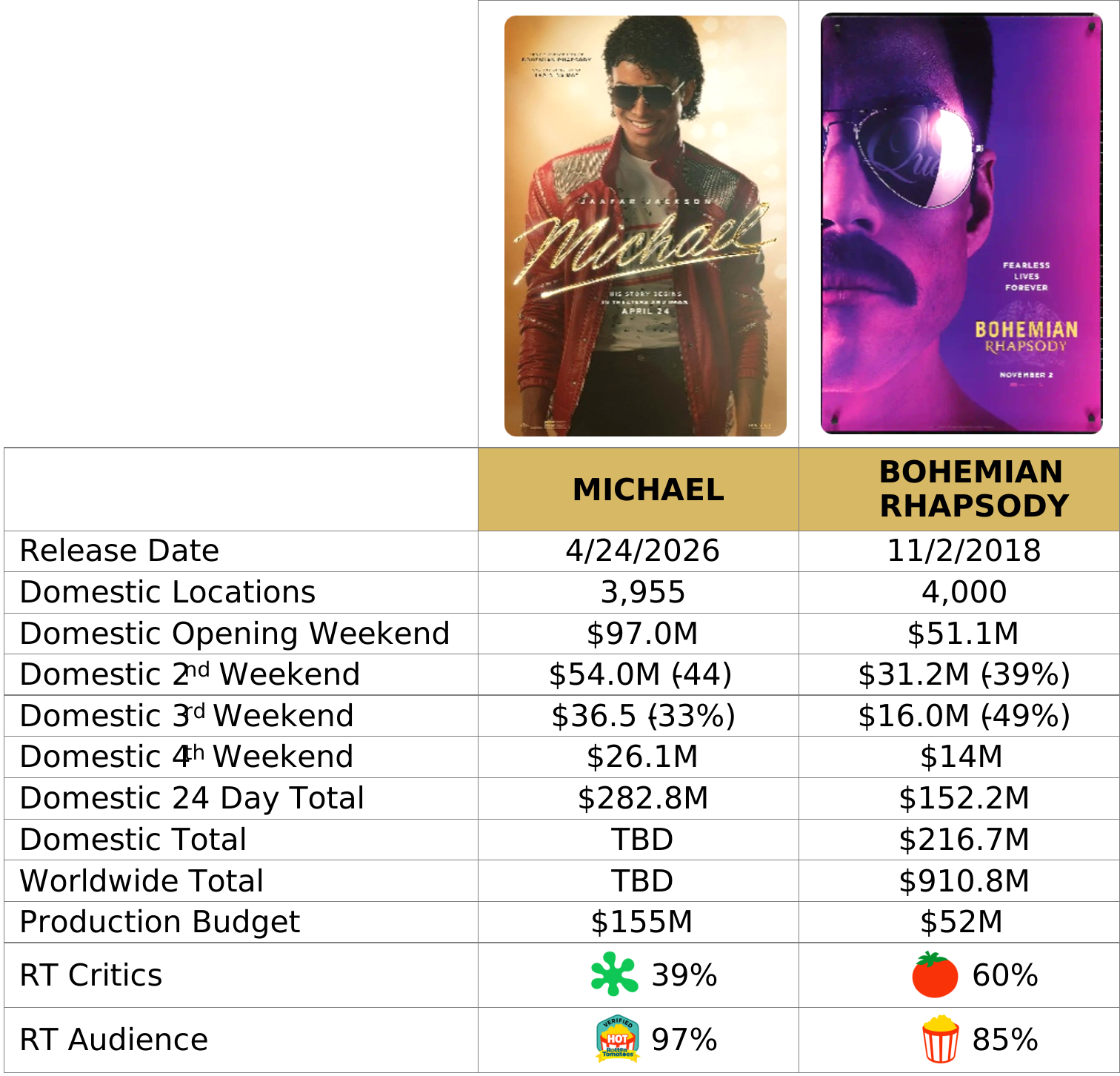
MICHAEL stepped back into the limelight in its fourth weekend by adding $26.1M over the past three days, a decline of only 31% from last weekend. This brings MICHAEL’s total box office to $282.8M in the U.S. and Canada and an amazing $703.9M worldwide. Not even Lionsgate saw this coming, with their Michael Jackson musical biopic having risen to become the fourth highest-grossing film of the year globally, and having a chance to pass PROJECT HAIL MARY’s total of $659M to take over third place.
In his prime, Michael Jackson was the #1 music star in the world, and the cultural nostalgia for the 1980s and 1990s seems to be surging. Another proof point of this phenomenon is the $943M in global box office for THE SUPER MARIO GALAXY MOVIE, based on the famous video game that came out in 1985. One fascinating aspect of MICHAEL’s success is that it is not behaving like a typical musical biopic, which usually opens well with older audiences but fades in subsequent weeks.
By contrast, MICHAEL’s performance resembles a “four-quadrant” event film with a lasting appeal over time. Moviegoers are not simply buying tickets to watch the Michael Jackson story, but instead are looking for the closest experience possible to a Michael Jackson concert, brought to life on a giant screen with advanced digital sound. This experience transforms the movie from a biographical story into an almost-live musical experience.
Another noteworthy aspect of the movie is the disconnect between the professional reviewers and audiences. One might expect its Rotten Tomatoes critics’ score of 39% to be a big problem for the movie, especially after spending $155M on its production. However, its 97% audience rating has overwhelmed the sour critical reviews, with viewers overlooking its shortcomings to focus on Jackson’s stage presence and musical performances. This emotional connection has fueled word-of-mouth recommendations and box office success over time.
MICHAEL’s appeal to various demographic groups is also unusual. Those who experienced Jackson at the peak of his global fame are sitting next to younger moviegoers, who have learned about Michael through his newfound popularity on streaming platforms like TikTok and YouTube. Not many films are able to pull off this cross-generational turnout. In many ways, MICHAEL’s theatrical run is similar to that of BOHEMIAN RHAPSODY in 2018, which also featured a musical catalog that appeals to all generations.
MICHAEL has done particularly well in international markets, with Jackson’s global fan base turning out to enjoy the music even though the actual movie is full of dialogue and biographical details. Lionsgate was smart to partner with Universal to secure the widest possible international distribution, an essential ingredient in the film’s financial model.
Another factor in its success is the premium experience exhibitors are providing in their biggest auditoriums with large screens and powerful sound systems that in-home viewing cannot match. Audiences have been known to behave as if attending a concert, singing along, and applauding during musical numbers. People are recommending not only the movie but also the theatrical experience itself.
The success also reinforces the unique appeal of musical icons and nostalgia. Only a handful of artists have a deep enough music catalog and cultural resonance to translate into theatrical turnout. MICHAEL demonstrates that if the personality is big enough, on the order of Michael Jackson, Freddie Mercury, or Elvis Presley, audiences will come out for the big-screen experience.
MICHAEL’s success has also been transformative for Lionsgate. The studio made a substantial bet when it committed $155M to make a non-superhero, non-franchise drama at a time when mid-range adult films have struggled. If the worldwide numbers continue climbing, MICHAEL could become one of the defining examples of post-pandemic theatrical counterprogramming — proof that event cinema does not have to originate from comic books, fantasy, or sequels. Sometimes, a singular cultural figure can be the franchise.
MICHAEL vs. BOHEMIAN RHAPSODY after 24 Days
#2 – THE DEVIL WEARS PRADA 2
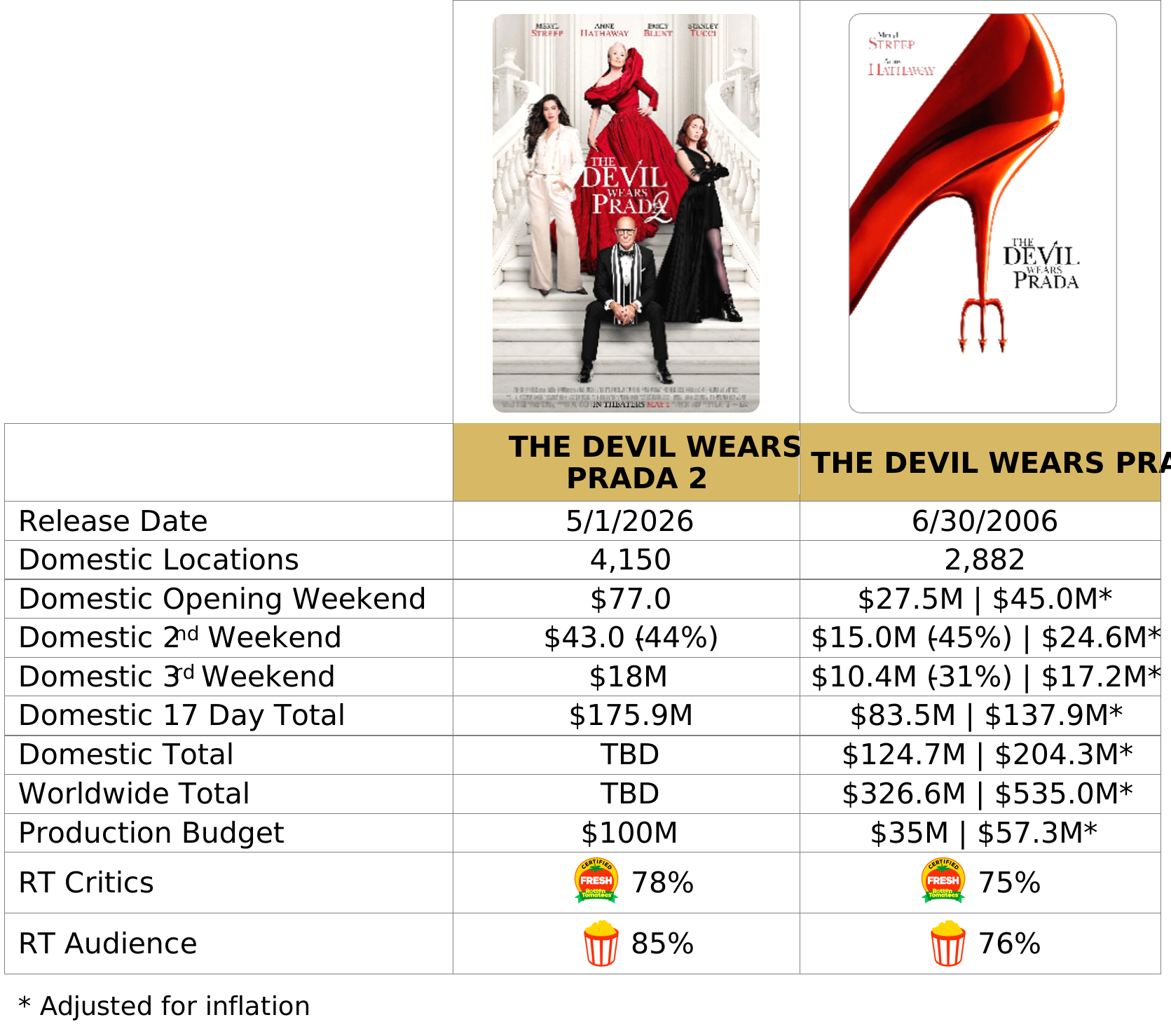
THE DEVIL WEARS PRADA 2 was the second highest-earning film this weekend, bringing in $18M and dropping 57%. This brings the sequel’s 17-day totals to $175.9M domestically and $546.2M globally.
THE DEVIL WEARS PRADA 2 demonstrates Hollywood’s rediscovery of the potential for movies focused on adults. Unlike superhero films or special effect-driven franchises, PRADA 2 is selling nostalgia, sophistication, star power, and emotional familiarity. Women over 30 have been underserved in the streaming era, and PRADA 2 shows that they will turn out in large numbers to see a smart, character-driven story.
The nearly 20-year gap from the first PRADA movie has turned into an advantage for the sequel. In the years since its release in 2006, the original movie has become a pop-culture comfort classic over streaming and social media. Younger audiences came across it long after its theatrical run, while older viewers who saw it in theatres came back to it to renew their attachment to the characters. This gave Disney a rare opportunity to bring together a multi-generational audience.
PRADA’s themes have aged remarkably well. PRADA explored ambition, workplace pressure, mentorship, burnout, and personal sacrifice, themes that are relevant today in a culture filled with career anxiety and social-media-driven image projection. PRADA 2 taps into those themes while still delivering escapist glamour, fashion, and witty sophistication.
The return of Meryl Streep was essential. Miranda Priestly remains one of the most iconic movie characters of the 21st century, with scenes and dialogue that have circulated online for years. Audiences were not just buying a ticket for a sequel — they were returning to spend more time with an iconic character. The film also benefited from the increased star power of Anne Hathaway and Emily Blunt, both much bigger stars today than they were in 2006.
Disney marketed the film as an “event movie for adults” rather than trying to imitate younger-skewing franchises. Social media nostalgia, fashion callbacks, and viral clips helped fuel anticipation months before release. The campaign leaned heavily into emotional familiarity and aspirational escapism at a time when audiences are craving comfort-oriented entertainment.
Some are likening PRADA 2 to TOP GUN: MAVERICK because of their ability to succeed as a sequel after a very long period of dormancy. In both cases, audiences have maintained a soft spot for the original characters and looked forward to seeing them in action again.
PRADA 2 also demonstrates the audience’s interest in movies with an adult-oriented story, built around characters, dialogue, and stars. Disney is happy to be able to diversify its movie offerings beyond superheroes, fantasy, and animation. Must-see movies do not always need to focus on capes and explosions.
THE DEVIL WEARS PRADA 2 vs. THE DEVIL WEARS PRADA after 17 Days
#3 – OBSESSION
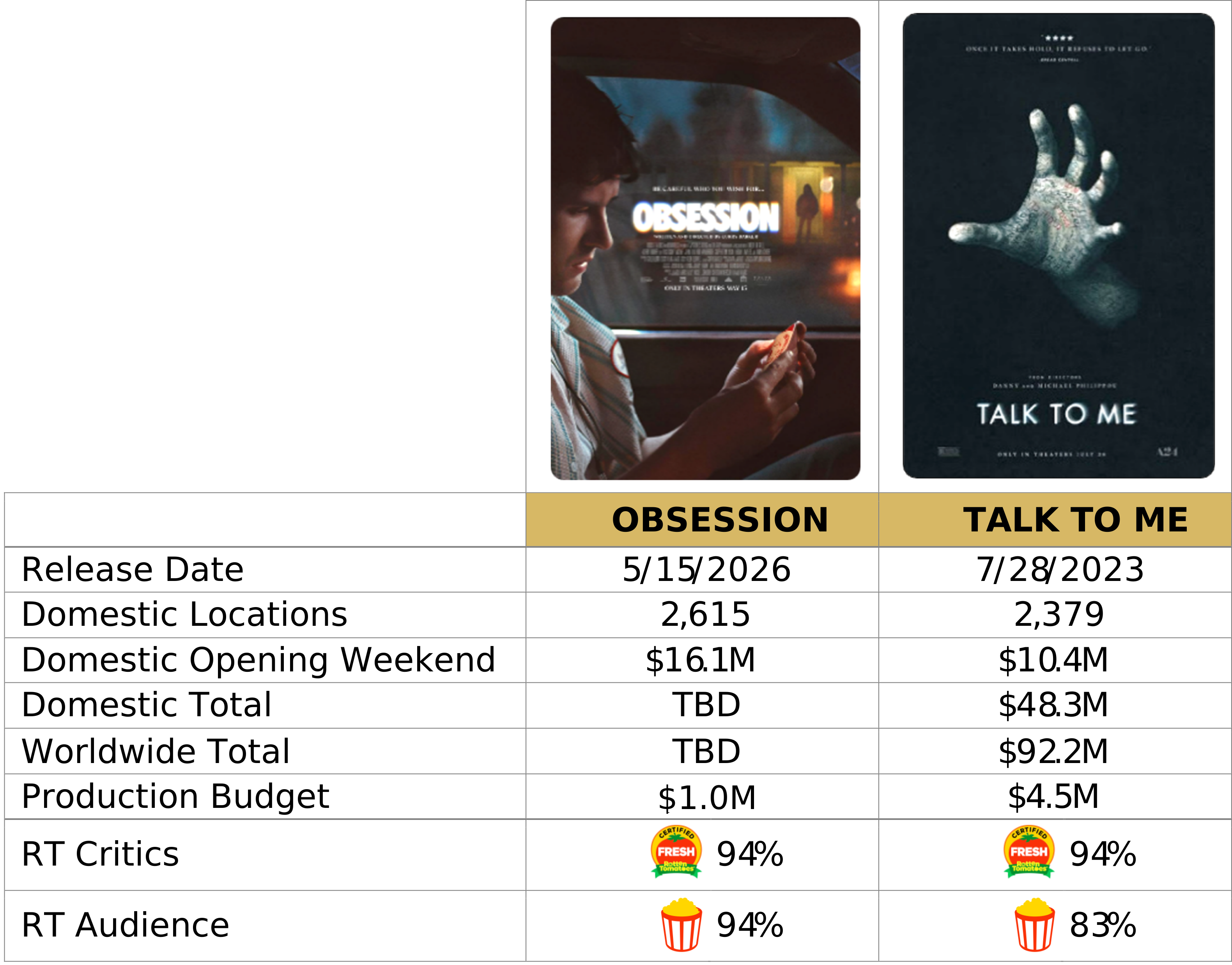
Universal’s OBSESSION opened with $16.1M, landing the psychological horror film in third place. The real story of the movie is the momentum it has built up over the year before its release. Its premiere at the Toronto International Film Festival last September sparked a distribution bidding war that was eventually won by Universal’s Focus Features group, which invested $15M for the rights.
The movie was written and directed by Curry Barker, the young horror filmmaker who gained attention by making ultra-low-budget shorts and YouTube projects. Before OBSESSION, Barker directed the microbudget horror film MILK & SERIAL, made for only $800, and the short film THE CHAIR. OBSESSION has transformed Barker from an online creator into a filmmaker for major studio projects, having been signed by A24 to write and direct the remake of the TEXAS CHAIN SAW MASSACRE.
OBSESSION stars Michael Johnston, best known for the Disney Channel series K.C. Undercover, alongside Inde Navarrette from Superman & Lois. Supporting players include Cooper Tomlinson, Megan Lawless, and comedian Andy Richter. The story centers on Bear, a socially awkward and emotionally isolated young man who has spent years quietly obsessed with his longtime crush, Mia. After discovering a mysterious tree known locally as the “One Wish Willow,” Bear impulsively wishes for Mia to fall in love with him. At first, the fantasy appears to come true as Mia suddenly becomes affectionate, attentive, and inseparable from him.
But the relationship soon turns terrifying when her devotion becomes unnaturally intense and increasingly violent. What begins as an awkward romantic fantasy evolves into a disturbing psychological nightmare as Bear realizes the wish has twisted Mia into something dangerous and uncontrollable. As friends begin disappearing and horrifying acts escalate, Bear struggles to reverse the curse while confronting his own loneliness, entitlement, and emotional dependency. The result is a film that blends psychological horror, body horror, and dark comedy while exploring themes of toxic obsession, fantasy versus reality, and the terrifying consequences of trying to manufacture love artificially.
Production designer Vivian Gray remodeled a real home in Los Angeles’ Burbank neighborhood to create the emotionally sterile and psychologically uncomfortable atmosphere Barker wanted for his film. Barker intentionally framed many scenes with excessive headroom and rigid centered compositions to subtly increase audience unease. One especially graphic violence sequence reportedly had to be trimmed multiple times to avoid an NC-17 rating from the MPAA. As is often the case with ratings negotiations, the MPA gave Barker precise guidance on what needed to be reduced in order to secure an R rating, and the filmmaker complied, knowing that an NC-17 designation would have limited the film’s commercial potential dramatically.
Beginning with its Toronto premiere, OBSESSION has generated unusually strong critical acclaim for a horror release. Its Rotten Tomatoes critics score currently sits at 94%, even higher than last year’s critically acclaimed horror breakout WEAPONS, which peaked at 93%. Audience reactions have also been equally strong, standing at 94%. Critics have praised the film’s escalating tension and Navarrette’s performance. The Hollywood Reporter wrote, “It’s Navarrette, though, who truly gives the film its mojo,” while The Daily Beast called the movie, “a deliriously pointed cautionary tale about the perils of getting what you want.” RogerEbert.com praised Barker for pushing the film to be “darker, creepier, and bloodier with each passing scene.” Not all critics were convinced, however, with The Reveal arguing that, “some of OBSESSION works, but it’s ultimately only good enough to make it easy to wish it was much better.”
OBSESSION’s budget is estimated to have been around $1M. While that is a lot more than the $800 spent on Barker’s MILK & SERIAL, it is a tiny amount for a feature released by a major Hollywood studio. Having grossed $16.1M in its opening weekend, OBSESSION could well become the most profitable wide-release movie of the year.
A logical comparison film is TALK TO ME, since both movies were made by young filmmakers who used unconventional platforms to establish themselves before becoming major industry stars through festival premieres. Like TALK TO ME, OBSESSION blends supernatural horror with emotional trauma and relationship dysfunction rather than relying on jump scares. Both films also earned unusually strong ratings on Rotten Tomatoes for horror releases, demonstrating that original horror concepts that are not based on existing IP can still become meaningful theatrical events.
OBSESSION vs. TALK TO ME
#4 – MORTAL KOMBAT II
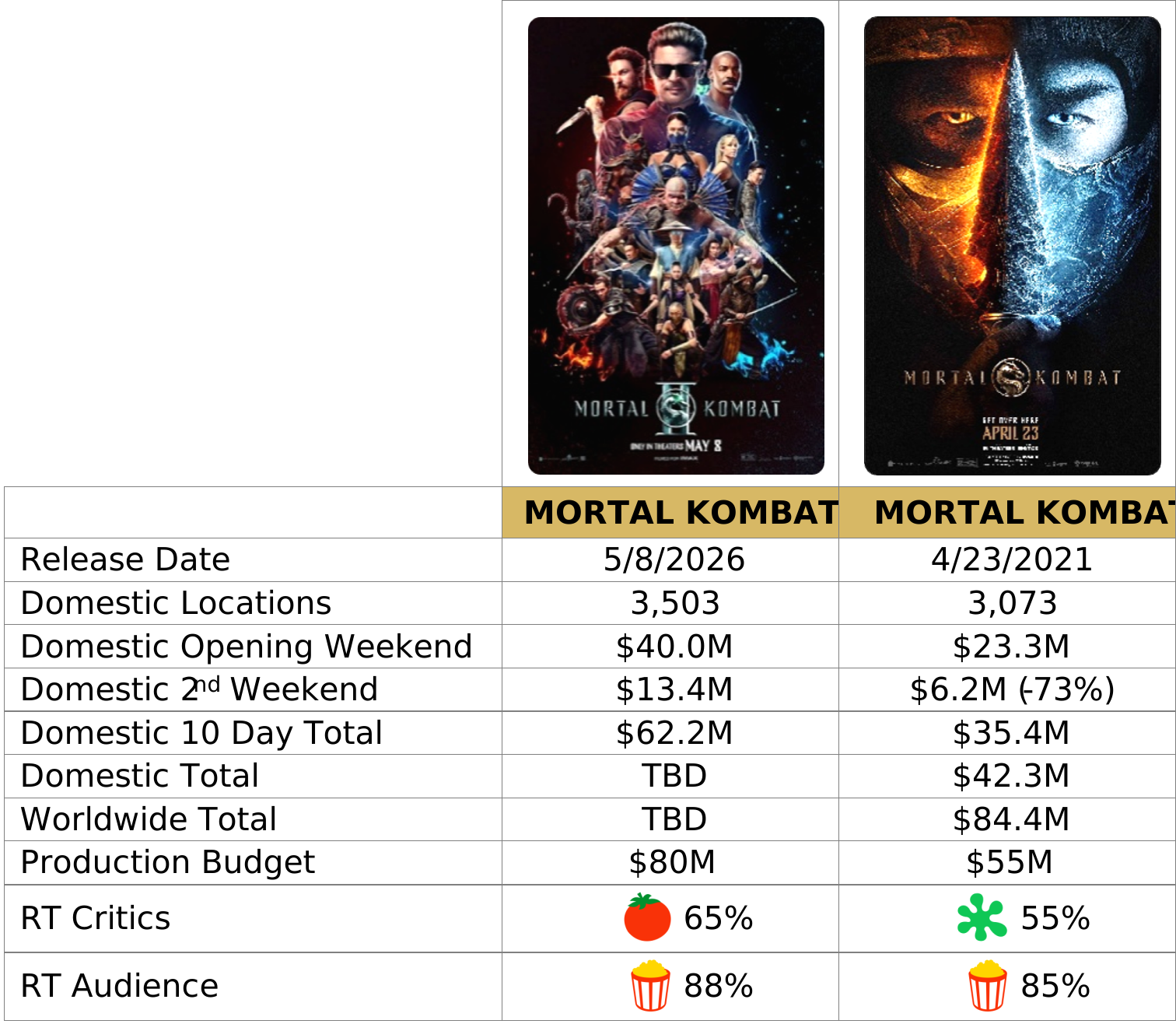
Warner Bros. and New Line’s MORTAL KOMBAT II fell from second to fourth, earning $13.4M in its second weekend. This brings its 10-day totals to $62.2M domestically and $101.2M worldwide. As expected, the sequel is far ahead of the pandemic-suppressed box office of the original MORTAL KOMBAT back in April 2021. The real question this time is whether the new movie is doing well enough to warrant future chapters in the franchise.
The industry reaction to MORTAL KOMBAT II has been mostly positive, though with a more measured tone than the enthusiasm surrounding originals like PROJECT HAIL MARY. Inside Warner Bros. and among exhibition executives, the consensus appears to be that the film successfully delivered what the studio needed most: a sizable improvement over the 2021 reboot and proof that the franchise still has strong theatrical value.
The sequel’s roughly $40M domestic opening and $63M global launch were viewed as solid for an R-rated video-game adaptation, especially in light of a crowded marketplace including direct competition from THE DEVIL WEARS PRADA 2. MORTAL KOMBAT II nearly doubled the opening of the 2021 film, which had been hampered by Warner Bros.’ strategy at the time to release the movie on HBO Max on the same day when it opened in theatres.
Studio executives are pleased to see that the film delivered for its core audience. The response from moviegoers was far better than with critics, meeting the interest of the fans of the video game rather than trying to reach a broader PG-13 action movie audience. After years of uncertainty, the MORTAL KOMBAT franchise appears to have regained some momentum, leading to discussion of a third installment. At the same time, the film’s production cost of $80M has raised the bar for the movie to make a profit, needing $200M in global sales to get into the black.
The prevailing industry view is that MORTAL KOMBAT II has been a victory for Warner Bros. in the increasingly competitive video-game adaptation space.
MORTAL KOMBAT II vs. MORTAL KOMBAT after 10 Days
#5 – THE SHEEP DETECTIVES
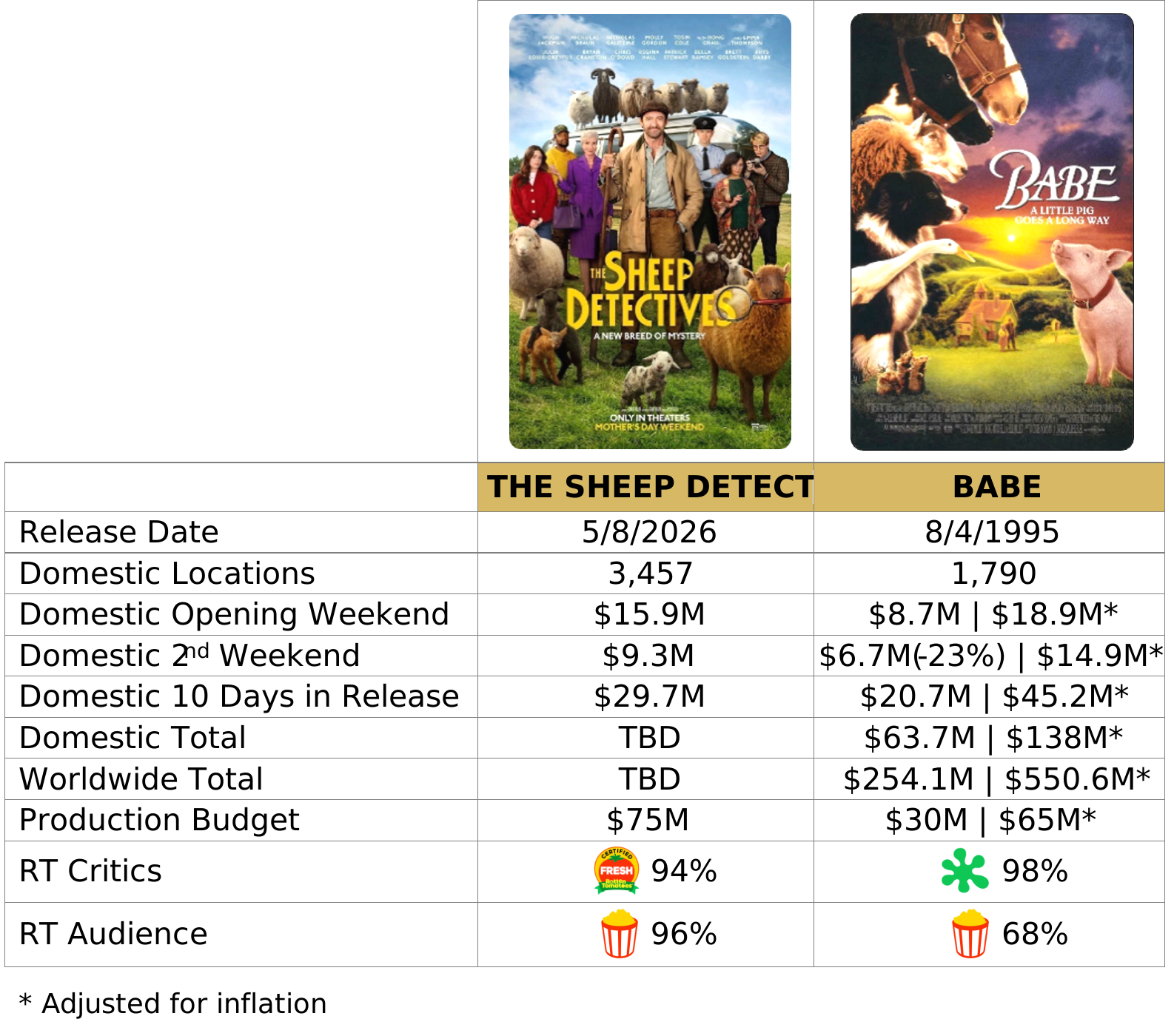
THE SHEEP DETECTIVES from Amazon MGM finished fifth in its second weekend by grossing $9.3M. This brings its 10-day totals to $29.7M domestically and $58.7M globally. THE SHEEP DETECTIVES has exceeded its pre-release expectations, having been seen as a quirky mid-budget original title. The relatively strong debut is another encouraging sign that audiences are willing to consider distinctive new movies, looking beyond the traditional superhero and sequel pipeline.
Executives have been especially impressed by the film’s broad demographic appeal. Family audiences showed up, but the movie also attracted younger adults and older moviegoers to enjoy its offbeat humor and mystery elements. Many exhibitors view the opening as proof that smart counterprogramming can still work in a crowded marketplace. THE SHEEP DETECTIVES is turning out to be a film that survives on audience recommendations and strong week-over-week holds.
The film’s “controlled” budget is another talking point. In an era of soaring production costs, executives see THE SHEEP DETECTIVE as a profitable theatrical project that studios could be willing to fund. Having invested $75M to make the movie, rather than the $200M budget for a blockbuster action film, THE SHEEP DETECTIVES has the opportunity to build long-tail value that includes international distribution and interest on streaming. Early speculation has already begun that the film could evolve into a franchise if its box office holds remain strong over the next several weekends.
THE SHEEP DETECTIVES vs. BABE after 10 Days
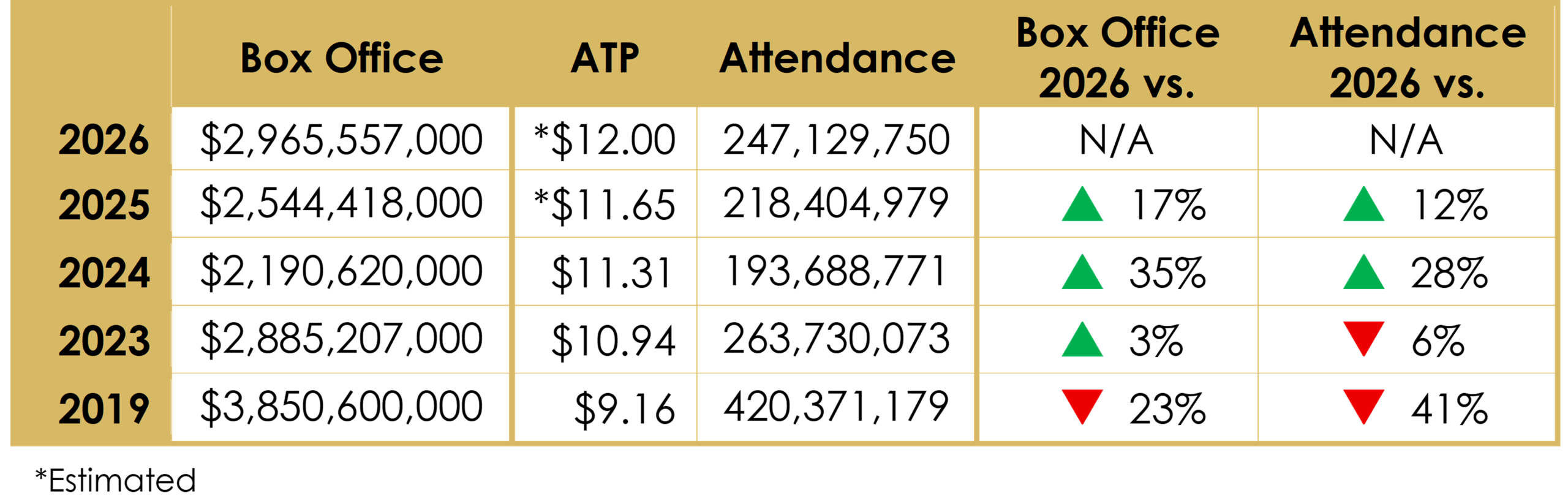
Where Are We as of 5/14/2026
BOX OFFICE AND ATTENDANCE – 19 WEEKS YEAR TO DATE
Related DICK WALSH's Industry Update

7/24-7/26: THE ODYSSEY Continues Its Voyage

7/17-7/19: THE ODYSSEY Crushes Its Opening

7/10-7/12: Disney’s MOANA Live-Action Remake Sails to First Place

7/3-7/5: Family Film Duo of MINIONS & MONSTERS and TOY STORY 5 Dominates July 4th Holiday Weekend

6/26-6/28: TOY STORY 5 and SUPERGIRL Team Up at the Top the Box Office