
THE DEVIL WEARS PRADA 2 Is Proving Worth the 20-Year Wait

THE DEVIL WEARS PRADA 2 from Disney had a very fashionable opening weekend, bringing in $77.0M in its first three days. Along with a strong second weekend from Lionsgate’s MICHAEL, which contributed $54.0M, the total for all films rose to $172.5M. This compares favorably to the same weekend in 2025, when THUNDERBOLTS* opened at $74.3M, leading that weekend to $144.3M for all films. This year has now outsold last year in back-to-back weekends, after April started with three straight weekends of lower results than last year’s.
After strong openings from MICHAEL last weekend and THE DEVIL WEARS PRADA 2 this weekend, Warner Bros.’ MORTAL KOMBAT II looks to continue the trend when it opens next weekend. Last August, WB announced that it was pushing back the release date for MORTAL KOMBAT II by eight months, from its originally scheduled release last October to Mother’s Day weekend of 2026.
At that time, the delay was lamented as a critical blow to the industry’s drive to gross $9B in the domestic theatrical market for 2025. As it turns out, those dollars were moved into 2026 and will now be part of the 2026 box office momentum, which could wind up breaking through the $9B ceiling that the industry has lived under for the last three years. An even greater impact will come later this month from Disney and Lucasfilm’s STAR WARS: THE MANDALORIAN AND GROGU, which opens on May 22nd. The 2026 box office has done well to survive a challenging four-week stretch compared with last year, when the dual successes of A MINECRAFT MOVIE and SINNERS were driving the box office.
THE LAST FOUR WEEKS – 2026 vs. 2025

#1 – THE DEVIL WEARS PRADA 2
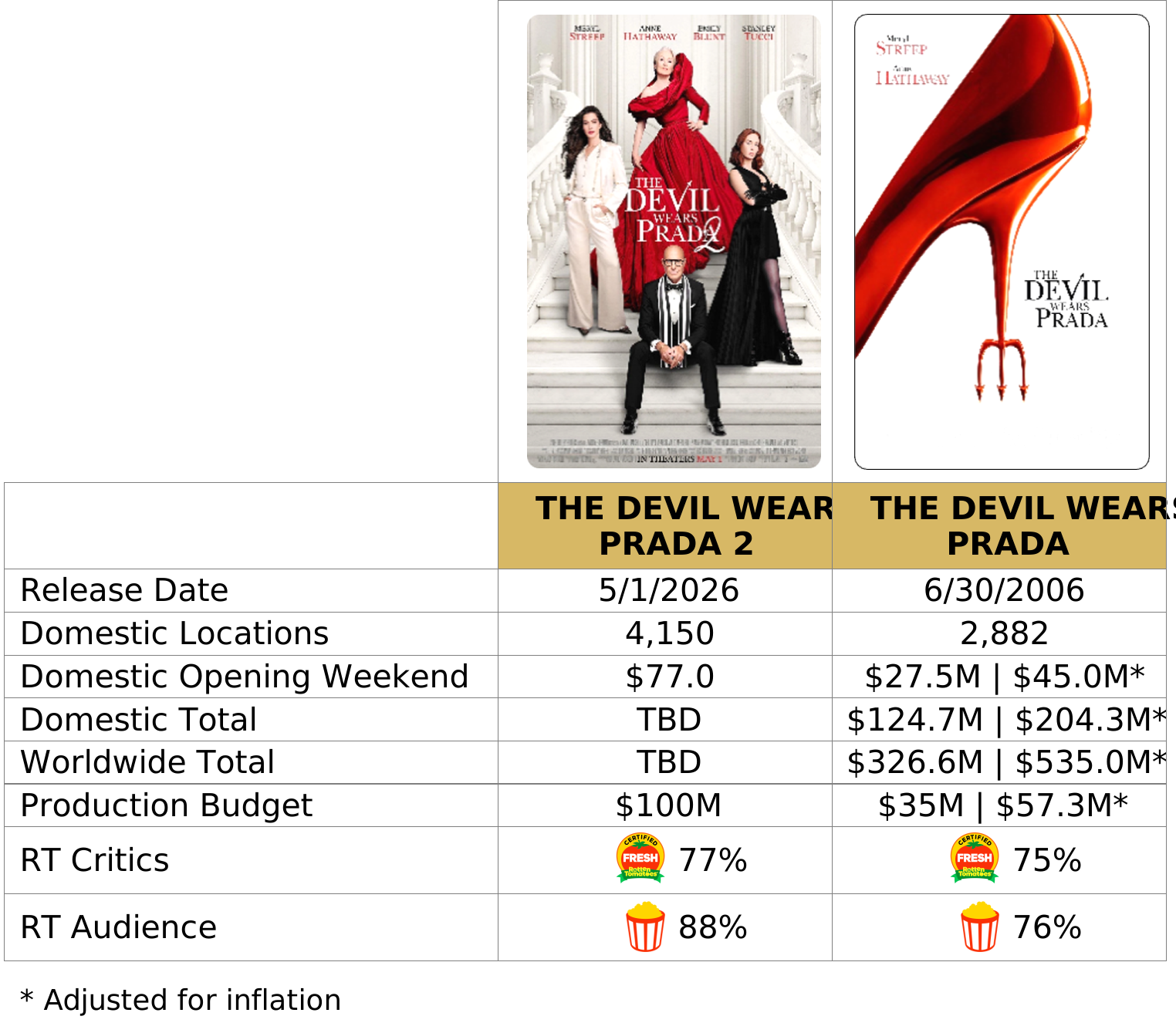
Disney’s THE DEVIL WEARS PRADA 2 finished in first place in its opening weekend by grossing $77.0M domestically and $233.6M worldwide. This long-awaited sequel will be profitable within its first week of release. The story of how THE DEVIL WEARS PRADA 2 came to be is a case study in the convergence of talent alignment and cultural relevance. It is rare for a sequel to be as successful as this one after a long dormancy.
However, it does happen from time to time, as with TOP GUN: MAVERICK, which was released 36 years after the original TOP GUN. The original THE DEVIL WEARS PRADA retained its cultural standing since its 2006 release, and the sequel has been able to turn nostalgia for the first movie into fresh interest in the new story. PRADA 2 has energized female audiences in a similar way that TG MAVERICK did with male audiences.
For THE DEVIL WEARS PRADA 2, the 20-year hiatus did not stem from a lack of interest in the intellectual property. In fact, the original film became more valuable over time than it was during its initial run in theatres. It turned into a multi-generational staple, watched and rewatched on streaming. Its growing relevance, paired with creative hesitation, combined to make the sequel hard to pull off.
A central reason for the delay was talent reluctance. Both Meryl Streep and Anne Hathaway, the twin pillars of the original, were openly resistant to a sequel for years. Streep reportedly had little interest in revisiting Miranda Priestly, while Hathaway insisted that she would only return under very specific circumstances rather than simply revisiting old material. Unlike franchise-driven IP such as a Marvel or DC superhero film, THE DEVIL
WEARS PRADA 2 was always going to be driven by its talent. Without buy-in from every member of its core four—Streep, Hathaway, Emily Blunt, and Stanley Tucci—there would be no movie. In fact, it has been reported that the cast insisted that all four of the principals would participate together in any new project, an insistence that slowed development but preserved brand integrity.
The second major obstacle was relevance to the modern world. For years, a challenge in making a sequel was to come up with a story that justified revisiting these characters. The fashion magazine world of 2006, which was dominated by glossy print and power brokers, has since collapsed. Eventually, the raison d’être of the sequel became telling the story of that collapse. The movie focuses on the decline of print media, the rise of digital platforms and influencer culture, and AI-driven disruptions, giving the movie a storyline that resonates with the current day. In other words, this sequel couldn’t exist until the industry it portrayed was in crisis—and that crisis became its narrative engine.
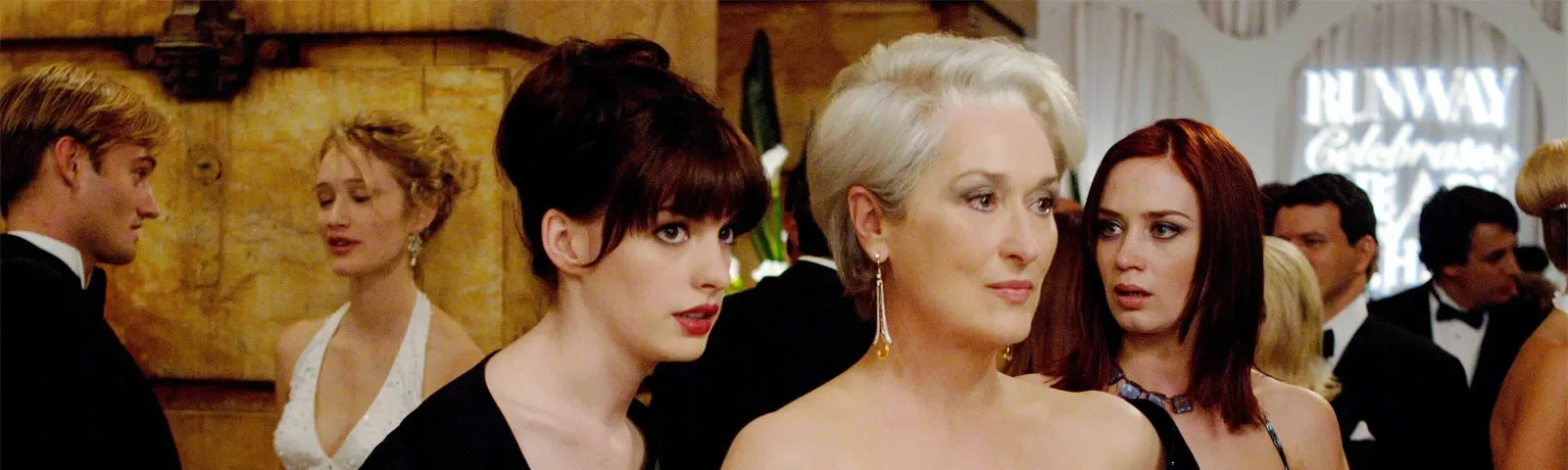
That creative alignment is why director David Frankel’s return was essential. Frankel, who also directed the original, understood that tone—not plot—was the franchise’s secret weapon. The sequel doesn’t try to replicate the “fish out of water” arc of Andy Sachs. Instead, it turns to the drama of a power struggle in the face of a collapsing media ecosystem. Miranda Priestly is now nearing retirement, confronting irrelevance in a world where her authority no longer guarantees influence. Andy, no longer the naive assistant, returns as a seasoned editor, while Emily Charlton—once subordinate—has become a rival power player controlling advertising leverage that Miranda desperately needs.
This inversion of power dynamics is arguably the film’s most sophisticated storytelling decision. It transforms the sequel from a rehash into a commentary on longevity, female leadership, and industry evolution. In a sense, it mirrors Hollywood itself: legacy players adapting—or failing to adapt—to structural change.
The casting strategy reinforces that theme. Alongside the returning quartet, the film draws on a deep bench of new talent, including Kenneth Branagh, Lucy Liu, and Justin Theroux. This isn’t just expansion for scale—it’s generational layering. The new cast represents the modern media and fashion ecosystem: global, digital, and diversified beyond the insular Manhattan magazine world that defined the original. The production even leaned into authenticity, incorporating fashion industry voices and cameos, underscoring how much the real-world industry has shifted since 2006.
Once the movie was greenlit, production moved quickly. Principal photography started in June 2025 and wrapped within months, with principal filming taking place in New York and various international locations. The efficiency suggests a project that had been creatively “solved” before the cameras rolled. In many ways, the 20-year delay wasn’t development hell—it was development patience.
What’s particularly interesting from an industry perspective is how the sequel reframes Miranda Priestly. In 2006, she was an almost mythic gatekeeper, modeled loosely on Anna Wintour. In 2026, that archetype itself is under scrutiny. The sequel positions Miranda not just as a figure of authority, but as someone confronting the erosion of that authority in a democratized, algorithm-driven world. That’s a subtle but meaningful shift—from dominance to survival—and it reflects broader anxieties across media, entertainment, and even theatrical exhibition.
Ultimately, THE DEVIL WEARS PRADA 2 reveals a larger truth about sequels in today’s marketplace. Timing is everything – not release date timing, but cultural timing. The film only exists because its themes became more relevant over time, not less. It waited for the industry it depicts to transform, for its stars to evolve into new phases of their careers, and for audiences to develop enough nostalgia to justify revisiting the story—but not so much that the story felt outdated. In that sense, the 20-year gap isn’t a liability; it’s the film’s defining asset.
Critics have been mostly favorable with a 77% rating on Rotten Tomatoes, while the audience score of 88% is even more compelling. Both of these grades exceed those from the original movie, which is usually a challenge for a sequel. Time Magazine said, “The Devil Wears Prada 2, imperfect as it is, is actually a better movie than its predecessor.” The New York Times offered up, “Frankel wisely gives his four main performers plenty of room to show off their comic timing; they’re clearly enjoying themselves, which heightens the pleasure of watching talented actors getting their collective groove on.” The Arizona Republic felt, “It’s all too much on the surface, not enough underneath. In other words, fans of the first film will love it.” As always, some were less than thrilled, led by the Seattle Times, which offered up “The Devil Wears Prada 2” gives us a lot to look at, and Hathaway and Blunt in particular are a pleasure, but it’s flat Champagne: maybe worth drinking in a pinch, but unsatisfying.”
The production cost for PRADA 2 has grown to $100M, mostly fueled by inflation in both star salaries and location costs. This makes the film profitable at $250M in worldwide ticket sales, and having already secured $233.6M in just three days, Disney has yet another breakout financial hit.
For a comparison film, we decided to go out on a limb and use THE DEVIL WEARS PRADA from 2006. Perhaps the easiest decision we have made this year. Since 20 years have passed, we recorded all financial data of the original in real and adjusted for inflation terms.
#2 – MICHAEL
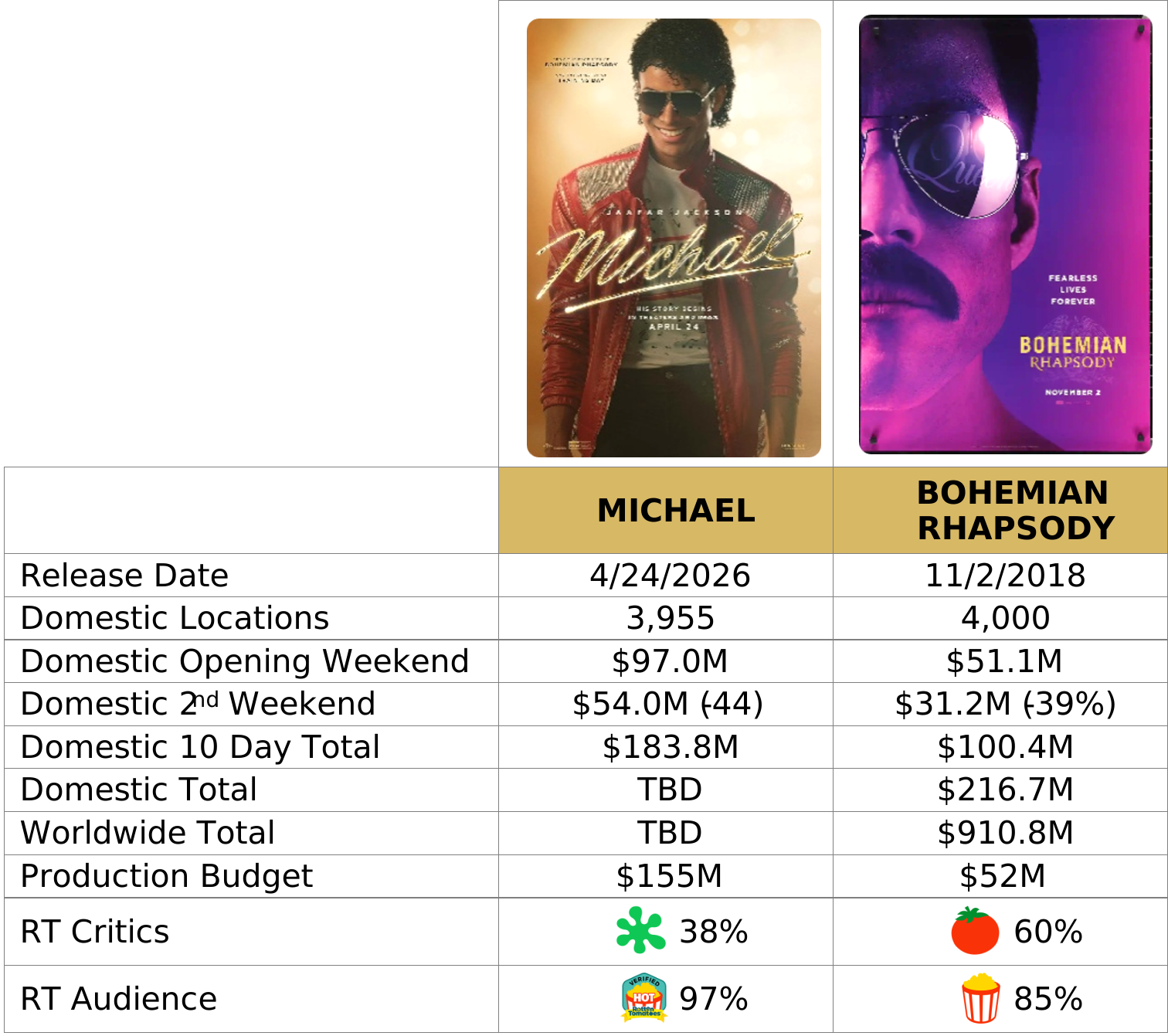
MICHAEL, the musical biopic from Lionsgate, brought in $54.0M in its second weekend, a drop of only 44% from last weekend’s opening box office. This brings its 10-day totals to $183.8 domestically and $423.9M globally. The drop of only 44% indicates that this story has appeal both for the true fans who tend to show up on the first weekend and general audiences who turn out later when it’s convenient. Lionsgate must be delighted to see MICHAEL have a wonderful opening weekend and now a strong follow-up.
The film is far out in front of BOHEMIAN RHAPSODY, which had been the box office champ among musical biopics. After its first weekend, MICHAEL was leading BOHEMIAN RHAPSODY by $45.9M, and after 10 days, its lead has jumped to $83.4M. MICHAEL will certainly exceed the $216.7M domestic record set by BOHEMIAN RHAPSODY back in 2018. The bigger challenge MICHAEL will have is to beat BOHEMIAN RHAPSODY’s global total of $910.8M, of which 76% came from international markets. MICHAEL’s international gross after ten days is only 57% of its total, and it is not likely to match the worldwide success of BOHEMIAN RHAPSODY.
MICHAEL has already become profitable by earning $423.9M in its first ten days, passing the milestone of $388M, which it needed to be in the black. Lionsgate does not maintain its own in-house team for international distribution, so it turned to Universal to promote MICHAEL globally. In return, Lionsgate received a healthy upfront payment for those rights, which was a substantial hedge to help pay for the film’s high production cost.
Lionsgate’s Motion Picture Group chairman, Adam Fogelson, expressed confidence in the movie before it was released, but the $217M global opening blew past their internal estimates. The studio concludes that this film has validated the “event biopic” strategy, which emphasizes the music itself and the spectacle of the personality rather than chasing critical approval. Even after receiving a mere 38% score from critics on Rotten Tomatoes, the film has opened well and is being cheered by moviegoers, who have offset the low critics’ score with a 97% audience rating.
#3 – THE SUPER MARIO GALAXY MOVIE
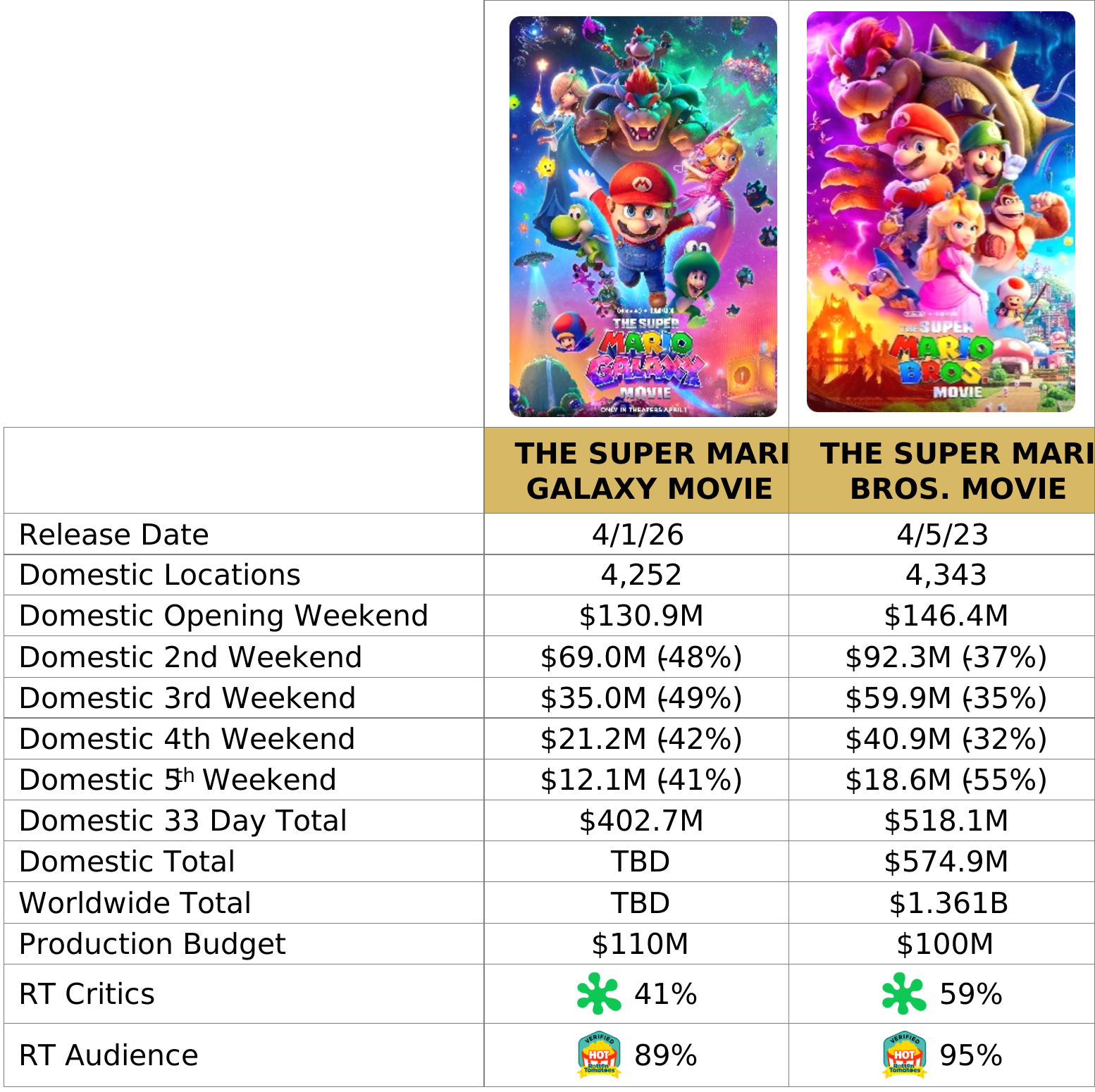
Universal’s THE SUPER MARIO GALAXY MOVIE continues to add to its impressive total with $12.1M in new sales in its fifth weekend, a decline of 41% from last weekend. The #1 domestic film of 2026 has earned $402.7M in the U.S. and Canada and $924.2M worldwide. Its ratio of global gross to production cost stands at 8.4 to 1, making MARIO GALAXY more profitable than last year’s box office champ, A MINECRAFT MOVIE, which ended its run with a worldwide gross to production cost ratio of 6.4 to 1. After 33 days in release, MARIO GALAXY is slightly ahead of MINECRAFT at the same point in its release, and it will almost certainly wind up making more than MINECRAFT’s final domestic total gross of $424.1M.
THE SUPER MARIO GALAXY MOVIE vs. A MINECRAFT MOVIE after 33 Days

One measure by which MARIO GALAXY has come up short is a comparison with its franchise counterpart, THE SUPER MARIO BROS. MOVIE from 2023. After MARIO GALAXY opened slightly higher than the original (101% in its first weekend), it has since dropped to only 78% of THE SUPER MARIO BROS. MOVIE.
THE SUPER MARIO GALAXY MOVIE vs. THE SUPER MARIO BROS. MOVIE
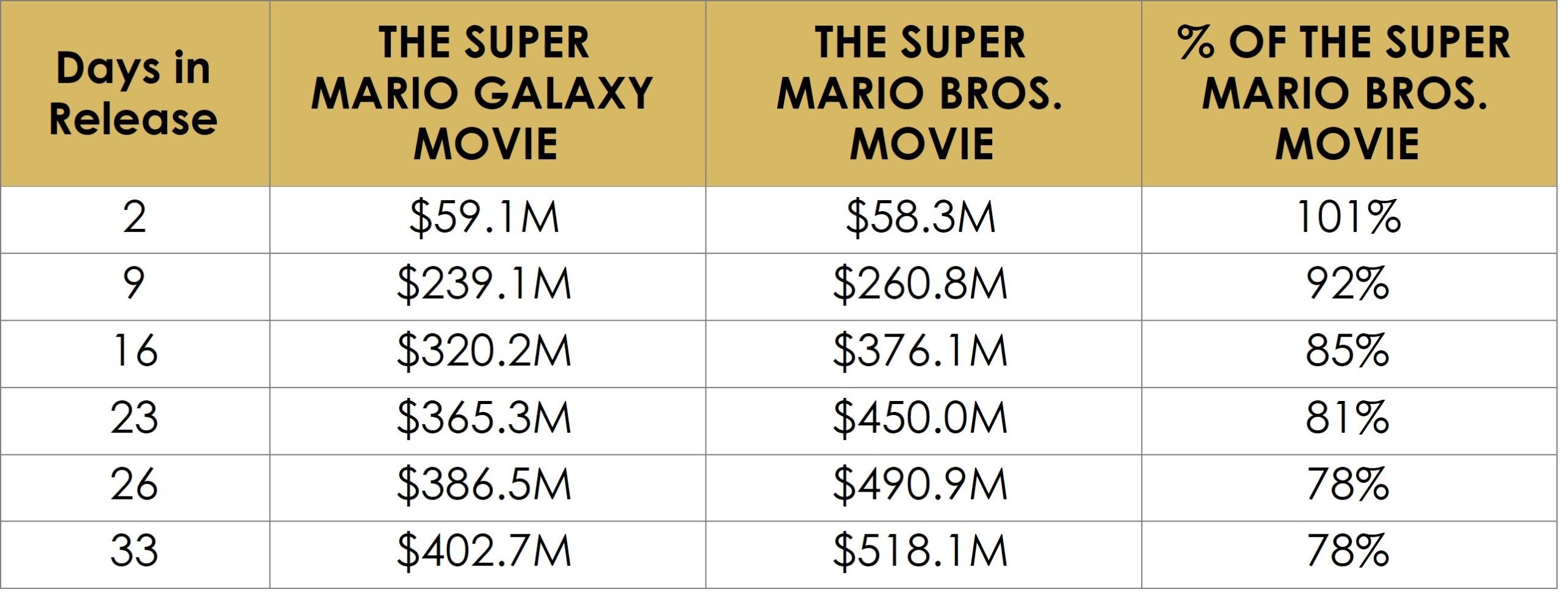
The two MARIO movies should be judged in their totality, having grossed $2.3B worldwide combined. This places them firmly in the group of highly lucrative IP, in this case, for Universal Studios. The long-term outlook for the franchise remains strong. If an eventual MARIO 3 can be produced for $120M, which would be $10M more than GALAXY, that movie’s break-even point would sit at around $300M in global box office, which is only a fraction of what the current MARIO is on track to deliver.
The next Mario film has not yet been announced, but the release calendar and development pipeline make it clear that Universal and Nintendo are expanding the brand well beyond the current, first sequel. The broader trajectory suggests a coordinated push toward a Nintendo cinematic universe, with industry chatter pointing to a Donkey Kong spin-off as the most likely next step, followed by a third Mario film that could land in 2029.
THE SUPER MARIO GALAXY MOVIE vs. THE SUPER MARIO BROS. MOVIE after 33 days
#4 – PROJECT HAIL MARY
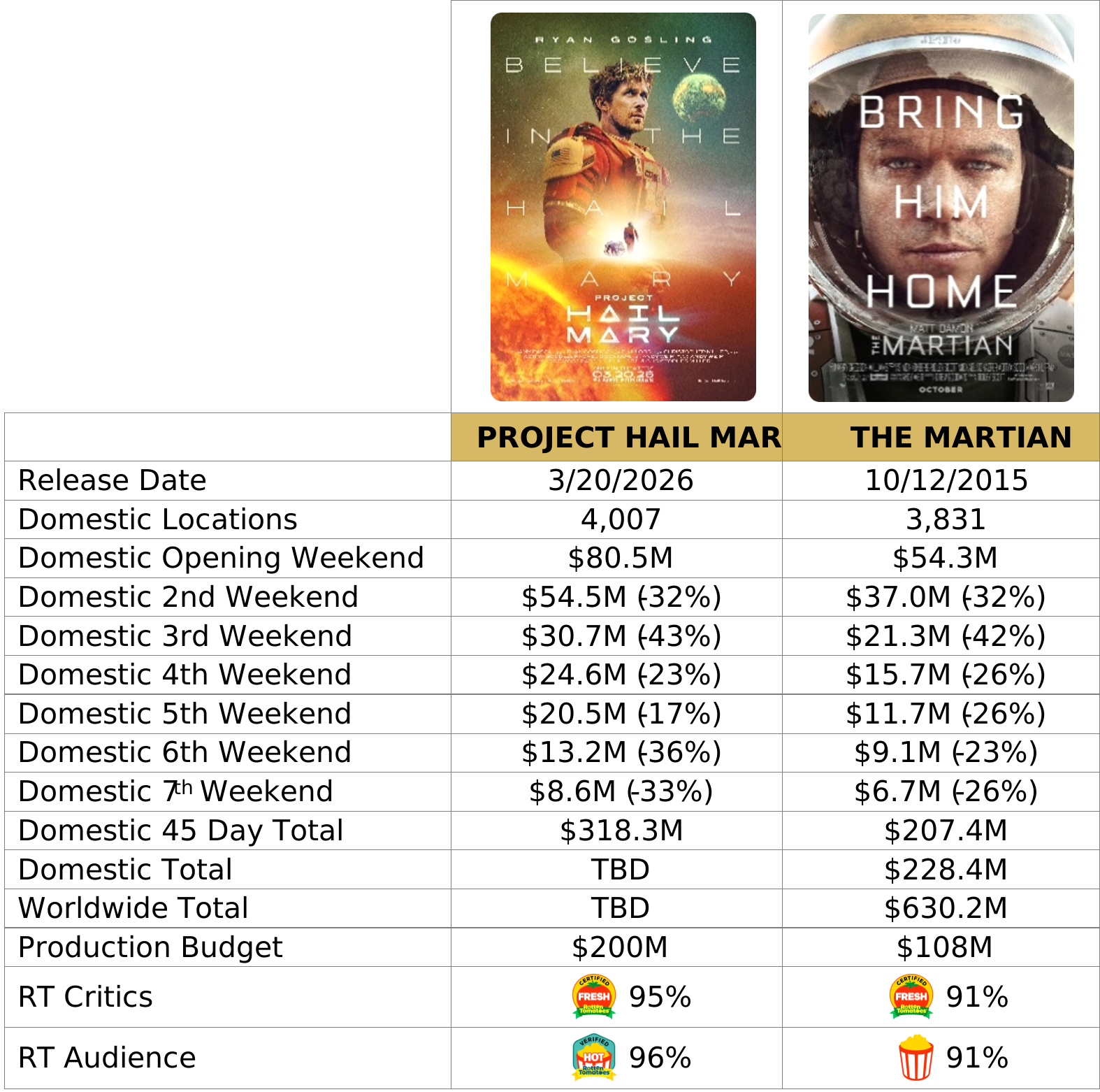
PROJECT HAIL MARY from Amazon MGM finished fourth in its seventh weekend, adding $8.6M and dropping only 33%. This brings its 45-day totals to $318.3M domestically and $638.4M worldwide. It has now surpassed the box office for THE MARTIAN, Weir’s other book-to-movie. The 45-day mark carries industry weight—Amazon MGM has publicly committed to that window for its theatrical releases. But in the case of PROJECT HAIL MARY, the schedule for its availability on streaming has been pushed back, with the date for its appearance on Prime Video still undetermined. The reason for this delay is the $638.4M it has earned in theatres worldwide.
Amazon MGM is treating PROJECT HAIL MARY less like a streaming title and more like a traditional tentpole, extending its theatrical run beyond the standard window. It’s exactly the flexibility exhibitors have been hoping to see, honoring the 45-day baseline but open to the upside of continuing its successful run. In doing so, Amazon MGM reinforces that a one-size-fits-all window is counterproductive.
For exhibitors, PROJECT HAIL MARY is proof positive that a streaming-backed studio can maximize value by letting theatrical performance dictate the window—driving both box office and, ultimately, streaming success.
PROJECT HAIL MARY vs. THE MARTIAN after 45 Days in Release
#5 – HOKUM
In fifth place is the opening of Neon’s supernatural horror film HOKUM, which brought in $6.4M. The movie is a textbook example of today’s high-art horror, focusing on voice, atmosphere, and control. Written and directed by Damian McCarthy, the 2026 film represents a significant step forward for a filmmaker who has quietly become one of the more interesting genre filmmakers working in the space.
McCarthy’s earlier films, particularly CAVIAT (2021) and ODDITY (2024), established his signature: slow-burn dread, confined spaces, and deeply unsettling imagery. With HOKUM, he expands that blueprint into something slightly larger in scope, but crucially, not diluted. That creative discipline, resisting the urge to “go big” just because a Hollywood star is involved, is one of the defining production insights behind the film.
At the center of the movie is Adam Scott, whose casting is both strategic and subversive. Scott is best known for his work on TV’s Parks and Recreation series, where he plays a comedic and likable role. In NOKUM, he plays Ohm Bauman, a deeply flawed, often abrasive horror novelist. Scott’s character travels to rural Ireland to scatter his parents’ ashes, only to find himself staying at a remote inn rumored to be haunted by a witch. What begins as a grief-driven journey quickly evolves into something far more destabilizing, blending supernatural folklore with internal psychological collapse.
The storyline itself is deceptively simple, but that simplicity is part of its design. A single location—a decaying hotel in the Irish countryside—becomes the entire narrative engine. This is a classic horror device, but McCarthy elevates it by layering in folklore elements, particularly Celtic mythology and witch lore, creating a story that feels both ancient and contemporary. The hotel is not just a setting; it’s a character, with each corridor and room functioning as a pressure point for the protagonist’s unraveling. Thematically, the film explores guilt, grief, and self-destruction, using horror as a lens rather than an endpoint. That’s a key distinction, and one that aligns HOKUM with the “elevated horror” wave rather than traditional jump-scare blood-driven fare.
From a production standpoint, HOKUM is built on efficiency and intentional limitation. Principal photography took place in West Cork, Ireland, over a relatively tight window in early 2025. That location choice is not just aesthetic – it’s economic. Ireland has become a major hub for mid-budget filmmaking due to tax incentives, experienced crews, and visually rich landscapes that can double for multiple settings. In HOKUM, the Irish countryside isn’t just background; it reinforces the film’s isolation and folklore roots, adding production value without inflating cost.
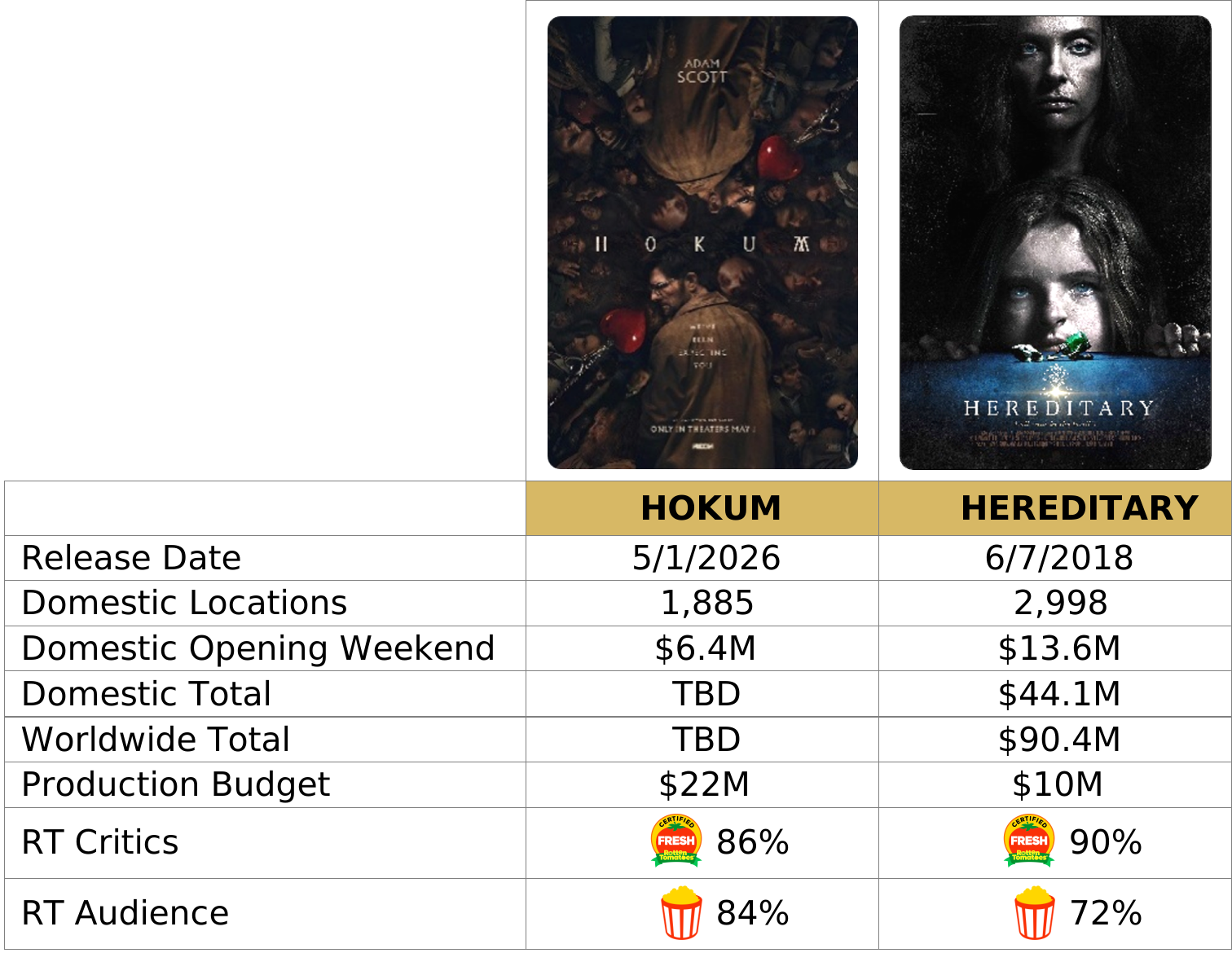
Critically, the film receives very high grades with an 86% fresh rating on Rotten Tomatoes, and audiences are not far behind with an 84% grade. The Los Angeles Times said, “I’ve seen too many protagonists skulk down dark hallways, but McCarthy’s version of that shot is so visceral that you feel like he’s really been there. You can smell the mildew.” Variety opined, “Buoyed by Scott’s level-headed turn, Hokum is a proficient horror exploit, which hinges on atmosphere instead of gore, even if its many frightening threads feel disjointed, like rooms in distinctly different hotels.” The New York Times adds, “Reveling in misdirection and a teasing duality, ‘Hokum’ profits from Colm Hogan’s insinuating camera as it noses through gloomy corridors and a terrifying dumbwaiter shaft, hinting at what lurks on the other side of the frame.” Not everyone is impressed, as the Globe and Mail felt, “Damian McCarthy’s new horror film arrives ready to play with convention and expectation. The scary thing, though, is that the movie exhausts itself halfway through, revealing Hokum as something closer to hogwash.”
HOKUM’s production budget came in at $22M, resulting in a target of $55M in global box office for profitability. After only bringing in $6.4M domestically in its opening weekend, the movie has a long way to go to hit that target.
For comparison, we have selected the horror film HEREDITY from 2018. The direct parallels to HOKUM include the fact that the home is a physical extension of generational trauma. The hotel in HOKUM serves the same purpose. In both films, horror is tied to inheritance, something passed down, not stumbled upon. Finally, in both films, the protagonist doesn’t just enter the house or hotel; they’re trapped in it.
HOKUM vs. HEREDITARY
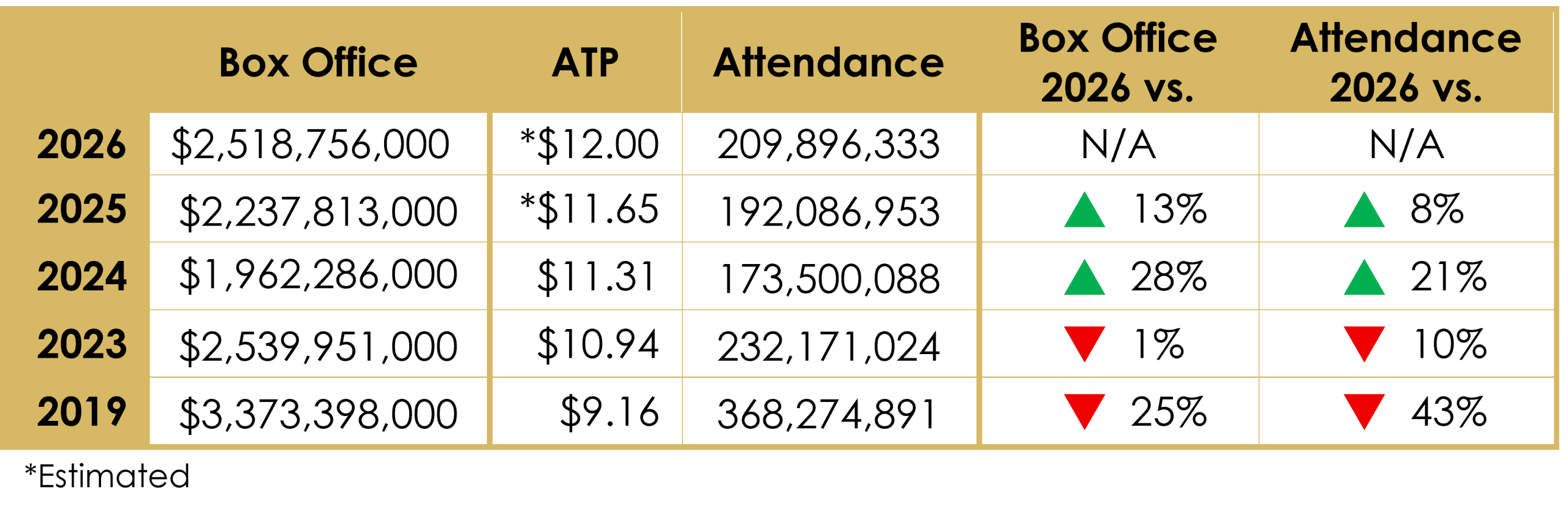
Where Are We as of 4/30/2026
BOX OFFICE AND ATTENDANCE – 17 WEEKS YEAR TO DATE
Related DICK WALSH's Industry Update

7/17-7/19: THE ODYSSEY Crushes Its Opening
7/10-7/12: Disney’s MOANA Live-Action Remake Sails to First Place

7/3-7/5: Family Film Duo of MINIONS & MONSTERS and TOY STORY 5 Dominates July 4th Holiday Weekend
6/26-6/28: TOY STORY 5 and SUPERGIRL Team Up at the Top the Box Office
6/19-6/21: TOY STORY 5 Has the Biggest Opening of 2026