

Theatre
AMC Theatres8 Screens, 1,384 Seats
AMC Kabuki 8
This business has not yet been claimed by the owner or a representative.
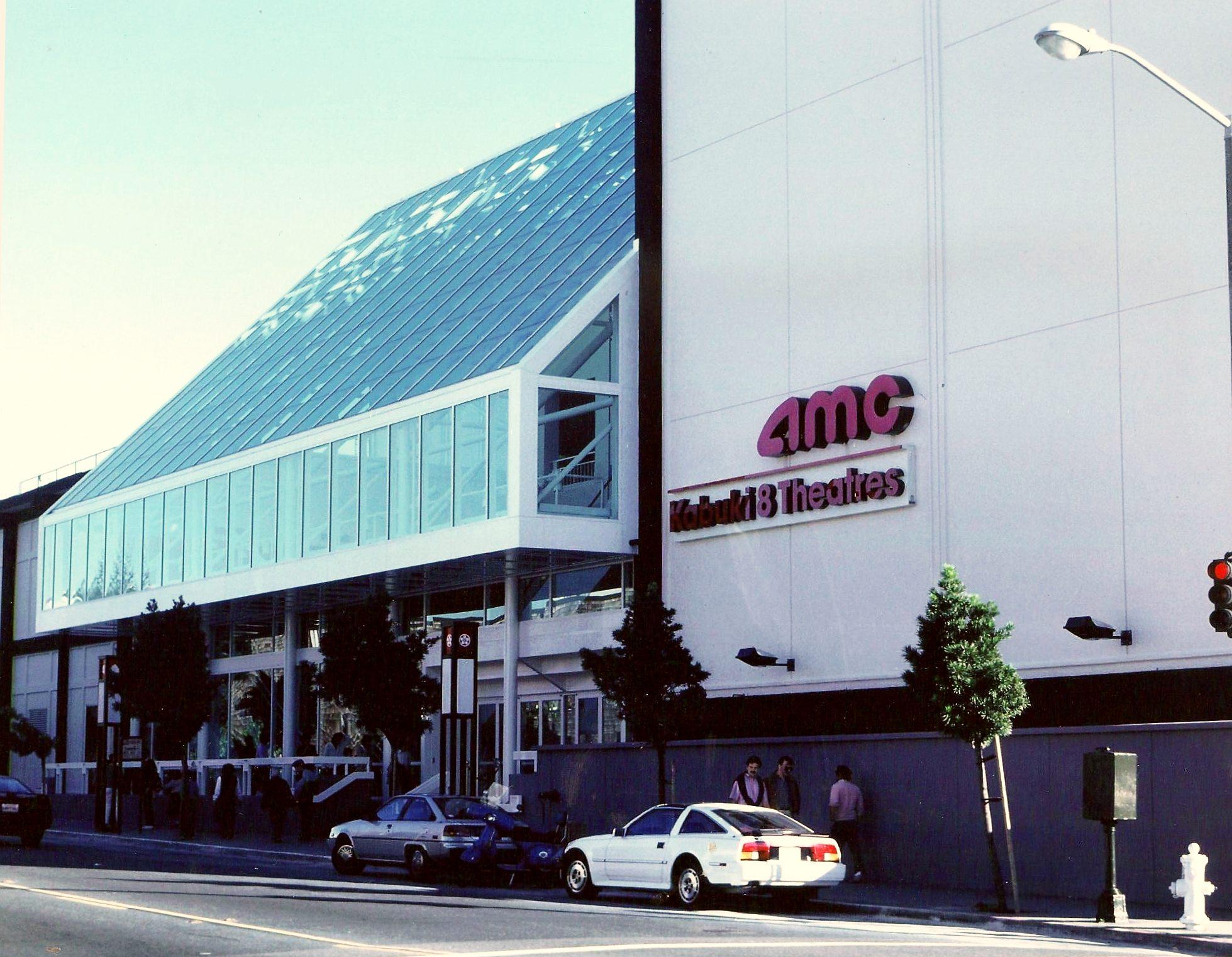
A dinner theater concept that didn’t take. The 1969 venue at Post and Fillmore opened with a proscenium and a revolving stage. Dinner service was run at the seats. Audiences never came in the numbers the venue needed. Seven smaller screens went up around the original house in 1986, and the building has run as a multiplex ever since under three different operators. The current operator is AMC, with around 1,380 seats across eight auditoriums.
Theatre Overview
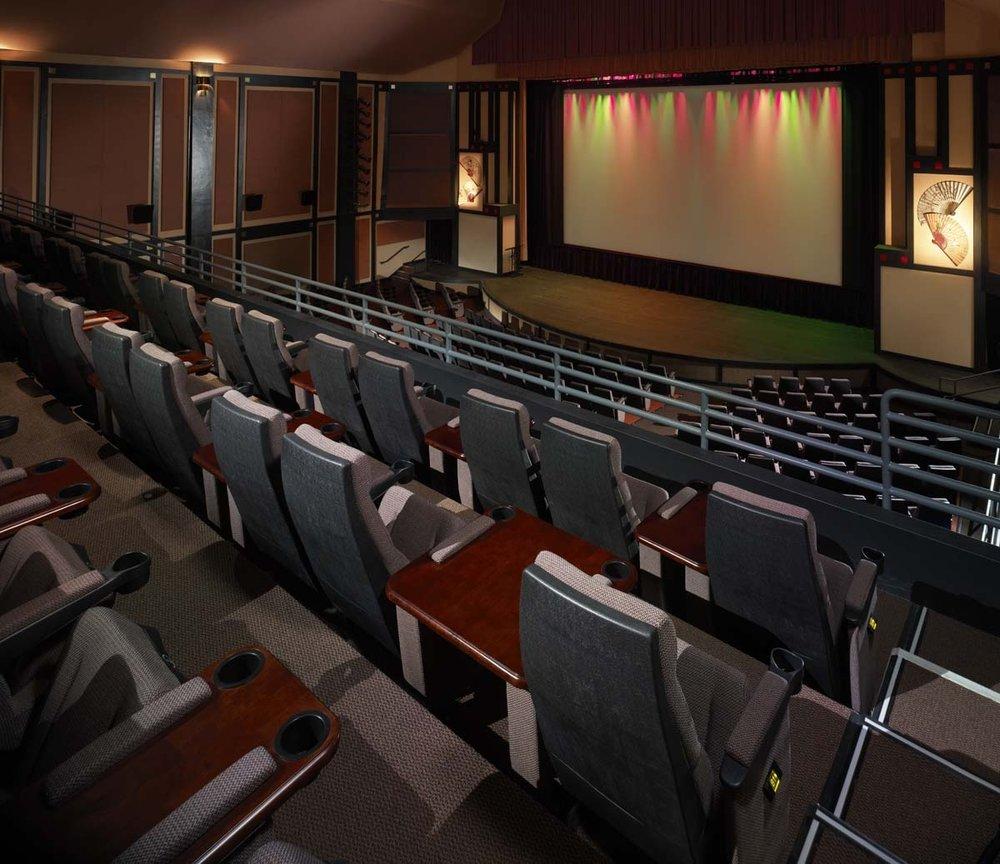
Minoru Yamasaki designed it. Yes, the same architect responsible for the original World Trade Center towers. His firm partnered with local Bay Area outfit Van Bourg/Nakamura to deliver a theatre styled after 17th-century Kabuki venues, complete with traditional proscenium and a revolving stage. February 1969 was the opening. The dinner theater idea ran into trouble fast. The building reopened in 1976 as the Japan Center Theatre with a different programming slant, and that didn’t catch either. AMC was bought in by the mid-eighties. Seven screens went up around the original 509-seat hall. December 5, 1986, was reopening day for the new multiplex. A handful of operators have run the building since. AMC was forced to sell after acquiring the Loews chain in 2006. Sundance Cinemas took the property in late 2007. The renovation went through ELS Architecture, with D. Jamie Rusin as principal architect. Carmike absorbed Sundance in 2015. AMC ended up back with the keys in 2016 after buying Carmike. Closure came in March 2020 with the pandemic. The building reopened with the rest of AMC’s circuit after restrictions were lifted. One detail survives from 1969 unchanged: the big house and its balcony.Screens & Presentation
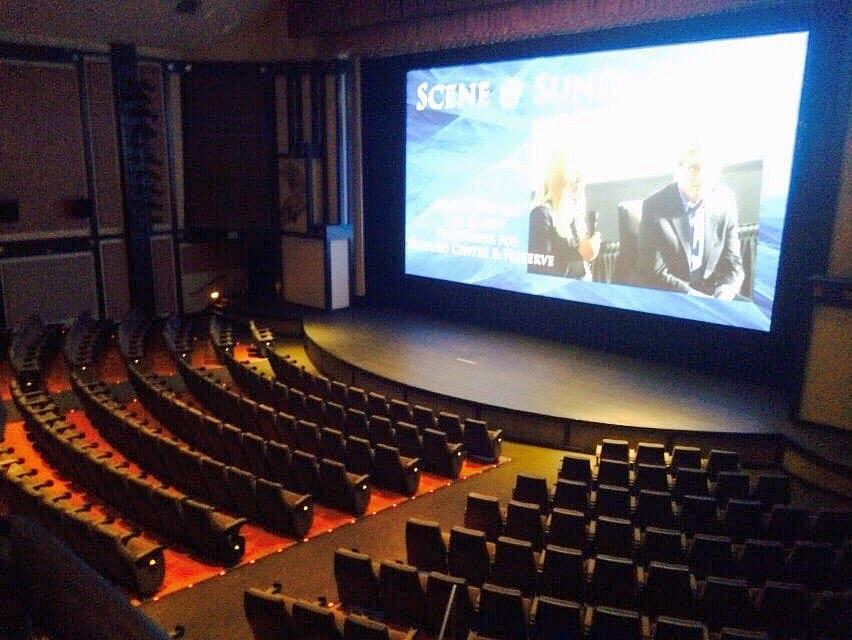
Dolby Cinema sits in the flagship auditorium. Dual 4K laser projection. The contrast runs about 50 percent higher than a standard multiplex. Dolby Atmos audio runs alongside, with twin-channel woofers built into the floor. Eight screens total. The big house, originally built for live performance in 1969, was retrofitted for film projection in the 1986 conversion. It has handled 16mm prints alongside 35mm, with 70mm capability built in early on. The other seven auditoriums are smaller. Capacities range from around 60 in the upstairs houses to nearly 180 in the mid-tier rooms. Digital projection runs across all eight.Seating & Auditorium Features
Recliner seats throughout. The conversion went in during AMC’s chain-wide refresh program. Total capacity is somewhere around 1,384 across the eight rooms. The recliner conversion knocked the count down from where it had been before the refit. The flagship auditorium runs on two levels. Downstairs holds 327. Add another 182 in the balcony. Reserved seating is in place for every showing. Pick the seat at booking, walk in to find it waiting. Most of the auditoriums use the standard AMC plush recliner. The Dolby house has a slightly different setup with the audio components built into the fixtures.Programming & Showtimes
Tuesdays and Wednesdays run at 50 percent off for AMC Stubs Insider members. That’s the headline value play. The mix leans Hollywood first-run, but indie titles and foreign films still find their way onto the schedule. A holdover from the Sundance years and from earlier still, when AMC had originally programmed the venue with that hybrid in mind back in 1986. Festival programming hits each spring. The San Francisco International Film Festival was set up here in 1987. The run usually goes through April. Passholders crowd the lobby for those weeks. Festival nights mean the bar runs longer. Showtimes post on the AMC site usually about a week ahead.Ticketing & Pricing
Most patrons book through the AMC app or the AMC Theatres website. Reserved seating runs across every showing. A Friday night Dolby Cinema booking can sell out the good seats by mid-afternoon. Standard adult tickets run roughly $17 to $19 for matinees. Evenings move to $20 to $24 depending on the format. Dolby Cinema carries a premium of a few dollars on top. AMC Stubs A-List membership covers up to four showings a week against the monthly fee. The Insider tier is free and triggers the 50 percent Tuesday and Wednesday discount.Concessions
The full bar is the unusual piece. Most multiplexes don’t run one. This building has had a working bar since the Sundance renovation in 2007, and AMC kept it running after the takeover. Cocktails on the menu. Tap beer and wine selection alongside. The bar isn’t a token feature. It gets actual use. Drinks are now allowed inside any auditorium. That wasn’t always the policy. Standard AMC concessions handle the rest. Popcorn and fountain drinks at the main counter. The candy case sits beside the dispensers, with hot dogs handled at the same station. Dine-in express pickup runs from the upstairs counter for hot food orders. Ordering happens at the kiosk or through the app.Accessibility
Wheelchair spaces sit at the back of each auditorium and can be reserved at the same time as a standard seat. The big house has spaces on both the main floor and the balcony level, with elevator access between them. Hearing-assist receivers stock at guest services. The closed-caption devices for supported showings sit in the same drawer. The phone for accommodation requests outside the standard setup is (415) 346-3243.Location & Parking
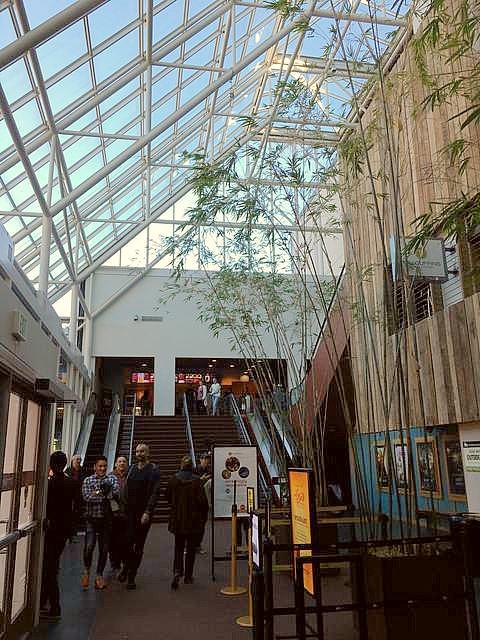
The address is 1881 Post Street, on the upper floor of the Japan Center mall. Post and Fillmore is the nearest intersection. Geary Boulevard runs a block south. The building sits about a mile and a half west of Union Square. Roughly the same distance northeast of Golden Gate Park. The walk from Lower Pacific Heights takes around ten minutes downhill. Parking moves into the Japan Center Garage in the basement of the complex. Validation is available through the cinema for a discounted rate. Metered street parking exists on Post and Sutter Streets but turns over fast on weekend evenings. Muni bus lines 2 and 3 stop at Sutter and Buchanan. The 38 and 38R run along Geary Boulevard a block south.Local Area Context
Japantown covers about six city blocks centered on the Japan Center complex. The mall has been the commercial anchor since 1968 and houses Kinokuniya bookstore alongside a long row of restaurants. The Cherry Blossom Festival each April pulls something like 200,000 visitors through the Peace Plaza outside the cinema’s front door. The crowds spill into the lobby on most festival weekends. The five-tiered Peace Pagoda in the plaza was a gift from Osaka in 1968. It stands about a hundred feet tall. Lower Pacific Heights and the Western Addition border the area. Rents for a one-bedroom in this part of the Western Addition went past $3,000 a month a few years back. The neighborhood was redeveloped in the post-WWII period after the Japanese-American population was forcibly removed during the 1942 internment. The community that returned built much of the current Japan Center, but the population recovery never fully happened. Boutique hotels surround the mall. The Hotel Kabuki next door dates to the same 2007 renovation cycle that gave the cinema its current look.