
8/28-8/30: SPIDER-MAN Tops the Box Office for a Rare 5th Weekend in a Row
Dick Walsh
Aug 30, 2026
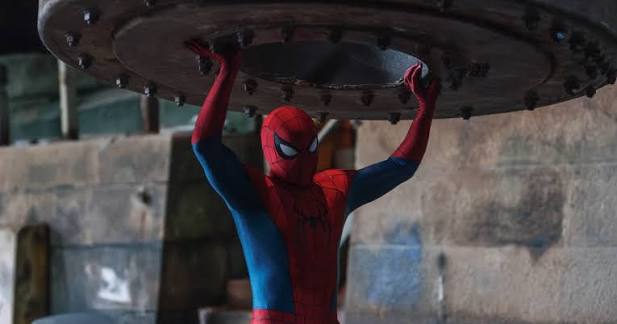
Sony and Marvel’s SPIDER-MAN: BRAND NEW DAY continues to fend off all challengers for the fifth consecutive weekend. In the post-pandemic era, only AVATAR: THE WAY OF WATER has lasted longer in the top spot, holding first place for seven consecutive weekends from Friday, December 16, 2022 through Sunday, January 29, 2023.
The overall weekend came in at $100.0M even, with support from the opening weekend of Ketchup Entertainment’s COYOTE VS. ACME and continued interest in Universal’s THE ODYSSEY. The weekend total was 23% higher than the $81.2M earned last year on this same weekend, led by $13.0M from Warner Bros.’ horror hit WEAPONS which moved back into first place in its fourth weekend.
Both streaks are likely to end next weekend, with the total box office coming in lower than last year and SPIDER-MAN is will most likely give up its first-place crown. Last year’s 36th weekend saw an impressive $84.0M opening for Warner Bros.’ THE CONJURING: LAST RITES, lifting the overall box office to $124.6M. There will be no comparable new openings next weekend to push up the box office. The top film next weekend could be Christopher Nolan’s THE ODYSSEY in its 8th weekend, with tickets for IMAX 70mm showtimes still in high demand.
The last four weeks have amounted to a fantastic late summer run, with the 2026 box office during that time running 118% higher than last year and attendance up 112%.

THE LAST FOUR WEEKS – 2026 vs. 2025
#1 – SPIDER-MAN: BRAND NEW DAY
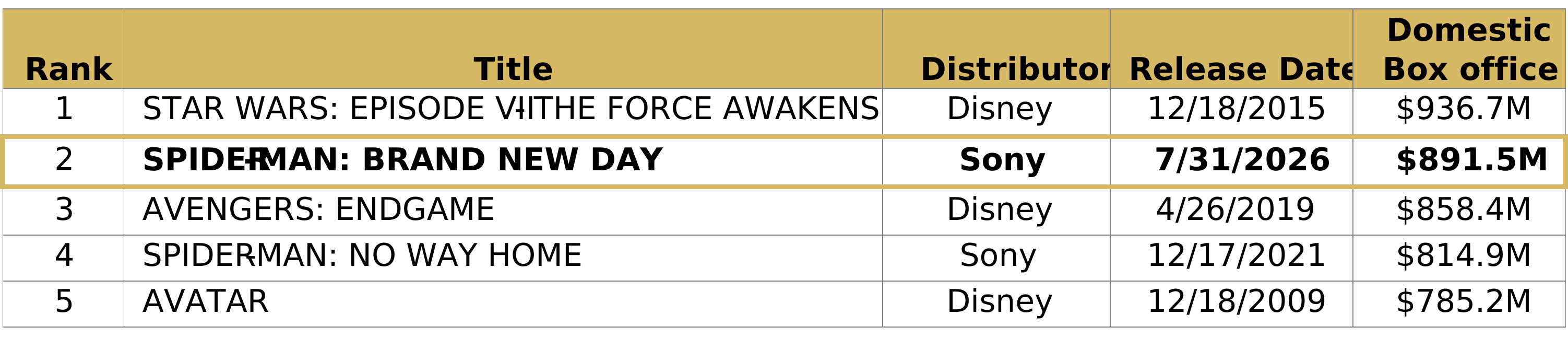
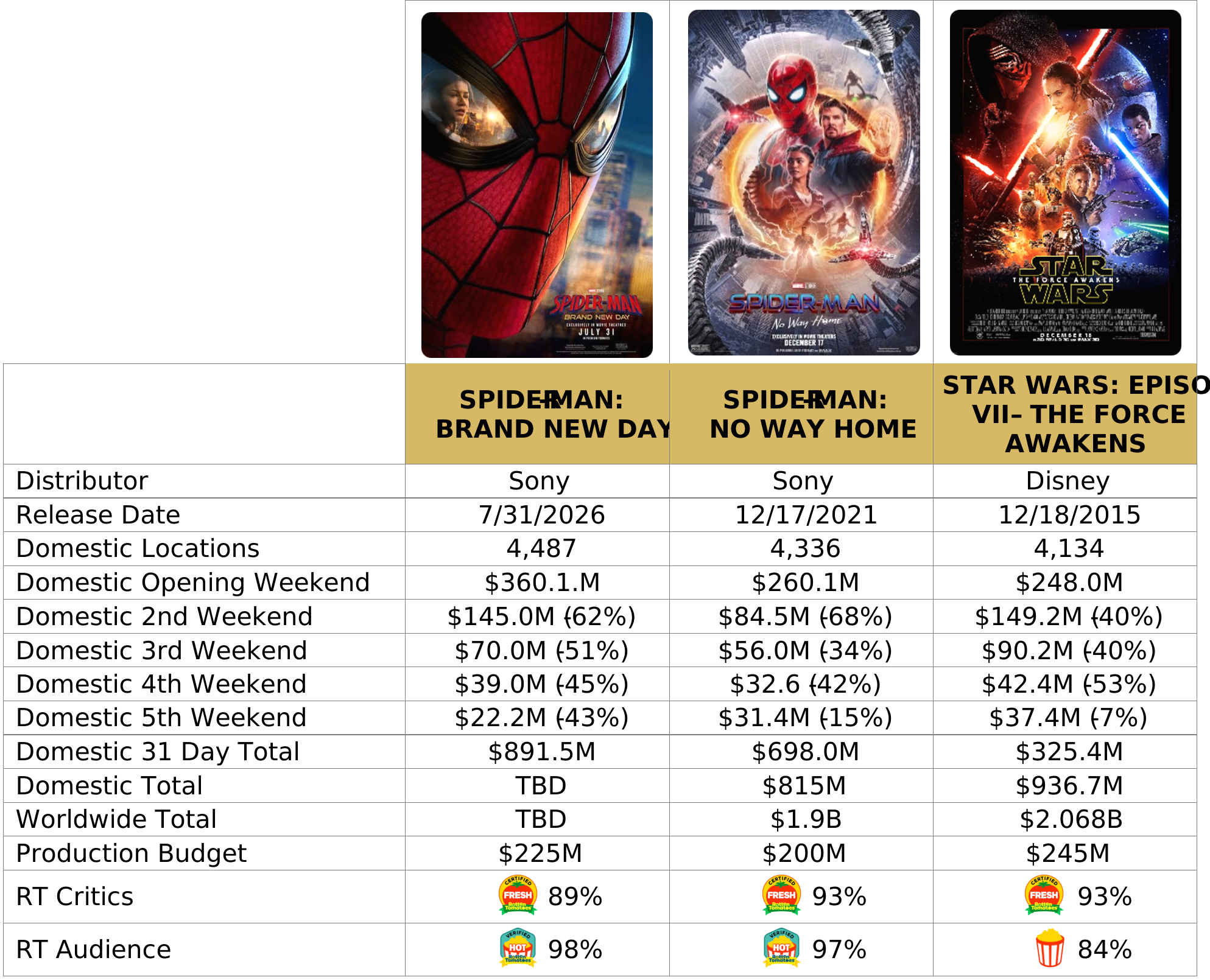
Sony and Marvel’s SPIDER-MAN: BRAND NEW DAY landed in first again by adding $22.2M to its massive domestic total, a decline of 43% from last weekend. After 31 days, the superhero sequel has grossed $891.5M domestically and $2.332B worldwide. It passed AVENGERS: ENDGAME last Monday to move into second place on the all-time domestic box office chart, trailing only STAR WARS: EPISODE VII – THE FORCE AWAKENS which earned $936.7M at the domestic box office.
5 Highest-Grossing Movies of All Time at the Domestic Box Office
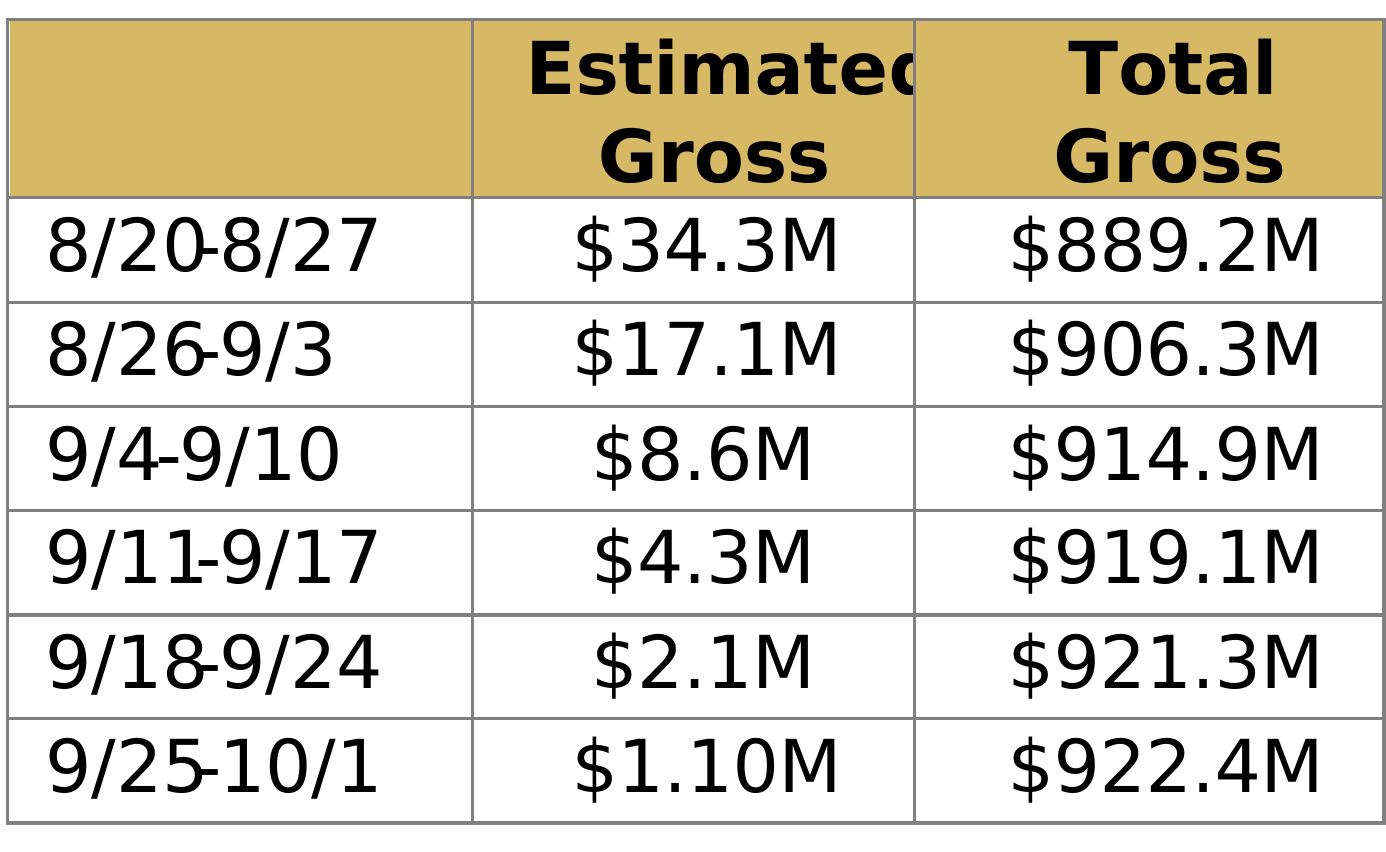
Now in its fifth weekend, SPIDER-MAN: BRAND NEW DAY is still playing in 3,678 theatres, having lost 328 locations this weekend and 806 since its opening. After it dropped 62% from its all-time best opening weekend, it has settled into a pattern of dropping by an additional mid-to-upper 40% in each subsequent weekend. Its lead over this weekend’s second-place was only $6.7M, its slimmest first-place finish so far. SPIDEY could fall out of first place next weekend, although it will be close. Given the rate of its weekly decline in box office and locations playing the film, we foresee the following results for SPIDER-MAN as it plays out its record-setting theatrical run.
Projected Finish of SPIDER-MAN: BRAND NEW DAY (U.S. and Canada)
Even if BRAND NEW DAY does not quite reach THE FORCE AWAKEN’s $936.7M total, Sony will almost certainly come back with a re-release at some point, and the additional box office it generates then will be enough put the movie in first place on the all-time domestic box office chart. By selling almost $1B in tickets, SPIDER-MAN’s success has helped many exhibitors return to good health and leaves studios with the dream of matching its performance with movies on their future release schedules.
SPIDER-MAN: BRAND NEW DAY vs. SPIDER-MAN: NO WAY HOME and STAR WARS: EPISODE VII – THE FORCE AWAKENS after 31 Days
#2 - COYOTE VS. ACME
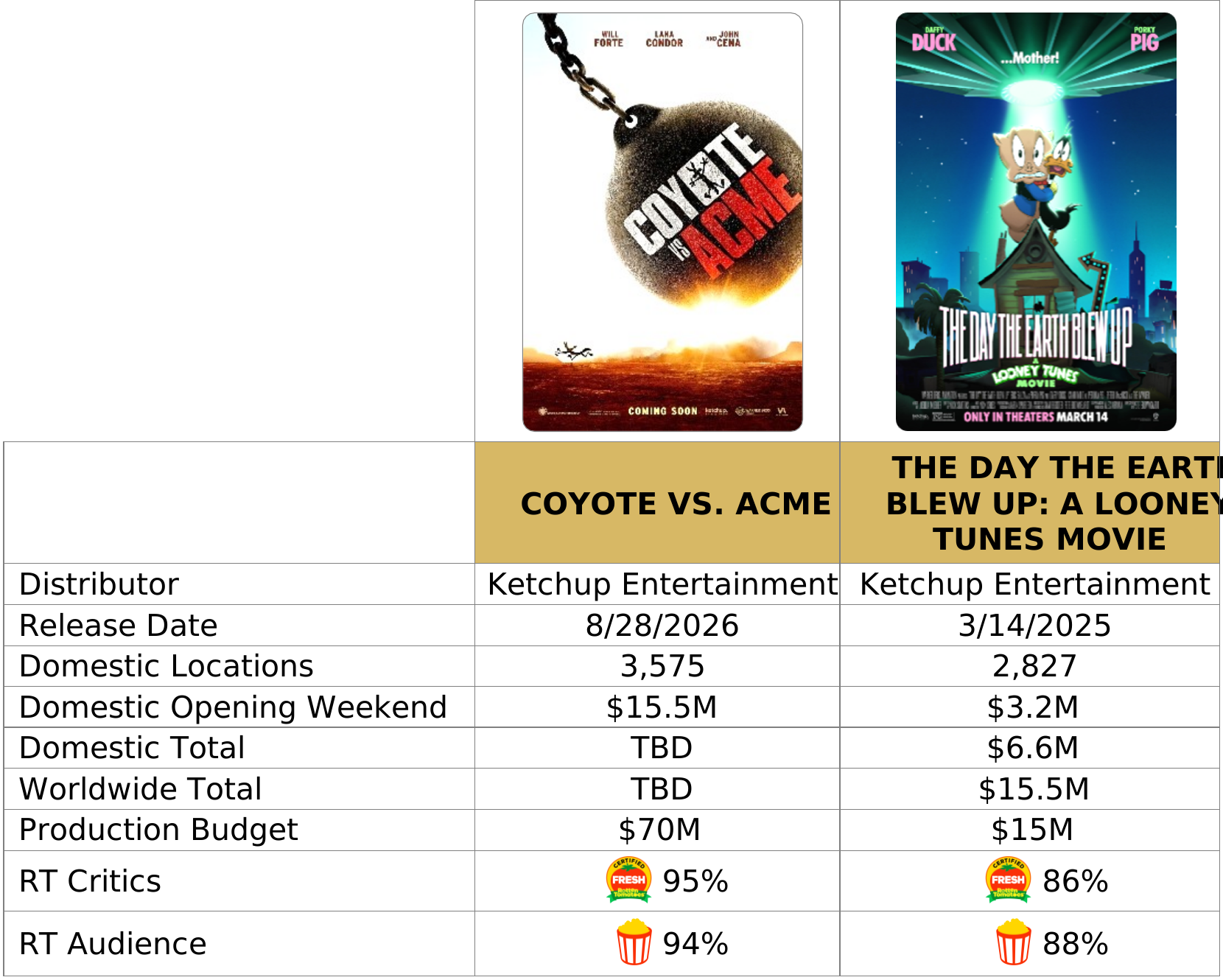
COYOTE VS. ACME, the live-action/animation hybrid release from Ketchup Entertainment, finished in second place by earning $15.5M in its opening weekend. For generations who grew up watching the antics of Wile E. Coyote and the Road Runner, it is almost unthinkable that this movie is not a Warner Bros. release. The characters are, after all, fixtures of the studio’s LOONEY TUNES franchise.
Director Chuck Jones and writer Michael Maltese created the pair for Warner Bros. Cartoons in 1948. They made their screen debut in the seven-minute theatrical short FAST AND FURRY-OUS (1949), released on September 17, 1949. Jones reportedly drew inspiration from Mark Twain’s description in ROUGHING IT of his coyote character as being perpetually hungry and miserable. The Looney Tunes cartoons were also seen as a parody of chase comedies such as TOM AND JERRY.
The formula rarely changed. Wile E. Coyote set up elaborate devices that he ordered from the fictional Acme Corporation in his never-ending attempt to capture and eat the Road Runner. The bird escaped with little effort, while the Coyote’s impatience, faulty reasoning and malfunctioning equipment inevitably turned his schemes against him. The desert setting, mock-Latin species names, minimal dialogue, “Beep Beep” call and impossible physics became hallmarks of the series.
Jones directed 23 principal Coyote–Road Runner shorts between 1949 and 1963, including BEEP, BEEP (1952), GOING! GOING! GOSH! (1952), ZIPPING ALONG (1953), STOP! LOOK! AND HASTEN! (1954) and READY, SET, ZOOM! (1955). His final original entry, WAR AND PIECES (1964), followed the closure of Warner Bros.’ original animation studio. Production continued through DePatie-Freleng Enterprises and Format Films, although those mid-1960s shorts were produced more affordably and sometimes reused animation, music and footage.
The characters later became television staples through THE ROAD RUNNER SHOW, a CBS compilation series that aired from 1966 to 1968, and THE BUGS BUNNY/ROAD RUNNER SHOW, which ran in various forms on CBS from 1968 to 1985 and later on ABC. Those broadcasts introduced Wile E. Coyote and the Road Runner to generations that never saw the original shorts in theatres. Warner Bros. Entertainment, now part of Warner Bros. Discovery, controls the underlying rights to the characters, LOONEY TUNES, and the fictional Acme universe.
Why, then, is Ketchup Entertainment releasing COYOTE VS. ACME instead of Warner Bros.? The answer is one of Hollywood’s most unusual rescue stories. Warner Bros. completed the film in 2022 but shelved it in 2023, reportedly planning to take a tax write-down of roughly $30M. The decision was not driven by evidence that audiences disliked the movie; test screenings were reportedly strong. Instead, Warner’s new management at the time viewed it as an inherited, uncertain commercial asset, while the write-down offered a faster, more predictable financial benefit. The decision came as Warner Bros. Discovery cut content costs, reduced debt, and reported major losses. The company had already shelved the nearly completed BATGIRL and SCOOB! HOLIDAY HAUNT under the same cost-cutting strategy.
Strong test results and fierce industry criticism ultimately pushed Warner to let Netflix, Amazon, and Paramount review the film. All three reportedly showed interest, and Paramount proposed a theatrical release. Warner, however, sought approximately $75M to $80M—enough to cover the production budget and other costs—and reportedly rejected lower bids without allowing meaningful counteroffers. The studio appeared willing to sell the film, but only at a price buyers were unlikely to meet.
Two years later, Warner sold the worldwide rights to Ketchup Entertainment for approximately $50M, well below its earlier asking price.
The deal allowed Warner to recover substantial cash while transferring the expense and risk of releasing and marketing the film. Ketchup, meanwhile, rescued a completed movie that had become a symbol of the industry’s growing conflict between creative value and balance-sheet priorities.
Samy Burch wrote the screenplay from a story credited to Burch, James Gunn and Jeremy Slater, inspired by Ian Frazier’s satirical 1990 New Yorker article imagining Wile E. Coyote suing the Acme Corporation. Director Dave Green previously made the found-footage science-fiction adventure EARTH TO ECHO (2014) and the franchise sequel TEENAGE MUTANT NINJA TURTLES: OUT OF THE SHADOWS (2016). Green envisioned the film as both a Wile E. character study and a collision between Looney Tunes slapstick and serious courtroom thrillers. He cited WHO FRAMED ROGER RABBIT (1988) as the creative standard for integrating animated characters into a convincing live-action world.
Will Forte stars as Kevin Avery, an unsuccessful Albuquerque personal-injury attorney who agrees to represent Wile E. Coyote. Forte’s films include NEBRASKA (2013), MACGRUBER (2010) and THE LEGO MOVIE (2014). John Cena plays Buddy Crane, Acme’s intimidating attorney and Avery’s former boss; his credits include BLOCKERS (2018), THE SUICIDE SQUAD (2021), BARBIE (2023) and FAST X (2023). Lana Condor, known for TO ALL THE BOYS I’VE LOVED BEFORE (2018) and ALITA: BATTLE ANGEL (2019), plays Kevin’s niece, Paige. The supporting cast includes Tone Bell, P.J. Byrne, Martha Kelly and Luis Guzmán, whose credits include CARLITO’S WAY (1993), BOOGIE NIGHTS (1997) and TRAFFIC (2000). Eric Bauza and Jeff Bergman voice several Looney Tunes characters.
After decades of injuries caused by defective Acme rockets, explosives, and traps, Wile E. hires Kevin to sue the corporation. The underdogs face Acme’s powerful legal team, led by Crane. As Kevin and Wile E. form an unlikely friendship, the lawsuit becomes a comic examination of corporate greed, personal failure and the Coyote’s indestructible optimism. Road Runner, Bugs Bunny, Daffy Duck, Porky Pig, Tweety, Sylvester and Foghorn Leghorn join numerous other Looney Tunes characters in supporting roles and cameos.
The film’s 95% Rotten Tomatoes critics score validates the enthusiastic response from early test screenings that had circulated for years, while its audience score is also exceptionally strong at 94%. The Boston Globe called it, “a superb piece of filmmaking” and “a loving tribute” to Wile E. and his fans. The San Francisco Chronicle placed it, “right up there with the best of live-action/animation hybrids.” Empire Magazine described it as, “a daft, inventive, hilarious comedy that’s more than worth the wait,” concluding, “it’s the audience that wins big.” The Film Verdict praised Burch for weaving a legitimate mystery and genuine character moments into comedy whose “pervasive wackiness” never becomes tiresome.
At the center of the film’s extraordinary journey to theaters is its financial history. Warner Bros. spent $70M to produce the movie, while Ketchup Entertainment later paid the studio $50M for the film rights. Crucially, Ketchup acquired only the movie COYOTE VS. ACME, while Warner Bros. retained the underlying character IP. That left Warner Bros. in an almost no-lose position. If the film fails, the studio could argue that it had correctly judged its box office potential while recovering $50M of the production cost and avoiding additional marketing and distribution expenses. If it becomes a major success, Warner Bros. would still control the characters and decide whether to authorize future films. Given the opening weekend of only 15.5M, Warner Bros. appears to have dodged a bullet by selling the film.
For a comparison film, we are using THE DAY THE EARTH BLEW UP: A LOONEY TUNES MOVIE, which was another Ketchup Entertainment film focused on the Looney Tunes universe.
COYOTE VS. ACME vs. THE DAY THE EARTH BLEW UP: A LOONEY TUNES MOVIE
#3 - THE ODYSSEY
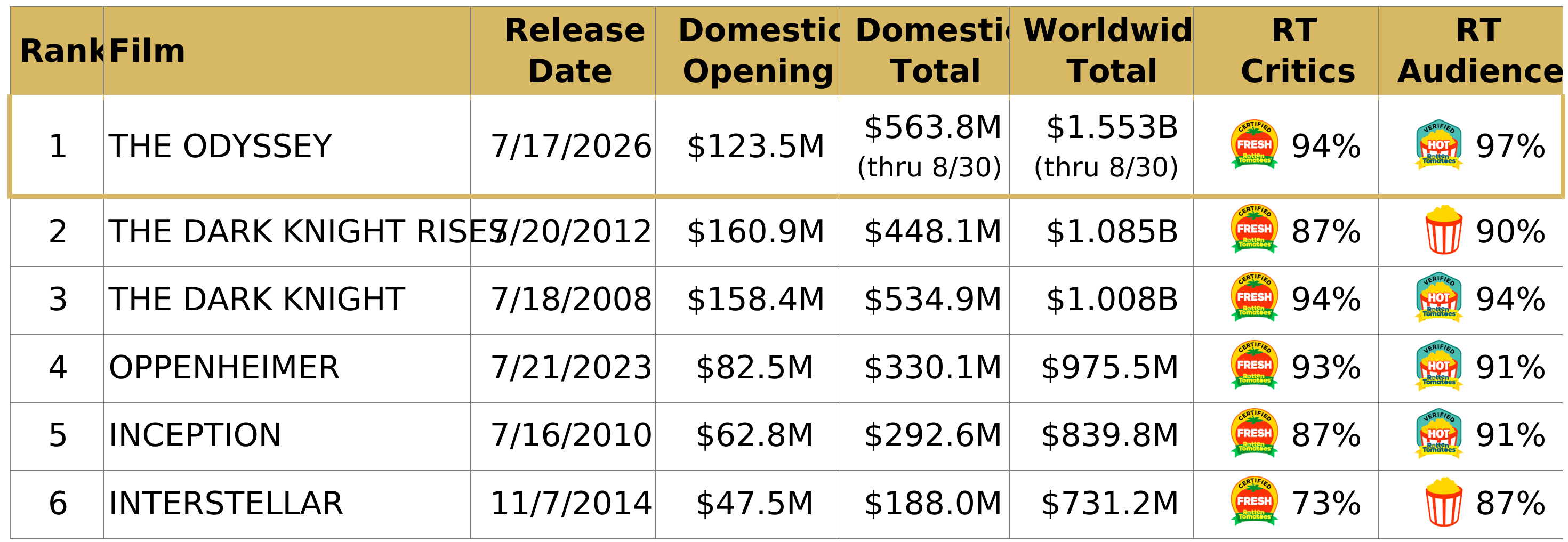
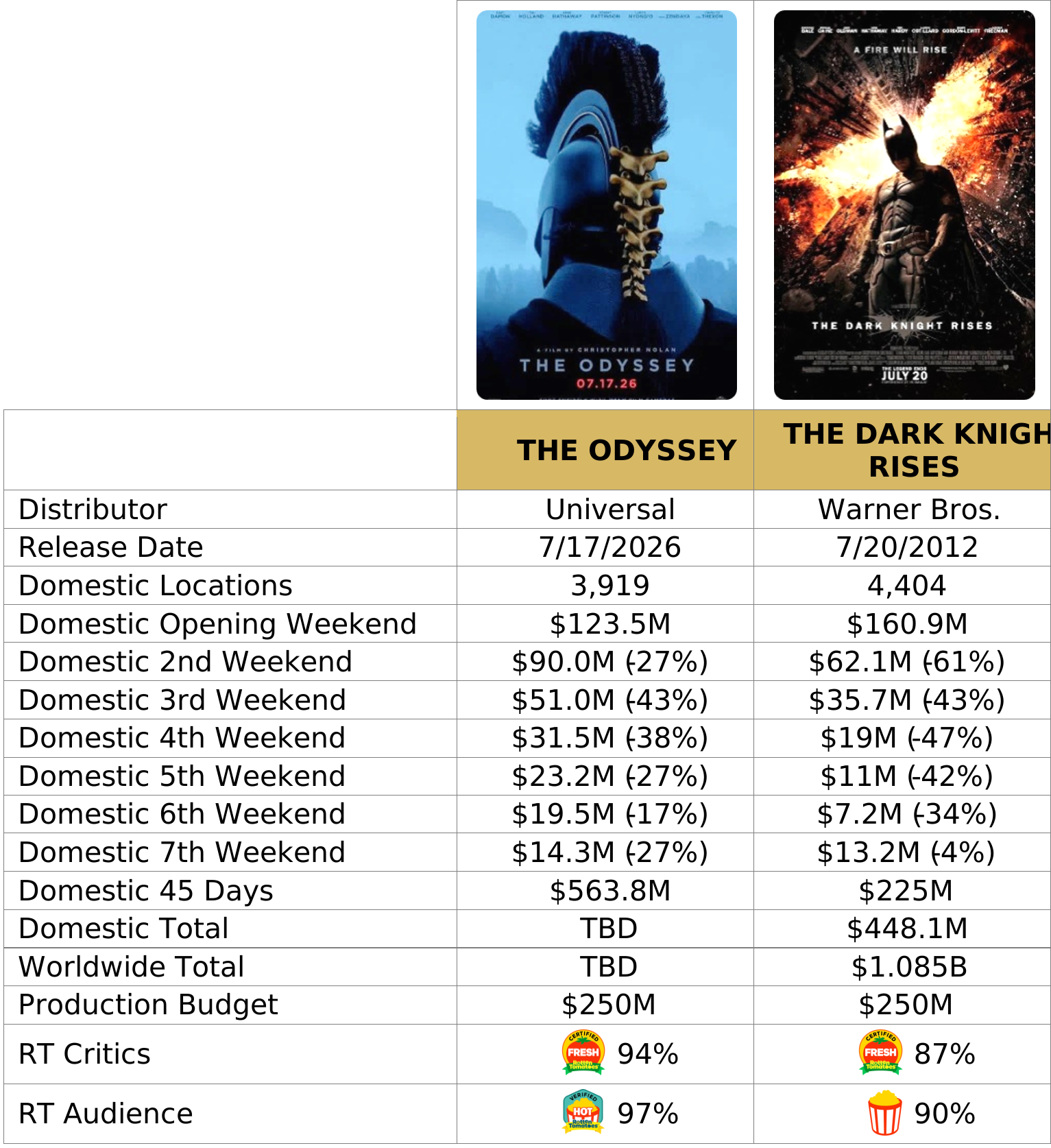
Similar to BRAND NEW DAY, Universal’s THE ODYSSEY keeps adding to its remarkable run. Finishing third this weekend with $14.3M and dropping only 27%, the film has now earned $563.8M domestically and $1.553B worldwide after 45 days. In fact, this picture is holding up so well that we expect it could dethrone SPIDER-MAN next weekend and climb back into first place in its 8th weekend after 52 days in release! The film has already become Nolan’s top-grossing movie, and each day only raises the bar higher.
Christopher Nolan’s Six Highest-Grossing Movies
The 41 worldwide locations with the technology to play it in 70mm IMAX have sold $56M in tickets. This exclusive club has created a scarcity effect, commanding premium-priced ticket prices and weeks-long waits for advance tickets. These IMAX screenings have helped THE ODYSSEY maintain its status as a must-see theatrical event for true movie lovers, with many of these theatres extending their commitments to play the film on their IMAX screens through at least September 16. The amount earned at these 41 locations is comparable to the entire domestic run of a successful mid-level release playing on 1000’s of screens. Even now, it is contributing over $4M every week to global sales and $3M per week in the U.S. and Canada, where 35 of the 41 total screens are located.
THE ODYSSEY vs. THE DARK KNIGHT RISES after 45 Days
#4 – INSIDIOUS: OUT OF THE FURTHER
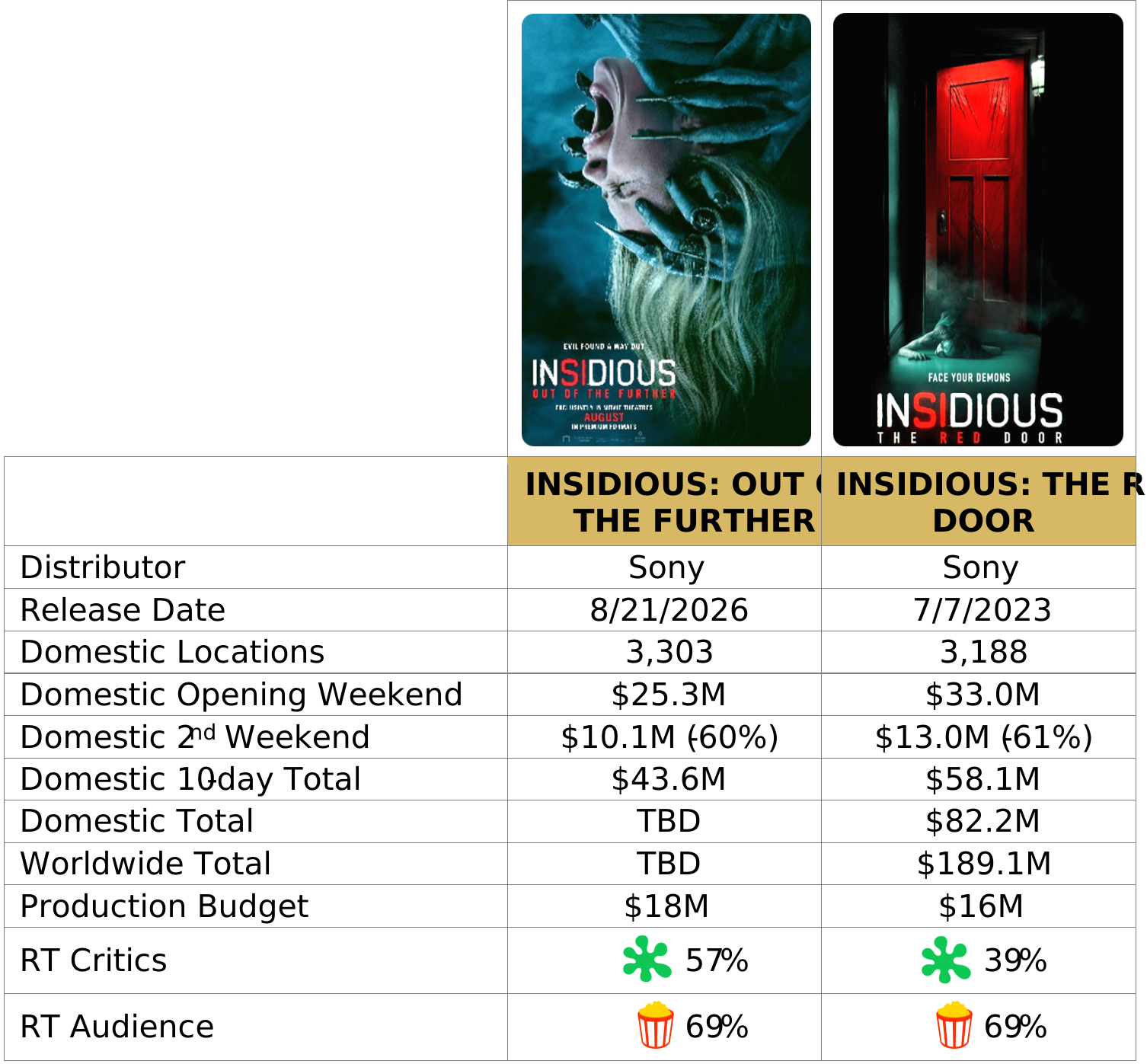
Sony’s INSIDIOUS: OUT OF THE FURTHER finished in fourth place in its second weekend by scaring up $10.1M, a decline of 60% from its opening. This brings its 10-day totals to $43.6M domestically and $110.2M worldwide. After its second weekend, it has now fallen behind INSIDIOUS: THE RED DOOR by 25% and will not establish any new records for the franchise. That being said, the film will be very profitable for its creators, prompting the investment to create at least one more entry in the 15-year franchise.
While not a breakout hit by any means, industry insiders see this movie as yet another example of a profitable Sony-Blumhouse release. Deadline described INSIDIOUS as Sony’s “cash-cow horror franchise.” Having earned $110.2M worldwide, it has already generated a very healthy box office to production cost ratio of 6.1 to 1. James Wan, the co-creator and producer of INSIDIOUS, wrote recently, “Six films, countless scares, and incredible fans who have been with us every step of the way.” Wan added: “So proud of Jacob Chase and the movie he made—no small task. BIG THANK YOU to the wonderful cast, crew and producing team at Blumhouse Atomic Monster.”
Sony is having quite the late summer of 2026. SPIDER-MAN BRAND NEW DAY released on 7/31 is of course continuing its record-breaking swing through the record books, while on a smaller scale INSIDIOUS adds to Sony’s bottom line like very few pictures are able to do.
INSIDIOUS: OUT OF THE FURTHER vs. INSIDIOUS: THE RED DOOR after 10 Days
#5 – THE DOG STARS
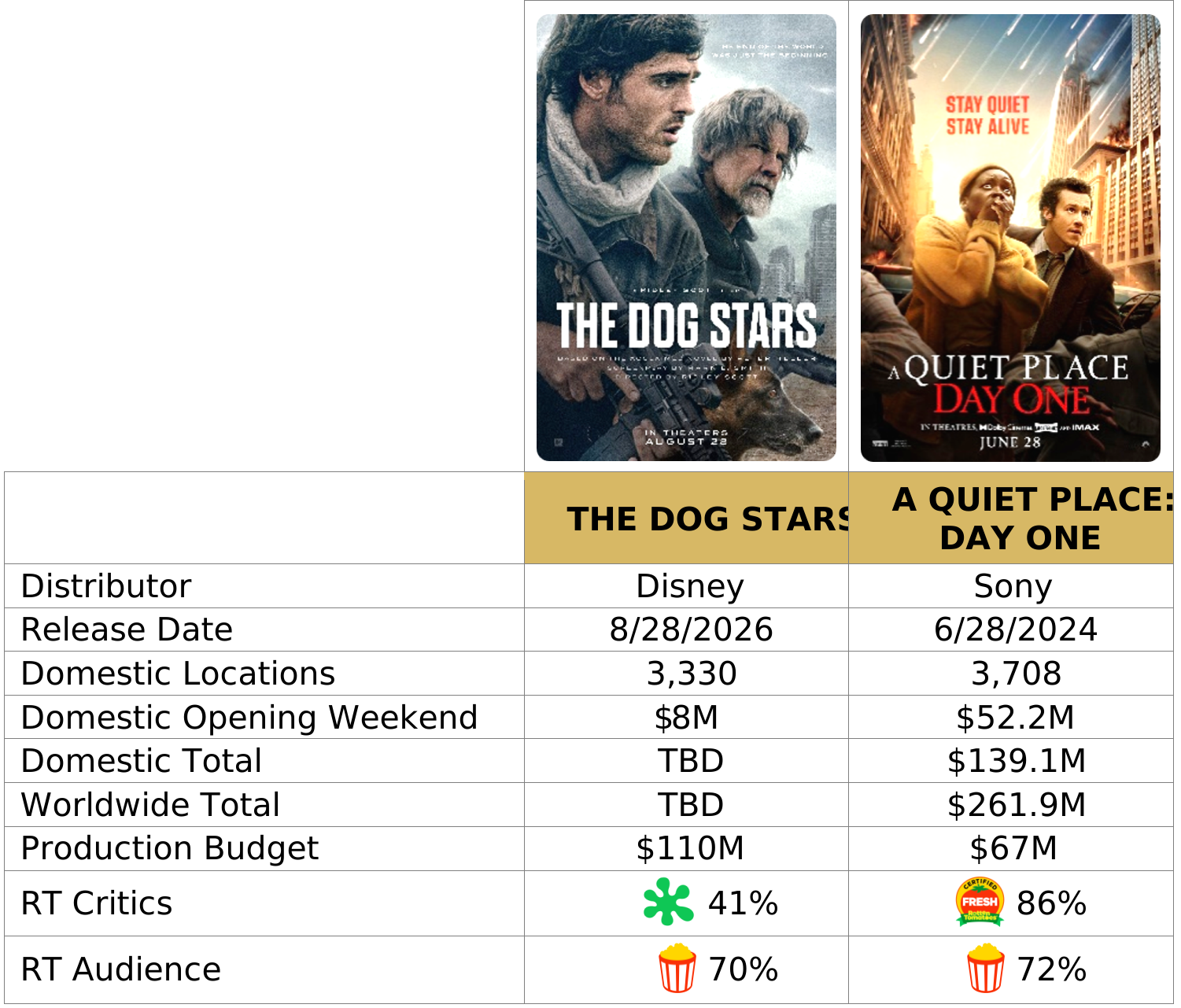
Disney’s adventure thriller THE DOG STARS opened in fifth place with a disappointing $8M in the U.S. and Canada and $19.3M worldwide. Adapted by Mark L. Smith from Peter Heller’s acclaimed apocalyptic 2012 novel, the picture combines survival action with a more reflective story about grief, loneliness and the need for human connection. Literally, the title is taken from the astronomical “Dog Star,” also known as Sirius, the brightest star in the night sky. The plural title also evokes the constellations Canis Major and Canis Minor, the “greater” and “lesser” dogs.
The film was directed by Ridley Scott, one of Hollywood’s most prolific filmmakers. At 88 years old, Scott is showing no signs of slowing down as THE DOG STARS is his 30th major theatrical release and 5th film in five years. Scott’s credits include ALIEN (1979), BLADE RUNNER (1982), THELMA & LOUISE (1991), GLADIATOR (2000), BLACK HAWK DOWN (2001), THE MARTIAN (2015), NAPOLEON (2023) and GLADIATOR II (2024). THE DOG STARS (2026) represents Scott’s return to large-scale science fiction, although its emotional, humanistic approach is quieter than many of his previous spectacles.
Jacob Elordi stars as Hig, a civilian pilot attempting to preserve his humanity after civilization collapses. Elordi is best known for THE KISSING BOOTH (2018), PRISCILLA (2023), SALTBURN (2023) and FRANKENSTEIN (2025). Josh Brolin plays Bangley, Hig’s heavily armed, suspicious ex-Marine companion; Brolin’s major credits include NO COUNTRY FOR OLD MEN (2007), TRUE GRIT (2010), AVENGERS: INFINITY WAR (2018) and DUNE (2021). It has been reported that Brolin nearly quit after his first day of filming because Scott’s minimal-rehearsal, multi-camera method left him feeling overwhelmed. After watching the completed footage, Brolin changed his mind and eventually called the experience one of his most creatively rewarding. Margaret Qualley portrays Cima, a young medic who becomes important to Hig; she previously appeared in ONCE UPON A TIME…IN HOLLYWOOD (2019), POOR THINGS (2023), THE SUBSTANCE (2024), and HONEY DON’T! (2025). Guy Pearce, playing Cima’s father, Pops, is known for L.A. CONFIDENTIAL (1997), MEMENTO (2000), THE HURT LOCKER (2009) and THE BRUTALIST (2024). The supporting cast includes Allison Janney of I, TONYA (2017) and BOMBSHELL (2019), and Benedict Wong of DOCTOR STRANGE (2016) and AVENGERS: ENDGAME (2019).
THE DOG STARS takes place several years after a catastrophic flu pandemic has killed most of humanity and left the United States with only scattered pockets of survivors. Hig, a former civilian pilot still grieving the family and life he lost, occupies an abandoned Colorado airport with his loyal dog and Bangley, a heavily armed former Marine. The two men depend upon one another but approach their new world very differently. Bangley is suspicious, disciplined and prepared to kill anyone who approaches their compound, while Hig struggles to preserve his compassion and belief that decent people may still exist. Hig regularly patrols the surrounding territory in an aging Cessna, watching for intruders and helping protect the few vulnerable survivors living nearby. Beyond the airport’s defensive perimeter are lawless scavengers known as Reapers, making every flight or trip into the wilderness potentially deadly.
During one patrol, Hig hears a fragmentary radio transmission coming from far beyond the Cessna’s normal range. The signal may be old, misleading, or deliberately designed to lure survivors into an ambush, but Hig becomes convinced that it could represent an organized community—and perhaps a more meaningful life. Despite Bangley’s warnings, he loads the aircraft with limited fuel and supplies and flies toward the signal, knowing that he may not have enough gasoline to return. His journey brings him into conflict with violent scavengers and eventually leads him to a secluded mountain settlement occupied by Cima, a resourceful young medic, and her protective father, Pops, a former Navy SEAL. Hig’s growing connection with Cima offers him an emotional future he thought had disappeared with civilization, but it also forces him to question whom he can trust and where he truly belongs. The story combines aerial action, survival warfare and post-apocalyptic suspense with a more intimate examination of grief, loneliness and companionship. Its central question is not simply whether Hig can remain alive, but whether a life defined entirely by fear, isolation and self-protection is really worth surviving.
Critics have given a thumbs down on the production, rating it 41% on Rotten Tomatoes while audiences were more positive at 70%. Here is a sampling of the critics' takes. The Los Angeles Times said, “The film’s dystopian beats are so familiar, you’ve probably guessed by now that you shouldn’t get too attached to the dog.” The Boston Globe offered up, “Director Ridley Scott’s dystopian thriller 'The Dog Stars' is three movies in one, none of which is compelling enough to sustain a two-hour runtime.” The Financial Times weighed in with, ”Elordi has charisma enough to keep the movie afloat (just), but even the most gifted actor would struggle with a script that makes his character’s choices feel this random.” A few critics liked the film well enough, most notably the Hollywood Reporter, which opined, “Jacob Elordi leads with introspective movie-star magnetism that evokes the heyday of Kevin Costner, while cinematographer Erik Messerschmidt’s panoramic vistas lend the unhurried but engrossing story a restorative grace.”
The production cost of the film is estimated to have been $110M, which translates to a target of $275M in global ticket sales in order for the movie to reach profitability on its theatrical sales. Based on its global opening weekend of $19.3M, there is virtually no chance that it will get there. Ridley Scott’s films are first-class productions with Hollywood’s best actors lining up to be part of his movies. THE DOG STARS is no exception, and Disney/20th Century knew this before they ever greenlit the project. This has to be considered both a major financial failure and a disappointment that the “A team” assembled to make the film didn’t result in a better box office performance.
When this picture first appeared on the release schedule, we had two concerns about it. The first is that the title itself does not give a clear understanding of what the movie is about. Tracking based on consumer polling gave it very low scores for overall awareness of the movie and for it being rated as a first choice to see. The second concern stems from the release date of August 28th. Pardon the pun, but these are the “dog days” of summer when moviegoing usually slows down dramatically. A release date in the first half of the summer could have been more fruitful.
For a comparison, we are using A QUIET PLACE: DAY ONE (2024) that similarly places intimate human relationships inside a large-scale end-of-the-world thriller. Another reason is that A QUIET PLACE: DAY ONE had a worldwide gross of $261.9M, close to the $275M that THE DOG STARS will need to approach profitability.
THE DOG STARS vs. A QUIET PLACE: DAY ONE
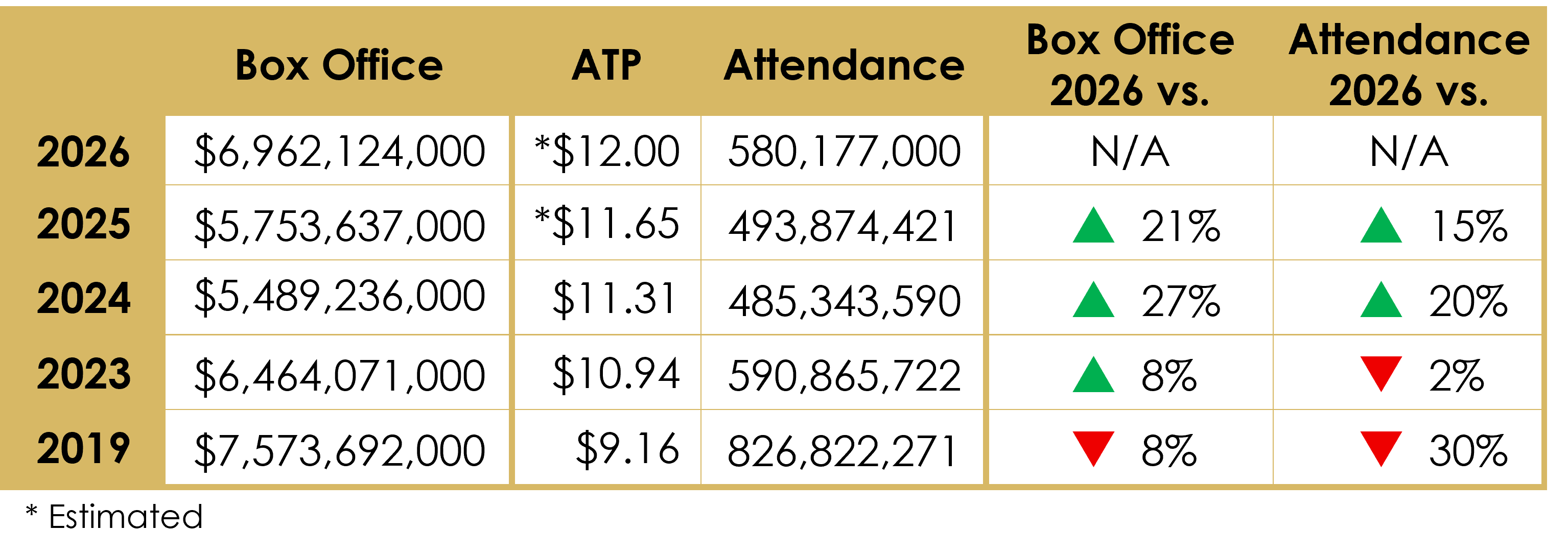
Where Are We as of 8/27/2026
BOX OFFICE AND ATTENDANCE – 34 WEEKS YEAR TO DATE