

The Korean Wave Hits the Jury
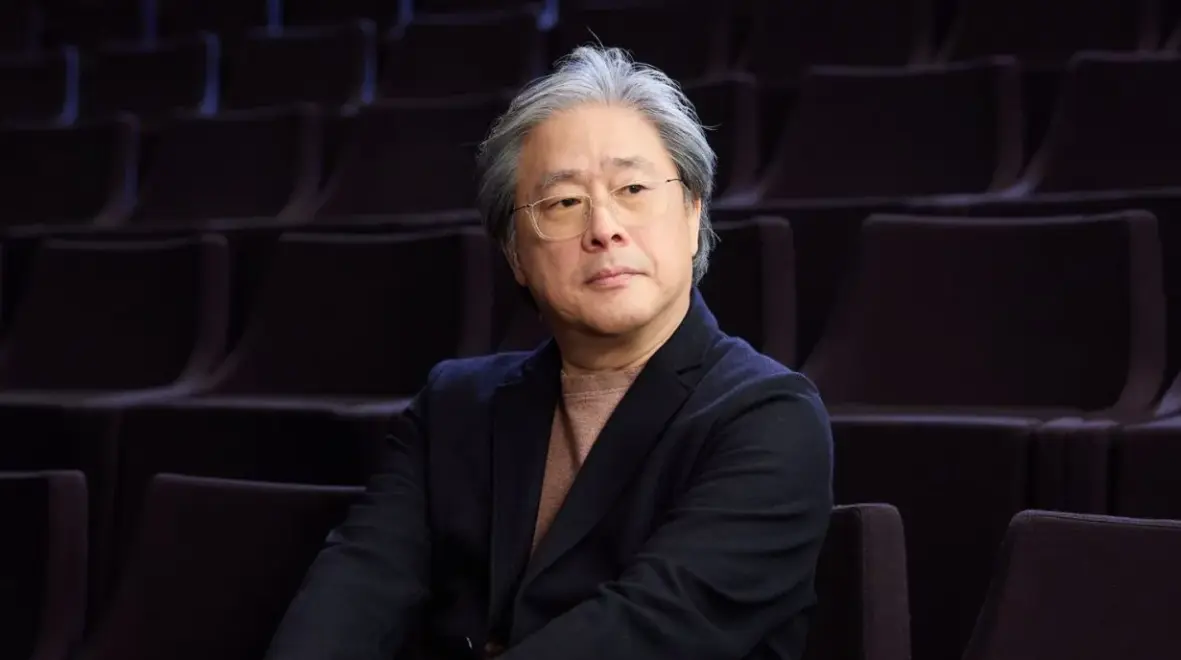
When Park Chan-wook was named the first South Korean jury president in the 79-year history of the Cannes Film Festival back in February 2026, the appointment sent a clear signal. This was a festival ready to put visceral, subversive filmmaking front and center. His exact words: “In this age of mutual hatred and division, I believe that the simple act of gathering in a theater to watch a single film together, our breaths and heartbeats aligning, is itself a moving and universal expression of solidarity.”
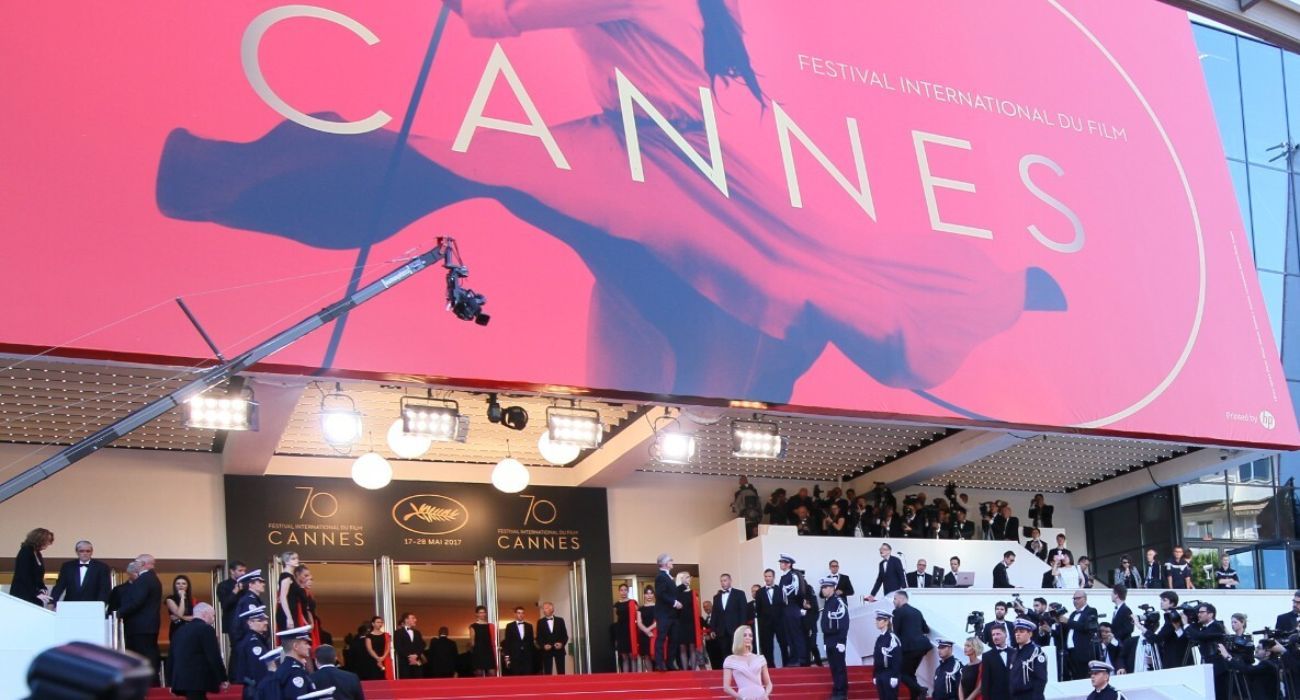
The 79th edition of the festival runs from May 12 to 23, 2026, and it is shaping up to be one of the most auteur-heavy lineups in recent memory. The Official Selection will be announced on April 9, 2026. Hollywood studios are largely absent. What fills the void is an international slate of directors who have spent careers proving that personal cinema can still rattle audiences. Pedro Almodóvar, Ryûsuke Hamaguchi, and Hirokazu Kore-eda are among the names tipped to lead the Palme d’Or charge, alongside long-awaited comebacks and bold debut entries.
The festival will also honor Peter Jackson and Barbra Streisand with the honorary Palme d’Or. Add in buzzy titles for Un Certain Regard, potential Midnight Screenings, and the wheeling-and-dealing of the Marché du Film, and the 79th edition has all the ingredients of a festival that leans hard into what Cannes does best: champion directors who refuse to play it safe.
The Jury President: Park Chan-wook’s Cannes Legacy
A. Historic Appointment
Park Chan-wook will preside over the main competition jury and hand out the Palme d’Or on May 23 at the Grand Théâtre Lumière. He succeeds Juliette Binoche, whose 2025 jury awarded the top prize to Jafar Panahi‘s Iranian drama It Was Just an Accident. Park is the first South Korean filmmaker to hold the position, and the third Asian jury president in festival history, after Japan’s Tetsurō Furukaki in 1962 and Hong Kong’s Wong Kar-wai in 2006. Festival president Iris Knobloch and director Thierry Frémaux issued a joint statement praising Park’s “inventiveness, visual mastery, and penchant for capturing the multiple impulses of women and men with strange destinies.” They described his appointment as a celebration of “the cinema of a country deeply engaged with the questioning of our time.”
B. Cannes Track Record
Park’s relationship with the Croisette goes back over two decades. His breakout on the international stage came with Oldboy (2004), which won the Grand Prix (the festival’s second-highest prize). There has been persistent lore, confirmed in a Hollywood Reporter retrospective, that Quentin Tarantino (who headed the jury that year) lobbied hard to give it the Palme, but the jury ultimately chose Michael Moore’s Fahrenheit 9/11. Park returned regularly after that. Thirst (2009), his vampire drama, won the Jury Prize. The Handmaiden (2016) screened in competition and won the Vulcan Prize for its production design. Decision to Leave (2022), his Hitchcockian thriller, won Best Director. Each film brought something formally distinctive to the main slate, and each left with at least one prize. The Cannes official statement noted: “His presence at the Palais des Festivals testifies to the mutual loyalty that exists between Park Chan-wook and the Festival de Cannes.”
C. The Park Philosophy
Park framed his upcoming role in characteristically theatrical terms. “The theater is dark so that we may see the light of cinema,” he said. “We confine ourselves within the theater so that our souls may be liberated through the window of film. To be enclosed in a theater to watch films, and enclosed again to engage in debate with the members of the Jury, this double, voluntary confinement is something I await with great anticipation.” The Cannes statement compared his work to that of Tarantino, De Palma, and Fincher for “artistry in composing images whose formal beauty is matched only by their moral rigor.” His filmography is defined by visceral, subversive, and baroque cinema and populated by extraordinary heroines. His most recent film, No Other Choice (2025), premiered at Venice and was shortlisted but not nominated for the Best International Feature Oscar, continuing his run of critical attention and institutional recognition.
The Palme d’Or Contenders: International Auteurs
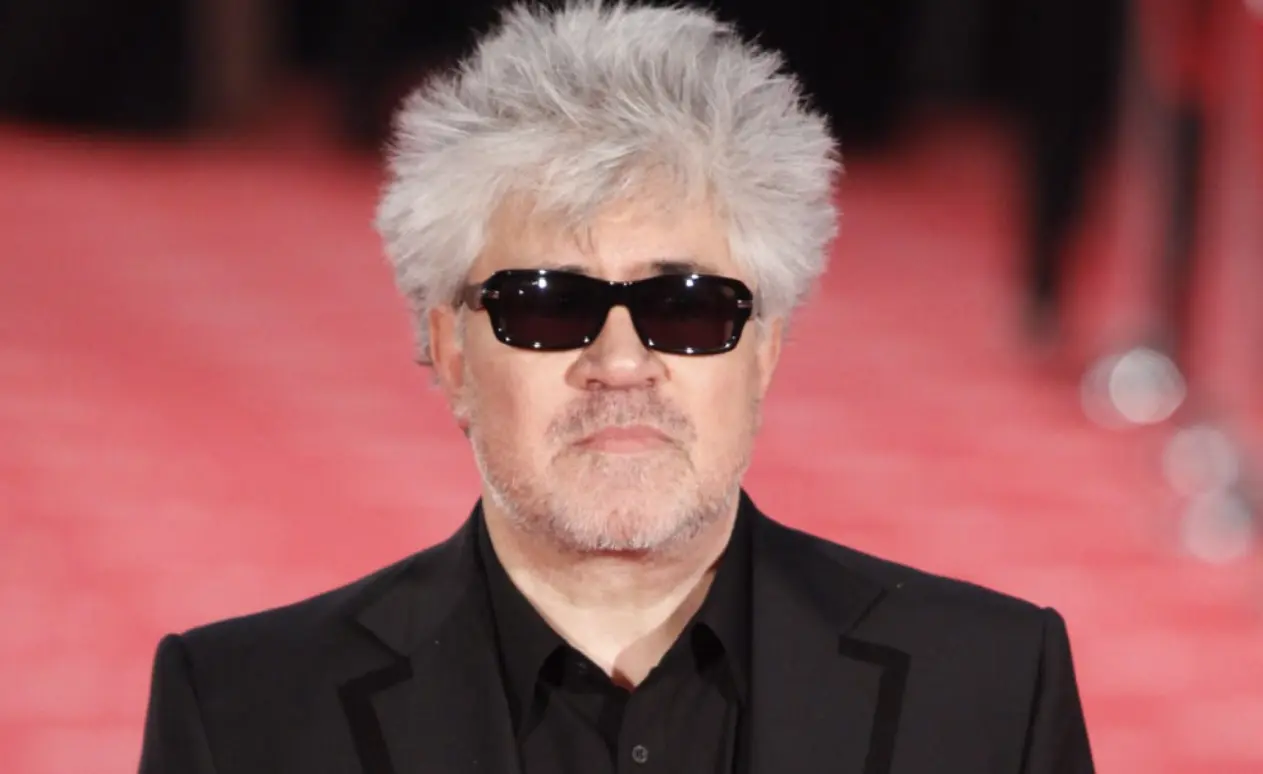
A. The Spanish Return: Pedro Almodóvar
Pedro Almodóvar returns to Spanish-language cinema with Bitter Christmas (Amarga Navidad), his 25th feature film. The move follows his English-language detour with The Room Next Door (2024), which won the Venice Golden Lion. Bárbara Lennie and Leonardo Sbaraglia star, alongside Aitana Sánchez-Gijón, Victoria Luengo, Patrick Criado, Milena Smit, and Quim Gutiérrez.
The film follows Elsa, an advertising director coping with her mother’s death during the December holiday period. After a panic attack forces her to stop working, she travels to Lanzarote with a friend. A parallel storyline involves a film director named Raúl (Sbaraglia), who is writing a script that turns out to be the story of Elsa. Almodóvar has described the film as his “most ruthless” toward himself.
Bitter Christmas was released in Spain on March 20, 2026, by Warner Bros. Pictures and opened to €728,038 in its debut weekend. Sony Pictures Classics holds North American distribution rights. Almodóvar has a long pattern of releasing films domestically before bringing them to Cannes. Pain and Glory (2019) followed this exact path and won Antonio Banderas the Best Actor prize. Volver (2006) also screened in Spain before its Croisette premiere, winning the Best Screenplay award. His previous competition entries include Bad Education, Volver, Julieta, and Parallel Mothers. A competition slot for Bitter Christmas would be consistent with that history.
B. The Japanese Contingent
Ryûsuke Hamaguchi brings All of a Sudden (Soudain), his French-language debut. The film was shot in Paris and Kyoto, stars Virginie Efira and Tao Okamoto, and runs approximately three hours. It is set in a Parisian suburb nursing home called “The Garden of Freedom.” Efira plays Marie-Lou Fontaine, the facility’s director, who adopts a humane care method called “Humanitude” despite resistance from her team. Her life changes when she meets Mari Morisaki (Okamoto), a terminally ill Japanese playwright. Together, they transform the facility into a space of resistance and humanity. Hamaguchi co-wrote the screenplay with Léa Le Dimna, drawing loose inspiration from You and I: The Illness Suddenly Gets Worse, a book of real-life letters by Makiko Miyano and Maho Isono. The score is by Canadian-French composer Samuel Andreyev. Neon holds North American distribution. The film is set for release in Japan on June 19, 2026, via Bitters End, and in France on August 12, 2026, via Diaphana Distribution. A Cannes debut is widely anticipated.
Hamaguchi’s Cannes pedigree is substantial. Drive My Car (2021) won Best Screenplay at the festival, then went on to earn four Oscar nominations, including Best Picture and Best Director, and won Best International Feature Film. It was Japan’s first-ever Best Picture nominee. Evil Does Not Exist (2023) won the Silver Lion Grand Jury Prize at Venice. All of a Sudden would mark his first film produced outside of Japan and Korea.
Hirokazu Kore-eda returns with Sheep in the Box, described as a dystopian follow-up to his 2023 film Monster. The Japan release is scheduled for May 29, 2026. Kore-eda won the Palme d’Or in 2018 for Shoplifters and has been a regular presence in the Cannes competition, with Like Father, Like Son (Jury Prize, 2013) and Broker (Best Actor for Song Kang-ho, 2022) among his Croisette highlights. A competition entry for Sheep in the Box is anticipated.
Kiyoshi Kurosawa is also in the mix with The Samurai and the Prisoner. Kurosawa, a genre-fluid director known for Cure (1997), Pulse (2001), and Wife of a Spy (Venice Golden Lion, 2020), remains a potential competition entry.
C. The Russian Resurgence: Andrey Zvyagintsev
Andrey Zvyagintsev returns with Minotaur, his first film since Loveless (2017). The gap between films has been involuntary. In 2021, Zvyagintsev received the Sputnik V COVID-19 vaccine and soon developed severe complications. He was admitted to intensive care in Moscow, developed nosocomial sepsis from an antibiotic-resistant infection, and was transferred to a German hospital where he was placed in a medically induced coma. His lungs lost 92% of their gas-exchange capacity. He was hospitalized for eleven months. He could not walk, sit, or speak for portions of his recovery. He was discharged in May 2022 from a hospital in Wiesbaden, Germany. A planned English-language debut, What Happens, was shelved. A subsequent project titled Jupiter, about a Russian oligarch, also failed to secure financing.
Minotaur was shot between September and November 2025 in Riga, Latvia. Zvyagintsev co-wrote the screenplay with Simon Liashenko. The film follows Gleb, a Russian company director preparing to lay off his employees while discovering his wife’s affair. It is described as a political fable blending crime thriller and classical tragedy, exploring the emotional and moral collapse of a businessman amid personal and global crises. Mubi has acquired North American distribution rights.
Zvyagintsev is a two-time Oscar nominee: Leviathan (2014) was nominated for Best International Feature Film and won Best Screenplay at Cannes. Loveless (2017) was also Oscar-nominated and won the Jury Prize at Cannes. His debut, The Return (2003), won the Golden Lion at Venice. A Cannes premiere for Minotaur would mark one of the most significant festival comebacks in years.
D. The Asian Expansion
Kantemir Balagov (Russia) returns with Butterfly Jam, a film following a Circassian-American teen wrestler in New Jersey. The cast includes Harry Melling, Barry Keoghan, and Riley Keough. The film was shot in France. Balagov won the FIPRESCI Prize in Un Certain Regard at Cannes for Closeness (2017) and the Best Director prize in Un Certain Regard for Beanpole (2019). He is still in his early thirties and represents a new generation of post-Soviet filmmaking talent.
July Jung (South Korea) brings Dora, starring Kim Do-yeon and Sakura Ando. The film follows a girl with physical and mental illness who finds healing through love. Jung previously directed A Girl at My Door (2014), which screened in Un Certain Regard.
Na Hong-jin (South Korea) presents Hope, a sci-fi drama and his return to filmmaking after The Wailing (2016). Na directed The Chaser (2008) and The Yellow Sea (2011), both of which screened at Cannes. His prolonged absence from directing makes Hope one of the more anticipated Korean entries.
The European Heavyweights
| Director | Film | Key Details | Likely Section |
| Cristian Mungiu | Fjord | English-language debut; Renate Reinsve, Sebastian Stan; Palme d’Or winner (4 Months, 3 Weeks, 2 Days) | Competition |
| Paweł Pawlikowski | 1949 | Cold War-era drama; Sandra Hüller (Anatomy of a Fall, Project Hail Mary) | Competition |
| Nicolas Winding Refn | Her Private Hell | Charles Melton, Sophie Thatcher; subversive Danish comeback | Competition |
| Albert Serra | Out of This World | Riley Keough, F. Murray Abraham; American delegate in Russia during the Ukraine war | Competition |
| Marie Kreutzer | Gentle Monster | Léa Seydoux, Catherine Deneuve; Austrian director (Corsage) | Competition |
| Sandra Wollner | Everytime | Rising Austrian director | Competition |
| Nanni Moretti | It Will Happen Tonight | Palme d’Or winner; Louis Garrel, Jasmine Trinca | Competition |
The U.S. Indie Presence: Limited but Potent
A. James Gray’s Paper Tiger
James Gray returns to the Croisette with Paper Tiger, starring Adam Driver, Scarlett Johansson, and Miles Teller. The film follows two brothers who pursue the American Dream but become entangled in a Russian mafia scheme that terrorizes their family. Gray wrote and directed the film, which was shot in Denville Township, New Jersey, starting in June 2025. Leone Film Group fully financed the production, with Raffaella Leone producing alongside Rodrigo Teixeira for RT Features. Johansson and Teller replaced Anne Hathaway and Jeremy Strong, who exited due to scheduling conflicts.
Paper Tiger has been submitted to Cannes and, per Variety, is confirmed as part of the official selection. It would be Gray’s sixth Cannes presentation. His previous five films in competition: The Yards, We Own the Night, Two Lovers, The Immigrant, and Armageddon Time. Gray is one of the most consistently Cannes-selected American directors working today, and he has a loyal following in France. The film does not yet have a distributor or release date, and is seeking distribution.
B. Jane Schoenbrun’s Teenage Sex and Death at Camp Miasma
Jane Schoenbrun brings Teenage Sex and Death at Camp Miasma, a slasher film that doubles as a meta-commentary on horror franchises and identity. Hannah Einbinder (Hacks) and Gillian Anderson (The X-Files, The Crown, Sex Education) star. The film is a Plan B and Mubi production, with The Match Factory handling worldwide sales.
The premise: after years of diminishing sequels, the fictional Camp Miasma slasher franchise is handed to an enthusiastic young director for resurrection. When she visits the original film’s now-reclusive star, the two women descend into what the director describes as “a blood-soaked world of desire, fear, and delirium.” Schoenbrun has called the film their “best attempt at the sleepover classic: an insane yet cozy midnight odyssey that beckons to unsuspecting viewers from the horror section at the local video store.”
Schoenbrun’s two previous features, We’re All Going to the World’s Fair (2021) and I Saw the TV Glow (2024), established them as one of the most distinctive new voices in American genre filmmaking. The film’s US release is scheduled for August 7, 2026, via Mubi, a timeline that aligns with a Cannes launch. It has been confirmed as part of Cannes’ official selection, though its specific section (Competition, Midnight, or Un Certain Regard) has not been announced.
C. The Zellner Brothers’ Alpha Gang
David Zellner and Nathan Zellner bring Alpha Gang, a sci-fi comedy starring Cate Blanchett, Dave Bautista, Léa Seydoux, Riley Keough, Chris Pine, Lily-Rose Depp, Kelvin Harrison Jr., and Doona Bae. Blanchett plays Alpha One, the leader of a group of aliens disguised as a 1950s leather-clad biker gang sent to conquer Earth. Their mission is derailed when they catch “the most toxic, contagious human disease of all: emotion.” The Zellner brothers previously directed Kumiko, the Treasure Hunter (2014) and Sasquatch Sunset (2024, Sundance). mk2 Films handles international sales, with CAA Media Finance on North American rights.
The French Contingent: Always Strong
| Director | Film | Cast | Notes |
| Quentin Dupieux | Full Phil | Woody Harrelson, Kristen Stewart | “Emily in Paris in hell” |
| Bertrand Mandico | Roma Elastica | Marion Cotillard, Noémie Merlant | Homage to Italian cinema glory days |
| Léa Mysius | The Birthday Party | Bastien Bouillon, Hafsia Herzi, Monica Bellucci | Ava (2017), The Five Devils (2022) progression |
| Stéphane Brizé | Un Bon Petit Soldat | Vincent Lindon, Alba Rohrwacher | Social drama |
| Pierre Salvadori | Venus Electrificata | Gilles Lellouche, Pio Marmaï | |
| Cédric Kahn | 15/18 | TBA | Drama |
| Arthur Harari | The Unknown | Léa Seydoux, Niels Schneider | Anatomy of a Fall co-writer, photographer wakes in a woman’s body |
Why Hollywood Is Sitting Out
A. The Studio Pullback
Thierry Frémaux addressed the issue directly in an interview with Variety. Studios, he noted, are “producing fewer blockbusters and fewer auteur films than in the past.” There is also a cost issue. “When they do come, they don’t travel light,” he said. The economics of sending a tentpole production to the French Riviera, with all the entourage and promotional apparatus that entails, have become harder to justify, especially when a negative critical reception at a high-profile festival can tank a film before it opens. The cautionary tale looms large: Warner Bros.’ Joker: Folie à Deux premiered at Venice in 2024 and was savaged by critics. The film never recovered commercially. That experience has made studios increasingly wary of unveiling major titles in environments where critical consensus forms fast and spreads faster.
B. The Absent Titles
Steven Spielberg‘s Disclosure Day, a UFO thriller starring Emily Blunt, Josh O’Connor, and Colin Firth, has a June 12, 2026, release date through Universal. The studio is not planning a festival launch. Alejandro G. Iñárritu‘s Digger, starring Tom Cruise, is positioned as a Venice premiere rather than a Cannes entry. No Mission: Impossible, no Top Gun, no major studio tentpoles are in the conversation for the Croisette this year. The U.S. presence, as it stands, is limited to the indie films listed above and potentially a few surprises to be announced after the April 9 press conference.
VIII. The Honorary Palme d’Or Recipients
The festival will award two honorary Palme d’Or prizes in 2026, bookending the 12-day event.
Peter Jackson will receive his honor during the opening ceremony on May 12. Jackson’s filmography includes the Lord of the Rings trilogy, King Kong (2005), and the World War I documentary They Shall Not Grow Old (2018). He is the first New Zealander to receive an honorary Palme d’Or since the prize was established in 1997.
Barbra Streisand will receive hers during the closing awards ceremony on May 23. The occasion marks her first time attending the Cannes Film Festival. With Yentl (1983), Streisand became the first woman to write, produce, direct, and star in a major studio film. She won the Golden Globe for Best Director for Yentl, becoming the first female director to win that award. She remained the only woman to do so for 37 years, until Chloé Zhao won for Nomadland in 2021. Her other directorial work includes The Prince of Tides (1991), which earned seven Oscar nominations, including Best Picture, and The Mirror Has Two Faces (1996). Streisand is also the first female composer to win the Academy Award for Best Original Song, for “Evergreen” from A Star Is Born (1976). She holds EGOT status (Emmy, Grammy, Oscar, Tony) and has received the Presidential Medal of Freedom, the Kennedy Center Honors, and the SAG Life Achievement Award.
IX. Conclusion: The Auteur Festival
With Park Chan-wook presiding over the jury, Hollywood largely absent, and international heavyweights like Almodóvar, Hamaguchi, Kore-eda, Zvyagintsev, and Mungiu all positioned for competition, Cannes 2026 returns to what it has always done best: celebrate director-driven cinema on a global stage. The Korean Wave is not just represented in the competition lineup. It is running the jury, with a filmmaker whose career was built on exactly the kind of challenging, emotionally complex work that the Palme d’Or was created to honor.
The timing feels significant. In an era dominated by streaming platforms and franchise filmmaking, the 79th edition offers a concentrated 12-day space for what Park Chan-wook described as “voluntary confinement.” A place where audiences and jurors sit together in the dark and let films do what they are supposed to do.
The Official Selection announcement is set for April 9, 2026. Based on what is known so far, Bitter Christmas, All of a Sudden, and Paper Tiger are among the early frontrunners for competition slots and Palme d’Or attention.