
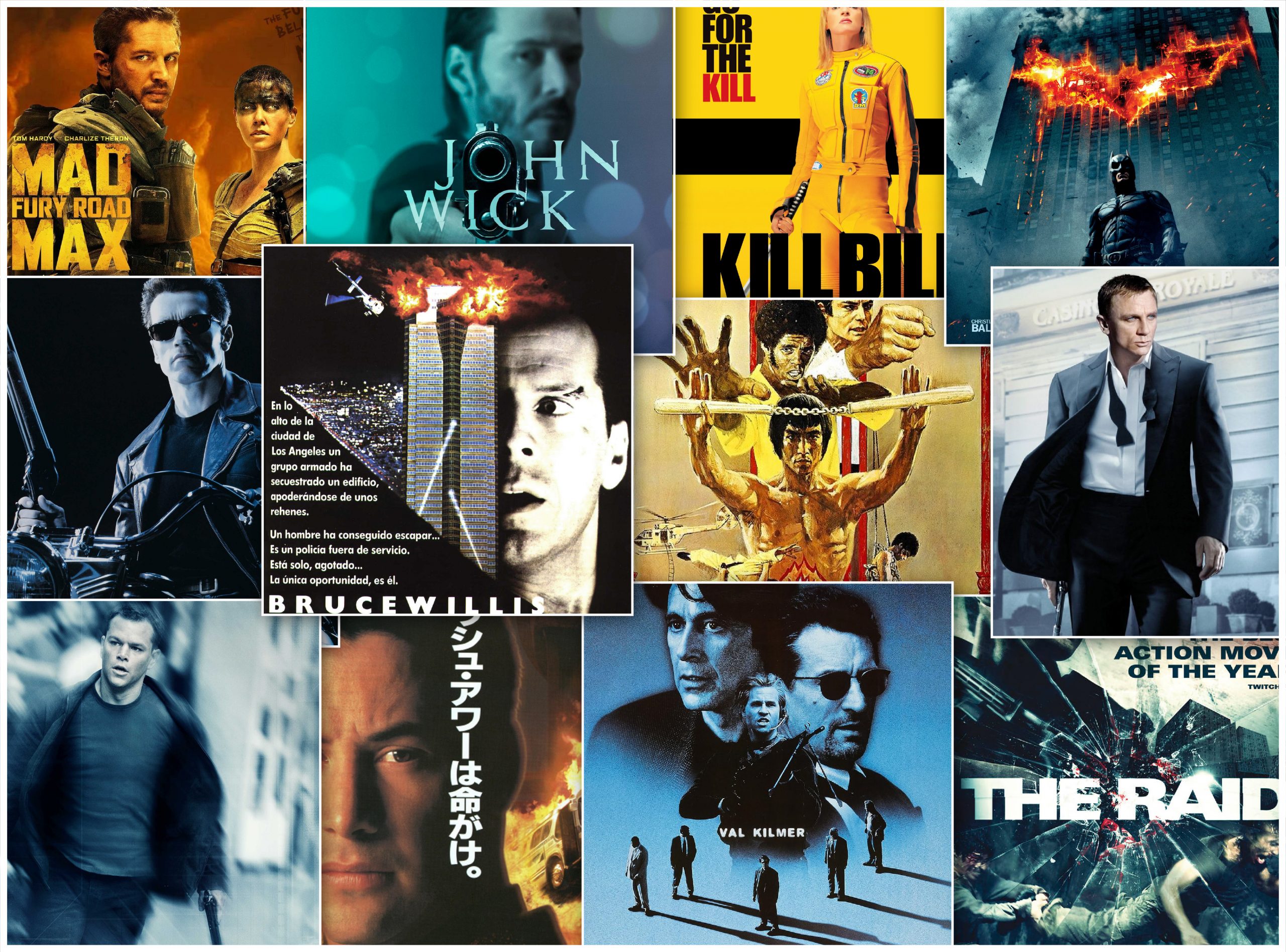

For as long as anyone can remember, the Academy has had a blind spot. Action movies can break box office records, inspire a hundred imitators, and even slip into pop culture as quotable classics, and yet, come Oscar night, they’re usually shoved into the “technical categories” corner. Die Hard?
Four nominations, all for sound and editing. The Dark Knight? Shut out of Best Picture entirely, a snub so glaring the Academy had to change its rules the following year. Even Mad Max: Fury Road, which roared away with six wins, somehow lost the night’s biggest prize.
Why does this keep happening? Part of it is old-school genre snobbery. Voters tend to treat action films as “popcorn fun” rather than cinema worth rewarding, even though, let’s be honest, some of these movies are more technically daring and emotionally effective than half the prestige dramas collecting trophies. Fans know it, critics often admit it, but Oscar ballots have been slower to catch up.
These films represent just a fraction of the action cinema that deserves recognition. For a comprehensive look at the genre’s finest achievements, explore our Top 60 Action Movies of All Time to see how these Oscar-snubbed classics fit into the broader landscape of action cinema excellence.”
So let’s set the record straight.
Here are 15 action movies that weren’t just good Saturday-night fun — they were Oscar-worthy!
1. Die Hard (1988)
- Cast: Bruce Willis, Alan Rickman, Bonnie Bedelia
- Director: John McTiernan
Before Die Hard, the ’80s action formula was simple: bigger muscles, bigger explosions. Then came Bruce Willis — a TV star from Moonlighting, not an action heavyweight, stumbling barefoot through a Los Angeles skyscraper, wisecracking his way past machine guns and broken glass. John McClane wasn’t indestructible. He was bloodied, exhausted, scared, and that vulnerability transformed the entire genre.
The film pulled in about $140 million worldwide, impressive for a mid-budget thriller that Fox initially thought would flop. It launched four sequels, cemented Alan Rickman’s Hans Gruber as one of the great screen villains, and, depending on who you ask, is still considered the best “Christmas movie” ever made. The American Film Institute added it to its list of top thrillers, and in 2017, the Library of Congress preserved it in the National Film Registry. And yet on Oscar night? Four nominations, no wins. No Supporting Actor nod for Rickman, even though villains often steal the show. No directing nod for McTiernan, whose pacing and tension still feel like a masterclass.
What Oscar it should’ve won: Best Supporting Actor for Alan Rickman. Cool, dry, and magnetic, he gave us a villain audiences almost wanted to root for. Thirty-five years later, people still talk about his debut—that alone should’ve made him a lock.
2. Terminator 2: Judgment Day (1991)
- Cast: Arnold Schwarzenegger, Linda Hamilton, Edward Furlong, Robert Patrick
- Director: James Cameron
If Die Hard redefined the hero, Terminator 2 redefined the spectacle. James Cameron made a sequel that delivered a visual effects leap so jaw-dropping that audiences in 1991 wondered if they were even watching the future of cinema. Between the liquid-metal morphing of Robert Patrick’s T-1000 and Arnold Schwarzenegger’s evolution from stone-cold villain to father-figure protector, this was the rare blockbuster that married groundbreaking tech with real emotional punch.
Linda Hamilton’s Sarah Connor deserves her chapter in film history. She went from damsel-in-distress in the first film to one of the fiercest, most complex action heroines ever put on screen. Her performance was muscular, haunted, and unrelenting, and was every bit as award-worthy as the prestige dramas of the year. Critics knew it, audiences felt it, and yet the Academy didn’t bite.
The film made over $500 million worldwide, a staggering number at the time, and won four technical Oscars (Visual Effects, Makeup, Sound, and Sound Editing). But when it came to the “serious” awards—Picture, Director, Acting—silence. Never mind that Cameron’s direction set the template for modern blockbusters or that Hamilton gave one of the defining performances of the decade.
What Oscar it should’ve won: Best Actress for Linda Hamilton. No disrespect to Jodie Foster (The Silence of the Lambs (1991), which swept that year), but Hamilton turned Sarah Connor into a cultural icon — a raw, human embodiment of strength, fear, and survival that action movies had never seen before.
3. The Dark Knight (2008)
- Cast: Christian Bale, Heath Ledger, Aaron Eckhart, Michael Caine, Maggie Gyllenhaal
- Director: Christopher Nolan
Here’s the movie that forced the Academy to rewrite the rules. Christopher Nolan’s The Dark Knight was deemed more than just your campy comic book film—it was a cultural earthquake. Ledger’s Joker rewired how audiences thought about villains, the IMAX sequences turned action into pure cinema, and Nolan’s operatic scope elevated superhero storytelling into something Shakespearean. Critics compared it to Heat and The Godfather. Audiences showed up in droves — $1 billion worldwide, the highest-grossing film of 2008.
And what did the Academy do? They threw Ledger a well-deserved posthumous Supporting Actor win, tipped their hat at a handful of technical categories, and then pretended the film didn’t exist in the Best Picture race. That snub was so controversial that it directly led the Academy to expand Best Picture to 10 nominees the very next year. That’s right: The Dark Knight broke the Oscars without even winning them.
Ledger’s Oscar is often remembered, but it overshadows the broader slight: Nolan’s directing went unrecognized, Bale’s brooding Batman was overlooked, and the film’s cultural dominance was ignored in favor of safer prestige fare like The Reader. Fans have never forgiven that blind spot.
What Oscar it should’ve won: Best Picture. Period. The Academy handed it to Slumdog Millionaire (a great film, sure), but in terms of cultural longevity, influence on the industry, and pure artistry, The Dark Knight deserved the crown.
4. Speed (1994)
- Cast: Keanu Reeves, Sandra Bullock, Dennis Hopper
- Director: Jan de Bont
Sometimes all it takes is a bus, a bomb, and a promise it can’t drop below 50 mph. Speed is the kind of high-concept thriller that could’ve been a disposable ‘90s gimmick, but instead it became a genre-defining adrenaline shot. Jan de Bont’s tight, muscular direction turned Los Angeles freeways into pressure cookers, Reeves found his stride as an action star with zen-like calm, and Bullock’s breakout performance made her America’s sweetheart overnight. Hopper? Pure, unhinged villain glee.
The Academy tossed the film a bone with two technical wins (Sound Editing and Sound Mixing), but that was it. For a movie that grossed $350M worldwide and is still studied in film schools for its pacing, tension, and character-driven thrills, that feels like robbery. It wasn’t just a popcorn spectacle; it was smart, taut filmmaking with iconic performances that launched careers and cemented a genre.
Why the snub? Because in the ‘90s, action was still treated as B-movie territory—fun, but not “serious.” The irony? Speed is leaner, more economical, and more gripping than half the prestige dramas it lost to (Forrest Gump took the crown that year).
What Oscar it should’ve won: Best Director. Jan de Bont deserved a nod for proving that action, when crafted with precision, can be art. His work kept audiences white-knuckled for two straight hours without ever losing coherence or character. That’s not luck—that’s craft.
5. Mad Max: Fury Road (2015)
- Cast: Tom Hardy, Charlize Theron, Nicholas Hoult, Hugh Keays-Byrne
- Director: George Miller
George Miller didn’t just revive his decades-old dystopian series—he detonated it. Fury Road is essentially a two-hour chase across the desert, but every frame is engineered with a precision that feels anarchic and divine at the same time. Miller’s choice to shoot in Namibia, leaning heavily on practical effects and stunt choreography, gave the film a raw, tactile quality. The War Rig barrelled through explosions. Polecats swung over convoys. Vehicles smashed into each other without green-screen padding—the result: an action film that plays like a symphony of controlled chaos.
The cast matched the spectacle. Charlize Theron’s Imperator Furiosa became an instant icon of resilience and rebellion—arguably the film’s true lead—with Tom Hardy’s taciturn Max as her battered counterpart. Nicholas Hoult’s manic War Boy “Nux” brought tragic humanity to the wasteland. Together, they turned what could’ve been a hollow spectacle into something elemental: survival, redemption, and hope roaring against despair.
At the Oscars, Fury Road stormed the night with 10 nominations and 6 wins—sweeping technical categories like Film Editing, Production Design, Costume Design, Makeup and Hairstyling, Sound Editing, and Sound Mixing. But the two most vital prizes—Best Picture and Best Director—slipped away to Spotlight and Alejandro G. Iñárritu (The Revenant). Many critics and filmmakers later argued that Miller’s achievement wasn’t just the best of 2015 but one of the most radical pieces of blockbuster filmmaking in decades.
What Oscar it should’ve won: Best Director for George Miller. Few films embody direction as clearly as this one—every cut, every sound, every frame locked to his vision. He orchestrated a living, breathing action opera in which clarity triumphed over chaos, redefining what large-scale action could look and feel like on the big screen.
6. Lethal Weapon (1987)
- Cast: Mel Gibson, Danny Glover, Gary Busey
- Director: Richard Donner
Richard Donner’s Lethal Weapon didn’t just give us another buddy-cop movie; it defined the blueprint for the genre. Pairing Mel Gibson’s unhinged, suicidal Martin Riggs with Danny Glover’s weary, family man Roger Murtaugh gave audiences a mix of action, humor, and heart that felt new at the time. Shane Black’s razor-sharp script layered in Vietnam War trauma, Christmas noir atmosphere, and banter that still gets quoted today (“I’m too old for this…” is Hollywood canon now).
The movie’s mix of high-octane action sequences (Riggs vs. Mr. Joshua, the freeway sniper scene) with genuine emotion helped launch three sequels, a TV show, and an entire subgenre of mismatched-partner movies from Rush Hour to Bad Boys. Financially, it was a box office juggernaut, pulling in over $120 million worldwide on a modest $15 million budget—cementing Donner’s reputation as a master of crowd-pleasing spectacle.
What Oscar it should’ve won: Best Original Screenplay (Shane Black).
Black’s blend of gritty realism, comic rhythm, and psychological depth elevated Lethal Weapon far above a generic cops-and-criminals thriller. In hindsight, it deserved recognition as a script that redefined Hollywood action storytelling.
7. The Matrix (1999)
- Cast: Keanu Reeves, Laurence Fishburne, Carrie-Anne Moss, Hugo Weaving
- Director: Lana & Lilly Wachowski
When The Matrix dropped in 1999, it just blew minds and reprogrammed the entire language of blockbuster cinema. The Wachowskis fused cyberpunk philosophy, anime-inspired visuals, and Hong Kong wire-fu action into a movie that felt like the future had arrived early. Suddenly, audiences were talking about simulation theory, quoting Morpheus, and dodging bullets in slow motion.
Keanu Reeves became the face of millennial cool as Neo, Laurence Fishburne’s Morpheus turned into an archetype for every “wise mentor” that followed, and Carrie-Anne Moss redefined female action stardom with Trinity’s iconic lobby shootout. Technically, the film was a watershed moment—bullet time, green code raining down the screen, black trench coats, and sunglasses all became shorthand for late-90s cool.
At the box office, The Matrix pulled in $467M worldwide, proving a dense, R-rated sci-fi concept could be both cerebral and wildly commercial. More importantly, it reshaped Hollywood action: every blockbuster after 1999 chased its look, its fight choreography, or its effects.
What Oscar it should’ve won: Best Picture.
Sure, it snagged four technical Oscars (Editing, Sound, Sound Effects Editing, Visual Effects), but looking back, no film captured 1999—or shaped the next two decades of action cinema—like The Matrix 8.
8. Point Break (1991)
- Cast: Keanu Reeves, Patrick Swayze, Lori Petty, Gary Busey
- Director: Kathryn Bigelow
Kathryn Bigelow’s Point Break is pure 90s adrenaline—a surf-noir crime thriller where extreme sports and outlaw philosophy collide. Keanu Reeves plays rookie FBI agent Johnny Utah, who goes undercover to bust a crew of surfers suspected of being the “Ex-Presidents,” a gang of bank robbers in rubber masks. Patrick Swayze’s Bodhi, all zen charm and reckless energy, is one of the great anti-heroes of the era—half spiritual guide, half thrill-seeking anarchist.
The film practically invented the “extreme action” subgenre, swapping car chases for skydiving free-falls and surf set-pieces that pushed stunt work to jaw-dropping levels. Bigelow shoots it with an intensity that made surfing look mythic and bank heists look like rock concerts. Its mix of macho bromance, undercover tension, and existential musings (“If you want the ultimate, you’ve got to be willing to pay the ultimate price”) made it both a cult legend and a pop culture reference point.
Point Break grossed $83.5M worldwide—solid, but its real legacy is the way it redefined action cool for the 90s. Every extreme sports action flick (xXx, Fast & Furious, even The Dark Knight Rises’ aerial opening) owes a debt to Bigelow’s vision.
What Oscar it should’ve won: Best Stunts (if the category existed). Skydiving sequences and 100-foot wave surfing remain some of the most exhilarating practical stunts ever put on film.
9. Heat (1995)
- Cast: Robert De Niro, Al Pacino, Val Kilmer, Jon Voight, Ashley Judd, Tom Sizemore, Amy Brenneman
- Director: Michael Mann
Michael Mann’s Heat isn’t just a crime saga—it’s the template. This sprawling Los Angeles epic follows meticulous thief Neil McCauley (Robert De Niro) and obsessive detective Vincent Hanna (Al Pacino) in a cat-and-mouse duel that feels Shakespearean in scope. Their legendary diner face-off—two titans quietly circling each other over coffee—remains one of cinema’s most electrifying dialogue scenes.
But when the bullets flew, Mann rewrote the rules. The downtown LA shootout is as raw and deafening as urban combat has ever looked on screen, its sound design studied by real law enforcement and military for training. Beyond the action, Heat digs into the loneliness of men defined by their work, where family ties and personal codes are constantly tested by obsession.
Though only a modest hit at $187M worldwide, its influence dwarfs its box office. Christopher Nolan cites it as a direct inspiration for The Dark Knight, and its DNA runs through everything from The Town to Sicario. Few films blend precision, poetry, and firepower so seamlessly.
What Oscar it should’ve won: Best Sound Mixing. The thunderous echo of automatic gunfire in downtown LA isn’t just a set piece—it’s a cinematic landmark.
10. Kill Bill: Vol. 1 (2003)
- Cast: Uma Thurman, Lucy Liu, Vivica A. Fox, Daryl Hannah, Sonny Chiba, Chiaki Kuriyama, Michael Madsen (cameo)
- Director: Quentin Tarantino
Quentin Tarantino rebuilt the revenge movie from scratch with Kill Bill: Vol. 1. Uma Thurman’s “Bride” wakes up from a four-year coma and slices her way through the Deadly Viper Assassination Squad — but what makes the film legendary is how Tarantino layers his influences. Shaw Brothers martial arts, spaghetti westerns, anime blood sprays, and samurai code all collide in one neon-soaked fever dream.
The action isn’t just staged—it’s weaponized. The suburban knife fight between Thurman and Vivica A. Fox turns a living room into a war zone, complete with PTA scheduling talk before the next blade swing. Then there’s Chiaki Kuriyama’s Gogo Yubari, a schoolgirl in a uniform hiding a meteor hammer that turns into one of Tarantino’s nastiest fight scenes. But the crown jewel? The Crazy 88 showdown in Tokyo’s House of Blue Leaves—a 20-minute blood ballet that shifts between wide master shots, silhouette swordplay, and frantic close-ups. Limbs fly, fountains of blood spray, and yet the rhythm feels almost musical.
Sonny Chiba’s cameo as Hattori Hanzo, forging a sword with samurai solemnity, grounds the film in a legacy of honor before all hell breaks loose. And Lucy Liu’s duel in the snow—katanas clashing against the sound of water and wind—gives the movie its most hauntingly beautiful moment.
Kill Bill: Vol. 1 is ultraviolence as operatic spectacle. It doesn’t just honor action cinema’s past—it reshapes it into something that feels timeless.
What Oscar it should’ve won: Best Costume Design. The yellow tracksuit didn’t just nod to Bruce Lee—it became an icon.
11. The Raid: Redemption (2011)
- Cast: Iko Uwais, Joe Taslim, Donny Alamsyah, Yayan Ruhian, Ray Sahetapy
- Director: Gareth Evans
Indonesian action cinema exploded onto the global stage with The Raid: Redemption, a film that doesn’t just raise the bar—it drop-kicks it through a concrete wall. Set almost entirely inside a Jakarta apartment block controlled by a ruthless crime lord, the story follows a SWAT team trapped floor by floor, forced to fight their way out. The setup is simple; the execution is relentless.
Iko Uwais’s Rama is the beating heart of the film, bringing Pencak Silat — Indonesia’s blisteringly fast, bone-snapping martial art — to international attention. Every punch, elbow, and knee strike is choreographed with surgical precision, turning narrow hallways and cramped rooms into killing fields. Joe Taslim’s Jaka brings grounded toughness, while Yayan Ruhian’s “Mad Dog” cements himself as one of the greatest action villains of the century, a wiry demon who refuses to die without testing his opponents in a fight to the death.
Evans shoots the action with a ruthless clarity—no shaky cam, no cheats. Long takes and locked frames let you feel the impact of every blow, while the sound design (bone cracks, blade slices, and the thud of bodies hitting tile floors) makes each scene almost tactile. The machete ambush, the stairwell brawl, and Rama’s desperate hand-to-hand duel with Mad Dog are pure adrenaline cinema.
What elevates The Raid is its pacing: there are no safe zones. Even the brief quiet moments hum with dread, knowing the next door could unleash another ambush. It’s survival horror fused with martial arts spectacle, and it redefined what modern action could look like.
The Raid: Redemption isn’t just a run-of-the-mill action movie — it’s a film so ferocious, it forced Hollywood to rethink fight choreography altogether.
What Oscar should’ve won: Best Editing. The film’s rhythm is unrelenting, proof that action movies can be symphonies of speed, precision, and chaos.
12. John Wick (2014)
- Cast: Keanu Reeves, Michael Nyqvist, Willem Dafoe, Alfie Allen, Adrianne Palicki, Ian McShane, John Leguizamo
- Director: Chad Stahelski
Nobody expected a grieving hitman avenging his puppy to redefine modern action cinema—but John Wick did just that. Keanu Reeves carved out his most iconic role since The Matrix, blending balletic gunplay, brutal close-quarters combat, and an underworld mythology that felt both fresh and instantly mythic.
The choreography, dubbed “gun-fu,” turns each firefight into a dance of precision: headshots flow like punctuation, reloads are part of the rhythm, and the camera lets you see the action. The Red Circle nightclub shootout is pure neon carnage—Reeves gliding through enemies in tailored suits with the grace of a dancer. Even quieter beats, like his sledgehammer exhuming the arsenal beneath his basement floor, thrum with inevitability.
Stahelski, a former stuntman, shoots action like he knows where every bruise lands. No shaky cam, no cheap cuts—just clarity and consequence. Wick isn’t invincible; he’s relentless, surviving by skill and sheer force of will. And Ian McShane’s Winston hints at the Continental, a hotel-for-assassins that opened the door to an entire franchise mythology.
John Wick is lean, mean, and balletic. It reminded audiences what R-rated action could feel like when crafted with precision.
What Oscar it should’ve won: Best Choreography (if it existed). Gun-fu deserves a category of its own.
13. The Bourne Ultimatum (2007)
- Cast: Matt Damon, Julia Stiles, David Strathairn, Joan Allen
- Director: Paul Greengrass
By the time The Bourne Ultimatum dropped in 2007, the spy genre was choking on tuxedos and gadgets. Jason Bourne came back to smash that mold—bare-knuckled, paranoid, and relentlessly kinetic. Paul Greengrass’s jittery handheld cameras and Matt Damon’s exhausted intensity turned what could’ve been another CIA thriller into a masterclass in tension. Every chase, every fight feels improvised in real time, like Bourne is inventing survival tactics faster than the audience can blink.
The Waterloo Station sequence alone is a clinic in suspense. Bourne maneuvers a rookie journalist through a maze of surveillance teams, directing him with terse phone instructions while dodging operatives at every turn. It’s spycraft boiled down to instinct, and Greengrass shoots it like a live wire—crowds, trains, earpieces, and split-second timing colliding into one of the greatest sequences of 21st-century action.
Then there’s the Tangier rooftop chase, where Bourne hurls himself across gaps, bursts through cramped apartments, and finally collides with Desh (Joey Ansah) in a bone-splintering close-quarters fight. Forget CGI: this is drywall breaking, fists smashing, and books becoming weapons. Damon doesn’t look like a superhero; he looks like a man whose body and mind are running on sheer adrenaline. That realism would go on to redefine spy action, pushing Bond to reinvent itself in Casino Royale a year earlier and even shaping fight choreography across Hollywood.
What makes Ultimatum iconic isn’t just the stunts—it’s the way Greengrass forces you into Bourne’s fractured perspective. The editing is chaotic but purposeful, making you feel hunted, cornered, and desperate right alongside him. Damon’s quiet, haunted performance gives it an emotional core: this isn’t a man chasing villains; it’s a man chasing himself, clawing through layers of lies for the truth.
What Oscar it should’ve won: Best Cinematography for somehow making shaky-cam an art form instead of a headache.
14. Casino Royale (2006)
- Cast: Daniel Craig, Eva Green, Mads Mikkelsen, Judi Dench, Jeffrey Wright
- Director: Martin Campbell
James Bond was supposed to be too old, too polished, and too martini-smooth for reinvention. Then Daniel Craig crashed through a bathroom wall in the opening minutes of Casino Royale—and suddenly Bond wasn’t a tuxedoed spy anymore. He was a blunt instrument. This wasn’t gadgets and one-liners. This was fists breaking sinks, parkour chases across cranes, and bruises that looked like they hurt.
Craig’s Bond makes his legend not by being the slickest in the room but by being the most relentless. The Madagascar chase—where Bond chases a bomb-maker who leaps like Spider-Man—rewrote the action playbook with raw parkour stunts and Craig smashing his way through drywall instead of leaping gracefully. He doesn’t match elegance with elegance; he bulldozes it.
And then there’s Mads Mikkelsen’s Le Chiffre, a villain defined not by death rays but by quiet menace and a poker face that could stop your pulse. The high-stakes casino showdown isn’t just cards on the table; it’s a war of nerves where silence is more lethal than bullets. Add in that torture scene with a rope and a chair—Bond stripped of glamour, reduced to raw survival—and the franchise had never gone darker.
But the film’s secret weapon is Eva Green’s Vesper Lynd. She doesn’t just humanize Bond; she dismantles him. The final Venice sequence, with Vesper drowning in an iron cage as Bond can’t save her, rewires the DNA of the franchise. Bond isn’t a man defined by victories, but by the wounds that never heal.
Casino Royale is the reason the modern Bond exists. It reminded the world that 007 could still surprise, still bleed, and still matter.
What Oscar it should’ve won: Best Supporting Actor for Mads Mikkelsen. Cold, calculating, and unforgettable.
15. Enter the Dragon (1973)
Cast: Bruce Lee, John Saxon, Jim Kelly, Shih Kien, Angela Mao
Director: Robert Clouse
Enter the Dragon isn’t just a martial arts film—it’s the martial arts film. Bruce Lee’s only major Hollywood vehicle turned him from an underground legend to a global icon, and it still stands as the gold standard for fight choreography on screen. Shot with a mix of grit and balletic precision, every punch feels like a thunderclap, every kick like a signature.
The setup is simple but perfect: Lee infiltrates a crime lord’s private island under the guise of a martial arts tournament. What follows is a showcase of Bruce Lee’s philosophy of combat—economical, brutal, and breathtaking. From the mirrored final duel with Han to the infamous nunchaku sequence, the film cemented imagery that would be copied endlessly but never equaled.
What separates Enter the Dragon from the chop-socky knockoffs it inspired is its fusion of a pulp spy story with Lee’s laser-focused intensity. Where other action heroes posed, Lee attacked. Where others quipped, he stared straight into the camera with a look that dared you to blink.
The film also widened the playing field: Jim Kelly’s cool karate master and John Saxon’s gambler sidekick brought a multicultural flair rare in the early ’70s. But make no mistake—this was Bruce Lee’s movie, and every frame is an argument for why he remains the most influential martial artist in cinema.
Enter the Dragon sparked a global martial arts boom, from Hong Kong to Hollywood, from black belts in school gyms to Jackie Chan and Jet Li’s entire careers.
What Oscar it should’ve won: Best Actor for Bruce Lee. Hollywood never gave him the time to collect trophies—but this was proof he was more than fists; he was fire.
What is your action-filled Oscar pick?
The Oscars may worship prestige dramas and character studies, but the truth is simple: action movies deserve their flowers too. From The Dark Knight, redefining superhero grit to The Raid: Redemption, turning fight choreography into high art. Each one fused adrenaline with artistry, proving that car chases, shootouts, and hand-to-hand combat can carry as much weight as an Oscar-bait monologue.
The Academy has too often dismissed action as spectacle over substance, but these 15 action classics show how wrong that thinking is. Their influence can be felt in every blockbuster that followed, inspiring filmmakers, reshaping genres, and thrilling audiences across generations.
So the next time awards season rolls around, remember: the future of film isn’t just in biopics and slow-burn dramas. It’s in the explosive, inventive, and unforgettable world of action cinema—the kind of stories that light up the big screen, live in our cultural memory, and truly define what moviegoing is all about.