

The summer box office is going out not with a bang but a whimper. For the fourth weekend in a row, Warner Bros.’ horror movie WEAPONS was #1, selling an additional $10.2M in the first three days of the long weekend. All films produced $65.6M, which is 29% lower than the $82.3M earned on the same holiday weekend last year, led by $15.5M from DEADPOOL AND WOLVERINE in its sixth weekend.
Netflix and Sony’s animated sing-along KPOP: DEMON HUNTERS was the unofficial box office winner last weekend, because Netflix chose not to report its grosses to Comscore. The estimated $18M it earned in its limited 2-day theatrical appearance turned out to be one and done, as the film did not carry over into this weekend.
We cannot remember any case when the highest-grossing film over the weekend didn’t play in the following week. While Netflix deserves credit for picking a slow late summer weekend to bring out its crowd-pleasing hit, it only won the weekend because it was up against very limited competition.
Ironically, the top “new” movie this weekend was the 50th anniversary re-release of Steven Spielberg’s JAWS, which earned $8.1M across 3,200 North American theatres. This was the lowest-earning weekend since March 14-16 earlier this year, when only $52.2M was brought in, led by NOVOCAINE with its $8.8M opening. While Labor Day can often be a slow time for theatres, it does not necessarily have to be that way.
In 2021, with COVID-19 in retreat, Disney made the bold move to open Marvel’s SHANG-CHI AND THE LEGEND OF THE TEN RINGS on Labor Day weekend. It earned $75.4M in its first three days and wound up earning a total domestic box office of $224.5M, the second highest of 2021. At least in that case, Labor Day weekend was a great time for a high-powered new release.
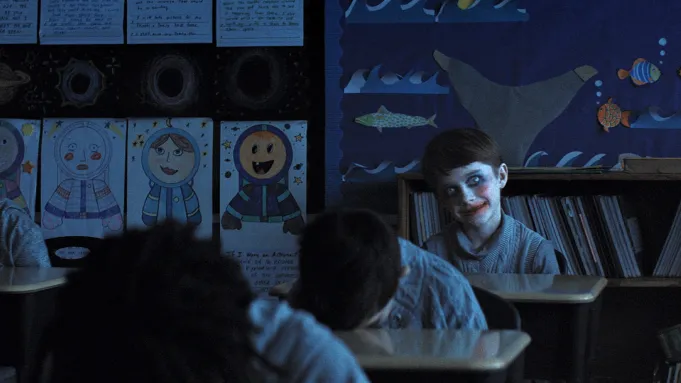
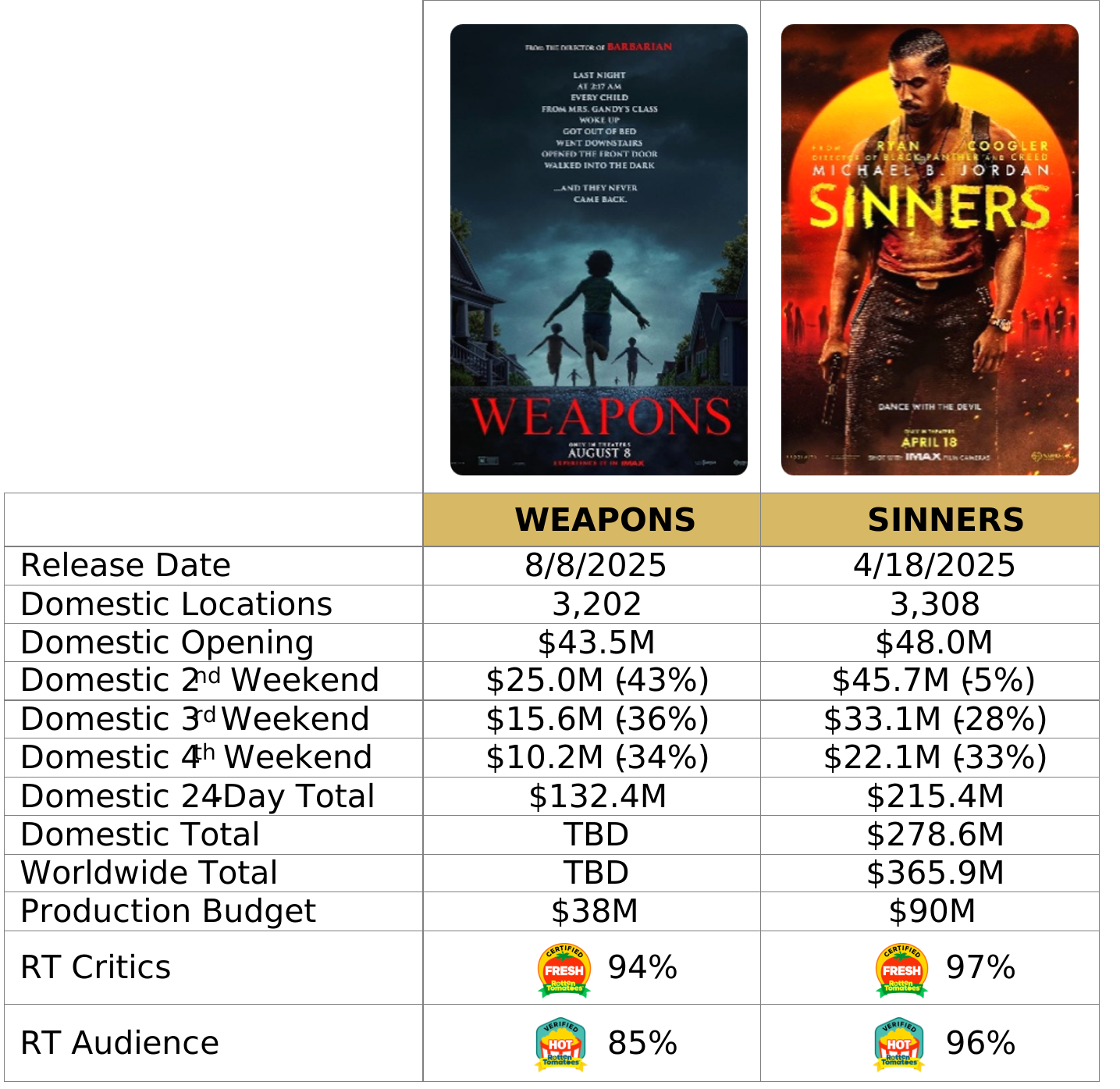
WEAPONS has led the official box office for four consecutive weekends, this weekend with an additional $10.2M and a decline of 34% from last weekend. It has accumulated $132.4M domestic and $234.6M worldwide in 24 days. Next week, this winning streak will end when Warner Bros. surpasses it with another horror title, THE CONJURING: LAST RITES. There’s no doubt that WEAPONS has been a success, drawing positive responses from both critics and audiences and selling well to moviegoers.
When Variety asked director and writer Zach Cregger whether he intended to get involved in a future sequel or prequel, he answered, “Definitely! I’ve actually … it’s funny you asked that. I can’t help it: I have another idea for something in this world that I’m kind of excited about. I’m not going to do it next, and I probably won’t do it after my next movie, but I do have one and I’d like to see it on the screen one day.” Here is a comparison between WEAPONS and SINNERS, the other surprisingly strong horror hit of 2025.
WEAPONS vs. SINNERS after 24 Days
JAWS: 50th ANNIVERSARY, the reissue of Universal’s summer classic, finished in second place by bringing in $8.1M. One half century later, it’s interesting to look back on the making of the film that has been dubbed the original summer blockbuster. Directed by then 27-year-old Steven Spielberg, JAWS was filmed primarily on the island of Martha’s Vineyard off the coast of Cape Cod, Massachusetts.
In the film, this setting was labelled as the fictional Amity Island. Filming on the open ocean—not in controlled tanks—lent authenticity but added unpredictable obstacles, like weather and errant sailboats. The mechanical great white shark—nicknamed “Bruce,” after Spielberg’s lawyer—was notorious for breaking down. For a movie about sharks, there were only a few shark close-ups that cut, but they were very memorable.
Versions of the shark included a full-body prop towed by a long umbilical cord, and two platform sharks operated by scuba-diving technicians beneath the waves. These failures influenced Spielberg’s pivot to a Hitchcockian “less-is-more” approach, suggesting the shark more than showing it. John Williams’ minimalist, iconic two-note motif—performed on tuba for menace—exceeded expectations and became synonymous with looming danger, keeping the audience on edge throughout the movie.
Filming spiraled from a planned 55-day schedule with a $3.5M budget to 159 days and $7M, with the delays pushing Spielberg to the breaking point. Richard Dreyfuss initially declined the role of Hooper, concerned about the difficult shoot. Roy Scheider offered himself to play Chief Brody after Spielberg expressed doubts about bigger-name actors like Charlton Heston.
Dreyfuss and veteran actor Robert Shaw, who played Quint, the grizzled shark hunter and boat captain, failed to hit it off in real life and argued constantly during the shoot. While this added to Spielberg’s stress, some feel that the tension contributed to their excellent performances. Rotten Tomatoes reports a 97% fresh rating from critics and a 91% audience reaction.
Pre-Internet and social media, here are several reviews from famous movie critics from the period. Roger Ebert in the Chicago Sun Times praised JAWS as “a sensationally effective action picture, a scary thriller that works all the better because it’s populated with characters who have been developed into human beings we like.” He highlighted Spielberg’s pacing and called the film “a great entertainment.”
Vincent Canby from The New York Times admired Spielberg’s craftsmanship, writing that JAWS, “is a coarse-grained and exploitive work of art, and wonderfully effective.” He described it as a movie “that makes you forget you have a dry seat.” Gary Arnold from The Washington Post called the film “a triumph of pure entertainment” and noted that Spielberg “delivers jolts with precision timing.”
He predicted that JAWS would “set records” and “change the way movies are sold.” Not all the critics were positive, as the famous Gene Shalit on NBC’s Today Show called the film “a gimmicky scare show” and suggested it was “a carnival ride more than a movie.” While he admitted it was fun, he doubted that it would have staying power.
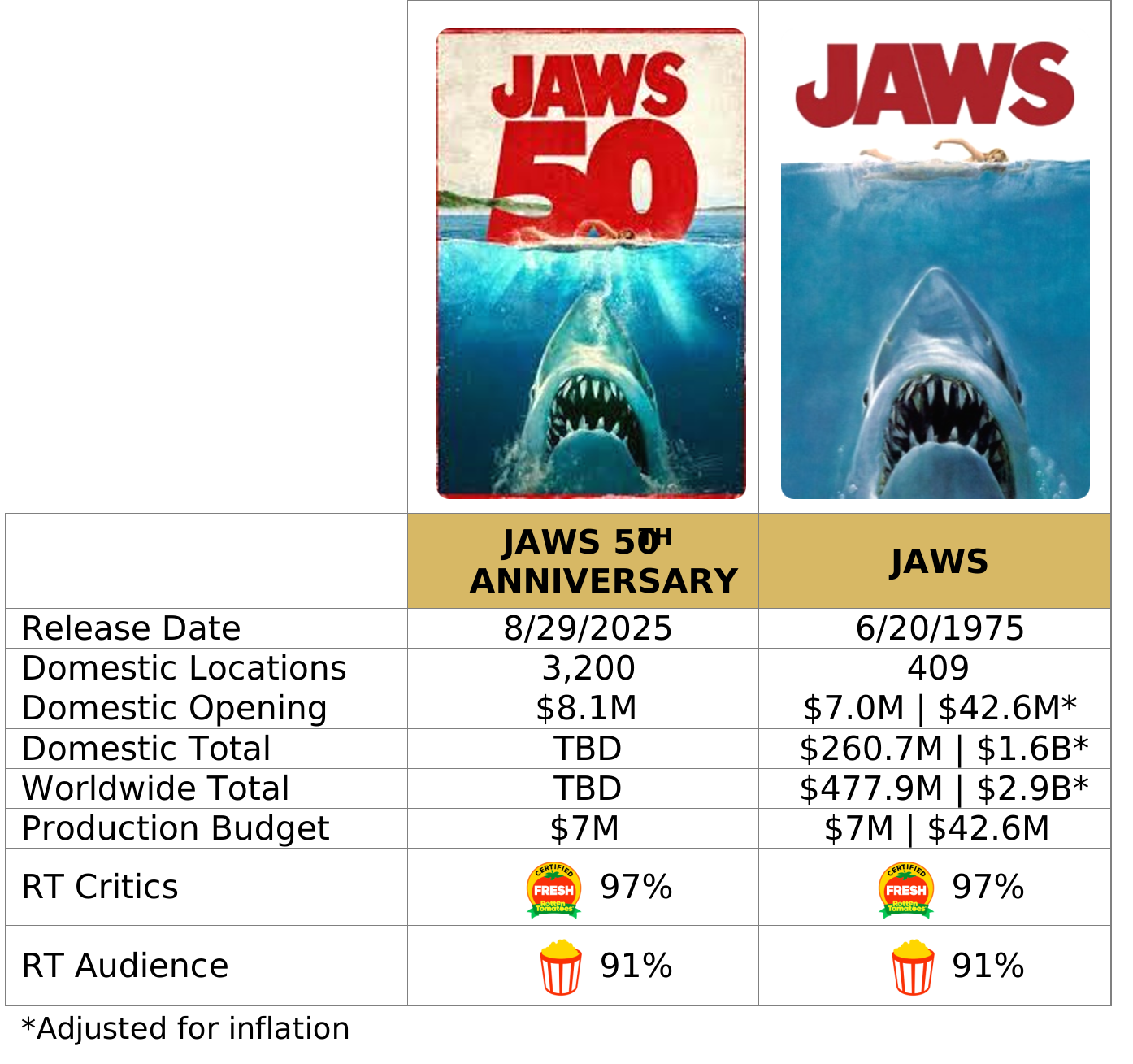
Well, Gene got it wrong, as it became the highest-grossing domestic film of all time, bringing in $260.7M during its initial release, almost twice the box office of the previous recordholder, THE GODFATHER, which had claimed that prize only three years earlier by earning $136.4M.
Two years later, JAWS would be eclipsed by STAR WARS, directed by a then little-known George Lucas, earning $307.2M in its 1977 domestic release. Amazingly, JAWS’ total worldwide gross in 1975 would equal $1.6B in today’s dollars. Here is a fun look at how the original JAWS release and its one-week re-release measure up against each other.
JAWS 50th ANNIVERSARY vs. JAWS 1975
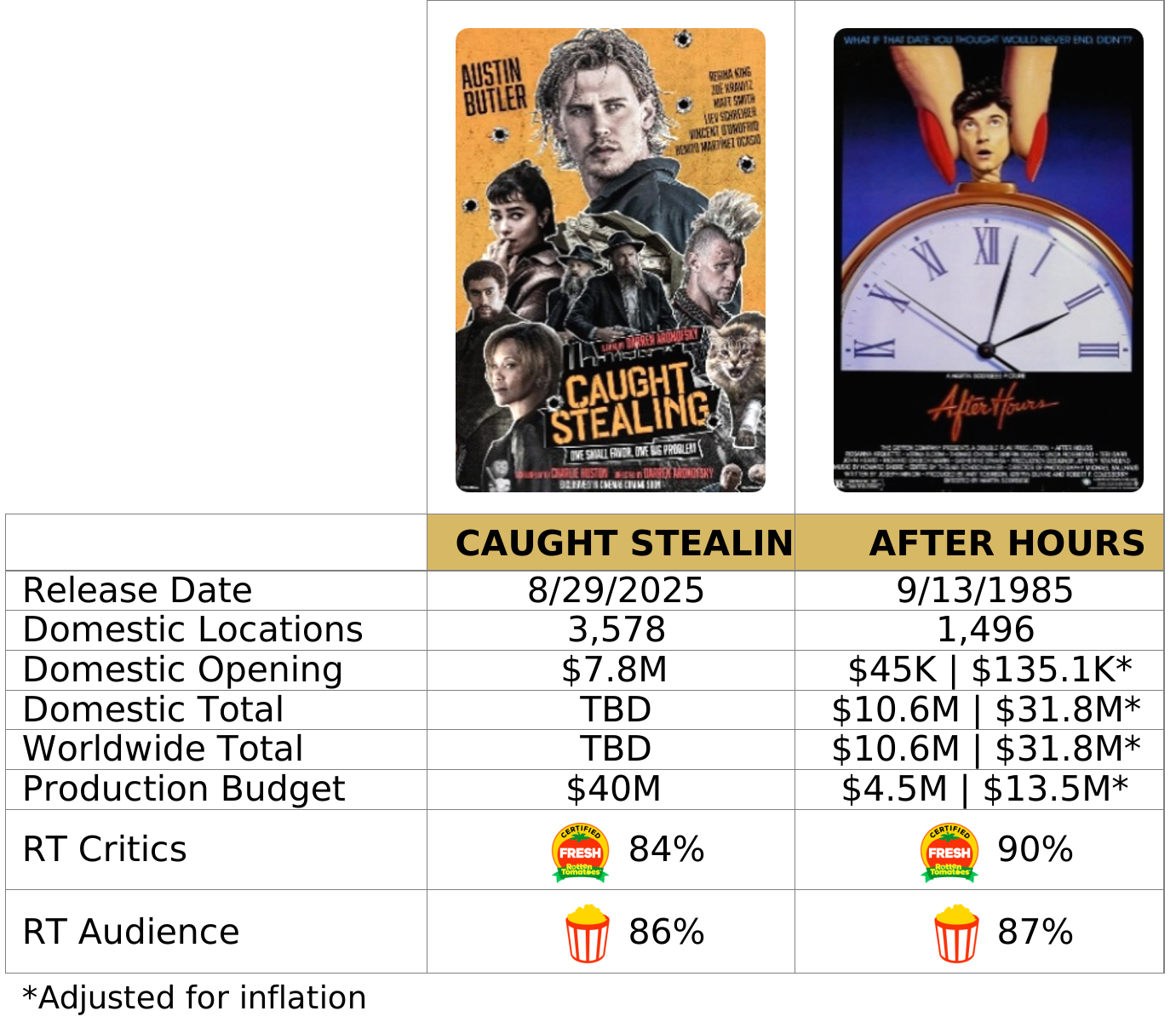
CAUGHT STEALING, the action-packed dark comedy from Sony, finished in third place with an opening weekend gross of $7.8M. This is the seventh film directed by Darren Aronofsky, since he arrived on the scene 25 years ago with REQUIEM FOR A DREAM. Four of his seven films have been nominated for Academy Awards, with REQUIEM FOR A DREAM (2000), THE WRESTLER (2008), BLACK SWAN (2010), and THE WHALE (2022) receiving a total of 11 Oscar nominations.
He is known as a director who gets the most out of his actors, with Natalie Portman winning as Best Actress for her performance in BLACK SWAN and Brendan Fraser winning as Best Actor for THE WHALE. He is very selective in his projects, producing only one film every three years on average. While his previous films were dramatic and somber, CAUGHT STEALING is a huge departure as a darkly comic crime thriller.
It is in New York in the 1990s, with the main character of Hank Thompson, being a washed-up former baseball player who has become a down-on-his-luck bartender. Content with his quiet, uneventful life, Hank agrees to cat-sit for a neighbor, a simple favor that spirals out of control.
Soon, he’s caught up in a violent underworld of gangsters and corrupt cops who are after something he unknowingly possesses. As the chaos escalates, Hank must fight for his own survival, stumbling through a breakneck series of misadventures and comedic circumstances where bad luck and bad choices collide.
The cast includes Austin Butler (ELVIS in 2022) as Hank Thompson, Zoe Kravitz (THE BATMAN in 2022) as Yvonne, his paramedic girlfriend, and Regina King (IF BEALE STREET COULD TALK in 2018) as Detective Roman, a perceptive law enforcer who investigates amidst all the chaos.
It has been reported that Austin Butler gained 35 pounds and lived overnight in the character’s apartment to get into the role, and that Aronofsky had to remind him to ease up. The critics have been receptive to the film, giving it an 84% rating on Rotten Tomatoes, while audiences have chimed in with an 86%.
The Washington Post describes the movie as an “enjoyably messy ride akin to Scorsese’s AFTER HOURS,” praising its noir vibes, satirical edge, and ensemble cameos, even as Butler plays more of a blank canvas amid other, more colorful characters.
RogerEbert.com calls it a “satisfyingly sharp thriller” with a tight, twisty script, meaningful stakes, top-tier direction, and an A+ cast. PunchDrunk Critics notes that the film “catches you flat-footed that it’s by Darren Aronofsky,” but finds many of the director’s trademarks emerging, calling it “a home-run thriller that’s one of the summer’s best.” With a production cost of $40M, it would have to take in $100M in worldwide sales to be profitable, and this seems unlikely after its $7.8M domestic opening.
With each new opener, we try to find an interesting film to use as a comparison. If the new movie is a sequel, prequel, or spin-off in a franchise or is within a clearly defined genre such as horror, the other films to compare it with are obvious. Other times, we might compare a movie to others that were directed by the same filmmaker, or starred the same lead actor or actress.
In this case, we found a parallel with another well-known filmmaker who took a chance by making a movie that was outside of their well-established style, just as Aronofsky did in this case. The Washington Post says in their review of CAUGHT STEALING that Aronofsky’s new film reminded them of Martin Scorsese’s AFTER HOURS from 1985.
Best-known for his crime epics such as TAXI DRIVER and RAGING BULL, Scorsese made this pitch-black comedy about one man’s nightmarish misadventures in SoHo. This comparison shows how two celebrated directors fared in their turn to comedy. While critics gave both directors supportive reviews, neither effort seems to have been commercially successful.
CAUGHT STEALING vs. AFTER HOURS
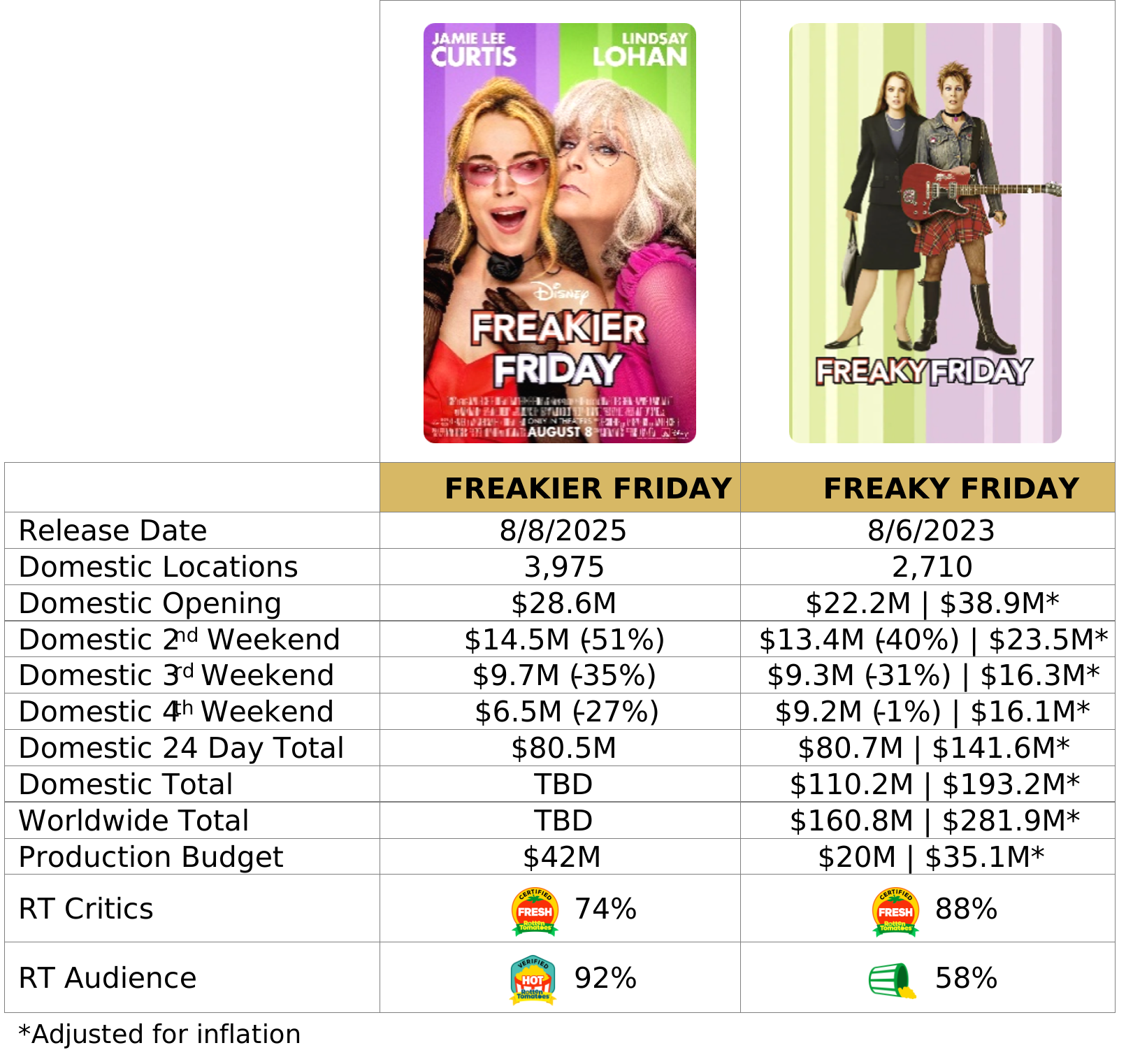
Disney’s FREAKIER FRIDAY continues to roll along by finishing #4 in its fourth weekend with an additional $6.5M and dropping only 27%. After 24 days, the film has sold $80.5M domestic and $130.9M worldwide and is becoming more profitable every week. It only needed to earn $105M to make it into the black and it has already achieved that number, with the entire month of September to go before it opens on Disney+ in early October.
FREAKIER FRIDAY vs. FREAKY FRIDAY after 24 Days
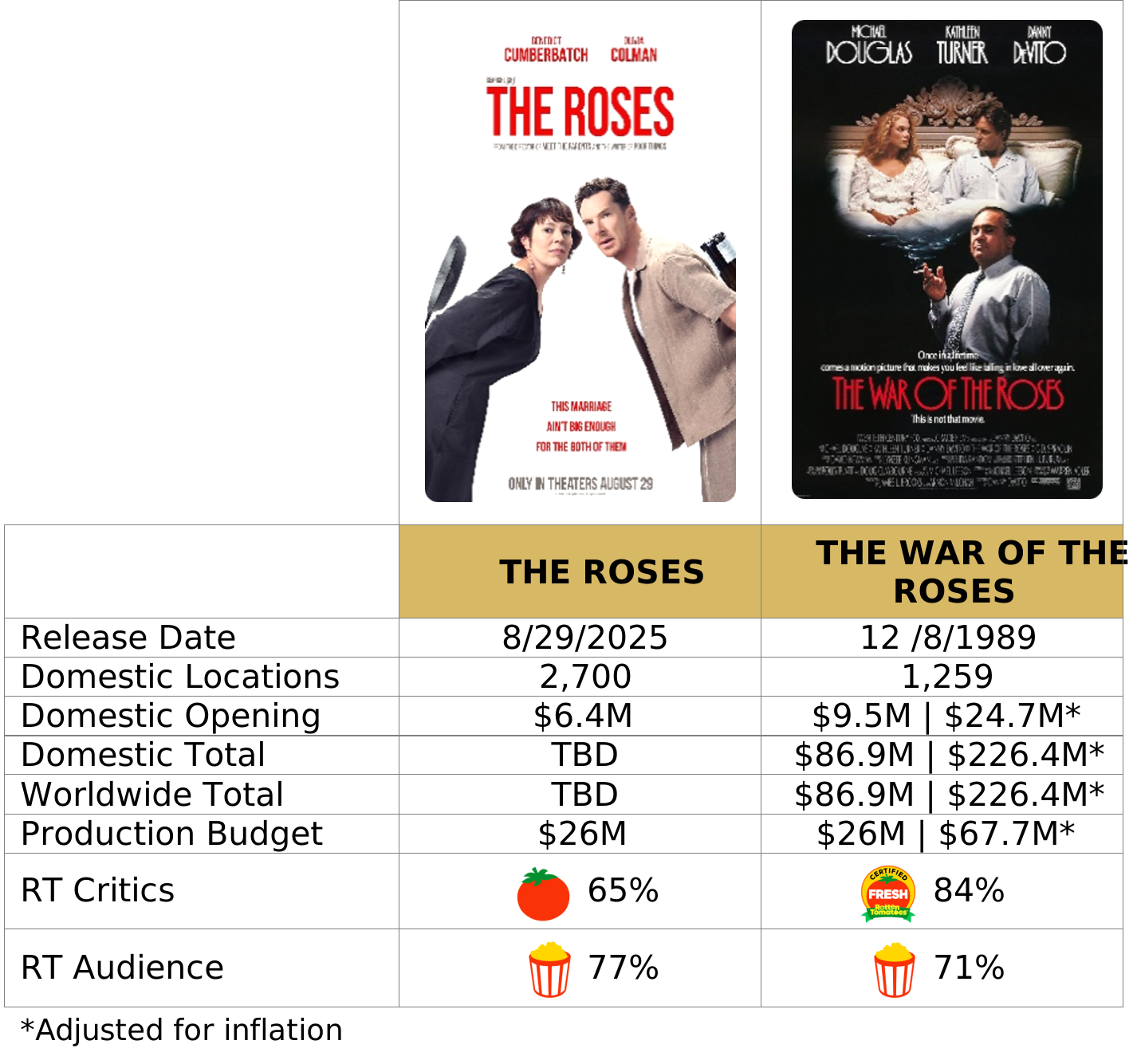
THE ROSES, the satirical dark comedy from Searchlight, finished fifth by taking in $6.4M. The film is based on the 1981 novel by Warren Adler, “The War of the Roses,” and is also a remake of the 1989 film by that same name. The new movie is a reimagining of its 1989 predecessor, maintaining its dark comedic tone while using a new cast, direction, and modern sensibility.
Director Jay Roach, who turned 68 this year, is best known for the AUSTIN POWERS trilogy and MEET THE FOCKERS. The characters of Oliver and Barbara Rose, who were played by Michael Douglas and Kathleen Turner in the 1989 film, have been renamed, for some reason, as Theo and Ivy Rose and are played by Benedict Cumberbatch and Olivia Coleman.
The plot of the new film follows the original’s, featuring a wealthy couple whose seemingly perfect marriage unravels into chaos. As this happens, neither spouse is willing to surrender their lavish home. What begins as petty disputes escalates into increasingly outrageous, vindictive, and destructive antics. The house turns into a war zone, mirroring the emotional collapse of their union.
Blending sharp wit, satire, and comedic violence, the film explores love, pride, and the absurd lengths that people can go to win. The difference between the two films is that the house that is central to the plot in the original was located in Hancock Park in Los Angeles, while THE ROSES takes place in Devon, England. This may have been an accommodation for both leads who live in England.
The critics preferred the 1989 movie with its 83% rating on Rotten Tomatoes more than the remake with a 65% score. Here is a sample of what they had to say about THE ROSES. The Associated Press describes the film as a “dark and biting black comedy.” It tracks the escalation from passive-aggressive jabs to outright violence. The sharp script and strong performances are acknowledged, but tonal inconsistency leaves it feeling “unpleasant.”
The Washington Post calls it a “strange yet compelling” blend of British wit and American slapstick. While Cumberbatch and Coleman shine, the tonal conflict and jarring comedic support leave the film feeling “uneven” and “unsettling,” especially for date night.
The Daily Beast highlights strong performances from Cumberbatch and Coleman but denounces weak writing, unfunny gags, and lackluster direction, and finds supporting roles to be distracting. The film was produced for $26M, the same amount as the original, and it will need to earn $65M worldwide to make money. Based on its low domestic opening of $6.4M, it seems unlikely to get there. Here is a comparison of the two versions.
THE ROSES vs. THE WAR OF THE ROSES
Where Are We as of 8/28/2025
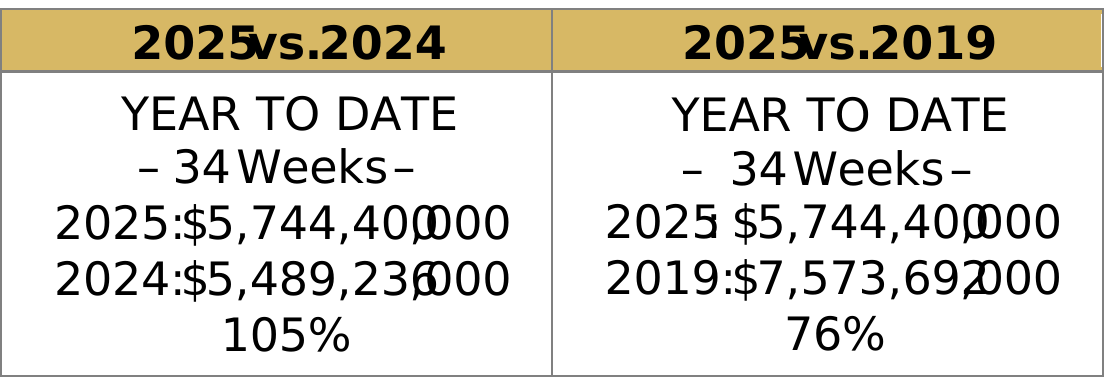
After 34 weeks, the 2025 domestic box office stands at 105% compared to the same point in 2024 and 76% compared to 2019.