
What Makes J.C. Chandor a Master of Slow-Burn Filmmaking
J.C. Chandor makes movies where almost nothing happens, and then suddenly everything changes. He's one of the few American directors working today who treats restraint-film making like a real tool. There may not be big speeches or music scores swelling to tell you what to feel. But what he does is, he puts smart people in a tough spot and allows the audience to see them scramble.
The thing that separates him from most thriller directors is that his tension is built out of money and ethics, and real-world morality questions. It’s not action-focused. He prefers to shoot long. He uses sparse dialogue and lets silences sit. A lot of his best scenes are just people thinking, working through a problem they don't want to be working through. That's the whole movie, sometimes. And it works.
Every Chandor protagonist eventually gets stripped down to the bare ‘most human’ version of themselves. He also tends to cast against type, which keeps you on your toes. None of his castings was the obvious choice when they were made. That's the point.
J.C. Chandor Films Ranked for Slow-Burn Tension
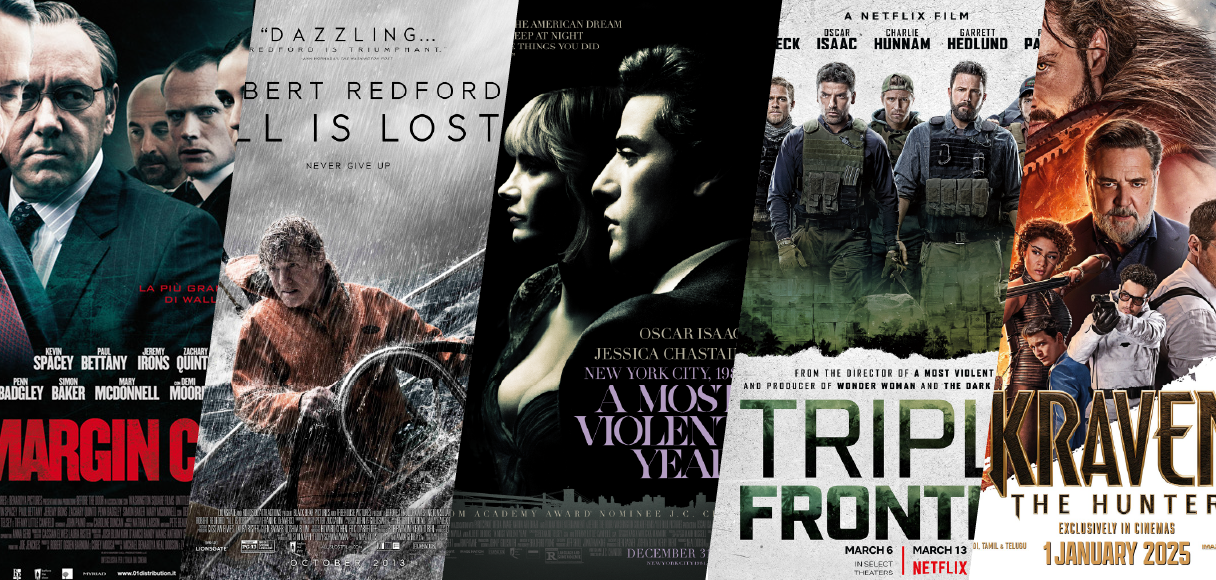
Chandor has directed five features. Four of them are slow-burn films, and the fifth one is the giant comic-book detour we should probably talk about anyway.
Here's the catalogue, ranked by how effectively each film holds the rope tight without snapping it.
Margin Call (2011)
https://www.youtube.com/watch?v=IjZ-ke1kJrA
Chandor's debut is set over roughly 24 hours at a Wall Street investment bank that has just figured out it's about to blow up the world. The fictional firm is unnamed, though the plot draws on events of the 2008 financial crisis, with similarities to several Wall Street institutions that faced collapse during that period. A junior risk analyst named Peter Sullivan, played by Zachary Quinto, opens a file his fired boss handed him on a USB stick and realises the bank is sitting on a portfolio of toxic mortgage-backed securities that's about to wipe everyone out.
The ensemble is stacked. Kevin Spacey is the floor head, Sam Rogers. Jeremy Irons is CEO John Tuld, sweeping in by helicopter to make the decision nobody else wants to make. Paul Bettany is the trading desk head, Will Emerson. Stanley Tucci is Eric Dale, the risk manager the firm laid off in the first 10 minutes of the movie. Demi Moore, Simon Baker, and Penn Badgley round it out.
The tension comes from people sitting on couches in glass offices and explaining numbers to each other. The single-location setup is what makes it work — nobody leaves the building, the lights stay on, and slowly everyone in the room understands they're the ones holding the lit match.
Chandor was nominated for the Academy Award for Best Original Screenplay for Margin Call, and the film won the Independent Spirit Awards for Best First Feature and the Robert Altman Award for Best Cast. It's still his sharpest movie.
All Is Lost (2013)
https://www.youtube.com/watch?v=no1rl9Gvx-s
This is the experiment. Robert Redford is the only person on screen. The shooting script was 31 pages long, and there are 51 spoken English words in the entire film. That's it.
Redford plays a character called Our Man, a solo sailor whose yacht collides with a stray shipping container somewhere in the Indian Ocean. The hit punches a hole in the hull, and water kills all the electronics. Amidst storms, he ends up in a life raft drifting toward shipping lanes, hoping someone notices him before his water runs out.
There is no backstory. No voiceover explaining how he got out there. Chandor leaves all of that out on purpose. You're watching a man whose only identity, for the runtime of this film, is the guy trying not to drown. It's stripped down to almost nothing, and somehow that makes it more gripping, not less.
The sound design does what dialogue usually does. Wind. Water hitting fibreglass. The film was nominated for the Academy Award for Best Sound Editing. Composer Alex Ebert won the Golden Globe for Best Original Score, and Redford was nominated for a Golden Globe of his own. He also won the New York Film Critics Circle Award for Best Actor that year and was widely considered snubbed when the Academy didn't nominate him.
A Most Violent Year (2014)
https://www.youtube.com/watch?v=o87gG7ZlEAg
Oscar Isaac plays Abel Morales, a heating oil businessman in 1981 New York City, which was statistically one of the most violent years in the city's recorded history. His trucks are getting hijacked. His drivers are getting beaten. He's trying to expand the business by buying a riverfront fuel terminal, and he's got 30 days to close the deal. The Teamsters want their drivers armed. The district attorney is investigating his books. And Abel, against every pressure on him, wants to do this without breaking the law.
Jessica Chastain plays his wife Anna, the daughter of a Brooklyn gangster, and she does not share her husband's principles. Their marriage is the engine of the movie. Chastain is doing something close to Lady Macbeth in shoulder pads, and she's never been better. David Oyelowo plays the assistant district attorney, and Albert Brooks is Abel's lawyer.
The title promises violence. Chandor doesn't deliver it, at least not in the way you'd expect. There are guns, sure, but the film keeps almost getting there and then sliding past. The confrontation you're waiting for never quite arrives. That's what makes it tense.
Bradford Young's cinematography is gorgeous and brown and looks like the inside of a cigarette. The whole film feels like it's underlit on purpose, and it is.
Triple Frontier (2019)
https://www.youtube.com/watch?v=Fo3yRLLrXQA
Five former U.S. Army Delta Force operatives reunite to rob a South American drug lord. Ben Affleck is Tom 'Redfly' Davis, the reluctant leader now working as a realtor. Oscar Isaac is Santiago 'Pope' Garcia, the one with the tip-off. Charlie Hunnam is William 'Ironhead' Miller. Garrett Hedlund is his brother Ben. Pedro Pascal is Francisco 'Catfish' Morales, the pilot. Chandor co-wrote the screenplay with Mark Boal of The Hurt Locker and Zero Dark Thirty.
Here's the thing that surprises you: the heist happens early. This isn't a movie about planning a robbery; it's a movie about what happens after the robbery goes too well. The team gets the money. The money is too heavy. The helicopter can't carry it over the Andes. They have to start dumping cash. Then they have to start killing people. Then they have to start asking themselves what any of this was for.
Chandor uses the landscape itself as the antagonist. The mountains don't care how many tours these guys did. Released by Netflix on March 13, 2019, after a brief limited theatrical run starting March 6.
Kraven the Hunter (2024)
https://www.youtube.com/watch?v=uPDIzB1mNJc
Now for the weird one. Chodar's fifth feature is an R-rated origin story for the Marvel villain Sergei Kravinoff, played by Aaron Taylor-Johnson, with Russell Crowe as his gangster father Nikolai, Ariana DeBose as Calypso, Fred Hechinger as his half-brother Dmitri (eventually Chameleon), Alessandro Nivola as Aleksei Sytsevich (Rhino), and Christopher Abbott as the Foreigner. It was the sixth and final film in Sony's Spider-Man Universe, and it underperformed badly at the box office.
Let's be honest: it's not a good movie. Critics didn't like it. Audiences didn't show up. The film grossed less than its reported production budget and is widely credited with killing off Sony's spinoff franchise for good. The CGI animals look like CGI animals. The dialogue is rough. Two-time Oscar nominee Russell Crowe is doing some kind of Russian accent. It's a lot.
That said, the reason it's included here is that Chandor's instincts as a director are still visible, even when the material is fighting him. The father-son moral framework is recognisably his. He insisted on shooting on real locations. He kept the action grounded enough that Taylor-Johnson does mostly human-scale stunts, not building-jumps. Worth watching if you're going through the filmography. Worth skipping if you're not.
How Chandor's Tension Technique Differs from Other Slow-Burn Directors
People bring up Chandor in the same breath as Denis Villeneuve and David Fincher, which makes sense up to a point. All three are patient. All three trust their audience to keep up. But the way they each build dread is genuinely different.
Villeneuve grounds his tension in atmosphere and scale. His films feel cosmic, even when they're about something banal. Chandor doesn't go anywhere near cosmic. His tension is grounded in recognisable workplaces — trading floors, oil terminals, helicopter cockpits. His characters worry about bonuses and supply contracts. The horror is mundane, which is part of why it sticks.
Fincher is a control freak in the best way. Every Fincher frame is engineered to within a millimetre. Chandor goes the other direction. His camera is more observational, often handheld, and more interested in what the actor is doing than in the composition. It's a less stylish approach, and that's the choice.
The other big difference is the antagonist. Chandor doesn't really do villains. His bad guys are institutions, weather, and economic systems. The market. The ocean. The city of New York in 1981. The Andes. There's no Hans Gruber, no Anton Chigurh. There's a situation, and the situation doesn't negotiate. His endings stay open.
Similar Films to Watch After Exploring Chandor's Work
If you've watched the Chandor catalogue and you're looking for the next thing, these are the closest matches in spirit. Same restraint, same patience, same interest in moral compromise as a slow-acting poison.
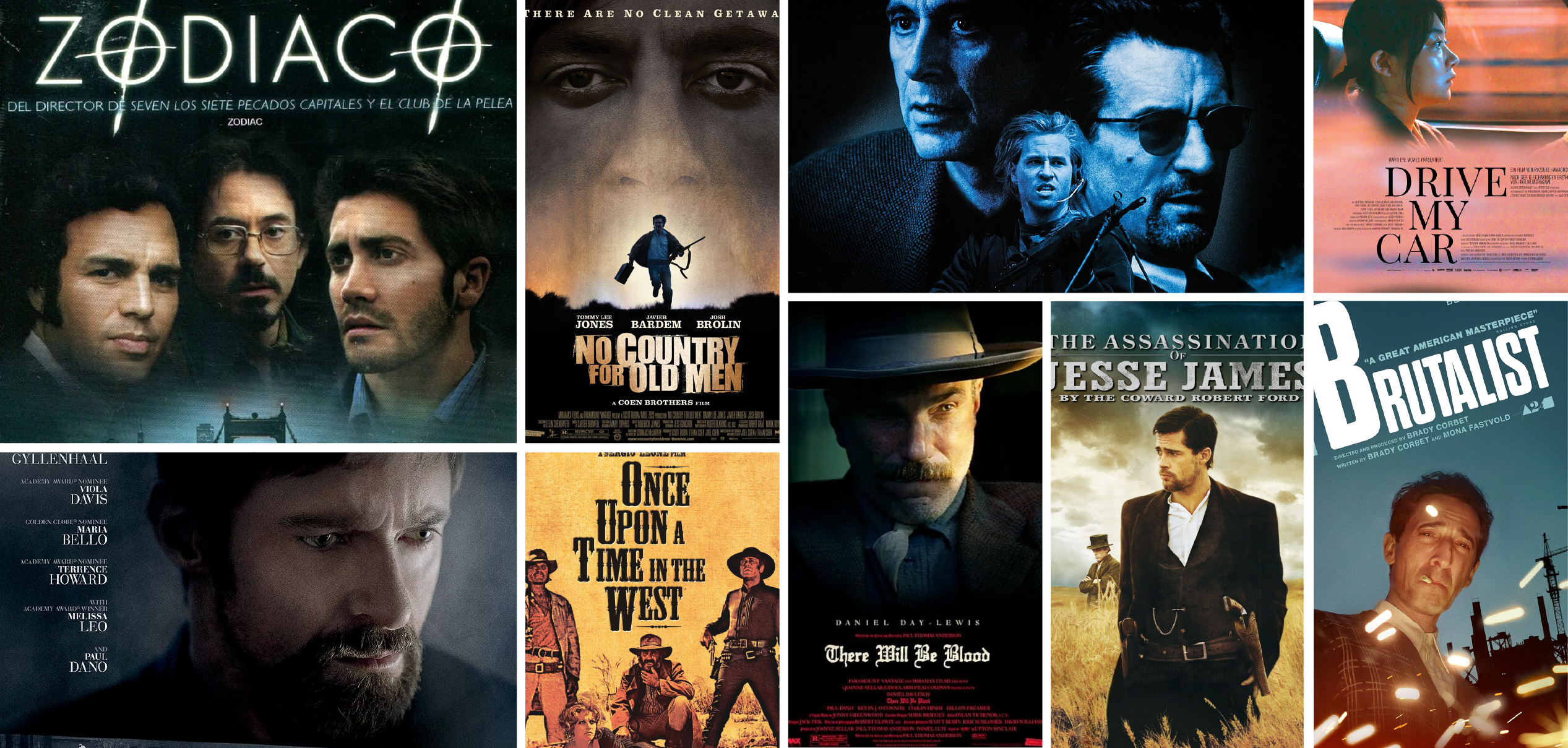
- No Country for Old Men (2007). The Coens share Chandor's instinct for withholding violence, so the violence that does arrive lands like a hammer. Anton Chigurh is a moral void, and the silences in this movie are doing more work than most films' entire scores.
- There Will Be Blood (2007). Paul Thomas Anderson's portrait of Daniel Plainview hits a lot of the same notes as A Most Violent Year. Capitalism as a character study.
- Sicario (2015). Denis Villeneuve's cartel thriller is built on institutional pressure and moral erosion, which is basically Chandor's whole thing. Emily Blunt's Kate Macer would feel right at home in a Chandor script.
- Locke (2013). Steven Knight's one-man movie with Tom Hardy is the obvious companion piece to All Is Lost. One character, real-time collapse. A man, a BMW, a series of phone calls, and a life falling apart on the M6.
- Michael Clayton (2007). Tony Gilroy's corporate paranoia thriller is the closest thing to a Margin Call companion. Same suits, same hallways, same dread. George Clooney has never been better, and that's a sentence we don't say lightly.

.webp)