
10/16-10/18: STREET FIGHTER Muscles Its Way to #1
Paramount’s video-game derived actioner STREET FIGHTER burst to the top of the North American box office in its opening weekend by earning $31.0M, in line with pre-release expectations. The total weekend box office for all movies hit $103.9M, a 53% year-over-year increase compared to $67.9M earned last year on this same October weekend. This is the second time in the last four weeks with four new movies opening in the top five. This cluster of mid-tier movies are important enough to open wide – by playing at more than 1,000 locations – but not good enough to sustain significant interest after their opening weekends.
After STREET FIGHTER, the three other new movies in the top five sold only $30.3M combined. Normally these results would lead to a difficult comparison with the same weekend last year. However, the 42nd weekend of 2025 was only able to produce $67.9M. This is the fifth consecutive weekend and tenth out of the last twelve in which 2026 beat out the matching weekend in 2025. The following chart shows this year’s dominance compared to last year since July 31, when SPIDER-MAN: BRAND NEW DAY opened.
2026 vs. 2025 WEEKEND DOMINATION
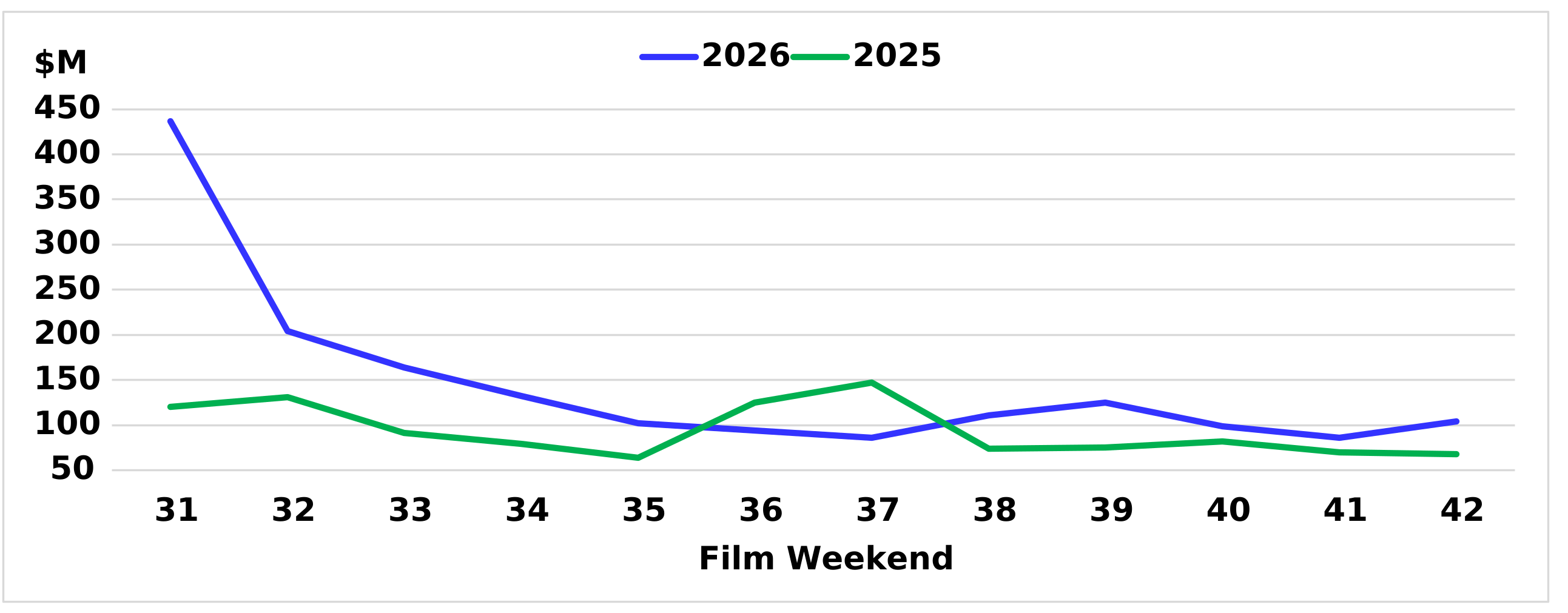
As you can see, 2026’s blue line has hovered above 2025’s green line for most of the last 12 weeks. The first three weekends of the fourth quarter have met expectations, despite being significantly below the pace of the summer. We expect the remainder of the fourth quarter to be healthy and finish up the year with a total domestic box office of $10.3B.
THE LAST FOUR WEEKS – 2026 vs. 2025

#1 – STREET FIGHTER
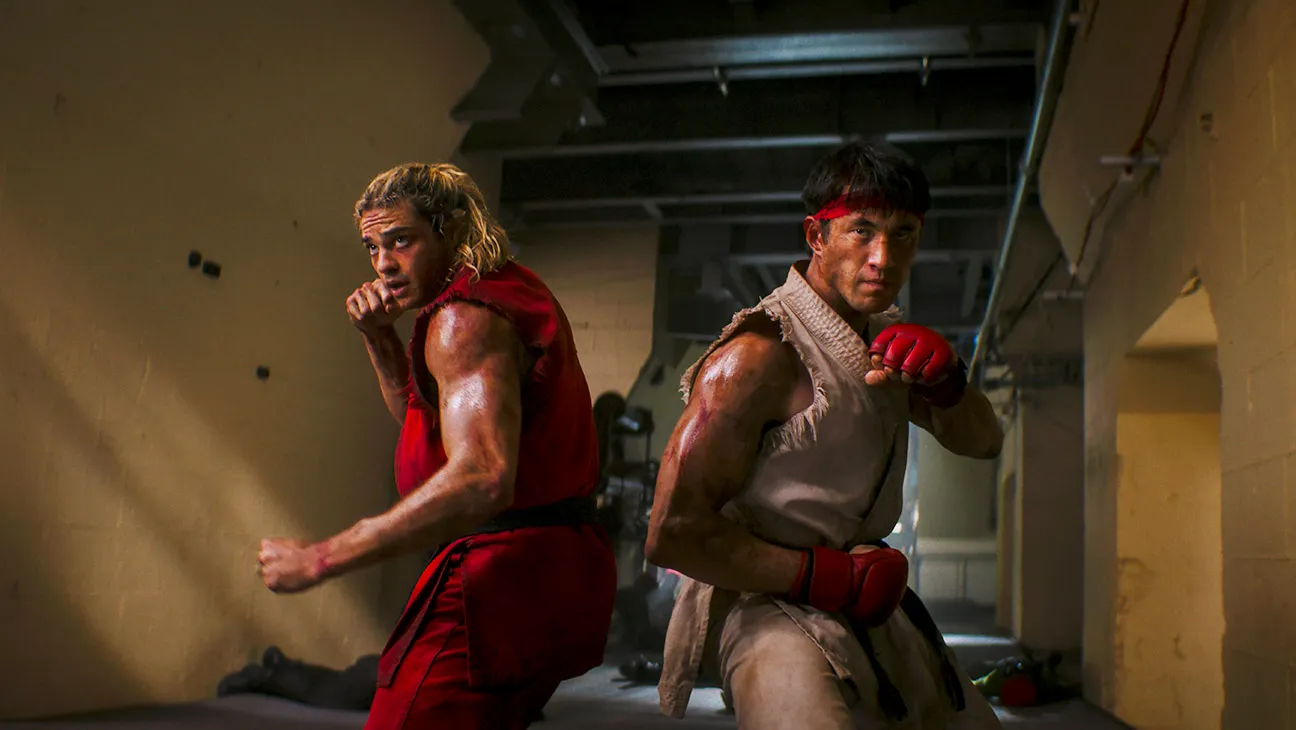
Paramount’s STREET FIGHTER took home first place in its debut by earning $31.0M domestically and $51.1M worldwide, giving the long-running video-game property another chance to establish itself as a durable theatrical attraction. This third live-action STREET FIGHTER movie has a new cast and storyline, drawing on familiar characters without continuing the events of the franchise’s earlier films.
The history of these movies shows both potential and caution. The original STREET FIGHTER movie in 1994, starring Jean-Claude Van Damme and Raúl Juliá, opened on December 23rd to $6.9M in its first three days and $9.5M for the four-day Christmas holiday weekend. It finished in theatres with a total box office of $33.4M domestically and $99.4M globally against a reported production budget of $35M. STREET FIGHTER: THE LEGEND OF CHUN-LI arrived in 2009 and starred Kristin Kreuk. Its opening weekend which began on February 27th brought in only $4.7M, and its total run earned an anemic $8.7M domestically and $12.7M worldwide against a reported budget of $50M. Ouch. That was followed by a 17-year hiatus from live-action feature films.
The 2026 STREET FIGHTER was directed by Kitao Sakurai, who brings an unconventional background to the assignment. His earlier features include the independent crime drama AARDVARK (2011 U.S. festival screening) and the hidden-camera comedy BAD TRIP (2021), while his television work includes “The Eric Andre Show” and the video game live-action comedy series “Twisted Metal.” This combination of absurdist comedy and stylized action helps explain the new film’s eccentric characters, elaborate combat and deliberately exaggerated tone.
The ensemble mixes established actors with rising performers, musicians and professional wrestlers. Noah Centineo, whose credits include BLACK ADAM (2022) and WARFARE (2025), plays Ken Masters. His co-star is Andrew Koji, seen in SNAKE EYES (2021) and BULLET TRAIN (2022), as Ryu. Callina Liang, previously in BAD GENIUS (2024) and PRESENCE (2025), plays Chun-Li. Jason Momoa, known for AQUAMAN (2018) and A MINECRAFT MOVIE (2025), appears as Blanka, while David Dastmalchian of THE SUICIDE SQUAD (2021) and LATE NIGHT WITH THE DEVIL (2024) plays M. Bison. Curtis “50 Cent” Jackson portrays Balrog, with WWE stars Roman Reigns and Cody Rhodes appearing as Akuma and Guile.
Set in 1993, the story reunites estranged fighters Ryu and Ken, with Chun-Li recruiting them to sign up for the World Warrior Tournament. Behind the competition lies a deadly conspiracy, forcing the former friends to confront their opponents, their troubled past and each other. Whereas STREET FIGHTER (1994) emphasized Guile’s military campaign and STREET FIGHTER: THE LEGEND OF CHUN-LI (2009) explored its heroine’s origins, this version makes Ryu and Ken’s fractured friendship its emotional center. The tournament supplies the framework for bringing the games’ distinctive fighting styles and supernatural attacks to the screen.
Reviews suggest that the film’s energy and enthusiasm cannot overcome its narrative lapses. On Rotten Tomatoes, critics are giving it only a 40% score, while audiences were mostly approving with an 80% rating, a substantial gap between the professionals and ticket buyers. Associated Press critic Jake Coyle observed, “But the scenes clash together as much as the fighters do.” IndieWire’s Christian Zilko described it as, “A film that overflows with convoluted plotting and confusingly engineered jokes.” A few critics found pleasures in its excess, with Mashable’s Kristy Puchko writing, “Centineo masters a style I'll call clown-fu.” The New York Times’ Brandon Yu appreciated the movie’s effect on the audience by saying, “It simply feels like the natural zenith of an arcade player’s imagination, the ‘and then, and then’ output of fighter fantasies running wild.”
The reported $82.0M production budget reflects the cost of staging a large fantasy-action spectacle. The shoot in Sydney required a on-location team of nearly 300, while the extensive roster of fighters required specialized choreography, rehearsals, stunt performers and distinctive costumes. Supernatural combat and fantastical characters added visual effects from Digital Domain, DNEG and Framestore. Therefore, the expense of the movie extends well beyond its director and cast compensation to the cost of the facilities, equipment and technical labor required to deliver its central attraction.
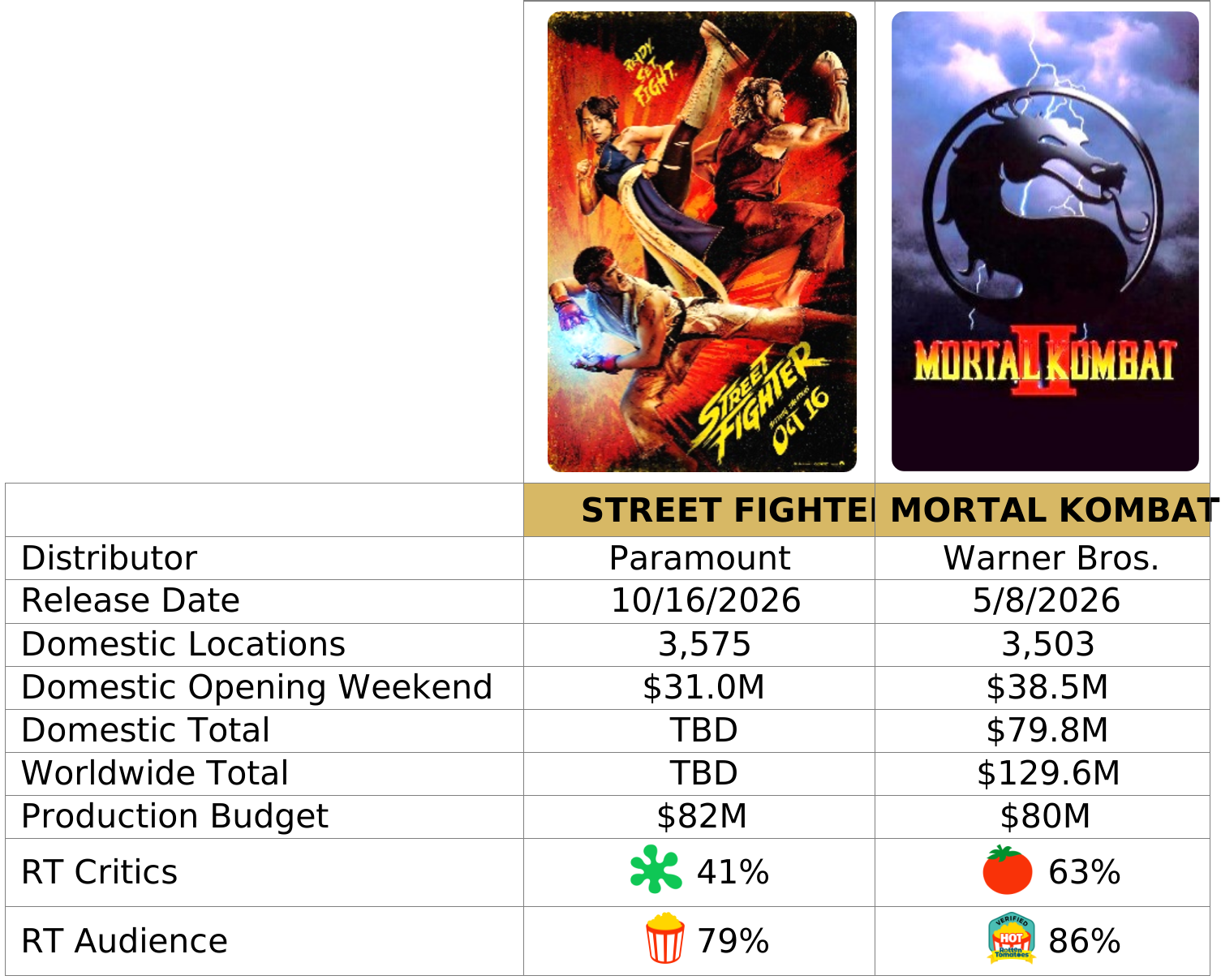
At 2.5 times its reported production budget, STREET FIGHTER would need to earn $205M in worldwide sales to reach theatrical profitability. A global opening of $51.1M gives the film a starting point, but its second weekend and beyond will also need to be strong, demonstrating interest from beyond the committed fans of the video game.
MORTAL KOMBAT II (2026) is an apt comparison. Both films draw on globally recognized fighting games, established fan bases and colorful ensembles whose action moves are central selling points. Their appeal rests heavily on choreography, visual effects and fidelity to recognizable characters, making the property itself a major attraction. STREET FIGHTER’s PG-13 rating and comic tone could make it accessible to younger viewers, in comparison to MORTAL KOMBAT II with its R-Rating.
STREET FIGHTER vs. MORTAL KOMBAT II
#2 - YOU CAN SEE EVERYTHING
A24’s documentary YOU CAN SEE EVERYTHING finished second, taking in $15.0M in its opening weekend. This is a stunningly strong result, especially for a 3-hour documentary, considering the fact that it played at only 855 locations which translates to a per theatre average of $17,544.
Directed by Nathan Fielder and Lance Oppenheim, the film follows disgraced Theranos founder Elizabeth Holmes and her partner, Billy Evans. The story begins 34 days before Holmes reported to federal prison in May 2023. What initially appears to be an intimate portrait of her final weeks of freedom develops into a nearly three-hour examination of deception, self-delusion and the difficulty of separating authentic behavior from performance.
Oppenheim previously directed the documentaries SOME KIND OF HEAVEN (2020) and SPERMWORLD (2024), followed by his first scripted feature PRIMETIME (2026) starring Robert Pattinson. He also directed the HBO documentary miniseries “Ren Faire” (2024). This is Fielder’s feature directing debut, with his reputation coming primarily from his work on TV’s “Nathan for You” (2013–2017) and “The Rehearsal” (2022). Fielder’s uncomfortable questioning and elaborate experiments with reality complement Oppenheim’s interest in unusual people and carefully composed documentary imagery.
The principal participants are Holmes, Evans and Fielder, appearing as themselves. Amanda Seyfried, known for MEAN GIRLS (2004), MAMMA MIA! (2008), LES MISÉRABLES (2012) and MANK (2020), joins the film in a substantial role involving reenactments. She previously won an Emmy for portraying Holmes in THE DROPOUT (2022). Christopher Abbott, whose films include JAMES WHITE (2015), IT COMES AT NIGHT (2017) and POOR THINGS (2023), portrays Evans in reconstructed conversations. These performances become part of the documentary’s investigation rather than a separate dramatized biography.
According to the filmmakers, Holmes originally approached A24 with the idea of making a documentary about her life and they took her up on it. The story begins inside the couple’s Southern California home, where Holmes hopes unfiltered access will reveal a person different from her public image. Fielder questions her claims of innocence while observing her everyday life. Holmes had such a profound and unsettling effect on the filmmakers that the crew became concerned that their guest house might be bugged and bought a detection device. They found no evidence of surveillance. After she enters prison, the filmmakers continue investigating, using conversations, footage and reenactments to examine inconsistencies and the couple’s relationship. The central question gradually expands from whether Holmes can be believed to be whether filmmakers—or audiences—can confidently interpret what they see.
Critical reception has been extraordinarily enthusiastic. Rotten Tomatoes lists a 99% score from critics and a 98% audience rating. Here are some examples of the critics’ takes. The New Yorker observed that, “For all the unpleasantness of its backstory, its confrontations, its outcomes, and even, at times, Fielder’s own behavior, the film is more than fascinating and ingenious; it’s strangely, poetically, poignantly beautiful.” The Washington Post said, “This is also a movie that lives up to every single ounce of its hype.” The Guardian observed that, “My mouth was agape for, conservatively, one half of the film’s unusually deserved three-hour run time.” Vulture titles its review, “Nathan Fielder Has Made the Movie of the Year.”
The film had a production cost of $7M, although reports of this number vary. The extended production, editing and staged sequences make it more involved than a straightforward documentary based on interviews. After its opening weekend box office of $15.0M, the film is sure to hit the threshold for theatrical profitability within its first week in theatres.
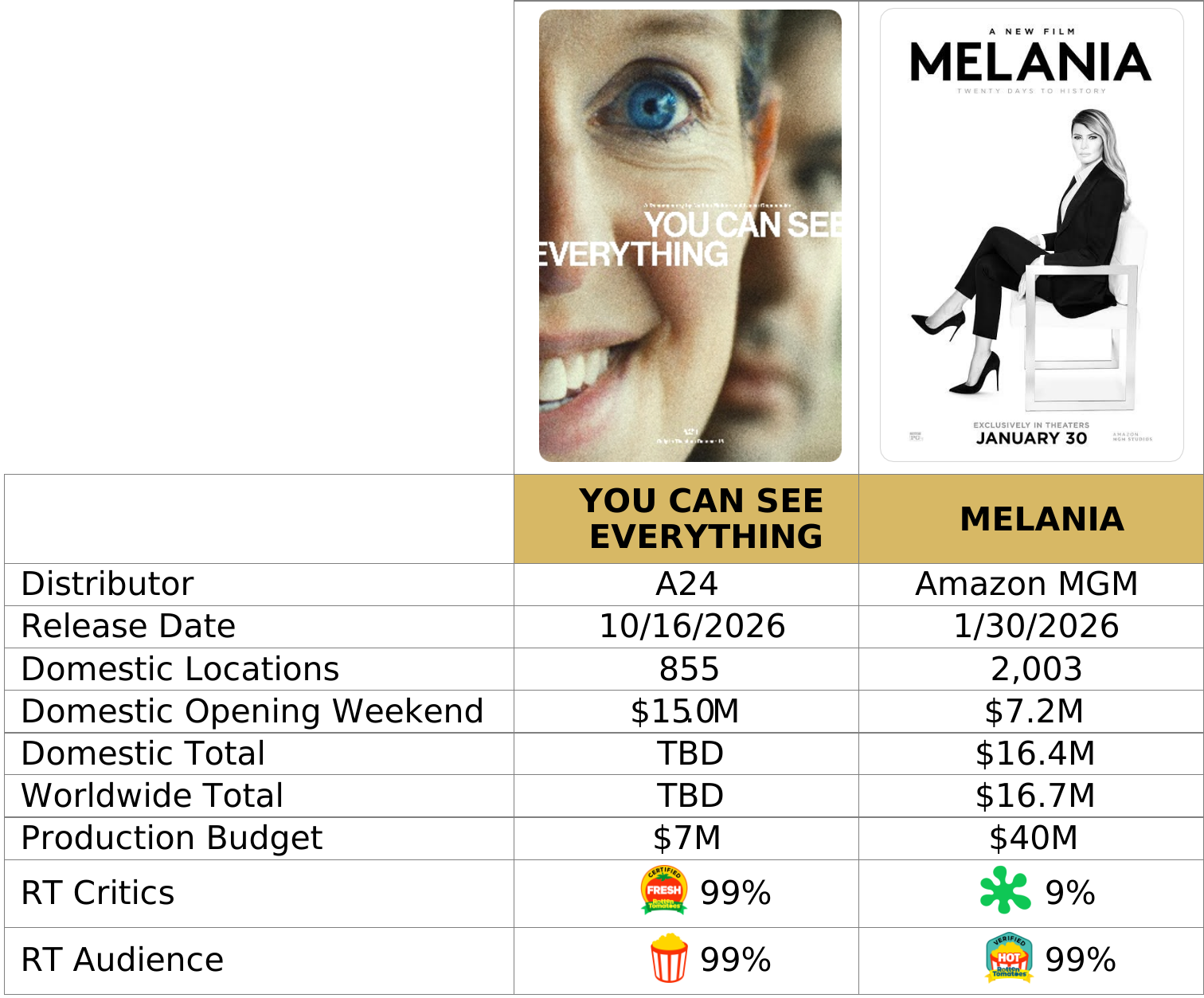
This year’s Amazon MGM documentary MELANIA is the comparison film we have chosen for YOU CAN SEE EVERYTHING. Both offer intimate access to a famous, polarizing woman whose public image generates strong opinions and considerable curiosity. Each promises a view behind carefully managed appearances, giving audiences a reason to experience the documentary beyond familiar headlines. Although MELANIA presents a more controlled portrait while YOU CAN SEE EVERYTHING takes a questioning and unpredictable approach, both test whether public fascination with a controversial personality can translate into theatrical ticket sales.
YOU CAN SEE EVERYTHING vs. MELANIA
#3 - OTHER MOMMY
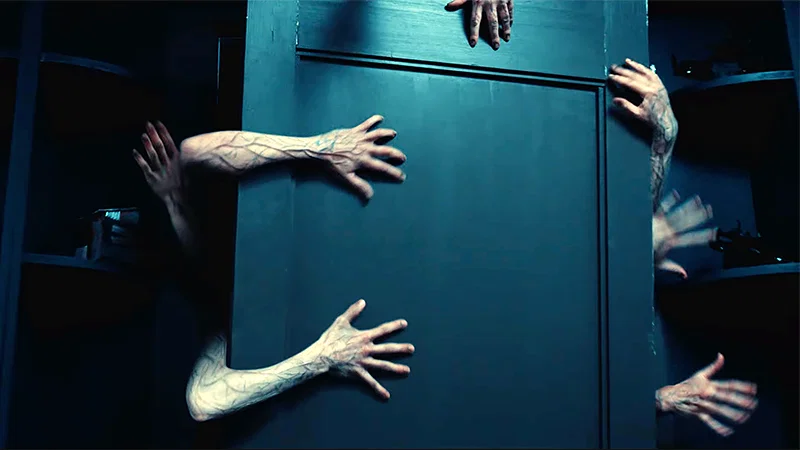
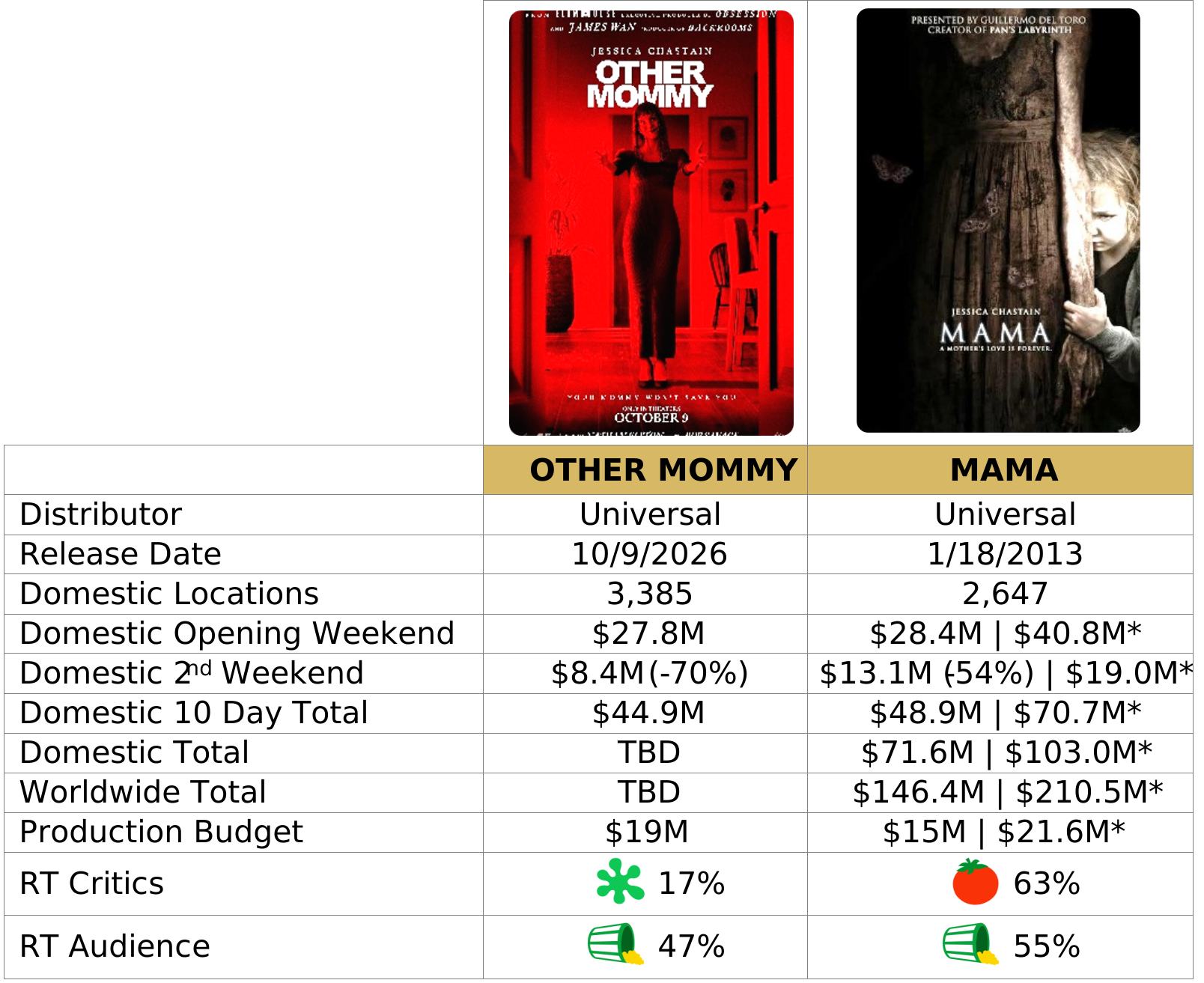
OTHER MOMMY, the horror film from Universal and Blumhouse, finished third in its second weekend, adding $8.4M and dropping a significant 70%. This brings its 10-day box office totals to $44.9M domestically and $78.8M worldwide. Concerns surfaced last weekend about the film's staying power when the Rotten Tomatoes grades came in at a lowly 17% from critics and 47% from audiences. With such a steep drop of 70% in its second weekend, those concerns have been substantiated.
While drastic declines in a movie’s box office would normally sound strong alarm bells, that may not be the case for OTHER MOMMY. Blumhouse’s strict business model is to make horror films on a tightly controlled budget, which was only $19M for this title. This gives its movies a built-in defense against the steep declines that many horror films experience after their opening weekend. The film will only need to earn $48.0M worldwide to be profitable, a target it has already hit by the end of its first full week in theatres worldwide.
Earlier in the week, Barron’s placed this result in a broader industry context with an article it published titled, “Horror Is Hollywood’s Hottest Movie Genre These Days.” Its coverage noted that OTHER MOMMY’s $27.8M opening exceeded what many had expected and that the film would be very profitable. Describing a strength of the movie, Jim Orr, Universal’s head of domestic distribution, emphasized to The Associated Press the breadth of the film’s audience by saying, “No matter how you look at it, everybody turned out for it. It wasn’t just one particular demographic.”
Given its rapid decline, this film may only have a few more weeks to play before it finishes its run, perhaps lasting through Halloween. We are projecting a final worldwide box office of $110M, which will wind up being very profitable with a 5.8 multiple of global box office to production cost.
OTHER MOMMY vs. MAMA after 10 Days
#4 - WHALEFALL
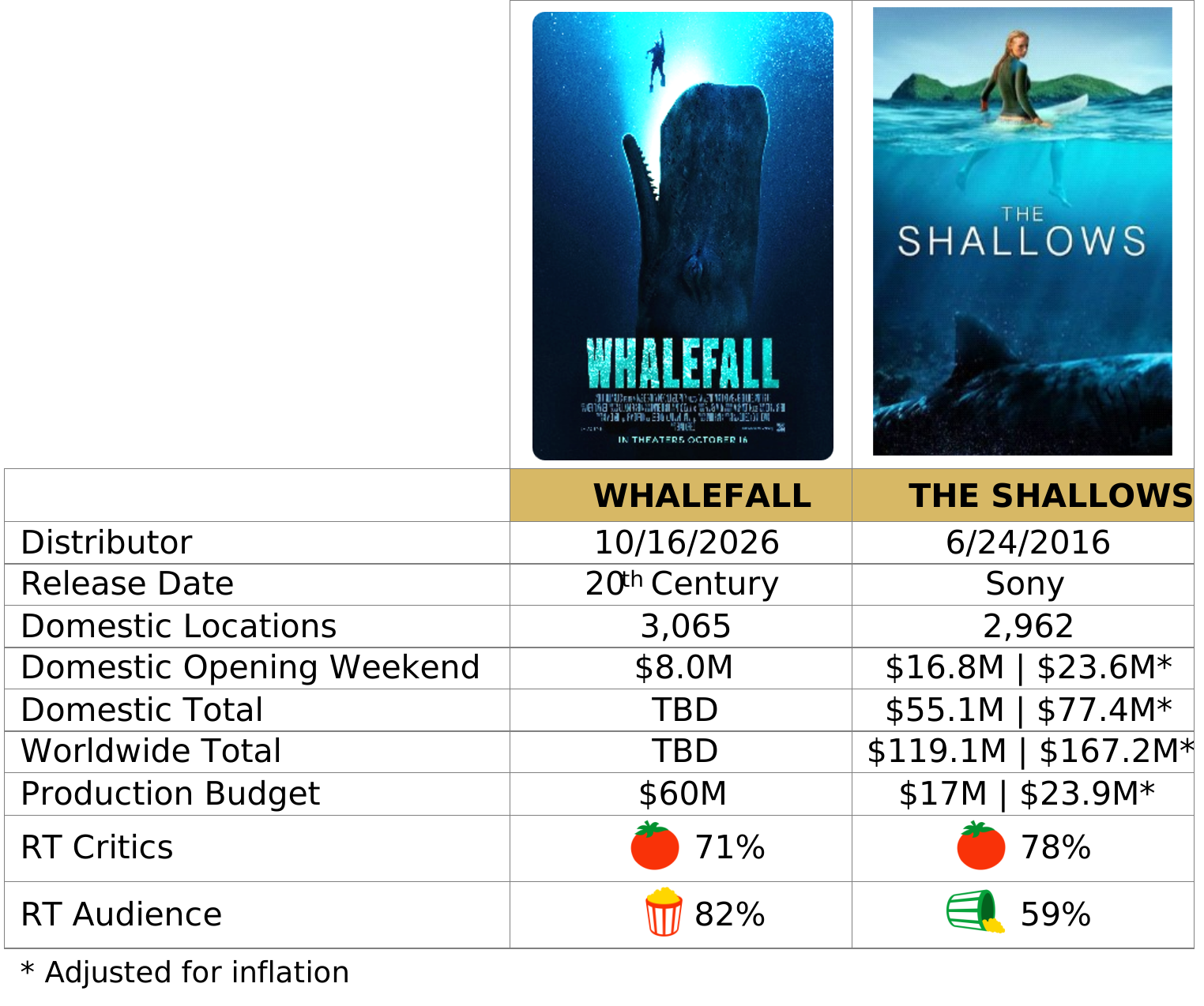
WHALEFALL, the survival thriller from Disney’s 20th Century Studios, surfaced in fourth place with an opening of $8.0M domestically and $17.5M globally. Adapted from Daniel Kraus’s 2023 novel, the film began with an unlikely inspiration: a viral video of kayakers narrowly encountering a humpback whale’s open mouth. Kraus investigated whether that terrifying moment could support a sustained survival story. Imagine Entertainment acquired the rights before publication, and 20th Century subsequently won a bidding competition for the project. Brian Duffield directed, produced and co-wrote the screenplay with Kraus.
Duffield previously directed the darkly comic teenage horror film SPONTANEOUS (2020) and the largely dialogue-free alien-invasion thriller NO ONE WILL SAVE YOU (2023). Both paired unusual genre premises with emotionally vulnerable protagonists, an approach that defines WHALEFALL (2026). Here, the extraordinary physical predicament provides the setting for a more familiar struggle with grief, resentment and family expectations.
Austin Abrams plays Jay Gardiner, adding another demanding lead role to a résumé that includes WOLFS (2024), WEAPONS (2025) and RESIDENT EVIL (2026). Josh Brolin portrays Jay’s father, Mitt, bringing the intensity familiar from NO COUNTRY FOR OLD MEN (2007), SICARIO (2015) and DUNE (2021). Elisabeth Shue, known for THE KARATE KID (1984) and LEAVING LAS VEGAS (1995), plays Jay’s mother. The supporting cast includes Jane Levy of EVIL DEAD (2013) and DON’T BREATHE (2016), John Ortiz of SILVER LININGS PLAYBOOK (2012), and Emily Rudd of FEAR STREET PART TWO: 1978 (2021).
The story follows Jay, a college student returning to Monterey, California, after his father Mitt’s death by suicide in the ocean. Hoping to recover his father’s remains, the son dives off Monastery Beach and becomes entangled in an encounter between a sperm whale and a giant squid. Swallowed by the whale with roughly one hour of air remaining, Jay must improvise an escape from a shifting, hostile environment of darkness, digestive fluids and constricting flesh. Each attempted solution creates another danger as his air supply dwindles.
Flashbacks reveal why Jay’s struggle extends beyond the immediate emergency. Mitt, an accomplished diver, approached fatherhood with a harshness that left his son feeling inadequate and resentful. Yet the lessons Jay resisted become the tools he needs to survive. Drawing on that knowledge forces him to reconsider his father’s influence and confront the anger complicating his grief. The physical battle to escape gives the film its urgency; the unfinished relationship gives it emotional weight.
The filmmakers invested heavily in making that ordeal tangible. Whale anatomist Dr. Joy Reidenberg advised on the animal’s digestive system and the hazards Jay would encounter. Separate physical sets represented stomach chambers, the rear of the mouth and the esophagus, with the latter suspended on a soundstage. Those environments gave Abrams something substantial to struggle against while helping the filmmakers sustain the sensation of being trapped inside a living creature.
Critical reception has been generally favorable, with Rotten Tomatoes approval from 71% of critics and 81% of audience members in the snapshot cited here. Reviewers have responded most strongly to the claustrophobic suspense, while opinions differ on the family drama. TheWrap wrote, “Brian Duffield is 100% committed to the bit, which makes ‘Whalefall’ a wild ride.” Time Out observed, “It’s stressful to be stuck in there with him. Claustrophobics are going to need a bag to breathe into.” Mashable was more skeptical, saying, “Is Whalefall a good father-son drama? Well, it's certainly a father-son drama.” The Los Angeles Times identified the film’s broader ambition when it concluded, “Sometimes our rational understanding of life and death bumps into a seemingly impossible presence.”
The reported $60M production budget places considerable pressure on a film built around such an unusual premise. Although much of the action occupies confined spaces, constructing moving whale interiors, staging underwater sequences and integrating practical and digital effects made this technically demanding production. Water work adds complications involving safety, equipment, lighting and the time required to complete each setup.
A total worldwide gross of $150M would make the movie profitable, equaling 2.5 times the reported production budget of $60M. With a worldwide opening weekend of only $17.5M, WHALEFALL will need to maintain its appeal for multiple additional weeks to get there.
THE SHALLOWS (2016) provides a useful comparison. Both films place a young protagonist in an overwhelming marine emergency while connecting the fight for survival to personal grief. In THE SHALLOWS (2016), Blake Lively plays a medical student stranded on a rock after a shark attack, close enough to see safety but unable to reach it. The film opened to $16.8M domestically and finished with $55.1M domestically and $118.8M globally against a reported $13M budget. That success demonstrated the appeal of a clear, suspenseful survival hook. WHALEFALL, however, must attract a substantially larger worldwide audience to support a production budget more than four times as high.
WHALEFALL vs. THE SHALLOWS
#5 - SENSE AND SENSIBILITY
SENSE AND SENSIBILITY, from Universal’s Focus Features, opened in fifth place with $7.3M domestically and a worldwide total of $18.5M. Produced by Working Title and November Pictures, this new adaptation of Jane Austen’s 1811 novel is directed by Georgia Oakley from a screenplay by novelist Diana Reid. Filmed in Britain during 2025, it brings an earthy, naturalistic approach to the Dashwood sisters’ story, emphasizing their emotional bond, financial vulnerability and connection to the English countryside.
The film revisits an enduring literary property whose best-known theatrical adaptation remains Ang Lee’s SENSE AND SENSIBILITY from 1995. With a screenplay written by Emma Thompson and starring Thompson, Kate Winslet, Hugh Grant and Alan Rickman, that version earned $43.2M domestically and $135M worldwide against a reported $16.5M production budget. Thompson also won the Academy Award for Best Adapted Screenplay, establishing a formidable artistic and commercial standard for any successor.
Oakley made her feature directing debut with BLUE JEAN, released in U.S. theatres in 2023, about a closeted physical-education teacher in Thatcher-era Britain. Her second feature moves onto a larger production canvas while continuing her interest in women navigating restrictive social expectations. Here, the constraints come from inheritance, class and the limited opportunities available to women without independent wealth.
Daisy Edgar-Jones, whose films include FRESH (2022), WHERE THE CRAWDADS SING (2022) and TWISTERS (2024), plays reserved older sister Elinor Dashwood. Esmé Creed-Miles, best known for television’s “Hanna”, plays the passionate Marianne, while Caitríona Balfe of FORD V FERRARI (2019) and BELFAST (2021) portrays their mother. George MacKay, known for CAPTAIN FANTASTIC (2016) and 1917 (2019), plays Edward Ferrars; Frank Dillane plays Willoughby; and Herbert Nordrum of THE WORST PERSON IN THE WORLD plays Colonel Brandon. Fiona Shaw rounds out the principal cast as Mrs. Jennings.
After their father dies, Elinor, Marianne and younger sister Margaret must leave their family estate when it passes to their half-brother. They relocate with their mother to a modest Devon cottage, where reduced circumstances make the relationship between marriage, money and social standing painfully clear. Elinor quietly falls in love with Edward Ferrars, but his concealed obligations threaten their future. Accustomed to putting others first, she conceals her disappointment to spare her family.
Marianne, meanwhile, is swept away by Willoughby, whose enthusiasm for poetry, music and romance mirrors her own. She dismisses dependable Colonel Brandon, mistaking his restraint for an absence of feeling. As secrets emerge and romantic expectations collapse, both sisters must reconsider their judgments. Elinor learns to give greater expression to her emotions, while Marianne discovers that loyalty and character matter as much as passion.
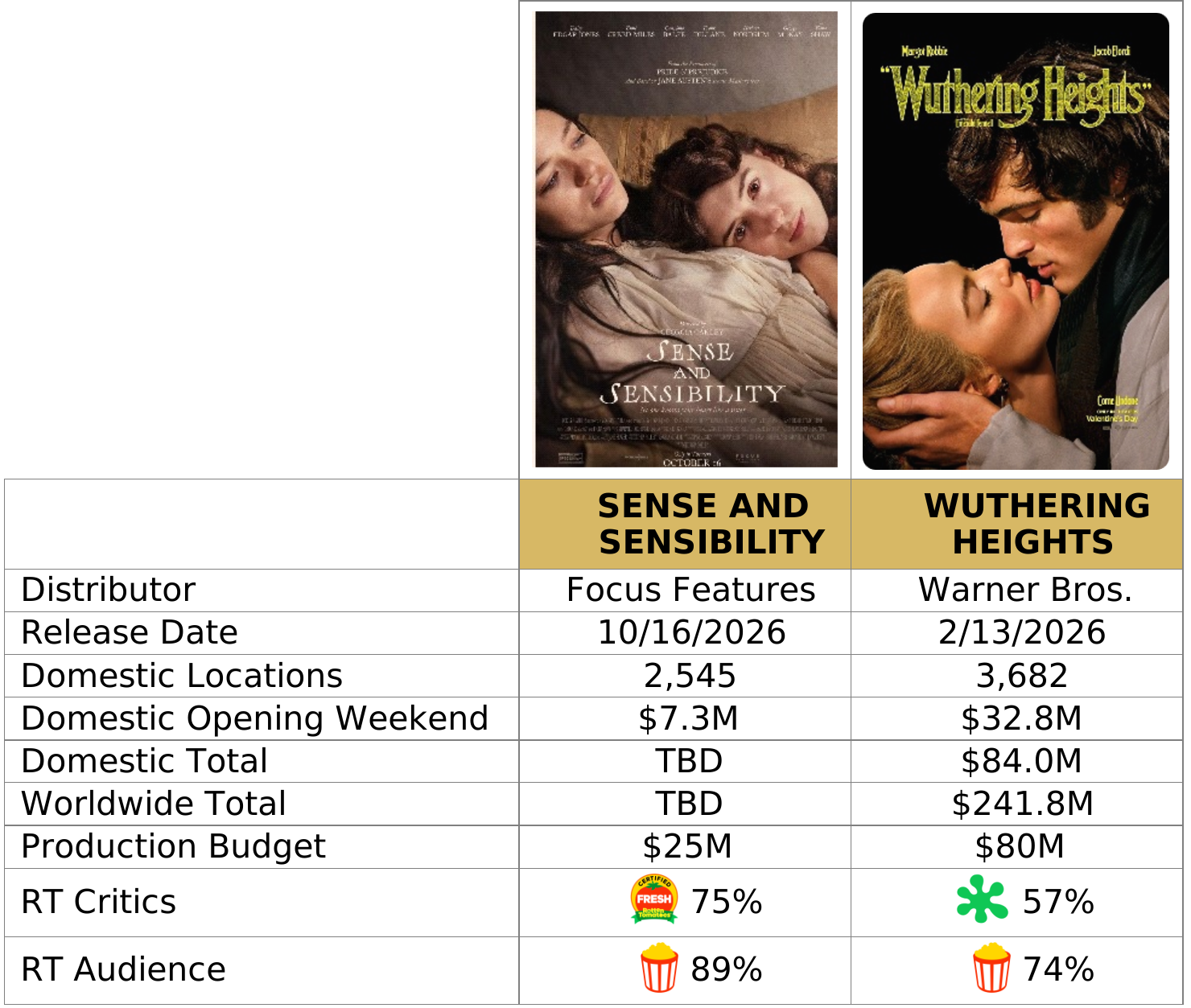
SENSE AND SENSIBILITY holds a 76% critics’ score on Rotten Tomatoes, with responses frequently highlighting the sisters’ relationship. Enthusiasm is tempered by comparisons with the wit and emotional power of the 1995 film. TheWrap praised a version that “keeps the historical context front and center,” while the Los Angeles Times described its central love story as “the one between the sisters. And it is deeply felt.” Time Out called it, “a wild and wonderful take on Jane Austen,” and The Independent found Oakley’s interpretation “undeniably gorgeous.”
The reported $25M production budget represents a moderate investment in a period drama requiring the detailed recreation of Austen’s England. Historic locations provide authenticity but also bring transportation, preparation and conservation requirements. For Barton Cottage, the crew constructed a two-story interior within a ruined Dartmoor building, allowing the camera to follow characters between the rooms and surrounding countryside. Ecological checks included monitoring resident bats. Along with costumes, furnishings, cast and crew, such work helps explain the expense of a romance whose spectacle comes from its setting rather than elaborate action sequences.
That investment is less than one-third of the reported $80M budget for WUTHERING HEIGHTS, released in February. Emerald Fennell’s film paired Margot Robbie and Jacob Elordi with a lavish, highly stylized presentation and generated $241.8M globally, approximately three times its production cost. SENSE AND SENSIBILITY cost $55M less, giving it a substantially lower financial hurdle.
Applying a simple 2.5-times-budget benchmark produces worldwide targets of $200M for WUTHERING HEIGHTS and $62.5M for SENSE AND SENSIBILITY. The smaller budget gives SENSE AND SENSIBILITY room to build a successful business with a considerably more modest audience.
WUTHERING HEIGHTS also provides a compelling comparison because history shapes both films’ romantic conflicts. Adapted from nineteenth-century novels by Emily Brontë and Jane Austen, each transports audiences to an England where inheritance, property and class determine women’s prospects and influence whom they can marry. Country estates, period costumes and expressive landscapes provide theatrical appeal, while the tension between personal desire and social obligation gives these historical stories contemporary relevance. Their shared appeal rests on more than literary familiarity: both dramatize the enduring struggle to secure love and independence in a society governed by wealth.
SENSE AND SENSIBILITY vs. WUTHERING HEIGHTS
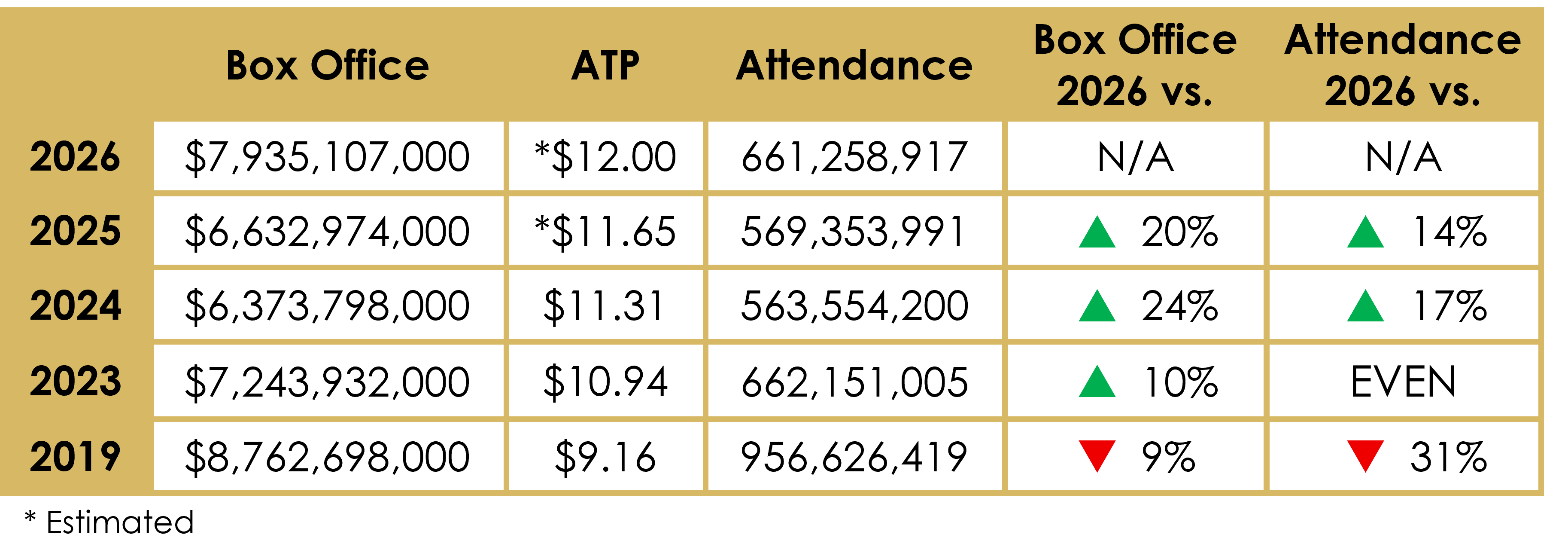
Where Are We as of 10/15/2026
BOX OFFICE AND ATTENDANCE – 41 WEEKS YEAR TO DATE