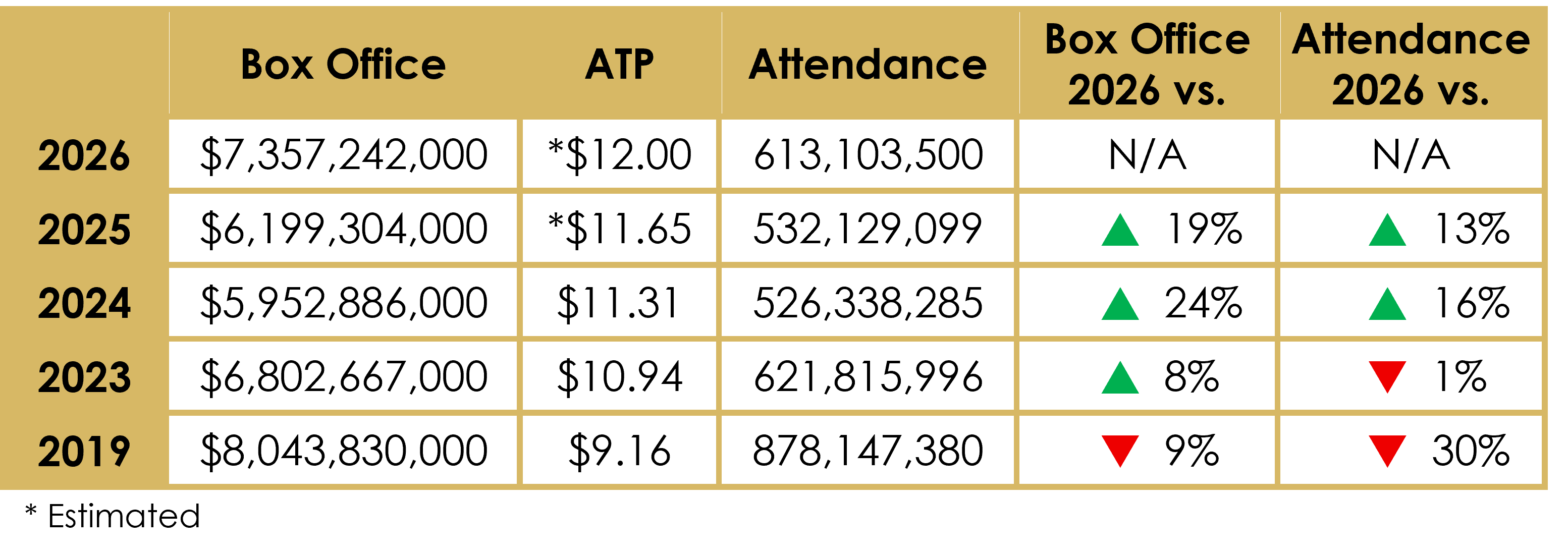
Sony’s horror reboot RESIDENT EVIL had a shockingly good opening weekend by bringing in $60M and finishing in first place. All movies in theatres this weekend earned $110.3M, which is nearly 50% higher than the $73.7M earned last year on this same weekend, which was paced by $17.3M from the second weekend of DEMON SLAYER: INFINITY CASTLE. While the box office for the last two weekends ran behind the same weekends in 2025, that brief losing streak has come to an end. The 2026 box office to-date is 18.6% higher than at this point in 2025.
Looking at the weeks ahead, the box office will most likely continue to shine by comparison to last year, continuing the momentum that has infused optimism throughout the industry.
Next weekend on September 25th, Disney and Marvel will re-release their 2019 record-setting superhero movie AVENGERS: ENDGAME, while Universal and DreamWorks bring out FORGOTTEN ISLAND, a Filipino-inspired fantasy adventure about two teenage friends transported into a mysterious world where their memories begin to disappear.
One week later, on October 2nd, Warner Bros. opens DIGGER, the latest collaboration between Tom Cruise and director Alejandro G. Iñárritu. The film places Cruise in a decidedly different kind of role from the action-driven characters with which he is most closely associated. Amazon MGM’s VERITY will appear, a psychological thriller adapted from Colleen Hoover’s bestselling novel and starring Anne Hathaway, Dakota Johnson and Josh Hartnett.
On October 9th, Universal will release the supernatural horror movie OTHER MOMMY starring Jessica Chastain and produced by James Wan and Blumhouse. Sony will counterprogram THE SOCIAL RECKONING, Aaron Sorkin’s follow-up to THE SOCIAL NETWORK (2010), examining the Facebook Files and the company’s effects on politics, society and teenage mental health.
Taken together, these three weeks of new releases offer a healthy mix of franchise spectacles, animation, star-driven drama, literary adaptation and horror.
We are particularly interested in how much the re-release of AVENGERS: ENDGAME can accomplish. Disney and Marvel have made a smart decision to bring back one of the most popular movies of all time, as a way to rekindle interest in the franchise before the December 18th opening of AVENGERS: DOOMSDAY. The reissue, officially titled AVENGERS: ENDGAME ENCORE, will include additional material intended to help connect the previous AVENGERS storyline with the events of DOOMSDAY. Advance ticket sales are humming along extremely well.
The stakes for AVENGERS: DOOMSDAY are enormous. Not only will this be Marvel’s biggest release of 2026 and perhaps the biggest since AVENGERS: ENDGAME in 2019, but the industry will need it to push the total annual domestic box office to $10B. Advance tickets went on sale on July 20th, 5 months before the movie reaches theatres and have broken all records for early movie ticket sales. The combined performance of AVENGERS: DOOMSDAY and DUNE: PART THREE could exceed that of SPIDER-MAN: BRAND NEW DAY. On the other hand, DUNESDAY will only have two weeks of 2026 sales, with the run-off after that falling into 2027.
For now, let's be thankful for the momentum we are enjoying now and over the next several weeks. Here are the totals for the last four weeks.
THE LAST FOUR WEEKS – 2026 vs. 2025

#1 - RESIDENT EVIL
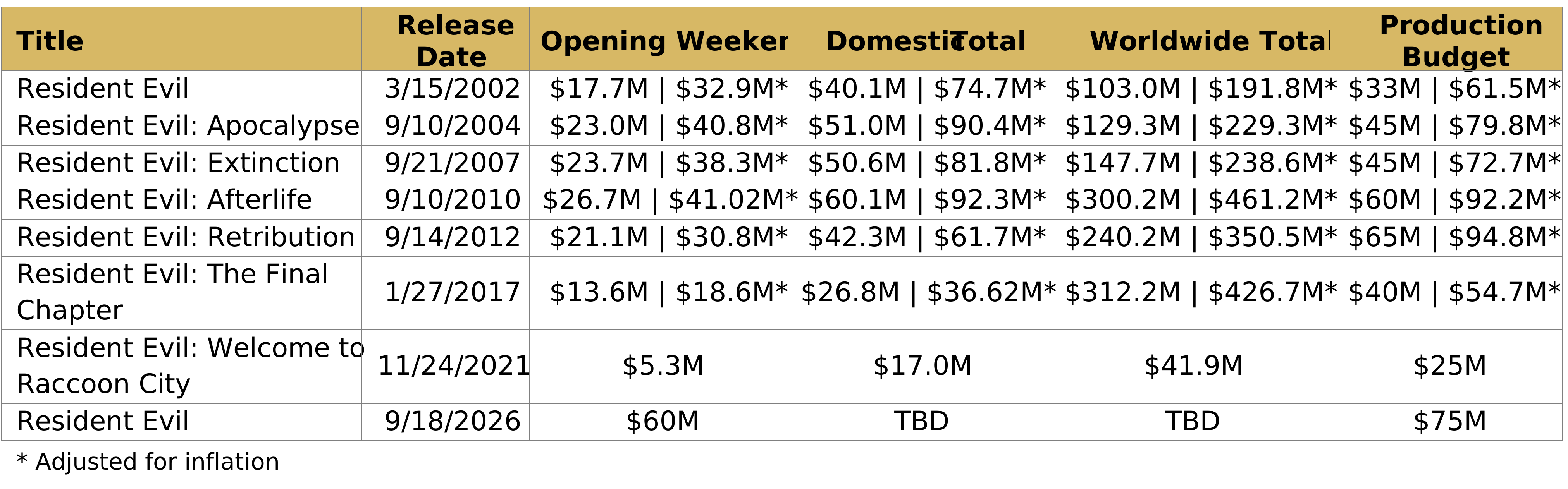
Sony’s latest installment in the long-running RESIDENT EVIL horror franchise finished in first place with a strong opening of $60M, more twice the total of any other opening weekend in the series’ history. The new RESIDENT EVIL reboot has already earned $108.3M globally as well. This is the 8th live-action theatrical film based on Capcom’s survival-horror video-game franchise, but it is neither a continuation of the six-film Milla Jovovich series nor a sequel to RESIDENT EVIL: WELCOME TO RACCOON CITY from 2021. Instead, it marks the franchise’s second consecutive reboot, telling an original story that unfolds on the periphery of the events depicted in the RESIDENT EVIL 2 video game. Constantin Film began developing the project after WELCOME TO RACCOON CITY underperformed and Netflix canceled its plans to make a RESIDENT EVIL series. Sony’s Columbia Pictures division secured the distribution rights following a competitive bidding process that included Warner Bros. and Netflix. Here is a look at the franchise history.
RESIDENT EVIL Movie Franchise
Zach Cregger directed the current RESIDENT EVIL movie and co-wrote the screenplay with Shay Hatten, whose credits include JOHN WICK: CHAPTER 3 – PARABELLUM (2019), ARMY OF THE DEAD (2021) and JOHN WICK: CHAPTER 4 (2023). Cregger also directed the critically acclaimed horror hits BARBARIAN (2022) and WEAPONS (2025) as well as the comedy MISS MARCH (2009). Although he has created new characters rather than adapting ones from the video game, Cregger structured the film to evoke the RESIDENT EVIL experience, moving its protagonist through increasingly dangerous locations, obstacles, and monsters. The central disaster begins only six or seven minutes into the film, after which Cregger intended the picture to operate as a hard-charging, pedal-to-the-metal ride.
Austin Abrams stars as Bryan, a medical courier given the job of transporting a vital package between hospitals. When his route takes him to Raccoon City, he becomes trapped in a rapidly spreading viral outbreak filled with zombies and other infected creatures. Unlike Alice, the nearly superhuman heroine played by Milla Jovovich in the original series, Bryan possesses no military training, combat expertise, or special powers. The film follows his increasingly desperate attempt to survive the night, with the action unfolding as a fast-paced journey through locations resembling successive levels of a video game.
Abrams is best known for his roles in PAPER TOWNS (2015), SCARY STORIES TO TELL IN THE DARK (2019), CHEMICAL HEARTS (2020), WOLFS (2024) and Cregger’s WEAPONS (2025), as well as the TV series EUPHORIA. Zach Cherry, whose credits include SPIDER-MAN: HOMECOMING (2017), SHANG-CHI AND THE LEGEND OF THE TEN RINGS (2021) and TV’s SEVERANCE, plays an Umbrella Corporation employee. Kali Reis, best known for CATCH THE FAIR ONE (2021), ASPHALT CITY (2024) and TV’s TRUE DETECTIVE: NIGHT COUNTRY, portrays an Umbrella operative with a military background.
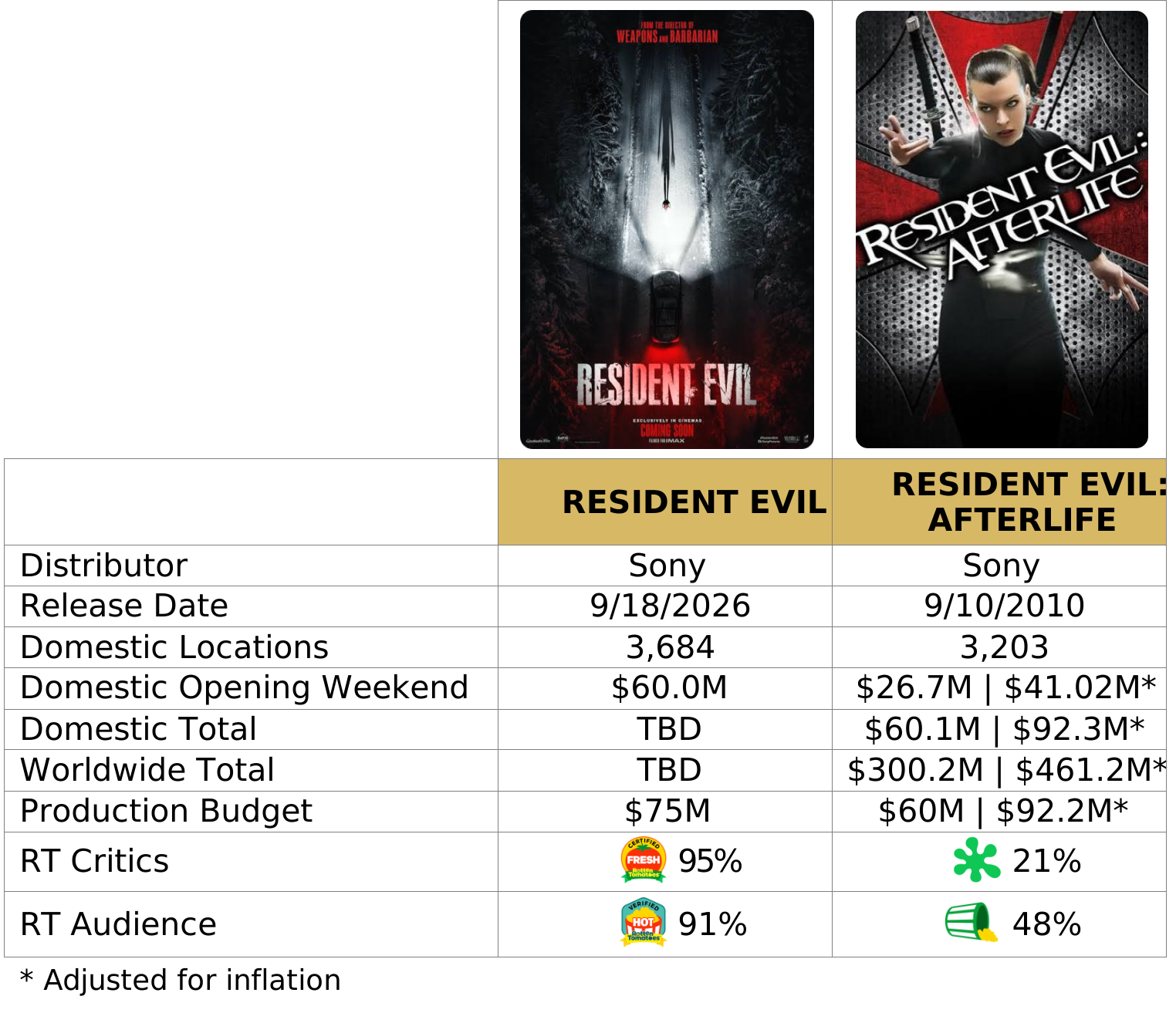
Paul Walter Hauser, known for I, TONYA (2017), RICHARD JEWELL (2019), CRUELLA (2021) and the TV miniseries BLACK BIRD (2022), plays another Umbrella employee who helps explain Bryan’s assignment. Johnno Wilson, whose credits include the TV series I LOVE THAT FOR YOU and CURB YOUR ENTHUSIASM, rounds out the principal supporting cast. Cregger intentionally kept the ensemble small so that Abrams’ frightened and inexperienced courier would remain the film’s central focus. Critical response has been exceptionally strong. RESIDENT EVIL holds a 95% Tomatometer score based on 187 reviews and a 91% verified audience score on Rotten Tomatoes, easily the best reception earned by any of the live-action RESIDENT EVIL films. Slate wrote that the movie “manages to be both creepy enough to keep you on the edge of your seat and self-aware enough to keep you smiling.” The New York Times praised Abrams for playing “comedic and emotional desperation with a deceptively fine-tuned subtlety.” The Associated Press called the film a “highly entertaining survival-horror, zombie-infestation tale.” IndieWire described it as “I.P. cinema with vision and verve,” praising the way it combines the storytelling languages of movies and video games.
The production budget for the movie is estimated to have been $75M, not out of line with a modern, effects-heavy studio release. Still, this amount makes it the most expensive chapter in the RESIDENT EVIL franchise. The good news is that its impressive $60M opening is by far the highest in the series, giving it an encouraging start towards reaching the $188M it will need from its theatrical run to make it profitable. International markets have contributed 78% of the total worldwide gross for all the RESIDENT EVIL movies to date, so if that same ratio holds, this movie only needs to earn $42M in the U.S. and Canada to go along with a projected $146M from international markets to get to $188M. With the domestic number already surpassed, its dependency on foreign markets will be eased.
Based on the success of this weekend’s opening, it seems that Zach Cregger was a perfect choice to reinvigorate the 24-year-old franchise, offering the skills of a proven filmmaker, a more vulnerable protagonist and a creative approach rooted in the original video game.
The strongest box-office comparison is RESIDENT EVIL: AFTERLIFE from 2010, which is the highest-grossing installment in the franchise so far. Sony is clearly swinging for the fences and hoping RESIDENT EVIL can establish a new commercial high-water mark for the series. Here is how the two films compare.
RESIDENT EVIL vs. RESIDENT EVIL: AFTERLIFE
#2 - PRACTICAL MAGIC 2
PRACTICAL MAGIC 2 from Warner Bros. dropped down to a distance second place this weekend with $12.2M in new sales, a decline of 59% from last weekend’s opening. This brings its 10-day total to $50.0M domestically and $76.8M worldwide. The industry reaction to PRACTICAL MAGIC 2 has been mixed. Last weekend’s $30M opening made it the #1 movie in the land, briefly, while its worldwide total was $46.0M. This opening was towards the lower end of the $30M-$35M range that Warner Bros. had expected.
The WB distribution team has not released any official statements to paint PRACTICAL MAGIC 2 as either a success or disappointment. While first place opening was appreciated, the overall success of the movie now depends on how well it holds up over time. Having spent $75M to make the film, Warner Bros. needs it to earn an estimated $188M in global sales to reach profitability. This makes the $46M worldwide debut decent, but insufficient.
Rentrak senior media analyst Paul Dergarabedian emphasized the movie’s value as a social theatrical experience, calling it “the kind of movie that you can build an evening at the movie theater around with your friends.” He nevertheless cautioned that the second weekend will be an important indicator of the film’s long-term prospects.
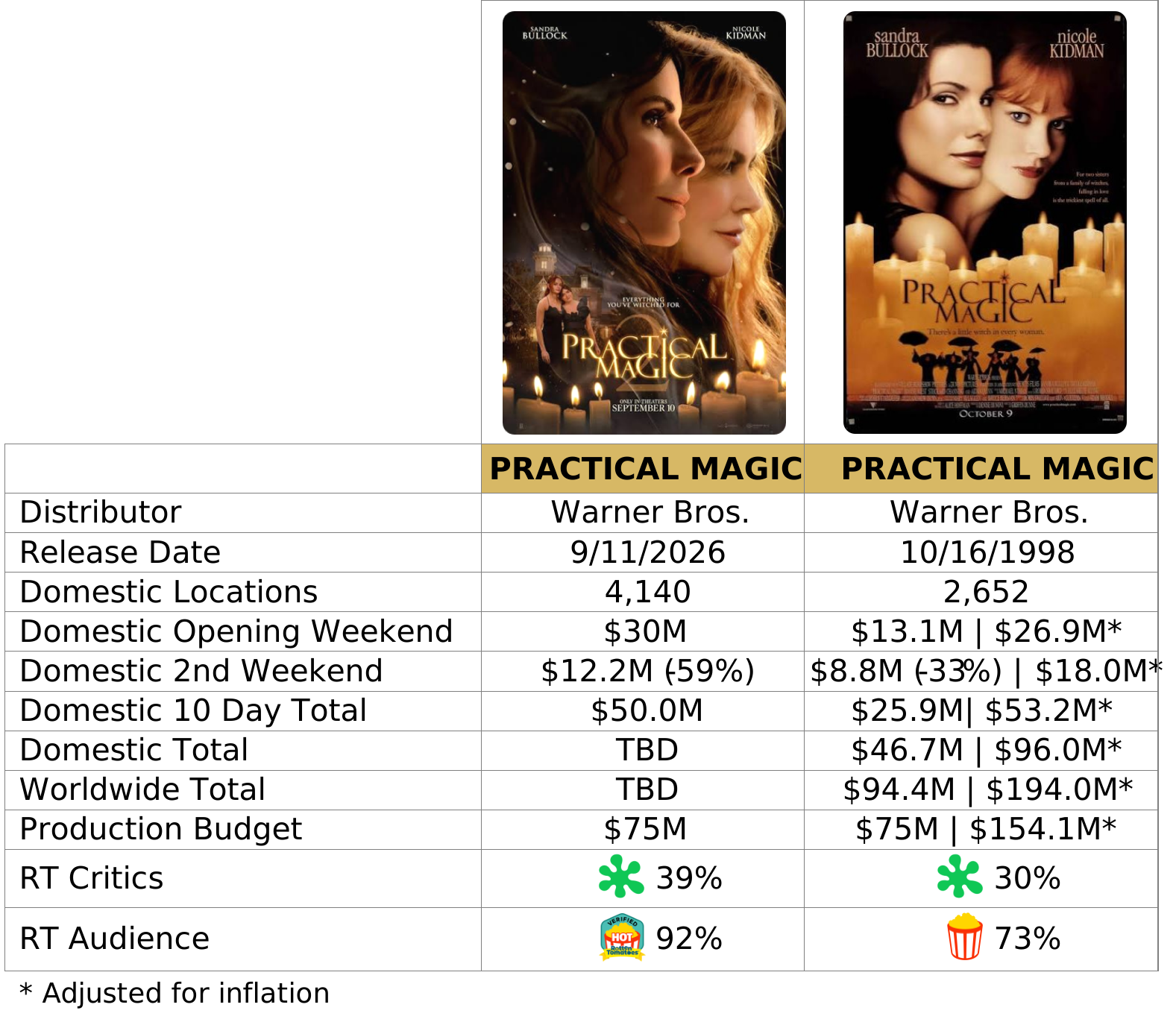
Entertainment Weekly was more skeptical, calling its opening “a worrying start” given the money spent to make and market the film. They also noted that PRACTICAL MAGIC 2 could do well in the long run, if fans discover it over time in a way that is similar to how interest in the original movie built after its initial release in theatres. However, this weekend's 59% drop is a cause for concern considering that the original movie dropped only 33% in its second weekend, followed by 39% and 24% drops in its third and fourth weekends.
PRACTICAL MAGIC 2 has opened well enough to validate the decision to make this movie, but not well enough to guarantee profitability. The sequel’s $30M opening was already two-thirds the amount earned by the original in its entire domestic run. However, the new movie’s ultimate success will be based on whether it can attract audiences over time, just as the original was able to do. Here is how the two films compare after 10 days in release.
PRACTICAL MAGIC 2 vs. PRACTICAL MAGIC after 10 days
#3 - SPIDER-MAN: BRAND NEW DAY
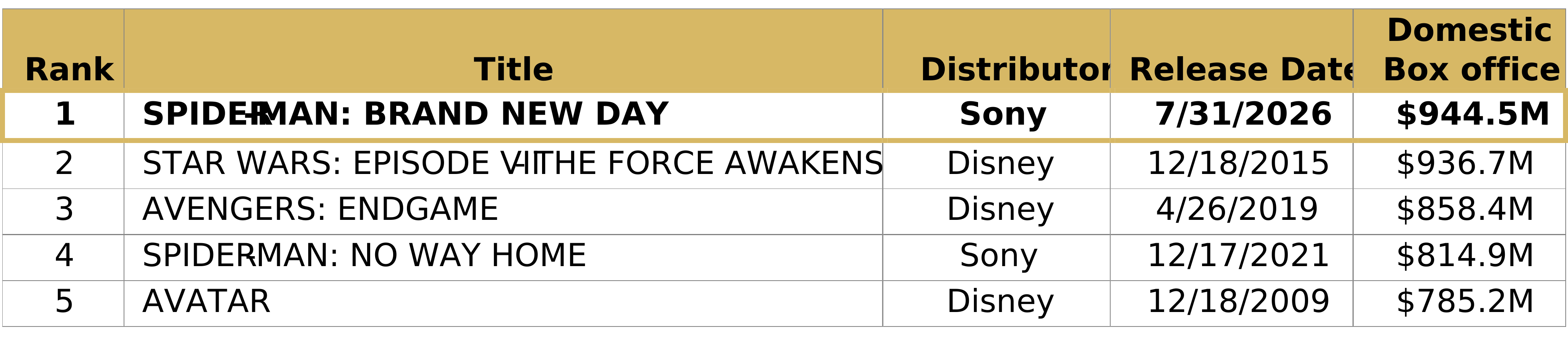
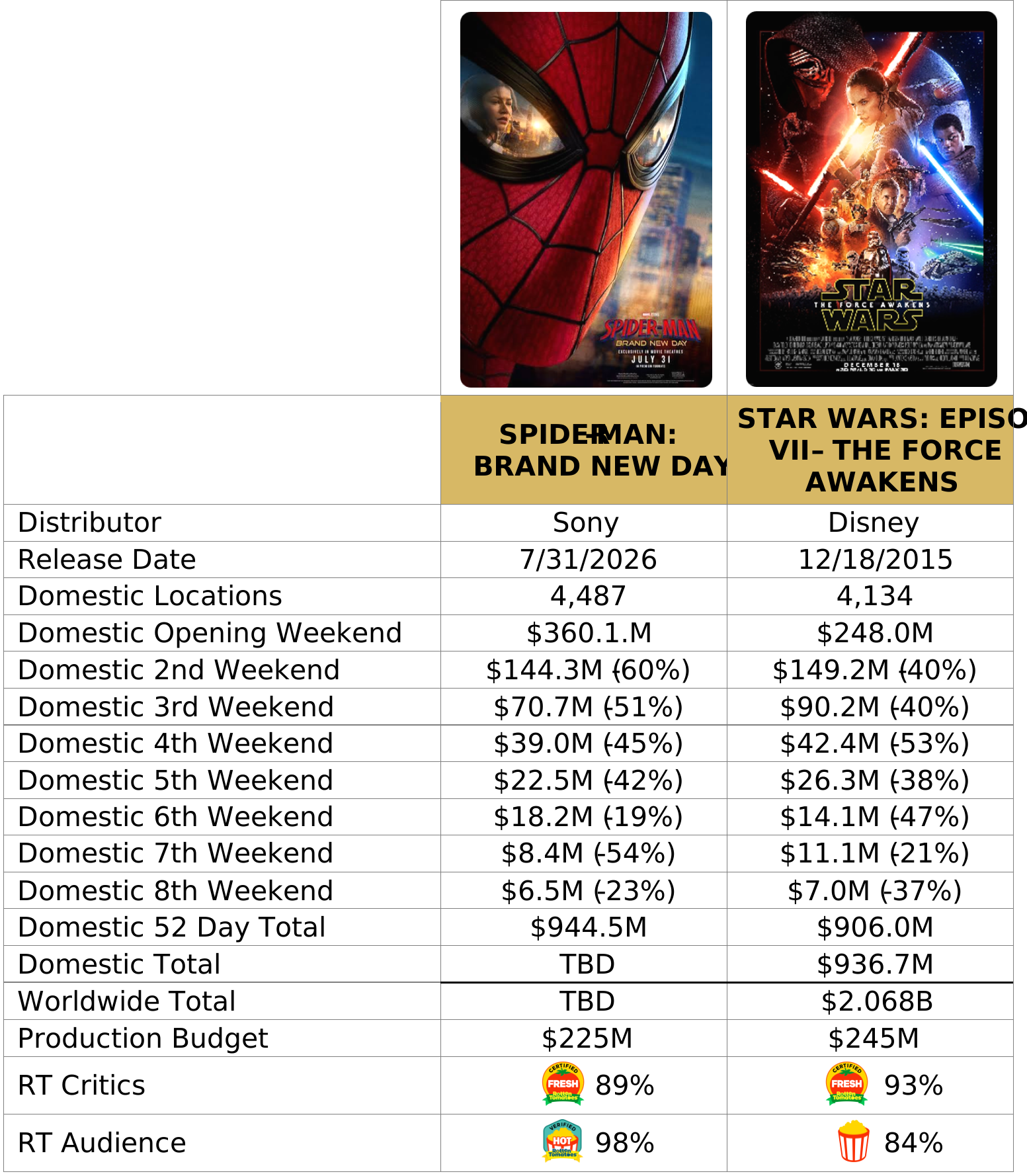
Sony’s SPIDER-MAN: BRAND NEW DAY added another $6.5M to its historic totals, falling only 23% from last weekend and finishing in third place in its eighth weekend. In 52 days, it has earned $944.2M domestically and $2.478B worldwide. Last Tuesday it passed STAR WARS: EPISODE VII – THE FORCE AWAKENS to become the highest-grossing movie of all time in the domestic market. Here is a list of the top-grossing five movies of all time.
5 Top-Grossing Movies of All-Time in the Domestic Market
Now that it has earned the top spot, the discussion about BRAND NEW DAY’s financials turns to whether it can get to $1B in domestic sales. This may be too tall an order since it only earned $6.5M this weekend from 3,017 North American theatres. We estimate that it will finish the week with around $8.5M, which would put its total at $946.5M. We see another $20M potential in domestic sales over the weeks ahead, which would leave it with a total to around $964M. While it would not hit $1B this time around, Sony will almost certainly come back with a re-release at some point in the future, giving it another swing at crossing $1B at the box office. The goal is too tantalizing to come up short.
SPIDER-MAN: BRAND NEW DAY vs. STAR WARS: EPISODE VII – THE FORCE AWAKENS after 52 Days
#4 - THE ODYSSEY
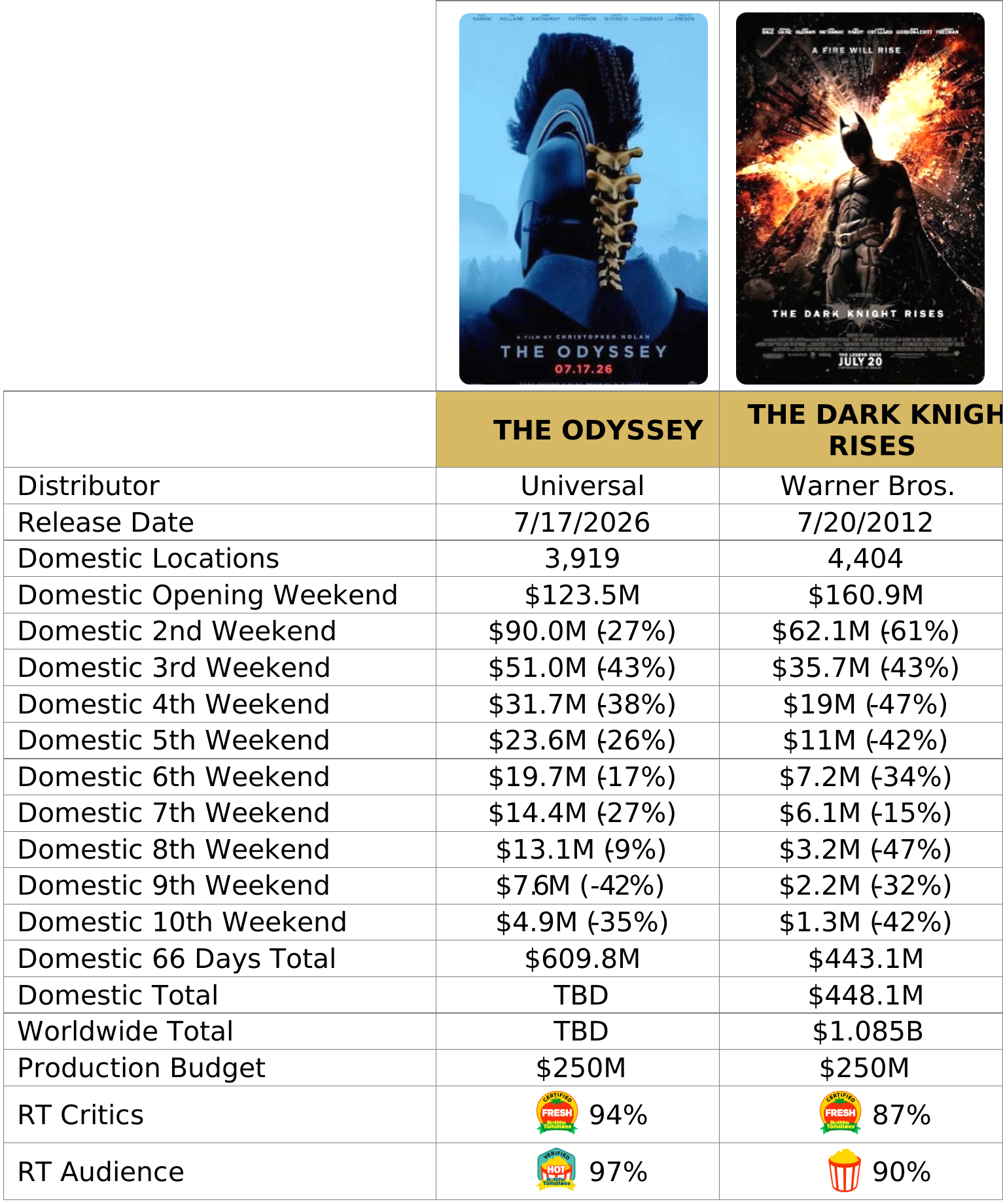
Universal’s THE ODYSSEY continues its own amazing run, landing in fourth place this weekend with an additional $4.9M, a decline of 35% from last weekend. After 66 days, Christopher Nolan’s epic has earned $609.8M domestically and $1.721B worldwide.
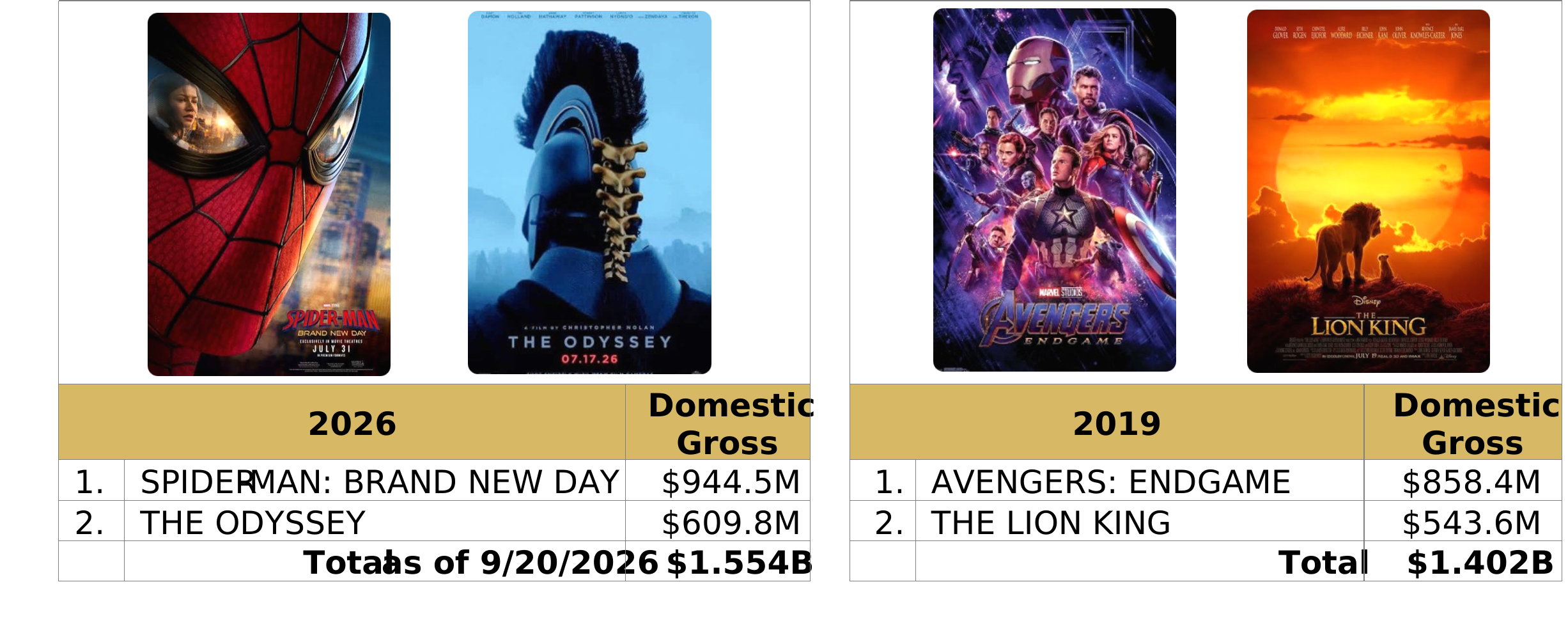
Even though SPIDER-MAN: BRAND NEW DAY has been the topic of most of the headlines, THE ODYSSEY has also enjoyed an enviable theatrical run and contributed greatly to this year’s box office success. The two films together have generated the highest box office of any 1-2 combination in movie history. Here is a look at the two top-grossing film duos of all time.
TOP TWO FILM DUOS IN A SINGLE CALENDAR YEAR
The 2026 pair is already 11% ahead of the 2019 champs and still adding on more each week. They represent another box office milestone to fall this year, underlining just how far 2026 has outperformed all other post-pandemic years. In the comparison between the top two Nolan films, THE ODYSSEY is now definitively his personal best.
THE ODYSSEY vs. THE DARK KNIGHT RISES after 66 Days
#5 - COYOTE VS. ACME
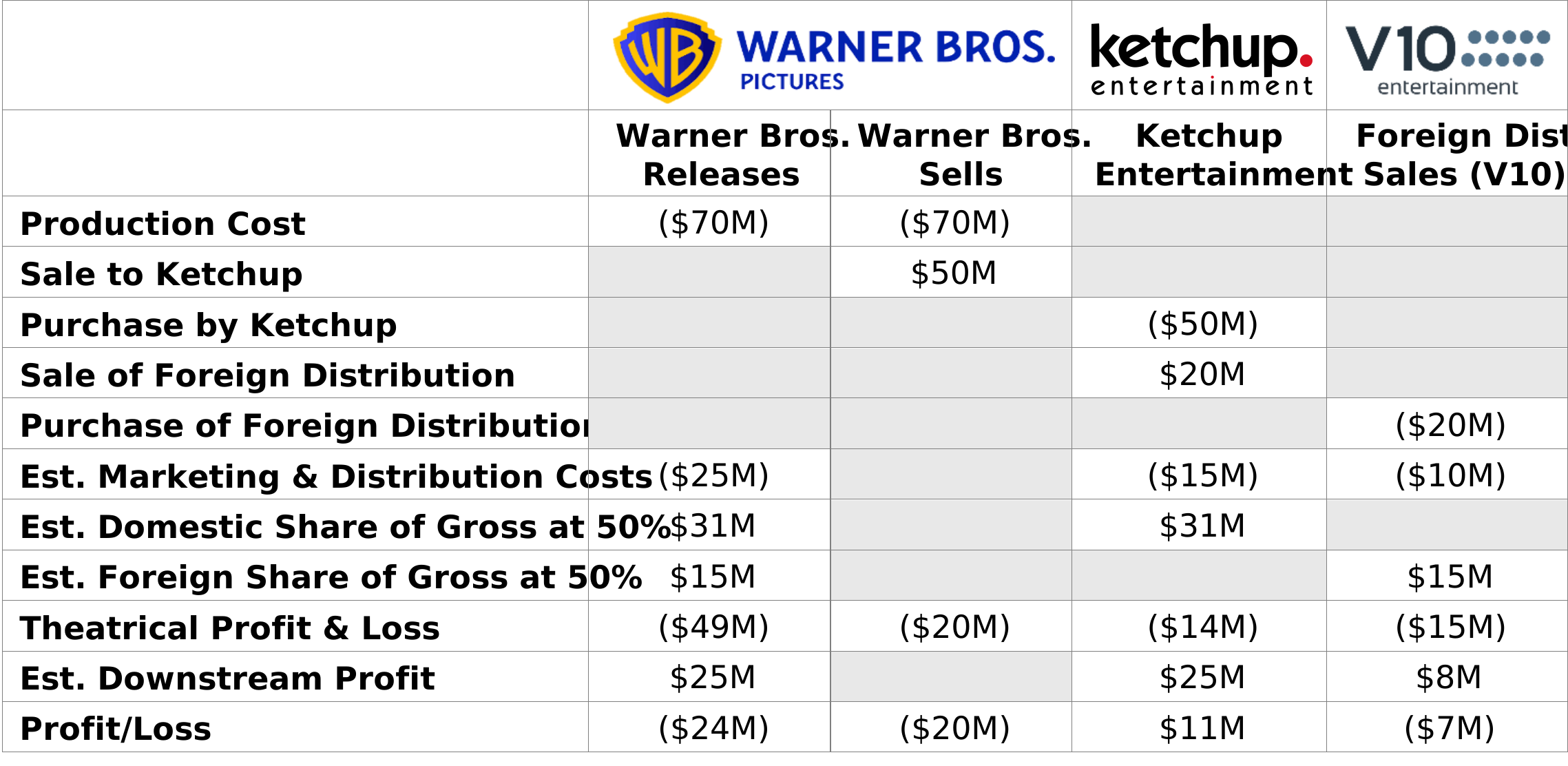
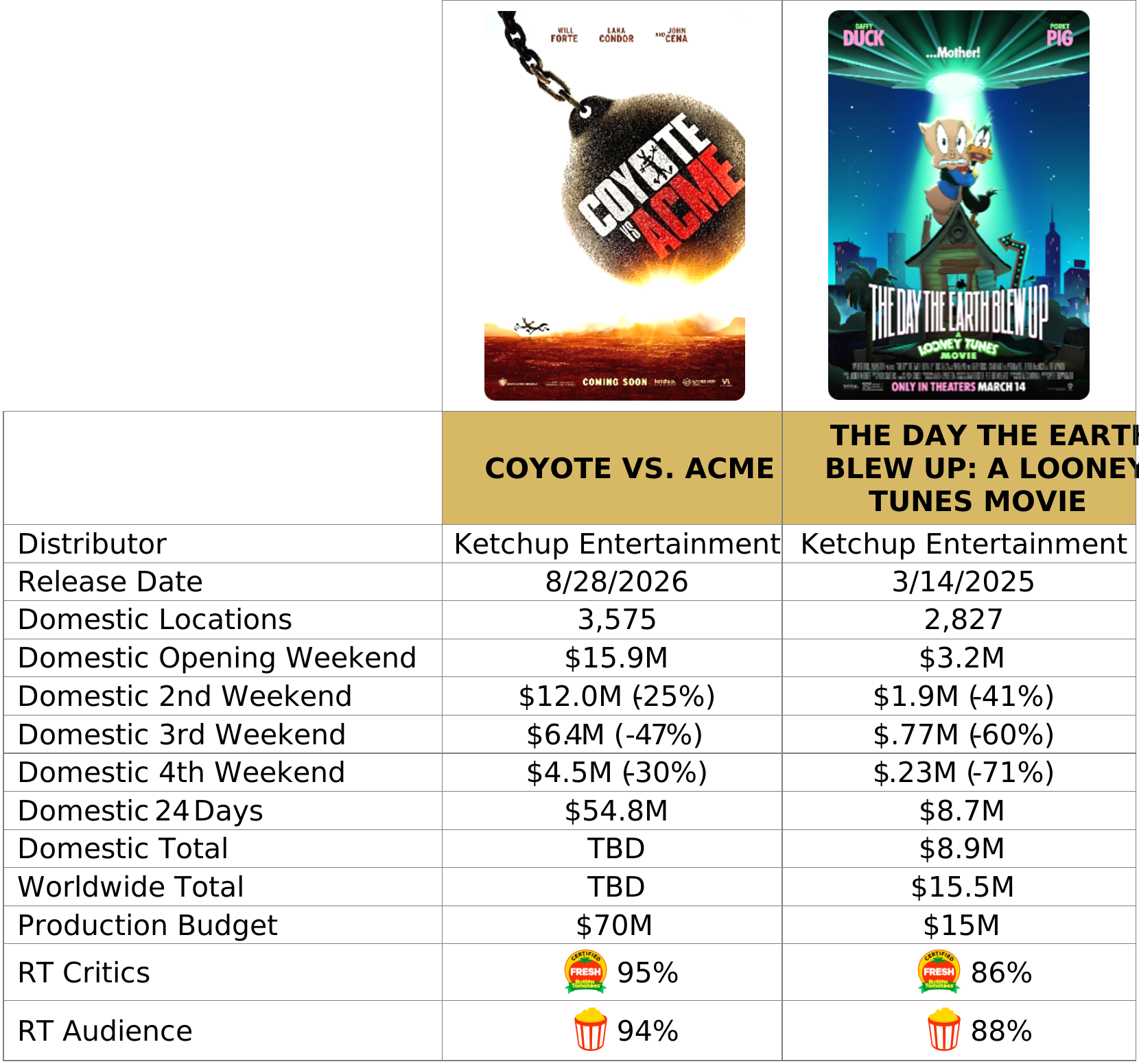
Ketchup Entertainment’s COYOTE VS. ACME finished fifth in its fourth weekend, bringing in $4.5M and dropping 30%. This brings its 24-day totals to $54.8M domestically. Much of the discussion about this film is the unconventional journey it took to get it released, having been shelved by Warner Bros. to take a tax write-off, only to later be sold for $50M to Ketchup Entertainment in order to recoup some of that investment. Last weekend, we projected that the film would end up reaching $62M domestically and $92M globally. After this weekend's results, we feel that those projections are still on target. With that in mind, here is how each company involved with this movie will come out financially.
COYOTE VS. ACME PROFITABILITY
As the breakout above shows, Warner Bros. probably made the right decision to sell its distribution rights for the movie for $50M and take the remaining $20M invested in making the film as a tax write-off. If WB had released the film on its own and it had earned the same $92M that we expect the Ketchup release to make, the studio would have lost $24M on the project. As it was, it lost $20M instead, a slightly better result.
If the film grosses $92M worldwide, Ketchup will earn around $11M on the project after spending $50M to acquire the rights and receiving $20M of that $50M back from re-selling the foreign distribution rights. If there is a loser here, it will most likely be the patchwork of companies put together by V10 on behalf of Ketchup that distributed the movie in foreign markets after spending $20M to acquire those rights. We estimate that they will lose $7M after factoring in the total international box office and downstream rights.
The big winners here are the team that made the film, the fans who were able to enjoy it on the big screen and exhibitors who took home their share of the $54.8M domestic box office together with add-on concessions sales to moviegoers.
$100M in worldwide sales could encourage similar rescue deals. Ketchup will walk away with a much higher profile in the industry and its best-performing movie of all time.
COYOTE VS. ACME vs. THE DAY THE EARTH BLEW UP: A LOONEY TUNES MOVIE after 24 Days
Where Are We as of 9/17/2026
BOX OFFICE AND ATTENDANCE – 37 WEEKS YEAR TO DATE