

The many references to Spielberg in David Robert Mitchell’s latest serve only as a reminder that Spielberg would more delicately handle the disparate tones of this dysfunctional-family-versus-dinosaurs saga.
Set in 1982 — probably not coincidentally the year of E.T. the Extraterrestrial’s release — David Robert Mitchell’s The End of Oak Street is stuffed with Spielberg-isms, from suburban kids on bikes to a dissatisfied wife and mother trying to create art between carpool duties. (Noted Spielberg-phile J.J. Abrams is the executive producer, so they pour on everything but the Reese’s Pieces.) There’s nothing wrong with this kind of homage per se, but by the end of the movie, it’s clear that Spielberg would have done a far better job at spinning all the plates and managing all the tones that Mitchell is attempting to balance.
Writer-director Mitchell (It Follows, Ad Astra, Under the Silver Lake) is too talented not to give us individual scenes that land, but those that do still can’t support a subplot about an unhappy marriage in film that’s primarily about Michiganders running for their lives as their cul-de-sac gets transported to the primordial soup. The End of Oak Street isn’t a particularly good movie unto itself, but it contains the making of three or four potentially interesting ones of wildly varying genres.
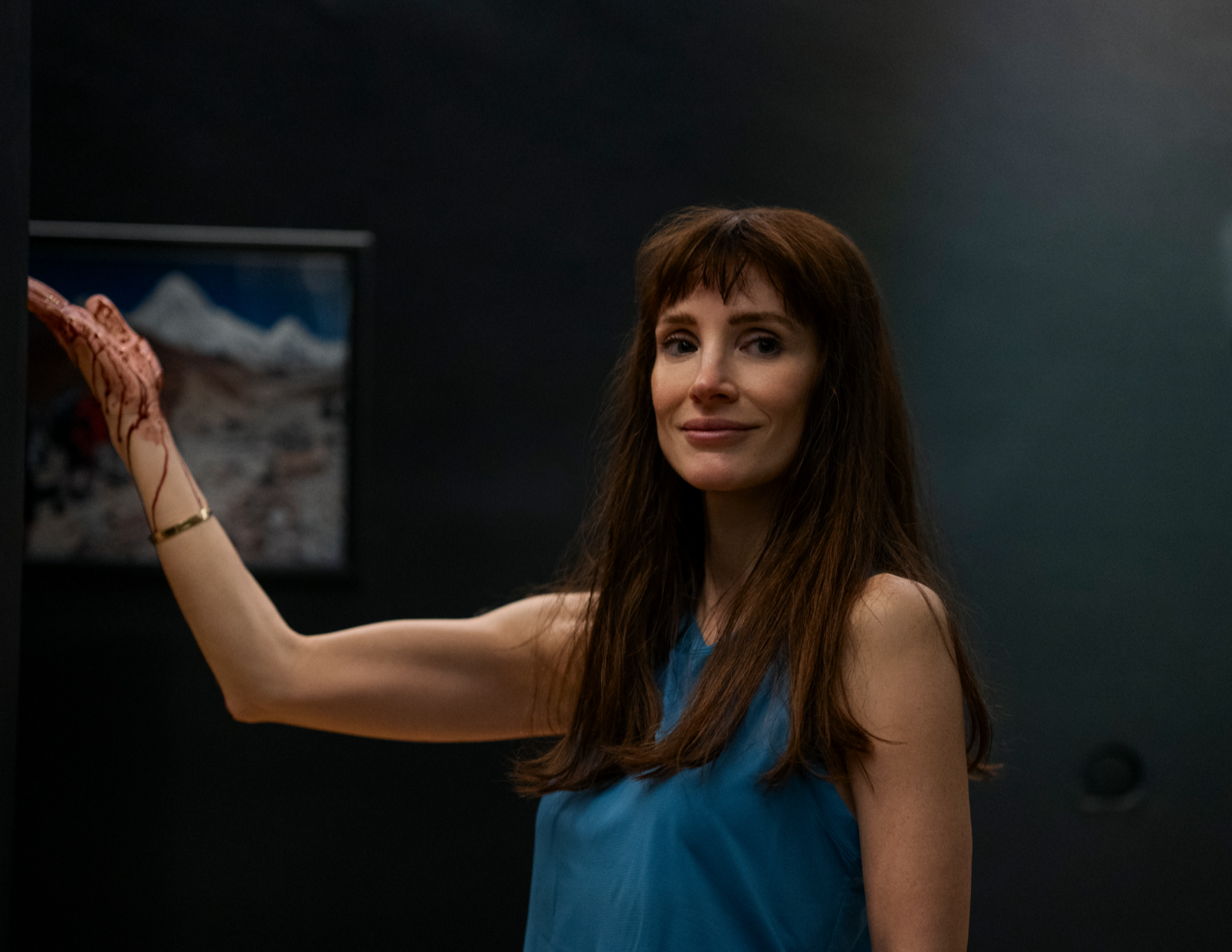
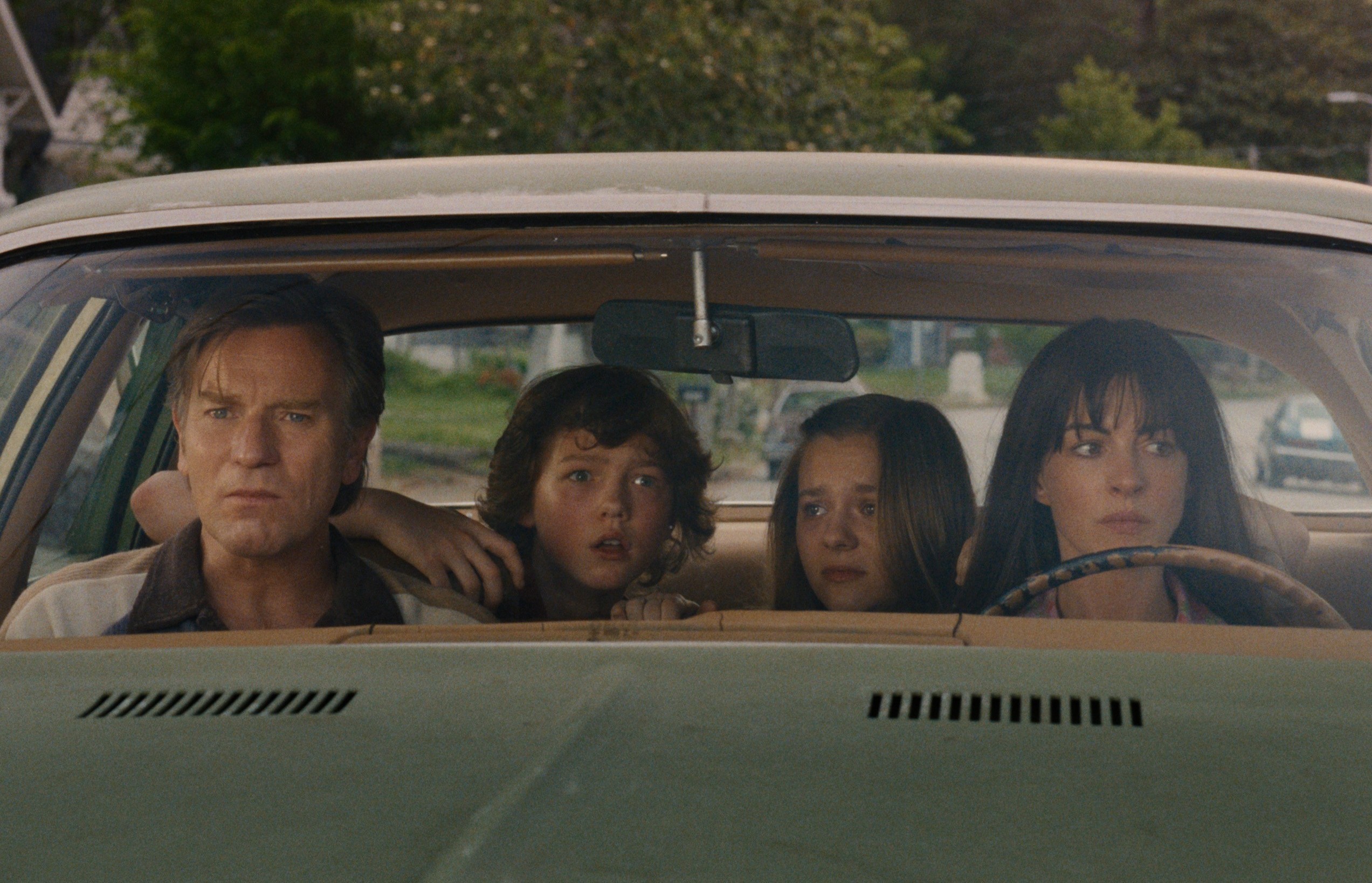
We open with a ludicrously idyllic block party, where the Platt family looks so perfect from the outside that they even compete in a sack race like the Brady Bunch. But the cracks are starting to show, with parents Denise (Anne Hathaway) and Greg (Ewan McGregor) having hushed arguments that are becoming increasingly apparent to their upset children, high-school grad Audrey (Maisy Stella, My Old Ass) and tween Brian (Christian Convery, Cocaine Bear).
One night, some flashing lights agitate the family dog, and suddenly the Platts discover their entire suburb has gone through a wormhole to the past, somewhere between the Pleistocene Epoch and One Million Years, B.C. With their backyards taken over by predatory dinosaurs of all sizes, and every road out now blocked by steep cliffs or thickets of jungle, the Platts and their neighbors have to figure out both how to survive and how to jump back in time to 1982.
Paleontologists, take note: these are some of the most feathery dinosaurs ever presented on the big screen, in keeping with contemporary research that categorizes these creatures as more bird and less lizard. And when Mitchell goes into monster-movie mode, he delivers the thrills; there are quick jump scares, of course, but cinematographer Mike Gioulakis (Sasquatch Sunset) and editor John Axelrad (Ad Astra) really get to shine in an extended sequence where a larger dino chases Brian, then Greg, then Denise, finally cornering the latter on a seemingly inescapable bricked-in front porch.
If giddy thrills were all the film had in mind, then Mitchell clearly has the chops to deliver. What he doesn’t do is make us care about Denise’s unfinished novel and her secret desire to abandon her family and run off to New York City, even though Hathaway excels at this aspect of the character; it just doesn’t fit with all the running around and hiding and dodging automobile-sized dinosaur droppings. As good as Hathaway is at the heavy dramatics here, she’s somewhat one-note as a horror heroine; her terror repertoire seems limited to some combination of wide-open eyes and a trembly chin, occasionally screaming with the vocal power she brought to her big number in Les Misérables. The other characters are given little to deal with beyond “oh crap, I’m about to be eaten,” and these talented players handle their assignment with grace.
Mitchell’s script makes one bold move that defies the predictability of big-studio filmmaking, only to undo it later in an idiotic last-minute twist, so The End of Oak Street can’t claim any ambitions beyond being a satisfying late-summer monster movie. On that level, it works, but only when it stops worrying about being something it’s not.