

That’s all? Fash-mag fantasy butts up against the realities of the 2026 media landscape, so whatever fun there is comes from referencing the vintage original.
Magazines — remember when they were a thing? This is a devastating put-down lobbed by a fashion exec to the hardy crew at Runway magazine in The Devil Wears Prada 2, and it encapsulates why this 20-years-later sequel is so often such a drag. A new Prada must absolutely acknowledge how awful the media biz is doing these days, but the returning creators haven’t figured how not to poop their own party. If the original movie was a fizzy aspirational tale of career girls in head-to-toe couture, this latest entry merely reminds us that billionaires are awful, the internet ruined everything, and magazines are indeed no longer a thing.
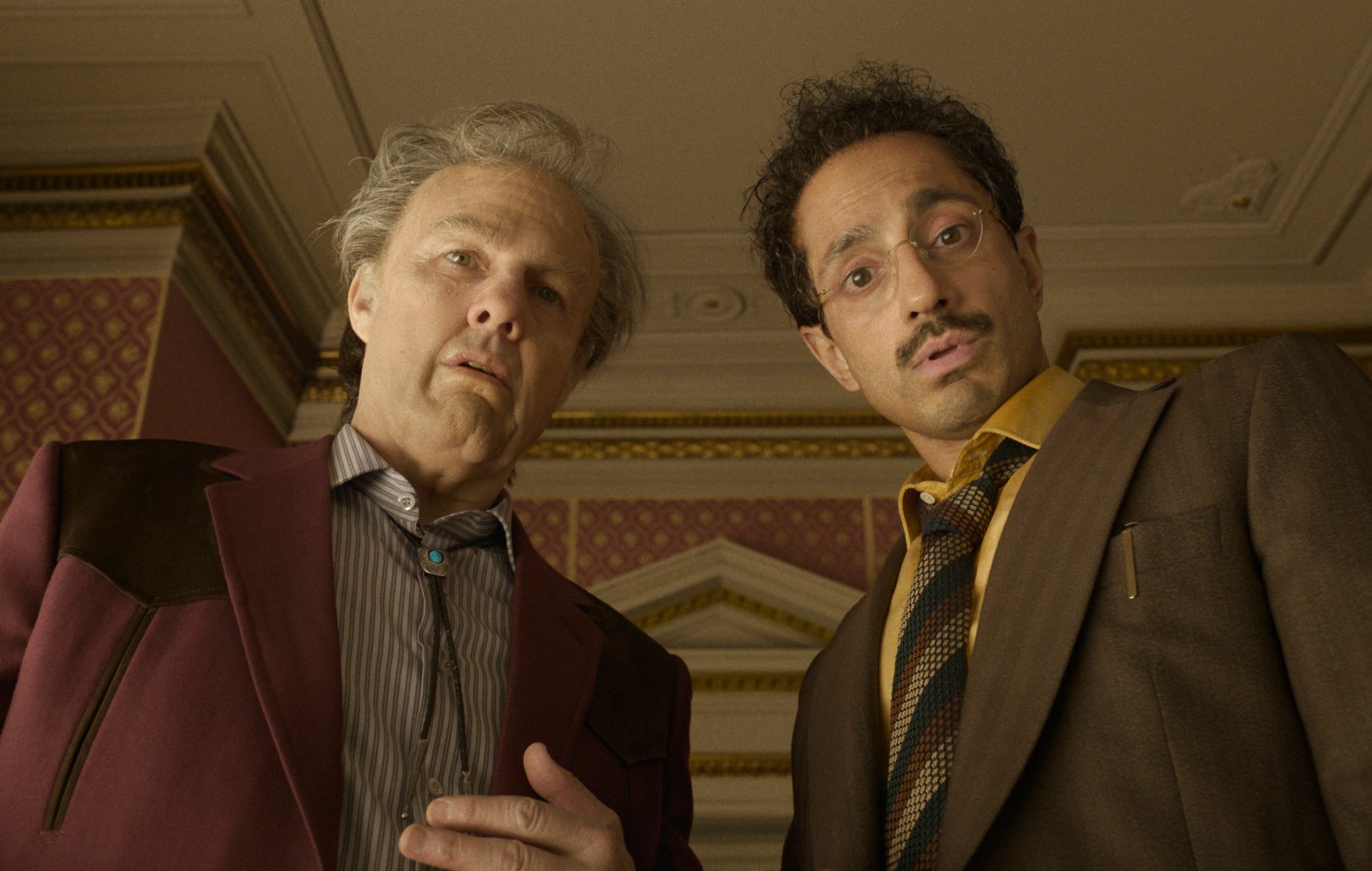
But The Devil Wears Prada 2 lets us pretend, anyway, even as it starts with a harsh bit of reality: Seconds before Andy (Anne Hathaway) wins an award for her journalism, she and her colleagues at the New York Vanguard receive a text telling them they’re all fired. Her sudden availability winds up being perfect timing: Runway just published a story lauding a fast-fashion company that turns out to be using sweatshop labor, and CEO Ira (Tibor Feldman) and his son Jay (B.J. Novak) decide that installing Andy as the magazine’s new features editor will save the venerable publication’s credibility.
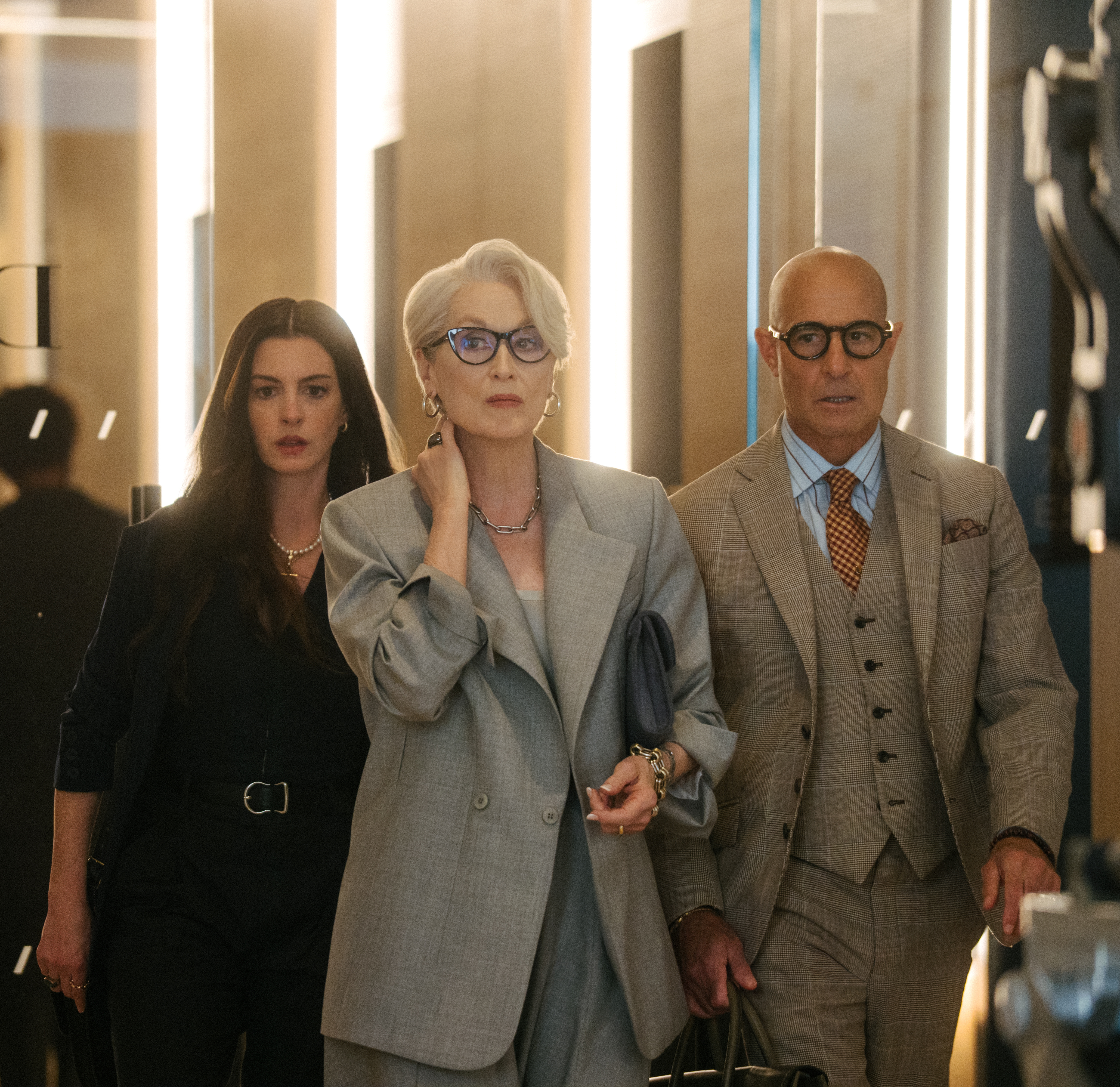
Trouble is, they didn’t run this past Miranda Priestley (Meryl Streep) first, so Andy’s reunion with her old boss is already off on the wrong foot, even with ever-patient art director Nigel (Stanley Tucci) once again providing Andy with the latest designer togs and shoes. After an ass-kissing visit with Emily (Emily Blunt) — once Miranda’s second-in-command, now a higher-up at Dior, a major advertiser with Runway — Andy sets off to put real journalism into the magazine, even as market forces and an untrustworthy tech giant (Justin Theroux) try to bring down the whole enterprise.
Screenwriter Aline Brosh McKenna and director David Frankel, in returning to this material, had no easy choices: they either had to pretend that all was well in the world of glossy mags, or they’d have to give us a Miranda and an Andy struggling with the fact that, as Miranda puts it, “the September issue is so thin you could floss with it.” But the ongoing appeal of the original The Devil Wears Prada had nothing to do with real-world concerns; it was a triumph-of-the-underdog-in-Chanel-boots tale so ephemeral that you could floss with it. Seeing the once-formidable Miranda having to cope with HR demands would be funnier if the movie wasn’t constantly softening her blunt edges, to the extent of giving Kenneth Branagh the thankless role of her devoted husband, presented only to show that an older, wiser Miranda can keep a man. (This grim examination of corporate consolidation brought to you by 20th Century Studios, once known as 20th Century Fox before it was absorbed into The Walt Disney Company.)
Production designer Jess Gonchor (Saturday Night) wisely gives us a suite of Runway offices that seem less grand and spacious, implying both the shrinking of the market and that feeling you get when you return to your first-grade classroom and everything suddenly seems so small. Alas, the original movie’s wicked wit has shrunk as well; the delicious venom that Streep and Blunt portrayed in the first film, unavoidably softened by repeat watchings over the decades, lives on via Bridgerton’s Simone Ashley, as Miranda’s current, ever-unamused assistant.
Andy gets her own barely-there relationship, with a sweet contractor played by Patrick Brammall (Colin from Accounts), but in true sequel style, The Devil Wears Prada 2 exists to give you moments (or outfits) that remind you of the first movie. Sequels have succeeded with less, goodness knows, but too often there’s a sense of inertia that drags down the pace. Little subplots get raised and resolved with minimal excitement, and there’s an ongoing sense that any attempt to revive and revitalize Runway amounts to rearranging the deck chairs on the Titanic.
The first movie, for all its fluff, gave Miranda that eminently quotable “cerulean sweater” monologue, but this follow-up has nothing as interesting to say about fashion, or journalism, or life as anyone leads it. It’s sending nostalgia down the runway and expecting us to wear it, when the perfectly comfortable original already fits just right.