


Following the $2.3 billion success of Avatar: The Way of Water, James Cameron’s Avatar saga continues with Avatar: Fire and Ash (2025), followed by Avatar 4 (2029) and Avatar 5 (2031). The sequels explore new Na’vi clans, a time jump, and even a trip to Earth. Here’s everything confirmed by Cameron, producer Jon Landau, and 20th Century Studios as of October 2025.
Quick Facts: Avatar Sequels at a Glance
Total sequels planned: 3 confirmed (Avatar 3, 4, 5) + 2 potential (6, 7)
Total box-office so far: $5.2 billion (Avatar 1: $2.9B, Way of Water: $2.3B)
Production timeline: Avatar 3 filmed 2017-2020 alongside Way of Water.
Time span: 2025-2031 (6 years between releases)
Director: James Cameron (all films)
Studio: 20th Century Studios / Disney
Key theme: Moral complexity — humans and Na’vi have good and bad individuals.
Biggest reveal: Neytiri goes to Earth in Avatar 5.
Official Titles and Confirmed Release Dates
Avatar: Fire and Ash (2025) (Avatar 3)
Release Date: December 19, 2025.
Original Date: December 2024 (delayed).
Title Revealed: August 2024 at Disney’s D23 Expo.
Status: Large chunk of principal photography was shot simultaneously with the earlier “Avatar 2” (i.e., Avatar: The Way of Water) between 2017-2020. Sources say filming on all four sequels commenced on 25 September 2017 in New Zealand.
Plot / New elements: The film introduces a new Na’vi tribe known as the “Ash People” who inhabit a volcanic/fiery biome of Pandora; the title is thematically linked to it.
Avatar 4 (Title TBA)
Release Date: December 21, 2029.
Status: The First act is filmed, but the remaining production is set to resume after Fire and Ash release. According to Wikipedia and other sources, about “a third” of Avatar 4 was filmed concurrently with the earlier sequels (for logistical reasons such as child actors aging), and the rest will be filmed later.
Key Feature: 6-year time jump in storyline.
Avatar 5 (Title TBA)
Release Date: December 19, 2031.
Status: Script reportedly complete, but full production for Avatar 5 is still “TBA” (not all shooting done). For instance, one source says principal photography for 4 & 5 will begin after the release of the third film.
Major Plot Point: There is talk that Avatar 5 will involve the Na’vi traveling to Earth (or at least Earth will feature significantly).
Avatar 6 & 7 (Potential)
Release Dates: Not announced
Status: These are more speculative. Cameron has indicated that ideas exist, but those films are not officially locked in. He mentioned in an interview that “If the earlier films don’t perform, 4 & 5 might not happen.”
Director Future: Cameron mentioned that he has no intentions of slowing down. In his words, he said, “I mean, there’s no reason not to. I’m healthy, I’m good to go,” Cameron tells Empire, before qualifying his answer.
What Is Avatar: Fire and Ash About? (Confirmed Plot Details)
The Ash People: A New Na’vi Clan: In the third instalment of the epic franchise, the “Ash People” emerge as a transformative and unsettling force within the Na’vi world of Pandora. Director James Cameron explicitly wants to “show the Na’vi from another angle” — moving away from the clear-cut paradigm of the first two films (humans bad, Na’vi good), to a world of internal conflict, cultural fracture, and moral grey. Avatar 3 explores morally complex or even antagonistic Na’vi.
According to interviews, the Ash Clan dwell in the volcanic-fire zones of Pandora, their faces ash-smudged, red-headdressed, hardened by survival in extreme terrain. Cameron characterises their leader (Varang) as someone who has “gone through incredible hardship… she will do anything for them, even things that we would consider to be evil.”
Confirmed Avatar: Fire and Ash Plot Points
1. Jake and Neytiri’s family is in greater danger
The Sully family will face their most personal and devastating challenges yet. Beyond external human threats, their children are pulled into escalating conflicts that blur the line between survival and war. Cameron has teased that this chapter “puts the family through the ringer,” making the stakes more intimate and emotional than ever before.
2. Spiritual themes expand — new clan cultures, different Na’vi perspectives
Avatar: Fire and Ash deepens the spiritual and cultural tapestry of Pandora. With new Na’vi clans like the Ash People and Wind Traders, audiences will see contrasting belief systems and ways of life. This expansion goes beyond simple world-building — it reframes how different tribes interpret Eywa, survival, and their place in the natural order.
3. Fire vs. Water symbolism — The Ash People vs earlier ocean clans
The elemental contrast between Metkayina (water) and Ash People (fire) underpins the film’s central conflict. While water embodied connection and renewal in the second film, fire now represents rage, destruction, and transformation. This clash of elements mirrors the moral and cultural divides that fracture Pandora’s fragile balance
4. Moral ambiguity — Not all Na’vi are heroic; not all humans are villains
Cameron has stated that this film will challenge the “good Na’vi vs evil humans” binary. The Ash People embody a more ruthless, survivalist Na’vi perspective, while some human characters may reveal unexpected depth and nuance. This moral greyness pushes the story into darker, more complex emotional terrain than the previous films.
Tone Shift: Cameron confirmed Avatar 3 will be darker and more morally complex than previous installments.
Has Avatar: Fire and Ash Already Been Filmed?
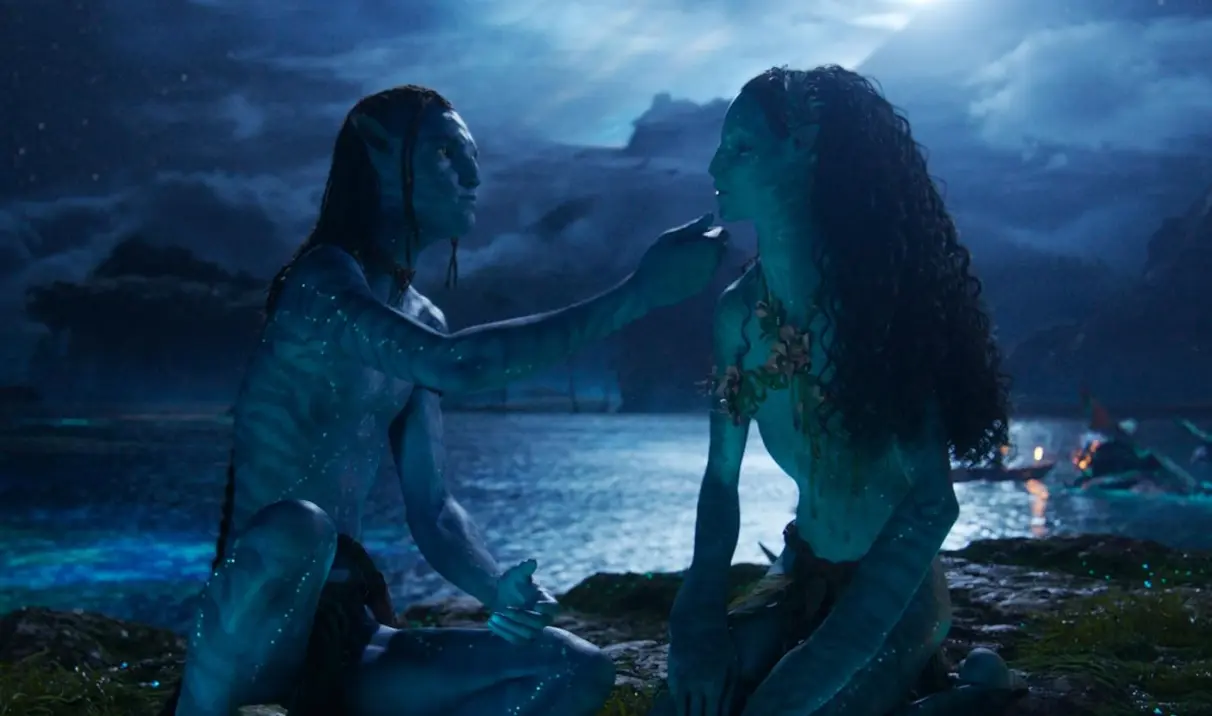
Yes — a significant portion of the film was shot between 2017 and 2020, alongside Avatar: The Way of Water (2022). This ambitious back-to-back production strategy also helped streamline visual effects pipelines and complex underwater performance capture sequences. While most principal photography was completed during that period, post-production, additional pick-ups, and VFX work have continued for years — a normal process for films of this scale. The film remains in post-production and finishing stages, ahead of its scheduled December 19, 2025, release.
Why film two movies simultaneously?
Director James Cameron chose to film large segments of Avatar: Fire and Ash simultaneously to maintain continuity, especially for the child actors playing the Sully children, ensuring their on-screen ages remained consistent. Cameron explained the decision was driven by the “Stranger Things effect,” avoiding problems with aging teen actors.
Production Timeline:
- 2017-2020: Principal photography for Avatar 2 & 3 filmed back-to-back.
- 2020-2022: Post-production on The Way of Water.
- 2022-2025: Post-production on Fire and Ash.
- No major reshoots needed — filming wrapped before the pandemic in full.
Young Cast Members Filmed Early:
- Jack Champion (Spider) – Age 12-15 during filming.
- Britain Dalton (Lo’ak) – Age 11-14 during filming.
- Trinity Jo-Li Bliss (Tuk) – Age 8-11 during filming.
Avatar: Fire and Ash Cast—Returning Stars & New Additions

Returning Core Cast:
- Sam Worthington as Jake Sully
- Zoe Saldaña as Neytiri
- Sigourney Weaver as Kiri
Young Cast (The Sully Children):
- Jack Champion as Spider (human boy raised by Na’vi)
- Britain Dalton as Lo’ak (Jake & Neytiri’s second son)
- Trinity Jo-Li Bliss as Tuk (Jake & Neytiri’s youngest daughter)
- Jamie Flatters as Neteyam (eldest son — status uncertain after Way of Water events)
New Cast Members (Avatar 3):
- Michelle Yeoh — Role undisclosed
Previously Known for: Acclaimed Malaysian actress known for Everything Everywhere All at Once (2022)(Oscar-winning role), Crouching Tiger, Hidden Dragon, and Star Trek: Discovery.) - Oona Chaplin — Character Varang, leader of the Ash People
Previously Known For: Known for her role as Talisa Maegyr in Game of Thrones and appearances in Taboo and The Hour. - David Thewlis — Character Peylak, Na’vi leader of Wind Traders tribe
Previously Known For: Best known as Remus Lupin in the Harry Potter and the Prisoner of Azkaban series and for acclaimed performances in Naked, Fargo, and The Theory of Everything.
Notable Fun Fact:
Zoe Saldaña joked: “I’ll be 53 when the last Avatar comes out!” (She was 44 when The Way of Water” was released.)
What to Expect in Avatar 4 (December 2029)
The 6-Year Time Jump: One of the most intriguing structural decisions in the Avatar saga is the six-year narrative time jump planned between Avatar: Fire and Ash (2025) and Avatar 4 (2029). Director James Cameron confirmed. This isn’t just a narrative flourish — it’s a strategic, creative, and production choice. What that means in practical terms is: the young actors who play the Sully kids will actually age by six years between the end of one act of the film and the start of the next — thus aligning their real-life growth with the narrative growth of their characters. This allows the story to treat the kids as young adults rather than “kids who somehow look unchanged.”
It also enables the filmmakers to avoid some of the typical pitfalls: awkward digital de-aging or recasting major child/teen characters, both of which can jar the continuity and believability of a long-running saga.
James Cameron Quote: “We see them [the Sully children] and then we go away for six years and we come back. It’s going to be a big time gap.”
Why This Matters:
- Real Age = Character Age
The young actors will actually be six years older when production resumes, aligning perfectly with their characters’ timeline. This makes their growth feel natural and believable, enhancing emotional continuity for the audience.
- No De-Aging or Recasting
By baking the jump into the story, James Cameron avoids the awkwardness of CGI de-aging or replacing core cast members — preserving both immersion and performance consistency.
- Coming-of-Age Arc
The time jump lets the story explore the Sully children as young adults, opening new dramatic ground: shifting family roles, leadership struggles, and personal conflicts.
- Story Mirrors Reality
The six-year leap mirrors the real-world production gap between Avatar: Fire and Ash (2025) and Avatar 4 (2029), giving the creative team flexibility while keeping the narrative timeline seamless.
Production Status:
- 2017 – 2020: The first act was filmed during the back-to-back production of Avatar: The Way of Water and Avatar: Fire and Ash to maintain continuity with the young cast.
- 2026 – 2027 (expected): The remaining scenes will be shot after Fire and Ash releases, allowing the actors to age naturally for the planned six-year time jump.
- Script phase (completed): The script is finalized and reportedly received a “Holy f—” reaction from executives at 20th Century Studios, indicating strong internal enthusiasm.
What We Know About the Plot:
- Continues the story of Jake and Neytiri and their family after the events of Avatar 3.
- Consequences of Fire and Ash will shape the next chapter — including shifts in Pandora’s political and cultural balance.
- Will introduce new Na’vi clans and unexplored Pandoran regions, further expanding the worldbuilding. (Producer Jon Landau confirmed new societies and tribes in interviews.)
- Continues the moral complexity theme: moving away from the simplistic “good Na’vi vs bad humans” framing, a concept Cameron has reiterated multiple times.
Cameron’s Confidence: The enthusiastic studio reaction suggests Avatar 4 may be the most ambitious sequel in terms of story and scale.
Avatar 5 (2031): Neytiri Goes to Earth — A Franchise Game-Changer

The Earth Storyline
Avatar 5 will feature Neytiri traveling to Earth — a seismic shift for the franchise, which has been set entirely on Pandora. Avatar 5 will mark the first time the saga leaves Pandora and ventures to Earth. It is a monumental shift for a franchise that has, until now, been rooted entirely in the alien moon’s lush ecosystem. According to Jon Landau, this narrative leap isn’t just a change of scenery; it’s a deep thematic pivot.
This storyline will challenge Neytiri’s worldview, forcing her to confront the complexity of humanity beyond the colonial and exploitative forces she’s always known. It’s a chance for the films to reframe the human–Na’vi relationship, shifting away from a one-dimensional conflict toward a more morally layered, emotionally resonant narrative.
The Earth setting also opens up new creative possibilities — visually, politically, and emotionally. Unlike Pandora, Earth is a world in crisis, scarred by climate change and corporate dominance (as hinted in the first film)
Producer Jon Landau (2023 interview): “We go to Earth to open Neytiri’s eyes to what exists beyond the RDA [Resources Development Administration]. She’s only seen the humans who have come to Pandora to rape and pillage, so she thinks all humans are bad. But there’s more to humanity than that.”
Why This Is Significant:
Thematic Expansion
- Challenging Neytiri’s worldview:
Throughout the franchise, Neytiri has viewed humans through the lens of occupation and violence. Her only encounters have been with soldiers, mercenaries, and RDA operatives who exploit Pandora. Traveling to Earth forces her to confront the nuance of humanity — seeing ordinary people, resistance movements, and a population that isn’t uniformly complicit in exploitation. - Showing Earth’s diversity and culture:
Unlike Pandora’s unified Na’vi identity, Earth is home to billions with different cultures, histories, and perspectives. By showing Neytiri this diversity, the story can reframe “the enemy” as complex and fractured, not a monolith. This also creates room for new characters — scientists, activists, or civilians — who may challenge both Neytiri’s and the audience’s assumptions. - Reinforcing moral complexity:
James Cameron has said repeatedly that the sequels move beyond simple binaries. Just as Avatar: Fire and Ash explores morally ambiguous Na’vi, Avatar 5 will show the spectrum of humanity — some corrupt, some complicit, but also many good. This aligns with the franchise’s evolving theme: “Not all humans are bad. Not all Na’vi are good.”
Visual Opportunities
- First full depiction of Earth in the Avatar universe:
While Earth has been mentioned in earlier films, Avatar 5 will be the first to take audiences there. This provides a chance to world-build outside Pandora for the first time. - A likely environmentally devastated world:
In Avatar (2009), dialogue and lore hinted at Earth’s collapse — overpopulation, pollution, and resource exhaustion. Cameron has described the setting as “a dying world”. Showing this in 2170 will contrast with Pandora’s beauty even starkly. - Pandora vs. Earth:
The contrast between Pandora and Earth sets the stage for one of the most powerful visual shifts in the franchise. Pandora is a world of verdant jungles, glowing bioluminescence, and thriving ecosystems — a living, breathing planet in perfect balance with its inhabitants. Earth, by contrast, is expected to be a place of industrial ruins, overcrowded megacities, and ecological collapse. This visual juxtaposition can make Neytiri’s journey visceral — she’s stepping into the very thing her people have fought to protect their world from.
- Urban vs. wilderness:
Avatar has always celebrated nature, so showing human urban sprawl — towering cities, polluted skies, resource extraction — amplifies the stakes of the conflict. It also sets the stage for potential human redemption arcs.
Story Implications
- Neytiri’s survival is confirmed through Avatar 5:
Since the storyline centers on her journey to Earth, we know she survives the events of Avatar 3 and 4. Jake Sully’s fate, however, remains intentionally ambiguous, heightening emotional stakes for the sequels. - Possible diplomatic or rescue missions:
Neytiri’s trip to Earth may be tied to diplomatic efforts — either to negotiate with sympathetic humans or address shared existential threats. This opens the door for new human–Na’vi alliances, potentially shifting the entire power dynamic of the franchise. - Introduction of Earth-based allies:
Not all humans work for the RDA. The film could introduce scientists, activists, or resistance groups who help the Na’vi — mirroring how Jake once sided with them against his own species.
Speculative World-Building — Earth in the 2170s
- Overpopulation:
The first film implies Earth is overrun with people, creating immense pressure on resources and pushing humanity to seek other worlds like Pandora for survival. - Resource depletion:
Mining unobtanium isn’t just greed — it’s driven by desperation. Earth has been stripped of many of its natural resources, making interstellar extraction a matter of survival for corporations and governments. - Environmental collapse:
Ecological ruin on Earth likely mirrors what the RDA is doing on Pandora. This sets up Earth as both a cautionary tale and a motivator for why humanity must change. - Neytiri’s outsider arc mirrors Jake’s:
Just as Jake arrived on Pandora and learned to see the world through Na’vi eyes, Neytiri will now walk through Earth as an alien. Her arc may reflect — and invert — Jake’s journey, learning to empathize with a world she once viewed only as “the enemy.”
Will There Be More Than 5 Avatar Movies? (Cameron’s Plans for 6 & 7)
Since the release of Avatar in 2009, James Cameron has treated the franchise as a long-form epic rather than a standalone series. What began as a single film has evolved into one of the most ambitious cinematic sagas ever conceived, spanning decades both on screen and in real time. And even though five films are officially planned, Cameron’s vision might extend even further.
Cameron’s Statement (2023 Interview):
“We’re fully written through movie five, and I’ve got ideas for six and seven… although I’ll probably be handing the baton on at some point. You know, mortality catches up. But we’re loving what we’re doing.”
What This Means:
James Cameron has already confirmed that the scripts for Avatar 1–5 are complete, ensuring a fully mapped-out story arc stretching from the franchise’s 2009 beginning through its planned 2031 conclusion with Avatar 5. That’s a 22-year cinematic narrative covering multiple generations of Sullys and Na’vi clans — a scale rarely seen in modern blockbuster filmmaking.
What Avatar 6 & 7 Depend On
- Box Office Performance:
The Walt Disney Company (which owns 20th Century Studios) will green-light additional sequels only if Avatar 3–5 sustain their global box office momentum. If the films continue earning in the $2 billion+ range like Avatar: The Way of Water, the odds are strongly in favor of 6 and 7. - Cameron’s Health and Interest:
By the time Avatar 5 releases in 2031, Cameron will be around 77. While he has expressed enthusiasm for the franchise, he’s also realistic about his ability to direct forever, saying he might eventually “hand the baton on.” - Audience Demand:
No franchise is immune to fatigue. If interest fades or cultural momentum shifts, even a well-planned series may be scaled back. Sustaining emotional investment and innovation will be key for the series’ long-term future.
Possible Succession Plan:
Cameron has hinted he could mentor a successor director. He/She will likely be a trusted collaborator from his long-time creative team to carry the saga forward if he steps back from directing.
There are industry precedents for this model:
- George Lucas handed over Star Wars to new filmmakers.
- The Lord of the Rings franchise has continued in new creative hands without Peter Jackson directly directing every project.
Such a transition would allow the franchise to outlive its original creator while preserving its core vision.
Financial Reality Check:
- The first two Avatar films have grossed more than $5.4 billion combined worldwide, placing them among the highest-grossing films of all time.
- If future installments maintain that momentum, Avatar 6 and 7 are highly likely to be produced — even if Cameron is no longer directing.
- Disney’s investment in Pandora-themed parks, merchandise, and long-term IP strategy further supports the case for extending the series beyond five films.
Avatar Franchise Timeline (2009-2031+)
| Year | Movie | Key Events |
| 2009 | Avatar | Jake Sully joins the Na’vi, defeats the RDA, and becomes Toruk Makto |
| 2154 | (In-universe) | Original film’s timeline |
| 2022 | The Way of Water | Sully family flees to the reef, Neteyam dies, Quaritch returns as a recombinant |
| 2166 | (In-universe) | Way of Water’s timeline (~12 years after Avatar 1) |
| 2025 | Fire and Ash | Ash People introduced, moral complexity explored |
| 2029 | Avatar 4 | 6-year time jump, young Sullys now adults |
| 2031 | Avatar 5 | Neytiri goes to Earth |
| 2033+ | Avatar 6-7? | Potential continuation if financially viable |
Behind the Scenes: Why Avatar Sequels Take So Long
Performance Capture Technology
- Advanced facial capture:
Each actor performs in a specialized motion-capture suit with a head-mounted camera rig that records even the tiniest facial movements. This allows animators to translate every micro-expression — a blink, a smirk, a furrowed brow directly onto the Na’vi characters with uncanny realism. - Proprietary performance translation:
Cameron’s team uses custom software that maps the actors’ performances onto digital Na’vi models. Unlike conventional CGI, this process is highly labor-intensive — each shot requires precise calibration to ensure the emotion, timing, and physicality match the actor’s intent. - Underwater performance capture:
Introduced with Avatar: The Way of Water, underwater performance capture was unprecedented in filmmaking. Years of R&D were needed to figure out how to track motion accurately underwater, handle air bubbles that disrupted sensors, and train the cast to hold their breath for extended takes. This alone added years to the production timeline.
Visual Effects Workload
- Three+ years of post-production:
Each film involves a massive visual effects pipeline that can take over three years. Every second on screen is layered with intricate digital work from bioluminescent plants to fluid simulations and complex creature animations. - Weta FX at the center:
The bulk of the visual effects is handled by Wētā FX (formerly Weta Digital), one of the world’s leading VFX houses. Their task is essentially to build a fully animated, photoreal world frame by frame, blending it seamlessly with motion-capture performances. - Every frame is handmade:
While some studios rely heavily on automated rendering, Avatar films involve extensive artist intervention. Lighting, texturing, atmospheric effects, and water physics are meticulously crafted to maintain the franchise’s signature realism. This level of detail slows production but sets a new standard for visual storytelling
Cameron’s Perfectionism
- Pushing technological boundaries:
James Cameron has a long history of reinventing film technology from liquid metal VFX in Terminator 2: Judgment Day to the photorealism of Titanic and the performance capture innovations of Avatar. Each sequel is treated as a technological leap. - “The film is done when it’s done.”
Cameron has publicly said he won’t rush to meet release dates at the expense of quality. The films are released only when they meet his technical and creative standards. This philosophy means production schedules are flexible but also significantly longer. - Story and technology co-develop:
Unlike most blockbusters, the scripts and technological infrastructure for Avatar sequels evolve in tandem. Cameron’s vision often demands new tools that don’t exist yet, so they have to invent them first.
Pandemic Delays
- Original release planned for 2014:
Avatar 2 was initially slated for December 2014. Technological innovation, script work, and world-building delays pushed it back repeatedly — but the COVID-19 pandemic caused the longest pause. - COVID shutdowns:
In early 2020, post-production and some filming were halted for months, particularly motion-capture and VFX work. Strict travel restrictions impacted production schedules. - New Zealand lockdowns:
Since Weta FX is based in New Zealand, strict national lockdowns affected both studio access and collaboration between the U.S. and NZ teams. Although the country handled COVID effectively, its zero-COVID policy slowed the project further.
How Avatar Sequels Compare to Other Franchises
| Franchise | Total Films | Timeline Span | Avg Box Office |
| Avatar | 5 planned (7 possible) | 2009-2031 (22 years) | $2.6B per film |
| Star Wars (Skywalker Saga) | 9 films | 1977-2019 (42 years) | $1.1B per film |
| Marvel Cinematic Universe | 33+ films | 2008-2025+ (17+ years) | $1.1B per film |
| Lord of the Rings + Hobbit | 6 films | 2001-2014 (13 years) | $1.0B per film |
- Highest Per-Film Box Office Average
Unlike sprawling franchises with uneven performance, Avatar has maintained exceptionally high global box office returns per entry. Avatar (2009) remains the highest-grossing film of all time worldwide, and Avatar: The Way of Water (2022) crossed $2.3 billion, ranking among the top three. This gives Avatar the highest per-film box office average in cinema history — a rare feat even compared to juggernauts like Star Wars: The Force Awakens, Avengers: Endgame, or Jurassic World.
- A Singular Creative Vision — One Director for the Entire Saga
Most major franchises involve multiple directors and creative teams over time, often resulting in tonal shifts or uneven storytelling. Avatar stands apart: James Cameron has directed every installment himself, maintaining a cohesive narrative tone, visual identity, and technological innovation throughout the saga.
- A Continuous Narrative — No Reboots, Spin-offs, or Anthologies
While franchises like Star Wars, Jurassic Park, or the Marvel Cinematic Universe rely on reboots, prequels, or multiple overlapping timelines, Avatar follows one continuous story. This linear, character-driven epic is closer to a serialized saga like The Lord of the Rings than a commercial franchise that endlessly expands sideways.
Where to Watch Avatar Movies in 2025
| Title | Streaming (U.S.) | Rental/Purchase |
| Avatar (2009) | Disney+ | Apple TV, Prime Video, Vudu |
| The Way of Water (2022) | Disney+ | Apple TV, Prime Video, Vudu |
| Fire and Ash (2025) | Theaters Dec 2025 → Disney+ ~45 days later | TBA |
Disney+ Subscription:
- In the U.S., Disney+ (with ads) is $11.99/mo and Premium (no ads) $18.99/mo from Oct 21, 2025.
Theatrical Experience:
Cameron designs Avatar films for IMAX 3D and High Frame Rate (HFR) formats. For optimal experience:
- See in IMAX 3D if available
- Dolby Cinema is the second-best option
- Avoid standard 2D screenings—visual spectacle is core to the experience.
Frequently Asked Questions (FAQs)
Q1: What is the official title of Avatar 3?
A: Avatar: Fire and Ash, revealed at Disney’s D23 Expo in August 2024. The title reflects the new Ash People clan and the film’s thematic focus on moral complexity (“fire” = passion, danger, destruction; “ash” = aftermath, legacy).
Q2: Why was Avatar: Fire and Ash delayed to 2025?
A: Disney rescheduled major franchises in 2023 due to pandemic-related post-production backlogs and strategic release calendar adjustments.
Q3: Is Avatar 4 already filmed?
A: Partially. Only the first act has been filmed (shot during 2017-2020 production). The remaining scenes will be shot after Fire and Ash releases, likely in 2026-2027.
Q4: Does Neytiri go to Earth?
A: Yes — in Avatar 5 (2031), per producer Jon Landau. She’ll travel to Earth to witness humanity’s complexity beyond the villainous RDA.
Q5: Are all sequels written?
A: Yes — Cameron confirmed scripts for movies 1-5 are complete. He has ideas for Avatar 6 and 7, but may “hand the baton” to another director.
Q6: How much did The Way of Water cost to make?
A: Estimated $350-460 million (exact budget undisclosed). Despite the cost, it earned $2.32 billion globally, making it profitable. Cameron stated it needed to be “the third or fourth highest-grossing film in history” to break even—it became the third highest-grossing film ever.
Q7: Will Jake Sully die in the sequels?
A: Unconfirmed, but Cameron has hinted at mortality themes. Sam Worthington’s contract runs through Avatar 5, but his character’s fate beyond that is unknown. Neytiri’s Earth trip in Avatar 5 could occur with or without Jake.
Q8: What happened to Neteyam in The Way of Water?
A: Neteyam (Jake and Neytiri’s eldest son, played by Jamie Flatters) died saving his siblings during the final battle. His death was a major emotional turning point.
Q9: How long are Avatar movies?
A:
- Avatar (2009): 2h 42m
- The Way of Water (2022): 3h 12m (longest in franchise)
- Fire and Ash (2025): Runtime TBA (likely 2h 45m-3h 10m based on Cameron’s style)
Q10: Can I watch Avatar sequels without seeing the first two films?
A: Not recommended. The sequels are a continuous narrative: Avatar 3 continues directly from The Way of Water’s ending.
Q11: Why does James Cameron make such long movies?
A: Cameron prioritizes storytelling over runtime constraints. His philosophy: “I don’t cut to a predetermined length. I cut to make the story work.”
Q12: Will Avatar sequels explore other planets?
A: Unconfirmed, but possible. Avatar 5’s Earth trip opens the door for:
- Space travel between worlds
- Other planets in the Alpha Centauri system
- Expanded RDA operations elsewhere
- Cameron has hinted that the universe is bigger than Pandora alone.
Conclusion
James Cameron’s Avatar franchise is one of cinema’s most ambitious undertakings—a 22-year (possibly 30+ year) saga spanning five confirmed films and two potential sequels. With Avatar: Fire and Ash (2025) introducing morally complex Na’vi, Avatar 4 (2029) featuring a time jump, and Avatar 5 (2031) taking Neytiri to Earth, the sequels promise to expand Pandora’s universe in groundbreaking ways. Whether Cameron directs all seven films or passes the torch, the franchise has already redefined blockbuster filmmaking. As Zoe Saldaña joked, we’ll be watching these films for decdecadesnd if the box office holds, the Na’vi’s story is far from over.