
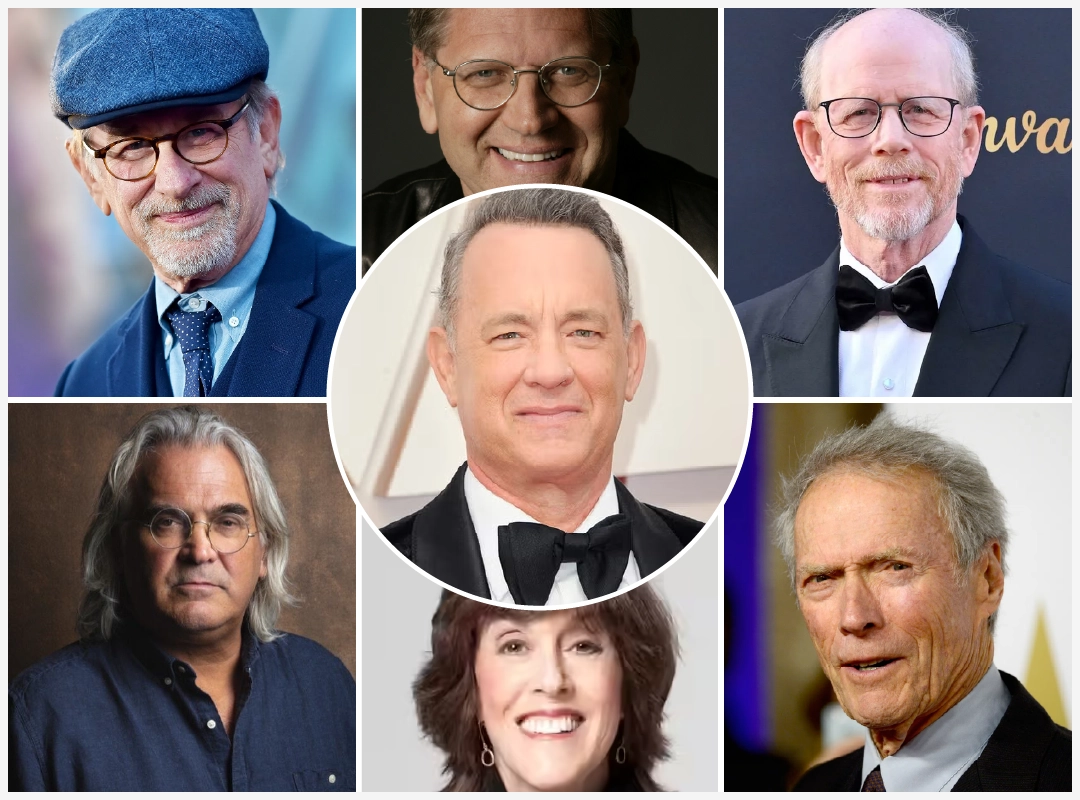

Tom Hanks is not just a beloved actor; he’s a magnet for visionary directors. Across a career spanning more than four decades, he’s worked with some of Hollywood’s most distinctive filmmakers, from Steven Spielberg and Robert Zemeckis to Nora Ephron and Paul Greengrass, often returning to the same directors multiple times.
He’s a two-time Oscar winner who has collaborated with seven or more directors on multiple projects, a rare distinction that speaks to his reliability, range, and reputation as a true director’s actor.
How We Ranked the Tom Hanks Filmography Directors
The ranking balances both quantity and quality:
- Number of films together – How often they’ve returned to each other.
- Critical reception – Reviews, awards, and long-term critical reputation.
- Box office impact – Did their collaborations shape careers and the marketplace?
- Artistic growth – Did the director bring out something new in Hanks, or refine a known strength?
- Cultural relevance & legacy – Are these films still referenced, quoted, studied, or streamed today?
Some directors Tom Hanks has worked with have delivered one-off collaborations that were so sharp they changed the trajectory of Hanks’ career. Others worked with him across decades, building a shared body of work that feels almost like a sub-filmography within his larger one.
The List: 9 of the Best Directors Tom Hanks Has Worked With
1. Steven Spielberg — The Definitive Creative Partnership
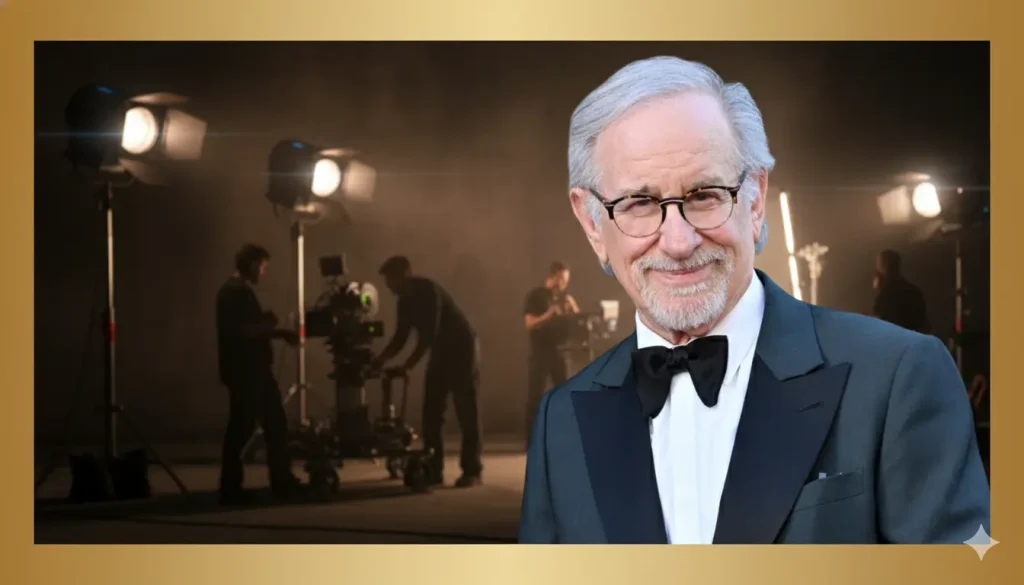
When discussing the most consequential actor–director partnerships in modern Hollywood, few rival the synergy between Tom Hanks and Steven Spielberg. More than just a recurring casting choice, their collaboration represents a rare alignment of artistic vision, moral clarity, and cinematic craftsmanship — a relationship that has redefined historical drama, humanist storytelling, and American mythmaking for over two decades. Spielberg and Tom Hanks’ movies are and have been culturally iconic.
Often hailed as the “Ford–Wayne of the post-classical era” (drawing parallels to John Ford and John Wayne’s legendary Western collaborations), or likened to David Lean and Peter O’Toole in Lawrence of Arabia for their shared gravitas and scale, the Spielberg–Tom Hanks movie alliance alliance stands as a gold standard for how mutual respect can elevate both filmmaker and performer can lead to Oscar-winning collaborations.
The Spielberg–Hanks Filmography: A Timeline of Trust
- Saving Private Ryan (1998)
A visceral, groundbreaking war epic that redefined battlefield realism. Hanks stars as Captain John H. Miller, a schoolteacher-turned-soldier leading a perilous mission to rescue a lone paratrooper behind enemy lines. Saving Private Ryan director Spielberg’s unflinching D-Day sequence shot with handheld cameras and a 45° shutter angle to mimic newsreel footage was revolutionary, while Hanks’ restrained, emotionally resonant performance anchored the film’s moral core.
Awards impact: 11 Academy Award nominations, including Best Picture and Best Director (won); 5 total Oscars. Though Hanks wasn’t nominated (a point of widespread critical debate), Miller remains one of his most iconic roles.
- Catch Me If You Can (2002)
A stylish, jazz-inflected cat-and-mouse caper based on the true story of con artist Frank Abagnale Jr. In a rare departure from his pure “everyman” archetype, Hanks plays FBI agent Carl Hanratty — a role blending dry wit, loneliness, and paternal yearning. Spielberg channels 1960s Rat Pack glamour with a bittersweet undercurrent, and the chemistry between Hanks and Leonardo DiCaprio becomes a masterclass in tonal balance: fun, melancholic, and strangely tender.
Fun fact: Composer John Williams originally wrote a full orchestral score, but Spielberg replaced much of it with diegetic period jazz — trusting instinct over convention.
- The Terminal (2004)
A modern fable of displacement and dignity, inspired by the real-life plight of Mehran Karimi Nasseri.
Hanks transforms into Viktor Navorski, an Eastern European traveller stranded in JFK Airport due to a geopolitical coup. Though marketed as a lighthearted dramedy, the film quietly interrogates immigration, bureaucracy, and kindness in a post-9/11 world. Spielberg’s warm, Capra-esque direction finds universality in Viktor’s small acts of grace.
Semantic note: The set, which is the largest ever built on a soundstage at the time, was a meticulously constructed 360° replica of an international terminal, reinforcing Spielberg’s signature world-building ethos.
- Bridge of Spies (2015)
A Cold War legal thriller rooted in true events, co-written by the Coen brothers. Hanks portrays James B. Donovan, a Brooklyn insurance lawyer thrust into high-stakes diplomacy during the U-2 spy crisis. His performance — measured, principled, and subtly witty — matches a film that favours dialogue and moral argument over spectacle. Spielberg’s restrained, symmetrical framing pays homage to 1950s studio craftsmanship, while Mark Rylance’s Oscar-winning turn as Soviet spy Rudolf Abel shows his eye for layered supporting characters.
Awards impact: 6 Oscar nominations, including Best Picture and Best Supporting Actor (won). Praised by historians for its procedural accuracy.
- The Post (2017)
A journalistic procedural dramatizing The Washington Post’s decision to publish the Pentagon Papers.
Reuniting Hanks (as editor Ben Bradlee) with Meryl Streep (publisher Katharine Graham), the film arrived amid renewed debates over press freedom and government transparency. Though some critics noted its rushed production (shot in roughly nine months and released weeks after wrapping), the urgency became part of its power — Spielberg responding in real time to contemporary threats to democracy.
Industry insight: Spielberg greenlit the film after reading the script during post-production on Ready Player One — a testament to his belief in the material and his trust in Hanks to embody Bradlee’s combative brilliance.
- Finch (2021, Apple TV+ – executive-produced by Spielberg via Amblin)
A post-apocalyptic road drama that feels like a chamber piece in the wasteland.
Though Spielberg did not direct (that duty fell to Miguel Sapochnik), his creative oversight helped shape the film’s tone — optimistic, humane, introspective. Hanks plays Finch, a dying robotics engineer building a caretaker robot for his dog. The project exemplifies how their partnership now extends beyond director–actor into a broader shared producing vision.
Semantic linkage: Finch echoes themes from A.I. Artificial Intelligence — another Spielberg film about artificial beings seeking love — revealing a throughline in their collaborative philosophy.
Why Spielberg Tops the List
- Creative Trust as Currency
Spielberg has called Hanks “the Jimmy Stewart of our time” — a compliment that speaks to shared values: decency without naivety, courage without bravado. That trust allows Hanks to take risks (e.g., the stoic minimalism of Bridge of Spies) and Spielberg to simplify his style (The Post’s long takes, more naturalistic lighting), knowing the emotional weight rests securely in Hanks’ presence. - Historical Humanism
Together, they’ve built a cinematic canon of American conscience — films that don’t just depict history but interrogate it. Whether it’s the cost of war (Saving Private Ryan), the ethics of surveillance and negotiation (Bridge of Spies), or the power of a free press (The Post), their work insists that individual integrity can alter the course of nations. - Legacy-Building Consistency
Of all the directors Tom Hanks worked with, this one is the most important. Across 25+ years and six major projects, their collaborations have maintained remarkably high critical and cultural impact — averaging strong reviews and amassing a combined stack of Oscar nominations. Very few Hollywood director-actor partnerships sustain that level of excellence across generations.
Final Thought: A Partnership for the Ages
In an era of franchise fatigue and algorithm-driven casting, the Spielberg–Hanks alliance remains defiantly author-driven — proof that storytelling rooted in empathy, research, and respect for the audience can still command global attention.
Fans eagerly await their next collaboration — whether a long-rumoured FDR biopic or a return to WWII storytelling. Whatever form it takes, one truth holds: When Tom Hanks and Steven Spielberg join forces, cinema doesn’t just reflect history — it helps shape how we feel it.
2. Robert Zemeckis — The Architect of Modern Myth

If Spielberg and Hanks shaped the American conscience, Robert Zemeckis and Tom Hanks helped build its modern myths. Their collaborations blend technological experimentation with unabashed sentiment and somehow make both work.
The Zemeckis–Hanks Filmography: Reinventing the Mainstream
- Forrest Gump (1994)
A time-hopping Americana epic that follows one man’s accidental journey through late-20th-century history. Forrest Gump director, Zemeckis’ technical wizardry — inserting Hanks into archival footage, orchestrating decades of cultural iconography — is anchored by Hanks’ gentle, open-hearted performance. The film won Hanks his second Oscar, cementing him as the era’s defining leading man. - Cast Away (2000)
The opposite of ensemble chaos: one man, one island, one ball. Zemeckis strips away dialogue and supporting characters, forcing the film to rely almost entirely on Hanks’ physicality and internal life. The transformation — weight loss, emotional rawness, long stretches of silence — remains one of the boldest star performances in a studio film. - The Polar Express (2004)
An early foray into performance capture, with Hanks playing multiple roles (including the conductor and Santa) in a digitally-rendered Christmas fable. Whatever your feelings about the uncanny valley visuals, it’s a key moment in both Zemeckis’ and Hanks’ careers: a sign of their willingness to experiment at scale. - The Walk (2015 – cameo)
Even in a small association, Hanks’ presence feels like a nod to their longer history of blending spectacle with earnestness.
Breakthrough synergy: Why Zemeckis Ranks This High
Zemeckis gave Hanks some of his biggest populist hits and pushed him into formally daring territory. Together they proved that mainstream movies can be both technologically risky and emotionally sincere — crowd-pleasers that still feel oddly personal.
3. Ron Howard — Master of American Storytelling
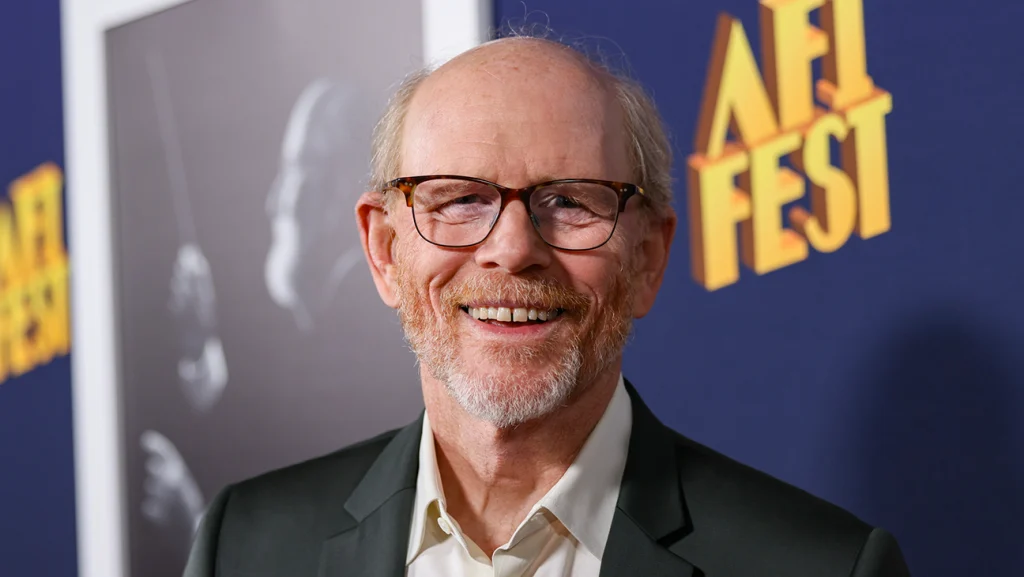
Ron Howard and Tom Hanks share a distinctly American storytelling instinct: take complex systems like NASA missions, religious conspiracies, Vatican politics, cs and translate them into emotionally legible, human-scale drama.
The Howard–Hanks Filmography: From Houston to the Holy See
- Apollo 13 (1995)
A near-disaster turned into a textbook example of procedural tension. The Apollo 13 director, Ho, ward dives into technical jargon and mission control logistics, yet the film never feels cold. Hanks’ Jim Lovell is steady, focused, and quietly frightened — a portrait of leadership that has made the film a staple in classrooms and leadership seminars alike. - The Da Vinci Code (2006), Angels & Demons (2009), Inferno (2016)
As Robert Langdon, Hanks is thrust into puzzle-box thrillers involving symbology, history, religion, and conspiracy. Howard keeps the pace brisk and the visuals glossy, while Hanks turns what could have been dry exposition into breezy, approachable intelligence. Together, they built a mid-2000s Da Vinci Code series franchise that earned over $1.5 billion worldwide, proving Hanks could anchor a global blockbuster series well into middle age.
Strength: Why Howard Matters in the Hanks Pantheon
Howard understands “ordinary people in extraordinary situations,” and Hanks is his ideal vessel. Even when the stakes are cosmic or conspiratorial, these films feel grounded in recognisable human reactions. Their collaborations are not the flashiest on this list, but they’re some of the most dependably effective.
4. Paul Greengrass — Gritty Realism & Urgency

With Paul Greengrass, Tom Hanks steps into a cinema of controlled chaos — handheld cameras, real-world film-making, politics, and moral discomfort. Greengrass brings documentary urgency; Hanks brings emotional stability amid the storm.
The Greengrass–Hanks Collaborations: Trauma in Close-Up
- Captain Phillips (2013)
A Somali pirate hijacking told with relentless tension. The Captain Phillips director, Greengrass’ restless camera and cross-cutting put you in the claustrophobic spaces of the ship and lifeboat, but the film’s lasting power lies in its final scene: a shell-shocked Phillips undergoing a basic medical exam. Hanks’ performance there — fragmented, mumbling, on the brink of collapse — is widely cited as one of the best single scenes of his career. - News of the World (2020)
A quieter collaboration, set in post–Civil War Texas. Hanks plays a traumatised veteran who travels from town to town reading news aloud, tasked with returning a young girl to her last remaining relatives. Greengrass swaps frenetic editing for classical Western framing, but the core remains: a man trying to uphold decency in a brutal world.
The StyleMatch: Why Greengrass Is Essential
Greengrass strips away comfort; there are no soft-focus montages here. In that stripped-back, sometimes harsh environment, Hanks’ sincerity hits even harder. Their work together shows what happens when a “Tom Hanks character” is dropped into chaos and the film refuses to sentimentalise it.
5. Nora Ephron — The Queen of Romantic Comedy

If Spielberg and Zemeckis shaped Hanks’ dramatic legacy, Nora Ephron-Tom Hanks’ partnership defined the romantic one. Together, they created the blueprint for ’90s urban rom-com, which was sophisticated yet earnest, witty but not cynical.
The Ephron–Hanks Filmography: Love and Loneliness in the City
- Sleepless in Seattle (1993)
A widower, a son, a radio call that reaches across America. Hanks plays Sam as a man still in active grief, cautious about happiness yet open enough to be nudged by fate (and a very determined child). The Sleepless in Seattle director, Ephr, orchestrates a multi-city dance without losing emotional clarity, crafting a film that feels both whimsical and grounded. - You’ve Got Mail (1998)
A film that has only grown more interesting with time: an early exploration of online romance and anonymous intimacy, set against the backdrop of ruthless corporate expansion. Hanks’ Joe Fox is charming but complicit; Ephron and Hanks together make him both frustrating and deeply likable. Their chemistry with Meg Ryan, plus the film’s New York atmosphere, helped define ’90s rom-com tropes that are still copied today.
Why Ephron’s Place Is Secure
These films turned Hanks into a modern Jimmy Stewart — the romantic lead who is thoughtful, kind, occasionally clueless, but always emotionally sincere. They remain streaming staples and defined the rom-com golden era because they offer something increasingly rare: romance that respects adult intelligence and vulnerability.
6. Clint Eastwood — Quiet Authority & Moral Complexity
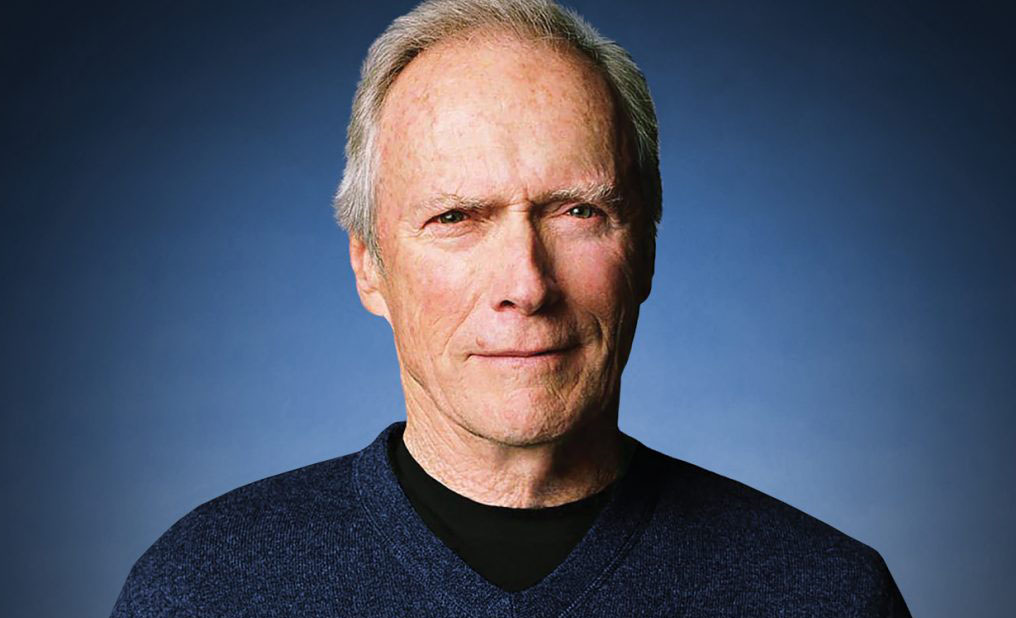
The partnership between Clint Eastwood and Tom Hanks is a model of restraint. They’ve only made one film together, but it’s a near-perfect alignment of sensibilities: spare, unfussy, and quietly devastating.
- Sully (2016)
Hanks plays Captain Chesley “Sully” Sullenberger, the pilot responsible for the real-life “Miracle on the Hudson.” The Sully director, Eastwood, refuses to turn the event into a standard disaster spectacle; the water landing is shown, but the film is more interested in the aftermath: the NTSB hearings, the bureaucratic second-guessing, the creeping self-doubt.
Hanks’ performance is all micro-adjustments where he is depicting a man who did his job, saved lives, and is now being asked whether he was wrong to do it that way.
Why This One-Off Still Matters
Sully distills much of what people mean when they call Hanks “the most trusted man in America,” and Eastwood’s direction ensures that trust is tested, not simply celebrated. It’s a collaboration that feels like a quiet summit meeting between two old-school Hollywood craftsmen.
7. Joel & Ethan Coen — Quirky Genius Meets Everyman
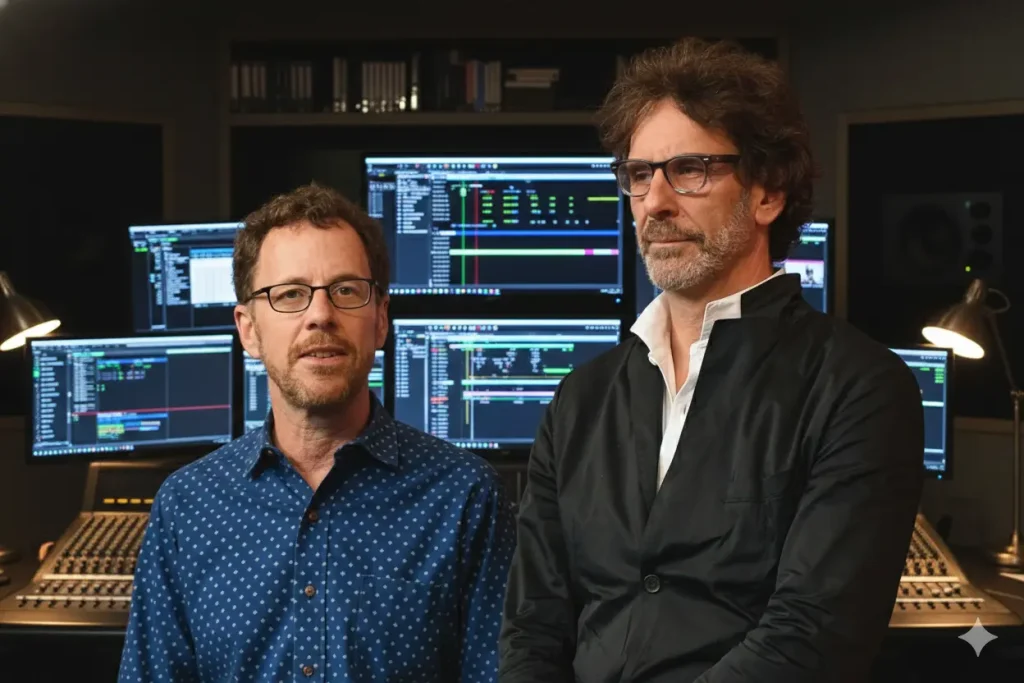
On paper, a Tom Hanks-Coen brothers comedy sounds like a slam dunk. In reality, The Ladykillers is one of their more divisive films — but Hanks’ performance is a fascinating outlier in his career.
- The Ladykillers (2004)
Hanks plays Professor G.H. Dorr, a wildly affected Southern con man with a baroque vocabulary, bizarre laugh, and theatrical swagger. The film Ladykiller is a remake of the 1955 Ealing comedy, reimagined through the Coens’ off-kilter sensibility. Is it top-tier Coen? Not really. Is it revealing? Absolutely. Hanks leans into full, unguarded absurdity here, abandoning his usual grounded stillness for something closer to cartoon villainy.
Why the Coens Still Belong on This List
The collaboration proves a key point: when Hanks trusts the filmmakers, sometimes even dark comedy directors, and when he does, he’ll get weird. Even in a lesser film, you can see him stretching, taking tonal risks, and playing against type. For an actor with his level of comfort and legacy, that willingness to experiment matters.
8. Mike Nichols — Satire with Heart
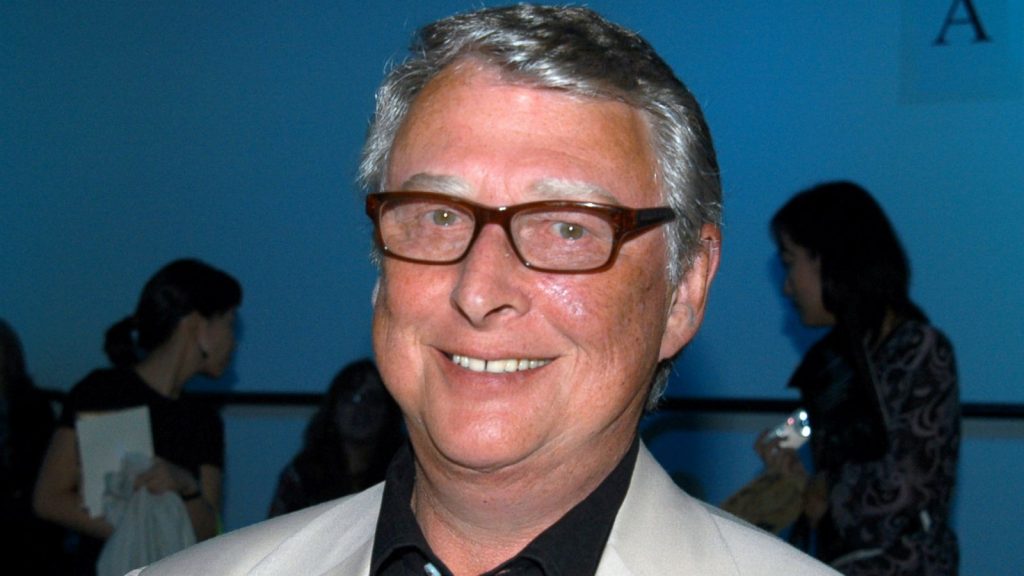
With Mike Nichols, Tom Hanks steps into sharper political territory without losing his signature warmth. Nichols’ genius for tone — moving from comedy to melancholy in a single scene- finds an ideal partner in Hanks’ ability to make flawed people feel understandable.
- Charlie Wilson’s War (2007)
Based on the true story of a Texas congressman who channels U.S. funds to Afghan rebels during the Cold War, Charlie Wilson’s War is a fizzy, talky political dramedy that gradually reveals tragic implications. Hanks plays Wilson as a charming, womanising operator whose conscience wakes up halfway through the party.
Nichols surrounds him with titans (Julia Roberts, Philip Seymour Hoffman), and Hanks never disappears next to them — he syncs with them. Aaron Sorkin’s script provides the verbal fireworks; Nichols and Hanks provide the humanity and the sense that all this glamour is sitting on a fault line.
Why Nichols Deserves His Slot
Charlie Wilson’s War’s director showcases Hanks’ underused gift for a political satirical performance — not broad sketch comedy, but political critique wrapped in charisma. It’s proof that he can inhabit morally messy terrain without losing the audience’s emotional investment.
9. Carl Franklin — Underrated Depth & Grit
Sometimes Hanks’ most meaningful contributions come not from his time on screen, but from the projects he chooses to back. Carl Franklin-Tom Hanks is a key example — a director whose work Hanks helped champion.
- Devil in a Blue Dress (1995 – Hanks as Devil in a Blue Dress producer)
Franklin’s adaptation of Walter Mosley’s novel brought Black neo-noir into the mainstream, with Denzel Washington as reluctant detective Easy Rawlins and Don Cheadle in a star-making supporting turn. While Hanks doesn’t appear on screen, his role as one of the producers mattered at a time when studios were far less willing to finance genre pieces led by Black casts.
Why Franklin Makes the Top 9
Including Franklin highlights a side of Hanks that often goes under-discussed: Tom Hanks, the producer-mentor. He doesn’t just choose good directors to work for; he occasionally helps them get their films made, especially when the stories expand who gets centred in Black neo-noir and American genre cinema.
Honorable Mentions: Directors with Notable (But Limited) Hanks Collaborations
- Garry Marshall
Marshall’s warm, ensemble-driven sensibility aligns with several projects Hanks has supported as a producer, reflecting a shared belief in crowd-pleasing, emotionally earnest storytelling. - Stephen Daldry — Extremely Loud & Incredibly Close (2011)
Hanks plays a father whose presence is mostly felt in memory and flashbacks. Daldry’s direction leans into emotional fragility; Hanks provides a grounding tenderness that makes the child’s grief and obsession more understandable. - Tom Tykwer (alongside the Wachowskis) — Cloud Atlas (2012)
Here, Hanks plays multiple roles across timelines, genres, and moral alignments — from villainous to heroic. Under Tykwer and the Wachowskis, he embraces some of the strangest, boldest choices of his career in an experiment about identity and reincarnation. - Richard Donner — The Goonies (1985 – tangential early association)
A tiny early-career footprint, but part of the wider Amblin universe that Hanks would soon become strongly associated with through his later work with Spielberg. - Baz Luhrmann — Elvis (2022)
As Colonel Tom Parker, Hanks delivers a flamboyant, heavily-accented, prosthetic-laden performance that divided critics but was impossible to ignore. It’s a reminder that even this late in his career, he’s willing to take big swings with maximalist directors.
What Makes a Great Hanks–Director Match?
1) Empathy Without Sentimentality
The best Hanks collaborations understand that he can play decency without turning it into sainthood. Directors like Spielberg, Zemeckis, Ephron, and Greengrass give him characters with contradictions and flaws, then trust him to find the emotional core without leaning on manipulation or easy tear-jerking.
2) Trust in Quiet Moments
Great directors give Hanks space — and then get out of the way. The scenes people most often cite (Captain Phillips’ medical exam, the bench in Forrest Gump, the cockpit in Sully, the airport rituals in The Terminal) are built on silence, stillness, and unshowy camera work. The camera simply watches him feel.
3) Creative Loyalty
Look at the pattern: Spielberg, Zemeckis, Ron Howard, Nora Ephron, Paul Greengrass — all of them returned to Hanks for multiple projects. Directors don’t repeat collaborations unless the experience is worth repeating. They know he shows up prepared, generous with scene partners, and relentlessly focused on serving the story. That mutual loyalty becomes a quiet engine behind some of his best work.
When filmmakers voluntarily come back to the same actor again and again, it usually means the chemistry isn’t just good — it’s essential.
Conclusion: Tom Hanks as the Ultimate Director’s Actor — And What’s Next
From war epics to airport fables, romantic comedies to political satires, Tom Hanks has built a filmography that doubles as a masterclass in actor–director partnerships. His greatest performances rarely exist in isolation; they sit inside carefully crafted worlds built by directors who share his belief in empathy, clarity, and human-scale storytelling.
His next truly iconic collaboration could come from:
- Greta Gerwig — sharp, character-driven comedy with emotional bite.
- Denis Villeneuve — ambitious, adult-oriented science fiction with philosophical depth.
- Ava DuVernay — historical narratives reframed for a new generation.
Whatever happens, one pattern is clear: The auteur theory and Tom Hanks Directors call Tom Hanks when they need emotional truth. And he delivers.