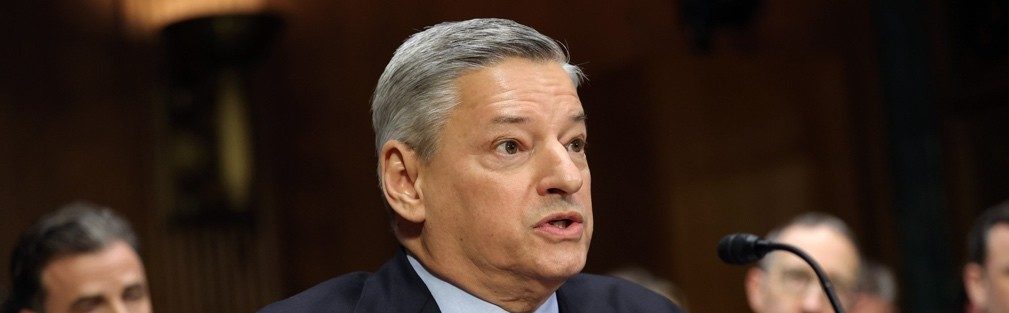
This week, Netflix Co-CEO Ted Sarandos testified before the U.S. Senate Antitrust Subcommittee to defend Netflix’s proposed acquisition of rival studio Warner Bros. Discovery. During the hearing, Sarandos defended his company against criticisms that the combination would be anti-competitive, taking questions from Senators on both sides of the aisle. The central question that will determine the deal’s fate is how the “market” that Netflix operates in is defined.
Sarandos attempted to position his company as a player in the widely defined market of “TV Viewing,” where it holds only 9% of overall market share, compared with YouTube’s 12.7%. In fact, Sarandos brought up YouTube regularly throughout his testimony. By contrast, Sarandos downplayed its dominant position in the “streaming” market, where it would control as much as 30% share after the WBD acquisition. If viewed in this way, Netflix’s dominance could be viewed as anti-competitive and contrary to the interests of consumers.
Sarandos made the point that YouTube was “not just cat videos anymore,” and that the Netflix+WBD combination could help save Hollywood from being overwhelmed by tech giants such as Google, Apple, and Amazon. On the other hand, the trade association of movie theatre owners released a statement after Sarandos’ testimony to condemn Netflix’s potential takeover of Warner Bros, saying that it represents an existential threat to movie theatres.
In their statement, Cinema United argues that the result would be “economically and culturally catastrophic”, leading to “fewer theatres, shorter windows, less revenue, fewer jobs across the national and global entertainment industry and fewer movies for consumers to see in theatres.” They also noted concerns about an alternative path in which its studio rival Paramount would assume control of Warner Bros., saying that lawmakers “must heed the lessons of the past: further industry consolidation has consistently led to fewer movies being made, and there is no reason whatsoever to believe the outcome here would be any different.”