


The old-school slasher kills still pop, but otherwise, after three decades, the franchise wheezes its way into irrelevance.
The Scream series has always been awash in meta-narrative, from its opening chapter – a horror movie that comments upon the tropes and “rules” of horror movies – to subsequent installments, including sequels that discussed the logic and pitfalls of sequels, and reboots that examined the vagaries of reboots. Three decades after the first film changed the way horror movies were seen, made, and interpreted, Scream 7 continues to be meta, in that it’s an entry in an exhausted franchise about characters who seem exhausted to still be part of this story.
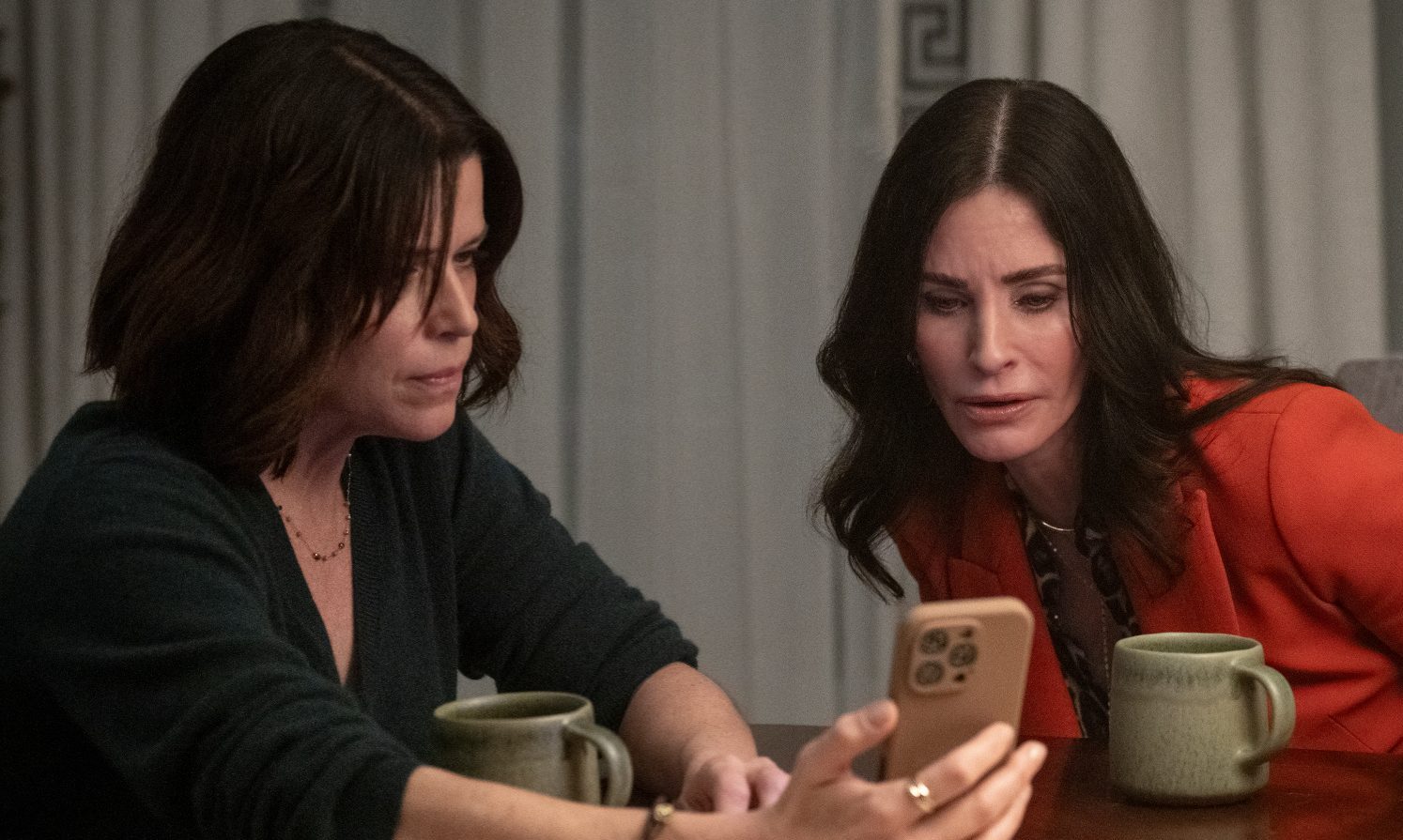
Yes, 30 years after Sidney Prescott (Neve Campbell) survived a deadly high-school kegger, her life’s murderous traumas continue to follow her around and to restage themselves over and over again. Sidney feels secure living in a suffocatingly cozy little town called Pine Grove, where she’s married to the local police chief (played by Joel McHale) but facing conflict from her teenage daughter, Tatum (Isabel May, 1883). Tatum – named after mom’s murdered best friend, played by Rose McGowan back in 1996 – has reached the age Sidney was when she first achieved Final Girl status, but Sidney’s unwillingness to discuss the details of her past has driven a wedge between them.
And wouldn’t you know it, just when the tension between the two of them is at its most fraught, a new Ghostface (voiced by Roger Jackson) pops up, again threatening the lives of Sidney and everyone she holds dear. But it’s 2026, and this Ghostface has access to deepfake technology that brings one of Sidney’s tormentors back to life – or is he still truly alive after all these years? (The movie gets points for making AI one of the villains here, particularly since that element is one of the few contemporary ideas on display.) It’s up to Sidney and her husband and investigative reporter Gale Weathers (Courteney Cox) to crack the case before they all wind up skewered.
Screenwriter Kevin Williamson dreamed up these characters back in 1996, and he’s back on board, both as co-writer (with Guy Busick, Ready or Not) and, for the first time, as a Scream director. When it comes to delivering the slasher-movie goods, Williamson remains inventive; apart from an early kill that’s a little too protracted and torture-intensive for the established house style, the murders are clever, surprising, and not without some wit. (The crawlspace sequence immediately earns hall-of-fame status.) But they’re the only reason for this movie to exist; the Scream series has become a horror version of That’s Entertainment!, where 21st century fans of a 1990s movie that paid homage to 1980s horror can get the kind of squishy, splattery, shocking homicides that A24 just isn’t going to deliver.
Unfortunately, the earlier, better Screams could handle both carnage and characterization, and the latter is sorely missing here. There are no new depths to Sidney or Gale for even these vets to plumb, and their presence just becomes a cozy and reassuring throwback to the audience’s youth, like a TV reunion special. The inside-baseball jokes about genre movies lack their usual zing, and there’s not even much fun trying to figure out whodunit – the mystery here feels less like Clue the movie and more like Clue the board game, with a random assemblage of pieces dumped on the board and the knowledge that one (or more) of them is the killer.
Apart from the always-welcome comedic banter between Jasmin Savoy Brown and Mason Gooding as Gale’s self-described “hot interns,” the youngsters are mostly interchangeable. (For the adults making their first franchise appearance, Williamson has assembled a crack team of suspicious red herrings and potential maniacs, including Mark Consuelos, Ethan Embry, Anna Camp, and Tim Simons.)
It’s Savoy Brown’s Mindy who gets the script’s most dead-on piece of self-descriptive dialogue, whether Williamson and Busick intended it or not: discussing Gale’s faltering TV-news career, Mindy deadpans, “I’m learning all about faded careers and failed comebacks.”