
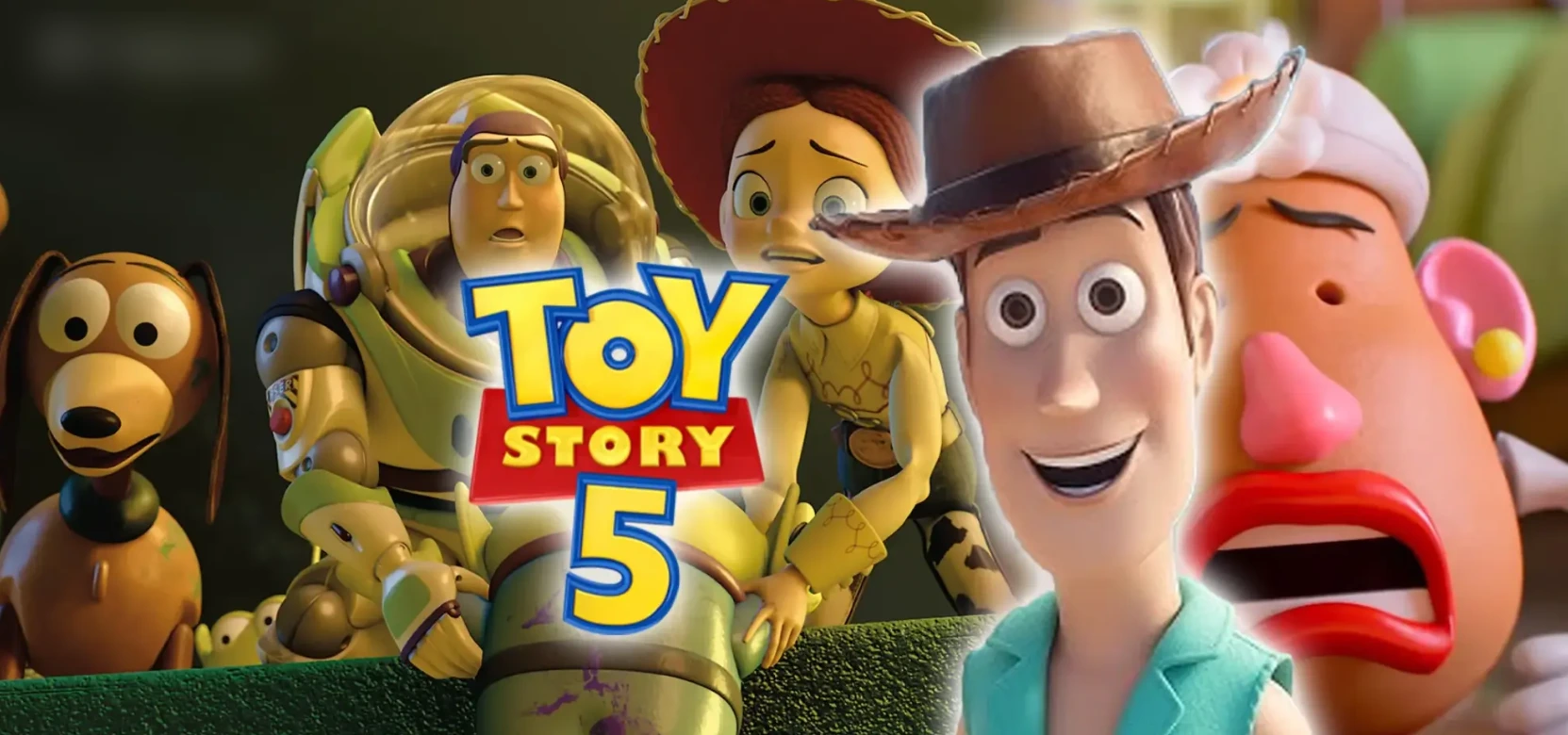

Toy Story 5 is officially in development at Pixar Animation Studios. The upcoming film will continue Pixar’s beloved animated franchise and is expected to bring back iconic characters like Woody and Buzz Lightyear.
| Topic | Answer |
| Movie | Toy Story 5 |
| Studio | Pixar Animation Studios |
| Release Window | 2026 |
| Returning Characters | Woody, Buzz Lightyear |
| Franchise | Toy Story |
| Previous Film | Toy Story 4 (2019) |
Look, we’ve been here before. A beloved franchise, a tearful goodbye, a door slammed shut on everything we thought we knew, and then Toy Story knocks again. Politely. With snacks.
The Toy Story 5 news sent the internet into a very specific kind of spiral, the kind reserved for properties people swear they’re “over” right up until the moment they’re absolutely not. Because here’s the thing about this franchise: it doesn’t just make movies. It manufactures fandoms and nostalgia. The films have a way of finding you exactly where you are in life and refusing to let go until you’ve processed something you didn’t even know you were carrying.
Woody is coming back. Buzz Lightyear presumably too. And Pixar Animation Studios, with all its emotional weaponry loaded and aimed directly at your chest, is ready to do this again. You can be cool about it. Or you can just accept what’s coming.
Toy Story 5 Release Date: When Will the Movie Arrive?
Pixar has scheduled Toy Story 5 for release in 2026, marking the fifth installment in the long-running animated series.
The Toy Story 5 release date is locked in for 19 June 2026, and if you know anything about how Pixar operates, that timeline tells you quite a bit. The studio doesn’t rush.
Every Pixar Toy Story movie spends years in development with layers of story meetings, character work, and emotional calculus before it so much as sniffs a release calendar. The fact that 2026 is officially on the board means this thing has been quietly building for a while now, probably while the rest of us were still arguing about the ending of the last one.
Toy Story 5 will be a theatrical release in the grand Pixar tradition, engineered for a big screen, loud sound, and maximum emotional impact on an unsuspecting public. 2026 can’t come fast enough.
Why Woody’s Return Is Such a Big Deal for the Toy Story Franchise
Woody has been the emotional center of the Toy Story franchise since the original film in 1995, making his potential return one of the most important story developments for the series.
Here’s how to understand the Woody Toy Story character phenomenon: in a franchise full of space rangers, talking dinosaurs, and a Barbie dream sequence, it’s the pull-string cowboy who keeps everyone together. Among all the Toy Story main characters, Woody has always been the conscience of the group — the one who cares too much, tries too hard, and carries the weight of every loyalty and every loss with more grace than most live-action protagonists manage across an entire trilogy.
He has been through it. By the time Toy Story 4 closed its final chapter, Woody had wrestled with purpose, belonging, and what it means to love something enough to let it go. His arc ended in a way that felt genuinely earned and emotionally risky. Which is precisely why fans lost their collective minds the moment his return was confirmed.
And here’s the shift that changes everything: Woody isn’t the one running the room anymore. By the time Toy Story 5 picks up, Toy Story 4 has reshuffled the entire hierarchy. With Woody gone, Jessie has stepped up as the leader of Bonnie’s toys, with Buzz Lightyear as her second-in-command. Among the Toy Story main characters, Jessie is no longer supported — she’s the one holding it together. Which makes Woody’s return not a homecoming but a complication. The Woody Toy Story character walking back into a room that learned to function without him? That’s not a reunion. That’s a whole story.
Toy Story 5 Plot: What the Story Might Be About
While Pixar has not officially revealed the plot, early hints suggest the film may explore how traditional toys adapt to modern childhood, shaped by technology.
The Toy Story 5 plot is no longer just rumour and breadcrumbs — Pixar has handed us the tagline, and it says everything: “Toy meets Tech.” The Toy Story 5 story plants its flag right in the middle of the most anxious conversation in modern parenting. Buzz Lightyear, Woody, Jessie, and the rest of the gang’s jobs get exponentially harder when they go head-to-head with a brand new threat to playtime, and that threat has a name.
Enter Lilypad. Voiced by Greta Lee, she’s a smart tablet device that arrives in Bonnie’s room with her own very disruptive ideas about what’s best for their kid. She’s charming, she’s useful, and she is absolutely the enemy. The Toy Story 5 theories online had been guessing at a faceless tech villain — turns out Pixar gave her a face, a voice, and a tagline: “The Age of Toys Is Over.” Brutal. Toy Story 5 has room to be genuinely ambitious here, and the tension between analog play and algorithmic convenience is as real a conflict as this franchise has ever tackled. And, to add a cherry on top, Toy Story 5 theories circulating online suggest reunion elements that would only add more emotional voltage to an already loaded premise.
Toy Story 5 Cast: Who Is Returning?
Several original voice actors are expected to return, including Tom Hanks as Woody and Tim Allen as Buzz Lightyear.
The Toy Story 5 cast situation is, for now, exactly what you’d hope for. Tom Hanks returning as Woody is practically a given at this point — the man has put so much of himself into that character across three decades that the two feel genuinely inseparable. And Tim Allen back as Buzz means the franchise’s central dynamic, that bickering bromance built on mutual respect and the occasional mild existential crisis, is intact.
Returning alongside Tom Hanks and Tim Allen are Joan Cusack as Jessie, Tony Hale as Forky, Annie Potts as Bo Peep, Keanu Reeves, Kristen Schaal, Wallace Shawn, John Ratzenberger, and Bonnie Hunt — essentially the full roster. New additions bringing serious energy to the Toy Story 5 cast include Greta Lee as the villain Lilypad, Conan O’Brien as a new character named Smarty Pants, Craig Robinson, and Ernie Hudson as Combat Carl. Whoever joins Tom Hanks and Tim Allen in this world will likely arrive carrying something thematically significant, and based on this lineup, Pixar is clearly not hedging.
New characters in this universe tend to function as catalysts, not just additions. Watch that space.
Toy Story Franchise Timeline
The Toy Story franchise has spanned nearly three decades, becoming one of Pixar’s most successful animated series.
The Toy Story movies’ history is, at its core, a story about how an animation studio found its soul — and how a franchise grew up alongside the audience it was supposedly made for. Here’s the full Toy Story franchise timeline:
1995 — Toy Story: The one that started everything. The first fully computer-animated feature film in history. What lingers isn’t the technical revolution but a cowboy’s fear of being replaced. Bold for a children’s movie. Devastatingly effective.
1999 — Toy Story 2: Expanded the story and characters in ways nobody expected from what was originally conceived as a direct-to-video project. Jessie’s backstory contained more genuine emotional weight than most standalone films. The bar was raised to an uncomfortable height.
2010 — Toy Story 3: The highly emotional goodbye to Andy’s story. A garbage bag of childhood, an incinerator, and an entire generation collectively wrecked in a multiplex. Toy Story 3 was supposed to be the ending. It felt like one.
2019 — Toy Story 4: Toy Story continues with a deeply personal focus on Woody’s individual journey — divisive in the best possible way, asking whether a happy ending is really an ending at all.
2026 — Toy Story 5: The next chapter. And whatever it turns out to be, the Toy Story franchise timeline suggests it will mean something.
Toy Story Movies Ranked by Box Office
| Film | Year | Worldwide Box Office |
| Toy Story 4 | 2019 | $1.07B |
| Toy Story 3 | 2010 | $1.06B |
| Toy Story 2 | 1999 | $487.1M |
| Toy Story | 1995 | $237.4M |
The Toy Story box office numbers tell their own quiet story about a franchise that expanded with its audience. When you rank the Toy Story movies by gross, Toy Story 4 edges out Toy Story 3 for the top spot — both crossing a billion dollars globally, both proving that audiences never really moved on. The earlier films look modest by comparison, but placing Toy Story in the 1995 context — the very first computer-animated feature, an unproven format, a studio no one had heard of — and $394M wasn’t just a number. It was historic.
Toy Story 3 at $1.06B remains a cultural phenomenon in its own right. Toy Story 4 at $1.07B proved the franchise had genuine legs beyond nostalgia. Together, these Toy Story movies’ ranked figures represent something rarer than a hit: a franchise that kept earning its audience back.
Toy Story Character Impact Index
The emotional power of the Toy Story films comes largely from their characters, particularly Woody and Buzz.
| Character | Story Importance | Emotional Impact | Franchise Presence | Impact Score |
|
Woody |
10 | 10 | 10 |
10/10 |
|
Buzz Lightyear |
9 | 9 | 10 |
9.3/10 |
| Jessie |
8 |
9 | 8 |
8.3/10 |
| Bo Peep |
8 |
8 | 7 |
7.7/10 |
When you look at Toy Story characters ranked this way, the numbers are clarifying — but they don’t capture the full picture. Woody, Buzz, and Jessie characters don’t operate as individuals so much as a distributed emotional system.
Woody holds the moral center. Buzz brings spectacle and, when the script demands it, a quiet, unexpected dignity. Jessie covers grief with uncomfortable precision — her backstory in the second film remains one of the most effective gut-punches in the franchise’s history. And Bo Peep, particularly after her reinvention in the fourth film, introduced a version of self-possession that reframed what Toy Story thought it was saying about purpose.
Together, they are the reason anyone actually cares what happens next.
What Woody’s Return Could Mean for Toy Story 5
Woody’s return could reconnect the core characters and explore how the toys’ lives have changed since the ending of Toy Story 4.
The Woody Toy Story 5 conversation cannot be separated from where we left him: walking away from the gang to stay with Bo Peep, choosing himself for the first time in a franchise that had always defined him through his selflessness. It was a genuinely surprising ending, and a good one. Bringing him back is therefore not a small creative decision — it’s a commitment that needs to be earned.
What makes the reunion possibilities worth getting genuinely excited about is the narrative problem Pixar has handed itself. Woody without a kid to belong to, Woody building something new, Woody walking back into the lives of toys he left behind — these are not the same dynamics we’ve spent four films watching. The unfinished emotional arcs are real and interesting. The questions around what belonging looks like when you rewrite your own definition of home, the way Buzz Lightyear might receive a friend he thought he’d said goodbye to for good — all of it carries potential for the kind of storytelling this franchise does better than almost anyone.
The Toy Story 5 theories running wild online suggest new story themes around identity, loyalty, and what it looks like to keep showing up for the people or the toys you love. The mechanics change. The questions stay the same. That’s the franchise, really.
Pixar Legacy Scorecard: Where Toy Story Ranks Among Pixar Franchises
| Pixar Franchise | Avg Critic Score | Total Box Office | Cultural Impact |
| Toy Story |
98% |
$3B+ |
Legendary |
| The Incredibles |
93% |
$1.8B |
High |
| Cars |
74% |
$1.4B |
Merchandise powerhouse |
| Monsters Inc |
96% |
$1.1B |
Fan favorite |
Among Pixar franchises ranked, the Toy Story Pixar legacy exists in a category by itself. A 98% average critic score across four films isn’t a real number — except that it is, and Pixar Animation Studios made it happen. Over $3 billion at the global box office. A cultural footprint that stretches from dorm room posters to graduation speeches. There are other great entries when you look at Pixar franchises ranked — The Incredibles, Monsters Inc, even Cars in its own merchandise-empire way — but only one of them redefined what animated cinema could do, twice per decade, across thirty years. The Toy Story Pixar legacy isn’t just the crown jewel of Pixar Animation Studios. It’s the foundation on which everything else was built.
Why Toy Story 5 Could Be Pixar’s Biggest Animated Event Yet
Because the Toy Story franchise defined Pixar‘s early success, the fifth film has the potential to become one of the studio’s most anticipated releases.
There’s a version of a Toy Story 5 Pixar movie that coasts entirely on goodwill and gets away with it. The property is beloved enough that audiences would show up regardless, and Pixar Animation Studios knows that. But coasting isn’t what this studio does when it’s operating at full capacity, and the Toy Story franchise’s future looks genuinely promising precisely because there’s real creative tension to mine — the analog versus digital question, Woody’s reinvented identity, a world that has changed dramatically since Andy’s bedroom in 1995.
The first film launched a philosophical conversation about purpose, obsolescence, and the grace of letting go. Thirty years later, with a Toy Story 5 Pixar movie arriving in a world that could genuinely use that conversation again, Pixar Animation Studios has the opportunity to close a loop in the most emotionally devastating way possible.
The Toy Story franchise’s future isn’t just about what happens to these characters next. If the franchise’s track record is any guide, they have more to say than we’re ready for.