
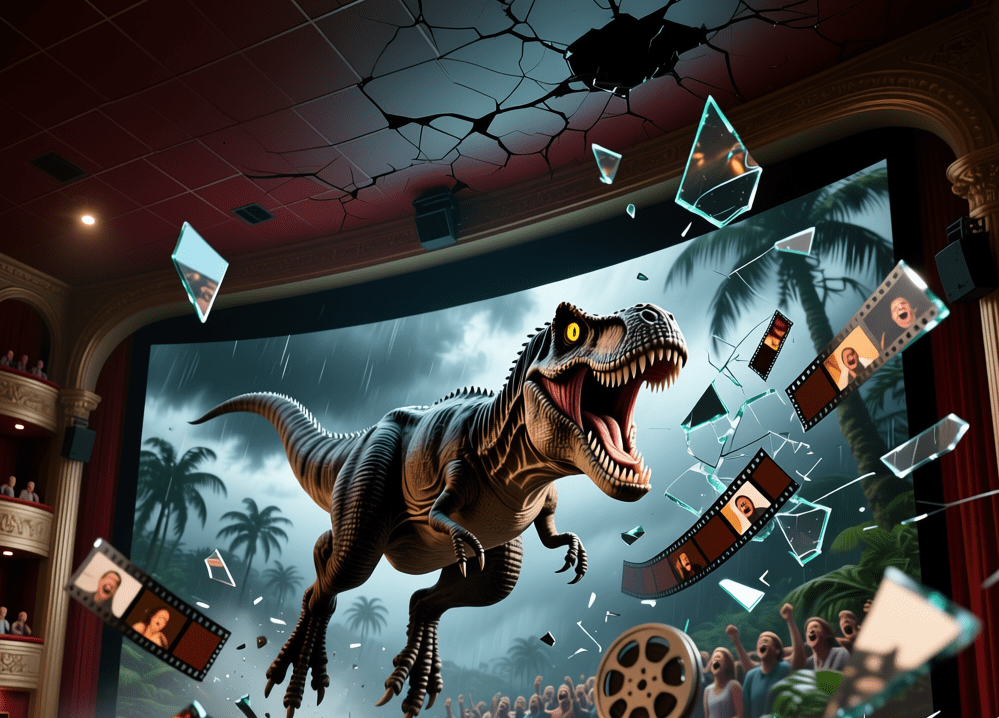

In a summer overflowing with legacy sequels, nostalgia bait, and multiversal mayhem, Jurassic World: Rebirth (2025) did the near-impossible: it made creature features thrilling again. Opening on July 2, 2025, just in time for the July 4th holiday weekend, the film stomped into North American theaters with a five-day debut of $147.3 million. Directed by Rogue One’s Gareth Edwards and led by Scarlett Johansson and Mahershala Ali, Rebirth brought back blockbuster spectacle with purpose.
Globally, it surged past $318 million across more than 80 territories in its opening frame, proving that even after three decades, the franchise still knows how to shake the ground and stir audiences. While critics delivered a mixed verdict, audiences responded in force: they didn’t just watch, they returned—for the dinosaurs, yes, but also for the feelings.
The Numbers Tell One Story
By early August, Rebirth had climbed to $766.9 million worldwide, becoming the fourth-highest-grossing film of 2025, trailing only Ne Zha 2 (2025), Lilo & Stitch (2025), and A Minecraft Movie (2025). It also became Universal’s top-grossing release of the year, a much-needed win in a franchise-heavy slate.
But numbers only capture the surface. Beneath the box office triumph lies a creative recalibration that reminded audiences why they fell in love with Jurassic Park in the first place.
Why It Worked
Despite being the sixth installment in a franchise long accused of creative exhaustion, Rebirth chose a surprising strategy: restraint. It resisted the urge to go bigger, louder, and more convoluted. Where Dominion collapsed under the weight of too many subplots and scattered tones, Rebirth simplified. It returned to the roots—one island, one ticking clock, one clear mission. The story was tight, the stakes personal, and the pacing relentless.
Gareth Edwards brought a sense of cinematic discipline and atmosphere, grounding the film in environmental allegory and lean, efficient storytelling. Nostalgia was present with haunting piano cues, the original park gates, but it wasn’t leaned on. The dinosaurs in Rebirth have also looked better. The CGI is razor-sharp, with creature movement that feels eerily real.
Audiences, especially those who grew up with the original trilogy and are now introducing it to their own children, found resonance in that approach. It was a legacy sequel done right: honoring the past, but using today’s technology to reawaken that sense of wonder for a new generation.
Final Thought: Dinosaurs Still Rule the Earth
With nearly $767 million in the bank and more likely to come, it’s not just one of the year’s biggest films—it’s arguably one of the most meaningful for Universal. In a cinematic landscape bursting with overcooked multiverses and algorithmic storytelling, Rebirth dared to slow down and focus on its own terms.
It proved that spectacle can have soul and that in the age of franchise fatigue, there’s still room for evolution.
And that, in 2025, might be the rarest dinosaur of all.