
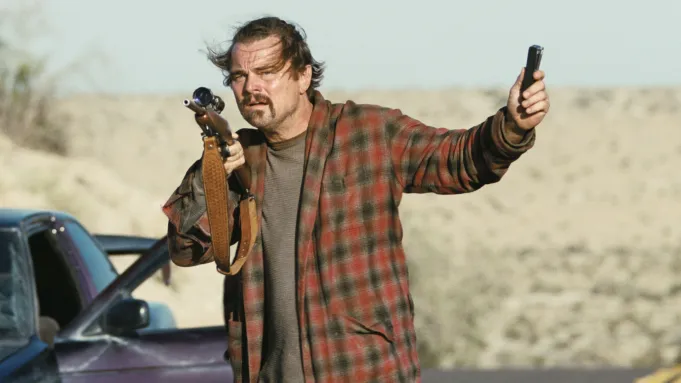

Warner Bros.’ critically-acclaimed new movie ONE BATTLE AFTER ANOTHER took first place in its opening weekend by earning $22.4M. This is the ninth Warner Bros. title this year to lead the box office in its first weekend, with all the studio’s films earning $1.8B domestically and $4.0B globally this year. WB movies account for an impressive 28% of the 2025 domestic box office so far, placing them as the top-grossing studio of the year.
After Warner Bros. pushed back the upcoming October 24th release of MORTAL KOMBAT II to May 15th of next year, the studio has no more movies on the calendar for the rest of the year, which includes the busy Thanksgiving and Christmas periods.
The total for all pictures this weekend was $76M, which falls behind the same weekend last year, which produced $93M. Last weekend, the top film was Universal’s THE WILD ROBOT, which opened with a surprisingly strong $35.8M.
Anticipation is building for next weekend’s buzz-worthy arrival of TAYLOR SWIFT: THE OFFICIAL RELEASE PARTY OF A SHOWGIRL. This three-day special event will dominate the Cineplex, with Swifties turning out to theatres as they did two years ago for the release of TAYLOR SWIFT: THE ERAS TOUR. While this year’s RELEASE PARTY is not likely to reach the $92.8M opening of THE ERAS TOUR, it will certainly do its job in lifting the early October box office.
ONE BATTLE AFTER ANOTHER earned $22.4M domestically and $48.6M worldwide, which are by far the best numbers ever for a Paul Thomas Anderson-directed movie. This is the director’s tenth feature film, whose previous works include BOOGIE NIGHTS (1997), MAGNOLIA (1999), THERE WILL BE BLOOD (2007), PHANTOM THREAD (2017), and LICORICE PIZZA (2021), among others.
Anderson’s films have received eleven Academy Award nominations, including a Best Actor win for Daniel Day-Lewis in THERE WILL BE BLOOD. Anderson is one of the most distinctive American filmmakers making films today, with a visually meticulous style, showcasing extensive period detail and precise camera movements.
He is known for collaborating closely with his actors, drawing out career-defining performances such as those from Daniel Day-Lewis in THERE WILL BE BLOOD, Joaquin Phoenix in THE MASTER, and Adam Sandler in PUNCH-DRUNK LOVE.
Over the years, Leonardo DiCaprio has commented in multiple interviews that he would like to have the opportunity to collaborate with Anderson, and ONE BATTLE AFTER ANOTHER finally gave him his chance. Anderson’s movies have been more successful with the critics than at the box office, with his top-grossing movie until now being THERE WILL BE BLOOD in 2007, which took in $40.2M domestically and $77.2M worldwide. All nine of his previous films have grossed $169M in North America and $356M globally.
ONE BATTLE AFTER ANOTHER is based on Thomas Pynchon’s novel Vineland, published in 1990. Anderson thought about adapting Vineland for years, but worried that his affection for the novel might make it impossible for him to make an unbiased and faithful adaptation of the book. In the end, he wrote separate stories first and then later merged those with elements from Vineland, especially the core father-daughter relationship.
This combination of Pynchon’s book and Anderson’s screenplay results in a somewhat complicated plot, centered on Bob Ferguson, played by Leonardo DiCaprio, a former radical revolutionary from a movement called French 75, who has gone off the grid and is living in hiding with his daughter, Willa, played by Chase Infiniti. Sean Penn plays Colonel Steven J. Lockjaw, a violent and ideologically-driven nemesis from Bob’s revolutionary past, who reappears in Bob’s life and triggers old wounds.
When Willa is kidnapped, Bob is forced to reunite with his former allies from French 75. Along the way, flashbacks reveal Bob’s former life, the mistakes he has made, and the emotional cost of his relationships. The cast is stellar, with DiCaprio and Penn leading the way, together with veteran actor Benicio del Toro as Sergio St. Carlos, Willa’s sensei. Anderson took a chance by casting first-time actress Chase Infiniti as Willa.
She won the part after a thorough audition process and delivered an excellent performance for the demanding director. Anderson has recounted that the last scene filmed with her was the final scene of the movie, and everyone thought it might not make the final cut, but upon the final edit, the director and crew realized that it was a magical moment.
There was some concern that the director’s first cut of the movie at just under three hours might feel too long for audiences, so, for only the second time in his career, after BOOGIE NIGHTS in 1997, Anderson agreed to screen the film for test audiences. Based upon feedback from these test screenings, an additional 10 minutes was removed from the film, leaving it with a still-substantial running time of 2h 42m.
As stated earlier, critics have long considered Anderson to be a favorite filmmaker, and the love affair continues with this movie. ONE BATTLE AFTER ANOTHER is sporting a nearly perfect critics’ score of 96% on Rotten Tomatoes, the best of his career, and an excellent 87% from audiences. Here are a few excerpts from the reviews. The Financial Times called it “the best film of the year so far,” praising its blend of political thriller and family drama.
Their review noted the time-jump structure, DiCaprio’s “deeply layered performance,” and how the movie pushes Anderson toward more mainstream spectacle without losing his surreal edge. People called it “An extraordinary crackerjack hell of a film that has met its time.” They also praise the cast as “sensational” and scenes that are absurdly funny.
The Washington Post described it as “a bold, genre-blending film that resonates powerfully with the current political climate.” The New York Times says the film is “brilliantly directed, but what makes it exhilarating is that it engages with its moment as few American fiction films do.” They praise Anderson for the ability to combine mastery of craft with urgency.
He’s not only making a technically strong film but one that feels deeply responsive to contemporary tensions. After looking for a review that complained about its lengthy 2h 42min run time, we instead found comments such as, “the film races by and seems nowhere near its actual run time,” “Anderson uses every minute wisely,” and “while the film may be long, there is something in this movie for everyone to like.”
ONE BATTLE AFTER ANOTHER’s production budget is estimated to have been $140M, the highest by far of any film Anderson has made. Previously, LICORICE PIZZA held the status of his most expensive feature, costing $40M in 2021. ONE BATTLE will need to earn $350M worldwide to break even, which could be a stretch given that Anderson’s highest-grossing picture until now was THERE WILL BE BLOOD, which earned only $40.2M domestically and $76.2M worldwide.
While Anderson does have a loyal following among cinephiles, this film will need to reach moviegoers outside of his core following. Many of Anderson’s previous titles have been released slowly, starting in a limited number of theatres and expanding to new locations over time. THERE WILL BE BLOOD is a prime example of this platform release strategy, with its initial release at only two theatres and taking three additional weeks to reach 129 locations.
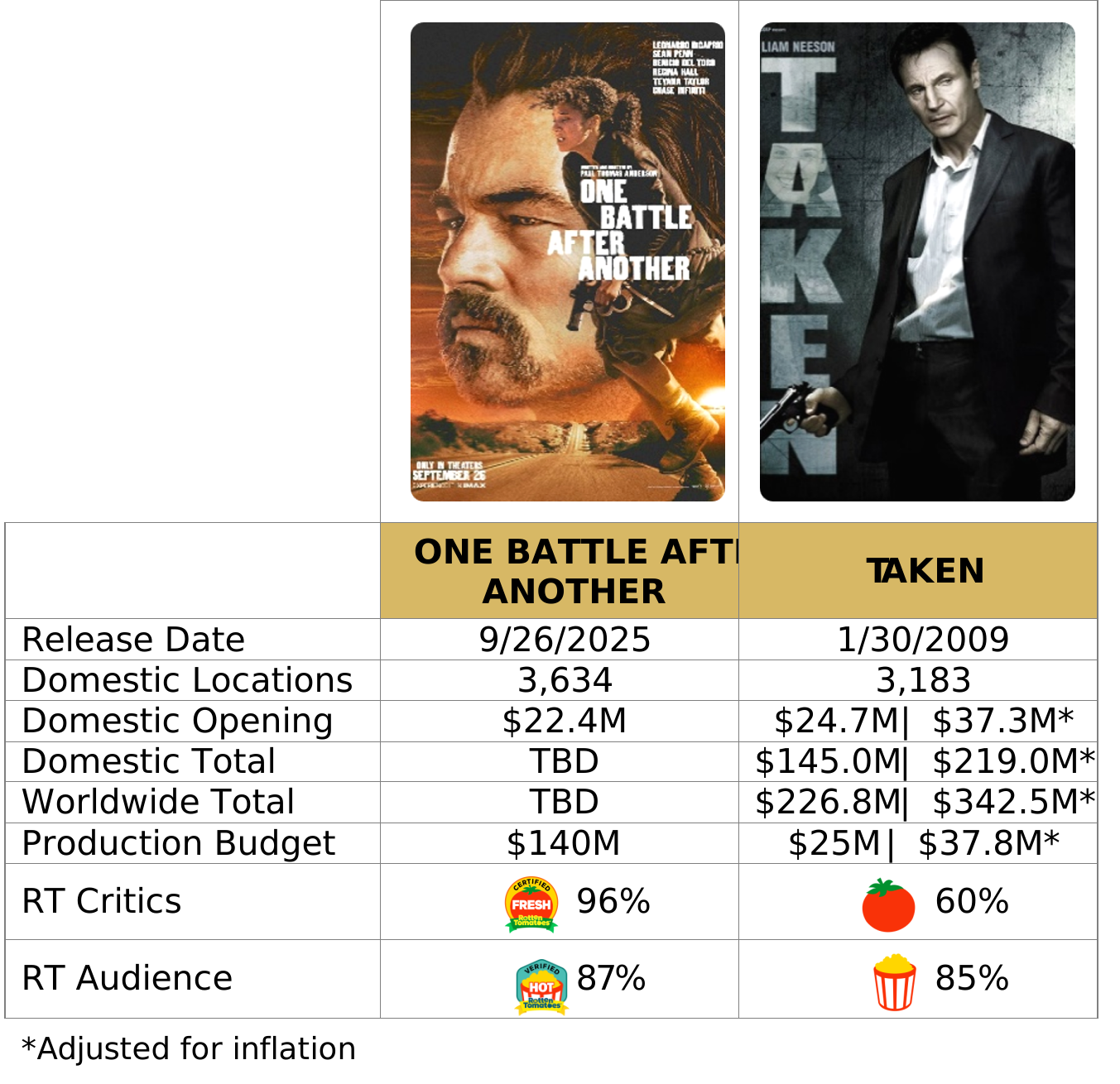
To find an apt comparison, we are stacking up ONE BATTLE AFTER ANOTHER with TAKEN from 2009, starring Liam Neeson. The plot of both movies deals with a father beating back violent forces to protect the safety of his daughter.
While TAKEN did not spark anywhere near the praise of ONE BATTLE AFTER ANOTHER, the extremely positive reviews for Anderson’s new film may help it reach new heights at the box office. TAKEN’s worldwide take, after adjusting for inflation, was $342.5, just shy of the $350M that ONE BATTLE AFTER ANOTHER needs to break into the black.
ONE BATTLE AFTER ANOTHER vs. TAKEN
GABBY’S DOLLHOUSE: THE MOVIE, from Universal and DreamWorks, finished in second place with $13.7M in its opening weekend and $19.4M worldwide. The movie is based on the characters in the “Gabby’s Dollhouse” Netflix series, the most-watched kids’ show ever on the platform. The series combines live-action and animation and resonates with preschool audiences.
Beginning in 2021, “Gabby’s Dollhouse” has run for 11 seasons and 76 episodes, with its 12th season scheduled to start in November. The series is ranked among Netflix’s Top 10 TV shows in 63 countries. DreamWorks began its work on a movie version in April 2024 and completed it in less than 18 months, which is quite an achievement, especially when considering that it combines live-action and animation.
The movie is directed by Ryan Crego, known for his work on ARLO THE ALLIGATOR BOY (a Netflix Original animated movie in 2021) and “Home: Adventures with Tip & Oh” (a Netflix series). The cast is led by Laila Lockhart Kraner, who reprises her role as Gabby, the imaginative young girl who embarks on a whimsical adventure to recover her cherished dollhouse.
Kristen Wiig portrays Vera, an eccentric cat enthusiast who becomes the film’s quirky antagonist, and Gloria Estefan plays Grandma Gigi, Gabby’s supportive and adventurous grandmother who accompanies her on the journey.
The plot of the film follows Gabby as she sets off on a road trip with her grandmother, Gigi, to the vibrant, cat-themed city of Cat Francisco. The journey is meant to be a playful getaway, with Gabby bringing along her magical dollhouse, which contains her beloved Gabby Cats. However, things go awry when the dollhouse accidentally detaches from its vehicle and tumbles onto a busy street.
It is soon discovered by Vera, an eccentric and flamboyant collector who is obsessed with cats. Delighted by the find, Vera whisks the dollhouse back to her stylish home, determined to make it part of her elaborate feline gallery. From there, Gabby embarks on a daring mission to recover her dollhouse, reunite her magical companions, and stop Vera from locking it away forever. The film carries a rare G-rating, a green signal for parents of young children.
Critics have always been supportive of the “Gabby’s Dollhouse” series on Netflix. Common Sense Media has noted that the Gabby character is a strong role model, demonstrating curiosity, compassion, and enthusiasm. The show is well-suited for a preschool audience, with an undeniable visual appeal full of shapes, color, and patterns, a mix of live action and animation, and engaging music.
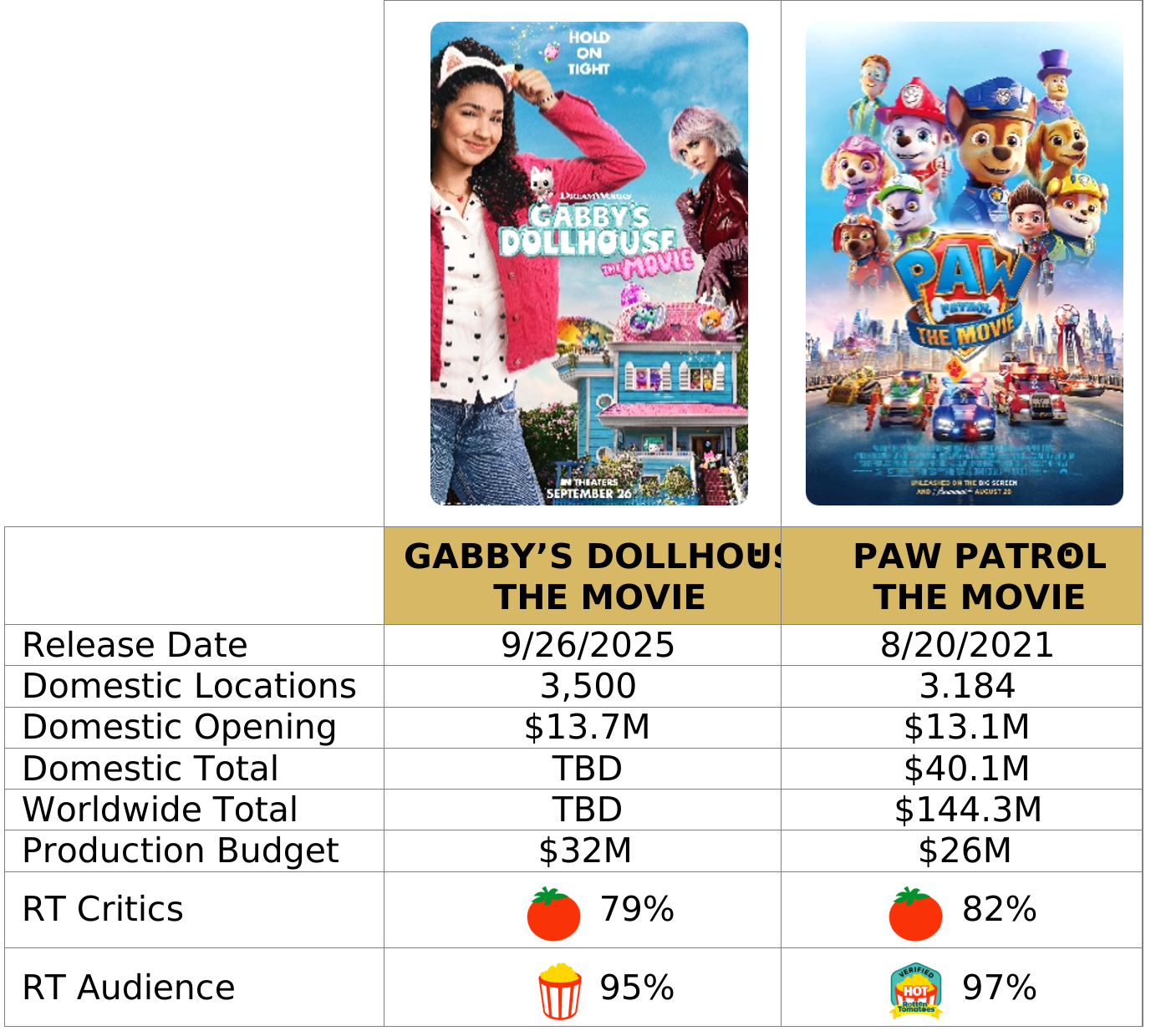
The movie has earned a 79% score from critics on Rotten Tomatoes, with audiences voting a much higher 94%. Among the reviews, Screen Rant says, “the result is a cute, thoughtful film that allows a new generation of kids to contemplate what it means to grow up.” Common Sense Media weighs in that the movie succeeds as a spirited, inventive, and participation-driven romp for kids, if perhaps one best enjoyed in moderation.
On the negative side, Variety calls it a genial throwaway that skitters through incidents with a G-rated innocuousness that makes it perfect for a very pint-sized demographic. The New York Times comments that the film is strictly not suitable for anyone over reading age. For parents to stay awake through the drivel, we suggest bringing a book. The Hollywood Reporter quips that if you happen to have some tykes that need big-screen babysitting, well, they’ll probably have a swell time… Other than the presence of Kristen Wiig, there’s precious little to offer for anyone who doesn’t drink beverages from a sippy cup.
The production cost for the movie came in at a reasonable $32M, which translates to a bogey of $80M in worldwide sales to be profitable. One advantage the movie may have is that the Netflix series is available in 63 countries, giving it the potential to attract broad support from foreign markets. Based upon its opening weekend of only $13.7M domestically, it will need all the help it can get.
As for a comparable film, we are matching it up against 2021’s PAW PATROL: THE MOVIE, another kids’ TV show that spawned a movie franchise. That movie was also G-rated, based on the Nickelodeon TV series Paw Patrol, which is available in 161 countries. New episodes of the “Paw Patrol” series are still being made, while three feature movies have been created, with the third film, PAW PATROL: THE DINO MOVIE, scheduled for release in 2026.
GABBY’S DOLLHOUSE: THE MOVIE vs. PAW PATROL: THE MOVIE
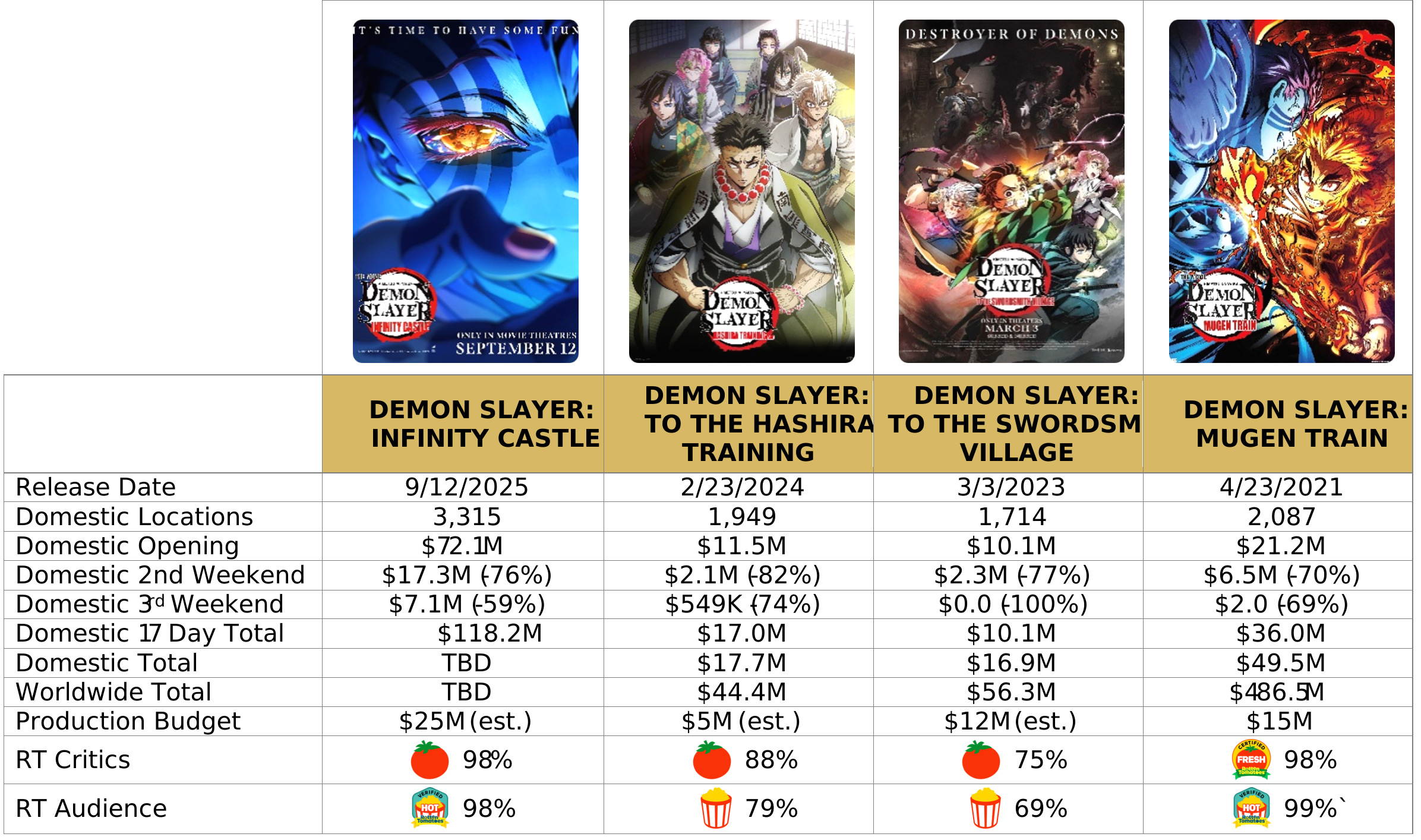
Sony and Crunchyroll anime feature DEMON SLAYER: INFINITY CASTLE finished in third place with $7.1M, a drop of 59%. Despite rather steep weekly declines, this film had an excellent start and has sold much more than other movies in the series. We project it to end up with a total domestic gross of $125M. The next film in the DEMON SLAYER trilogy is due to be released in 20,26, and it may begin with momentum on its side.
DEMON SLAYER Movies
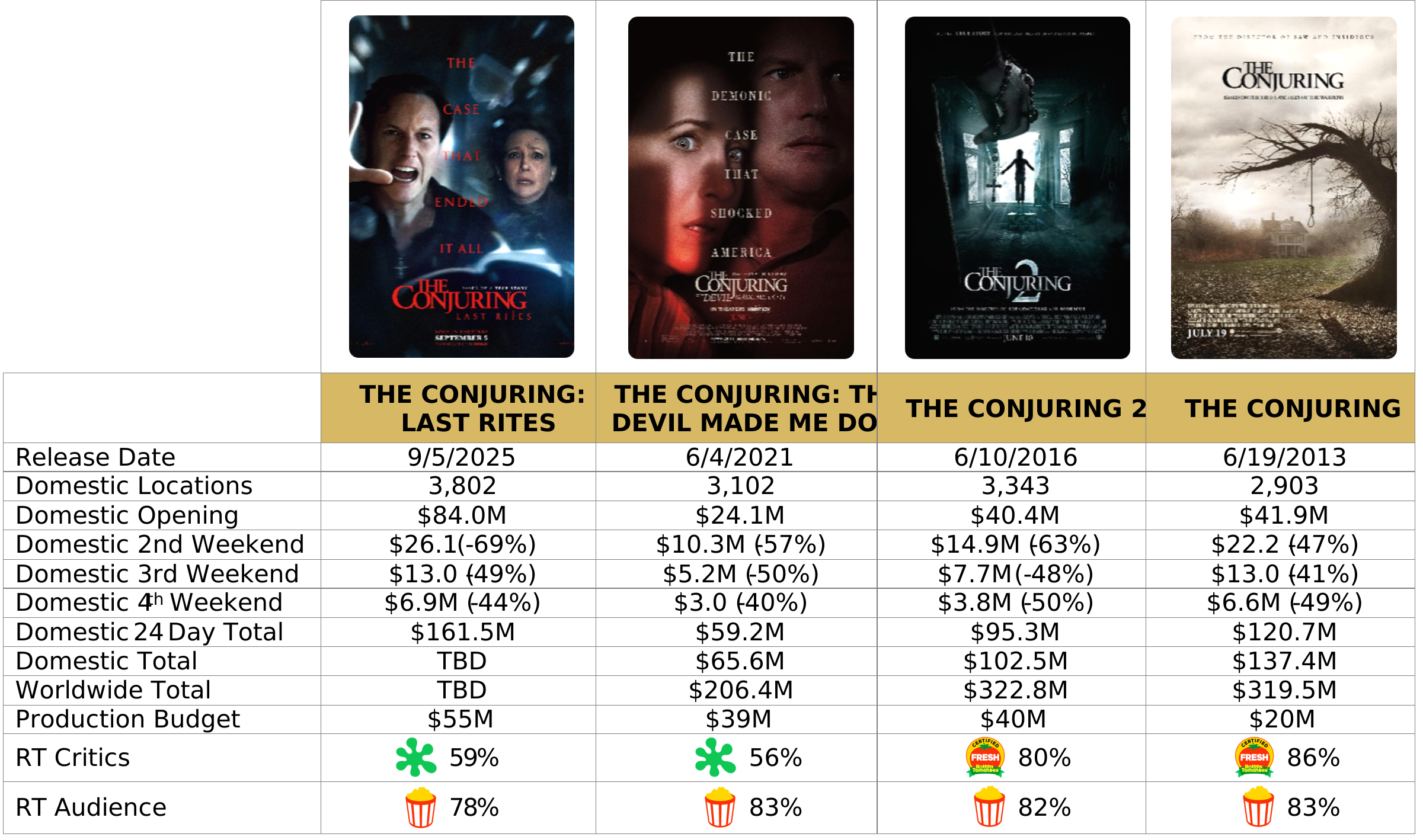
THE CONJURING: LAST RITES finished in fourth place, stirring up $6.9M in its fourth weekend and dropping 44%. This brings its 24-day total to an excellent $16.5M domestically and an even more impressive $435.9 worldwide. We project that it will wind up earning $175M in North America and $450M globally, making for a very profitable ratio of 8.2 to 1 in worldwide ticket sales to production cost.
THE CONJURING: LAST RITES vs. Earlier THE CONJURING Movies
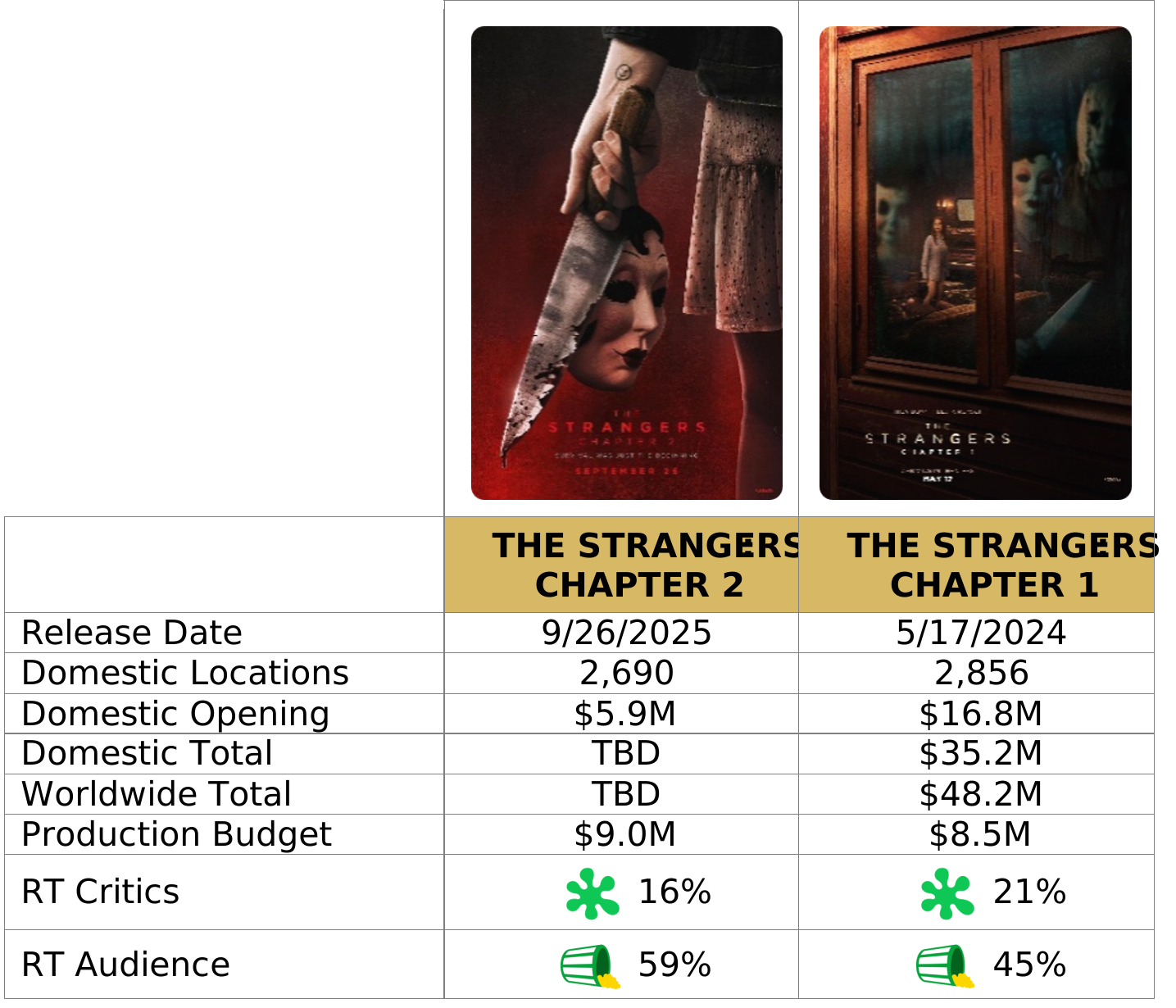
Lionsgate’s horror sequel THE STRANGERS: CHAPTER 2 finished fifth by bringing in $5.9M. This is the second movie of a planned trilogy from the Finnish director Renny Harlin, known for his previous work with action films. Harlin-directed movies have grossed $520M domestically and $1.2B worldwide, with his best-known titles being DIE HARD 2: DIE HARDER (1990), CLIFFHANGER (1993), and THE DEEP BLUE SEA (1999).
Before last year’s release of THE STRANGERS: CHAPTER 1, he had not released a new movie in theatres for 13 years. The three movies in THE STRANGERS series were shot at the same time, minimizing production costs and leading to a 5.7 to 1 ratio of worldwide gross to production cost for the first movie.
Harlin has described CHAPTER 2 as an escalation from CHAPTER 1. While the first movie depicts a home invasion in a rural cabin, CHAPTER 2 expands to a “town invasion,” expanding the threat and atmosphere. The story in CHAPTER 2 begins a few hours after the end of CHAPTER 1. Maya (Madelaine Petsch) wakes up in the hospital after surviving a brutal home invasion, only to discover that the killers are still nearby.
Dismissed by local authorities, she finds herself once again face-to-face with the evil Scarecrow, Dollface, and Pin-Up Girl. Navigating the town of Venus, Oregon, Maya encounters various characters, including Nurse Danica and her roommates, who become entangled in the escalating violence.
Despite THE STRANGERS: CHAPTER 1 being a financial success, it was ripped to shreds by critics, receiving only 21% from critics on Rotten Tomatoes and an equally alarming 45% audience score. After considering the negative feedback about CHAPTER 1, the editing of CHAPTER 2 tried to make the action more intense, refining scares, adding clarifying flashbacks, while trying not to lose the mythic mystery of the Strangers.
Unfortunately, the critics dislike the new movie even more than the first, scoring a miniscule 16% from critics on Rotten Tomatoes. The audience score ticked up a little, rising to 59%. With an opening weekend of $5.9M, it seems like the franchise is moving in the wrong direction. Even though the third movie is mostly completed, these results raise the question of whether Lionsgate will ever release CHAPTER 3 in theatres.
THE STRANGERS: CHAPTER 2 vs. THE STRANGERS: CHAPTER 1
Where Are We as of 9/25/2025
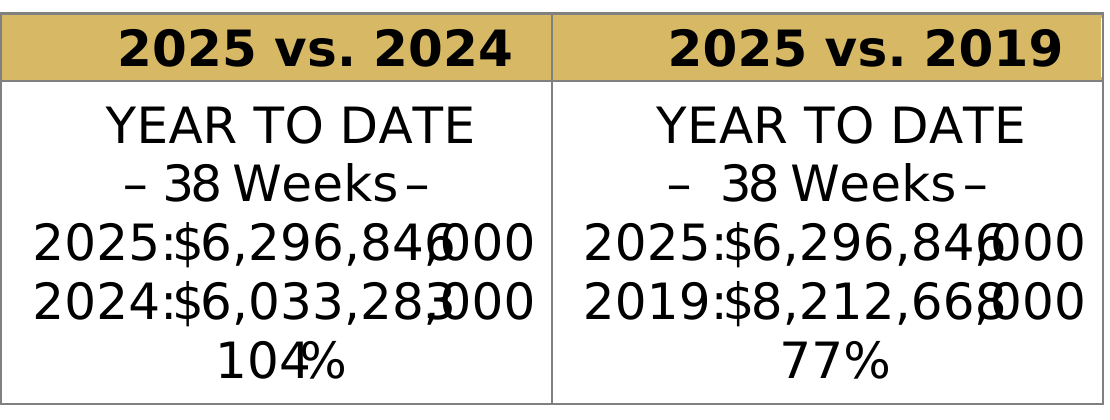
After 38 weeks, the 2025 domestic box office stands at 104% compared to the same point in 2024 and 77% compared to 2019.