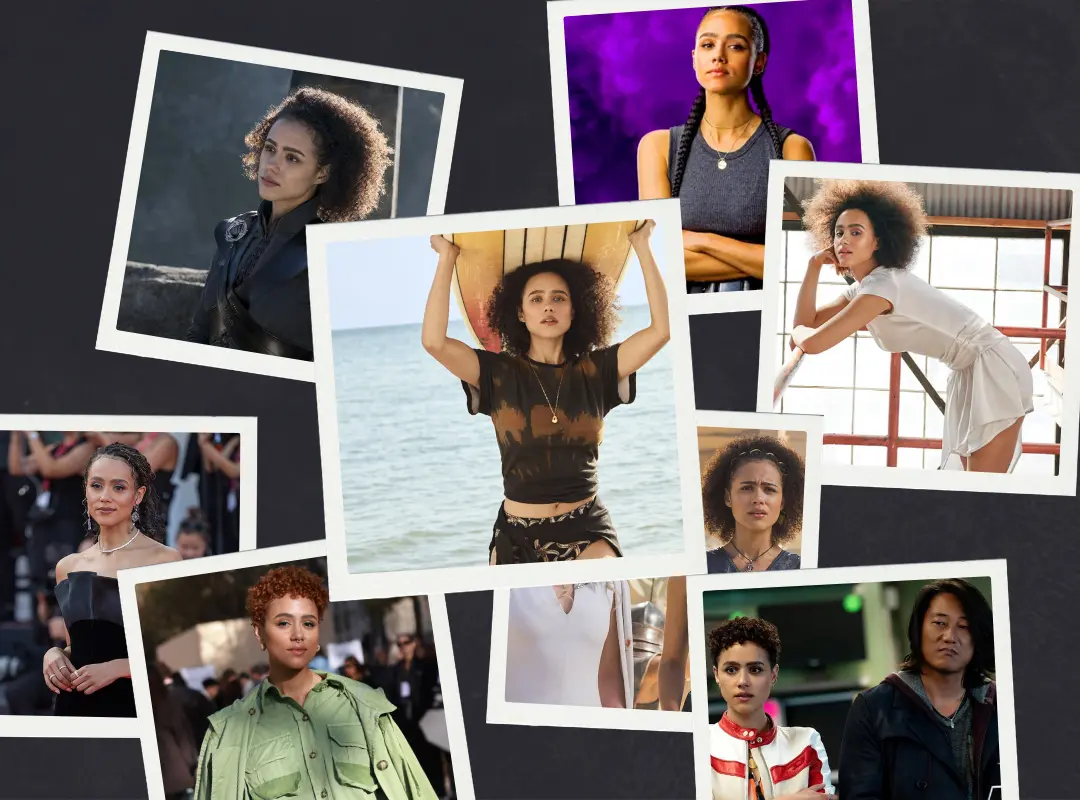



Taylour Paige is a character-driven dramatic actress whose performances consistently cut deeper than the roles themselves. Trained as a professional dancer before transitioning to acting, she brings physical precision and emotional fearlessness to every project she takes on.
The Taylour Paige actress profile is built on bold choices: independent films, morally layered characters, and stories that demand full commitment. Her Taylour Paige performances carry an internal logic that feels real. The film Zola (2021) established her as a serious dramatic force, and titles like Ma Rainey’s Black Bottom confirmed that Paige belongs in conversations about the most compelling screen actors working today.
When understanding Taylour Paige movies, a clear pattern emerges: she does not coast.
Ranking Criteria
The films on this list were selected based on how effectively they showcase Taylour Paige’s best movies and the full range of her abilities as a performer. Each entry was evaluated against five core factors.
- Character depth and complexity came first. The strongest entries are films where Paige carries emotional weight that goes beyond surface-level drama, roles where she is required to hold contradictions within a single scene.
- Career impact was the second filter. This list prioritizes Taylour Paige’s film roles that shifted how the industry and audiences perceived her, whether through critical recognition, franchise visibility, or prestige association.
- Critical reception shaped the middle of the ranking. Films that earned serious press attention or awards consideration, such as Zola and White Boy Rick, rank higher because they placed her work under genuine scrutiny, and she delivered.
- Cultural and industry significance determined how much her role expanded her reach beyond core cinephile audiences.
- Taylour Paige’s acting performances were assessed for dramatic range, specifically: how much the role demanded and how fully she answered that demand. Films where she operates at full capacity rank highest.
Summary Ranking Table
| Rank | Film | Year | Role | Career Impact |
| 6 | White Boy Rick | 2018 | Cathy Volsan-Curry | Early Breakthrough |
| 5 | Ma Rainey’s Black Bottom | 2021 | Dussie Mae | Prestige Ensemble |
| 4 | Boogie | 2021 | Eleanor | Supporting Drama |
| 3 | Sharp Stick | 2022 | Regina | Indie Character Study |
| 2 | Beverly Hills Cop: Axel F | 2024 | Jane Saunders | Franchise Exposure |
| 1 | Zola | 2021 | Aziah “Zola” King | Career-Defining |
The Films That Reveal Taylour Paige’s Raw Talent
#6 Cathy Volsan-Curry in White Boy Rick
ROLE: The wife of a drug lord who becomes entangled in a dangerous affair with the teenage informant at the film’s center.
Film Overview: Rick Wershe Jr. is a teenager recruited as an FBI informant in 1980s Detroit, working his way into the city’s drug trade to maintain his cover. When local kingpin Johnny Curry is imprisoned, Ricky begins an affair with his wife, Cathy Volsan-Curry, a woman connected to Detroit’s political establishment through her uncle, Mayor Coleman Young. The film is a study in exploitation and how systems — criminal, political, and institutional use people until they no longer need them. Taylour Paige in White Boy Rick places her as Cathy Volsan-Curry, a woman navigating dangerous loyalties in a world where every alliance carries a price.
Why This Role Matters: One of Paige’s earliest significant roles in a major Hollywood production, it proved she could hold her own in a demanding ensemble built around more established names.
Performance Strength: Paige plays Cathy with a controlled composure that makes the character’s position — caught between a jailed husband and a teenage informant — feel credible rather than sensational. She does not overplay the moral complexity. The result is a performance grounded in restraint, which is the harder choice and the more effective one.
Career Impact Score: Medium — Early Breakthrough
#5 Dussie Mae in Ma Rainey’s Black Bottom
ROLE: An ambitious young woman navigating desire and self-preservation inside a world of powerful men.
Film Overview: Ma Rainey is a towering blues singer whose recording session in 1920s Chicago becomes a pressure cooker of ego, race, and survival. Levee, the volatile trumpet player, drives much of the conflict as ambition collides with the limits imposed on Black artists of the era. The film is a study in power and who holds it. Taylour Paige in Ma Rainey’s Black Bottom positions her as Dussie Mae, caught between the competing forces of Levee’s hunger and the room’s unstable dynamics.
Why This Role Matters: Being placed alongside Viola Davis and Chadwick Boseman in a prestige production elevated Paige’s visibility at a critical moment. The Dussie Mae character required her to hold the screen in the company of two generational performances without disappearing.
Performance Strength: Paige understands exactly what Dussie Mae wants and plays her with calculated awareness. Her scenes carry a quiet friction that keeps the character from becoming a footnote in a film dominated by louder personalities.
Career Impact Score: High — Prestige Ensemble Recognition
#4 Eleanor in Boogie
ROLE: a grounded romantic lead who anchors the emotional life of a young athlete pulled in too many directions.
Film Overview: Alfred “Boogie” Chin is a Chinese-American basketball prospect in New York City, pressured by family expectations and a system that sees him as a commodity. The film explores identity, belonging, and the cost of ambition. Taylour Paige in Boogie places her as Eleanor, the girlfriend who represents something real in a world that keeps reducing Boogie to a potential score.
Why This Role Matters: The Eleanor character demonstrated Paige’s ability to bring emotional substance to a supporting part in a context that risked being overshadowed by the film’s lead-driven narrative.
Performance Strength: Eleanor could have been a functional love interest. Paige refuses to read. She makes the character emotionally specific and quietly assertive, adding texture to a film that needed grounding, and she provides it without overplaying her hand.
Career Impact Score: Medium — Strong Supporting Dramatic Role
#3 Regina in Sharp Stick
ROLE: a confident, outspoken woman whose presence disrupts the film’s already unsettled emotional landscape.
Film Overview: A young woman working as a caregiver becomes entangled in a complicated relationship that pulls her into unfamiliar emotional territory. The film examines desire, self-discovery, and the gap between what people project and what they actually want. Taylour Paige in Sharp Stick plays Regina, a character whose directness serves as a counterweight to the film’s more fragile central dynamics.
Why This Role Matters: The role reflects Paige’s consistent appetite for unconventional material. Choosing an experimental Lena Dunham-directed indie reinforces a pattern of Taylour Paige film roles built on creative risk rather than safe commercial choices.
Performance Strength Paige plays Regina with self-possession and a lack of apology that makes the character memorable. The Regina character functions as a kind of emotional anchor in a film that deliberately resists stability, and Paige understands that assignment completely.
Career Impact Score: Medium — Indie Recognition
#2 Jane Saunders in Beverly Hills Cop: Axel F
ROLE: A lawyer and the daughter of Axel Foley, pulled back into her father’s chaotic orbit.
Film Overview: Axel Foley returns to Beverly Hills after his daughter becomes the target of a threat tied to a larger conspiracy. The film is a legacy sequel operating within a well-established comedic action framework. At its core, it is about a father trying to reconnect with a daughter who long ago learned to manage without him. Taylour Paige in Beverly Hills Cop Axel F plays Jane Saunders, the emotional center of the plot.
Why This Role Matters: The role gave Paige major studio franchise exposure, introducing her actress profile to a mainstream global audience that had not necessarily followed her independent film work.
Performance Strength: Paige keeps Jane grounded without letting the character get swallowed by the film’s comedic energy. She plays the emotional sincerity straight, which gives the father-daughter dynamic actual weight inside a film that could easily have treated it as a plot mechanism.
Career Impact Score: High — Major Studio Franchise Exposure
#1 Aziah “Zola” King in Zola
ROLE: A Detroit waitress and exotic dancer whose weekend road trip to Florida spirals into something far more dangerous than she agreed to.
Film Overview Zola meets a stranger at work and, days later, finds herself in Tampa in a situation that escalates from strange to genuinely threatening. The story originates from a viral Twitter thread. The film is a study in how quickly circumstances can spiral beyond a person’s control. Taylour Paige in Zola is the film built entirely on her presence as Aziah Zola King, the character through whose eyes every scene is filtered.
Why This Role Matters: This is the performance that redefined Paige’s career. The Taylour Paige-Zola role earned widespread critical recognition and confirmed her as a lead actor capable of carrying a full feature of charisma and sharp comic instinct.
Performance Strength Paige holds the film together across wildly different tonal registers. She is funny, dangerous, vulnerable, and in control, sometimes within the same scene. No other performance in her filmography demands this much from her, and no other performance shows more clearly what she is capable of delivering.
Career Impact Score: High — Career-Defining Role
Taylour Paige Career Evolution
- Phase 1 – Early Film Breakthrough
White Boy Rick marks the starting point of Taylour Paige’s serious dramatic filmography. Before the film, her screen work had been largely in television, and the transition to a major Hollywood crime drama with a demanding ensemble was a deliberate step toward a different kind of career. The Cathy Volsan-Curry character did not require her to carry the film, but it required her to register fully in a crowded cast. She did. The role established a template: Paige gravitates toward characters who exist at the edge of other people’s stories but carry their own interior weight. It was an early signal that she was not interested in safe entries into dramatic acting.
- Phase 2 – Critical Recognition
The release of Zola and Ma Rainey’s Black Bottom in 2021 changed the scale of attention on Paige entirely. Zola arrived as one of the more formally inventive American films of its year, and Taylour Paige’s performances in it were inseparable from why it worked. The Aziah Zola King role asked her to be narrator, protagonist, and emotional anchor simultaneously, across a film that moves in unpredictable directions. She anchored it without effort visible to the viewer.
At the same time, Ma Rainey’s Black Bottom placed her inside one of the most scrutinized prestige productions of the same year. Playing Dussie Mae alongside Viola Davis and Chadwick Boseman in an August Wilson adaptation is not a role that disappears quietly. TaylourPaige’s acting style across both films in the same year demonstrated a range that most actors would spend a decade trying to display.
- Phase 3 – Expanding Filmography
Boogie and Sharp Stick represent a deliberate continuation of Paige’s preference for Taylour Paige movies that prioritize character specificity over commercial formula. Eleanor in Boogie showed her ability to add emotional precision to a supporting role without pulling focus from the film’s central arc. Sharp Stick placed her in an experimental indie context where the tonal demands are less predictable, and the margin for performance error is smaller. Across both, the pattern holds: TaylourPaige’s film roles in this phase confirm that her interest lies in craft, not profile management. Her trajectory is not linear by commercial logic, and that is exactly what makes it worth watching.
What Makes Taylour Paige Such a Powerful Performer?
- Emotional Authenticity
The most consistent quality across Taylour Paige’s performances is that they do not read as performed. Characters dealing with difficult personal circumstances have a tendency to be played at the surface, with visible effort signaling the emotional stakes. Paige works from the inside. Whether she is playing the quiet calculation of Cathy Volsan-Curry in White Boy Rick or the composure of Jane Saunders in a franchise film, she identifies what the character actually wants in any given moment and plays that, not the label the script assigns. Taylour Paige’s acting style across her body of work reflects a performer who has done the character work before the cameras roll.
- Fearless Role Selection
Most actors at a similar career stage would begin consolidating, choosing projects that reinforce a recognizable brand. Paige’s choices do not follow that logic. Taylour Paige’s decisions include experimental independent cinema, prestige ensemble drama, major franchise work, and intimate coming-of-age stories, often in sequence. Sharp Stick, Zola, and Beverly Hills Cop: Axel F should not belong to the same filmography by conventional industry reasoning. The fact that they do reflects a deliberate refusal to be typecast, and it means that no two Taylour Paige movies ask the same thing from her.
- Physical Expressiveness
Before film acting, Paige trained and worked professionally as a dancer. That background is a foundational part of Taylour Paige’s acting performances that consistently distinguishes her from her peers. Dance training builds an awareness of the body as an instrument of communication, of how posture, movement, and stillness carry meaning independent of dialogue. In Zola, that expressiveness performs a physicality that the film’s voice-over narration structure could not have achieved alone. Across her filmography, Paige carries herself with a composed authority that reads on screen as confidence, not attitude, and that is a trained quality.
Conclusion
Taylour Paige built her film career through consistent, deliberate choices rather than a single overnight moment. Her emergence from independent cinema established the terms: complex characters, unconventional material, and no coasting. Zola delivered the breakthrough that made the industry pay attention at scale. From there, her filmography has expanded in both directions, into prestige ensemble work and major studio franchises, without losing the instincts that made her interesting in the first place. She is an actor whose career is worth following precisely because each project reveals something the previous one did not.