



Romantic comedies defined Hollywood in the 1990s and early 2000s, and no two stars embodied the genre’s appeal more than Sandra Bullock and Julia Roberts. As the undisputed leading ladies of the genre, they shaped what many now call the golden age of 1990s cinema, turning the romantic comedy into one of Hollywood’s most beloved categories.
Both actresses became household names through roles that mixed humor, heart, and undeniable star power, and they remain cornerstones of the rom-com conversation today.
Roberts kicked off the decade with Pretty Woman, instantly cementing her place as “America’s Sweetheart.” Bullock, just a few years later, became the relatable charmer audiences couldn’t get enough of in While You Were Sleeping.
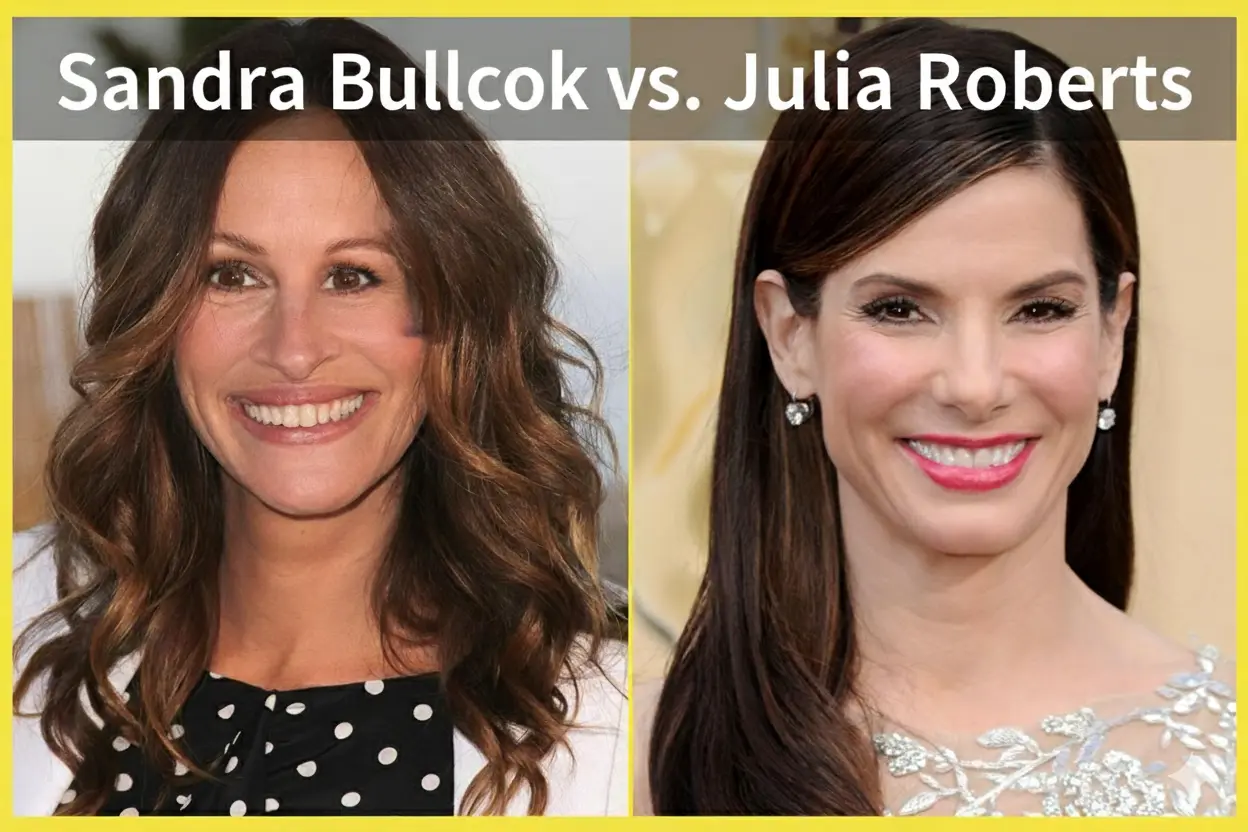
But when it comes to the debate of Sandra Bullock vs. Julia Roberts in rom-coms, who truly holds the crown as the queen of romantic comedies? Rather than framing this as a rivalry, it’s more meaningful to explore what each actress brought to the table—how they built their legacies, where they overlapped, and how they kept audiences invested in love stories for more than two decades.
Defining the Rom-Com Golden Era (1990s–2000s)
To understand Bullock and Roberts, you have to understand the landscape. The 1990s Hollywood era was arguably the golden age of romantic comedies. Studios poured money into mid-budget movies, confident that audiences wanted love stories with lighthearted comedy and a touch of fantasy. Multiplexes guaranteed box office turnout, and home video made rewatchability a major revenue stream. In short, this was why rom-coms were popular in the 90s—they were accessible, star-driven, and endlessly rewatchable.
This was also an era defined by star power. The romantic comedy genre wasn’t sold on concept alone; it was sold on who was leading it. Meg Ryan (Sleepless in Seattle, You’ve Got Mail) perfected the quirky yet adorable lead. Reese Witherspoon entered the scene in the early 2000s with Legally Blonde, proving the appetite for 90s rom-com movies and their successors was still strong.
But Julia Roberts and Sandra Bullock became the bookends of this tradition—Roberts at the start of the ‘90s, Bullock extending it into the 2000s and even 2010s.
Romantic comedies in this period were mainstream events, backed by full studio rom-coms campaigns and embraced by audiences worldwide. And Bullock and Roberts each offered viewers a way to fall in love.
Sandra Bullock’s Rom-Com Legacy

Sandra Bullock’s rise as a romantic comedy star was about timing and tone. Coming off the action success of Speed (1994), she shifted gears into While You Were Sleeping (1995). That movie was a surprise hit, grossing $182 million worldwide on a modest budget, and it revealed something important: Bullock had a knack for making the ordinary extraordinary.
Her character, Lucy, is not a glamorous movie star fantasy. She’s a lonely Chicago transit worker who gets caught in a case of mistaken identity. What makes the film so loved is Bullock. She’s funny, awkward, and empathetic, making the audience root for her even as she lies about her engagement. This “girl-next-door archetype” became her signature and remains one of the reasons this tops any Sandra Bullock romantic comedies list.
Through the late ‘90s and 2000s, Bullock kept delivering some of the best Sandra Bullock rom-com movies.
- Two Weeks Notice (2002) paired her with Hugh Grant, balancing his dry wit with her no-nonsense energy.
- Miss Congeniality (2000) blended rom-com tropes with an action-comedy plot, giving Bullock space to shine physically and comedically while still offering a romantic payoff.
- By the time The Proposal (2009) arrived, Bullock had refined her persona: strong-willed but secretly vulnerable, sarcastic yet warm. Her chemistry with Ryan Reynolds turned what could have been a generic “fake relationship” story into a $317 million global hit, cementing The Proposal’s box office success as one of her career highlights.
Even into the streaming age, she’s found ways to revisit the genre.
- The Lost City (2022), a throwback romantic adventure opposite Channing Tatum, pulled in over $190 million globally and reminded audiences she could still deliver escapist romance with ease.
Bullock’s greatest strength has been her consistency. Unlike Roberts, who defined an era and then pivoted, Bullock has dipped back into rom-coms at different points, adjusting to new audiences while keeping her core appeal intact. Her box office earnings across decades prove that audiences never stopped rooting for her mix of humor and heart.
Julia Roberts’ Rom-Com Crown
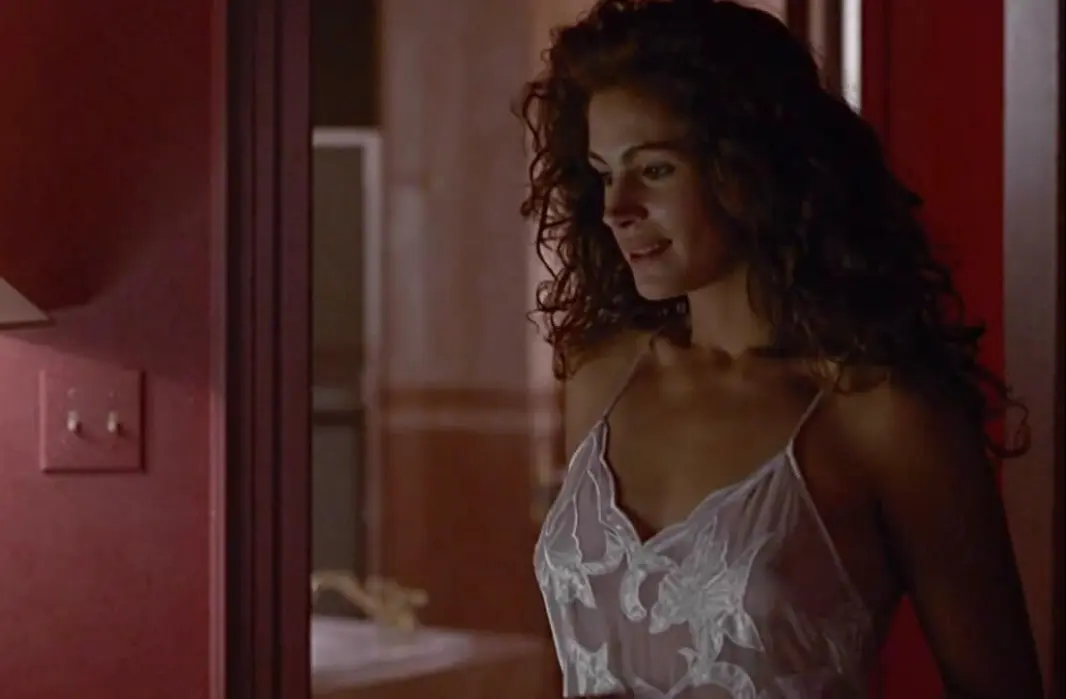
Julia Roberts’ impact on the romantic comedy genre is more about a single, seismic shift. When Pretty Woman premiered in 1990, Roberts wasn’t yet a superstar. By the time it left theaters, she was the defining actress of her generation. Directed by Garry Marshall, the film grossed $463 million worldwide and showcased how Roberts’ wide smile, playful laugh, and big-hearted screen presence could turn a film into a phenomenon. The Pretty Woman impact on rom-coms was enormous—it redefined the modern fairy-tale formula and cemented Roberts as “America’s Sweetheart.”
Roberts’ roles often leaned into these fairy-tale setups.
- Pretty Woman (1990) was a Cinderella story with an edge: a sex worker falling in love with a wealthy businessman.
- Notting Hill (1999) flipped the trope, casting Roberts as a movie star who falls for an ordinary bookshop owner (Hugh Grant).
- In Runaway Bride (1999), she played a woman literally sprinting from commitment until Richard Gere wins her heart.
These remain some of the best Julia Roberts rom-com movies, each offering audiences both glamour and relatability. The through-line in Julia Roberts’ romantic comedies she had the charisma to play larger-than-life roles but always grounded them in human emotion.
- My Best Friend’s Wedding (1997) even pushed the boundaries of the genre, giving Roberts a morally complex role as a jealous friend scheming against her best friend’s wedding.
- Her Oscar-winning turn in Erin Brockovich (2001) proved her dramatic range.
- Eat Pray Love (2010), while more of a dramedy, was marketed as a romantic journey, showing that Roberts’ name still carried box office power when tied to stories about love and self-discovery.
Ultimately, Roberts’ rom-com legacy is defined not by quantity but by quality. She starred in fewer romantic comedies than Sandra Bullock, but almost every one became a cultural touchstone—films that still shape how audiences imagine modern romance on screen.
Box Office & Commercial Success Compared
The box office revenue tells part of the story.
Julia Roberts:
- Pretty Woman (1990): $463 million worldwide
- Runaway Bride (1999): $309 million worldwide
- Notting Hill (1999): $364 million worldwide
Sandra Bullock:
- While You Were Sleeping (1995): $182 million worldwide
- Miss Congeniality (2000): $212 million worldwide
- The Proposal (2009): $317 million worldwide
When you look at Sandra Bullock vs Julia Roberts’ box office performance, both actresses rank among the stars behind some of the highest-grossing rom-com movies with a female lead, with Roberts carrying the early decade and Bullock ensuring the genre survived longer than expected. In terms of overall romantic comedy movie earnings, their combined impact remains unmatched, spanning both domestic and international markets.
Cultural Impact and Iconic Moments
Roberts and Bullock each gave us iconic rom-com scenes that became cultural shorthand for romance.
Roberts has two that stand above all: the red dress in Pretty Woman and the famous “I’m just a girl” speech in Notting Hill. Both are endlessly referenced, parodied, and quoted. The Pretty Woman red dress cultural impact went beyond the film, influencing fashion in romantic comedies and even real-world style. Together, these moments became defining symbols of cinematic romance in the 1990s.
Bullock’s impact is subtler but just as lasting. The train station scene confession in While You Were Sleeping epitomizes sincerity in rom-coms—a big, emotional payoff delivered with Bullock’s trademark relatability. It remains one of the most memorable While You Were Sleeping quotes, embodying her heartfelt charm. Miss Congeniality also gave us one of the most iconic makeover montages, complete with the “world peace” pageant moment that remains a pop culture staple.
Beyond individual scenes, both actresses helped cement enduring rom-com tropes: Roberts with fairy-tale narratives, Bullock with modern workplace or mistaken-identity setups.
If you’ve seen a romantic comedy from the past 30 years, odds are it owes something to one of their performances.
Critical Acclaim and Awards
Neither actress earned awards directly for their rom-com work, which isn’t surprising given the genre’s history with critics. This raises the familiar question: are rom-coms respected by critics? Often, the answer has been no, largely due to genre bias in awards culture.
But these actors’ wins enhanced their rom-com reputations. Roberts’ Academy Award for Erin Brockovich showed she wasn’t just a rom-com queen—she was a serious actress who happened to elevate romantic comedies along the way. Bullock’s win for The Blind Side served the same function, underscoring how her talent went beyond lighthearted roles, even though many remember her most for Sandra Bullock awards romantic comedy performances.
If anything, these accolades reinforced that they were proven talents whose charm translated across genres, supported by strong critical reception in both drama and comedy alike.
Who Has More Romantic Comedies?
By raw numbers:
- Sandra Bullock (~8): While You Were Sleeping, Two Weeks Notice, The Proposal, Miss Congeniality, All About Steve, Practical Magic (rom-com adjacent), The Lost City, Forces of Nature.
- Julia Roberts (~6): Pretty Woman, Notting Hill, Runaway Bride, My Best Friend’s Wedding, America’s Sweethearts, Eat Pray Love.
Bullock edges Roberts in volume, but Roberts’ hits carried more cultural weight. Her career-high recognition with the Julia Roberts Oscar win for Erin Brockovich added prestige that also elevated how critics perceived her rom-com roles.
Bullock, on the other hand, not only scored commercial successes with classics like The Proposal and While You Were Sleeping. Her versatility shows how Sandra Bullock’s Awards and Romantic Comedy Career intertwined, making her both a dependable star and a genre-expander.
The Verdict: Who Reigns Queen in 2024?
If you’re asking Who is the queen of romantic comedies in 2024’, the answer depends on what you value most.
So perhaps the best way to put it is this: Roberts is the queen of the rom-com’s golden era, while Bullock is the queen of its longevity. Together, they’ve proven why the debate of Sandra Bullock or Julia Roberts? Still resonates because both of them are Hollywood icons. For more than 30 years, these fan favorites made us believe in love stories on screen — a legacy that secures their place as contenders for the title of the best rom-com actress of all time.
FAQs
Did Sandra Bullock and Julia Roberts ever star in a movie together?
A. No. Despite decades of speculation, they’ve never appeared in the same film.
What is Julia Roberts’ most successful romantic comedy?
A. Pretty Woman (1990), which grossed $463 million worldwide.
What is Sandra Bullock’s highest-grossing romantic comedy?
A. The Proposal (2009), at $317 million worldwide.
Who has more Oscars?
A. They’re tied. Roberts won for Erin Brockovich (2001), Bullock for The Blind Side (2010).
Who is older?
A. Sandra Bullock (born 1964) is three years older than Julia Roberts (born 1967).