

The 25-Year Overnight Success
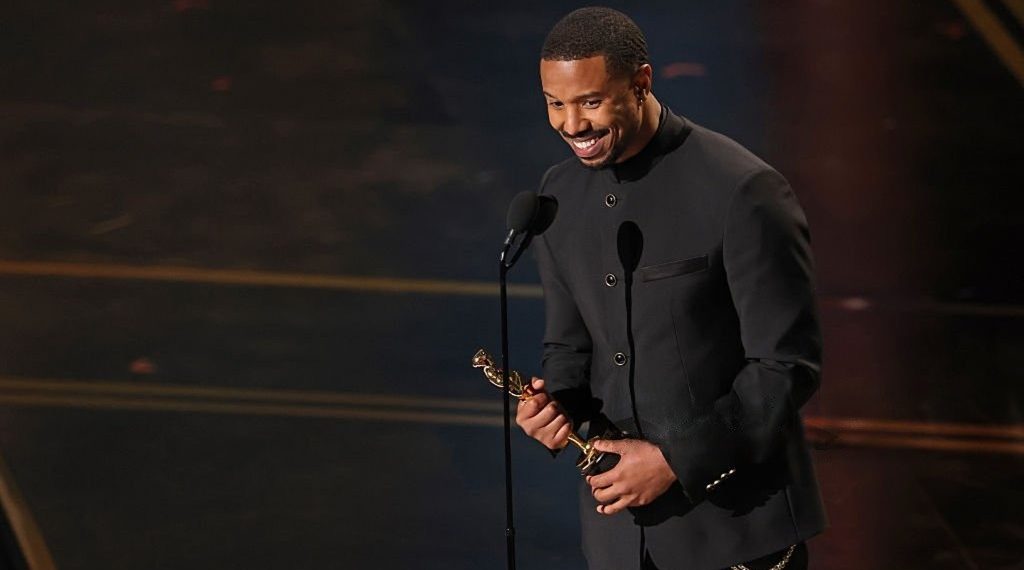
On March 15, 2026, Michael B. Jordan stood at the podium inside the Dolby Theatre in Los Angeles and became the first actor in Oscar history to win Best Actor for playing dual roles — identical twin brothers Smoke and Stack in Ryan Coogler‘s supernatural period film Sinners (2025). He was 39 years old. It had taken him 25 years to get there.
The story is not one of sudden discovery. His career built in phases — child model, soap opera regular, TV journeyman, blockbuster villain, franchise lead, and finally, Oscar winner — each phase feeding the next with discipline and strategic patience. By the time Sinners arrived, Jordan had done the groundwork across four distinct eras of his professional life.
The numbers tell part of the story. Sinners grossed $369 million globally. It earned a record 16 Oscar nominations, winning four. Jordan himself has accumulated 79 wins and 128 nominations across his career. But the number that matters most to the full picture is 25 — the years between his first credited acting appearance in 1999 and the night he walked offstage as an Academy Award winner.
Phase One: The Child Model & Early Actor (1999–2005)
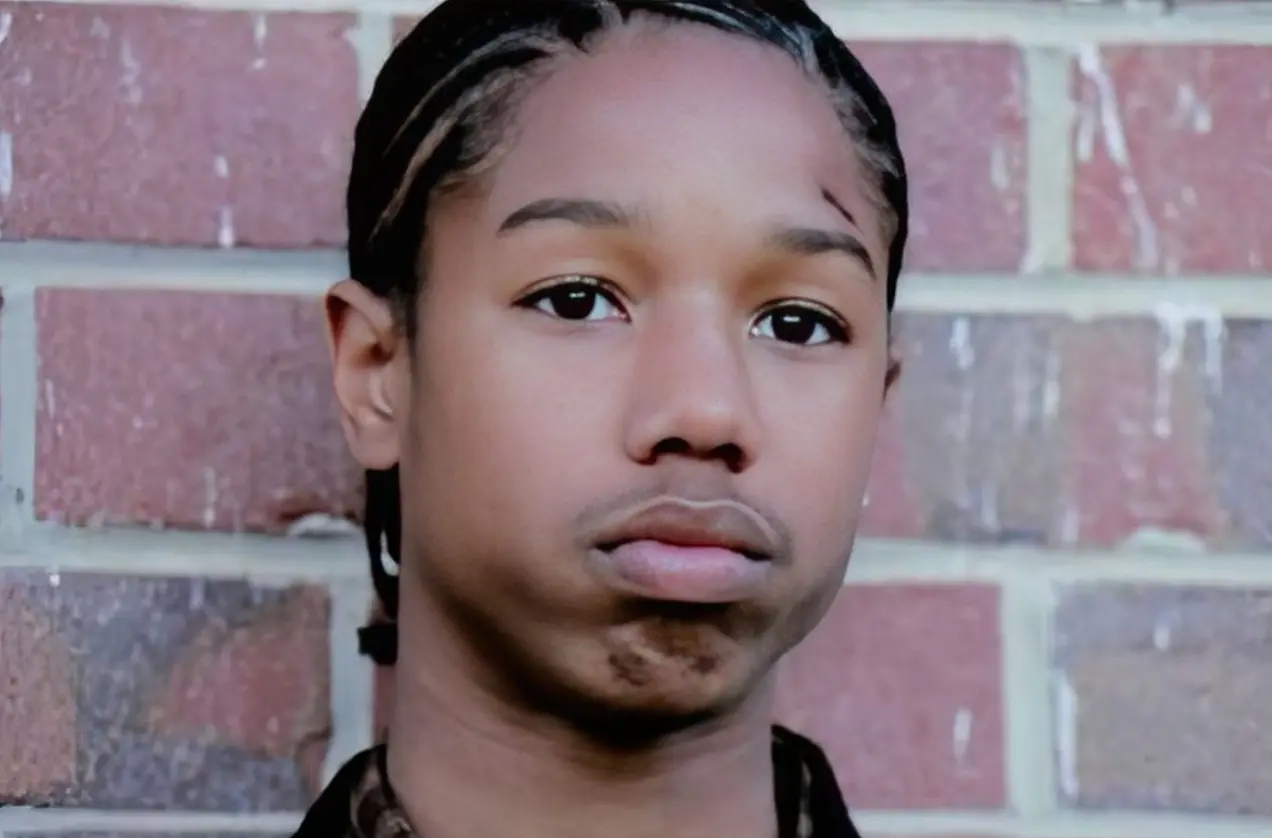
A. The Modeling Beginnings
Michael Bakari Jordan was born on February 9, 1987, in Santa Ana, California. His family moved to Newark, New Jersey, when he was around two years old, and Newark is where Jordan grew up, went to school, and developed the frame of reference that would inform his best performances.
His parents shaped him from two directions. His mother, Donna Jordan, worked as an arts teacher and parent liaison at Newark Arts High School. His father, Michael A. Jordan, was a supervisor at John F. Kennedy International Airport before launching a catering business and becoming involved in Pan-Africanism. Between the two of them, Jordan had creative encouragement and practical work ethic modeled at home from the start.
He got into modeling not through some Hollywood pipeline but through the ordinary mechanics of a Newark kid being in the right place. Around age 10, Jordan started doing print ads and commercials for brands including Modell’s Sporting Goods and Toys “R” Us. These were not glamorous assignments. They were bread-and-butter retail ads — the kind that paid modestly and gave a kid his first experience in front of a camera. Jordan has said he wasn’t initially chasing acting as a dream. What the modeling gigs gave him, practically, was an excuse to get out of school early and take the train into New York City. Talent followed soon after.
He attended Newark Arts High School — a magnet school established in 1931, the first of its kind in the United States — where his mother worked and where Jordan played basketball and studied drama. The school’s emphasis on performance and discipline gave him a structure that served him well before he had any formal acting training. He did not attend college, choosing instead to pursue acting full-time after high school.
B. The Soap Opera Breakthrough
Jordan launched his professional acting career in 1999, with brief appearances in single episodes of Cosby and The Sopranos. His first principal film role came in 2001 in Hardball, a sports drama starring Keanu Reeves, in which Jordan played a kid named G-Baby.
The part that actually put him on the map — at least on the radar of casting directors was Reggie Porter Montgomery on the ABC daytime soap opera All My Children (2003–2006). The role had a complicated origin. Chadwick Boseman had originally been cast as Reggie, but appeared in the role for only a brief stretch before being let go. Boseman — fresh out of Howard University and in his twenties walked into the producers’ room and began challenging the character’s direction, objecting to what he saw as stereotypical writing. He was fired. Jordan, then around 15 or 16, stepped in and took over. He would later star alongside Boseman in Black Panther (2018), though neither initially made much of the soap opera connection publicly.
Jordan played Reggie for four years, earning three consecutive NAACP Image Award nominations for Outstanding Actor in a Daytime Drama Series. He did not win any of them, but the nominations did something arguably more useful: they got him in front of the wives of casting directors and studio executives who watched daytime television. As Jordan himself has acknowledged, All My Children opened doors he never expected, not through prestige but through sheer audience reach. It was, as he put it, his acting education — 100-page scripts, fast production schedules, and no room for mistakes.
C. The Education
Newark Arts High School gave Jordan more than just a diploma. He studied drama under teacher Carl Gonzalez, who has described him as serious, pensive, and easy to like. Jordan played basketball alongside his studies — contradicting any notion that sports were off-limits. He graduated in 2005 and chose not to continue into higher education. By that point, he had already been a working actor for six years.
Phase Two: The TV Journeyman (2006–2012)

A. The HBO Prestige
Before the soap opera run even ended, Jordan had already appeared in one of the most consequential TV roles of his career. In 2002, he played Wallace in the first season of HBO’s crime drama The Wire. Wallace is a teenager caught in the drug trade in West Baltimore — a kid who wants out and pays for that desire. His arc ends in one of the series’ most devastating scenes. Jordan was 15 when he filmed it.
The performance was built on restraint. Jordan understood early — whether by instinct or by the particular logic of growing up in Newark — that the most powerful thing an actor can do is let the audience feel what the character is trying not to feel. The Wire gave him that canvas, and he used it.
After All My Children, Jordan landed the lead role of Vince Howard on the NBC sports drama Friday Night Lights (2009–2011), playing a troubled high school quarterback trying to pull himself out of difficult circumstances while managing his family, his team, and his own potential. He played the character across two seasons. It is, by many accounts, one of his most fully realized TV performances. In between, he also appeared in a recurring guest role as Alex on Parenthood (2010–2011).
B. The Film Struggle
The years between The Wire and Fruitvale Station were productive but uneven on the film side. Jordan appeared in Hardball (2001), Blackout (2007), and Pastor Brown (2009) — none of which broke through commercially or critically. His role as Steve Montgomery in Chronicle (2012) — a found-footage superhero film — gave him more visibility, as did Red Tails (2012), in which he played Maurice “Bumps” Wilson, one of the Tuskegee Airmen. He was working steadily, but the film industry had not yet found the right frame for what he could do.
C. The Breakthrough: Fruitvale Station (2013)
Everything changed with Ryan Coogler. The two met through a mutual connection, and Coogler — then making his feature directorial debut — had Jordan in mind for the lead before he had even finished writing the script. The film was Fruitvale Station, based on the real-life story of Oscar Grant III, a 22-year-old Black man who was shot and killed by a Bay Area Rapid Transit police officer in the early hours of New Year’s Day 2009.
The film premiered at the Sundance Film Festival in January 2013, where it won the Grand Jury Prize and Audience Award in the U.S. Dramatic Competition. Jordan’s performance as Grant — capturing an ordinary man navigating an ordinary day before an extraordinary and unjust death — earned him a National Board of Review Breakthrough Performance win and an Independent Spirit Award nomination for Best Male Lead. It also established the Coogler-Jordan creative partnership that would define the next decade of both men’s careers.
Phase Three: The Blockbuster Star (2015–2023)
A. Creed (2015) — The Franchise Rebirth
Creed announced Jordan as a leading man in a way that no prior role had. Directed again by Coogler, the film is a spinoff of the Rocky franchise. Jordan plays Adonis Creed, the son of legendary boxer Apollo Creed, who seeks training from an aging Rocky Balboa (Sylvester Stallone).
The physical preparation was comprehensive. Jordan trained for approximately 10 to 11 months for the role, working out two to three times a day, putting on around 24 pounds of muscle while developing authentic boxing technique alongside real professional fighters. There were no body doubles for the fight sequences. The result was a performance that was physically convincing and emotionally grounded — not just a showcase but a full character arc.
Creed became the strongest box office opening in the history of the Rocky franchise. Jordan earned an NAACP Image Award for Outstanding Actor in a Motion Picture and a Black Reel Award for Outstanding Actor. The franchise was reborn, and Jordan was its center.
B. Black Panther (2018) — The Villain Icon
Black Panther gave Jordan one of the great villain roles in contemporary blockbuster cinema. As Erik Killmonger — a man with a grievance against Wakanda that is deeply rooted in real-world pain — Jordan created a character whose motivations were legible and even sympathetic even as his methods were not. The film was directed by Coogler and starred Chadwick Boseman as T’Challa, completing the unexpected full-circle from their All My Children connection years earlier.
Black Panther grossed over $1.3 billion worldwide and became a genuine cultural phenomenon. Jordan earned an NAACP Image Award for Outstanding Supporting Actor and a nomination from the Critics’ Choice Movie Awards. The film also received a Teen Choice Award nomination for Choice Movie Villain in Jordan’s name — a category that understates the seriousness of what he brought to the role.
C. The Director Emerges: Creed III (2023)
Creed III marked Jordan’s directorial debut. He starred, produced, and directed — a significant undertaking for a franchise film with the weight of an established audience. He drew from his passion for anime, incorporating visual and narrative influences from the genre into the film’s boxing sequences. The film opened to the best box office debut in the history of the Creed series, his Outlier Society production banner behind it.
Jordan founded Outlier Society in 2016, initially with a first-look deal at Skydance Media before later moving to Warner Bros. In 2018, days after Frances McDormand mentioned the concept in her Oscar acceptance speech, Jordan announced that Outlier Society would adopt the inclusion rider for all its projects — one of the first production companies in Hollywood to do so formally. The rider mandates diversity in casting and hiring both in front of and behind the camera. Jordan has remained consistent on this as a production principle, not just a public statement.
Phase Four: The Oscar Glory — Sinners (2025)
A. The Dual Role Challenge
Sinners is set in 1932 in Mississippi’s Delta region, during the Jim Crow era. Jordan plays twin brothers Elijah “Smoke” Moore and Elias “Stack” Moore — two men who return to their hometown to start fresh, open a juke joint, and find themselves confronting a supernatural evil rooted in the landscape and history they thought they had left behind.
Playing twins in a single film is a technical and dramatic challenge. Playing twins written by Coogler — who built distinct internal logics for each character — required Jordan to differentiate two men who share a face but not a worldview. Smoke is stoic, carries weight internally, and operates from a place of controlled emotional restraint. Stack is looser, more talkative, quick to grin, and processes the world through a kind of tactical charm. As Jordan put it, they represent two survival instincts, just approached differently.
The production used seamless technical work to place both characters in the same frame. Jordan was on set effectively playing opposite himself, becoming a dual-role specialist, a technical requirement that also demanded enormous preparation and consistency.
B. The Critical Phenomenon
Sinners opened in April 2025 and became an unlikely commercial and critical sensation. It grossed $369 million globally, crossing $200 million domestically in its fourth weekend — the first original film to do so since Coco in 2017. On Rotten Tomatoes, it holds a 97% score from critics.
The film received 16 Oscar nominations at the 98th Academy Awards, the most of any film in Oscar history. It won four: Best Actor (Jordan), Best Original Screenplay (Ryan Coogler), Best Cinematography (Autumn Durald Arkapaw, who became the first woman and first person of Black and Filipino descent to win in that category), and Best Original Score (Ludwig Göransson).
At the 32nd Actor Awards (SAG-AFTRA), Sinners received five nominations and won Outstanding Performance by a Male Actor in a Leading Role and Outstanding Performance by a Cast in a Motion Picture.
C. The Historic Win (March 15, 2026)
Jordan is the first person in Academy Award history to win Best Actor for playing dual roles. He is the sixth Black man to win in the Lead Actor category, following Sidney Poitier (1964), Denzel Washington (2002), Jamie Foxx (2005), Forest Whitaker (2007), and Will Smith (2022).
In his acceptance speech, Jordan opened with his parents — his mother Donna seated beside him, his father who had flown in from Ghana for the ceremony. He then acknowledged the lineage he was entering: “I stand here because of the people that came before me: Sidney Poitier, Denzel Washington, Halle Berry, Jamie Foxx, Forest Whitaker, Will Smith. To be amongst those giants, amongst those greats, amongst my ancestors, amongst my guys.”
He thanked Coogler directly: “You gave me the opportunity and space for me to be seen. I am so honored to call you a collaborator and a friend.”
D. The Awards Trajectory
| Award | Result | Date |
| Golden Globe | Lost to Wagner Moura | January 2026 |
| BAFTA | Lost to Robert Aramayo | February 2026 |
| Critics’ Choice | Lost to Timothée Chalamet | February 2026 |
| Actor Awards (SAG) | Won | February 2026 |
| Academy Awards | Won | March 15, 2026 |
The Oscar win was considered an upset — Timothée Chalamet had been widely expected to win for his role in Marty Supreme until the race tightened in the final weeks. Leonardo DiCaprio was among the first to rise for a standing ovation when Jordan’s name was called.
The Oscar Aftermath: 2026–2027 Pipeline
| Project | Status | Role | Director/Notes |
| Swapped | April 24, 2026 (theaters) / May 1, 2026 (Netflix) | Ollie (voice) | Animated adventure; Nathan Greno |
| The Thomas Crown Affair | March 5, 2027 | Thomas Crown / Director | Romantic heist remake; MGM |
| Miami Vice | August 6, 2027 (tentative) | Detective Ricardo “Rico” Tubbs | Joseph Kosinski; early talks |
| Wrong Answer | Development | Damany Lewis | Ryan Coogler reunion; Atlanta cheating scandal |
| Rainbow Six | Development | John Kelly / Producer | Without Remorse sequel; Chad Stahelski |
| I Am Legend 2 | Delayed | Co-star / Producer | Will Smith reunion; Steven Caple Jr. |
| Creed IV | Eventually | Adonis Creed / Director | Sylvester Stallone’s return is hoped for |
| Methuselah | Stalled | Producer | Danny Boyle; no recent updates |
The Thomas Crown Affair is the project that most directly reflects Jordan’s post-Oscar ambitions. He directs and stars — a romantic heist remake for Amazon MGM — with production wrapped in 2025 and a March 5, 2027 theatrical release. It is the most concrete signal that the actor-director path he began with Creed III is not an experiment but a direction.
Swapped, an animated feature in which Jordan voices a character named Ollie, arrives first — in theaters on April 24, 2026, and on Netflix from May 1, 2026, directed by Nathan Greno.
The Jordan-Coogler Partnership: Five Films, One Oscar
| Film | Year | Jordan Role | Coogler Role | Result |
| Fruitvale Station | 2013 | Oscar Grant | Director/Writer | Breakthrough |
| Creed | 2015 | Adonis Creed | Director/Writer | Franchise rebirth |
| Black Panther | 2018 | Erik Killmonger | Director/Co-Writer | Villain icon |
| Black Panther: Wakanda Forever | 2022 | Killmonger (cameo) | Director | Brief return |
| Sinners | 2025 | Smoke/Stack | Director/Writer | Oscar win |
Over a span of 13 years, Ryan Coogler has directed Michael B. Jordan in five films. No other actor-director partnership in contemporary Hollywood has produced an equivalent run of work with this degree of sustained critical and commercial success. Fruitvale Station was both men’s breakthrough. Creed established Jordan as a franchise lead. Black Panther made him a globally recognized face. Sinners made him an Oscar winner.
The dynamic is not simply that Coogler writes good roles for Jordan. It is that Coogler’s projects have consistently placed Jordan in material where the character’s interiority is the film’s real subject — where physical performance and emotional precision exist together, not in competition. As a frequent Ryan Coogler collaborator, Jordan acknowledged this onstage: “You gave me the opportunity and space for me to be seen.”
Sinners is also notable as Coogler’s first original feature since Fruitvale Station — every film between them drew on existing IP, whether the Rocky franchise or Marvel. With Sinners, both men moved into wholly original territory and delivered the best work of their partnership.
The Outlier Society & Industry Impact
A. The Inclusion Rider
Jordan founded Outlier Society in 2016, initially through a first-look deal with Skydance Media. In 2018, in the immediate aftermath of Frances McDormand‘s Oscar speech, he publicly committed the company to adopting the inclusion rider for all its projects — one of the earliest and most prominent production entities to do so. The rider is a contractual clause requiring measurable diversity in cast and crew hiring. For Jordan, it was a formalization of a principle he had already been working toward, not a reaction to public pressure.
The company later signed a first-look deal with Warner Bros. and subsequently established a broader partnership with Amazon Studios.
B. The Producer Credits
Under Outlier Society, Jordan has produced a range of projects beyond his acting work. The HBO television film Fahrenheit 451 (2018), which he also starred in, earned an Emmy nomination for Outstanding Television Movie. The Netflix superhero series Raising Dion (2019–2022), which Jordan also appeared in, received a Children’s and Family Emmy nomination. The animated anthology series Gen:Lock (2019–2021) featured Jordan in a voice acting role alongside his producing credit.
The Outlier Society Fellowship, launched in 2019 with support from the Obama Foundation and My Brother’s Keeper, was designed to develop the next generation of diverse creators — an extension of Jordan’s stated focus on building infrastructure for others, not just accumulating credits for himself.
C. The “Next Generation” Philosophy
Jordan has been consistent, across interviews and acceptance speeches, in framing his success as something that should be passed forward. After the Oscars, he told the press room: “My father always told me, ‘Don’t expect anything to be handed to you. You do the work, and everything else will figure itself out.'”
He is also a co-owner of AFC Bournemouth in the English Premier League, part of a group called the Black Knight Football Club that took over the club. He holds a stake in the Alpine F1 Team. These investments reflect the broader Outlier Society philosophy of leveraging success and visibility to build sustainable structures — in entertainment and beyond.
Conclusion: From Wallace to Oscar Gold
Michael B. Jordan‘s career does not follow the logic of overnight success. It follows the logic of compound interest. Each phase built on the last. The Wire taught him restraint. All My Children gave him technique. Friday Night Lights gave him a lead role. Fruitvale Station gave him a collaborator. Creed gave him a franchise. Black Panther gave him global reach. Creed III gave him the director’s chair. Sinners gave him the Oscar.
The Coogler-Jordan partnership now has five films and an Academy Award to its name, and both men are still in their late thirties. The Outlier Society model — inclusive production, ownership negotiations, next-generation development — has become a template worth studying, not just celebrating.
Jordan’s Oscar win validates more than his own performance. It validates the approach: choose collaborators carefully, build over time, insist on inclusion not as a slogan but as a contractual commitment, and make work that earns its audience rather than chasing one. The tortoise still wins. This particular tortoise did it in 25 years.