
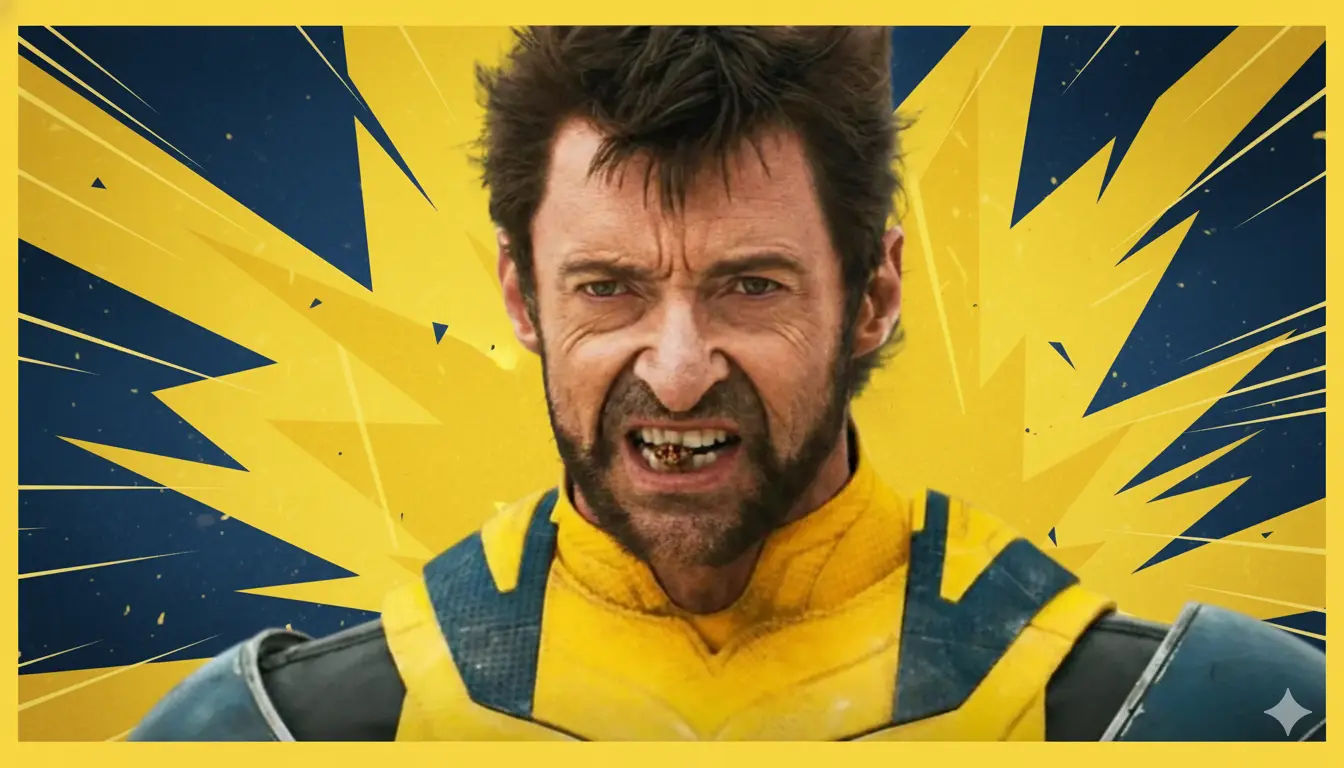

Few superhero portrayals have defined an era quite like Hugh Jackman’s Wolverine. From his first appearance in X-Men (2000) to the brutal, elegiac farewell of Logan (2017), Jackman carried the role with a mix of ferocity and vulnerability that made the character relatable and, hence, unforgettable.
The Hugh Jackman X-Men timeline spans over two decades and ten films. He transformed Wolverine from a comic-book antihero into a cultural icon, shaping the entire trajectory of the X-Men franchise for 20th Century Fox. And just when fans thought his journey was over, Jackman surprised the world by returning for his tenth film in Deadpool & Wolverine, proving that some legends are simply too iconic to stay retired.
Hugh Jackman’s Wolverine Movies Overview
- Total Appearances: 10 films across ensemble casts and solo spin-offs. Across ten films between 2000 and 2024, Hugh Jackman built one of the longest and most iconic runs as a single superhero in film history. His tenure spanned ensemble entries like X-Men, X2, and Days of Future Past, as well as solo spin-offs such as The Wolverine and Logan. Even brief cameos like his infamous one-liner in First Class contributed to a sense of continuity that made Wolverine the constant thread holding the X-Men saga together. This long-running presence gave fans a rare opportunity to watch a superhero evolve on screen over nearly two decades.
- Character Evolution: When audiences first met Wolverine in X-Men (2000), he was a cynical drifter with walls up and loyalty to no one. Over time, Jackman guided the character through layers of growth: reluctant teammate in X2, heartbroken lover in The Last Stand, reluctant mentor in The Wolverine, and finally, weary father figure in Logan. Each appearance added complexity, transforming him from a feral loner into a tragic hero whose arc came full circle with his sacrificial final act. That emotional progression made Logan one of the most fully realized characters in the superhero genre. And of course, Logan’s journey was inseparable from the wider tapestry of the saga — defined by his bonds and clashes with Professor X, Magneto, Jean Grey, and Sabretooth. Across these shifting dynamics, both Wolverine and Logan are superhero icons.
- Cultural Impact: Before Jackman, comic readers loved Wolverine, but hardly a mainstream figure. After Jackman, he was a household name. His rugged physicality, gruff charm, and emotional depth helped redefine what a superhero performance could be. He showed audiences that these stories weren’t just about flashy powers, but also about vulnerability, trauma, and the human experience.
- Box Office Success: The numbers speak for themselves: The X-Men franchise under 20th Century Fox (2000–2019) earned roughly $6.08 billion worldwide across all the films, from the original X-Men through Dark Phoenix, including the Deadpool entries.
Hugh Jackman’s ten appearances made up the backbone of that success, though he wasn’t present in every installment. The two Wolverine solo movies alone performed strongly at the box office—The Wolverine (2013) pulled in $414 million, while Logan (2017) grossed $619 million and made history as the first superhero film to be nominated for an Oscar in the Best Adapted Screenplay category.
Logan movies became both a box office hit and an Oscar-nominated film, proving the commercial and critical potential of mature, adult-focused superhero stories.
Ranking Criteria—How We Evaluated Each Wolverine Film
Hugh Jackman’s tenure as Wolverine spans ten films (including two brief cameos), and each appearance can be evaluated on several fronts. In this ranking from #10 (worst) to #1 (best), we consider critical reception (Rotten Tomatoes and Metacritic scores), box office performance (global gross and longevity), fan reception (audience scores and cult status), character development (how much the film adds to Logan’s arc), and legacy & influence (the film’s long-term impact on superhero cinema).
Here is how all of Jackman’s Wolverine Movies stack up:
Hugh Jackman’s Wolverine Movies Ranked!
#10. X-Men Origins: Wolverine (2009)
Hugh Jackman’s first solo film as Logan is often seen as the weakest. Critics gave it low scores (38% RT, 40 MC), and fans disliked the messy story and the poor version of Deadpool. It earned $373M worldwide, but that was less than the earlier X-Men films. The movie tried to explore Logan’s past but offered little more than shallow flashbacks, with some calling it ‘The Worst Wolverine Film’. In fact, it nearly ended Wolverine’s solo future until the franchise fixed things with The Wolverine.
#9. X-Men: Apocalypse (2016 – cameo)
Wolverine’s short appearance as Weapon X was the highlight of an otherwise weak film. Apocalypse got poor reviews (47% RT) and showed signs of audience fatigue, making $544M worldwide — far less than Days of Future Past. Fans enjoyed Logan’s berserker rage, but the cameo didn’t add to his character.
#8. X-Men: The Last Stand (2006)
The final part of the original trilogy gave Wolverine a bigger role but stumbled overall. Reviews were average (57% RT, 58 MC), and while it made $460M, fans were disappointed with the rushed Phoenix storyline and poor handling of major characters. Logan’s key moment — killing Jean Grey to save everyone should have been powerful, but weak writing dulled the impact. Today, it’s remembered as a low point that forced later reboots.
#7. Deadpool & Wolverine (2024)
Jackman’s multiverse comeback smashed records, earning $1.33B and becoming the highest-grossing R-rated film ever. Critics were mixed but leaning positive (78% RT, 56 MC), while fans loved it (CinemaScore “A”). The film didn’t add to Logan’s closed arc from Logan (2017), but gave a meta, funny, action-packed spin. Its legacy is still being written, but it’s already important for blending Fox’s X-Men into the MCU. For now, it’s more of a crowd-pleaser than a defining Wolverine chapter.
#6. X-Men: First Class (2011 – cameo)
Jackman’s surprise line, “Go f*** yourself,” became an instant fan favorite. The film itself was a fresh reboot, praised by critics (86% RT), though it made a smaller $353M. Wolverine’s cameo added no growth for his character, but its humor and shock factor made it iconic. The film revived the franchise, and Logan’s small role helped connect old and new eras.
#5. The Wolverine (2013)
A major improvement after Origins, this darker and more personal story was well-received (71% RT, 61 MC) and earned $415M globally. Fans liked the Japanese setting, the focus on Logan’s grief after The Last Stand, and the twist of him losing his healing power. The CGI-heavy finale disappointed some, but the extended cut became popular with fans. Its legacy is as an underrated, mature Wolverine story that set the stage for Logan.
#4. X-Men (2000)
The movie that started the modern superhero era and introduced Jackman’s Wolverine. With strong reviews (82% RT) and $296M worldwide, it proved audiences wanted mutant heroes. Jackman, though an unlikely choice at the time, quickly made Wolverine iconic. The film established Logan as a loner pulled into the X-Men family, with bonds (like Rogue and Jean) shaping his softer side. Its legacy is huge: it launched the X-Men-Wolverine series, influenced superhero films for years, and paved the way for the MCU.
#3. X2: X-Men United (2003)
One of the best superhero sequels ever, X2 improved on the original with bigger stakes and stronger character moments. It earned $408M, scored 85% on RT, and remains beloved. Wolverine’s role grew: he faced his Weapon X past, fought ferociously in the mansion raid, and became the team’s protector. This balance of fury and leadership deepened his character. Its legacy is lasting, influencing later sequels like Spider-Man 2 and The Dark Knight.
#2. X-Men: Days of Future Past (2014)
With a 90% RT score and $746M box office, this film was both a critical and commercial win. It united old and new casts in a time-travel story that gave Wolverine a central role: guiding young Xavier and Magneto in 1973. For once, Logan was the mentor, not the lone fighter. Its legacy is massive — fixing earlier mistakes (The Last Stand) and showing how crossovers could succeed long before the MCU’s biggest team-ups.
#1. Logan (2017)
Jackman’s farewell as Wolverine is widely seen as his best. With glowing reviews (93% RT, 77 MC) and $619M worldwide, it proved superhero movies could be serious, award-worthy cinema. The film earned an Oscar nomination for screenplay and gave fans a gritty, emotional Western-style story. An older, weaker Logan finds redemption in protecting Laura, ending with his sacrifice. Its legacy is profound: it redefined the genre and became the ultimate Wolverine story.
Complete Wolverine Movies List
Here’s the definitive Hugh Jackman Wolverine movies list, both chronological and ranked.
Chronological Wolverine Filmography
1. X-Men (2000)
Director: Bryan Singer
Key Plot Points:
Set in a world where mutants are feared, Wolverine (Logan) is introduced as a cage fighter with a mysterious healing factor and claws. After crossing paths with Rogue, he’s taken in by Professor X and the X-Men, who battle Magneto and his Brotherhood. Logan resists joining but slowly bonds with his new allies. Haunted by vague memories of experimentation, he helps thwart Magneto’s plan to mutate world leaders at Ellis Island. By the end, Logan chooses to stay with the team, marking the beginning of his transformation from isolated drifter to reluctant hero.
Strengths:
- Hugh Jackman’s breakthrough performance instantly defines Wolverine for the cinema.
- Smart allegories of prejudice and belonging elevate the superhero genre.
Weaknesses:
- Limited fight choreography compared to later Wolverine appearances.
- Visual effects and costumes feel dated today.
Critical Score: RT 82%, MC 64
Why It Matters:
X-Men launched the modern era of superhero films and established Wolverine as its heart. Jackman’s performance grounded the movie with grit and humanity, making Logan the standout among an ensemble cast. This film set the foundation for Logan’s arc, introducing him as both an outsider and reluctant protector.
2. X2: X-Men United (2003)
Director: Bryan Singer
Key Plot Points:
Wolverine’s past takes center stage as William Stryker launches an attack on Xavier’s school and kidnaps Professor X. Logan helps lead the students to safety, eventually uncovering Stryker’s connection to his Weapon X origins. He battles soldiers, experiments, and his own haunted memories. The mutant community faces extinction, forcing Wolverine to embrace responsibility rather than solitude. The climax sees him confronting Stryker directly, though Logan learns few concrete answers. In the end, Wolverine emerges as one of the team’s most dependable leaders, his rage and loyalty tested in equal measure.
Strengths:
- Wolverine’s hallway berserker rage scene is iconic.
- Complex themes of identity and prejudice give depth to the action.
Weaknesses:
- Some subplots (like Jean’s Phoenix tease) distract from Wolverine’s main storyline.
- Stryker’s revelations feel more teased than resolved.
Critical Score: RT 85%, MC 68
Why It Matters:
X2 cemented Wolverine as the franchise’s centerpiece. Jackman’s performance balanced feral intensity with vulnerability, making Logan the emotional anchor. The film deepened his backstory while showcasing his leadership potential, proving he was more than just a brooding loner.
3. X-Men: The Last Stand (2006)
Director: Gavin Hood
Key Plot Points:
The government announces a “mutant cure,” sparking division within mutantkind — some view it as hope, others as a threat to their identity. Magneto rallies a Brotherhood to destroy the cure, while Professor X’s X-Men defend the right to choose. Meanwhile, Jean Grey is resurrected as the Phoenix, her powers uncontrollable and destructive. She kills Cyclops and, in a devastating confrontation, disintegrates Professor X. The climax unfolds at Alcatraz, where Wolverine leads the X-Men against Magneto’s forces and the Phoenix. Ultimately, Logan is forced to kill Jean to save humanity.
The film closes on a bittersweet note: Magneto, seemingly cured, shows faint signs of his powers returning.
Strengths:
- Jackman’s dedication and physical transformation keep Logan compelling.
- Attempts to expand Wolverine’s history and relationships.
Weaknesses:
- Maligned script with tonal inconsistencies.
- Weak CGI (infamous claws) undermines big moments.
Critical Score: RT 51%, MC 50
Why It Matters:
Despite its flaws, Origins underscores Wolverine’s enduring appeal. Even in a weak film, Jackman’s charisma held the character together, proving Logan’s popularity could survive missteps.
4. X-Men Origins: Wolverine (2009)
Director: Gavin Hood
Key Plot Points:
This prequel follows Logan from childhood in the 19th century through his years fighting alongside his brother Victor Creed (Sabretooth) in multiple wars. Recruited by William Stryker into Team X, Logan becomes disillusioned by their brutality and tries to live peacefully with his lover, Kayla Silverfox. After her apparent death, he undergoes the Weapon X experiment, bonding adamantium to his skeleton and claws. Betrayed by Stryker, Logan faces off against Sabretooth and a heavily altered version of Deadpool. The film ends with Logan suffering memory loss after being shot with adamantium bullets, setting up his wandering, amnesiac future.
Strengths:
- Provides backstory on Logan’s relationship with Sabretooth.
- Showcases the Weapon X transformation fans had long anticipated.
Weaknesses:
- Criticized for poor CGI and continuity errors.
- The mishandling of Deadpool’s character remains infamous.
Critical Score: RT 38%, MC 40
Why It Matters:
Despite its flaws, Origins is significant for attempting to explore Wolverine’s origins in detail. Its shortcomings nearly derailed Logan’s solo potential until the franchise course-corrected with The Wolverine (2013).
5. X-Men: First Class (2011- cameo)
Director: Matthew Vaughn
Key Plot Points:
Set in the 1960s, this prequel explores Xavier and Magneto’s early years. Wolverine appears briefly when Charles and Erik attempt to recruit him at a bar. Logan cuts them off mid-pitch with a single, perfectly timed expletive, dismissing them instantly. His cameo lasts mere seconds but perfectly captures his gruff independence and disinterest in alliances at this stage.
Strengths:
- A sharp, scene-stealing cameo delivered with perfect timing.
- Keeps Wolverine’s essence intact without overstaying his welcome.
Weaknesses:
- Too brief to add meaningful development.
Critical Score: RT 86%, MC 65
Why It Matters:
The cameo is widely praised as one of the best superhero cameos because it fits the character and doesn’t interrupt the main story.
6. The Wolverine (2013)
Director: James Mangold
Key Plot Points:
Set after The Last Stand, Logan isolates himself, haunted by Jean’s death. Summoned to Japan, he meets an old acquaintance, Yashida, who offers to remove his healing powers. Logan becomes embroiled in Yakuza conflicts, protecting Yashida’s granddaughter Mariko while confronting samurai assassins and ninjas. Stripped of invincibility, Wolverine faces mortality and vulnerability. The climax pits him against a robotic Silver Samurai, where he reclaims his purpose as a protector.
Strengths:
- Noir-like tone with intimate character focus.
- Strong Japanese setting and samurai duels give it a unique texture.
Weaknesses:
- CGI-heavy Silver Samurai finale undercuts the grounded approach.
- Supporting villains lack depth.
Critical Score: RT 71%, MC 60
Why It Matters:
The Wolverine revitalized Logan’s solo storylines with a serious, character-driven tone. It stripped him of invulnerability, forcing audiences to confront his humanity and mortality, setting the stage for Logan.
7. X-Men: Days of Future Past (2014)
Director: Bryan Singer
Key Plot Points:
In a dystopian future where Sentinels hunt mutants, Wolverine is sent back in time to 1973 to prevent catastrophe. His mind inhabits his younger body, forcing him to unite the fractured younger versions of Xavier, Magneto, and Mystique. Logan acts as a mentor, mediator, and emotional anchor as the timeline is rewritten. His vulnerability in the past contrasts with his battle-hardened self in the future, making him the linchpin of the story’s success.
Strengths:
- Jackman shines as both warrior and mentor, bridging eras.
- Cleverly balances an ensemble cast while centering Wolverine.
Weaknesses:
- Time-travel rules can feel convoluted.
- Logan’s personal growth was slightly overshadowed by Xavier/Magneto arcs.
Critical Score: RT 90%, MC 75
Why It Matters:
This film gave Wolverine his most pivotal role: literally holding the franchise together across timelines. It reset continuity while positioning Logan as the glue between generations, deepening his mythos.
8. X-Men: Apocalypse (2016)
Director: Bryan Singer
Key Plot Points:
When Apocalypse rises, the young X-Men are drawn into battle. Wolverine appears in a cameo as Weapon X, unleashed from captivity at Alkali Lake. Brutal and feral, Logan slaughters soldiers in a berserker rampage before Jean calms his mind. Though brief, this sequence offers a more faithful cinematic take on Weapon X than Origins.
Strengths:
- Fierce, visceral depiction of feral Wolverine
- Brutal action aligns with comic-accurate Weapon X imagery.
Weaknesses:
- Only a cameo, adding little to character development.
- Overshadowed by the larger, uneven Apocalypse storyline.
Critical Score: RT 47%, MC 52
Why It Matters:
The cameo gave fans the savage Wolverine they’d long wanted: claws unsheathed, fully unrestrained. It was short but memorable, reaffirming Jackman’s unmatched intensity.
9. Logan (2017)
Director: James Mangold
Key Plot Points:
Set in 2029, Logan is weary, his healing failing, and Professor X is suffering from dementia. Hiding near the Mexican border, he’s pulled back into action when he meets Laura, a young mutant created from his DNA. Reluctantly, he protects her on a journey toward safety while battling Reavers and his own deteriorating body. Logan ultimately sacrifices himself to save Laura and her fellow mutant children. The film ends with Laura mourning him, whispering over his grave, marking his death not as a superhero but as a man.
Strengths:
- Jackman delivers his career-best, emotionally devastating performance.
- Mature, genre-bending Western tone breaks superhero conventions.
Weaknesses:
- Some pacing issues in the second act.
- Villains feel secondary compared to Logan’s inner struggles.
Critical Score: RT 93%, MC 77
Why It Matters:
Logan redefined what superhero films could be — raw, elegiac, and deeply human. It gave Hugh Jackman a fitting farewell, transforming Wolverine’s journey into a mythic tragedy. The film’s blend of superhero grit and Western melancholy elevated the genre and cemented Jackman’s legacy.
10. Deadpool & Wolverine (2024)
Director: Shawn Levy
Key Plot Points:
In a fractured multiverse, Deadpool (Wade Wilson) is enlisted by the Time Variance Authority (TVA) to prevent his universe from being erased. To do that, he must team up with a reluctant Wolverine variant (Logan) from another timeline. Together, they bounce between alternate realities, encountering multiple versions of Wolverine, crossovers with past X-Men characters, and chaotic timelines. Their mission eventually puts them in direct opposition to the villainous Cassandra Nova, who seeks to destabilize all mutant existence. The film mixes irreverent humor, over-the-top action, and heartfelt callbacks to the X-Men legacy.
Strengths:
- The chemistry between Ryan Reynolds’ Deadpool and Hugh Jackman’s Wolverine grounds the wild multiversal chaos.
- Bold humor, fourth-wall breaks, and self-referential satire lean fully into what makes Deadpool’s style distinct.
Weaknesses:
- The plot often feels like an afterthought: exposition dumps, loose logic, and overstuffed character cameos dilute narrative coherence.
- Some jokes and meta references border on excessive, which can undercut emotional stakes and make the tone feel uneven.
Critical Score:
- RT: 78% (of 414 critics)
- MC: 56 / 100
Why It Matters:
Deadpool & Wolverine marks a major moment: the first R-rated film officially in the MCU, and a bold attempt to bridge the irreverent Deadpool tone with Wolverine’s storied cinematic legacy. It functions as both a love letter to the Fox-era X-Men universe and a bridge into Marvel’s new multiverse era.
How Wolverine’s Character Evolved Across the Franchise
From the moment Wolverine hit the theatres in X-Men (2000), he was deemed the outsider. Over the years, Hugh Jackman shaped him into something richer.
What makes Logan’s arc resonate is how consistently it circles back to one question: Is he a weapon, or is he a man? In X2 and The Wolverine, we see him torn between the rage that makes him unstoppable and the humanity that keeps him vulnerable. By Days of Future Past, he’s evolved into a reluctant mentor, guiding younger mutants. Finally, in Logan, his story narrows into something intimate and devastating: a broken man who finds purpose in protecting Laura, a daughter figure born from his own DNA.
The throughline is clear – Logan’s arc feels less like the end of a superhero saga and more like the closing of a deeply human story about redemption, sacrifice, and love.
Why Hugh Jackman’s Wolverine Stands Alone in Superhero Cinema
- Longevity: No other actor has carried a superhero role with this consistency for 20 years..
- Emotional Authenticity: Jackman made Logan more than claws and rage — he made him vulnerable.
- Genre-Blending: His films dipped into noir, samurai cinema, westerns, and dystopian drama.
- Balance of Critical & Commercial: Few superhero performances have been both blockbusters and award contenders.
Final Word
When it comes to Hugh Jackman Wolverine movies ranked, the verdict is simple: there’s no “worst Wolverine film” that undermines the legacy, because even the weaker entries are carried by Jackman’s undeniable charisma. But from X-Men Origins’ stumble to Logan’s elegiac finale, the arc is nothing short of cinematic history.
And when you step back, it’s also a testament to the long journey of Marvel Comics’ most feral antihero on screen. Across nearly two decades, 20th Century Fox built an X-Men franchise that redefined superhero films, with directors like Bryan Singer and later James Mangold shaping Wolverine’s path into something far beyond comic-book action — a pop-culture legacy that’s both gritty and profoundly human.