
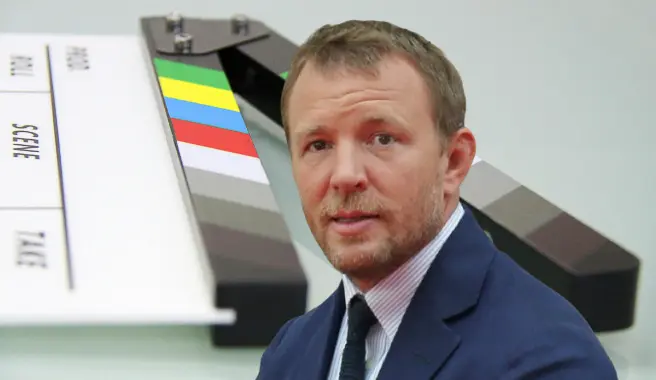

Some directors make movies. And then there’s Guy Ritchie, who builds entire ecosystems of fast talkers, lowlifes, aristocrats, hustlers, and men who think they’re smarter than they are. His films move like someone flipped the playback speed to 1.25x and forgot to turn it down. Rapid dialogue. Kinetic editing. London grit. A wink you almost miss.
From scrappy late-’90s crime indies to billion-dollar studio spectacles, Ritchie has stretched his voice without losing it. This ranking balances cult classics, commercial hits, and stylistic standouts. If you’re hunting for the best Guy Ritchie movies, trying to settle a debate about Guy Ritchie films ranked, or just building your personal syllabus of must-watch Guy Ritchie films, welcome. Especially if you’re here for the Guy Ritchie crime movies that made pubs feel cinematic.
What Defines a Guy Ritchie Film?
Before the list, a quick field guide.
If you’re studying Guy Ritchie’s directing style or tracing the pulse of British gangster cinema, these are the recurring signatures that shape his work — and anchor it firmly inside British gangster films and the wider crime-comedy genre:
- Fast-paced editing
At the center of it all is stylized filmmaking. Ritchie’s camera rarely sits still. He loves freeze frames, smash cuts, chapter cards, and needle drops that feel cheeky rather than epic. The edit becomes a character. - Nonlinear storytelling
Plots loop, collide, rewind, and intersect. One character’s bad choice becomes another character’s opportunity. Information is staggered for impact. The timeline bends just enough to keep you leaning forward. - Underworld humor
Gangsters arguing about etiquette. Criminals debating philosophy. Violence is treated with irony rather than solemnity. It’s wit inside danger, a defining trait of British crime cinema, steeped in pub banter and territorial ego. - Hyper-stylized masculinity
Sharp suits. Sharper egos. Men posturing, bluffing, overcompensating. Power is performed as much as it is possessed. The bravado is cinematic and self-aware. - Ensemble-driven narratives
No lone wolves here. These stories thrive on interconnected players. Every side character matters. Every subplot pays off. It’s ecosystem storytelling, a hallmark of both British gangster films and the evolving crime-comedy genre.
Now, the ranking.
The 9 Must-Watch Guy Ritchie Films
#09 – Swept Away (2002)
A wealthy, abrasive woman (Madonna) and a rough-edged deckhand (Adriano Giannini) are stranded on a Mediterranean island after a boating accident. Power dynamics flip, tempers flare, and romance arrives in strange, uncomfortable waves.
This is Ritchie stepping away from crime entirely. A remake of Lina Wertmüller’s 1974 Italian film, Swept Away, is often cited as a Guy Ritchie experimental film. Critics were not kind. Audiences were confused. The film struggled commercially and remains one of the more ‘underrated Ritchie movie’ discussions in fan circles.
Why it matter? Because risk matters. Ritchie didn’t stay inside the comfort zone of cockney gangsters. He swung wide. It didn’t land, but careers aren’t built only on victories. Sometimes they’re built on miscalculations that clarify what you do best.
#08 – Revolver (2005)
Jake Green (Jason Statham) is released from prison after seven years and seeks revenge against crime boss Dorothy Macha (Ray Liotta). What follows spirals into paranoia, ego battles, and a chess match inside the mind.
If you’re looking for a clean narrative, this isn’t it. Revolver dives into philosophy, identity, and self-destruction. It’s the most debated entry in any ‘Revolver/Guy Ritchie analysis’. Some call it bold. Others call it baffling. Both can be true.
The film leans heavily into psychological themes and abstraction, marking it as Ritchie’s attempt at a cerebral psychological thriller. It’s divisive and fascinating to watch him wrestle with big ideas about ego and control.
#07 – The Man from U.N.C.L.E. (2015)
CIA agent Napoleon Solo (Henry Cavill) and KGB operative Illya Kuryakin (Armie Hammer) reluctantly team up during the Cold War to stop a nuclear threat. Alicia Vikander plays the mysterious mechanic caught between them.
This stylish espionage reboot brings a crisp 1960s aesthetic to the screen. Tailored suits. Retro production design. A soundtrack that hums instead of shouts.
In many The Man from U.N.C.L.E. reviews, the common refrain is this: it deserved more love. As a Guy Ritchie spy film, it’s playful and controlled. The commercial run was modest compared to expectations, but time has been kind. Streaming audiences found it. The charm aged well.
#06 – Sherlock Holmes (2009)
Detective Sherlock Holmes (Robert Downey Jr.) and Dr. John Watson (Jude Law) investigate a ritualistic killer threatening London. Their partnership blends deduction, brawling, and sharp-tongued banter.
With Sherlock Holmes, Ritchie reimagined the world’s most famous detective as a bruiser with a brain. This wasn’t a drawing-room mystery. It was a kinetic action spectacle.
When people search for Sherlock Holmes, Guy Ritchie comes to mind. They’re looking at a reinvention. The action-forward tone worked. The film grossed over $500 million worldwide, launching a franchise and redefining how Victorian characters could live inside modern blockbuster pacing. Yes, Robert Downey in Jr Sherlock Holmes became its own pop culture reference point.
#05 – Sherlock Holmes: A Game of Shadows (2011)
Holmes and Watson chase criminal mastermind Professor Moriarty (Jared Harris) across Europe to stop a global conspiracy. Stakes rise. Explosions follow.
The sequel goes bigger. More spectacle. Slower-motion action sequences that stretch tension to the breaking point. In most Sherlock Holmes sequel breakdowns, A Game of Shadows is credited with elevating Moriarty into a worthy cinematic antagonist.
A Game of Shadows review will often mention its expanded scale and set pieces. It’s less intimate than the first film, but more ambitious. Ritchie balances studio demands and his signature energy.
#04 – The Gentlemen (2019)
American cannabis kingpin Mickey Pearson (Matthew McConaughey) tries to sell his London empire, triggering a web of blackmail, betrayal, and double-crosses. The ensemble includes Charlie Hunnam, Hugh Grant, and Michelle Dockery.
This is Ritchie returning home. A clear love letter to his gangster roots.
In many of the Gentlemen movie conversations, fans describe it as a mature refinement of his earlier chaos. The dialogue snaps. Hugh Grant steals scenes with slippery charm. As a Guy Ritchie gangster film, it feels confident rather than frantic.
Ensemble performances drive it. Stories nest inside stories. Everyone thinks they’re controlling the narrative. No one is.
#03 – RocknRolla (2008)
A Russian mob loan, a crooked real-estate deal, and a supposedly dead rock star collide in London’s criminal underworld. The cast includes Gerard Butler, Tom Hardy, and Thandiwe Newton.
RocknRolla didn’t explode at the box office. It was built quietly. Over time, it developed the reputation of a ‘RocknRolla cult classic’.
The ensemble storytelling is dense. Threads overlap. Characters intersect in satisfying ways. Fans still talk about the promised sequel that never came. As part of the Guy Ritchie films ranked debate, this one often climbs higher than its commercial footprint suggests.
#02 – Snatch (2000)
A stolen diamond sets off a chain reaction involving boxing promoters, small-time crooks, and a caravan-dwelling fighter named Mickey (Brad Pitt). The ensemble includes Jason Statham and Benicio del Toro.
This is where the tempo accelerates. Rapid-fire dialogue. Interconnected criminal storylines.
In any Snatch movie analysis, you’ll see admiration for its structure. The way scenes bounce between characters. The way chaos feels choreographed. Brad Pitt’s role as Mickey in Snatch became iconic, partly because half the audience couldn’t fully understand him. That was the point.
International cult status followed.
#01 – Lock, Stock and Two Smoking Barrels (1998)
Four friends get in over their heads after a rigged card game with a crime boss, leading to a scramble involving stolen shotguns, drug dealers, and very bad decisions. The cast includes Jason Flemyng and a young Jason Statham.
This is the debut that reshaped modern British crime cinema.
When critics discuss Lock Stock and Two Smoking Barrels’ impact, they’re usually referring to its role in reviving interest in gritty London-set gangster tales. It felt fresh in 1998. Energetic. Stylized. Unapologetically British.
As a Guy Ritchie debut film, it’s the blueprint. Ensemble chaos. Verbal wit. Criminal ecosystems are collapsing under their own weight. It announced a new voice inside British cinema revival conversations.
Guy Ritchie’s Evolution as a Filmmaker
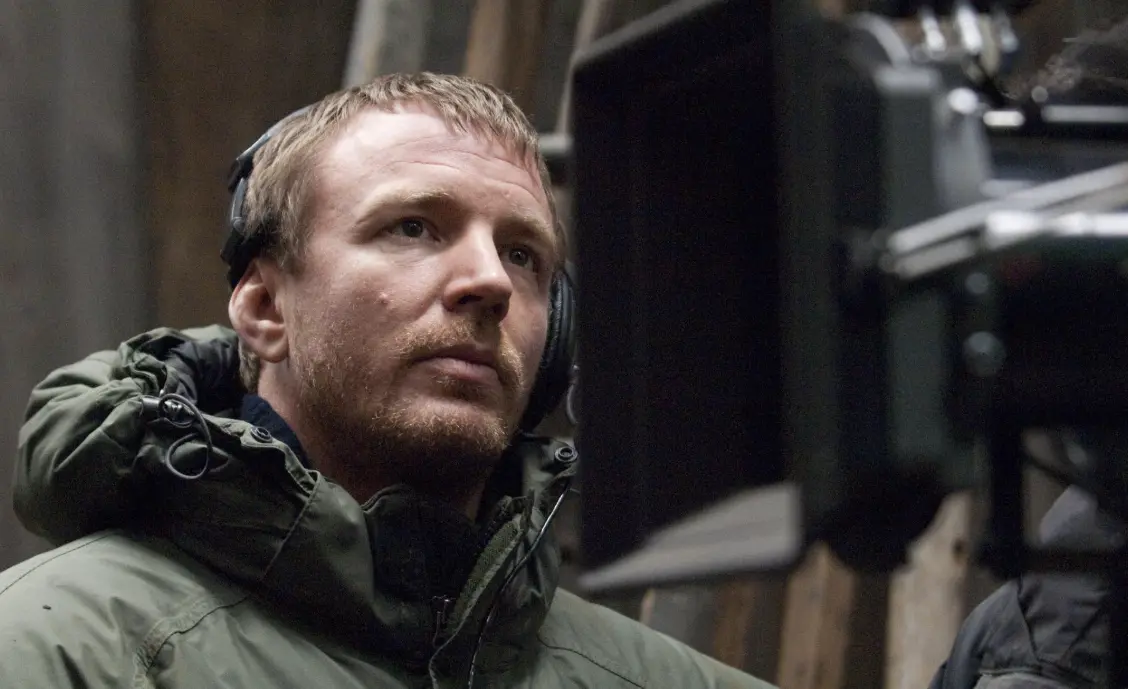
If you’re mapping Guy Ritchie’s career evolution or studying the full arc of the Ritchie filmmaking journey, here’s how it unfolds: Early Ritchie thrived inside tight budgets and sharper constraints. He became synonymous with a certain strand of British gangster cinema.
- From low-budget crime to global blockbusters
Ritchie began with gritty London underworld stories that helped fuel the late-90s British cinema revival. Over time, that trajectory expanded into large-scale studio projects and tentpole releases, positioning him firmly within modern Hollywood franchise filmmaking. - Balancing auteur voice with studio mandates
Even inside major franchises, traces of his rhythm remain, quick edits, stylized tension, sharp dialogue. The shift into big-budget territory didn’t erase the fingerprints; it reframed them within the machinery of Hollywood franchise filmmaking. - Shifts in tone and audience reach
Early films spoke directly to fans of British cinema revival and crime-heavy narratives. Later projects widened the net, attracting global audiences while still threading elements from his roots. That widening scope is central to understanding Guy Ritchie’s journey.