
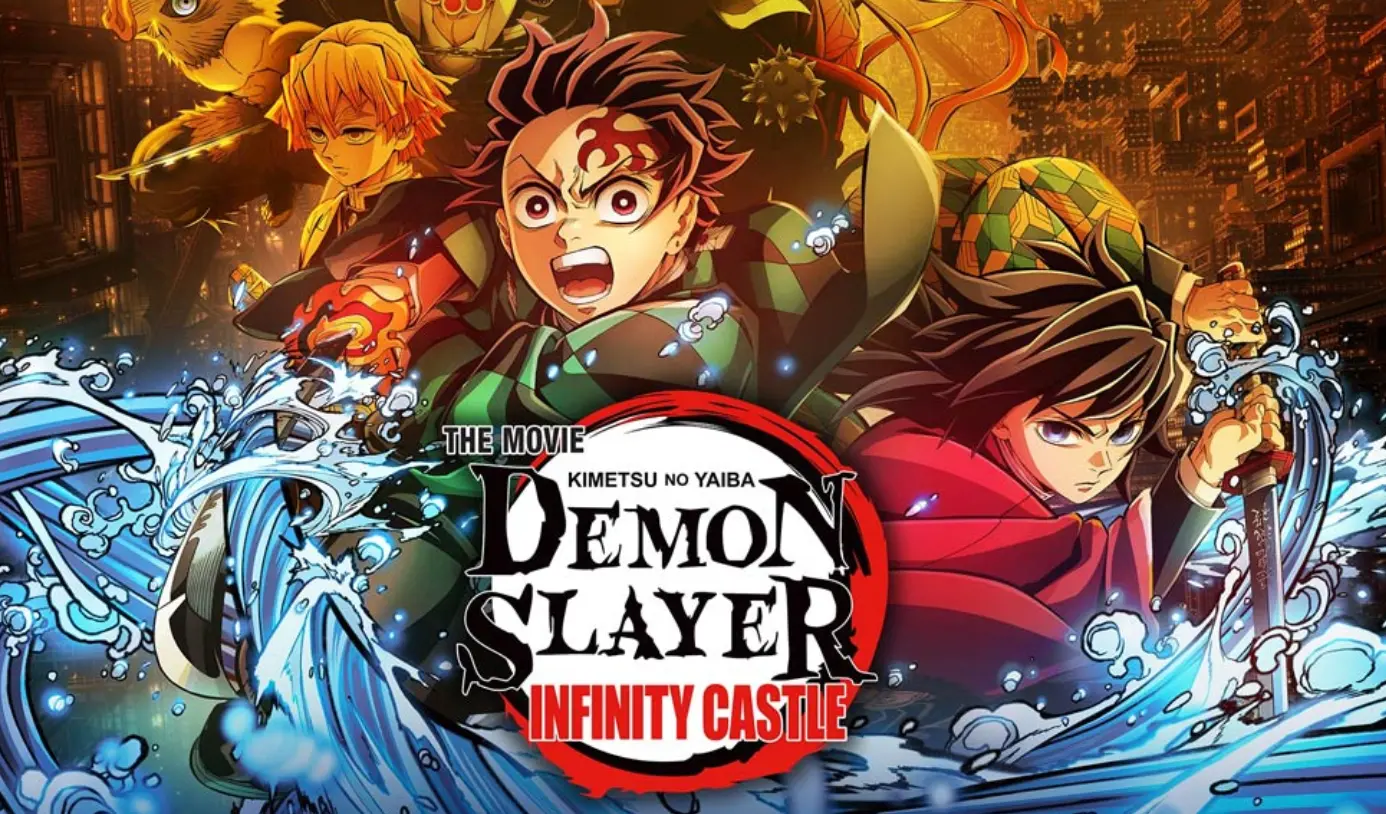
Demon Slayer: Kimetsu no Yaiba – Infinity Castle (2025) picks up where Season 4 left off, plunging the Demon Slayer Corps into the shifting labyrinth of Muzan’s fortress. The Slayers are separated and must face powerful Upper Moon demons in brutal duels, while memories and motives surface.
The film blends intense action, emotional stakes, and stunning animation. Though its pacing sometimes stutters under repeated flashbacks, it delivers a compelling start to the climax arc. Fans will be thrilled, but new viewers may feel a bit lost.
Cast: Key Performances & Character Chemistry
Natsuki Hanae as Tanjiro Kamado
Hanae brings Tanjiro’s unwavering resolve and gentle heart to the screen with natural earnestness. The balance between his compassion and rage becomes a central emotional compass in Infinity Castle. We see him pushed to his limits, and Hanae sells every strain and fear.
Akira Ishida as Akaza
Akaza is the primary antagonist in this film, and Ishida gives him a brooding menace mixed with tragic regret. His monologues and internal conflict over his past choices feel genuine. The flashbacks to his human life deepen his character, and Ishida’s performance grounds the larger-than-life battles in sincerity.
Supporting Cast (Giyu, Zenitsu, Inosuke, Shinobu, Muzan)
- Takahiro Sakurai’s Giyu is stoic and conflicted, especially in his interactions with Tanjiro and Akaza.
- Hiro Shimono (Zenitsu) and Yoshitsugu Matsuoka (Inosuke) each get moments to show growth beyond comic relief, particularly in pairing off with their foes.
- Shinobu’s screen time is limited, but her struggle against Doma retains emotional weight.
- Toshihiko Seki as Muzan looms in the background — his presence is felt even when he speaks little.
Together, the cast chemistry feels tight. Their interactions, whether in battle, in memory, or in quiet moments, reinforce the shared burdens and hopes of the Demon Slayers.
Plot & Story: What Worked and What Fell Flat
The story traps the Demon Slayers within Muzan’s Infinity Castle and forces them into brutal confrontations while peeling back villain backstories.
What Worked
- The action set-pieces are relentless and gripping, especially the Tanjiro vs Akaza confrontation.
- Use of flashbacks gives human depth to powerful demons (especially Akaza).
- The shifting, maze-like castle gives a haunting, disorienting setting.
- Emotional stakes feel real when lives are on the line, not just spectacle.
What Fell Flat
- Flashbacks sometimes slow down momentum rather than enhancing it.
- The film feels episodic, like big chunks of a season spliced together.
- Side characters don’t always get balanced screen time; some get overshadowed.
Visuals, Sound & Direction
Ufotable delivers its signature animation at full strength — fluid motion, bold color contrasts, and gorgeously detailed backgrounds. Battle choreography is sharp, the use of lighting in the castle is moody, and transitions feel cinematic.
Director Haruo Sotozaki maintains a steady grip on the tone, balancing grand spectacle with intimate character moments. Musically, the score by Yuki Kajiura and Go Shiina intensifies each fight, swelling at the right moments without drowning the emotion.
Core Themes & Tonal Analysis
At its heart, Infinity Castle wrestles with identity, regret, and redemption. Akaza’s human past haunts him, and his regrets complicate how we view him as a villain. The Slayers carry guilt, loss, and the constant fear of failing. Tanjiro’s empathy, even toward enemies, becomes a thematic anchor. The arc insists that demons are not monsters in isolation but fractured humans.
Flashbacks deepen this complexity, exposing how each demon’s corruption is born from human pain, making their destruction feel both just and tragic. Sacrifice runs through every frame, as Hashira and Slayers alike put their bodies, legacies, and futures on the line to protect others, raising questions about what can be redeemed and what must be lost.
The tone walks a tightrope between ultra-violent war and personal sorrow. It’s not just about defeating demons, but understanding who they were, and whether violence is the only answer.
Also, the film compels you to reflect on sacrifice: what each character must give to protect others, and what lines they might cross in the name of justice. That complexity, layered onto big action, gives Infinity Castle more weight than a typical battle movie.
Quick Facts & Key Info
- Director: Haruo Sotozaki
- Runtime: ~156 minutes
- Main Cast: Natsuki Hanae, Akira Ishida, Takahiro Sakurai, Hiro Shimono, Yoshitsugu Matsuoka
- Music by: Yuki Kajiura & Go Shiina
- Source: Adapted from Koyoharu Gotouge’s Demon Slayer manga, Infinity Castle arc
Why You Should Watch This Movie
- Because the animation and fight scenes are among the best in anime this year.
- For fans, it is the beginning of the final arc — must see to know what comes next.
- It gives emotional depth to villains, making the conflicts more than just “hero vs evil.”
- Its grand scale and ambition make it a true theatrical experience.
- Even with flaws, it feels like a proper chapter in a larger saga, not filler.
Potential Cons & Things to Know
- It’s not self-contained — clearly sets up more installments.
- Pacing dips due to repeated flashbacks and pauses.
- New viewers may feel lost without the prior context of the series.
- Some beloved supporting characters get limited focus.
Frequently Asked Questions (FAQ Section)
Q1: Is this movie a faithful adaptation of the original Demon Slayer: Infinity Castle arc?
A: Yes — the film largely follows the core storyline, major battles, and character arcs from the Infinity Castle section of the manga. While there are some adjustments in pacing, sequencing, and transitions, the essential beats and emotional weight remain intact.
Q2: Does it lean more toward action than drama?
A: Yes — action dominates, especially in the second half. But the film tries to weave in drama through backstories, emotional moments, and internal conflict.
Q3: Is it accessible to general audiences?
A: Not entirely. If you haven’t watched the anime or read the manga, you’ll likely miss character relationships, past events, and some stakes. It works best for those already invested. You may still enjoy the visuals and fight scenes, but emotional depth might be weaker.
Q4: How’s the music?
A: The music is strong. Kajiura and Shiina create sweeping orchestral and mood pieces that heighten tension and emotion without overshadowing dialogue or action. It fits well with the animation.
Q5: Are there standout scenes to note?
Yes — many.
- The Tanjiro vs Akaza duel stands out for sheer intensity and emotional weight.
- Zenitsu’s confrontation with Kaigaku is powerful, fused with regret and determination.
- Shinobu’s clash with Doma carries poetic fury and weight.
The flashback sequences to Akaza’s past provide emotional resonance seldom seen in pure action films.
These scenes elevate the movie beyond spectacle and remind us why Demon Slayer continues to be so compelling.