
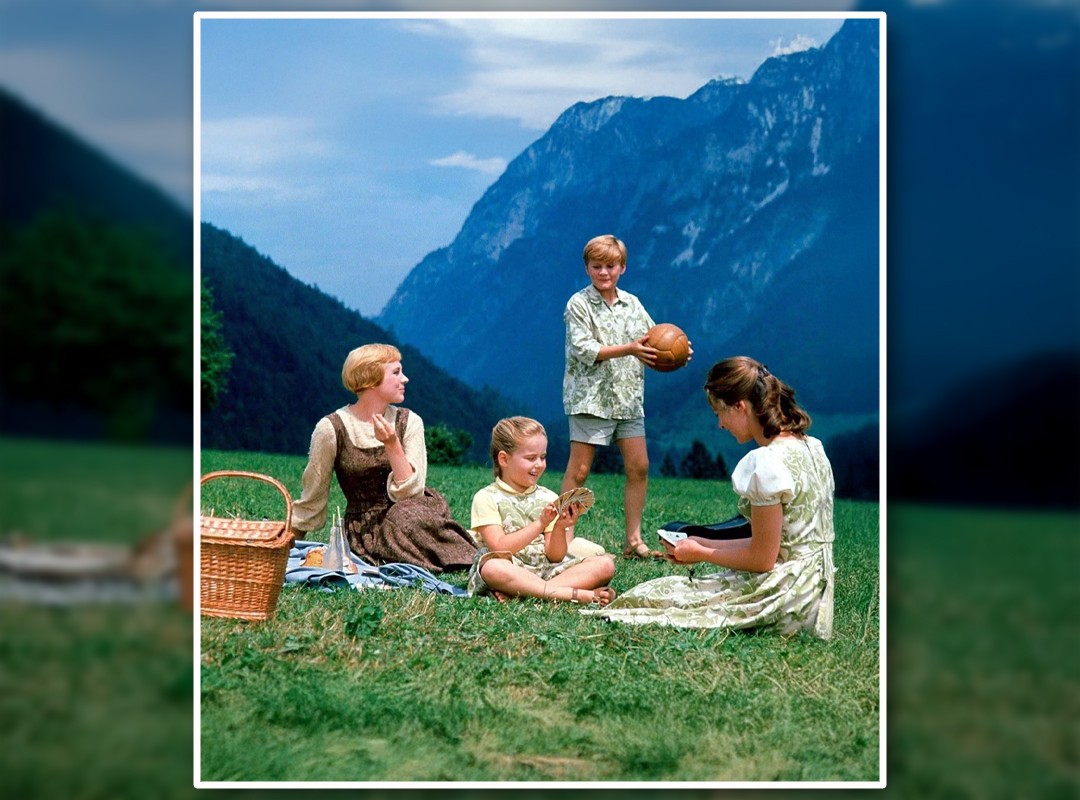
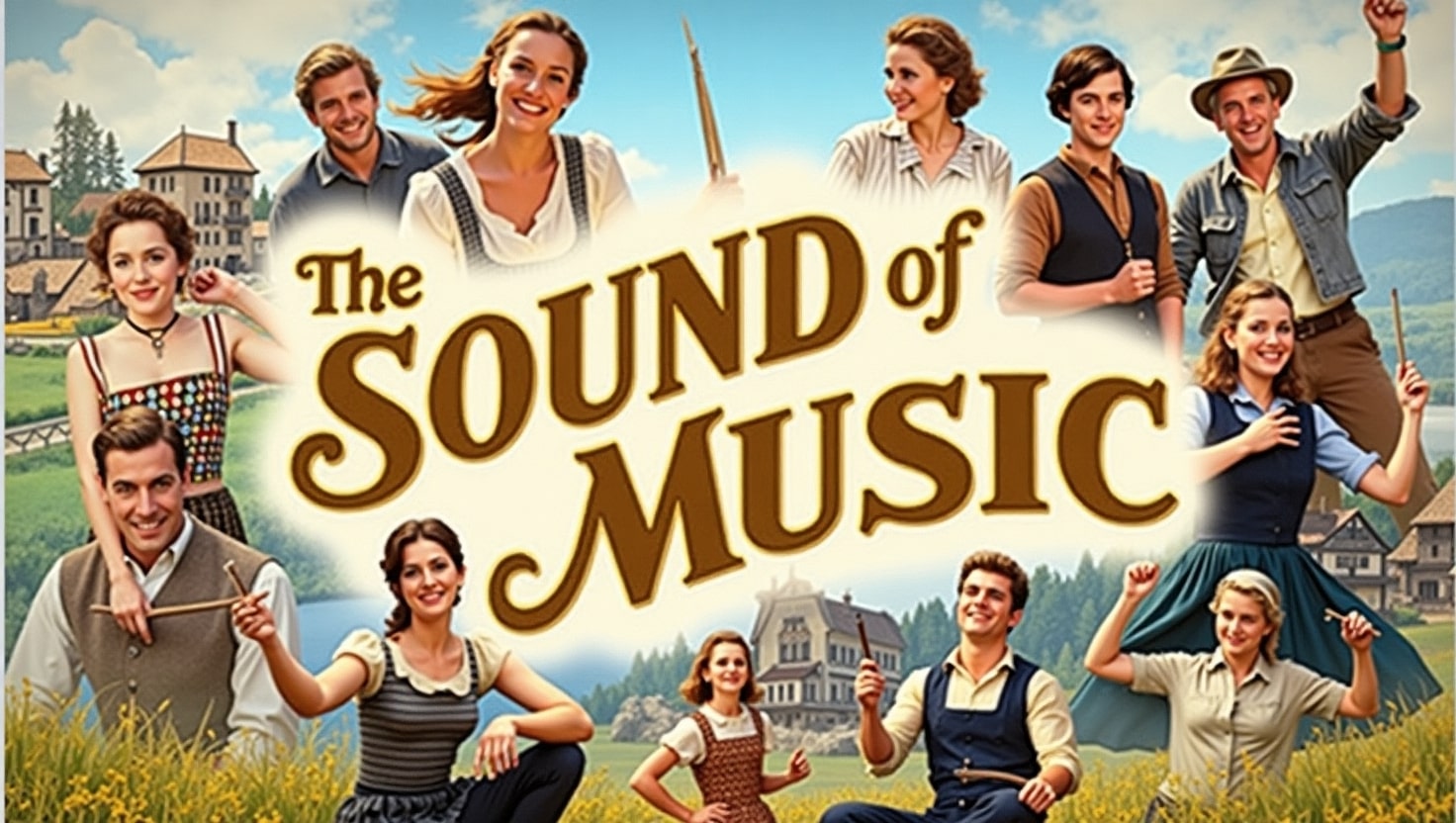
It’s a rare thing for a film to outlive generations. Yet here we are at The Sound of Music’s 60th anniversary this fall, and the film still resonates. In a way only musicals can, it invites us to remember what music, love, and film look like against a backdrop of a looming war. Many of the melodies carry layered significance, and exploring the Sound of Music soundtrack songs’ meaning reveals how the film used music as a subtle form of defiance.
The Story That Transcends Generations
Austria on the Eve of War –
Set in Austria on the eve of World War II, The Sound of Music follows Maria, a spirited young postulant whose free-spirited nature doesn’t quite fit within the walls of the convent.
Maria’s Transformative Journey –
She’s sent to serve as governess to the seven children of Captain Georg von Trapp, a widowed naval officer whose home runs with military precision and little warmth. Through music, laughter, and defiant compassion, Maria transforms the household, softens the Captain’s grief, and falls in love. All this happens, just as the encroaching Nazi regime threatens everything they’ve built.
The Hidden Politics of The Sound of Music
At its heart, The Sound of Music is a family story wrapped in romance, patriotism, and personal evolution. It is often remembered as a sweeping romance or a feel-good family musical. The Sound of Music political themes WWII—moral resistance, the dangers of authoritarianism, the strength of femininity, and the quiet power of everyday rebellion in the face of oppression.
The Sound of Music’s Cultural Impact Over Six Decades
WWII Context for 1965 Audiences –
When The Sound of Music came out in 1965, World War II wasn’t that far in the past. The Anschluss, Nazi Germany’s annexation of Austria in 1938, was only 27 years behind audiences. For many viewers, this wasn’t some distant period piece. It was a reminder of what they’d lived through, or what their parents had escaped.
Visual Storytelling Through Costume Design –
The film never blatantly announces that it’s about war or politics. It lets those elements creep in gradually, through mood and detail. Even the costumes in The Sound of Music carry weight. At the start, the von Trapp children are dressed in matching navy sailor uniforms. They look crisp and unmistakably rigid. It reflects a household built on control, where emotional expression has been packed away alongside the family’s grief. After all, this is a father still mourning his wife, trying to keep the chaos of the world (and his own house) at bay.
Then Maria walks in, and slowly, the palette changes. The children trade in uniforms for handmade playclothes. They begin to wear earth tones, florals, and softer fabrics. It’s subtle, but you can see it: they’re living again. Becoming individuals.
By the time they perform at the Salzburg Festival in full traditional Austrian dress. They adorn dirndls and lederhosen, and it’s no longer just about looking the part. It’s national pride worn at a time when even that feels dangerous. This layering of meaning is a perfect example of The Sound of Music costume symbolism, where wardrobe choices reflect emotional transformation and political defiance all at once.
Quiet Rebellion in Musical Form –
This message hit especially hard when the film first premiered in 1965. The Cold War was at a simmer, and questions around nationalism, ideology, and resistance were everywhere. That idea that protest can look like a lullaby or a farewell song was radical then. And honestly, it still is.
How The Sound of Music Addressed Authoritarianism Through Song
Sixty years on, as conversations around power and identity play out across the globe, the film’s quiet rebellion continues to land, and its music is a testament to it.
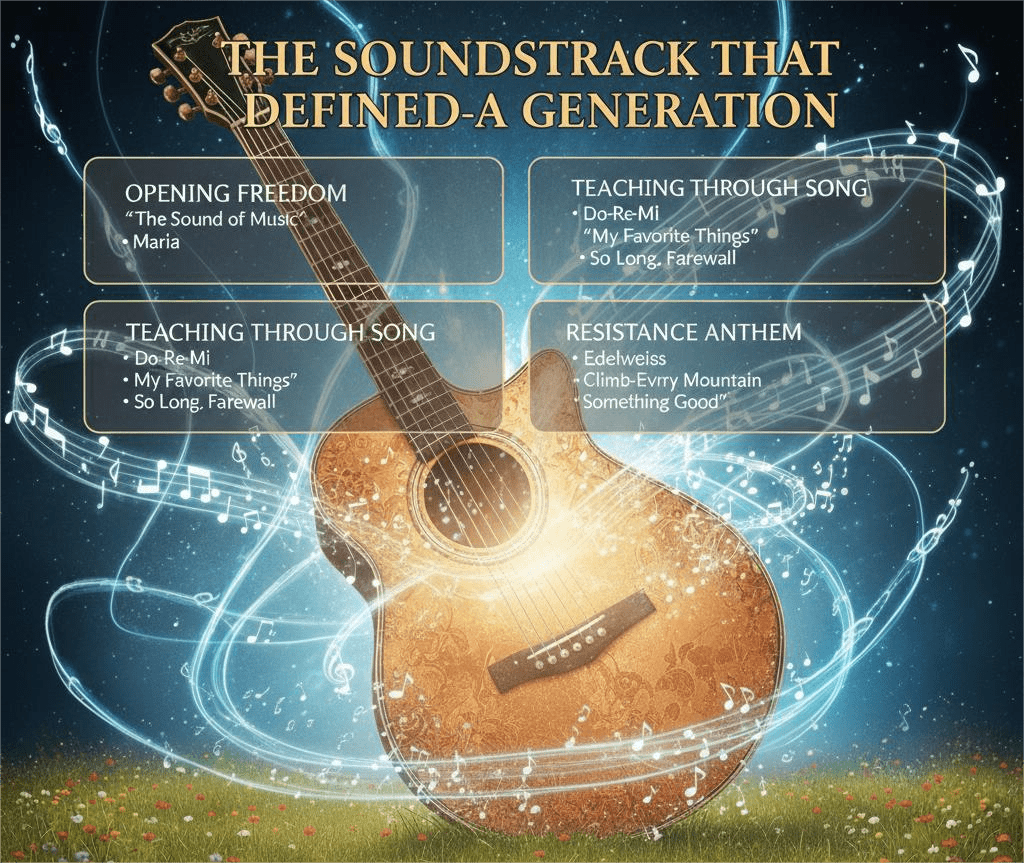
The Soundtrack That Defined a Generation
-
Opening Freedom – “The Sound of Music” – Maria’s opening number is a pure outpouring of freedom, her voice and the vast alpine landscape together announcing a spirit too alive to be confined by convent walls.
-
“Maria”- Sung by the nuns, it frames Maria as a delightful disruption, someone too unruly for order, yet too full of life to ignore.
-
Teaching Through Song – “Do-Re-Me” – What begins as a simple lesson becomes a turning point: the von Trapp children, once silent and regimented, finally burst into music and laughter under Maria’s care.
-
“My Favorite Things” – In the storm scene, Maria comforts the children with imagination, proving that courage often begins with the smallest joys.
-
Resistance Anthem – “Edelweiss” – Captain von Trapp’s voice softens as he sings a farewell to his homeland; the song becomes both personal grief and a quiet act of resistance.
-
“Climb Ev’ry Mountain” – The Reverend Mother’s soaring anthem gives Maria her charge, transforming personal doubt into a spiritual call for courage.
-
“So Long, Farewell” – At the Salzburg Festival, the children’s sweet goodnight doubles as their final goodbye to Austria, innocence laced with the weight of escape.
-
Love as Revolution – “Something Good” – In the gazebo, Maria and the Captain confess their love; the tenderness of the song is proof that in a world shadowed by war, love itself is a radical choice.
The Creative Team Behind the Magic

Robert Wise’s Directorial Vision –
Of course, none of this magic would have lasted six decades without the people who shaped it. Robert Wise, a director who had already won hearts with West Side Story (1961), knew exactly how to let a musical breathe on screen. He gave The Sound of Music its balance. Ernest Lehman’s screenplay made the stage musical into cinema with remarkable care.
Julie Andrews’ Defining Performance –
And then there were the faces that made it unforgettable. Julie Andrews, fresh from Mary Poppins, gave Maria a playful and defiant character all at once.
Christopher Plummer’s Complex Captain –
Christopher Plummer, who famously bristled at the sentimentality of the role, still found a way to give Captain von Trapp his aching dignity, a man learning to feel again. Around them, the children—Charmian Carr as Liesl, Nicholas Hammond as Friedrich, down to little Kym Karath as Gretl were the heartbeat of the story.
Together, this ensemble created a world that felt lived-in, flawed, and profoundly human.
Why The Sound of Music Still Matters After 60 Years Matters
Music as Resistance in Modern Times –
Perhaps that is why, sixty years later, the film still holds. The Sound of Music reminds us that in moments of fear and change, song and love can be forms of resistance. Looking at it through the lens of Sound of Music film analysis, it’s a meditation on how art itself can push back against oppression.
Universal Themes of Love and Courage –
And that, more than anything, is why it continues to resonate across generations. It’s also part of The Lasting Legacy of Rodgers and Hammerstein’s Musical, a work that not only entertains but continually inspires. It remains one of my favorite things to return to on a rainy Sunday afternoon, especially when the politics of the world feel more uncertain and harsh.